
Introduction
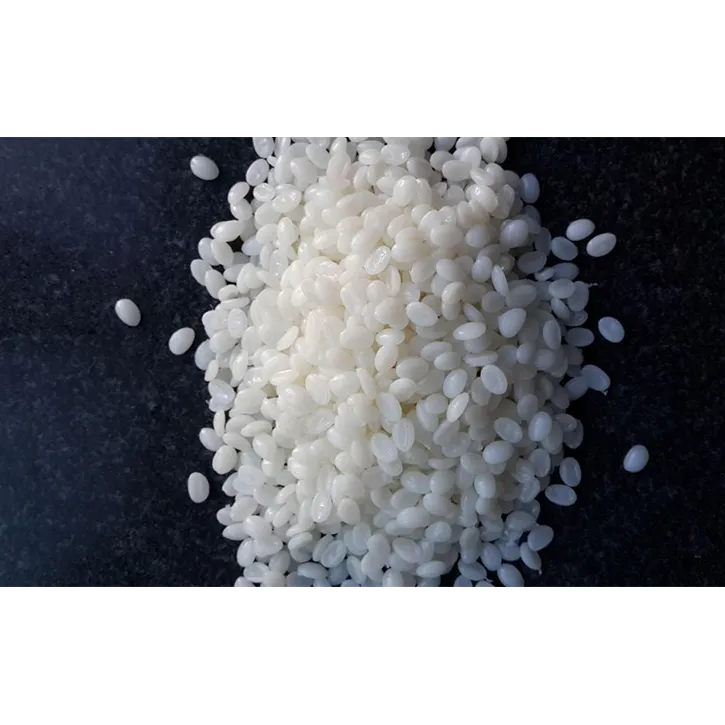
Polybutylene succinate-co-adipate (PBSA) is a biodegradable aliphatic copolyester used as a high-performance, compostable alternative to conventional polyolefins in films, bags, agricultural materials, and selected molded products. It is typically synthesized from succinic acid, adipic acid, and 1,4-butanediol, and its properties are tuned by the adipate content, which lowers crystallinity and melting point while increasing flexibility and biodegradation rate.
PBSA sits within the broader family of succinate-based biodegradable polyesters and is closely related to PBS, but it is generally softer, more extensible, and more readily biodegradable because adipate segments disrupt chain packing. Commercially, PBSA is important because it combines thermoplastic processability with performance close to polyethylene or polypropylene in flexible applications, while also supporting industrial composting and, in some grades and thicknesses, home-compostable use cases.
The material has attracted interest from packaging, agriculture, consumer goods, and 3D-printing developers because it can run on conventional extrusion, film-blowing, injection-molding, and thermoforming equipment with relatively modest adaptation. At the same time, PBSA occupies a strategic position in the sustainability transition: it is often promoted as a lower-persistence alternative to fossil-based plastics, but its environmental value depends on feedstock origin, collection systems, composting access, and the specific application design.
History and Development
PBSA emerged from work on aliphatic polyester chemistry aimed at producing biodegradable plastics with better toughness and processability than earlier compostable materials. Japan played an early role in commercial development, with Showa Denko among the companies associated with early PBS-family copolymers, including PBSA.
As biodegradable plastics markets expanded, PBSA gained attention as a more flexible counterpart to PBS for thin-film applications and low-temperature service. More recent research has focused on improving thermal stability, molecular weight control, compatibilization with PLA, and performance in seawater, soil, and industrial composting conditions.
Chemical Structure and Key Properties
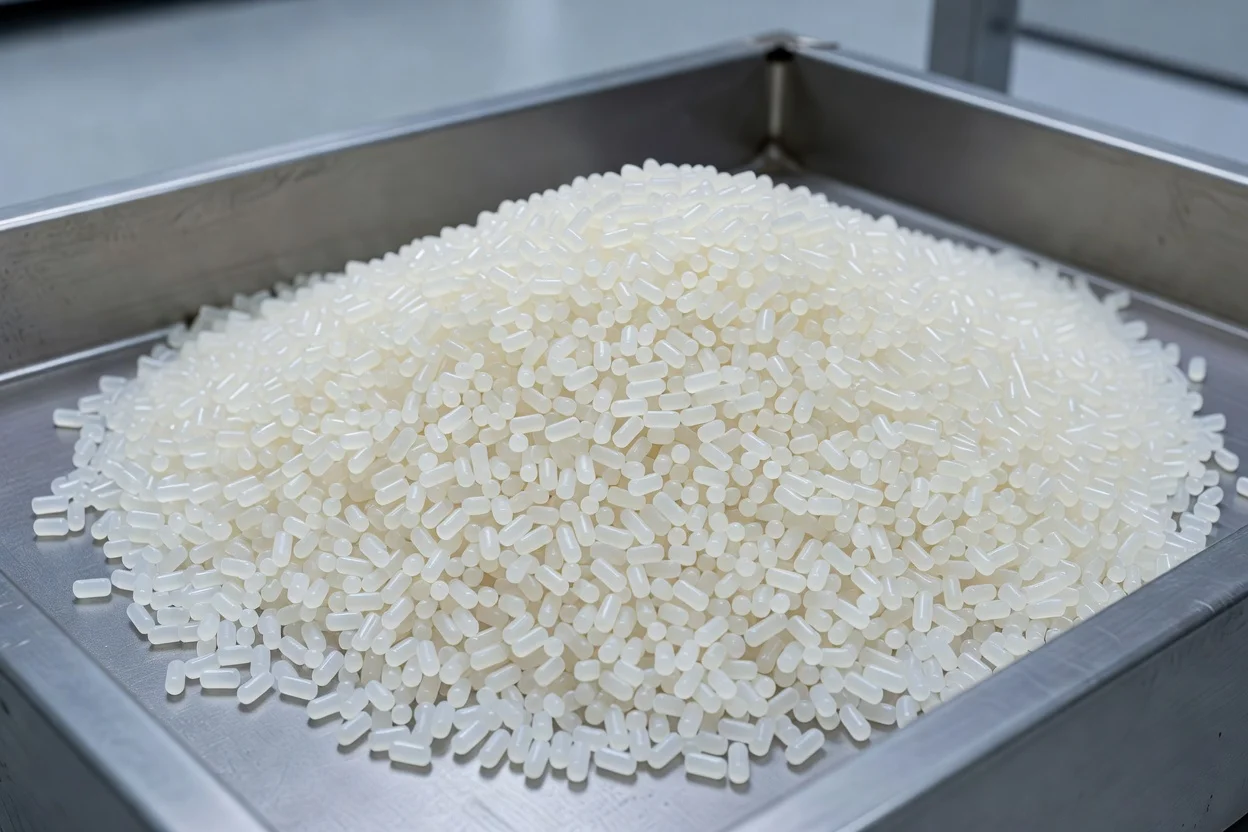
PBSA is a random copolyester built from succinate and adipate ester units linked by 1,4-butanediol-derived segments. The adipate comonomer reduces regularity in the chain, which decreases crystallinity and typically lowers the melting temperature relative to PBS.
| Property | Typical PBSA behavior | Practical implication |
|---|---|---|
| Flexibility | High | Better film toughness and extensibility than PBS |
| Crystallinity | Lower than PBS | Faster biodegradation and easier sealability |
| Melting temperature | Roughly in the 80–120 C range depending on grade and composition | Useful for low-temperature processing and heat-seal films |
| Glass transition | Low, typically around sub-zero values | Good low-temperature flexibility |
| Strength | Moderate | Suitable for flexible packaging, less ideal for rigid load-bearing parts |
Two important limits define PBSA’s application window:
- Low heat resistance → caused by its relatively low melting point and reduced crystalline stability → commonly addressed by blending, nucleating agents, chain extenders, or use in multilayer structures rather than in high-temperature rigid parts.
- Limited gas barrier performance → caused by its aliphatic polyester structure and moderate crystallinity → commonly addressed by barrier coatings, multilayer co-extrusion, or blending with barrier polymers for food-packaging uses.
PBSA is often described as mechanically similar to certain flexible polyolefins in handling behavior, but it is not a drop-in substitute for every PE or PP grade because its thermal window is narrower and its barrier performance is application dependent.
Production Processes and Raw Feedstocks
PBSA is produced by polycondensation of succinic acid, adipic acid, and 1,4-butanediol, usually in a two-stage process involving esterification or transesterification followed by polycondensation under vacuum. Patent literature describes catalyst systems that can operate at very low total catalyst loadings, while commercial processes may use proprietary metal-based or organic catalyst packages to control molecular weight and color.
The main feedstocks are:
- Succinic acid, increasingly available from bio-based routes as well as petrochemical sources.
- Adipic acid, commonly petrochemical but also under development from bio-based pathways.
- 1,4-butanediol, available from fossil or renewable production routes depending on supplier and grade.
Because PBSA is a condensation polymer, final properties depend strongly on molecular weight, end-group control, residual catalyst levels, and the succinate-to-adipate ratio. Higher molecular weight generally improves melt strength and film performance, while higher adipate content tends to increase softness and degrade crystallinity more rapidly.

Applications and End-Use Markets
PBSA is most strongly positioned in flexible, biodegradable applications where softness, sealing behavior, and compostability are more important than high heat resistance.
- Film and bags: PBSA is widely used in packaging film, shopping bags, liners, and agricultural film because it combines extrusion processability with tear resistance and elongation.
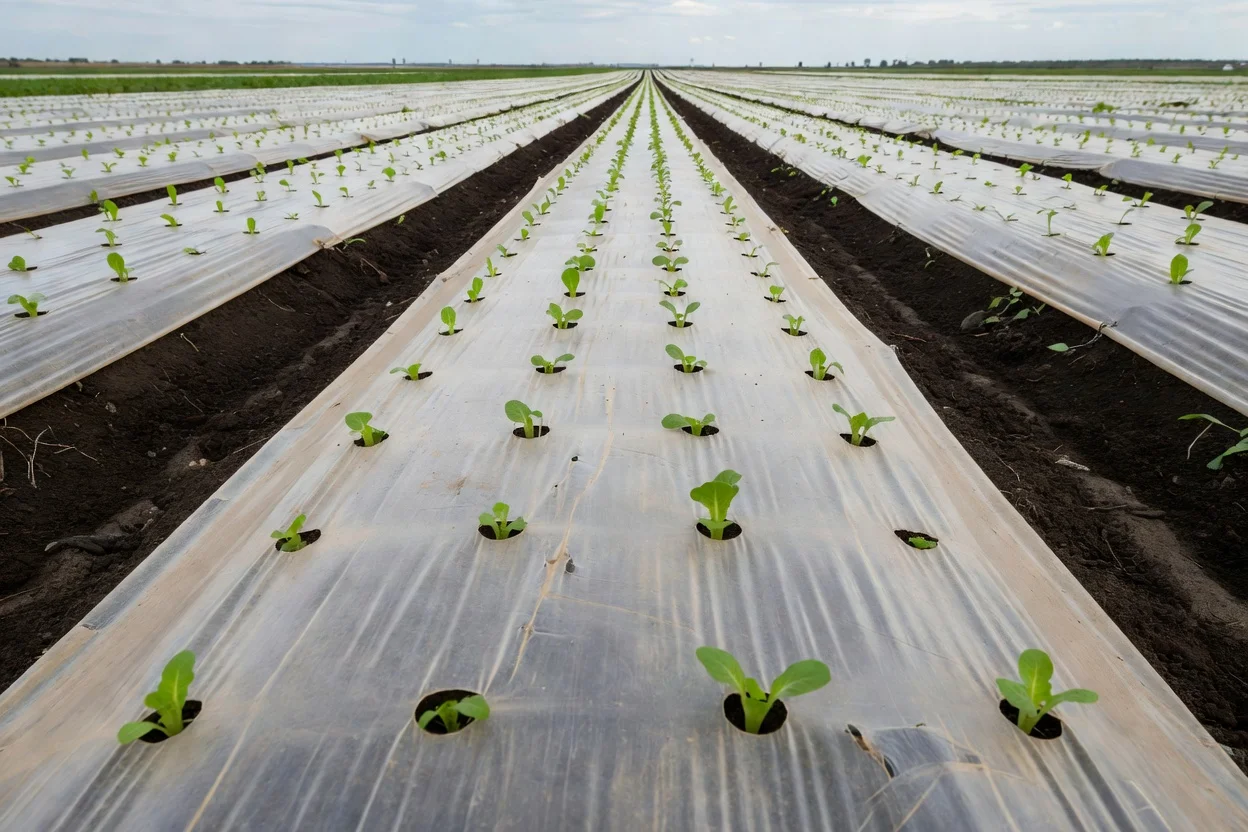
- Agriculture: Mulch films, plant pots, nursery items, and soil-contact articles benefit from PBSA’s biodegradation profile, especially where removal and recovery are difficult.
- Food packaging: PBSA can be used in flexible packaging, especially where compostable end-of-life options are targeted, often in blends or multilayers for better sealing and mechanical balance.
- Blends with PLA and other biopolymers: PBSA is commonly used as a flexibilizer or toughness modifier in PLA blends, improving ductility and impact performance.
- Injection-molded consumer goods: Suitable for caps, closures, and small molded items where moderate stiffness is acceptable and compostability is desired.
- 3D printing and composites: PBSA has been explored for fused deposition modeling and bio-composites because of its processability and low-temperature flexibility.
A poor-fit use is high-heat rigid parts such as under-the-hood automotive components or hot-fill packaging, because PBSA softens too readily and lacks the thermal margin of engineering plastics.
Environmental and Sustainability Aspects
PBSA’s principal environmental attraction is that it is designed to biodegrade under appropriate conditions, reducing long-term persistence compared with conventional plastics. Studies and reviews report biodegradation in industrial composting, soil, seawater, and sludge environments, although actual rates depend on thickness, crystallinity, temperature, moisture, microbial activity, and formulation.
Key sustainability considerations include:
- Compostability: PBSA is widely discussed as industrially compostable, and some grades at specified thicknesses are also described as home compostable.
- Bio-based content: PBSA can be partially or fully bio-based if the acid and diol intermediates are sourced renewably, but commercial supply chains remain mixed in many cases.
- Recyclability: Mechanical recycling is possible in principle, but PBSA is most often positioned for controlled organic-recovery routes rather than closed-loop recycling, because contamination and mixed-material collection reduce practicality.
- Carbon footprint: The footprint depends heavily on feedstock origin, process energy, and waste-management pathway; renewably sourced intermediates can lower cradle-to-gate impact, but this is not automatic.
Environmental claims also require careful interpretation. Biodegradable does not mean harmless in all environments, and performance depends on access to the right disposal infrastructure. For compostable packaging, the design challenge is to align product use, certification, labeling, and collection so that biodegradation occurs in the intended pathway rather than in open environments.
Economic and Global Market Impact
PBSA is part of the broader expansion of biodegradable plastics, especially in Asia and Europe, where packaging regulation and agricultural-film waste concerns have supported adoption. Demand is shaped by three factors: regulatory pressure on single-use plastics, consumer interest in compostable materials, and the need for flexible materials that can run on standard converting equipment.
Market development is influenced by the relative price of bio-based intermediates, adipic acid and 1,4-butanediol supply chains, and competition from PLA, PBAT, starch blends, and other compostable polyesters. In practical terms, PBSA is often selected when converters need a softer, more extensible, and lower-temperature biodegradable film than PLA can provide.
Current Challenges and Innovations
The principal technical challenges for PBSA are:
- Heat resistance: improved through chain extension, nucleating agents, and blends.
- Barrier properties: improved through coatings, multilayer structures, or hybrid blends.
- Cost competitiveness: constrained by renewable feedstock economics and the still-limited scale of dedicated biodegradable polymer capacity.
- End-of-life realism: compostability benefits depend on collection and treatment systems, not only material chemistry.
Current innovation directions include:
- Reactive blending with PLA to improve toughness and thermal performance in compostable packaging.
- Bio-based catalyst and process development to reduce energy use and improve molecular-weight control.
- Composite formulations using fillers such as biochar or natural fibers to lower cost and tune mechanics, though this must be balanced against compostability and dispersion issues.
- Seawater- and soil-degradation studies to better define safe and realistic disposal pathways for short-life applications.
A useful formulation example is maleic-anhydride reactive compatibilization at about 0.5–2.0 wt% in PBSA-containing blends, which can improve interfacial adhesion by reacting with terminal hydroxyl groups and raising blend integrity. Another example is low-level chain extenders used to raise melt strength in film grades, which is especially important in blown-film processing where weak melt strength can cause bubble instability.
Future Outlook
PBSA is likely to remain a key material in the compostable flexible-packaging segment, especially where softness, sealability, and short-life performance are more important than heat resistance. Growth prospects are strongest in agricultural films, compostable bags, and flexible packaging formats that can be recovered through industrial composting or controlled organic waste systems.
The most important technical direction is not simply making PBSA “stronger,” but matching composition, thickness, and end-of-life pathway to the application. That means continued work on bio-based monomer supply, multilayer barrier design, and better standards-based labeling to prevent contamination of recycling streams.
Summary
PBSA is a biodegradable, flexible aliphatic copolyester that bridges the gap between compostable polymers and polyolefin-like processing behavior. Its strengths are toughness, film formability, and biodegradability; its main constraints are modest heat resistance and limited barrier performance, which are typically managed through blends, coatings, and formulation design.
Commercially, PBSA is best understood as a materials platform for short-life, flexible applications rather than a universal plastic replacement. Its long-term significance will depend on whether bio-based feedstocks, composting infrastructure, and conversion technologies continue to mature in parallel.
References
- •
ポリブチレンサクシネートアジペート. (2026, May 24).Link
- •
Based biodegradable plastics for sustainable flexible packaging and.... (2025, March 5).Link
- •
Poly(Butylene Succinate-Co-Adipate): Comprehensive Analysis Of.... (n.d.).Link
- •
Journal of Applied Polymer Science. (n.d.).Link
- •
PBSA : Poly(butylene succinate-co-butylene adipate). (2000, January 1).Link
- •
The biodegradable polymer poly(butylene succinate-co.... (2025, February 15).Link
- •
Poly(lactic acid) (PLA)/Poly(butylene succinate-co-adipate).... (2021, January 9).Link
- •
Studies on poly(butylene succinate) and poly(butylene succinate-co-adipate)-based biodegradable plastics for sustainable flexible packaging and agricultural applications: a comprehensive review. (n.d.).Link
- •
Synthesis, Properties, and Degradation of Poly(butylene.... (n.d.).Link
- •
Method for synthesizing poly(butylene succinate-co-butylene adipate) - Patent US-9469724-B2. (2014, July 22).Link
- •
Polybutylene-succinate-co-adipate. (2024).Link
- •
Poly(butylene succinate-co-butylene adipate). (n.d.).Link
- •
Polybutylene Succinate Adipate: Comprehensive Analysis Of.... (n.d.).Link
- •
Seawater Biodegradable Poly(butylene succinate-co-.... (2023, March 24).Link
- •
A Brief Review of Poly (Butylene Succinate) (PBS) and Its.... (2022, February 21).Link
- •
High MW co -polymer Poly(butylene succinate- co -butylene adipate). (n.d.).Link
- •
Poly(butylene succinate-co-butylene adipate)(PBSA) resin. (2024, April 26).Link
- •
Chain extension of adipic acid and (or) succinic acid/butanediol polyesters with 2,2′‐(1,4‐phenylene)‐bis(2‐oxazoline) and adipoylbiscaprolactamate combined chain extenders. (n.d.).Link
- •
Based biodegradable plastics for sustainable flexible packaging and.... (2025, March 5).Link
- •
Biodegradable aliphatic polyesters. Part II. Synthesis and.... (n.d.).Link
- •
Poly(lactide)-g-poly(butylene succinate-co-adipate) with High Crystallization Capacity and Migration Resistance. (2016, April 27).Link
- •
Unraveling the cause for the unusual processing behavior of.... (n.d.).Link
- •
Poly (butylene succinate-co-adipic acid) (PBSA) synthesis process method by biomass creatinine catalysis method. (2015, July 22).Link
- •
A Review on Properties and Application of Bio-Based Poly(Butylene.... (2021, April 29).Link
- •
Synthesis and characterization of the biodegradable copolymers from succinic acid and adipic acid with 1,4‐butanediol. (n.d.).Link
- •
Binary Green Blends of Poly(lactic acid) with Poly(butylene.... (2021, July 28).Link
- •
PBSA Plastic: A Sustainable and Biodegradable Alternative. (2024, January 19).Link
- •
Sustainable co -polymer Poly(butylene succinate. (n.d.).Link
- •
Preparation and characterization of poly(butylene succinate-co-adipate)/poly(lactic acid) blends with enhanced compatibility, mechanical properties, and heat resistance. (n.d.).Link
- •
Method for synthesizing poly(butylene succinate-co-.... (2015, December 10).Link
- •
Poly Butylene Succinate Bio Based Polymer. (n.d.).Link
- •
Enhancing Low-temperature Resistant and Biodegradation.... (n.d.).Link
- •
PBSA (polysuccinic acid-butylene adipate). (2020, March 18).Link
- •
Poly Butylene Succinate Blend: Advanced Formulations,.... (n.d.).Link
- •
Study of biodegradable poly(butylene succinate‐co‐.... (n.d.).Link
- •
Development and Characterization of PBSA-Based Green Composites in 3D-Printing by Fused Deposition Modelling. (2022, October 28).Link
- •
PHA Compositions Comprising PBS and PBSA and Methods for their Production. (2015, May 1).Link
- •
Wood Residue-Derived Biochar as a Low-Cost, Lubricating Filler in Poly(butylene succinate-co-adipate) Biocomposites. (2023, January 6).Link
- •
Molecular and Supramolecular Changes in Polybutylene Succinate.... (2018, March 1).Link
- •
Poly(butylene succinate-co-adipate) (PBSA).... (2025, May 19).Link
- •
A Review on Properties and Application of Bio-Based Poly.... (n.d.).Link
- •
Poly(butylene succinate) (PBS): Materials, processing, and.... (n.d.).Link
- •
Poly(butylene succinate) (PBS): Materials, processing, and.... (2022, September 10).Link
- •
Polybutylene Succinate (PBS): Properties, Applications,.... (2025, February 10).Link