
Introduction
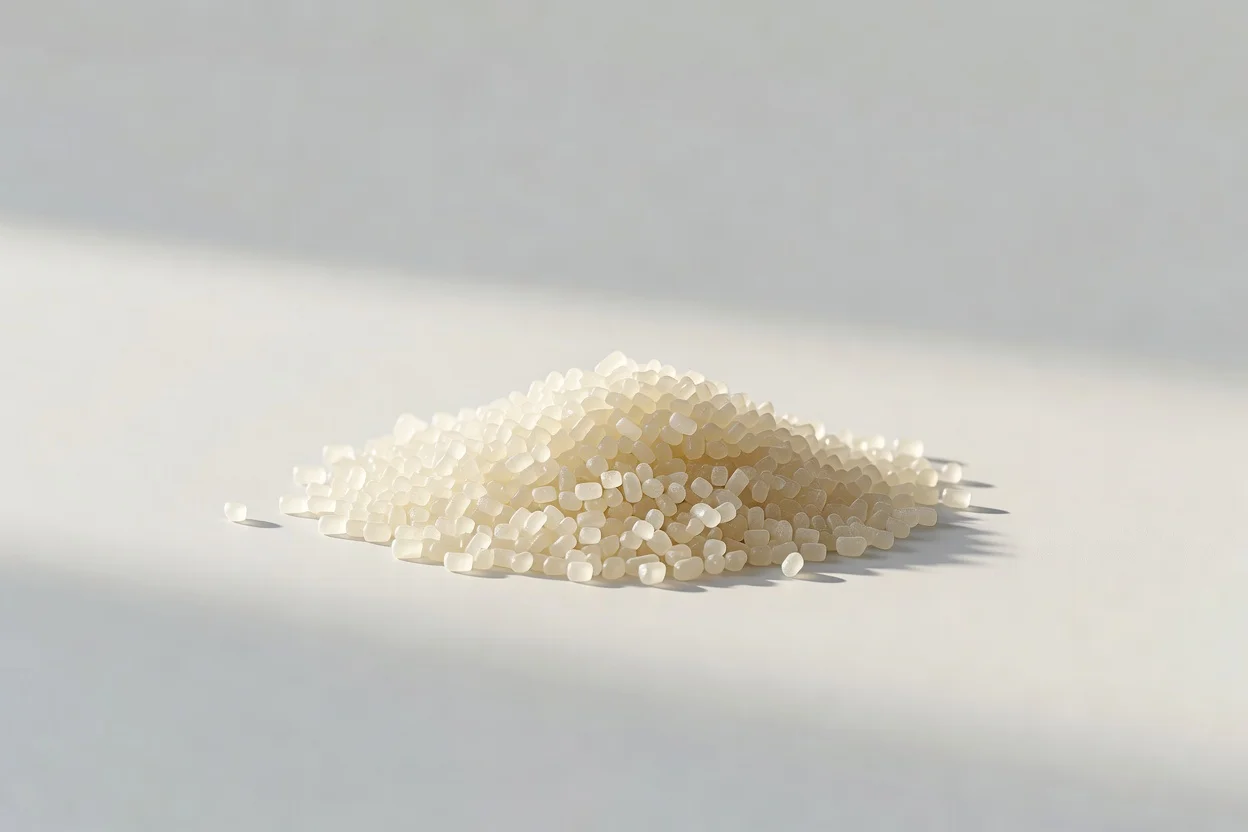
Biobased polyamide (bio-PA) is a family of engineering thermoplastics in which some or all of the monomer feedstock comes from renewable biomass rather than fossil-derived petrochemicals. In industrial practice, bio-PA usually refers to the same polyamide chemistry used for conventional nylons, but produced from bio-based diamines, diacids, amino acids, or lactams, with major commercial grades including PA 11, PA 10.10, PA 10.12, PA 6.10, PA 6.12, PA 4.10, PA 5.10, PA 6.19, and newer partly bio-based variants of PA 6 and PA 66.
The material is significant because it combines the familiar processing and performance profile of polyamides with a lower reliance on fossil carbon, especially in applications that demand toughness, chemical resistance, fatigue resistance, and durability. Bio-PA is also strategically important because it sits at the intersection of renewable feedstocks, high-performance plastics, textile fibers, technical films, automotive tubing, electrical parts, and recyclable polymer systems.
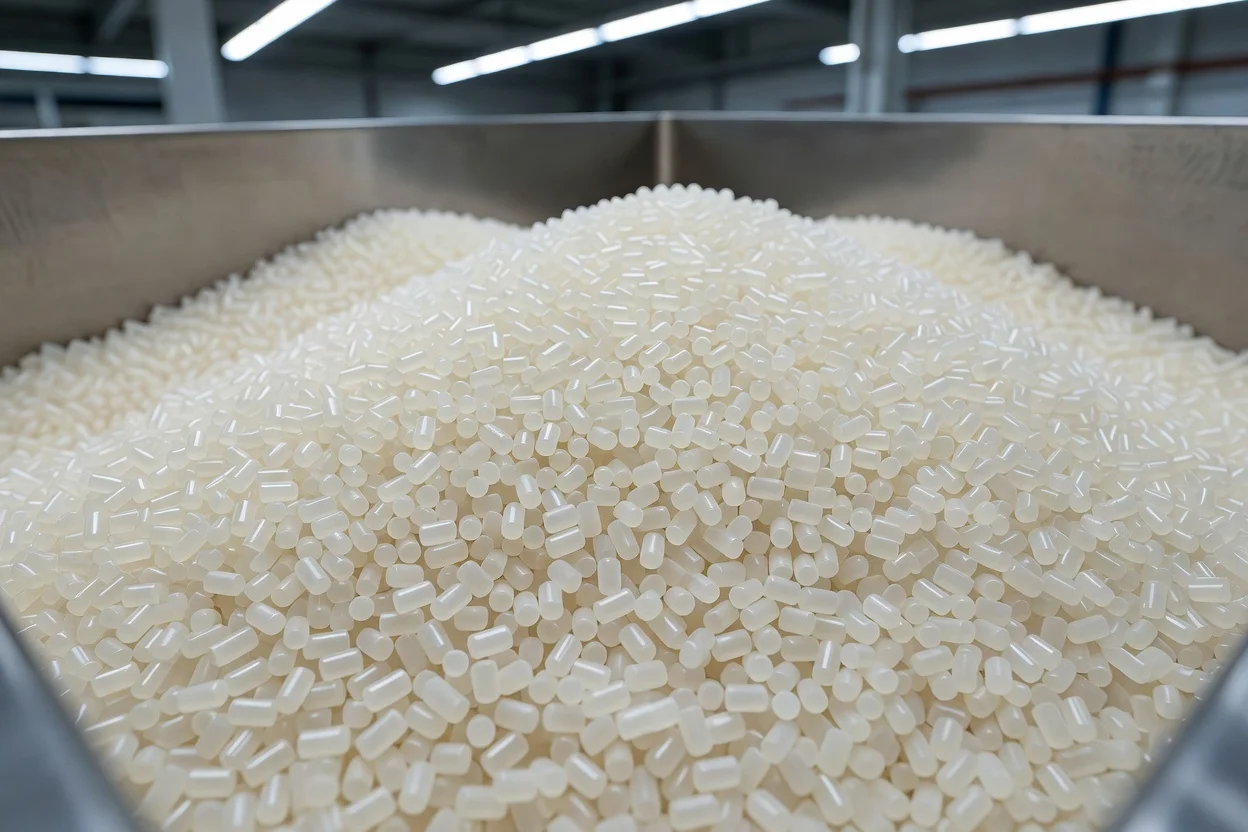
Commercial bio-PAs emerged from long-chain aliphatic polyamides derived from castor oil, especially PA 11, and later expanded into partially and fully bio-based grades built from sugars, plant oils, and lignocellulosic routes. Current development is moving in two directions: higher-bio-content engineering resins that match or exceed conventional nylon performance, and more circular production pathways that combine bio-based content with mass-balance, recycling, and lower-carbon manufacturing.
History and Development
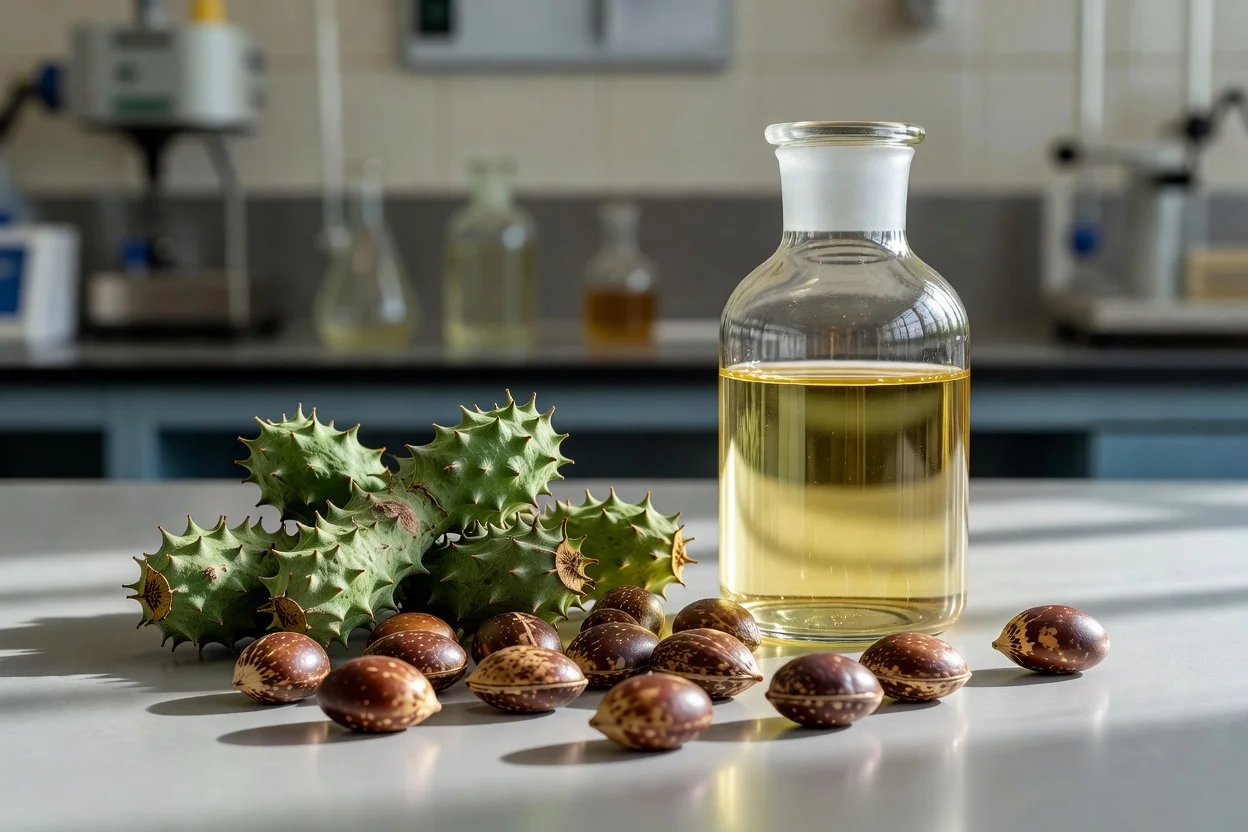
Polyamides were first developed as synthetic engineering materials in the fossil-based era, but bio-based routes became attractive when researchers and manufacturers recognized that many polyamide monomers could be obtained from renewable molecules with similar chain architectures and properties. Castor oil became especially important because it provides sebacic acid and related intermediates suitable for long-chain polyamides such as PA 11 and PA 10.10.
Industrial commercialization accelerated as producers learned to scale bio-based monomer synthesis and integrate it into existing polyamide plants and compounding systems. A key milestone was the establishment of PA 11 as a mature high-performance resin, followed by the broader introduction of bio-based PA 10.10, PA 6.10, PA 5.10, and PA 6.19, plus newer bio-based copolyamides and specialty fibers for textiles and technical applications.
More recent development has focused on reducing greenhouse-gas intensity while preserving processability and performance. This has led to bio-based formulations with natural fillers, fiber reinforcement, and hybrid renewable feedstocks, as well as advanced monomer routes from sugars and lignocellulosic biomass.
Chemical Structure and Key Properties
Bio-PA belongs to the polyamide class, meaning its polymer chains contain repeating amide linkages that promote strong intermolecular hydrogen bonding. That hydrogen bonding is the source of the material’s characteristic balance of stiffness, strength, toughness, abrasion resistance, and thermal endurance.
A major feature of bio-PA is that the “bio” designation refers to feedstock origin, not necessarily to biodegradability. Most bio-PAs are not biodegradable under normal use conditions, and they behave like conventional nylons in service and in recycling streams.
Representative technical traits include:
| Property | Typical significance |
|---|---|
| High mechanical strength | Suitable for load-bearing and wear applications |
| Good chemical resistance | Useful for fuels, oils, hydraulic media, and industrial fluids |
| Low water uptake in long-chain grades | Better dimensional stability than short-chain nylons |
| Abrasion resistance | Important in cables, tubing, gears, and moving parts |
| Thermoplastic processability | Compatible with injection molding, extrusion, and fiber spinning |
Several real limitations shape design choices:
| Limit → Cause → Workaround |
|---|
| Moisture sensitivity → amide groups absorb water and plasticize the polymer → use long-chain grades such as PA 11 or PA 12-like bio grades, drying control, or glass-fiber reinforcement |
| Barrier performance is not universal → polyamides are not ideal oxygen or grease barriers in all film uses → multilayer structures, coatings, or blending with barrier polymers |
| Low surface energy in untreated parts → polyamide surfaces may bond or print poorly without activation → corona, plasma, flame treatment, primers, or surface-functional additives |
| Property drop in some bio-based copolyamides → bio-based monomer symmetry can reduce crystallinity or stiffness in certain designs → copolymerization, reinforcement, or formulation tuning |
Bio-PA grades differ substantially in crystallinity, melting point, moisture uptake, and flexibility. PA 11 is especially notable for very low water absorption, good impact resistance, and strong low-temperature toughness, while some newer bio-based amorphous or semi-aromatic polyamides offer high glass-transition temperatures and specialty thermal behavior for niche uses.
Common property profile by family
| Family | Typical profile | Typical implication |
|---|---|---|
| PA 11 | Low moisture uptake, flexibility, UV and chemical resistance | Tubing, fuel lines, industrial hose, cable jacketing |
| PA 10.10 / PA 10.12 | Long-chain, lower water absorption, good toughness | Automotive, electrical, sports goods, technical parts |
| PA 6.10 / PA 6.12 | Balanced mechanical and chemical performance | Injection-molded parts, cable ties, housings |
| PA 4.10 / PA 5.10 / PA 6.19 | Higher bio-content, engineered thermal and mechanical balance | Technical components, fibers, specialty compounds |
| Bio-based PA 6 / PA 66 variants | Higher-performance, often partly bio-based | More demanding engineering applications |
Production Processes and Raw Feedstocks
Bio-PA is made by the same core polyamide routes used for conventional nylons: condensation polymerization of diamines with diacids, ring-opening polymerization of lactams, or polymerization of amino acids and long-chain monomers. The crucial difference is upstream: renewable feedstocks replace part or all of the fossil-based monomer supply.
Main feedstock pathways include:
- Castor oil for sebacic acid, undecylenic acid, and downstream long-chain polyamide monomers.
- Fermentation-derived sugars for diamines such as pentamethylenediamine in some fully bio-based formulations.
- Lignocellulosic biomass and other non-food biomass for advanced monomer synthesis and research-stage routes.
- Vegetable oils and fatty acids as broader renewable inputs for industrial polyamide chemistry.
Commercial production is concentrated among a relatively small number of specialty polymer producers and integrated chemical companies. Arkema is widely associated with PA 11 and related high-performance renewable polyamide lines, while Evonik, Nurel, Solvay, UBE, Cathay Biotech, and other producers are active in bio-based polyamide grades, intermediates, or compounded systems.
Bio-PA is often sold not only as neat resin but also as compounds containing glass fiber, minerals, impact modifiers, lubricants, flame retardants, pigments, or natural fillers. This compounding step is central because most end uses require tuned stiffness, heat resistance, creep resistance, or electrical behavior rather than the base polymer alone.
Typical dosage and functional examples
- Glass fiber at 20–50 percent is common in structural polyamide compounds, where the fibers raise modulus, heat deflection temperature, and creep resistance by mechanically sharing load with the matrix.
- Natural fillers up to about 47 percent have been used in certain bio-based nylon solutions to lower embodied carbon and reduce fossil content while maintaining processability in selected applications.
Applications and End-Use Markets
Bio-PA is used where conventional nylon is already valued, but where renewable content, lower moisture uptake, or high durability provide added strategic value. The most important sectors are automotive, electrical and electronics, textiles, industrial hose and tubing, consumer goods, sports equipment, coatings, and additive manufacturing.
| End-use sector | Typical bio-PA grade | Usual process | Why it fits |
|---|---|---|---|
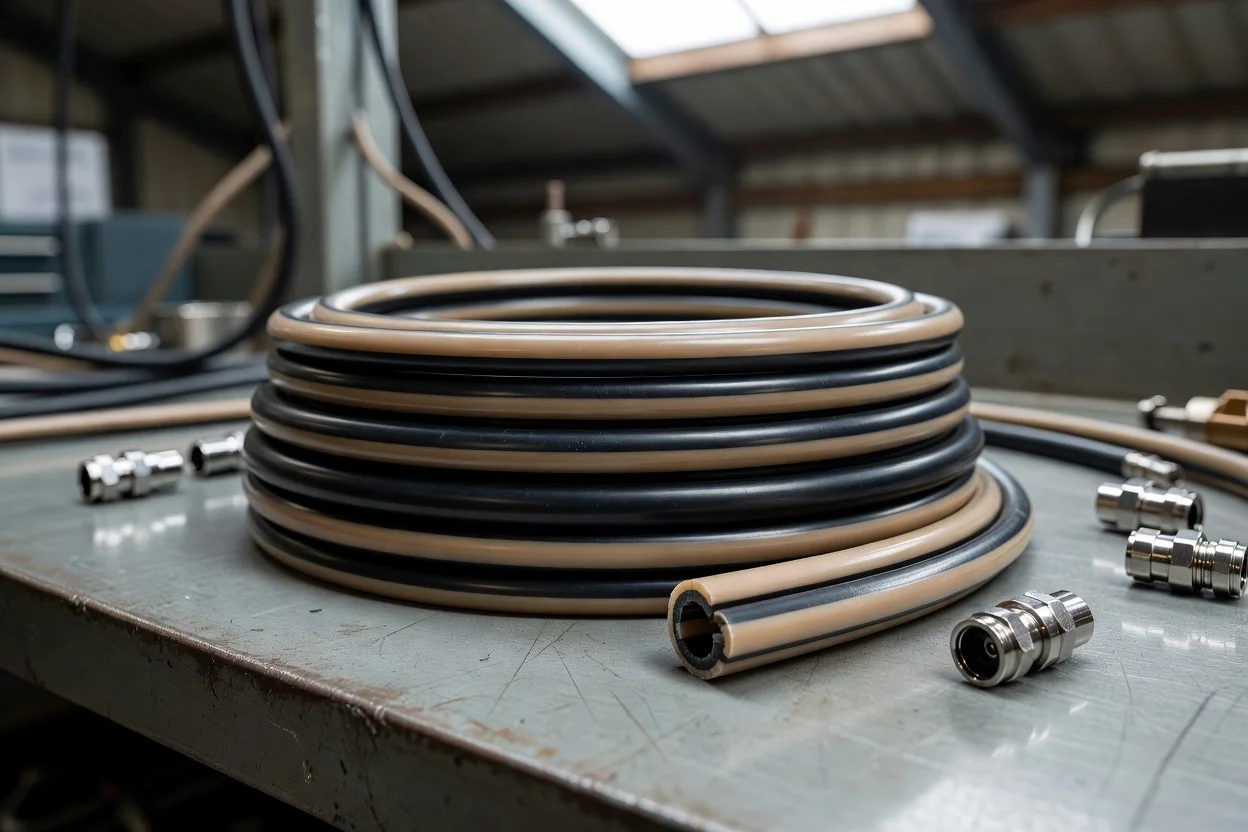
| Automotive fuel lines and tubing | PA 11, PA 10.10, PA 6.10 | Extrusion, sometimes multilayer tubing | Chemical resistance, flexibility, fatigue resistance |
| Electrical cable jacketing and connectors | PA 11, PA 10.10, reinforced bio-PA compounds | Extrusion, injection molding | Heat resistance, toughness, electrical insulation |
| Textile fibers and yarns | PA 5.6, PA 11, PA 6.19 blends | Melt spinning | Strength, dyeability, hand feel, sustainability positioning |
| Industrial hoses and pneumatic lines | PA 11 and long-chain bio-PAs | Extrusion | Low water uptake, hydrolysis resistance, durability |
| Consumer and sporting goods | Bio-PA compounds | Injection molding | Impact strength, surface quality, design flexibility |
| Powder coatings | PA 11 powders | Powder application and sintering | Tough protective coatings for metals |
| 3D printing | PA 11 powders and filaments | Selective laser sintering, filament extrusion | Low warpage, toughness, fatigue resistance |
A poor-fit use is high-barrier monolayer packaging film, because polyamides are not inherently the best standalone oxygen/grease barrier solution and often require multilayer design or coatings to achieve top packaging performance. By contrast, technical films, flexible packaging layers, and barrier laminates can make good use of bio-PA when its toughness and thermal stability are combined with complementary polymers.
Textiles remain a major market because polyamide fibers benefit from abrasion resistance, elasticity, dyeability, and long service life. Automotive and mobility applications are also important because bio-PA can serve in fuel lines, airbrake tubing, under-the-hood components, connectors, and cable ties where performance and heat resistance matter.
Bio-PA is also increasingly visible in specialty applications such as medical tubing, catheters, wear-resistant parts, gears, bearings, and electronic housings. For these uses, the main value proposition is often not only sustainability, but also a favorable combination of toughness, chemical resistance, dimensional stability, and low-temperature impact performance.
Environmental and Sustainability Aspects
Bio-PA is generally positioned as a lower-fossil-carbon alternative rather than a biodegradable plastic. Its sustainability profile depends heavily on the feedstock, process energy, transport distance, and whether the material is used in durable, long-life applications.
Key sustainability dimensions include:
- Renewable carbon content from castor oil, plant oils, or sugars can reduce dependence on fossil feedstocks.
- Lower lifecycle emissions are reported in some bio-PA systems, especially when renewable feedstocks and efficient processing are used.
- Recyclability is generally compatible with conventional polyamide recovery streams, although actual circularity depends on product design and sorting infrastructure.
- Durability can be a sustainability advantage because long service life lowers replacement frequency in vehicles, equipment, and industrial systems.
The environmental case is not uniform. Castor-based production avoids direct competition with food-grade starch in some pathways, but agricultural sourcing still carries land-use, farming-input, and supply-chain considerations. For that reason, the strongest sustainability claims typically come from life-cycle assessments rather than feedstock origin alone.
Bio-PA also has a role in design for recycling. Because it is chemically close to conventional PA, it can often be treated as part of the broader polyamide material family in sorting and reprocessing systems, although additives, fibers, and laminates can complicate recovery.
Economic and Global Market Impact
According to recent industry analyses, demand for bio-based polyamides is being driven by automotive lightweighting, technical textiles, electric mobility, consumer sustainability targets, and regulatory pressure to reduce fossil carbon intensity. The market remains smaller than that of commodity nylons, but it has a disproportionately high influence in premium segments where performance and sustainability can justify a price premium.
Global commercial leadership is shaped by a few specialized producers and compounders:
- Arkema is a leading name in PA 11 and renewable high-performance polyamide systems.
- Evonik has been active in bio-based PA 6.10 and PA 10.10 product lines and related sustainable formulations.
- Nurel offers bio-based nylon solutions derived from renewable raw materials and markets high-renewable-content engineering grades.
- Solvay has been associated with bio-based polyamide fiber developments such as PA 5.6 for textiles.
- Cathay Biotech has contributed bio-based polyamide commercialization, including fibers and specialty applications.
- UBE has introduced bio-based copolyamides for sustainable-performance applications.
Price competitiveness remains a central issue. Bio-PA often costs more than mainstream PA 6 or PA 66 because renewable monomers can be more specialized, capacity is more limited, and supply chains are less commoditized. That premium is partly offset by lower carbon footprint, brand value, and performance advantages in moisture-sensitive or chemically demanding applications.
Current Challenges and Innovations
The main technical challenge is to extend bio-content without sacrificing the cost-performance balance that made nylon successful in the first place. In many applications, the challenge is not whether a bio-based polyamide can be made, but whether it can be supplied at scale with stable quality and competitive economics.
Current innovation themes include:
- Higher-bio-content monomers from fermentation, plant oils, and lignocellulosic chemistry.
- Copolymer design to tune melting point, crystallinity, flexibility, and moisture behavior.
- Fiber and filler reinforcement to raise stiffness and heat performance in structural parts.
- Low-carbon compounding with natural fillers and renewable additives.
- Advanced bio-based aromatic or semi-aromatic polyamides for specialty thermal and barrier functions.
- Powder and additive manufacturing grades for industrial coatings and 3D printing.
A particularly active area is the development of bio-based polyamides with more favorable water-uptake profiles, since moisture strongly affects nylon dimensions and mechanical response. Another innovation path is the creation of odd-carbon or structurally tuned monomers that change crystallization behavior and enable new combinations of flexibility and heat resistance.
Future Outlook
Bio-PA is likely to remain a premium engineering material rather than a commodity resin, but its strategic importance is expected to rise as industries pursue lower-carbon materials without abandoning nylon’s performance advantages. The most promising growth areas are likely to be technical textiles, electrified mobility, fluid-handling systems, connectors, industrial coatings, and high-value consumer products.
The next phase of development will probably be defined by three linked goals:
- More renewable carbon
- Lower lifecycle emissions
- Greater circularity through recycling and durable design
Long-chain bio-PAs such as PA 11 will likely remain benchmarks for moisture resistance and low-temperature toughness, while newer bio-based copolyamides and partially bio-based PA 6/PA 66 platforms may expand bio-PA into larger volume engineering markets. If feedstock diversification, monomer innovation, and scalable compounding continue to improve, bio-PA could become one of the most important examples of how renewable chemistry can enter high-performance plastics without compromising industrial utility.
Summary
Biobased polyamide is a renewable-derived nylon family that preserves the core strengths of polyamides while reducing dependence on fossil feedstocks. Its value lies in the combination of engineering performance, process compatibility, and sustainability potential, with established use in automotive, textiles, electrical, tubing, coatings, and specialty industrial products.
Its limitations are equally important: moisture sensitivity in some grades, the need for multilayer or surface treatment in barrier-sensitive uses, and higher cost than commodity nylon. Even so, bio-PA remains one of the most commercially credible routes toward lower-carbon high-performance plastics, especially where durability and recyclability matter as much as bio-content.
References
- •
Microsoft Word - 761-774 gc160016 黄正强. (n.d.). https://cjb.ijournals.cn/cjben/article/pdf/gc16060761Link
- •
Bio-polyamides part 4: Application of bio-polyamides in different.... (2023, August 8). https://www.findoutaboutplastics.com/2023/08/bio-polyamides-part-4-application-of.htmlLink
- •
Bio-based polyamide technology landscape 2026. (2026, April 23). PatSnap. https://www.patsnap.com/resources/blog/articles/bio-based-polyamide-technology-landscape-2026/Link
- •
Biobased polyamide: The future of sustainable engineering.... (2025, November 21). EuroPlas. https://europlas.com.vn/en-US/blog-1/biobased-polyamide-future-of-sustainable-engineering-plasticsLink
- •
Bio-based polyamides: A commercial demonstration of.... (2022, May 27). Crimson Publishers. https://crimsonpublishers.com/psprj/fulltext/PSPRJ.000570.phpLink
- •
Bio-PA (Polyamid). (2024, July 1). Biopolymer Wiki. https://biopolymerwiki.hof-university.de/wiki/bio-pa-polyamid/Link
- •
Biobased polyamides: A journey from the biomass towards.... (2025, September 25). PMC. https://pmc.ncbi.nlm.nih.gov/articles/PMC12526697/Link
- •
The bio-based polyamide road to sustainability. (n.d.). UL Prospector. https://www.ulprospector.com/knowledge/media/2023/02/webinar15march2023crepaldispiniv5-1.pdfLink
- •
Bio-based polyamides. (2020, November 23). In Industrial applications of biopolymers and.... Taylor & Francis. https://www.taylorfrancis.com/chapters/edit/10.1201/9781315154190-3/bio-based-polyamides-feldmannLink
- •
Bio-based polyamides: A commercial demonstration of synthetic.... (n.d.). Crimson Publishers. https://crimsonpublishers.com/psprj/pdf/PSPRJ.000570.pdfLink
- •
BIOBASED PA. (n.d.). Natureplast. https://natureplast.eu/en/matiere/biobased-pa-2/Link
- •
11 Bio-based polyamide. (n.d.). De Gruyter. https://www.degruyter.com/document/doi/10.1515/9781501521942-011/htmlLink
- •
Biobased polyamides: Monomer sources, preparation, functional modifications, and applications. (2025, May 25). PubMed. https://pubmed.ncbi.nlm.nih.gov/40415173/Link
- •
Biobased polyamides: Bridging sustainability and.... (2024, January 3). Bio-Sourced. https://www.bio-sourced.com/biobased-polyamides/Link
- •
Profiles from bio polyamide (PA). (n.d.). Technoform. https://www.technoform.com/en/material/bio-polyamide-paLink
- •
Biobased polyamides: Recent advances in basic and.... (n.d.). Sci-Hub. https://2024.sci-hub.st/5833/f06e3564f04ea4909dca9c48d24270ff/winnacker2016.pdfLink
- •
Bio-PA is a bio-based PA derived from castor oil. (2023, January 9). Circular Material Library. https://circularmateriallibrary.org/material/bio-pa/Link
- •
Facts and statistics. (n.d.). IfBB. https://www.ifbb-hannover.de/files/IfBB/downloads/faltblaetter_broschueren/f+s/IfBB-Biopolymers-FactsAndStatistics-2024.pdfLink
- •
Modern biopolyamide-based materials: Synthesis and modification. (n.d.). Springer. https://link.springer.com/article/10.1007/s00289-019-02718-xLink
- •
Biobased polyamides: Academic and industrial aspects for their development and applications. (n.d.). Springer. https://link.springer.com/chapter/10.1007/12_2021_112Link
- •
Synthesis and characterization of bio-based amorphous polyamide from dimethyl furan-2,5-dicarboxylate. (n.d.). Sci-Hub. https://sci-hub.se/downloads/2021-09-01/c1/mao2021.pdfLink
- •
Bio-based polyamides – Part 2: Short and long chain aliphatic.... (2021, October 11). https://www.findoutaboutplastics.com/2021/10/bio-based-polyamides-part-2-short-and.htmlLink
- •
Biobased nylon. (2026, July 28). NUREL. https://nurel.com/en/fibers-division/products/sustainable/biobased-nylon/Link
- •
Comparative study on physical properties of bio-based.... (2024, January 3). De Gruyter Brill. https://www.degruyterbrill.com/document/doi/10.1515/aut-2023-0032/html?lang=enLink
- •
Industrial bio-based polyamide fibers in the real world. (2025, October 8). LinkedIn. https://www.linkedin.com/pulse/industrial-bio-based-polyamide-fibers-real-world-5-uses-youll-1sazeLink
- •
Toughening of bio‐based PA 6.19 by copolymerization with PA 6.6 – Synthesis and production of melt‐spun monofilaments and knitted fabrics. (n.d.). Wiley. https://onlinelibrary.wiley.com/doi/abs/10.1002/marc.202300256Link
- •
Biobased PAs. (2025, April 9). Natureplast. https://natureplast.eu/en/lexique/biobased-pa/Link
- •
Nymax™ BIO bio-based polyamide solutions. (2025, February 25). Avient. https://www.avient.com/products/engineered-polymer-formulations/sustainable-formulations/nymax-bio-bio-based-polyamide-solutionsLink
- •
Biobased and biocircular. (2025, May 15). NUREL. https://nurel.com/en/polymers-division/solutions/biobased-biocircular/Link
- •
Vestamid Terra bio-based polyamide (bio-PA), nylon. (2024, June 26). Spot Material. https://spotmaterial.com/article/vestamid-terra-bio-based-polyamide-bio-pa-nylon-from-evonik/Link
- •
Green matter: Evonik launches rayon-reinforced biobased PA. (2023, November 10). PlasticsToday. https://www.plasticstoday.com/plastics-processing/green-matter-evonik-launches-rayon-reinforced-biobased-paLink
- •
Current advancements in the bio-based production of.... (2023, December 2). ScienceDirect. https://www.sciencedirect.com/science/article/abs/pii/S2589597423002277Link
- •
Biopolymer blends from hardwood lignin and bio-polyamides: Compatibility and miscibility. (2019, July 1). PubMed. https://pubmed.ncbi.nlm.nih.gov/30926507/Link
- •
Biobased and biocircular polyamide. (2026, July 31). NUREL. https://nurel.com/en/polymers-division/solutions/sustainability/biobased-biocircular/Link
- •
The IIC AG glossary | All terms from A to Z. (2020, August 20). https://www.iic-ag.com/glossary/Link
- •
Synthesis of odd-odd bio-based polyamide 5,9 as a path to.... (2025, September 8). Iowa State University. https://dr.lib.iastate.edu/handle/20.500.12876/8zn7035wLink
- •
LETZero encyclopedia: Bio-PA. (n.d.). LG Chem. https://blog.lgchem.com/en/2024/02/14_letzero_biopa/Link
- •
High performance bio-based renewable solutions. (n.d.). Arkema. https://hpp.arkema.com/en/product-families/rilsan-polyamide-11-resins/bio-based-renewable-solutions/Link
- •
Poliammidi a base biologica. (2025, December 28). Tamin Kala Tak. https://it.taminkalatak.com/product/bio-pa-biobased-polyamide/Link
- •
Powder coating, PA, bio-PA, polyamide. (2025, August 7). Spot Material. https://spotmaterial.com/material/polyamide-pa/powder-coating-pa-bio-pa-polyamide/Link
- •
Performance and biobased polyamide/functionalized.... (n.d.). https://d-nb.info/1237137632/34Link
- •
Performance polyamides built on a sustainable carbohydrate core. (2024, March 13). Nature. https://www.nature.com/articles/s41893-024-01298-7Link
- •
Bio-based polyamide ED34 for sustainable applications. (2026, January 21). UBE. https://ube.es/bio-based-polyamide-ed34-sustainable-performance-without-compromise/Link
- •
Nylon 11, PA11, bio-PA, resin. (2025, August 7). Spot Material. https://spotmaterial.com/material/polyamide-pa/nylon-11-pa11-bio-pa-resin/Link
- •
What is bio-based polyamide: PA11 vs PA12 properties and typical.... (2025, August 20). Eureka PatSnap. https://eureka.patsnap.com/report-what-is-bio-based-polyamide-pa11-vs-pa12-properties-and-typical-usesLink
- •
Castor oil based nylon 11: Comprehensive analysis of bio.... (n.d.). Eureka PatSnap. https://eureka.patsnap.com/materials/castor-oil-nylon-11Link
- •
Polyamide (nylon): How to select the right grade? (2025, July 7). SpecialChem. https://www.specialchem.com/plastics/guide/polyamide-pa-nylonLink
- •
Bio based materials and polyamide: Innovation and.... (2026, May 4). Fulgar. https://www.fulgar.com/en/feature/305/bio-based-materials-and-polyamide-innovation-and-sustainability-in-textilesLink
- •
Polyamide (PA): Structure, properties, and 3D printing applications. (2025, April 7). Sculpteo. https://www.sculpteo.com/en/3d-learning-hub/3d-printing-materials-guide/polyamide-pa-structure-properties-and-3d-printing-applications/Link
- •
Bio-polyamides based on renewable raw materials: Glass transition and crystallinity studies. (n.d.). Springer. https://link.springer.com/article/10.1007/s10973-015-4929-xLink
- •
Bio-based polyamide market size, share, industry, forecast and.... (2024, January 30). DataM Intelligence. https://www.datamintelligence.com/research-report/bio-based-polyamide-marketLink