
Introduction
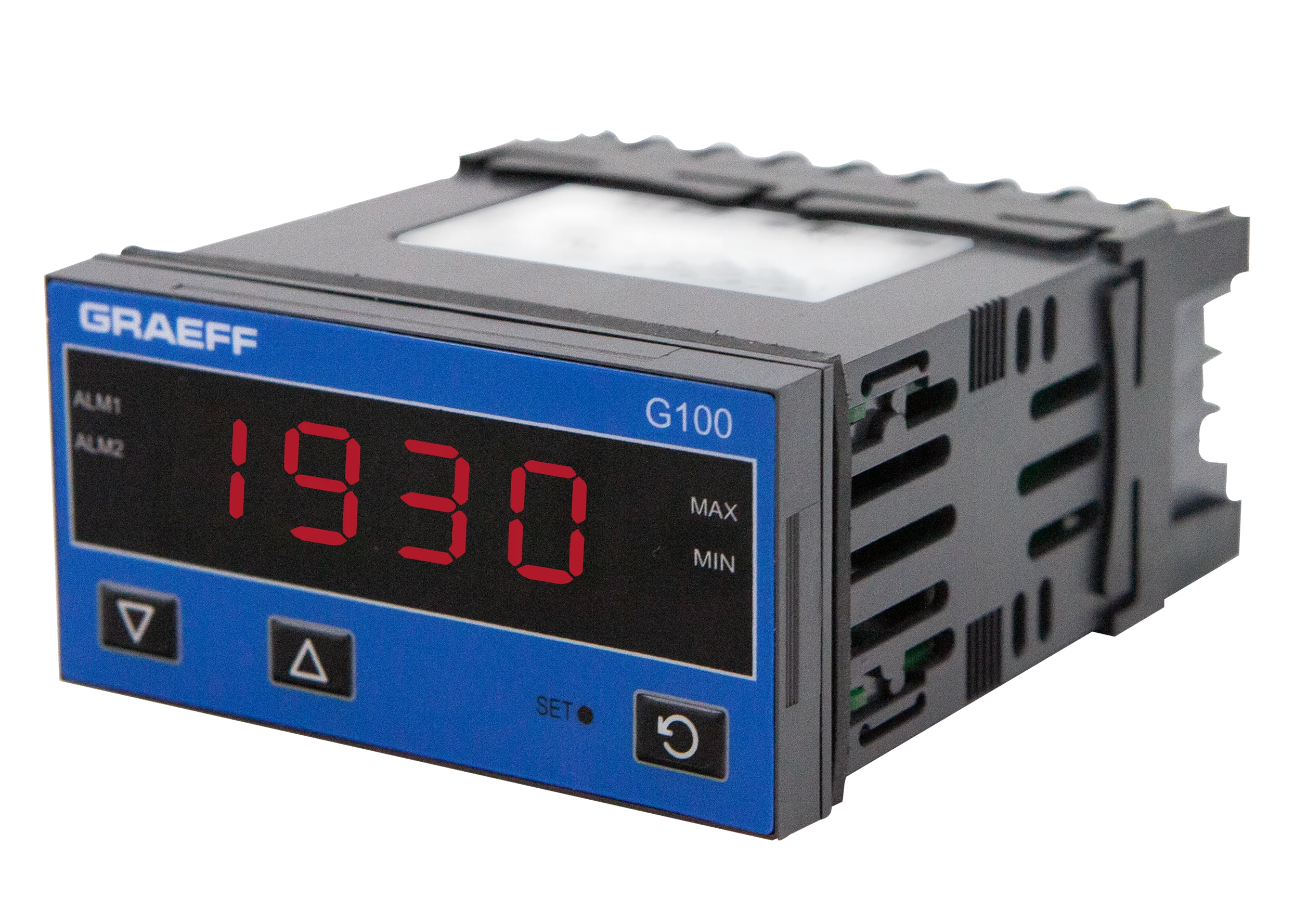
Closed loop control equipment for pressure is a class of sensing, control, and actuation hardware that automatically maintains a target pressure by continuously comparing measured pressure with a setpoint and correcting any deviation. In plastics processing, it is used to stabilize pneumatic, hydraulic, gas, and fluid-pressure conditions in equipment such as extrusion lines, injection molding auxiliaries, gas-blanketing systems, and process vessels, where pressure stability directly affects product quality, throughput, and energy efficiency.
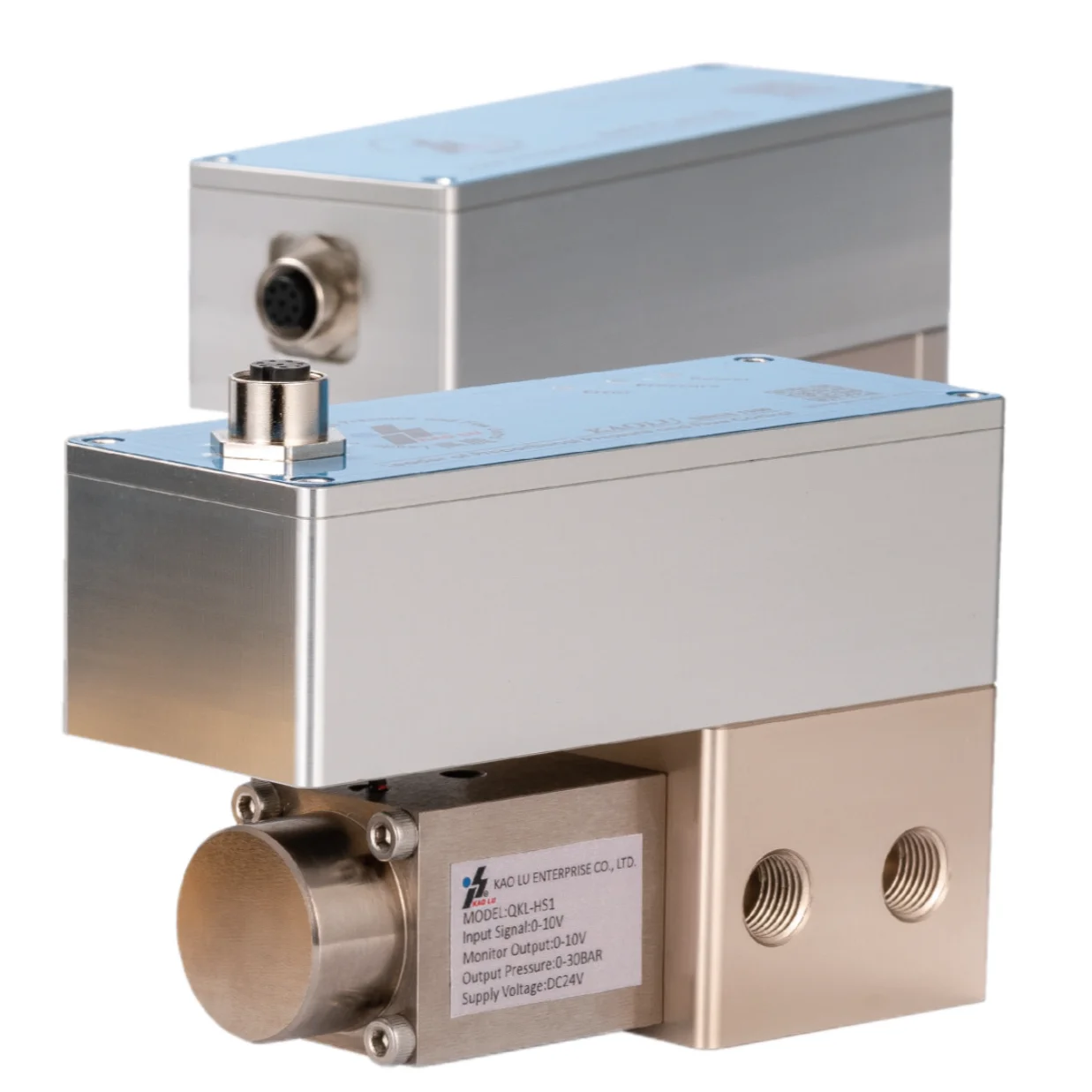
At its core, a closed-loop pressure system combines a pressure sensor or transmitter, a controller or embedded electronics, and a proportional valve, regulator, or pump drive that changes the process until the measured pressure matches the desired value. The technology has evolved from basic electro-pneumatic regulators into highly integrated servo systems with internal sensors, digital communication, and cascade or multi-sensor control for better disturbance rejection and repeatability. In plastics manufacturing, these systems are increasingly valued for reducing scrap, improving melt consistency, controlling gas blanketing and transfer operations, and supporting automation and data-driven process management.
History and Development
Closed-loop pressure control emerged from general control-engineering principles developed for industrial process regulation, then became practical in manufacturing as reliable pressure transducers, electronic controllers, and proportional valves matured. In industrial automation, the transition from manual regulators to feedback-based systems enabled tighter regulation of air, gas, and hydraulic pressure in applications where load changes and leakage would otherwise disturb the process.
Key milestones include:
- The introduction of electronic proportional pressure regulators that combined integrated electronics with valve actuation and internal feedback sensing, allowing true automatic pressure regulation rather than simple restriction-based control.
- The development of closed-loop servo pressure controllers that use inlet and exhaust solenoid valves, internal pressure measurement, and PID-type algorithms to improve response time and accuracy.
- The spread of PLC- and drive-based pressure loops, in which pumps or compressors are speed-controlled from pressure feedback, making pressure control more energy-efficient in variable-demand systems.
In plastics plants, these developments paralleled broader automation trends: the rise of programmable logic controllers, analog instrumentation, and later digital networking made pressure control easier to integrate with extrusion, molding, tank blanketing, and utility systems.
Technical Overview
A closed-loop pressure system works by measuring the actual pressure and comparing it with a setpoint. The controller then changes the actuator output until the error is minimized. The loop typically includes:
- a pressure transducer or sensor,
- a controller or embedded electronics with proportional, integral, and sometimes derivative logic,
- a final control element such as a proportional valve, regulator, or variable-speed pump,
- and the controlled system, which may be a line, vessel, manifold, extruder, or hydraulic circuit.
In pneumatic and gas regulation, the actuator often modulates inlet and exhaust paths through a proportional valve pair or pilot stage, allowing continuous pressure adjustment rather than simple on/off switching. In pump-based systems, a drive adjusts motor speed so the pump delivers only the pressure and flow required by the process.
Typical performance and engineering ranges include:
- Pressure range: vacuum to low-pressure gas service up to high-pressure process and test systems; some commercial controllers cover full vacuum to 175 psi, while others extend into the thousands of psi for high-pressure liquids and gases.
- Feedback architecture: single-sensor internal feedback, external-feedback, or cascade/multi-sensor control for improved accuracy and hysteresis correction.
- Response: milliseconds in fast industrial pressure loops, especially where the valve and sensor are closely coupled.
- Control accuracy: systems designed for tight setpoint maintenance can hold small pressure bands when properly tuned and calibrated, particularly in regulated pneumatic or gas manifolds.
- Controller logic: commonly PI or PID-based, with tuning adjusted for compressibility, line volume, leakage, and actuator dynamics.
For plastics processing, pressure-loop design must account for the compressibility of gases, the pulsation of pumps, the viscosity of melts, and the effect of temperature on seals and sensors. Pressure instability in these systems can produce dimensional variation, inconsistent die output, unstable gas blanketing, or uneven hydraulic actuation.
Types and Variations
| Type | Main control element | Typical use | Main advantage |
|---|---|---|---|
| Electronic pressure regulator | Internal valve and sensor | Clean pneumatic and gas pressure control | Compact, fast, easy integration |
| Proportional pressure regulator | Proportional solenoid or pilot stage | General industrial pressure control | Smooth modulation and repeatability |
| Servo pressure controller | High-response valve with feedback | Demanding process or test applications | High precision and disturbance rejection |
| Drive-controlled pump loop | Variable-speed motor drive | Water, hydraulic, and utility pressure systems | Energy savings under variable demand |
| Cascade pressure control | Primary controller plus secondary loop | Disturbance-heavy or highly sensitive systems | Better stability and settling performance |
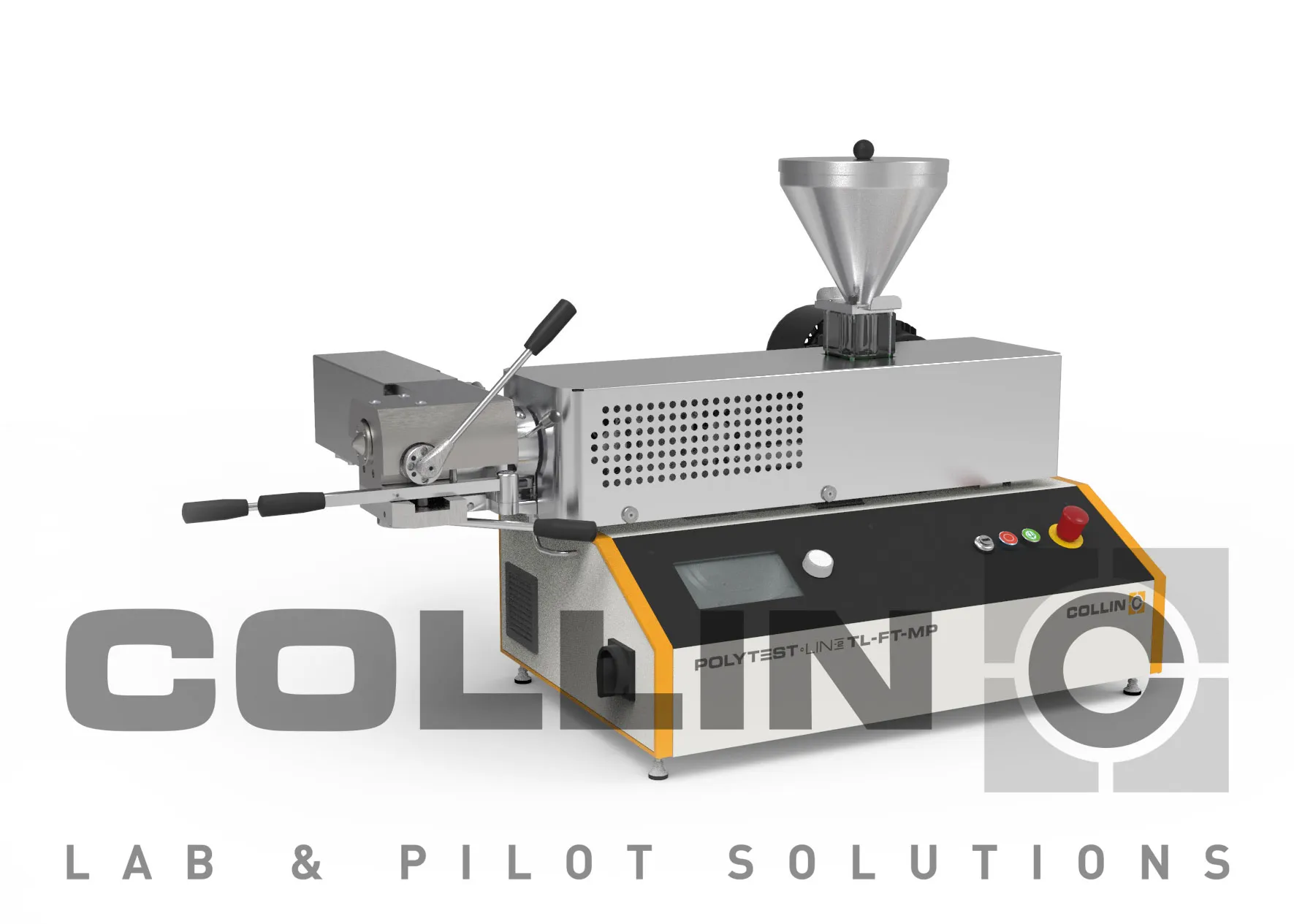
Within plastics machinery and plant engineering, the most relevant variants are proportional gas regulators for inerting and blanketing, hydraulic pressure loops for presses and actuators, and drive-based pressure loops for utility and feed systems.
Applications and Uses
Closed-loop pressure control is used wherever stable pressure affects material handling, process quality, or safety.
- Extrusion and melt delivery: Closed-loop pressure feedback can regulate screw speed or gear-pump inlet pressure to reduce surging and stabilize die pressure, which improves gauge consistency and output uniformity.
- Injection molding auxiliaries: Pressure loops support hydraulic clamping, melt transfer, and auxiliary pneumatic functions where repeatable force and timing matter.
- Gas blanketing and inertization: Pressure regulators maintain controlled nitrogen or argon pressure in tanks, reactors, and process vessels used around resin handling, compounding, or chemical additives.
- Material transfer and filling: Pressure control helps move powders, pellets, liquids, or additives between vessels without over-pressurizing the system.
- Compressed-air systems: In plant-wide utilities, closed-loop control keeps header pressure stable and can reduce energy consumption compared with throttling or fixed-speed operation.
- Hydraulic actuation: Closed-loop hydraulic circuits are used where force, position, or pressure must be tightly controlled in presses, clamps, and high-load machinery.
A poor-fit application is highly contaminated, abrasive, or crystallizing media in standard small-bore regulators, because fouling can degrade sensor performance and valve response; such duties usually require specialized separators, remote sensing, or heavy-duty valve designs.
Role in Plastics Processing Machinery
In plastics processing, pressure is often a proxy for process stability. Melt pressure in extrusion, air pressure in auxiliaries, and hydraulic pressure in clamping and actuation all influence cycle time, product consistency, and machine loading.
Common machine-level uses include:
- Extrusion lines: pressure feedback stabilizes die pressure and reduces output ripple caused by surging, which is important for sheet, pipe, film, and profile quality.
- Compounding and feeding systems: controlled gas and air pressure support conveying, venting, and blanketing in upstream handling equipment.
- Thermoforming and blow molding auxiliaries: pneumatic pressure loops help maintain forming air, pre-blow, and transfer conditions with repeatability.
- Hydraulic presses and injection units: closed-loop pressure control improves force consistency and can reduce overshoot in clamp and injection phases.
These uses illustrate a broader engineering principle: pressure control is rarely isolated. It interacts with temperature, flow, material rheology, sensor placement, and machine dynamics, so successful implementation depends on loop tuning and system design rather than on the regulator alone.
Technological Innovations and Automation
Modern closed-loop pressure equipment increasingly incorporates:
- Digital setpoint input and remote communication, reducing dependence on manual adjustment.
- Integrated internal sensors for compact, self-contained regulation.
- Cascade and multi-sensor control, which can compensate for hysteresis, line losses, and leakage more effectively than single-loop control.
- PLC and SCADA integration, enabling logging, alarm management, and plant-wide coordination.
- Drive-based control, where pressure becomes one variable in a broader energy-management strategy for pumps and compressors.
In plastics operations, this automation supports higher repeatability, faster changeovers, and better traceability. It also makes pressure loops easier to coordinate with downstream quality systems, such as melt-pressure monitoring in extrusion or vessel-pressure supervision in material handling.
Environmental and Sustainability Aspects
Closed-loop pressure control can improve sustainability in several ways:
- Energy reduction: variable-speed pressure control often uses less energy than throttling, bypassing, or operating fixed-speed pumps against constant pressure.
- Waste reduction: tighter pressure stability can reduce scrap from inconsistent extrusion, unstable filling, or poor transfer conditions.
- Leakage control: in distribution and utility networks, pressure optimization can reduce leakage risk by smoothing pressure fluctuations.
- Material efficiency: improved regulation can limit over-pressurization, over-filling, and unnecessary venting of gases or fluids.
The trade-off is added instrumentation, tuning effort, and maintenance complexity. Sensors drift, valves wear, and poorly tuned loops can oscillate or waste energy, so lifecycle performance depends on calibration and diagnostics as much as on hardware quality.
Economic and Global Market Impact
Demand for closed-loop pressure equipment is supported by broader automation in plastics and process industries, especially where product quality, utility cost, and compliance pressure are increasing. The market spans low-pressure pneumatic regulators, high-pressure gas controllers, hydraulic systems, and embedded pressure-control packages for OEM machinery.
Economically, the main value drivers are:
- lower scrap and rework,
- improved throughput stability,
- reduced utility consumption,
- fewer manual interventions,
- and better integration with digital manufacturing systems.
Suppliers with visible roles in the segment include Proportion-Air in compact electronic pressure control, Festo in proportional and pneumatic pressure regulation, Emerson/Tescom in high-pressure gas control, and related automation suppliers offering PLC, drive, and valve integration.
Current Challenges and Innovations
Current engineering challenges include:
- Hysteresis and deadband in valves and regulators, especially when high precision is required.
- Sensor drift and calibration burden, which can undermine long-term stability.
- Disturbance sensitivity from leakage, supply variation, pulsation, and temperature changes.
- Integration complexity when pressure loops must coordinate with motion, flow, or thermal control.
Recent innovation trends address these issues through:
- higher-resolution digital sensors,
- faster embedded controllers,
- better diagnostic feedback,
- and hybrid architectures that combine local pressure regulation with supervisory PLC or drive logic.
Future Outlook
Future closed-loop pressure equipment for plastics processing is likely to become more networked, more diagnostic-rich, and more tightly linked to overall machine efficiency. The most probable directions are:
- smarter self-tuning loops for faster commissioning,
- condition monitoring to detect leakage, drift, and valve wear,
- greater use of digital communication for traceability and remote optimization,
- broader energy optimization through pressure-and-flow co-control,
- and closer integration with Industry 4.0 systems for predictive maintenance and adaptive production.
In plastics machinery, that evolution should favor systems that can maintain pressure more precisely while using less energy, reducing scrap, and improving repeatability across variable materials and operating conditions.
Summary
Closed loop control equipment for pressure is an essential automation layer in plastics processing and related industrial systems. By combining pressure sensing, feedback control, and proportional actuation, it stabilizes extruders, pneumatic manifolds, gas-blanketing systems, hydraulic circuits, and utility networks, with benefits in quality, energy use, and process reliability.
References
- •
The closed-loop control strategy for precise low pressure [PDF]. (n.d.). NADIA. http://article.nadiapub.com/IJCA/vol9_no11/35.pdfLink
- •
MM closed-loop pressure regulator. (2026, February 17). Proportion-Air. https://proportionair.com/product/mm/Link
- •
Closed-loop pharmacologic control of blood pressure. (2023, September 13). PMC - NIH. https://pmc.ncbi.nlm.nih.gov/articles/PMC10576018/Link
- •
Proportional pressure regulators VPPX [PDF]. (n.d.). Festo. https://ftp.festo.com/public/PNEUMATIC/SOFTWARE_SERVICE/Documentation/2016/EN/VPPX_EN.PDFLink
- •
Pressure control [PDF]. (2026, March 15). Scribd. https://www.scribd.com/document/978716797/Pressure-ControlLink
- •
Advanced pressure control [PDF]. (n.d.). Emerson. https://www.emerson.com/documents/automation/article-advanced-pressure-control-micro-motion-en-63374.pdfLink
- •
FESTO. (2025, August 27). Scribd. https://www.scribd.com/document/799222503/FESTOLink
- •
Using closed loop control. (n.d.). Invertek Drives. https://www.invertekdrives.com/support/iknow/energy-saving/using-closed-loop-control-28Link
- •
Closed loop electronic pressure controller. (n.d.). MS Jacobs. https://blog.msjacobs.com/2018/03/closed-loop-electronic-pressure.htmlLink
- •
Proportional pressure regulators VPPX [PDF]. (n.d.). Festo. https://ftp.festo.com/public/pneumatic/SOFTWARE_SERVICE/Documentation/2015/EN/VPPX_EN.PDFLink
- •
Proportional valves for closed-loop control of inert gases in process automation [PDF]. (n.d.). Festo. https://www.festo.com/media/cms/media/editorial/downloads/proportional_valves_for_closed_loop_control_en.pdfLink
- •
ER5000 series [PDF]. (2024). Emerson Automation Solutions - Tescom. https://pdf.directindustry.com/pdf/emerson-automation-solutions-tescom/er5000-series/11757-769131.htmlLink
- •
Closed-loop pressure control system for industrial applications. (2025, April 10). LinkedIn. https://www.linkedin.com/posts/sahilshevade_presenting-pid-of-a-closed-loop-pressure-activity-7316179415715987456-tZjVLink
- •
BOP control system components & recommendations. (2021, December 20). Drilling Manual. https://www.drillingmanual.com/bop-control-system/Link
- •
Proportional pressure regulators VPPM [PDF]. (n.d.). Festo. https://ftp.festo.com/Public/PNEUMATIC/SOFTWARE_SERVICE/Documentation/2013/EN/VPPM-G_EN.PDFLink
- •
PLC pressure control: Analog I/O and electronic regulator setup. (2026, May 1). Industrial Monitor Direct. https://industrialmonitordirect.com/blogs/knowledgebase/plc-pressure-control-analog-io-and-electronic-regulator-setupLink
- •
Closed loop control with variable frequency drives. (n.d.). Invertek Drives. https://www.invertekdrives.com/support/iknow/commissioning-and-troubleshooting/closed-loop-control-with-variable-frequency-drives-9Link
- •
Alicat EPC - Single valve OEM electronic pressure controller. (2000). PCT Flow. https://www.pctflow.com/our-products/pressure/pressure-controllers/alicat-epc-oem-electronic-pressure-controller/Link
- •
Optidrive applications support library [PDF]. (n.d.). Hiflex. https://hiflex.nl/downloads/docu/inv_freq/Application_Note_Optidrive_E3_PI_Closed_%20Loop_Feedback_Control_Applications.pdfLink
- •
ProControl 1KE Plus closed loop fluid pressure / flow. (2024, February 2). Graco. https://www.graco.com/us/en/in-plant-manufacturing/product/25b295-procontrol-1ke-plus.htmlLink
- •
Closed loop pressure control for the extrusion process [PDF]. (n.d.). Dynisco. https://www.dynisco.com/userfiles/files/Datasheets/closed_loop_pressure_control_for_the_extrusion_process_1_.pdfLink
- •
Closed-loop feedback opens up possibilities. (2023, June 6). Pneumatic Tips. https://www.pneumatictips.com/closed-loop-feedback-opens-up-possibilities/Link
- •
Electro-pneumatic pressure regulators series from: Controlair, Inc. (2023, September 12). IEN. https://www.ien.com/new-products/controls/product/22872755/controlair-inc-electropneumatic-pressure-regulators-seriesLink
- •
Microsoft Word - 1. Suryadi et al. (n.d.). Journal UNJ. https://journal.unj.ac.id/unj/index.php/jkem/article/download/49932/19176/148589Link
- •
Direct vs cascade control for dome-loaded pressure. (2026, March 20). Pressure Control Solutions. https://www.pressurecontrolsolutions.com/closed-loop-control-strategies-direct-vs-cascade-strategies-for-dome-loaded-pressure-regulation/Link
- •
VP50 series proportional valves. (n.d.). Flowtech. https://punchout.flowtech.co.uk/category/section-6-pneumatic-vacuum-equipment/norgren-proportional-valves/valves-norgren/vp50-series-proportional-valvesLink
- •
Proportional-pressure regulators VPPM [PDF]. (n.d.). RS Components. https://docs.rs-online.com/c3d7/A700000008716688.pdfLink
- •
How does a pressure controller maintain system pressure? (2026, May 24). Pressure Control Solutions. https://www.pressurecontrolsolutions.com/blogs/how-does-a-pressure-controller-maintain-system-pressure/Link
- •
Pressure sensors: Enhancing closed loop system performance. (2022, May 23). AZO Sensors. https://www.azosensors.com/article.aspx?ArticleID=2583Link
- •
Proportional precision pressure regulator Regtronic series [PDF]. (n.d.). Metal Work. https://pdf.directindustry.com/pdf/metal-work/proportional-precision-pressure-regulator-regtronic-series/594-907129.htmlLink
- •
Basics of control hydraulics – Equipment set TP 511. (n.d.). Festo. https://www.festo.com/us/en/p/basics-of-control-hydraulics-equipment-set-id_PROD_DID_8028723Link
- •
Closed loop control. (n.d.). PSI Florida. https://www.psifla.com/hydraulics-solutions/positionpressureforce-closed-loop-control/Link
- •
Electronic pressure regulators. (2026, May 8). Marotta Controls. https://marotta.com/products/flow-controls/pressure-controls/electronic-pressure-regulator/Link
- •
What is a closed-loop control? (2026, July 27). C-P Systems. https://c-psystems.com/glossary-closed-loop-control/Link
- •
Proportion-Air, Inc.: McCordsville, IN 46055. (2015, February 6). Thomasnet. https://www.thomasnet.com/company/proportion-air-inc-957606/profileLink
- •
Development of a robust closed loop pressure control. (n.d.). ScienceDirect. https://www.sciencedirect.com/science/article/pii/S0924424725004029Link
- •
Closed-loop control systems for pumps used in portable analytical systems. (n.d.). ScienceDirect. https://www.sciencedirect.com/science/article/pii/S0021967323001577Link
- •
Open and closed loop pressure control for leakage reduction. (n.d.). ScienceDirect. https://www.sciencedirect.com/science/article/abs/pii/S1462075800000480Link
- •
Customize your GlobalSpec experience. (2024, December 3). GlobalSpec. https://www.globalspec.com/learnmore/manufacturing_process_equipment/process_controllers/pressure_controllersLink
- •
Benefits of a closed-loop hydraulic system. (2024, January 31). Domin. https://domin.com/blog/the-benefits-of-a-closed-circuit-displacement-control-system-for-improving-efficiencies/Link
- •
Closed loop vs. open loop process control. (2025, November 27). Graco. https://www.graco.com/us/en/in-plant-manufacturing/solutions/articles/closed-loop-vs-open-loop-process-control.htmlLink
- •
Process control fundamentals [PDF]. (n.d.). KSU Faculty. https://faculty.ksu.edu.sa/sites/default/files/process_control_fundamentals.pdfLink
- •
In a closed loop system with a pump, how can we control the pressure. (2023, January 2). Physics Forums. https://www.physicsforums.com/threads/in-a-closed-loop-system-with-a-pump-how-can-we-control-the-pressure.1048718/Link
- •
What is the difference between open and closed loop control systems? (2026, February 25). Aerotech. https://go.aerotech.com/in-motion/open-vs-closed-loop-control-systems-explainedLink