
Introduction
Extrusion lines for tapes are integrated processing systems that convert thermoplastic polymers into continuous flat or narrow strip-shaped products, then orient, cool, slit, and wind them into finished tapes or intermediate materials for further conversion. In the plastics-processing industry, the term most commonly refers to PP and HDPE flat-tape / raffia lines used for woven sacks, FIBCs, tarpaulins, ropes, twines, geotextiles, and synthetic grass, although related line concepts also exist for strapping tape, technical tapes, and specialty multilayer or reinforced products.
These lines are built around a tightly coordinated sequence of extrusion, quenching, film or slit-film formation, stretching, annealing, and winding, with modern systems emphasizing high output, stable tape width, low energy use, and precise orientation control. The category has evolved from relatively simple single-screw lines into more sophisticated plants featuring melt pumps, automatic screen changers, PLC-based control, multi-stage stretching, co-extrusion, and edge-trim recycling, reflecting the broader shift in plastics machinery toward automation and circularity.
History and Development
Early tape production lines were based on single-screw extrusion followed by mechanical stretching, with the main engineering objective being to produce a uniform film or slit tape that could be drawn into a strong, oriented product. Over time, the line architecture became more specialized for the requirements of woven-packaging grades, which demanded better gauge stability, higher line speed, and more reliable winding.
Several concrete development milestones shaped the segment:
- Standardized PP/HDPE raffia lines emerged as dedicated machinery for woven bags, tarpaulins, and related textile-like plastics, replacing more generic film handling setups in many plants.
- Higher-speed stretching systems were commercialized to improve productivity; modern industrial lines now commonly advertise operating speeds in the several-hundred-meter-per-minute range, with some systems reaching up to 450–600 m/min depending on material and product design.
- Co-extrusion and double-stage stretching broadened product performance, enabling composite or light/strong tape structures and better process stability for demanding applications.
In parallel, line builders increasingly integrated automatic filter-changing devices, digital controls, and waste re-feeding, reflecting industry pressure to reduce downtime, improve consistency, and lower operating costs.
Key Characteristics and Technical Overview
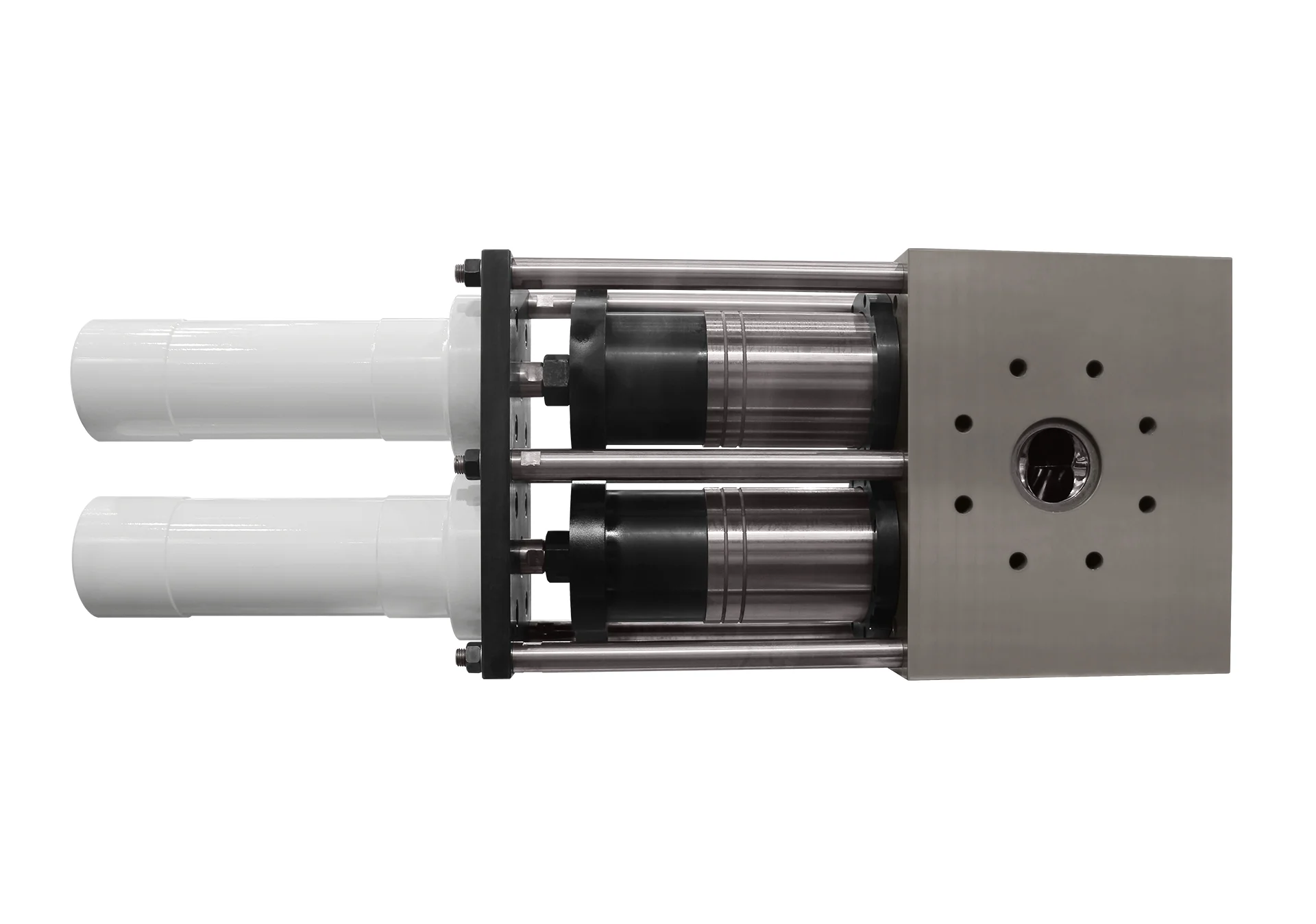
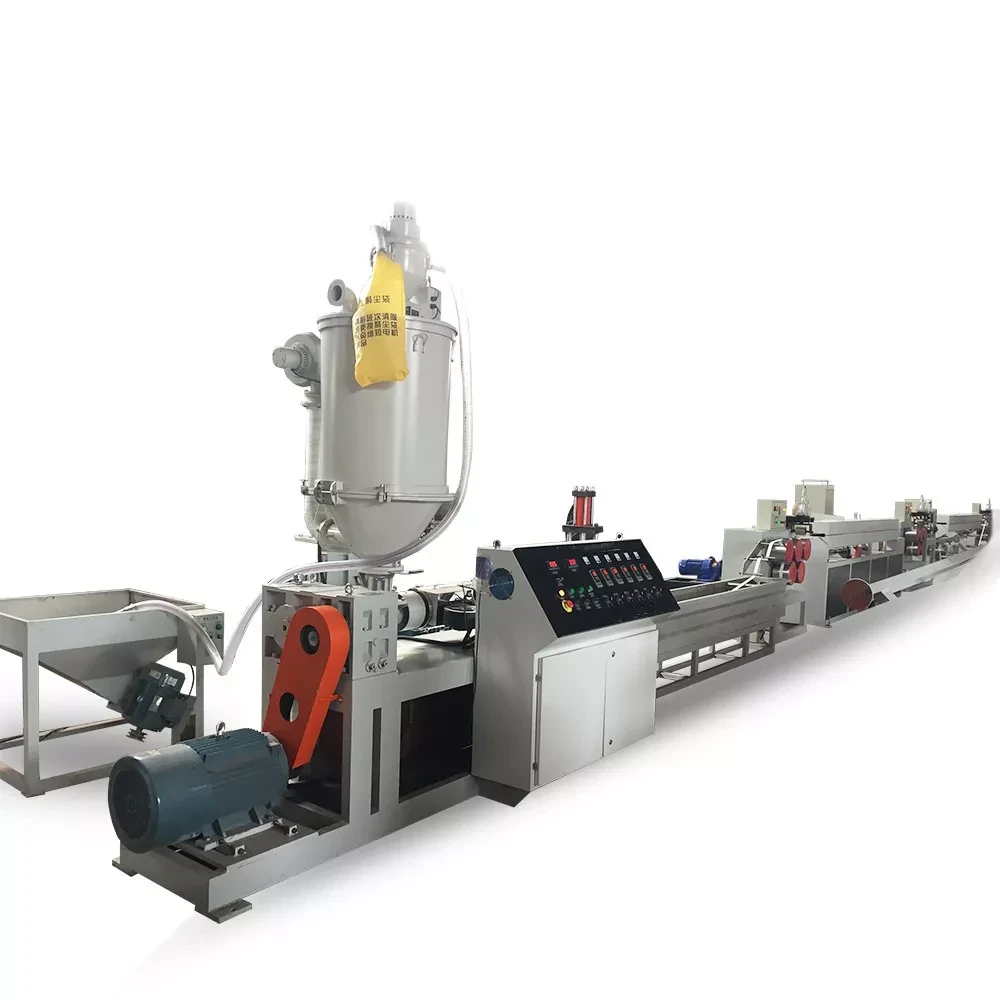
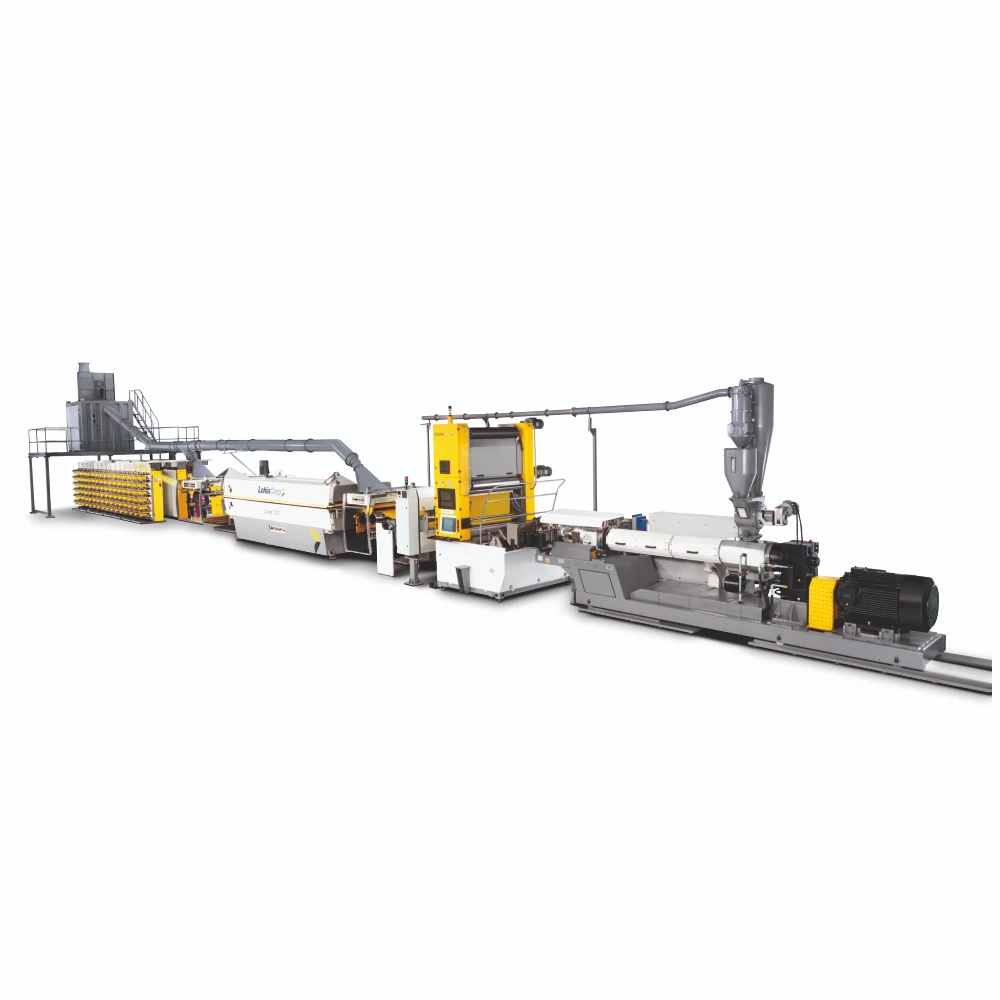
A tape extrusion line is typically composed of an extruder, melt filtration or screen changing system, T-die or slit-film forming unit, quench or cooling section, slitting or tape-splitting stage, draw/traction rolls, stretching and annealing ovens, and a winder or coiler. Some configurations also include edge-trim reclaim, fibrillation equipment, melt pumps, and special cross-winding packages.
Working principle
The polymer—most often PP or HDPE—is melted in the extruder, homogenized, and pushed through a die to form a thin film or narrow strip. After rapid cooling, the material is oriented by stretching, which aligns polymer chains and improves tensile properties, stiffness, and dimensional stability. The final tape is wound under controlled tension to avoid edge damage, telescoping, or thickness variation.
Typical technical benchmarks
Industrial product data show the following common ranges:
- Melt capacity: about 120–900 kg/h for PP tape lines, with some systems specifying 150–600 kg/h or up to 900 kg/h depending on line class.
- Working width: approximately 460–2200 mm, depending on tape count and final package format.
- Line speed: commonly 280–450 m/min, with high-end systems reaching 500–600 m/min in some configurations.
- Tape width: broadly from narrow packaging grades around 9.5–19 mm for strapping-type products to much wider slit-film arrangements used for raffia and woven-yarn applications.
- Stretch ratio: often several times the original length; some strap-oriented systems report around 10× oven stretching for high orientation and strength development.
- Specific energy use: detailed plant-specific figures vary widely, but modern lines emphasize reduced power consumption through optimized screw design, efficient heating, frequency control, and melt-pump stabilization.
Product quality parameters
Key quality targets include:
- Width uniformity and low gauge variation
- Stable orientation ratio
- Low shrinkage after heat setting
- Smooth edges and low fibrillation where not desired
- Consistent winding density and roll geometry
For some products, residual moisture after centrifugal dewatering is relevant when the line includes a washing or recycling stage upstream; in such systems, centrifugal dewatering typically reduces surface moisture to a low single-digit percentage before thermal drying, although exact values depend on the polymer, contamination level, and dryer design. In practice, this is more common in integrated recycling-fed lines than in virgin resin raffia plants.
Types and Variations
By product family
| Type | Main material | Typical use | Technical note |
|---|---|---|---|
| Raffia / flat-tape lines | PP, HDPE | Woven bags, tarpaulins, FIBCs, geotextiles | Designed for high throughput and strong biaxial or uniaxial orientation. |
| Strapping tape lines | PP, PET, sometimes specialty blends | Packaging straps, pallet securing | Emphasis on tensile strength, embossing, and controlled elongation. |
| Fibrillated tape lines | PP, HDPE | Rope, twine, netting, artificial grass | Film or tape is slit and partially split into fibrils for bulk and surface area. |
| Technical UD tape lines | PA, PE composites, reinforced systems | Carbon-fiber prepregs, technical laminates | Higher precision, often co-extruded or specialty-fed. |
By line architecture
- Single-layer lines, common for standard PP and HDPE tapes.
- Double-stage stretching lines, used to raise speed and improve process stability.
- Co-extrusion lines, which form multilayer composite tapes for performance tuning or material savings.
- Fibrillation-capable lines, designed to produce split tapes for twine, rope, and artificial grass.
By winding format
- Cross-wound packages
- Spools or bobbins
- Large industrial coils
- Integrated tilting-table discharge systems for downstream handling.
Applications and Uses
Tape extrusion lines serve a broad range of plastics-processing markets, especially in polyolefin-based flexible packaging and technical textiles.
- Woven bags and sacks: PP/HDPE tapes are woven into sacks for grain, fertilizer, cement, and bulk goods.
- Flexible intermediate bulk containers (FIBCs): High-output tape lines supply the woven fabric used for jumbo bags and bulk packaging.
- Tarpaulins and covers: Tapes are converted into coated or woven substrates for industrial and agricultural covers.
- Ropes, twines, and baler twine: Fibrillated and non-fibrillated tapes are twisted into rope and twine.
- Geotextiles and agrotextiles: Orientation and low cost make PP/HDPE tapes attractive for soil stabilization and crop-protection fabrics.
- Synthetic grass and carpet backing: Fibrillated tape lines support turf yarns and backing structures.
- PP strapping: Dedicated lines produce packing straps for bundling and pallet transport.
A less natural fit is high-clarity consumer packaging film, because tape lines are optimized for oriented strip products rather than optical-grade flat film.
Technological Innovations and Automation
Recent tape-line development has focused on improving process stability and operator control. Common features include:
- PLC and touchscreen control
- Automatic tension control
- Frequency-controlled drives
- Automatic filter changers
- Melt pumps for pressure stabilization
- Digital recipe management
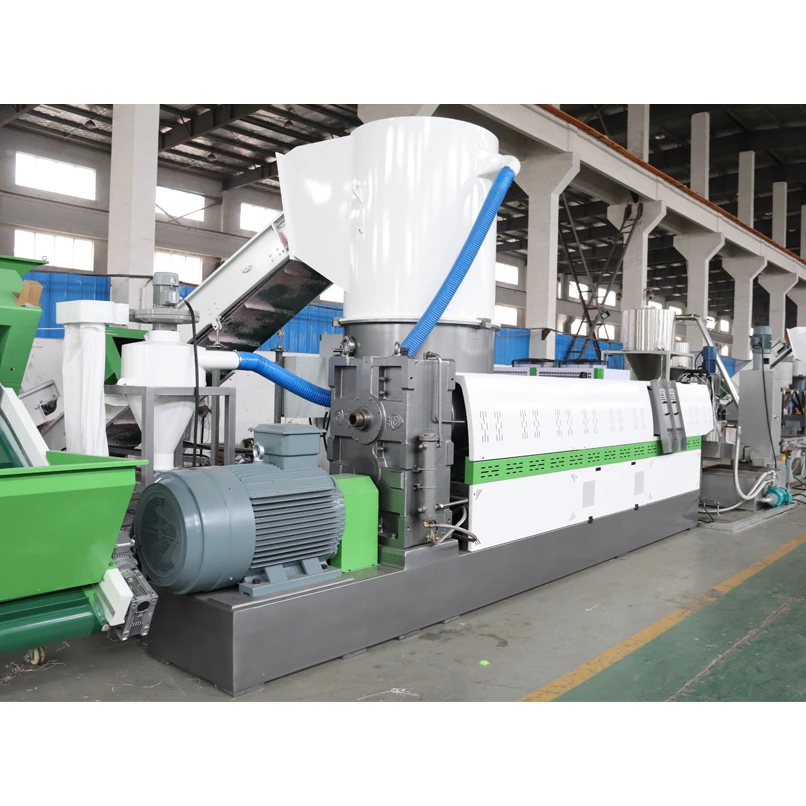
- Edge-trim recycling and re-feeding
Advanced lines also use two-stage stretching to decouple pre-orientation from final draw-down, which helps reduce breakage and improve dimensional consistency at high line speeds. Co-extrusion systems extend this logic by assigning different functions to core and skin layers, such as improved processability, strength balance, or material optimization.
Environmental and Sustainability Aspects
Tape extrusion lines are closely tied to sustainability in packaging because they can produce lightweight, high-strength tapes that reduce material use per unit of packaged product. This is one reason the segment has continued to develop high-speed “light tape” systems and more efficient stretching technologies.
Key sustainability themes include:
- Material savings: High orientation allows thinner tapes with acceptable tensile strength.
- Energy efficiency: Newer screw designs, optimized heating, and improved drive control reduce power demand per kilogram of output.
- Waste reduction: Edge trim recovery and re-feeding lower scrap generation.
- Recyclability: PP and HDPE tape products are generally compatible with established polyolefin recycling streams, although contamination and multilayer structures can complicate recovery.
- Circular feedstocks: Some lines are adapted for recycled polymer input, especially in packaging-related products, though quality control becomes more demanding.
At the same time, the segment faces a trade-off: higher orientation and speed typically improve output efficiency, but they can also raise sensitivity to melt defects, tension instability, and breakage, which makes control quality essential.
Economic and Global Market Impact
Tape extrusion lines are economically important because they sit upstream of large-volume sectors such as packaging, agriculture, logistics, and industrial textiles. Demand is influenced by the global use of woven sacks, bulk bags, tarpaulins, and strapping, particularly in markets where cost-performance and moisture resistance are critical.
Machine suppliers commonly compete on:
- Output range
- Line speed
- Energy efficiency
- Automation level
- Product versatility
- After-sales service and process know-how
Regional strengths are visible in established suppliers from Europe, India, China, Taiwan, and Southeast Asia, many of which offer complete turnkey systems for raffia, strapping, and twine production.
Current Challenges and Innovations
Several engineering challenges remain central to the segment:
- Maintaining tape uniformity at higher speeds
- Reducing breakage during stretching and winding
- Managing recycled-content variability
- Balancing output with energy consumption
- Meeting increasingly strict product consistency requirements for technical textiles and packaging substrates
Innovation is concentrated in:
- Better die design and flow control
- Improved quenching and cooling stability
- Higher-performance godets and haul-off systems
- Closed-loop tension control
- Hybrid lines for virgin and recycled polymers
- Multilayer tape structures for tailored performance
Future Outlook
The next generation of tape extrusion lines is likely to emphasize higher automation, lower energy intensity, and broader feedstock flexibility. Co-extrusion and multi-stage stretching will probably expand in technical packaging and specialty textile applications, while digital monitoring will make process deviations easier to detect and correct in real time.
As packaging and industrial textiles move toward lighter constructions and more circular material systems, tape-line designers will continue to refine orientation control, scrap recovery, and line efficiency. The most competitive systems will likely be those that combine high throughput, stable product quality, and lower total cost per kilogram rather than maximum speed alone.
Summary
Extrusion lines for tapes are specialized plastics-processing systems that transform PP, HDPE, and related polymers into oriented flat tapes, raffia, strapping, and fibrillated products for packaging, agriculture, industrial textiles, and technical uses. Their evolution from basic single-screw equipment into highly automated, high-speed, and increasingly sustainable production systems reflects broader trends in plastics machinery toward productivity, precision, and resource efficiency.
References
- •
扁絲擠出生產線 - 拉菲草帶拉伸生產線. (2025). PRM-Taiwan. https://taiwan.prm-taiwan.com/product/Flat-Yarn-Extrusion-Line-Raffia-Tape-Stretching-Line.htmlLink
- •
Tape extrusion lines [PDF]. (n.d.). Lohia Group. https://www.lohiagroup.com/storage/app/media/products/LCL_CoEx.pdfLink
- •
Tape extrusion line. (2025). Alibaba. https://www.alibaba.com/countrysearch/CN/tape-extrusion-line.htmlLink
- •
--产品中心_Dongguan Chuangzhan Machinery Co., Ltd. (n.d.). Dongguan Chuangzhan Machinery. https://en.chuangzhanjixie.com/--products.html?productCateId=5Link
- •
Woven Sacks Machinery, Tape Extrusion Line, PP Tape Plant. (n.d.). Plastemart. https://www.plastemart.com/plastic-processing-machinery/tape-plant/410Link
- •
PDF tiratex_V4.indd. (n.d.). Windmöller & Hölscher. https://www.wh.group/media/products/woven/tiratex.pdfLink
- •
TECHNO TAPE-ROPE. (2016, April 20). SIMA. https://sima-ds.com/en/technologies/extrusion-lines/techno-tape-rope/Link
- •
Plasco Engineering Inc. - Techtextil – Exhibitors & Products. (2024, October 14). Messe Frankfurt. https://techtextil.messefrankfurt.com/frankfurt/en/exhibitor-search.detail.html/plasco-engineering-inc.htmlLink
- •
长丝与纱线挤出生產线. (2023). PRM-Taiwan. https://china.prm-taiwan.com/category/Extrusion-Lines-For-Filaments-and-Yarn.phpLink
- •
Butyl rubber tape extrusion machine. (2024, August 28). Alibaba. https://www.alibaba.com/showroom/butyl-rubber-tape-extrusion-machine.htmlLink
- •
涂覆管道挤出生产线. (n.d.). DirectIndustry. https://www.directindustry-china.cn/zhizaoshang-gongye/tu-fu-guan-dao-ji-chu-sheng-chan-xian-83105.htmlLink
- •
Used Extrusion Machinery - Tape Lines - Plastemart.com. (2020, December 8). Plastemart. https://www.plastemart.com/used-plastics-machines/used-extrusion-machinery-tape-lines/992Link
- •
Rubber sheet extruder. (2025, January 20). Alibaba. https://www.alibaba.com/showroom/rubber-sheet-extruder.htmlLink
- •
Extrusion. (n.d.). Starlinger. https://www.starlinger.com/en/packaging/extrusionLink
- •
Pp fibrillated tape extrusion machine. (2024, August 28). Alibaba. https://www.alibaba.com/showroom/pp-fibrillated-tape-extrusion-machine.htmlLink
- •
Tape Extruder And Stretching Line Suppliers. (2019, December 25). Made-in-China.com. https://www.made-in-china.com/manufacturers/tape-extruder-and-stretching-line.htmlLink
- •
支持- 青岛闻思塑料科技有限公司. (n.d.). Wings Plastic. https://cn.wingsplastic.com/download.htmlLink
- •
扁丝挤出工艺| 高端热塑性弹性体TPV/TPE. (2021, March 18). Renprene. http://www.renprene.com/flat-yarn-extrusion-process.htmlLink
- •
PA管道挤出生产线 - 自动化. (n.d.). DirectIndustry. https://www.directindustry-china.cn/zhizaoshang-gongye/pa-guan-dao-ji-chu-sheng-chan-xian-250361.htmlLink
- •
RTP管管道挤出生产线. (n.d.). DirectIndustry. https://www.directindustry-china.cn/zhizaoshang-gongye/rtp-guan-guan-dao-ji-chu-sheng-chan-xian-209690.htmlLink
- •
塑料带挤出生产线. (n.d.). Wings Plastic. https://cn.wingsplastic.com/pl61880867.htmlLink
- •
工业类挤出生产线. (n.d.). China HRJ. https://www.chinahrj.com.cn/gyljcscx/Link
- •
双螺杆管道挤出生产线. (n.d.). DirectIndustry. https://www.directindustry-china.cn/zhizaoshang-gongye/shuang-luo-gan-guan-dao-ji-chu-sheng-chan-xian-237023.htmlLink
- •
热熔塑料管道挤出生产线. (n.d.). DirectIndustry. https://www.directindustry-china.cn/zhizaoshang-gongye/re-rong-su-liao-guan-dao-ji-chu-sheng-chan-xian-212795.htmlLink
- •
PP打包带生产线. (n.d.). GDTF. http://www.gdtf.net/applications/3169.htmlLink
- •
Tape extrusion lines [PDF]. (n.d.). Imimg. https://5.imimg.com/data5/XQ/UR/MY-3965207/tape-stretching-lines-duotec.pdfLink
- •
塑料挤出扁丝拉丝机. (2025). Yong-Ming. https://www.yong-ming.com/lsx.htmlLink
- •
塑料扁丝挤出-天风塑机 - 塑料柔性编织制品机械专业制造商. (2024). TF Machinery. https://cn.tf-machinery.com/plastic_tape_extrusion/Link
- •
包覆挤出生产线--宝碟塑机 - 精密管挤出设备. (2021, March 28). Baodie. https://www.baodie.cn/products/1Link
- •
上海金纬片板膜设备制造有限公司. (n.d.). JWELL. https://www.jwellextrusions.com/plastic-sheet-production-line-series.pdfLink
- •
解决方案- 金纬机械-塑料挤出设备供应商. (n.d.). JWELL. https://cn.jwellplate.com/solution/Link
- •
新闻稿 [PDF]. (n.d.). Oerlikon. https://www.oerlikon.com/ecoma/files/PR-OMF_EvoTape_the_r_evolution_of_tape_production__cn.pdfLink
- •
项目编号: ZX18K049 [PDF]. (n.d.). ZJJCMS. https://zjjcmspublic.oss-cn-hangzhou-zwynet-d01-a.internet.cloud.zj.gov.cn/jcms_files/jcms1/web3597/site/attach/0/a8fcc8b7fabb4e76b9640b559fb7bdb8.pdfLink
- •
Profile & Tape. (n.d.). Flexplas. https://flexplas.com/en/products/9-extrusion-lines/23-profile-tapeLink
- •
Used Extrusion line for tapes (woven sacs) - MachinePoint. (n.d.). MachinePoint. https://www.machinepoint.com/machinepoint/inventory.nsf/web2utreetype?openform&catarbol=fsheet&mt=mtfilm0085&ln=enLink
- •
SIMA - Extrusion lines, rope and twine making technologies. (2016, April 11). SIMA. https://sima-ds.com/en/technologies/extrusion-lines/Link
- •
PP Tape Extrusion Line. (n.d.). Plasco. https://www.plasco.com.tw/en/products_i_Tape_Extruder_fy.htmlLink
- •
Tape plant - Industrial Extrusion Machinery. (n.d.). Industrial Extrusion Machinery. http://www.industrialextrusionmachinery.com/ocean-extrusion/raffia_tape_stretching_line/tape_plant.htmlLink
- •
PP & HDPE Tape Extrusion Line. (n.d.). Lohia Group. https://www.lohiagroup.com/products/extrusionLink
- •
An In-Depth Guide to Butyl Rubber Tape Extruder Production Line. (2026, March 12). Alibaba. https://www.alibaba.com/product-insights/butyl-rubber-tape-extruder-production-line.htmlLink
- •
Extrusion Tape Line for PP & HDPE Flat Tapes. (n.d.). Phyllis. https://www.phyllis.com.tw/en/product/P2019041700001/Extrusion-Tape-LineLink
- •
PP Tape Extrusion Machine: High-Quality & Customizable - Accio. (2026, March 13). Accio. https://www.accio.com/plp/pp-tape-extrusion-machineLink
- •
Used Complete lines - Plastic extrusion for sale - Exapro. (n.d.). Exapro. https://www.exapro.com/plastic-rubber-c11-extrusion-lines/Link
- •
Tape Extrusion Machines. (2023). PRM-Taiwan. https://www.prm-taiwan.com/category/Tape-Extrusion-Machines.phpLink
- •
LOREX - tape extrusion lines [PDF]. (n.d.). Lohia Group. https://5.imimg.com/data5/SELLER/Doc/2020/8/LQ/DU/OP/3965207/lorex-tape-stretching-lines.pdfLink
- •
Tape / Fibrillated Tape / Twine Extrusion Line. (n.d.). Plasco. https://www.plasco.com.tw/en/products_sub_F02.htmlLink
- •
Understanding Polypropylene Tape Extruding Line. (2026, March 13). Alibaba. https://www.alibaba.com/product-insights/polypropylene-tape-extruding-line.htmlLink
- •
Extrusion lines for monofilaments, strapping tapes & raffia [PDF]. (n.d.). ICE. https://www.ice.it/en/my-home/repository/vetrine/230132/1646480083.0435.pdfLink
- •
"Packing Tape Machine". (2026, September 27). Made-in-China.com. https://www.made-in-china.com/products-search/hot-china-products/Packing_Tape_Machine.htmlLink
- •
TE1600: High-Efficiency Tape Extrusion for PP and PE Tapes. (2026, September 27). LinkedIn. https://www.linkedin.com/posts/stp-machinery_stpmachinery-industrialmachinery-activity-7383801129417076737-Up96Link
- •
Tape Extrusion Lines - Lohia Corp Limited - Plastics Technology. (n.d.). Plastics Technology. https://www.plastics-technology.com/products/lohia-corp/tape-extrusion-linesLink
- •
Tape Extrusion Line - Made-in-China.com. (n.d.). Made-in-China.com. https://www.made-in-china.com/products-search/hot-china-products/Tape_Extrusion_Line.htmlLink
- •
Tape Stretching Line - Raffia tape line with slitting and winding. (n.d.). Amrut Plastics. https://www.amrutplastics.com/tape-stretching-line.htmlLink
- •
Tape extrusion machine: High-Speed, Customizable Solutions. (2025, November 14). Accio. https://www.accio.com/plp/tape-extrusion-machineLink
- •
Duotec [PDF]. (n.d.). Lohia Group. https://5.imimg.com/data5/SELLER/Doc/2020/8/IM/XE/YR/3965207/tape-stretching-lines-duotec.pdfLink
- •
J P Extrusiontech (Pvt) Ltd. (n.d.). J P Extrusiontech. https://www.jpel.in/tape-stretching-lines.htmlLink