
Introduction
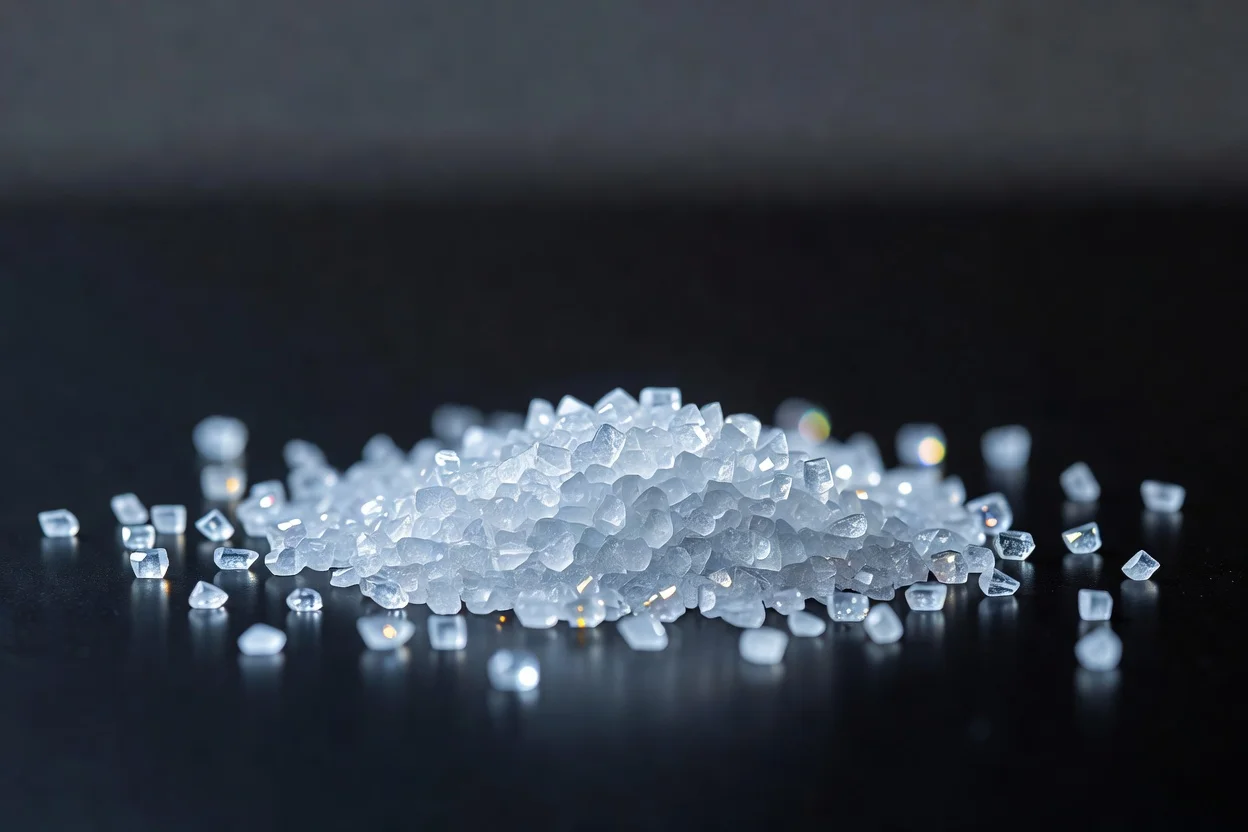
Clarifying and nucleating agents are polymer additives used to control crystallization in semi-crystalline plastics, improving processing speed, stiffness, dimensional stability, heat resistance, and, in some formulations, optical clarity. Clarifying agents are a subcategory of nucleating agents: all clarifiers are nucleants, but not all nucleants are clarifiers.
These additives are most important in polyolefins, especially polypropylene, where they help reduce haze, increase crystallization temperature, and shorten molding cycle times; they are also used more selectively in other crystallizable resins such as polyethylene terephthalate and some polyethylene grades. Their industrial significance has grown alongside demand for transparent packaging, faster injection molding, lightweight consumer goods, and improved productivity in high-volume plastics manufacturing.

History and Development
The commercial development of nucleating additives followed advances in polymer crystallization science and the need to better control the microstructure of molded and extruded parts. Early nucleating systems were often inorganic powders such as talc or sodium benzoate, used primarily to increase crystallization rate and stiffness.
Clarifying agents emerged later as specialized nucleators capable of producing crystallites or spherulites small enough to scatter less visible light, making otherwise translucent polypropylene substantially clearer. Sorbitol-based clarifiers, especially derivatives of dibenzylidene sorbitol, became especially important for transparent polypropylene packaging and consumer products.
Chemical Structure and Key Properties
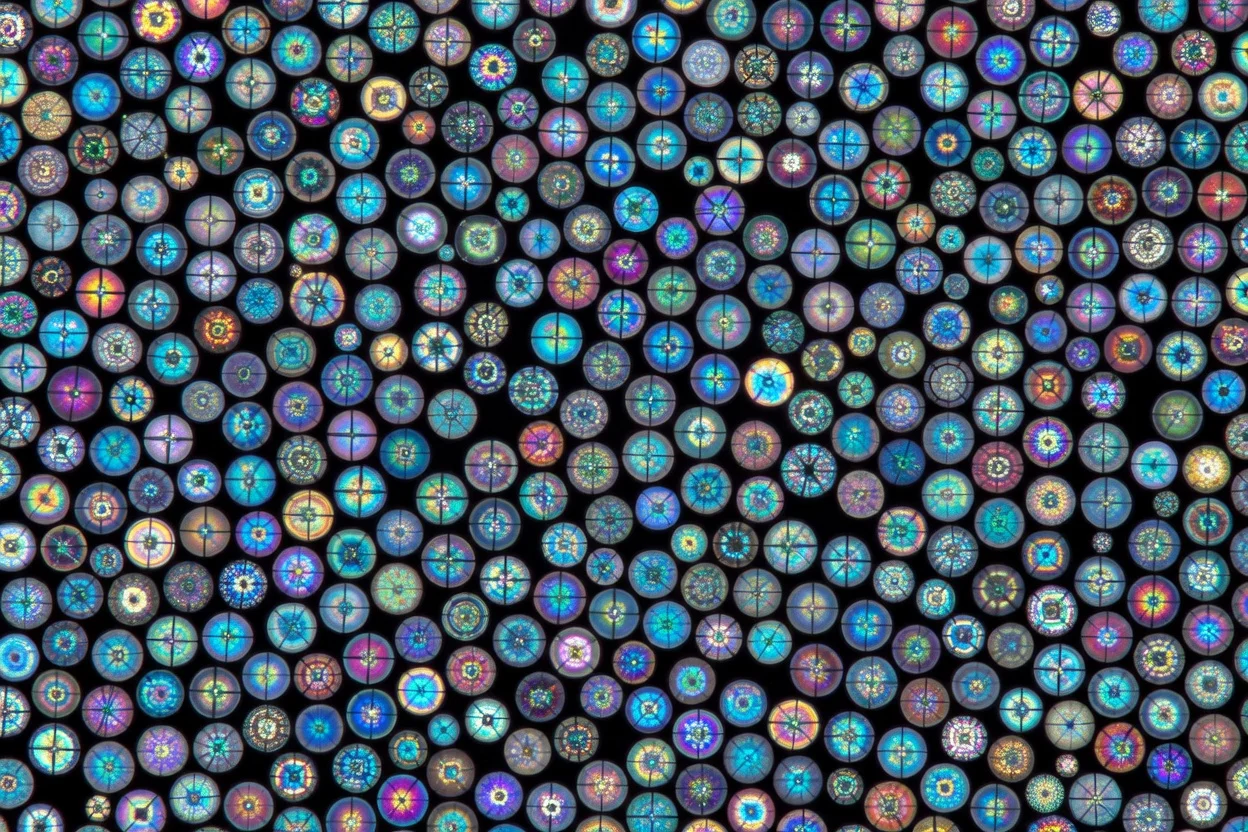
Nucleating and clarifying agents work by providing heterogeneous surfaces that lower the energetic barrier for crystal formation during cooling. By increasing the number of nuclei, they typically generate more, smaller spherulites and a finer crystalline morphology, which explains the simultaneous gains in stiffness, heat deflection temperature, and dimensional control.
A useful way to distinguish them is by their practical effect rather than chemistry alone:
| Category | Primary function | Typical effect on morphology | Typical effect on appearance |
|---|---|---|---|
| Nucleating agents | Accelerate crystallization | More nuclei, smaller crystals | May remain translucent or become more opaque |
| Clarifying agents | Accelerate crystallization and improve optics | Very fine crystals below visible-light scale | Lower haze, higher transparency |
A few important limits shape their use:
- Limit: effective use is restricted mainly to semi-crystalline polymers → Cause: they act by inducing crystallization → Workaround: they are not used in fully amorphous polymers, where optical or processing improvement must come from other additives or resin design.
- Limit: many nucleators improve stiffness but not clarity → Cause: some generate crystals that still scatter visible light → Workaround: use clarifying agents specifically designed for fine spherulite formation, especially in polypropylene.
- Limit: transparency gains are far more pronounced in polypropylene than in polyethylene → Cause: polyethylene crystallization is less strongly affected by nucleation in many commercial systems → Workaround: use resin selection, orientation, or other optical strategies when high clarity is required.
In practice, typical additive loadings are low, often around 0.1% to 0.5% for many clarifying systems and somewhat higher for some inorganic nucleators, with exact dosage depending on resin, dispersion, and the required balance of clarity versus stiffness. Mechanistically, small dosages can have large effects because nucleation is governed by surface availability and crystal-growth kinetics rather than bulk filler volume.
Production Processes and Raw Feedstocks
These additives are manufactured as fine powders, granules, or masterbatches and are compounded into the polymer before processing. Their performance depends heavily on dispersion quality, thermal stability, and compatibility with the target resin, particularly the melt window of polypropylene.
Common chemical families include:
- Organic clarifiers such as sorbitol derivatives, which are widely used in transparent polypropylene.
- Inorganic nucleators such as talc and some mineral particles, valued for robust crystallization enhancement.
- Metal salts and aromatic acid derivatives, including benzoate and phosphate-based systems, used to tailor stiffness, cycle time, and optical properties.
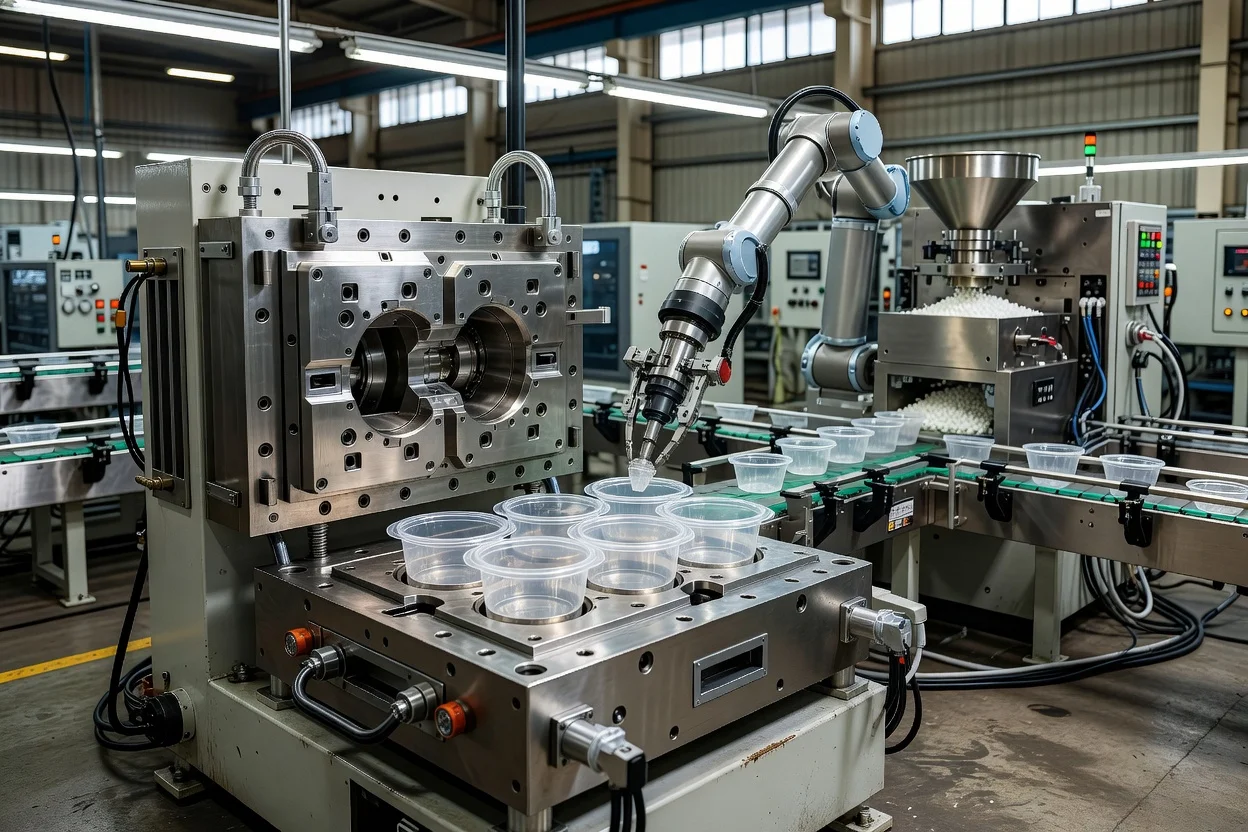
Processing route matters because the additive must be present and active before crystallization begins. Injection molding is the most common high-value application, but extrusion, thermoforming, blow molding, and sheet production also use these additives when faster solidification or greater clarity is desired.
Applications and End-Use Markets
Clarifying and nucleating agents are used across many semi-crystalline polymer applications, but their strongest commercial position is in polypropylene. The main sectors and typical grade/process combinations include:
| End use | Typical polymer | Usual additive type | Main benefit |
|---|---|---|---|
| Food containers and closures | PP homopolymer or random copolymer PP | Clarifier | Transparency, gloss, faster molding |
| Medical and pharmaceutical packaging | PP | Clarifier or high-purity nucleator | Clarity, rigidity, product visibility |
| Housewares and consumer goods | PP | Nucleator or clarifier | Stiffness, dimensional stability, shorter cycle time |
| Thin-wall injection-molded parts | PP | Nucleator | Faster crystallization, reduced warpage |
| Automotive interior components | PP and PP compounds | Nucleator | Heat resistance, stiffness, productivity |
| Extruded sheets and thermoformed items | PP | Clarifier | Improved appearance and lower haze |
| Technical molded parts | PP and some engineering thermoplastics | Nucleator | Mechanical reinforcement through morphology control |
A poor-fit use is high-barrier food packaging, where these additives cannot compensate for the inherent oxygen and moisture barrier limitations of polypropylene; barrier performance must be achieved with multilayer structures, coatings, or different polymers rather than nucleation alone.
The strongest demand comes from transparent rigid packaging, especially where consumers value product visibility and manufacturers value short cycle times. Medical containers and pharmaceutical packaging also benefit from clarity and rigidity, while automotive and appliance parts use nucleators more for productivity and dimensional control than for optical effects.
Environmental and Sustainability Aspects
These additives can reduce manufacturing energy indirectly by shortening cycle times and improving molding productivity. Faster crystallization can mean shorter cooling periods, higher output per machine, and lower electricity use per part, although the magnitude depends on part geometry and processing conditions.
From a circularity standpoint, clarifying and nucleating agents are generally compatible with mechanical recycling when they remain at low concentration and are not paired with problematic contaminant packages. However, they do not solve broader plastic sustainability issues such as feedstock origin, collection rates, or end-of-life sorting, and some high-performance clarifier packages are more sensitive to contamination or formulation drift in recycled streams.
Bio-based alternatives exist at the polymer level more than at the additive level. In other words, the market discussion is often about bio-based or recycled resin plus conventional nucleators rather than a fully bio-based nucleating chemistry. The sustainability benefit therefore usually comes from enabling downgauging, faster production, or more durable parts rather than from the additive itself being renewable.
Economic and Global Market Impact
According to recent industry analyses, the global market for nucleating and clarifying agents is expanding at a steady pace, supported by packaging, consumer goods, healthcare, and automotive demand. Polypropylene remains the central value pool because small additive doses can create measurable gains in both appearance and processing economics.
Leading commercial suppliers include specialty additive companies and polymer additive formulators, with strong positions held by firms active in clarifiers, nucleators, and masterbatch systems. Market competition is shaped by resin-specific performance, food-contact compliance, optical efficiency, and the ability to maintain stability through compounding and molding.
Current Challenges and Innovations
Current technical challenges include:
- Achieving high clarity without sacrificing impact strength or heat resistance.
- Maintaining performance in recycled-content formulations, where contamination and variable melt history can disrupt crystallization.
- Ensuring additive migration, odor, and regulatory compliance in food and medical applications.
- Designing systems that remain effective across diverse processing windows and part thicknesses.
Innovation is focused on:
- Next-generation sorbitol derivatives with better thermal robustness and lower taste-and-odor impact.
- Hybrid nucleator packages that combine fast crystallization with improved haze control.
- Masterbatch engineering for more consistent dispersion and lower dosage sensitivity.
- Application-specific clarifiers for thin-wall packaging, medical goods, and high-gloss consumer parts.
A recurring formulation strategy is pairing a nucleator with a stabilizer or slip package when the final part must meet both optical and processing targets; for example, a polypropylene container may use a clarifier for haze reduction together with antioxidant stabilization to preserve appearance during reprocessing and service life.
Future Outlook
Demand is likely to remain strong where lightweight rigid packaging, visible-product presentation, and high-throughput molding are priorities. The most promising growth areas are transparent polypropylene packaging, medical containers, and recycled-content formulations that still need good appearance and productivity.
Future development will likely emphasize:
- Better performance in recycled and bio-attributed resin streams.
- Lower-dose, higher-efficiency clarifiers with improved compatibility.
- Additives designed for tougher regulatory and sustainability requirements.
- More precise control of crystal size distribution through additive chemistry and process integration.
Summary
Clarifying and nucleating agents are small-dose but high-impact additives that reshape polymer crystallization to improve processing efficiency, stiffness, dimensional stability, and, in the case of clarifiers, transparency. Their greatest commercial importance lies in polypropylene, where they enable clearer packaging, faster molding, and more reliable part performance, while their broader future will depend on compatibility with recycling, lower-carbon manufacturing, and evolving packaging regulations.
References
- •
Nucleating agents are used to reduce cycle times and improve physical properties. (n.d.). https://tuprints.ulb.tu-darmstadt.de/server/api/core/bitstreams/baf7b14d-6057-48d8-9ac7-b6d4fedfa393/contentLink
- •
Development of novel. (n.d.). https://tuprints.ulb.tu-darmstadt.de/7579/1/Dissertation_Felix%20Budde_TUprints.pdfLink
- •
Kevichem. (2025, December 16). Clarifying and nucleating agents. https://kevichem.com/clarifying-and-nucleating-agents/Link
- •
Nucleating and clarifying agents for polymers. (n.d.). http://digilib.k.utb.cz/bitstream/handle/10563/7290/ku%C4%8Derov%C3%A1_2008_bp.pdf?sequence=1Link
- •
SpecialChem. (2026, April 21). Nucleating agents & clarifiers selection tips for polypropylene. https://www.specialchem.com/polymer-additives/guide/nucleating-agents-selection-for-polypropyleneLink
- •
What is nucleating and clarifying agents? Uses, how it works. (2025, September 10). LinkedIn. https://www.linkedin.com/pulse/what-nucleating-clarifying-agents-uses-how-works-top-qj6ycLink
- •
Amfine. (n.d.). Nucleating agents and clarifiers for plastics. https://www.amfine.com/nucleating_agents_and_clarifiers.shtmlLink
- •
Kevichem. (2025, December 27). Clarifying and nucleating agents in plastics: Benefits, uses. https://kevichem.com/clarifying-and-nucleating-agents-benefits/Link
- •
Wypych, G. (2021, January 25). Handbook of nucleating agents (2nd ed.). Elsevier. https://shop.elsevier.com/books/handbook-of-nucleating-agents/wypych/978-1-927885-81-9Link
- •
Strategic Market Research. (n.d.). Nucleating and clarifying agents market report, industry. https://www.strategicmarketresearch.com/market-report/nucleating-clarifying-agents-marketLink
- •
ADEKA. (2026, January 9). Nucleating & clarifying agents. https://www.adeka-pa.eu/clarifying-agents/Link
- •
Nucleating and clarifying agents. (2025, October 6). Scribd. https://www.scribd.com/doc/270159337/Nucleating-and-Clarifying-AgentsLink
- •
Nucleating and clarifying polymers study. (2026, March 17). Scribd. https://www.scribd.com/document/693219544/Nucleating-and-Clarifying-Polymers-Polymer-TechnologyLink
- •
Understanding nucleating agents: How they improve the. (2025, October 11). https://specialty-polymer.com/what-is-a-nucleating-agent-meaning-types-and-pp-applications-explained/Link
- •
Nucleation and clarity PP. (n.d.). https://danpolymer.com/product/nucleating-agents-and-clarifiers-pp/?lang=enLink
- •
Clarifying agent, compositions, comprising same, and methods of manufacture thereof. (2020, February 20). Google Patents. https://patents.google.com/patent/EP3868822A1/enLink
- •
Clarifying/nucleating agents for polypropylene. (2024, September 12). https://www.raytopoba.com/Clarifying-Nucleating-Agents-for-Polypropylene_232.htmlLink
- •
Plastimix. (n.d.). Vasavi Pigments. https://vasavipigments.com/Anti%20Rodent.php?slug=nucleating_and_clarifying_agentsLink
- •
Nucleating-and-clarifying-agents. (n.d.). Palmarole. https://www.palmarole.com/Nucleating-and-Clarifying-Agents.htmLink
- •
Recent developments. (2022, October 10). Polaris Market Research. https://www.polarismarketresearch.com/industry-analysis/nucleating-and-clarifying-agents-marketLink
- •
Nucleating & clarifying agents market report 2024-2029. (2024, December 20). MarketsandMarkets. https://www.marketsandmarkets.com/Market-Reports/nucleating-clarifying-agent-market-194731108.htmlLink
- •
Nucleating agent—An overview. (n.d.). ScienceDirect. https://www.sciencedirect.com/topics/engineering/nucleating-agentLink
- •
Polymer compositions comprising nucleating or clarifying agents and articles made using such compositions. (2006, September 8). Google Patents. https://patents.google.com/patent/US7786203B2/enLink
- •
Clarifying the definition and role of nucleating agents within glass-ceramic systems. (2022, August 5). The American Ceramic Society. https://ceramics.org/ceramic-tech-today/clarifying-the-definition-and-role-of-nucleating-agents-within-glass-ceramic-systems/Link
- •
Nucleating & clarifying agents market size, forecast, 2034. (2026, July 27). Fortune Business Insights. https://www.fortunebusinessinsights.com/nucleating-clarifying-agents-market-102360Link