

Introduction
Blow-fill-cap machines are integrated packaging systems that combine container formation, liquid filling, and closure application in one continuous, automated sequence. In plastics processing, the term is used most often for blow-fill-cap (BFC) combiblocks in beverage and liquid-food packaging, and more broadly for blow-fill-seal (BFS) systems in sterile pharmaceutical and specialty liquid applications.
These machines are important because they reduce transfer steps, shorten exposed product pathways, and improve line hygiene and throughput compared with separate blow molding, filling, and capping units. The technology has evolved from earlier standalone container-forming and filling lines into compact monoblock or rotary systems with servo control, hygienic design, and increasingly sophisticated process monitoring.
History and Development
The development of blow-fill-cap systems is closely tied to two parallel industrial trends: the rise of PET bottle packaging for beverages and the adoption of aseptic, closed-system processing in pharmaceuticals.
Early BFS systems established the core principle of forming a polymer container, filling it while still inside a controlled sterile environment, and sealing it without human intervention. This concept later influenced beverage combiblocks, where preforms are blown into bottles, filled, and capped in a single integrated unit.
Several practical milestones shaped the modern format:
- Aseptic BFS commercialization made it possible to package sterile unit-dose pharmaceuticals and sensitive liquids in one continuous operation, reducing contamination risk and cleaning burden.
- Rotary and combiblock beverage lines integrated bottle blowing, filling, and capping into compact high-speed systems, improving floor-space efficiency and reducing bottle handling.
- Servo-driven and PLC-controlled monoblocks improved synchronization, changeover precision, and process repeatability, making the systems more suitable for modern high-volume packaging plants.
Technical Overview
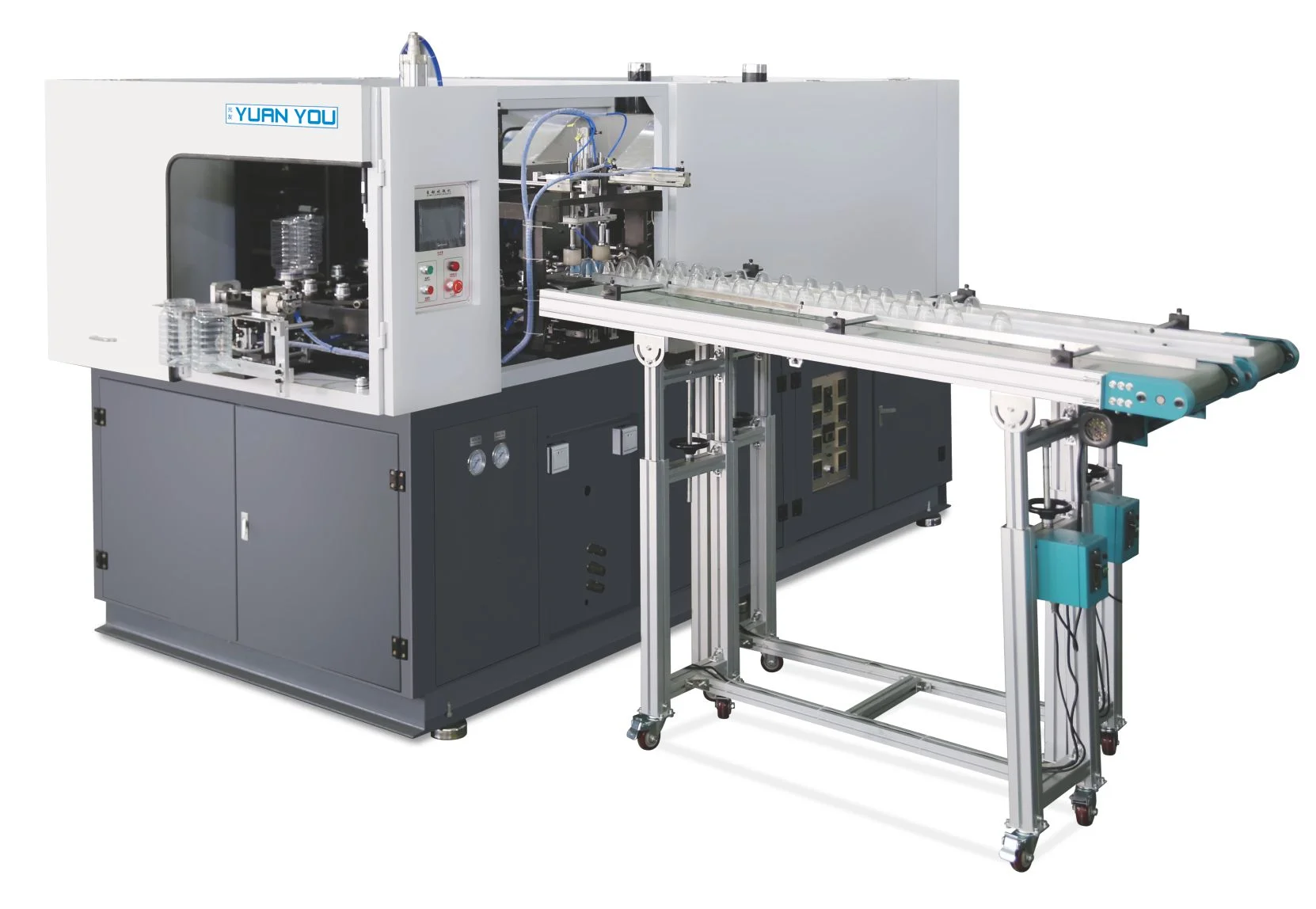
At a functional level, blow-fill-cap machines perform three tightly synchronized operations:
- Blowing: a heated PET preform or polymer parison is expanded in a mold using high-pressure air or sterile air, depending on the application.
- Filling: the formed bottle or container is dosed immediately, often by flowmeter, volumetric, or gravity-based systems in beverage lines, or by sterile dosing systems in BFS pharmaceutical lines.
- Capping or sealing: the container is closed in-line, typically with controlled torque in beverage applications or hermetic sealing in BFS systems.
Process architectures
Two major architectural families dominate the segment:
- Blow-fill-cap combiblocks for beverages and other non-sterile liquids, typically based on PET preforms and high-speed rotary transfer systems.
- Blow-fill-seal machines for aseptic pharmaceutical and specialty liquids, where container formation, filling, and sealing occur within a sterile enclosure.
Typical engineering characteristics
The exact specifications vary widely by container size, product type, and throughput, but several benchmarks are common in industrial practice:
- Throughput: from a few thousand bottles per hour on compact lines to very high-volume rotary systems in beverage plants; BFS lines are often configured for continuous sterile production rather than simple bottle-per-hour comparisons.
- Cycle time: compact integrated systems are often engineered for rapid, repeatable transfer with minimal dwell time between forming and filling.
- Rotary motion: many beverage systems use rotary blowers, fillers, and cappers to maintain compact footprint and high line speed.
- Sterile room conditions: BFS systems typically operate in highly controlled cleanroom environments; one cited compact system description places operation in ISO 5 conditions.
Material and container considerations
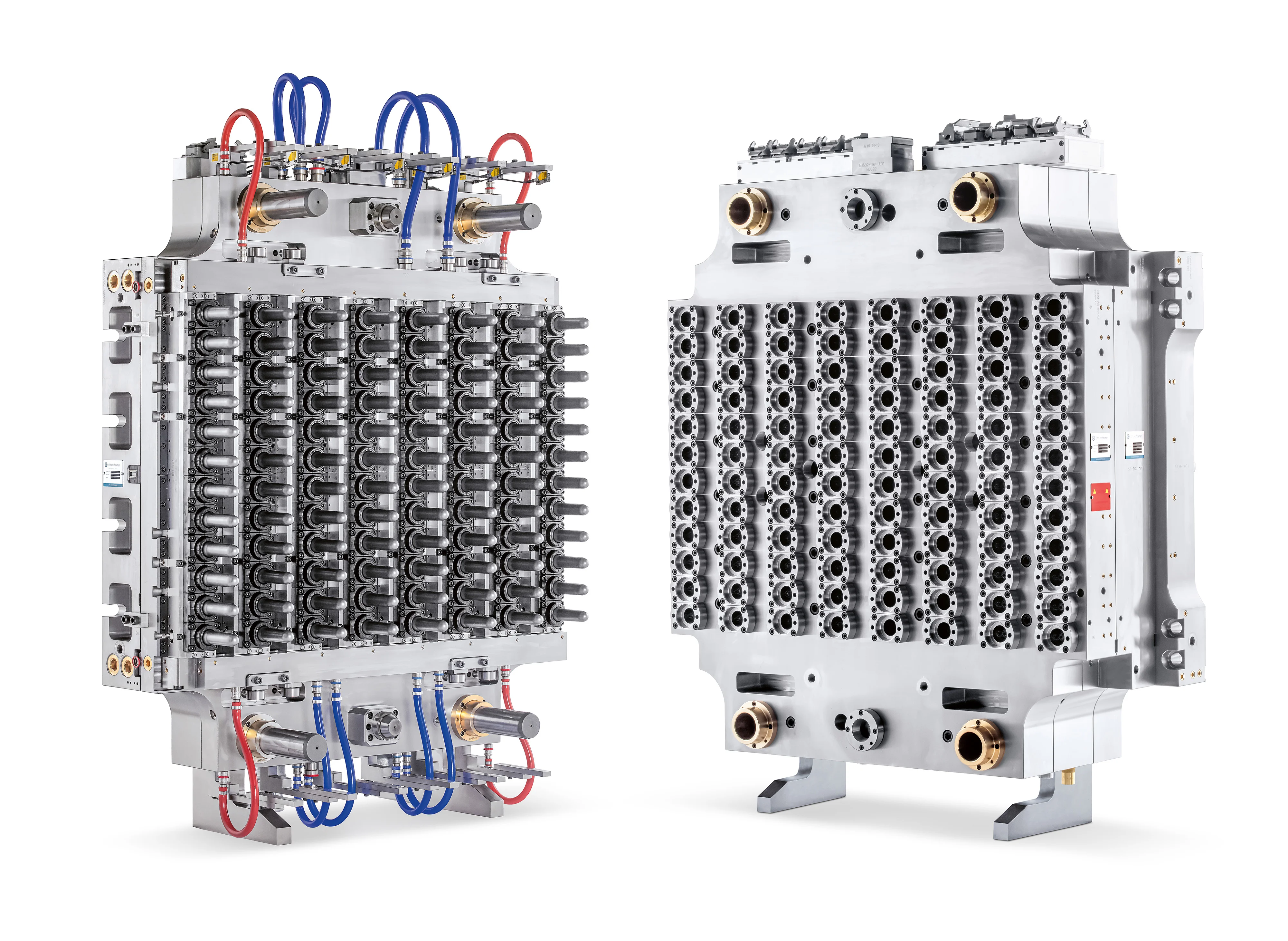
Most beverage BFC machines are designed around PET because it balances clarity, light weight, gas barrier performance, and blowability. BFS systems more often use PE or PP for pharmaceutical-grade containers, depending on product compatibility and regulatory requirements.
Types and Variations
| Type | Main function | Typical industry | Key feature |
|---|---|---|---|
| BFC combiblock | Blow, fill, cap in one unit | Beverage, liquid food, household liquids | High-speed PET bottle production with reduced handling |
| BFS machine | Blow, fill, seal under aseptic conditions | Pharma, sterile liquids, medical products | Closed sterile system with minimal contamination risk |
| Rotary blow-fill-cap line | Continuous circular transfer of containers | Large beverage plants | Compact layout and high productivity |
| Monoblock integrated line | Multiple functions within a single frame | Medium-to-high volume packaging | Lower footprint and simplified synchronization |
Applications and Uses
Blow-fill-cap machines are used wherever high hygiene, compact line design, and efficient container handling are priorities.
- Bottled water: a major application for BFC combiblocks because PET, lightweight logistics, and high output align well with water filling economics.
- Soft drinks, juice, and tea beverages: the integrated line supports fast changeovers and careful control of fill accuracy and closure integrity.
- Dairy and chilled drinks: some combiblock systems are used for sensitive chilled products where on-site bottle formation can reduce investment and exposure to contamination.
- Pharmaceutical liquids: BFS is widely used for sterile ophthalmic, respiratory, saline, and other unit-dose or small-volume liquid products.
- Household and personal-care liquids: some systems are adapted for detergents, disinfectants, shampoos, and other non-food liquids where automation and hygiene matter.
- Poor-fit use: highly abrasive, highly particulate slurries are generally a poor match because they complicate dosing, valve design, and closure sealing.

Key Performance and Engineering Factors
The performance of a blow-fill-cap machine is governed by the interaction of thermal conditioning, air management, filling accuracy, and cap application control.
Important variables include:
- Preform heating profile: determines bottle orientation, wall thickness distribution, and top-load strength.
- Blow pressure and timing: influence container geometry and material stretch ratio.
- Fill accuracy: depends on valve response, flowmeter calibration, bowl pressure stability, and product viscosity.
- Cap torque and seal integrity: affect leak performance, oxygen ingress, and consumer opening behavior.
For BFS systems, process integrity also depends on sterility assurance, CIP/SIP compatibility, and environmental control; one technical description notes automatic cleaning, steam sterilization, and sterile air drying of product-handling lines.
Technological Innovations and Automation
Recent generations of blow-fill-cap machines increasingly use:
- PLC-based coordination for synchronized transfer, dosing, and capping sequences.
- Servo drives to improve motion precision and reduce mechanical wear.
- Closed-loop sensors for fill-level monitoring, cap presence, torque control, and fault detection.
- Heat recovery and optimized preform conditioning to reduce energy use in PET bottle blowing.
- Aseptic enclosure design and HEPA-filtered air handling in BFS applications to reduce contamination risk.
Automation has improved repeatability and reduced manual handling, but it also increases system complexity, maintenance skill requirements, and the need for disciplined calibration and clean-in-place routines.
Environmental and Sustainability Aspects
Blow-fill-cap systems support sustainability primarily through line integration and material efficiency.
Key environmental advantages include:
- Reduced handling losses because containers do not travel between separate machines.
- Lower contamination-related waste through closed or semi-closed processing.
- Potential energy savings from integrated layouts, heat optimization, and reduced conveyance.
- Lightweight packaging through PET bottle design, which can reduce transport emissions per packaged unit compared with heavier formats.
At the same time, sustainability performance depends on careful trade-offs:
- High-speed integrated systems can consume substantial electrical and compressed-air energy.
- Aseptic BFS lines require stringent environmental control, which adds HVAC and sterilization burdens.
- Recyclability depends on container polymer choice, label design, and cap compatibility.
Economic and Global Market Impact
Blow-fill-cap machines are economically significant because they compress several capital and operating steps into one platform, reducing plant footprint, labor demand, and product exposure.
For beverage producers, the main economic value comes from:
- Lower intermediate handling
- Higher line uptime
- Faster production changeovers
- Reduced logistics for empty containers
- Improved product consistency
For pharmaceutical manufacturers, the value is more strategic: BFS can reduce reliance on externally supplied sterile containers and simplify certain aseptic fill-finish workflows.
The global market is led by machine builders specializing in beverage combiblocks, aseptic BFS platforms, and customized integrated packaging lines, with strong regional competition in Europe and Asia.
Current Challenges and Innovations
Despite its advantages, the technology faces several engineering challenges:
- Calibration drift in fill-weight control, especially when product viscosity, bowl pressure, or valve settings change.
- Sterility assurance in BFS, where enclosure integrity and validated cleaning cycles are critical.
- Material compatibility across PET, PE, PP, and specialty polymers for different products.
- Maintenance complexity in highly integrated rotary systems.
- Energy intensity in heating, compressed air generation, and sterile environmental control.
Ongoing innovation is focused on:
- better sensor integration,
- faster changeover tooling,
- improved aseptic design,
- lower-energy preform heating,
- and more precise digital process control.
Future Outlook
The next phase of development is likely to emphasize digitalization, hygiene, and flexibility. Integrated systems are moving toward more intelligent diagnostics, predictive maintenance, and adaptive process control, especially where product variation is frequent.
In beverages, demand is likely to remain strongest for compact high-output PET combiblocks with improved energy efficiency and broader product flexibility. In pharmaceuticals, BFS is expected to continue expanding in sterile liquid and specialty dosage formats, where contamination control and unit-dose convenience remain decisive.
Summary
Blow-fill-cap machines occupy a distinct position in plastics processing and packaging because they unify container making, filling, and closure into a single automated workflow. Their value lies in the combination of hygiene, speed, compactness, and process control, with beverage combiblocks and BFS pharmaceutical systems representing the two most important industrial variants.
References
- •
How does the rotary blowing filling capping machine work. (2023, April 11). Sunswell. https://www.sunswell.com/news/how-does-the-rotary-blowing-filling-capping-machine-work.htmlLink
- •
Blowing filling capping machine: Boost productivity & cut waste. (2026, February 22). Eqspack. https://www.eqspack.com/blog/how-the-blowing-filling-capping-machine-boosts-productivity-and-reduces-wasteLink
- •
Blow-fill-seal technology from the inventor. (2026, January 1). Rommelag. https://www.rommelag.com/en/technology/blow-fill-sealLink
- •
BLOW-FILL-SEAL. (n.d.). Thomasnet. http://cdn.thomasnet.com/ccp/10078611/240384.pdfLink
- •
Blowing-filling-capping combiblock vs. Traditional ... (n.d.). King-machine. https://www.king-machine.com/news/blowing-filling-capping-combiblock-vs-traditional-beverage-filling-line.htmlLink
- •
Blowing filling capping machine. (n.d.). Mic Machinery. https://www.micmachinery.com/blowing-filling-capping-machine.htmlLink
- •
Mesin pengisian, pengecoran, dan penutup ringkas untuk pabrik kecil dan menengah. (2025, October 18). Sznewcrownmachine. https://www.sznewcrownmachine.com/id/blog/compact-blowing-filling-capping-machine-for-small-and-medium-factoriesLink
- •
Blow fill seal. (2005, July 16). Wikipedia. https://en.wikipedia.org/wiki/Blow_fill_sealLink
- •
Blower. (2024, January 1). Sspackaginggroup. https://sspackaginggroup.com/blower/Link
- •
Complete guide to 3 in 1 water filling machine for beverage producers. (2026, March 10). Wanplas. https://www.wanplas.com/industry-blogs/complete-guide-to-3-in-1-water-filling-machine-for-beverage-producers/Link
- •
Faygo union machinery: Your one-stop blow-fill-cap integrated line solution. (2025, December 4). Faygo Union. https://faygoplast.com/faygo-union-machinery-your-one-stop-blow-fill-cap-integrated-line-solution/Link
- •
TECHNICAL DATA. (n.d.). Tistatic. https://tiimg.tistatic.com/fm/15335466/Rinsing%20Filling%20Capping.pdfLink
- •
blo w -fill-seal machines. (n.d.). Pda. https://www.pda.org/docs/default-source/website-document-library/chapters/presentations/new-england/sterile-packaging-of-liquidpharmaceuticals---using-rommelag-bottelpack-blow-fill-seal-machines.pdf?sfvrsn=6Link
- •
Blow-fill-cap combiblock filling accuracy deviation: Common causes and calibration methods. (2026, August 13). Wanplas. https://www.wanplas.com/hi/industry-blogs/blow-fill-cap-combiblock-filling-accuracy-deviation-common-causes-and-calibration-methods/Link
- •
Blowing-filling-capping combiblock. (2026, June 15). Wanplas. https://www.wanplas.com/products/filling-machine/Link
- •
Blow-fill-seal tech: How it ensures sterile medication ... (2025, September 16). Ritedose. https://ritedose.com/2025/09/16/how-blow-fill-seal-technology-ensures-sterile-medication-delivery/Link
- •
Serac combox H2F US 2017 BD | PDF | Drink | Valve. (2025, September 29). Scribd. https://www.scribd.com/document/882959231/Serac-Combox-H2F-US-2017-BDLink
- •
A review on blow fill seal machine. (n.d.). Ijraset. https://www.ijraset.com/research-paper/a-review-on-blow-fill-seal-machineLink
- •
How does blow-fill-seal work? (2024, November 13). Apiject. https://apiject.com/how-does-blow-fill-seal-work/Link
- •
What is a fully automatic blow molding, filling, and capping ... (2023, November 22). Fillers-packer. https://fillers-packer.com/blogs/what-is-a-fully-automatic-blow-molding-filling-and-capping-machine/Link
- •
Fully automatic blowing filling capping equipment with advanced servo control. (2026, February 28). Eqspack. https://www.eqspack.com/blog/fully-automatic-blowing-filling-capping-equipment-with-advanced-servo-controlLink
- •
Serac showcases blow-fill-cap machine. (2014, May 10). Packaginginsights. https://www.packaginginsights.com/news/serac-showcases-blowfillcap-machine.htmlLink
- •
How blowing filling capping integration ... (2026, March 5). Eqspack. https://www.eqspack.com/blog/streamline-your-bottle-manufacturing-with-a-fully-integrated-blowing-filling-capping-lineLink
- •
ਬਲੋ-ਫਿਲ-ਕੈਪ ਮਸ਼ੀਨਾਂ ਉਤਪਾਦਨ ਦੀ ਸਫਾਈ ਨੂੰ ... (2025, September 25). Sunswell. https://www.sunswell.com/pa/news/how-blow-fill-cap-machines-improve-production-hygiene.htmlLink
- •
Blow fill sealed container with twist off top operated by overcap and method of forming the same. (2003, September 5). Google Patents. https://patents.google.com/patent/US20050051572A1/enLink
- •
Blow-fill-seal (BFS): 7-step aseptic process, machine types ... (2025, July 23). Soontact. https://soontact.com/what-is-blow-fill-seal-bfs-and-how-does-it-work/Link
- •
Blow-fill-seal technology advances in aseptic filling ... (2014, June 18). Pharmtech. https://www.pharmtech.com/view/blow-fill-seal-technology-advances-aseptic-filling-applicationsLink
- •
4 reasons blow/fill/seal technology should be ... (n.d.). Drugdeliveryleader. https://www.drugdeliveryleader.com/doc/reasons-blow-fill-seal-technology-should-be-considered-for-your-aseptic-filling-needs-0001Link
- •
How blow-fill-seal delivers operational efficiencies and ... (2023, June 28). Linkedin. https://www.linkedin.com/pulse/how-blow-fill-seal-delivers-operational-efficiencies-aseptic-fill-finishLink