
Introduction
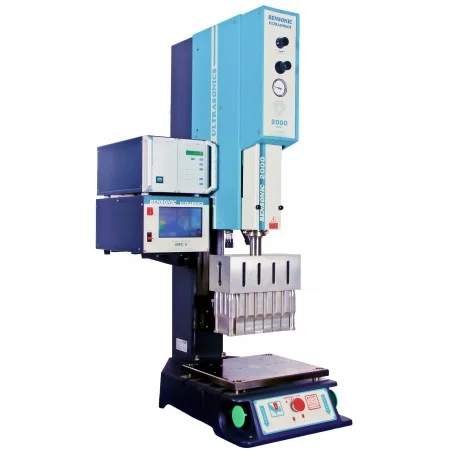
Ultrasonic welding machines are industrial joining systems that use high-frequency mechanical vibration, pressure, and controlled displacement to create a solid-state weld in thermoplastics and, in specialized configurations, nonferrous metals. In plastics processing, they are valued for very short cycle times, clean joining without adhesives or fasteners, and strong process repeatability, which has made them important in automotive, medical, electronics, packaging, and consumer-goods assembly.
The technology sits at the intersection of polymer processing, precision automation, and materials engineering. Typical machine families include pneumatic press systems, servo-driven systems for tighter control, handheld units for repair or low-volume work, and fully automated integrated cells for high-throughput production. Recent development has focused on better digital control, greater energy efficiency, lower scrap, and improved traceability, while future growth is being shaped by electrification, miniaturization, and Industry 4.0 integration.
History and Development
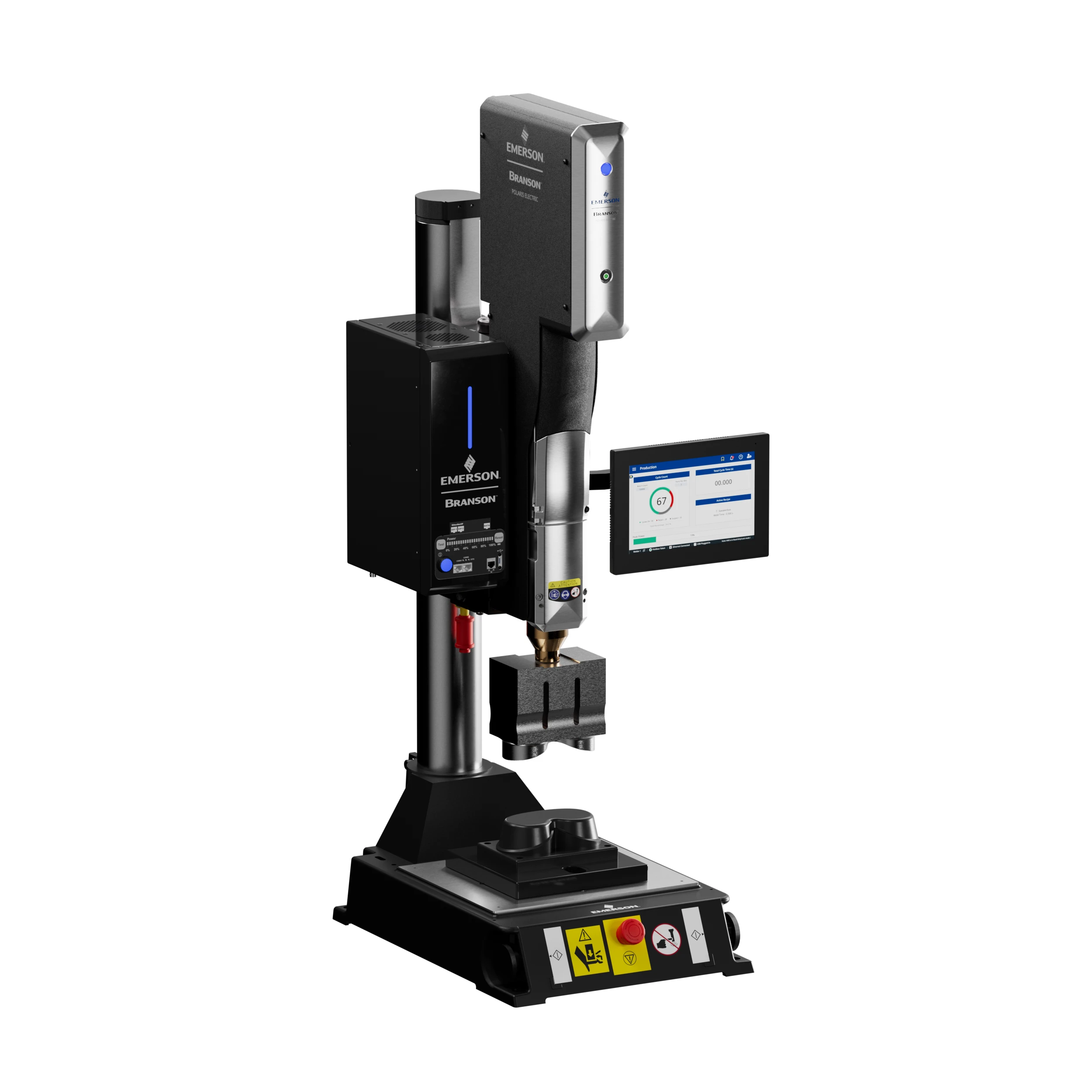
Ultrasonic welding emerged from broader ultrasonic engineering in the 20th century and became commercially important as thermoplastic parts proliferated in mass manufacturing. Early systems established the core architecture still used today: a generator, transducer, booster, and horn or sonotrode that converts electrical energy into high-frequency motion at the weld interface.
Several concrete milestones shaped the field:
- Standardization of frequency bands such as 15, 20, 30, 35, 40, and 70 kHz, allowing machine builders to match part size, stiffness, and precision requirements more closely.
- Expansion from simple spot welding to integrated automation, including rotary, press-type, handheld, cutter, and robotic systems for production lines with more complex handling needs.
- Transition from pneumatic control to servo and all-electric motion, improving repeatability of weld speed, collapse distance, force control, and data capture for critical applications.
As the technology matured, it expanded beyond plastic assembly into foil, textile, nonwoven, and certain metal-bonding applications, especially where low heat input and fast joining were advantageous.
Working Principle and Technical Overview
An ultrasonic welding machine converts mains power into high-frequency electrical energy, then into mechanical oscillation through a converter/transducer. The oscillation is amplified by a booster and transmitted by the horn/sonotrode into the workpieces held under pressure, generating localized frictional heating and interfacial softening or melting.
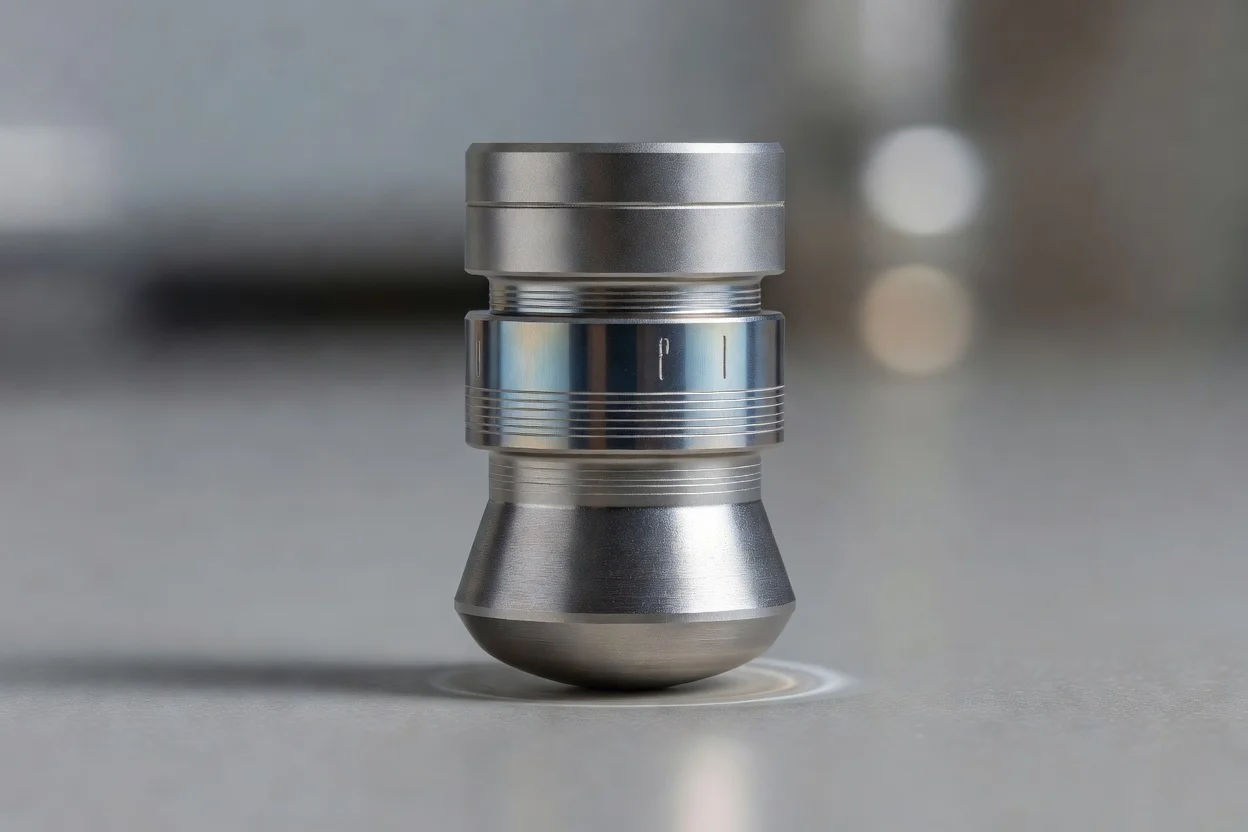
For thermoplastics, the weld is usually formed at an energy director, rib, or designed joint interface. The parts are pressed together while the horn vibrates, and the polymer softens rapidly because the heat is concentrated locally and the material has limited time to conduct heat away. The result is a solid-state weld that is typically completed in fractions of a second to a few seconds, depending on part size and mode.
Common control variables include:
- Frequency: typically 15–40 kHz for industrial plastic welding, with higher frequencies used for smaller, more delicate parts and lower frequencies for larger parts.
- Power: portable and bench systems may range from about 150 W to several kilowatts, while industrial systems commonly reach 2–4 kW or more for larger assemblies.
- Weld modes: time, energy, peak power, distance, collapse, and hybrid modes are widely used to balance weld quality and part variation.
- Force and stroke: press force, downspeed, trigger position, and collapse distance are central to achieving consistent fusion without flash or component damage.
Typical machine architectures include:
- Pneumatic machines, where air pressure drives the weld motion and is widely used for general plastic assembly.
- Servo or electrical-motion machines, where motion is electronically controlled for higher precision in force, position, and weld profile.
- Handheld systems, suited to spot welding, staking, inserting, and repair work.
- Automated systems, integrated with robots, fixtures, conveyors, and quality monitoring for serial production.
Typical Performance Ranges
| Parameter | Common range or example |
|---|---|
| Frequency for plastics | 15–40 kHz typical; 70 kHz for micro-parts and delicate assemblies |
| Power | About 150 W to 4 kW+ depending on machine class and part size |
| Weld time | Often milliseconds to a few seconds for thermoplastic joining |
| Handheld unit examples | 500 W portable welders are common in light-duty work |
| Large-part systems | Lower-frequency, higher-power systems such as 15 kHz / 4,000 W are used for larger weld lengths and stronger fixtures |
| Precision systems | Servo/electric machines can independently tune force, speed, amplitude, trigger, and stop points for repeatability |
For plastics recycling and reprocessing contexts, ultrasonic technology is also used in cutting, sealing, and web processing, not only welding, although the term “ultrasonic welding machine” usually refers to assembly equipment rather than granulation machinery.
Types and Variations
By motion system
- Pneumatic ultrasonic welders: common, robust, and cost-effective for standard plastic joining.
- Servo-driven ultrasonic welders: preferred when precise control of collapse distance, speed, and force is required.
- Electrical-motion systems: combine high precision with programmable motion and may improve consistency in demanding applications.
By operating style
- Handheld welders: used for spot welding, staking, reshaping, and field repair.
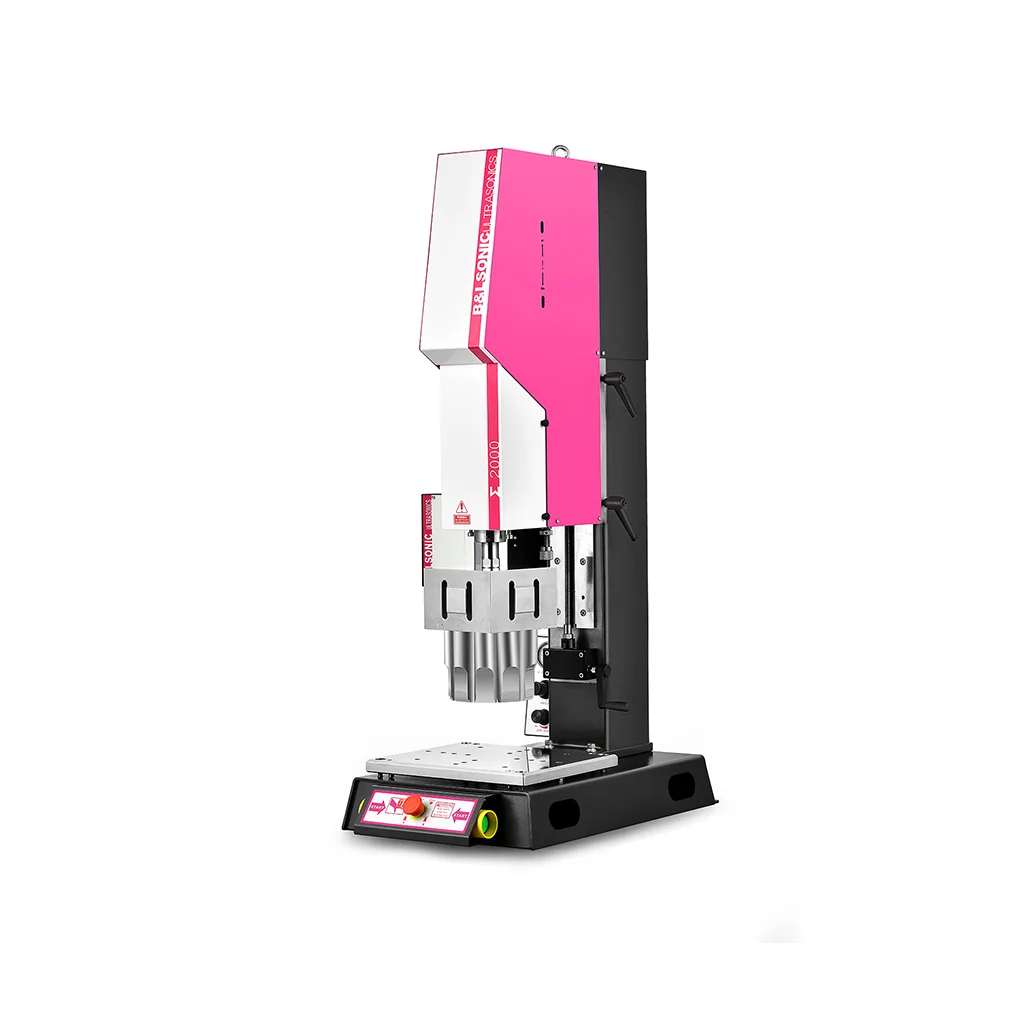
- Bench or press-type welders: the most common format for structured production work.
- Automated systems: incorporate robotics, guarding, and inline inspection for high-volume manufacturing.
By frequency
- 15 kHz: suited to larger parts and longer welds.
- 20 kHz: widely used for general thermoplastic assembly and metal applications.
- 30–35 kHz: balanced option for many medium and smaller assemblies.
- 40 kHz and above: used for smaller, delicate, or micro-scale parts.
- 70 kHz: specialized for very small plastic components and high-precision work.
Applications and Uses
Ultrasonic welding machines are used where manufacturers need fast, clean, and repeatable joining.
- Automotive: instrument panels, lighting components, air-management parts, sensors, battery-related assemblies, and interior modules.
- Medical devices: disposable diagnostic consumables, filters, housings, tubing components, and sterile or clean-room-suitable assemblies.
- Electronics: housings, connectors, cable management, wire splicing, and micro-component assembly.
- Packaging: sealing of thermoplastic packages, films, and certain closures.
- Consumer goods: appliance parts, small enclosures, and wearable products.
- Textiles and nonwovens: masks, gowns, filters, seams, and decorative or functional bonding.
A less suitable application is the joining of thick structural metals or very large load-bearing sections, because ultrasonic welding works best on relatively thin sections, localized joints, and materials that can respond efficiently to high-frequency vibration.
Engineering Features and Process Control
Modern ultrasonic welding machines increasingly emphasize process intelligence rather than simple actuation. Key engineering features include:
- Closed-loop amplitude control to stabilize energy delivery during varying part conditions.
- Multi-mode welding logic such as time, energy, peak power, distance, and collapse control.
- Recipe management for validated production settings and faster changeover.
- Data export and traceability for quality assurance in regulated sectors.
- High-precision positioning in systems designed for miniature or tolerance-sensitive assemblies.
Joint design remains critical. Energy directors, shear joints, and step joints are commonly used to concentrate energy and promote consistent fusion. Poor part design, excessive filler, moisture, contamination, or incompatible polymers can cause weak welds, flash, or variability.
Technological Innovations and Automation
Ultrasonic welding has moved from a standalone joining method toward a digitally monitored manufacturing process. Innovations include:
- All-electric motion platforms for finer force and displacement control.
- Robotic cell integration for complex part handling and multi-station production.
- Portable handheld systems with modern power supplies for low-power, precise local work.
- Expanded applications in metals, especially nonferrous materials and wire/tab welding.
- Parameter logging and connectivity, supporting statistical process control and traceability in sensitive industries.
Manufacturers increasingly compare process windows, energy profiles, and weld consistency rather than focusing only on nominal power or frequency.
Environmental and Sustainability Aspects
Ultrasonic welding is often considered an environmentally efficient joining method because it usually requires no adhesives, solvents, solder, or mechanical fasteners. This reduces consumable use and can simplify downstream recycling by avoiding mixed-material contaminants.
Additional sustainability advantages include:
- Very short cycle times, which reduce energy per part in many applications.
- Localized heating, which lowers thermal load on surrounding material and can reduce scrap.
- Compatibility with lightweight design, especially in automotive and consumer products, where removing screws or adhesives can reduce part count.
The trade-offs are mainly engineering-related: highly precise tooling, application development, and validation can increase upfront cost, and not every polymer pair or geometry is suitable. In addition, the process is best viewed as a complement to circular-economy strategies rather than a universal solution.
Economic and Global Market Impact
Ultrasonic welding machines are a mature but still expanding equipment category within plastics processing. Demand is supported by the growth of medical disposables, electronics miniaturization, electric vehicles, battery-related assembly, and automated production lines.
The market is characterized by:
- Strong presence of established specialists such as Dukane, Herrmann, Branson/Emerson, RINCO, TELSONIC, FRIMO, and other regional manufacturers with application-specific portfolios.
- High value added in automation and validation, especially for medical and automotive customers.
- Regional specialization, with European, North American, and Asian suppliers all active in standard machines, automation, and custom tooling.
Procurement decisions typically weigh not just purchase price but total cost of ownership, process capability, service support, and qualification burden.
Current Challenges and Innovations
Current engineering challenges include:
- Material variability, especially with filled polymers, recycled feedstocks, or multi-layer structures.
- Miniaturization, which demands tighter frequency control, smaller horns, and more precise motion systems.
- Quality assurance, particularly in regulated sectors where weld strength must be validated and traced.
- Acoustic tooling wear, which can affect amplitude, joint quality, and maintenance intervals.
- Part design dependence, since ultrasonic welding is highly sensitive to geometry and stack-up variation.
Active innovation areas include advanced control algorithms, better horn materials, improved simulation of weld behavior, and more robust adaptation to recycled or bio-based polymers.
Future Outlook
The future of ultrasonic welding machines is likely to be shaped by three converging trends: greater electrification, more digital process control, and higher demand for low-waste assembly. Servo and all-electric systems are expected to gain traction where precision and traceability justify their higher complexity.
Further growth opportunities are likely in:
- Battery and e-mobility assemblies
- Medical microdevices
- Wearable electronics
- Technical textiles and filtration media
- Automated, data-rich production cells
The long-term competitive position of ultrasonic welding will depend on its ability to combine speed, repeatability, and sustainability with stronger adaptability to recycled polymers, mixed-product portfolios, and tighter quality standards.
Summary
Ultrasonic welding machines are precision joining systems that use high-frequency vibration and pressure to create rapid, clean, and repeatable bonds in thermoplastics and selected nonferrous metals. Their technical appeal lies in short cycle times, low consumable use, and strong automation potential, while future development is centered on digital control, traceability, and broader compatibility with modern manufacturing requirements.
References
- •
FRIMO. (n.d.). Ultrasonic welding.Link
- •
百度. (n.d.). 超声波焊机.Link
- •
Made-in-China.com. (2026, October 1). Ultrasonic welding machine.Link
- •
灵高超声波. (n.d.). 超声波焊接机-超声波自动化焊接配套-手持焊接机-珠海超声波塑焊机.Link
- •
RINCO Ultrasonics. (n.d.). 标准50 型超声波焊接机- RINCO 中国.Link
- •
RINCO. (n.d.). Ultrasonic.Link
- •
RINCO Ultrasonics. (n.d.). 超声波焊接机Electrical Motion2-35 - RINCO 中国.Link
- •
骄成超声波. (n.d.). 超声波金属焊接设备_楔杆式超声波焊机WE-骄成超声波.Link
- •
阿里巴巴. (n.d.). 高效而强大的超声波智能焊接机-阿里巴巴.Link
- •
CNPP. (2026, August 25). 超声波焊接机十大名牌,超声波塑料焊接机-超声波线束焊接机品牌排行,超声波焊接机哪个牌子好〈2026〉.Link
- •
精電舎. (2024, June 24). Product line of ultrasonic welding machine (welder).Link
- •
Dema Sewing Automation. (n.d.). Ultrasonic welder.Link
- •
Jendow. (n.d.). 超音波焊機.Link
- •
Scribd. (2025, August 18). Untitled.Link
- •
Thomasnet. (2015, January 1). Ultrasonic welders manufacturers and suppliers in the USA and Canada.Link
- •
搜狐. (2026, July 20). 超声波焊接机全解析:技术资质、应用场景与源头工厂指南 - 搜狐.Link
- •
Imimg. (n.d.). [PDF] ultrasonic plastic welding machine - image.Link
- •
Dukane. (n.d.). Industrial ultrasonic welders & assembly systems.Link
- •
Herrmann Ultrasonics. (2020, November 17). Ultrasonic welding machines.Link
- •
Dukane. (n.d.). Ultrasonic welders by Dukane.Link
- •
Herrmann Ultraschall. (2023, September 4). HSG - 超声波焊机 by Herrmann Ultraschall.Link
- •
U.S. Solid. (2025, August 1). Ultrasonic welders.Link
- •
爱采购. (2026, July 2). 超声波手带焊接机 - 爱采购寻源宝典.Link
- •
Metoree. (n.d.). Assembly equipment ultrasonic welding machine small type THANK METAL.Link
- •
维基百科. (2010, December 23). 超声波焊接 - 维基百科,自由的百科全书.Link
- •
Sonitek. (2025, November 25). Branson® ultrasonic welders: Used available (save 60%).Link
- •
Toman Thermosonics. (2021, November 24). How to choose an ultrasonic welding machine.Link
- •
VFE. (n.d.). 沪.Link
- •
Emerson. (2005, July 1). 超声波金属焊机.Link
- •
TWI. (n.d.). Ultrasonic welding - process and equipment - TWI.Link
- •
Solvay. (n.d.). Technical bulletin.Link
- •
Sonics & Materials, Inc. (n.d.). Hand held welders - Sonics + Materials, Inc. - PDF catalogs.Link
- •
Emerson. (n.d.). Handheld ultrasonic welding systems | Emerson GB.Link
- •
百度. (n.d.). 超声波设备.Link
- •
Emerson. (2005, July 1). 超声波焊接.Link
- •
Herrmann Ultrasonics. (2020, November 17). Ultrasonic handheld spot welder.Link
- •
广东省. (n.d.). 广东省首台(套)重大技术装备推广应用指导目录(2019 年版).Link
- •
SBT Ultrasonic Technology Co., Ltd. (n.d.). SBT ultrasonic technology co., Ltd.Link