
Introduction
Welding machines are industrial power sources and process systems used to join metals, and in some cases thermoplastics, by applying heat, pressure, or both to create a permanent joint. In modern manufacturing, the term covers a wide family of equipment, from simple manual arc welders to fully automated robotic cells, and includes major process classes such as MIG/GMAW, TIG/GTAW, stick/SMAW, flux-cored/FCAW, submerged arc welding, resistance welding, plasma welding, laser welding, and multi-process units.
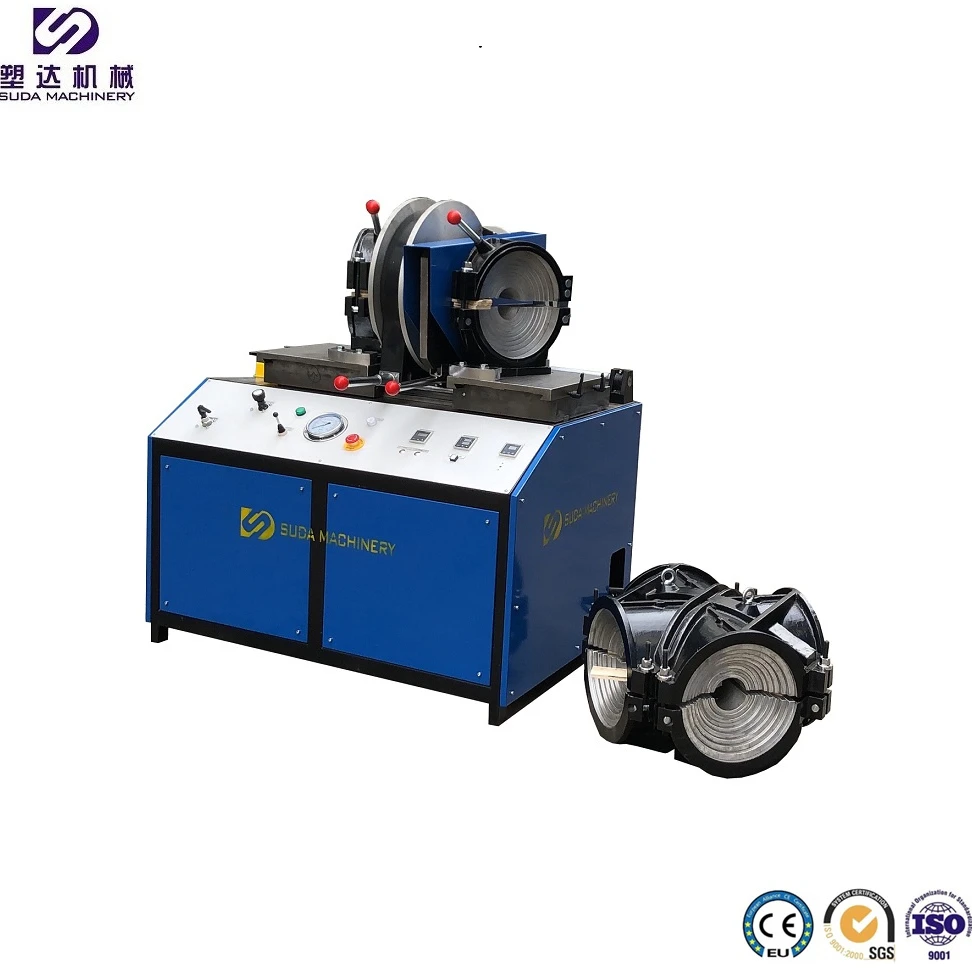
In plastics processing, welding machines also refer to equipment used for plastic welding, especially for thermoplastics, where heat, friction, vibration, or ultrasonic energy softens mating surfaces so they can fuse on cooling. This broader interpretation matters because the same industrial logic applies: controlled energy delivery, repeatable joint formation, and process-specific tooling determine weld quality, productivity, and cost.
The technology has evolved from transformer-based, manually operated systems toward compact inverter-based and digitally controlled machines with stable arc characteristics, lower energy losses, and better portability. Current development priorities include automation, data connectivity, better fume and energy management, and compatibility with high-value materials and lightweight structures. Sustainability is increasingly important as manufacturers seek to reduce scrap, rework, shielding-gas consumption, and electricity use while improving joint consistency and worker safety.
History and Development
Early welding relied on flame-based and resistance-based joining methods before electric arc welding became the dominant industrial route for metal fabrication. As electric power systems expanded in the 20th century, arc welding machines became more practical for shipbuilding, construction, repair, and mass production.
Key milestones include:
- Arc-welding power supplies became a foundation of industrial joining, enabling consistent high-current heat generation for steel fabrication and repair.
- Resistance welding systems matured for sheet-metal production, especially in automotive manufacturing, where spot and projection welding became integral to high-volume assembly.
- Inverter welding machines replaced many older transformer-heavy designs in portable and production equipment, improving arc stability, reducing weight, and lowering electrical losses.
More recently, welding machines have been integrated with robot controllers, seam-tracking sensors, programmable power sources, and industrial networks, turning welding from a largely manual craft into a highly monitored manufacturing process.
Technical Overview
A welding machine is fundamentally a controlled power-conversion system. It converts incoming mains, generator, or plant power into the current and voltage required by a specific joining process, then regulates the output to sustain the weld.
Working principle
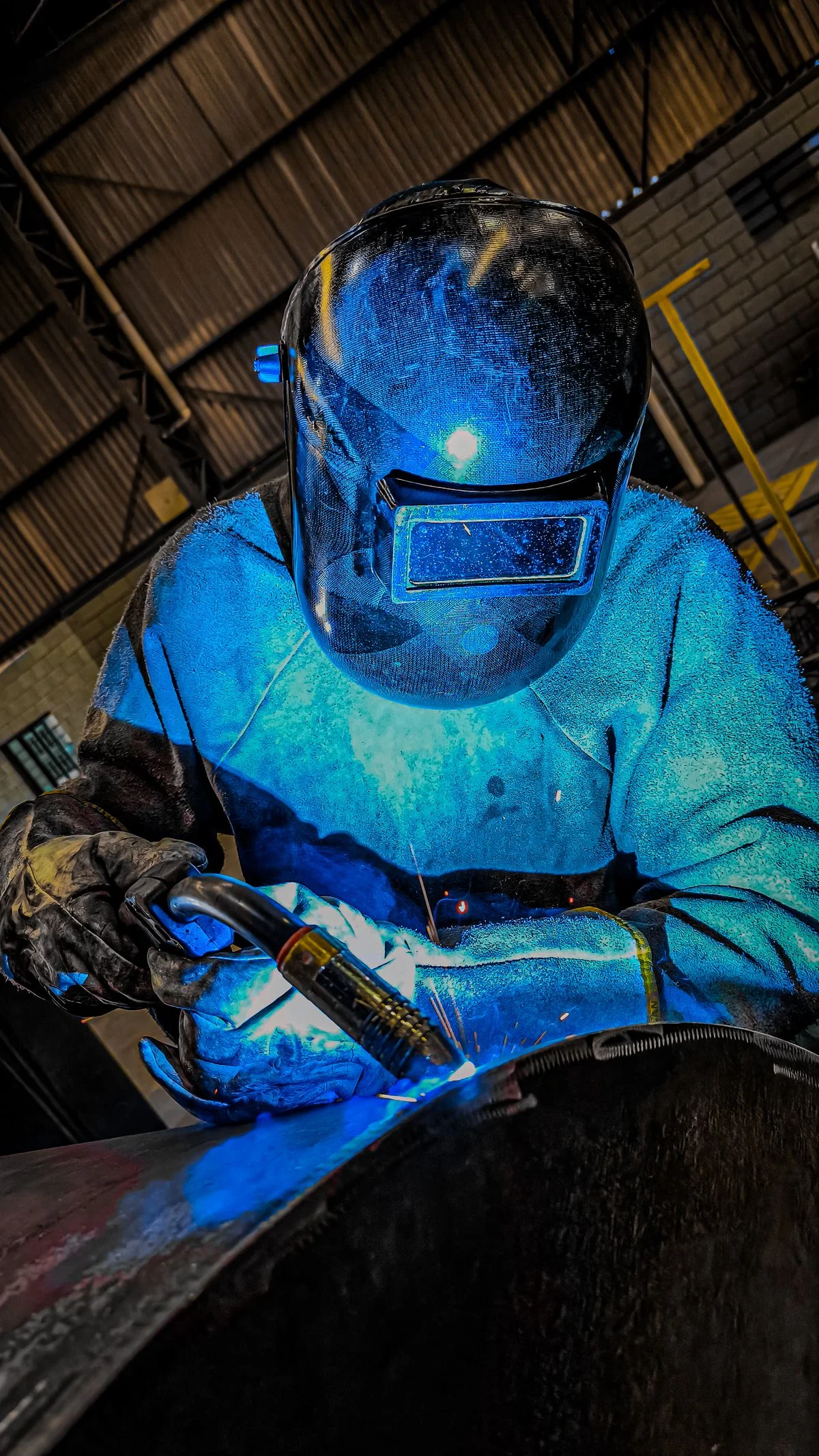
In arc welding, the machine establishes an electric arc between an electrode and the workpiece. The arc ionizes the gap, producing intense heat that melts the base metal and, depending on the process, the filler metal. The molten pool solidifies into a weld bead that forms the joint.
Typical arc temperatures reported in general technical descriptions range from about 5,000°C to 20,000°C, with many introductory sources citing values around 6,000°C for common arc processes.
Main machine subsystems
- Power source: transformer, rectifier, inverter, or engine-driven generator.
- Control electronics: regulate current, voltage, pulse behavior, and dynamic response.
- Electrode holder, torch, or gun: delivers current and filler wire where applicable.
- Wire feeder: used in MIG/GMAW and flux-cored processes for continuous electrode delivery.
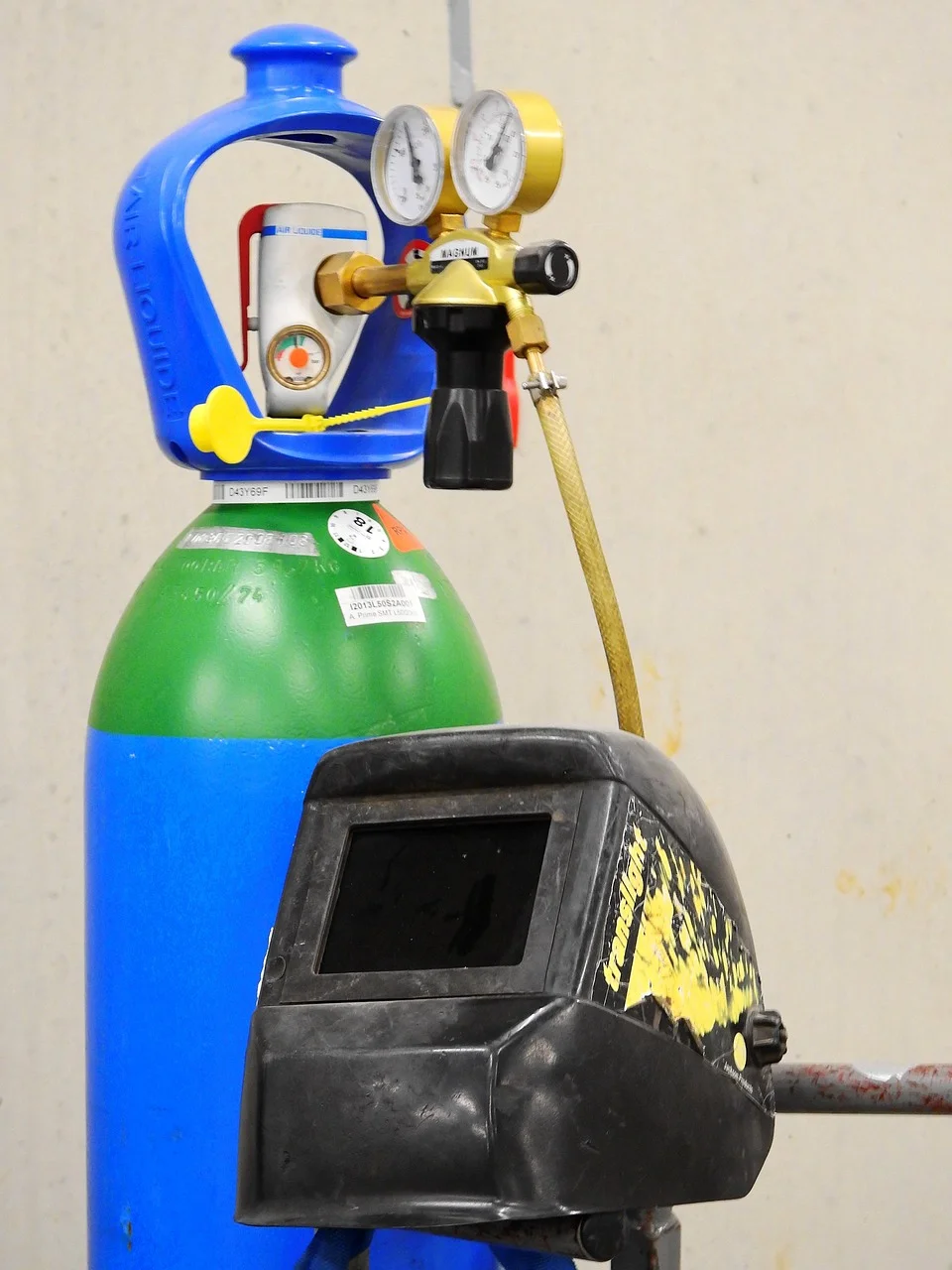
- Shielding-gas system: protects the molten pool from oxidation in gas-shielded processes.
- Work clamp/return lead: completes the electrical circuit.
Typical operating characteristics
| Parameter | Common industrial range or benchmark |
|---|---|
| Arc-welding current | Roughly 100–300 A in many manual and light production applications, with higher currents used in heavy fabrication |
| Open-circuit voltage | Process-dependent, often designed to sustain arc initiation and stability |
| Output characteristic | Constant current for processes such as stick and TIG; constant voltage for MIG/FCAW |
| Power architecture | Traditional transformer/rectifier or modern inverter designs |
| Arc gap in manual operation | Often only a few millimeters in arc starts and short-arc control |
| Arc temperature | About 5,000°C to 20,000°C depending on process and conditions |
Industrial performance benchmarks
For metal joining, machine capability is often discussed in terms of deposition rate, duty cycle, and penetration. In production environments, MIG and flux-cored systems are favored for higher deposition rates, while TIG is chosen for precision, thin sections, and appearance. Submerged arc welding is used for very high deposition in heavy plate fabrication. Resistance welding systems are measured in terms of transformer capacity and force application; one technical example notes a projection welding setup with a 50 kVA transformer and substantial electrode loading.
For plastics-related welding equipment, performance is usually described differently: hot-air plastic welders, extrusion welders, vibration welders, and ultrasonic units are selected by material type, part thickness, and required seam integrity. In these systems, control of temperature, pressure, amplitude, and time is more important than amperage.
Types and Variations
Welding machines can be grouped by heat source, power control, and level of automation.
| Type | Principle | Typical strengths | Typical limitations |
|---|---|---|---|
| SMAW / Stick | Consumable flux-coated electrode | Rugged, portable, good for outdoor repair | Slower deposition, more spatter and slag |
| MIG / GMAW | Continuous wire feed with shielding gas | High productivity, easier learning curve | Sensitive to wind and gas coverage |
| TIG / GTAW | Non-consumable tungsten electrode | Highest control and clean welds | Slower, more operator skill required |
| FCAW | Flux-cored wire, gas-shielded or self-shielded | Good for thick material and field work | Smoke and slag removal |
| SAW | Arc submerged under granular flux | Very high deposition, deep penetration | Limited to flat or horizontal fabrication |
| Resistance welding | Heat from electrical resistance and pressure | Fast, repeatable, ideal for sheet metal | Tooling-specific, joint design dependent |
| Plasma welding | Constricted arc with high energy density | Precision and narrow heat-affected zone | More complex equipment |
| Laser welding | Concentrated photon energy | High speed, low distortion, automation-friendly | High capital cost and fit-up sensitivity |
| Multi-process machines | Combine multiple welding modes | Flexible for shops and maintenance | Higher upfront cost |
For plastics, related welding-machine classes include hot-plate welders, hot-gas welders, extrusion welders, vibration welders, spin welders, and ultrasonic welders.
Applications and Uses
Welding machines are central to sectors that require durable structural or hermetic joints:
- Construction and infrastructure: structural steel fabrication, rebar cages, beams, and site repair, often using stick, flux-cored, or SAW equipment.
- Automotive manufacturing: body-in-white assembly, bracket joining, and sheet-metal spot welding, especially with resistance welding and robotic MIG systems.
- Shipbuilding and heavy fabrication: thick-plate welding, long seams, and automated submerged arc processes.
- Aerospace and precision manufacturing: TIG, plasma, and laser systems for thin-wall alloys and high-integrity joints.
- Maintenance and repair: portable stick and multi-process machines for field conditions.
- Plastics fabrication: thermoplastic tank building, piping, geomembranes, ducts, and industrial components using plastic welding machines.
One poor-fit use is high-speed mass joining of very thin, highly conductive metals in an unshielded outdoor environment; in that situation, gas-shielded processes can become unstable, and resistance or laser alternatives may be more suitable depending on joint geometry and access conditions.
Engineering and Process Selection
Selecting a welding machine depends on material, thickness, joint type, environment, and required productivity.
- Material type: carbon steel, stainless steel, aluminum, thermoplastics, or dissimilar-material combinations.
- Thickness: thin-gauge sheet often favors TIG, laser, or resistance welding, while thick sections may favor MIG, FCAW, or SAW.
- Location: outdoor work often favors stick or self-shielded flux-cored systems because wind can disrupt shielding gas.
- Quality requirement: precision and cosmetic finish favor TIG or laser; speed and throughput favor MIG, FCAW, or automated resistance welding.
- Automation level: shop fabrication can use manual or semi-automatic systems, while high-volume plants increasingly use robots and programmable welding cells.
Technological Innovations and Automation
Modern welding machines increasingly incorporate:
- Inverter power electronics for compact design and efficient energy conversion.
- Pulse control for better heat management and reduced distortion.
- Synergic programs that simplify setup by linking wire-feed speed, voltage, and arc parameters.
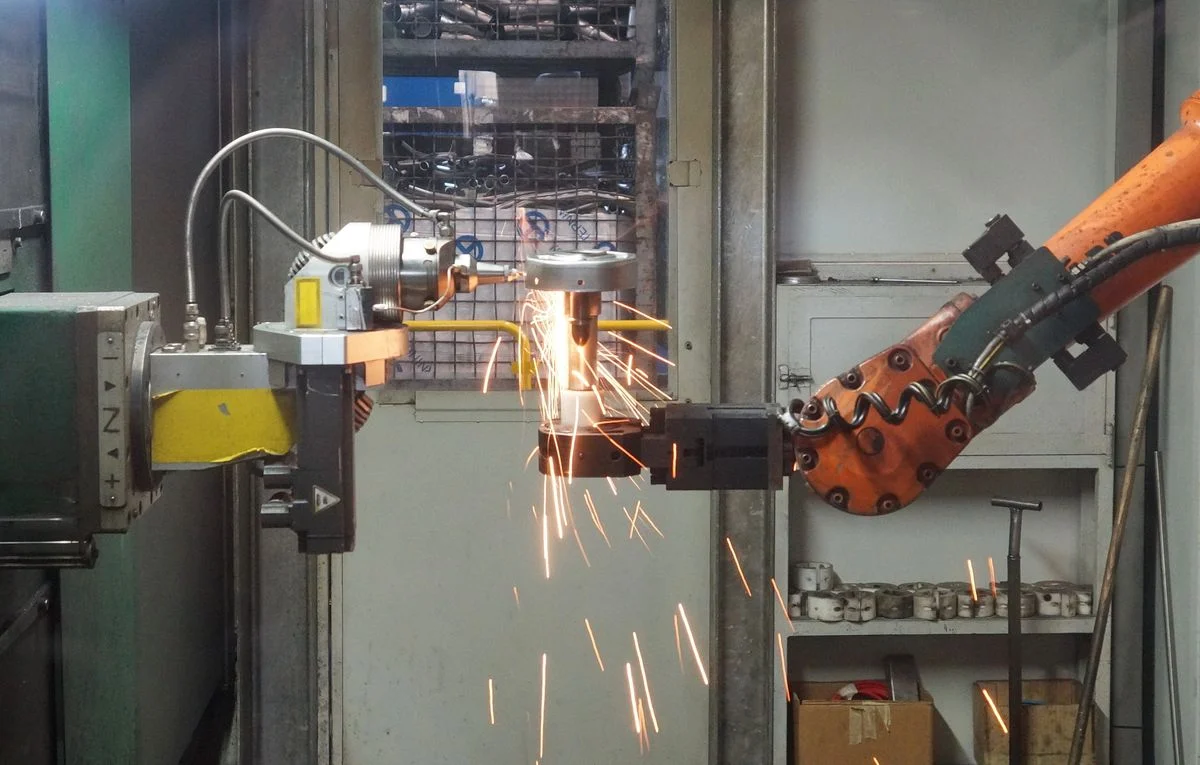
- Robotic integration for repeatable weld paths in automotive and appliance production.
- Sensor-based monitoring for seam tracking, arc stability, and quality assurance.
- Digital connectivity for production data capture, traceability, and predictive maintenance.
These developments have reduced dependence on operator intuition alone, although skilled setup and supervision remain essential for quality outcomes.
Environmental and Sustainability Aspects
Welding machines influence sustainability through energy demand, consumables use, and scrap generation.
- Energy efficiency has improved with inverter-based power supplies and optimized duty-cycle control.
- Material waste reduction comes from better joint control, lower rework, and fewer rejected parts.
- Consumable reduction is possible through stable arcs, correct shielding-gas flow, and automated parameter control.
- Worker-health measures include fume extraction, filtering, and better process selection to limit emissions at the source.
- Circular-economy relevance is strong because welding supports repair, remanufacturing, and life extension of metal equipment and plastic assemblies.
For plastics, welding can reduce adhesive use and mechanical fasteners in selected applications, which may simplify disassembly or repair if the part design is compatible with recycling strategies.
Economic and Global Market Impact
Welding machines are a core capital asset in fabrication, construction, transport, energy, and plastics manufacturing. Their economic importance comes from their direct impact on throughput, labor productivity, and defect rates.
Demand is shaped by:
- Infrastructure investment in bridges, pipelines, buildings, and transport systems.
- Automotive and industrial automation that favor robotic and resistance systems.
- Repair and maintenance markets that value portability and multi-process flexibility.
- Regional manufacturing growth in Asia, Europe, and North America, where machine selection is influenced by labor cost, energy pricing, and compliance requirements.
Manufacturers compete on arc stability, digital controls, duty cycle, service networks, and integration with automation platforms rather than on price alone.
Current Challenges and Innovations
Key challenges include:
- Operator skill variability, especially in manual arc processes.
- Heat input control, which affects distortion, metallurgical properties, and weld appearance.
- Shielding sensitivity in windy or contaminated environments.
- Fume exposure and workplace safety, particularly in high-volume production.
- Compatibility with advanced materials, including aluminum alloys, high-strength steels, and thermoplastics with narrow process windows.
Innovation is focused on adaptive control, improved consumables, smarter diagnostics, and hybrid systems that combine speed with precision. In plastics welding, the challenge is similar: consistent surface preparation and controlled energy delivery remain decisive for joint quality.
Future Outlook
Future welding machines are likely to become more automated, more data-driven, and more energy-efficient. In metal joining, this will mean wider use of robot-ready power sources, closed-loop process control, and hybrid joining methods. In plastics, more advanced temperature control, inline monitoring, and application-specific tooling will expand use in packaging, automotive interiors, medical devices, and industrial pipe systems.
The long-term direction is clear: welding machines are evolving from standalone tools into integrated production platforms that link process science, machine control, quality assurance, and sustainability objectives.
References
- •
Guide to welding machine types and their applications. (2023, March 13). Eziil. https://eziil.com/welding-machine-types/Link
- •
5 different types of welding machines [How to choose]. (2023, July 20). Sunbelt Rentals. https://www.sunbeltrentals.com/resources/blog/industrial-tool/welding-machines/Link
- •
12 types of welding machines. (2024, January 22). Igoldenlaser. https://www.igoldenlaser.com/12-types-of-welding-machines/Link
- •
How welding machine works: Types and tips for choosing. (2020, April 3). Ingco. https://www.ingco.com/blog/how-welding-machine-worksLink
- •
15 different types of welding machines & their uses. (2025, October 6). Engineeringchoice. https://www.engineeringchoice.org/types-of-welding-machines/Link
- •
What are the different types of welding machines? (2025, June 26). H&K Fabrication. https://hkfabrication.com/different-types-of-welding-machines/Link
- •
How does a welding machine work? (2014). ATO.com. https://www.ato.com/how-does-a-welding-machine-workLink
- •
Different types of welding machines and their uses. (2026, August 3). Steelmax Tools. https://steelmax.com/types-of-welding-machine/Link
- •
How welding machines work: A beginner's guide. (2026, July 29). Weldingpilot. https://weldingpilot.com/how-does-a-welding-machine-work/Link
- •
How does a welding machine work? Complete overview. (2025, January 23). Ssimder. https://www.ssimder.com/blogs/ssimderwelder/how-does-a-welding-machine-work-complete-overview-1Link
- •
What are the 7 types of welding machines – Choosing the right one. (2026, April 25). Thejimbosliceworkshop. https://thejimbosliceworkshop.com/what-are-the-7-types-of-welding-machines/Link
- •
22 types of welding machines & their uses. (2024, August 8). Raxindustry. https://www.raxindustry.com/blog/types-of-welding-machines/Link
- •
How does a welding machine work? (2022, August 14). Nutech. https://www.nu-tech.us/how-does-a-welding-machine-work/Link
- •
Welding machine overview. (2018, January 16). Tulsa Welding School. https://www.tws.edu/blog/welding/welding-machine-overview/Link
- •
Types of welding machines, arc, oxyfuel gas, resistance and solid-state. (2023). Weldinginfo. https://www.weldinginfo.org/welding-technology/types-of-welding-machines-and-processes/Link
- •
How does a welding machine work? Simple explanation & uses. (2025, December 9). Ferrcasting. https://www.ferrcasting.com/how-does-a-welding-machine-work/Link
- •
The ultimate guide to types of welding machines. (2024, August 13). Car-O-Liner. https://car-o-liner.com/en-us/the-ultimate-guide-to-types-of-welding-machines/Link
- •
10 different types of welding machines. (n.d.). Industry Buying. https://www.industrybuying.com/articles/types-of-welding-machinesLink
- •
Welding machine | Definition, processes & safety. (2026, May 20). Darda. https://www.darda.de/en/knowledge/welding-machineLink
- •
Welding machines - An overview. (n.d.). ScienceDirect. https://www.sciencedirect.com/topics/physics-and-astronomy/welding-machinesLink
- •
Welding machines: Types, techniques & safety. (2024, October 30). StudySmarter. https://www.studysmarter.co.uk/explanations/engineering/mechanical-engineering/welding-machines/Link
- •
How to choose the right welding machine for your project. (2024, October 29). Weldingmart. https://weldingmart.com/blogs/how-to-weld/how-to-choose-the-right-welding-machine-for-your-projectLink
- •
Comprehensive guide to welding machines. (2024, November 1). Trcwelding. https://trcwelding.com/comprehensive-guide-to-welding-machines/Link
- •
How does a welding machine work? (2025, January 1). Hotairtools. https://www.hotairtools.com/blog/how-does-welding-machine-work/Link
- •
Overview of 16 types of welding machines. (2024, November 20). MFG Shop. https://shop.machinemfg.com/overview-of-16-types-of-welding-machines/Link
- •
Guide to welding equipment types. (2024, December 2). Decapower. https://www.decapowerwelder.com/guide-to-welding-equipment-types/Link
- •
16 essential types of welding machines to know about. (2023, November 16). Beginner Welding Guide. https://beginnerweldingguide.com/types-of-welding-machines/Link
- •
Eli5: How exactly does welding work? (n.d.). Reddit. https://www.reddit.com/r/explainlikeimfive/comments/wtj71m/eli5_how_exactly_does_welding_work/Link
- •
Different types of welding and what they are used for. (2021, May 13). The Manufacturer. https://www.themanufacturer.com/articles/different-types-of-welding-and-what-they-are-used-for/Link
- •
ELI5: How does welding work? (n.d.). Reddit. https://www.reddit.com/r/explainlikeimfive/comments/14rh1gg/eli5_how_does_welding_work/Link
- •
Welding. (2002, March 18). In Wikipedia. https://en.wikipedia.org/wiki/WeldingLink