
Introduction
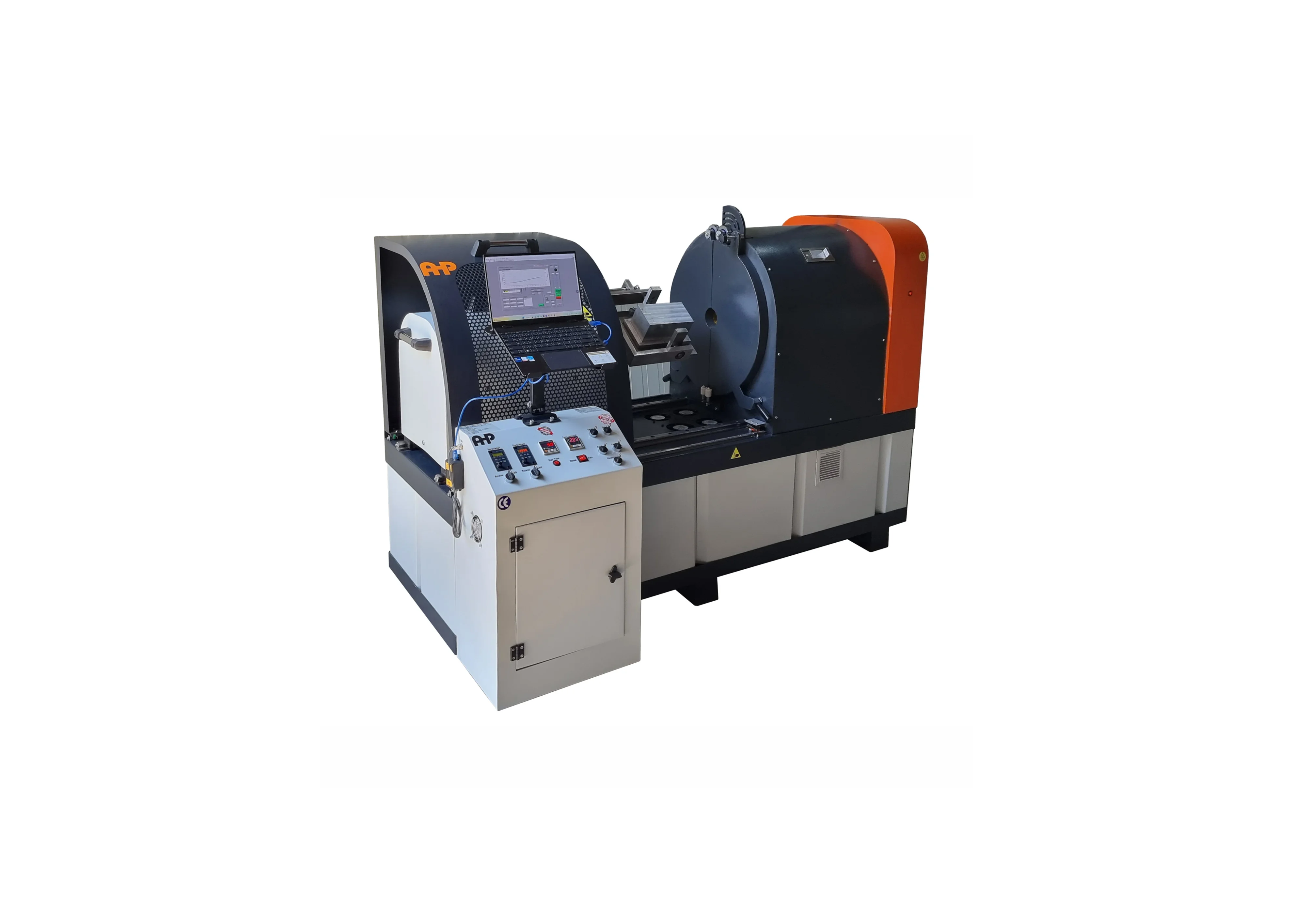
Rotational molding machines are industrial systems used to manufacture large, hollow, seamless plastic parts by heating a charged mold while rotating it biaxially through an oven and cooling stage. The process is especially suited to low-pressure production of tanks, containers, enclosures, toys, marine parts, traffic barriers, and many other hollow products where uniform wall thickness, integrated geometry, and relatively low tooling pressure are important.
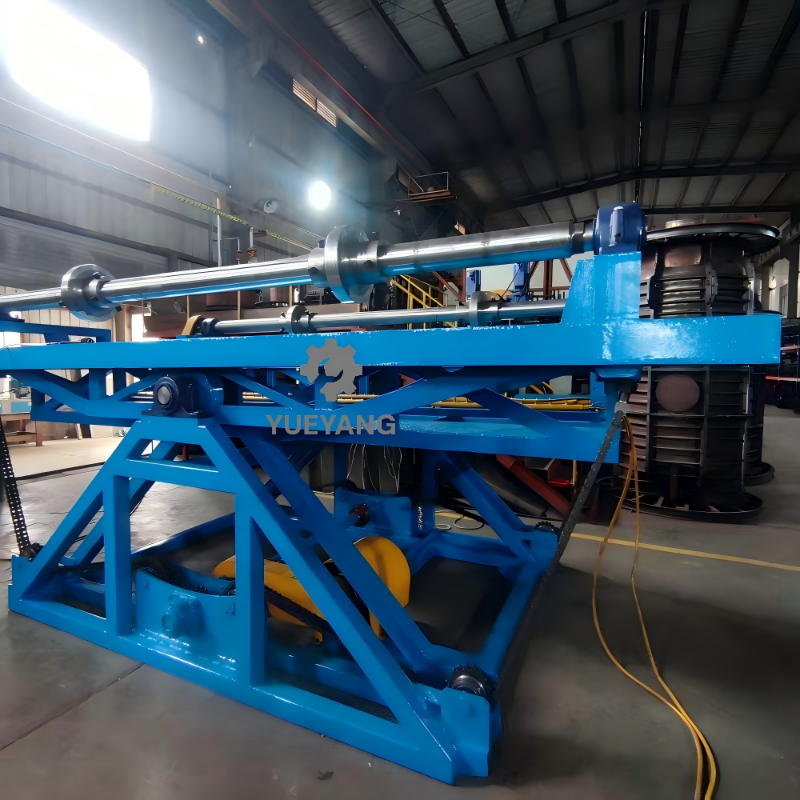
Unlike injection or blow molding, rotational molding relies on gravity-assisted powder or liquid deposition rather than high pressure, which makes the machinery mechanically simpler but thermally intensive. Modern machine families include carousel, shuttle, rock-and-roll, clamshell, and independent-arm systems, each optimized for different part sizes, cycle flexibility, and production volumes. The technology has evolved from relatively manual, single-station equipment into highly automated multi-arm systems with programmable rotation ratios, temperature monitoring, cooling control, and data-driven cycle optimization.
Because the process is thermal rather than pressure-driven, its sustainability profile is shaped by oven efficiency, insulation quality, cycle time, material utilization, and scrap reprocessing practices. Recent development trends emphasize energy reduction, improved oven and arm control, faster cooling without distortion, and greater compatibility with recycled polymers, multilayer structures, and specialty formulations.
History and Development
Rotational molding emerged as a practical method for producing hollow plastic goods once thermoplastics became available in powder and liquid forms suitable for low-pressure forming. Early systems were comparatively simple, often relying on manual loading, basic biaxial motion, and batch processing.
Several milestones shaped the modern machine platform:
- The adoption of biaxial rotation established the core process principle: continuous motion around two axes to coat the interior of the mold evenly.
- The transition to carousel and shuttle machine architectures improved throughput by separating loading, heating, and cooling into coordinated stations.
- The introduction of independent-arm machines allowed different molds to run with different cycle times on the same platform, enabling simultaneous production of parts with different thicknesses or materials.
More recent development has focused on better control of oven temperature, arm speed ratios, cooling air and mist, and mold venting to reduce porosity, warpage, and energy consumption.
Key Characteristics and Technical Overview
Rotational molding machines are designed around a simple sequence: charge the mold, heat while rotating on two axes, cool while rotation continues, then open and demold. The machine must provide stable mechanical motion, controlled heat input, and repeatable cooling so that the polymer fuses into a uniform hollow shell.
Core operating principles
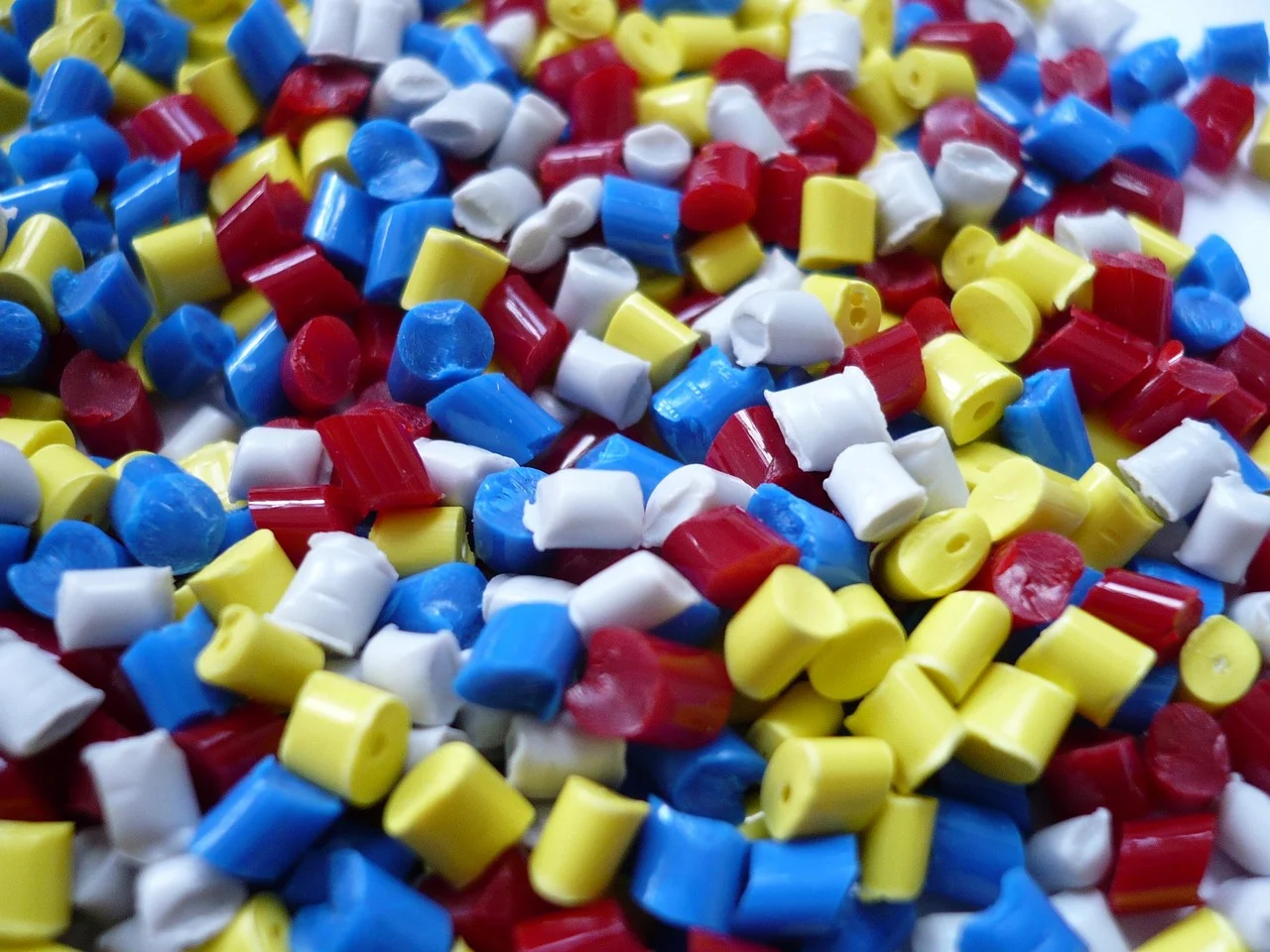
- Charge form: Most rotational molding uses polymer powder, commonly linear polyethylene, though some specialty systems use liquid feedstocks such as PVC plastisol or polyurethane formulations.
- Mold motion: The mold rotates slowly on a major axis and a minor axis so that material continually contacts all interior surfaces.
- Low-speed regime: Rotational molding is distinct from centrifugal casting because the speed is low; the powder tumbles and adheres as it heats rather than being thrown outward by centrifugal force.
- Wall formation: Wall thickness is primarily controlled by shot weight, not pressure.
- Cooling: Cooling occurs while still rotating, usually with forced air and often a water mist, to prevent pooling and warpage.
Typical technical benchmarks
- Powder particle size: A common feed is around 35 mesh, or roughly 500 µm.
- Rotation speed: Major-axis speeds are commonly in the range of 4–12 rpm, with overall rotational speeds often cited broadly at 4–20 rpm depending on part geometry and machine type.
- Oven temperature: Typical oven conditions are about 260–370 °C.
- Peak internal air temperature (PIAT): For polyethylene, PIAT is often around 204–221 °C.
- Residual moisture after dewatering: In systems that incorporate centrifugal or mechanical dewatering of wash flakes used for recycle or compounded feed preparation, residual moisture is commonly targeted in the low single digits, often around 1–3% in well-controlled drying lines; this is an auxiliary process benchmark rather than a core rotomolding-machine specification.
Mechanical and thermal design features
- Hollow mold support: Machines must carry molds that are often relatively large and structurally heavy.
- Arm geometry: Fixed-arm, swing-arm, or independent-arm layouts determine how molds pass through oven and cooling zones.
- Drive control: Modern systems use variable-speed drives to tune the major/minor axis ratio for better coating on complex parts.
- Cooling capacity: Efficient cooling is critical because excessive cooling speed can reduce cycle time but increase warpage or residual stress.
- Vent management: Mold vents are required to release expanding air during heating and reduce pressure buildup inside the cavity.
Types and Variations
| Machine type | Main feature | Typical strengths | Typical limitations |
|---|---|---|---|
| Carousel | Multiple arms move through loading, oven, and cooling stations | High output, efficient batch flow, widely used for production | Requires more floor space and coordinated cycle timing |
| Shuttle | Mold carriage moves between stations, often with two arms | Flexible for large parts and mixed cycles | Lower output than large carousel systems |
| Rock-and-roll | Primarily used for long, narrow parts | Well suited to boats, kayaks, ducts, and long tanks | Less suitable for compact three-dimensional parts |
| Clamshell | Compact machine with integrated motion and heating envelope | Lower footprint, simpler installation | Typically smaller scale and less flexible for very large molds |
| Independent-arm | Each arm can run separate cycles and settings | Ideal for mixed products, different wall thicknesses, or multilayer parts | Higher capital complexity and control requirements |
Carousel machines are among the most common industrial configurations because they support continuous throughput and coordinated station timing. Shuttle machines are often selected where part geometry or plant layout favors flexible transfer between heating and cooling zones. Rock-and-roll systems are specialized for elongated hollow products, while independent-arm machines are valued when multiple mold sizes or cycle times must be run on one machine platform.
Applications and Uses
Rotational molding machines are used to produce large, hollow, durable parts across industrial, agricultural, consumer, and recreational sectors.
Major application sectors
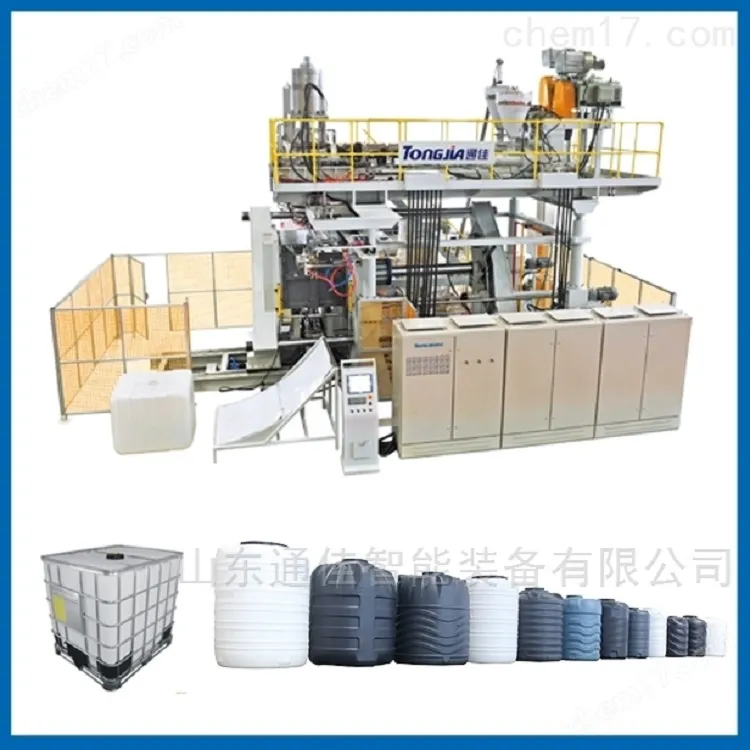
- Storage and containment: Water tanks, chemical tanks, septic tanks, fuel tanks, and industrial reservoirs.
- Material handling: Bins, drums, IBCs, crates, tote boxes, and bulk containers.
- Transportation and off-road: Vehicle fuel tanks, ducts, wheel-arch components, dashboards, and protective covers.
- Recreation: Kayaks, canoes, playground equipment, slides, toys, balls, and sporting goods.
- Infrastructure and safety: Traffic barriers, barricades, road markers, buoys, and floats.
- Industrial housings: Cleaning equipment housings, instrument enclosures, lighting globes, and scrubber bodies.
A notable poor-fit use is thin-walled, highly detailed precision parts with tight dimensional tolerances, where injection molding or thermoforming is usually more efficient and accurate than rotational molding.
Materials and Part Design Considerations
Rotational molding is most commonly associated with polyethylene, especially linear low-density and medium-density grades formulated for powder processing. Depending on the application, processors may also use polyamide, polycarbonate, PVC plastisol, polyurethane, or specialty blends.
Design constraints are strongly linked to the process:
- Wall thickness is set by charge mass and mold geometry.
- Uniform corners and generous radii improve melt flow and reduce weak points.
- Insert placement and undercuts require careful mold engineering because the process is low pressure and relies on melt adhesion rather than forced filling.
- Shrinkage management is important, especially in polyethylene, where shrinkage is relatively high compared with many rigid molding processes.
Technological Innovations and Automation
Modern rotational molding machines increasingly incorporate:
- Programmable axis-speed control for better wall uniformity and part balancing.
- Temperature monitoring and PIAT tracking to improve repeatability and reduce under- or over-cooking.
- Automated loading and unloading aids to reduce labor intensity and handling time.
- Independent-arm operation for production of different part families on one machine.
- Improved oven insulation and airflow design to lower energy demand and shorten cycle time.
- Data logging and process diagnostics for quality control and preventive maintenance.
Automation in rotational molding is often less about extremely high speed and more about repeatability, thermal consistency, and labor efficiency. The trade-off is that added controls and sensors increase machine complexity and capital cost.
Environmental and Sustainability Aspects
Rotational molding has several sustainability advantages and limitations.
Advantages
- The process is low pressure, so tooling can be simpler and more durable than in many pressure-based processes.
- It can produce near-net hollow parts that reduce assembly steps and eliminate weld lines in many applications.
- Material utilization can be favorable in large parts where alternative fabrication would require multiple components.
Limitations
- Energy use is significant because the process depends on heating large molds and ovens over long cycle times.
- Cooling can be a bottleneck, especially if parts require controlled cooling to avoid warpage.
- Powder generation and regrind handling must be managed carefully to preserve part quality.
Recent industry attention has focused on better oven efficiency, reprocessed materials, and process monitoring to reduce scrap and energy intensity while maintaining part integrity.
Economic and Global Market Impact
Rotational molding machines occupy a specialized but globally important segment of plastics processing because they serve part sizes and shapes that are difficult to produce economically by other methods. Demand is strongest where hollow, durable, weather-resistant parts are required and tooling cost must remain comparatively moderate.
The market is supported by:
- water and chemical storage infrastructure,
- agriculture and material handling,
- outdoor recreation and playground products,
- industrial enclosures and safety equipment.
Machine suppliers include firms focused on carousel, shuttle, rock-and-roll, and independent-arm platforms, with competition often centered on throughput, footprint, energy efficiency, and service support rather than on standardized machine outputs.
Current Challenges and Innovations
Key challenges in rotational molding machine operation include:
- Long cycle times relative to pressure molding methods.
- Energy intensity due to heating and cooling of large thermal masses.
- Part consistency, especially for thick sections, large molds, and complex geometries.
- Warpage and shrinkage, which are highly sensitive to cooling rate and material formulation.
Current innovations are addressing these issues through:
- better thermal modeling of oven and mold behavior,
- more precise control of major/minor axis ratios,
- enhanced cooling strategies with air and mist staging,
- use of recycled and formulated powders,
- and machine architectures that permit mixed-cycle production without idle time.
Future Outlook
The future of rotational molding machines is likely to be shaped by three converging priorities: energy reduction, automation, and material circularity. Machine builders are expected to continue refining oven efficiency, motion control, and station synchronization, while processors push toward recycled-content powders, lower-emission heating systems, and better digital process control.
Independent-arm systems and flexible carousel platforms will likely gain importance where plants need to run multiple product families with different wall thicknesses or cycle durations on the same asset base. At the same time, process simulation and sensor-based monitoring should improve first-pass quality, reduce scrap, and narrow the historical productivity gap between rotational molding and faster high-pressure processes.
Summary
Rotational molding machines are specialized thermal processing systems for producing hollow plastic parts with uniform walls, low tooling pressure, and broad design freedom. Their main machine families—carousel, shuttle, rock-and-roll, clamshell, and independent-arm—serve different throughput and geometry requirements, while ongoing innovation is focused on energy efficiency, automation, and sustainability.
References
- •
Rotational molding machines: A complete guide. (2023, July 14). Rotodynamics. https://rotodynamics.com/rotational-molding-machines-a-complete-guide/Link
- •
A guide to rotational molding [PDF]. (n.d.). Lawrence Berkeley National Laboratory. https://www-eng.lbl.gov/~shuman/NEXT/MATERIALS&COMPONENTS/HV/Guide_Rotational_Molding.pdfLink
- •
Rotational molding. (n.d.). DEG Comp. https://degcomp.com/pdf/SME.Rotomolding.3.2017.pdfLink
- •
Rotational molding: Definition, process, and advantages. (2023, July 29). Xometry. https://www.xometry.com/resources/injection-molding/rotational-molding/Link
- •
Rotational molding machines and the rotomolding process. (2021, October 21). Gregstrom. http://gregstrom.com/rotational-molding-machines/Link
- •
The rotational molding process. (2026, January 15). Roto Dynamics. https://rotodynamics.com/services/rotational-molding/the-rotational-molding-process/Link
- •
Rotational molding machines. (2015, October 9). Plastic-Industry.gr. https://plastic-industry.gr/en/rotational-molding-machines/Link
- •
Rotational moulding. (2015, October 18). ScienceDirect. https://www.sciencedirect.com/topics/engineering/rotational-mouldingLink
- •
RotoSpeed: Products and solutions. (n.d.). Ferry Industries. https://www.ferryindustries.com/RotoSpeedLink
- •
Types, processes, and materials used in rotational molding. (2026, May 14). IQS Directory. https://www.iqsdirectory.com/articles/rotationally-molded-plastic/rotational-molding.htmlLink
- •
Rotational moulding machine in the real world: 5 uses you'll actually... (2025, October 20). LinkedIn. https://www.linkedin.com/pulse/rotational-moulding-machine-real-world-5-uses-youll-actually-qcbxeLink
- •
Typical rotomolding applications and markets. (n.d.). Association of Rotational Molders. https://www.rotomolding.org/design-guide-pt1-ch1Link
- •
Rotational molding process in the real world: 5 uses you... (2025, October 1). LinkedIn. https://www.linkedin.com/pulse/rotational-molding-process-real-world-5-uses-wta7fLink
- •
Guide to rotational molding. (2023, November 1). Entec Polymers. https://www.entecpolymers.com/resources/product-guides/guide-to-rotational-moldingLink
- •
Products. (2023, May 4). Rotomachinery Group. https://rotomachinery.com/en/products/Link
- •
Rotational molding. (2025, August 1). PlastiWin Capital Equipment. https://plastiwin.com/product-category/rotational-molding/Link
- •
ARM design guide – The rotational molding process. (n.d.). Association of Rotational Molders. https://www.rotomolding.org/design-guide-pt1-ch2Link
- •
Rotation molding — Process guide. (2026, August 11). Manufacturing Processes. https://manufacturingprocesses.org/processes/forming/rotation-moldingLink
- •
Rotomolding process. (n.d.). Ferry Industries. https://www.ferryindustries.com/rotospeed/RotomoldingProcessLink
- •
Roto-molding machine - All industrial manufacturers. (2025, January 1). DirectIndustry. https://www.directindustry.com/industrial-manufacturer/roto-molding-machine-77696.htmlLink
- •
About rotomolding. (2024, July 10). Borke Mold Specialists. https://borkemold.com/industry-news-blog/about-rotomolding/Link
- •
Rotational molding machines. (n.d.). Rotomachinery Group. https://rotomachinery.com/en/products/machines/Link
- •
What kinds of products are made with rotational molding? (2025, August 4). Fibertech Plastics. https://fibertechplastics.com/kinds-products-made-rotational-molding/Link
- •
Rotational molding: The process. (n.d.). Rotomachinery Group. https://rotomachinery.com/en/knowledge-rotational-molding/Link
- •
Rotational molding applications that may surprise you. (n.d.). Gregstrom. http://gregstrom.com/rotational-molding-applications/Link
- •
Used rotational molding machines. (n.d.). KD Machinery. https://www.kdmachinery.com/used-plastic-rotational-molding-machines/Link
- •
What is rotational molding used for? Common applications and examples. (n.d.). Remcon Plastics. https://www.remcon.com/insights/what-is-rotational-molding-used-for-common-applications-and-examples/Link
- •
How do Rotoline rotomolding machines work? (2025, May 19). Rotoline. https://www.rotoline.com/en/blog/rotoline-rotomolding-machines/Link
- •
Rotomachinery Group: Leader in rotational molding. (2021, March 14). Rotomachinery Group. https://rotomachinery.com/en/Link
- •
Yantai Fangda Rotational Molding Co., Ltd. (n.d.). Fangda Roto. https://www.fangdaroto.com/Link
- •
Applications for rotational molding: A comprehensive overview. (2023, April 30). Roto Dynamics. https://rotodynamics.com/applications-for-rotational-molding-a-comprehensive-overview/Link
- •
Shuttle - Rotational molding machine. (2026, August 25). Rotoline. https://www.rotoline.com/en/shuttle-rotomolding/Link
- •
Rotational molding machines. (2026, April 10). Assmann. https://assmann-usa.com/rotational-molding-machines/Link
- •
Rotational molding. (2005, July 28). In Wikipedia. https://en.wikipedia.org/wiki/Rotational_moldingLink
- •
What is a rotational molding machine? Process, types, and key... (2026, March 7). Made-in-China. https://insights.made-in-china.com/What-Is-a-Rotational-Molding-Machine-Process-Types-and-Key-Benefits-for-Manufacturers_IakGxnhMVJHF.htmlLink
- •
Rotational molding machine lab. (2026, April 13). Rotoline. https://www.rotoline.com/en/lab/Link
- •
Rotational molding. (n.d.). Luptons. https://luptons.com/thermoplastic-and-thermoset-molding/rotational-molding/Link
- •
Rock and roll rotomoulding machines factory, buy good price rotational molding equipment products. (n.d.). Rotomolding-Machine.com. https://www.rotomolding-machine.com/products.htmlLink
- •
Rotational moulding equipment. (n.d.). Made-in-China. https://www.made-in-china.com/Manufacturing-Processing-Machinery-Catalog/browse-Rotational-Moulding-Equipment-19282300000003.htmlLink
- •
Buy used rotational molding machines for sale. (2025, May 19). PlastiWin. https://plastiwin.com/buy-used-plastic-processing-equipment/used-rotational/Link
- •
Rotational molding advantages and disadvantages. (2024, August 27). Gemini Group. https://geminigroup.net/rotational-molding-advantages-disadvantages/Link
- •
Rotational molding advantages and disadvantages. (2026, May 5). RMB Products. https://www.rmbproducts.com/rotational-molding-advantages-and-disadvantages/Link