
Introduction
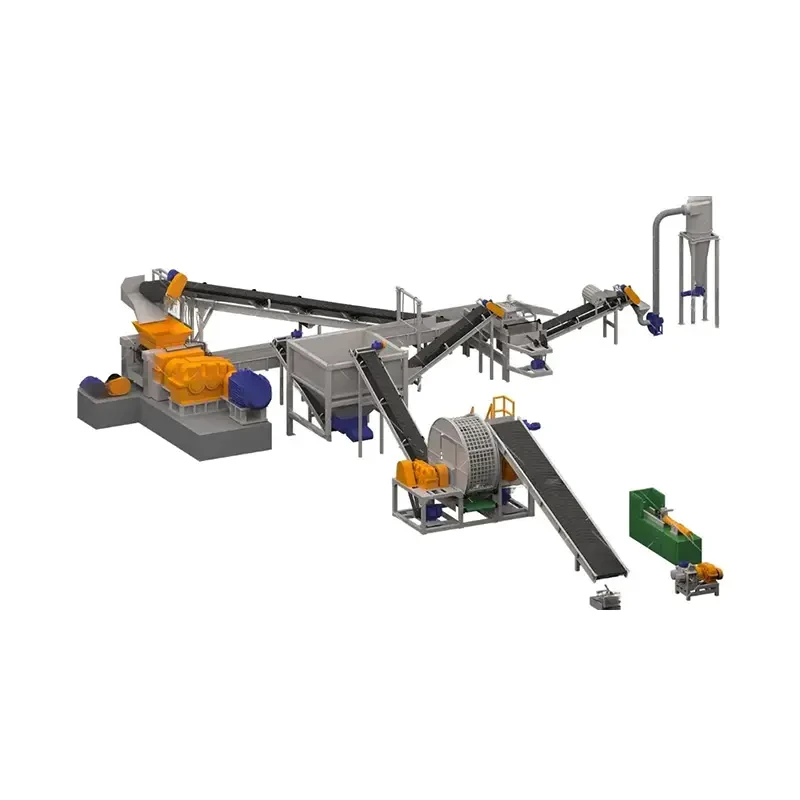
Machines for the tyre industry are the specialized processing, assembly, curing, inspection, and finishing systems used to convert rubber compounds, textiles, and steel reinforcement into finished tyres and related rubber products. The machinery set spans the full production chain, from compounding and component preparation through tyre building and vulcanization, and is increasingly integrated with automation, digital controls, and quality-monitoring systems.
In modern tyre plants, the machine portfolio typically includes internal mixers, extruders, calenders, bead-making systems, tyre building machines, curing presses, post-cure inflators, inspection equipment, and material-handling automation. The sector has evolved from largely manual, batch-oriented production toward highly synchronized production lines with tighter process control, shorter cycle times, and better repeatability. Sustainability is now a central design criterion, with attention to energy-efficient mixing and curing, waste reduction, retreading, recyclable materials, and lower scrap rates.
History and Development
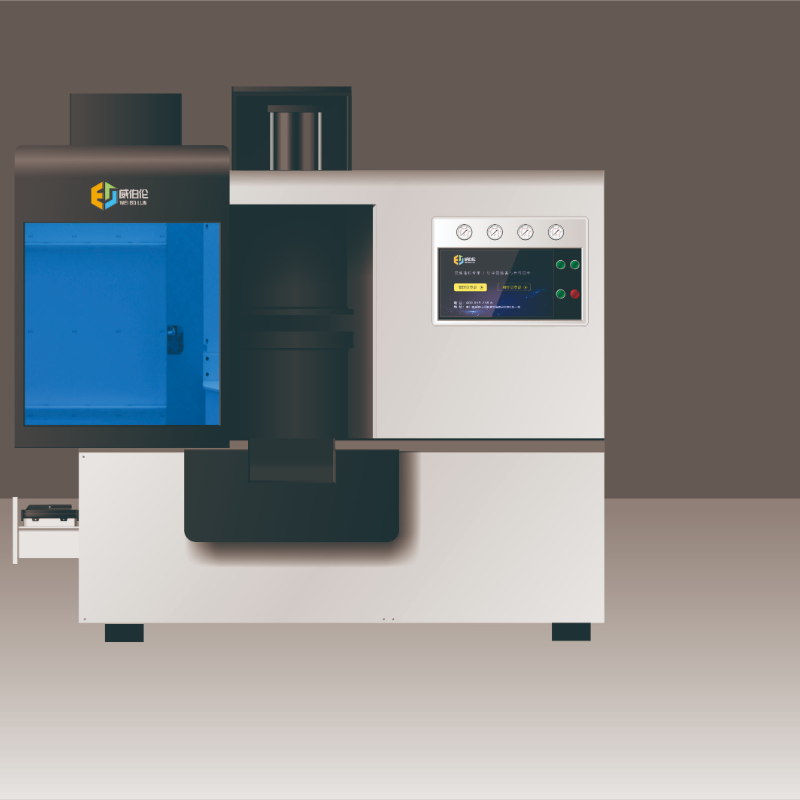
Tyre manufacturing machinery developed alongside the transition from early pneumatic tyres to industrial-scale radial tyre production. As tyre constructions became more complex, individual process steps were separated into dedicated machines for compounding, calendaring, extruding, building, and curing.
Several milestones shaped the modern machine set:
- Internal mixing became the industrial standard for compound preparation, with the Banbury-type mixer widely recognized as a core machine for dispersing fillers and additives into rubber stock.
- Automated tyre building machines replaced much of the manual assembly process by building green tyres on rotating drums with controlled component placement and tension management.
- Servo-controlled curing presses and digital automation improved repeatability in vulcanization, handling, and inspection, supporting the move toward smart factories and traceability across the line.
By the late 20th century, machine suppliers were offering integrated lines for passenger car, truck, bus, motorcycle, bicycle, and specialty tyres, alongside retrofit and modernization packages for existing plants.
Technical Overview
The tyre industry uses a process chain rather than a single machine type, because tyre quality depends on the interaction of all stages. A typical line begins with compounding, followed by component preparation, assembly of the green tyre, vulcanization, and final inspection.
Core machine classes
- Internal mixers combine natural and synthetic rubber, carbon black or silica, oils, curatives, and process aids into a homogeneous compound.
- Extruders form tread, sidewall, apex, strip, and other profiled rubber components by forcing compound through dies.
- Calenders produce rubberized textile plies, steel-cord belts, and innerliner sheets of controlled thickness.
- Tyre building machines (TBMs) assemble the components into an uncured green tyre on a building drum.
- Curing presses vulcanize the tyre in a heated mould under pressure, creating the final tread pattern and carcass geometry.
- Post-cure inflators and inspection machines stabilize tyre shape and verify uniformity, balance, and structural integrity.
Typical process performance
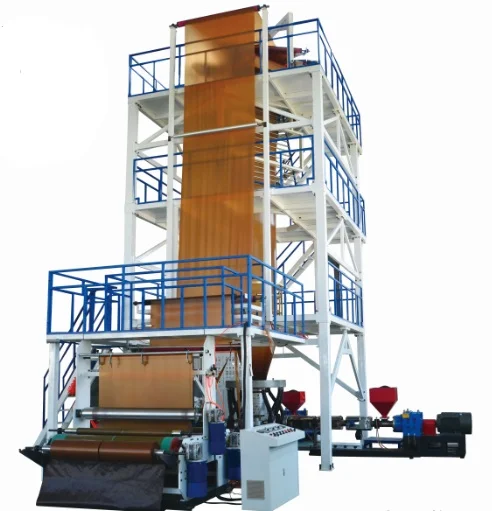
- Internal mixing cycles are commonly measured in minutes per batch, reflecting the high-shear nature of compound preparation.
- Tyre building machines for passenger-car and motorcycle applications may achieve build times in the range of 25–30 seconds per tyre in some configurations.
- Curing presses are commonly configured with 1 to 4 cavities for certain tyre classes, while higher-capacity systems serve truck, bus, and specialty applications.
- Modern curing presses and building systems increasingly use servo and PLC-based control to stabilize pressure, temperature, timing, and component placement.
Engineering characteristics that matter most
- Dispersion quality in mixing determines filler distribution, compound consistency, and downstream wear resistance.
- Dimensional control in extrusion and calendering affects tyre uniformity, which is critical for ride comfort, rolling resistance, and durability.
- Heat and pressure uniformity in curing strongly influence vulcanization, adhesion, and final performance.
- Automation level affects repeatability, labor demand, and traceability, but also increases system complexity and maintenance requirements.
Main Machine Types and Variants
| Machine class | Main function | Common variants | Typical notes |
|---|---|---|---|
| Internal mixer | Compound preparation | Banbury-type, automated batch mixers | High-shear mixing; central to compound quality |
| Extruder | Profile shaping | Single-screw, co-extrusion, vented extruders | Produces tread, sidewall, apex, strip components |
| Calender | Sheet and cord coating | Fabric calender, steel-cord calender, innerliner calender | Critical for plies, belts, and liners |
| Tyre building machine | Green tyre assembly | 1-stage, 2-stage, uni-stage, radial, bias, motorcycle, PCR, TBR | Determines build accuracy and changeover flexibility |
| Curing press | Vulcanization | Hydraulic, servo-controlled, multi-cavity, mould-specific | Final shaping and cross-linking stage |
| Post-cure inflator | Shape stabilization | Batch or inline systems | Helps control flat-spotting and dimensional drift |
| Inspection equipment | Quality control | Uniformity, balance, X-ray, visual inspection | Detects defects before shipment |
Applications and Uses
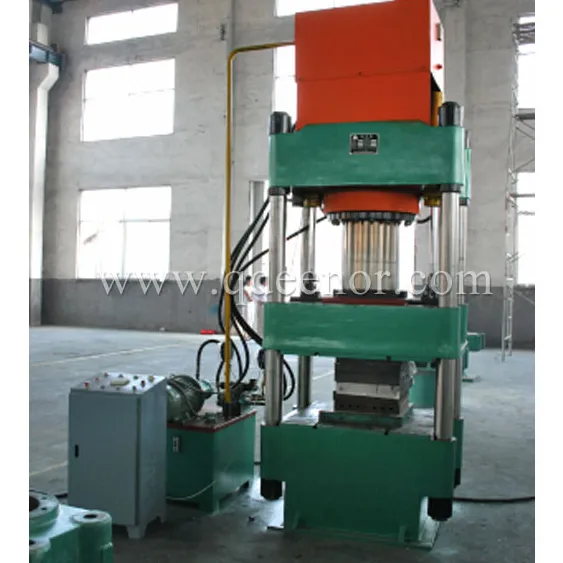
Tyre-industry machinery is used across nearly every tyre segment, but the machine configuration changes with product geometry, volume, and performance target.
- Passenger car tyres (PCR): typically use high-precision mixers, extrusion lines, calenders, uni-stage or multi-stage TBMs, and multi-cavity curing presses.
- Truck and bus tyres (TBR): require robust component preparation, steel-cord handling, and building machines optimized for heavier constructions and larger dimensions.
- Motorcycle and two-wheeler tyres: often emphasize compact building machines and faster cycle times.
- Bicycle tyres and tubes: use smaller-scale building, extrusion, and curing equipment tailored to lower dimensions and lower batch sizes.
- OTR and specialty tyres: depend on larger moulds, presses, and handling systems adapted to very large diameters and heavy carcasses.
- Retreading systems: use dedicated stripping, buffing, tread application, and curing equipment for remanufacturing worn tyres.
A poor-fit use for standard tyre machinery is general-purpose rigid plastics processing, such as injection moulding of polypropylene housings, because tyre machinery is designed for elastomer flow, high-friction compounding, and vulcanization rather than thermoplastic melting and moulding.
Technological Innovations and Automation
Automation now covers almost every stage of tyre production, from compound batching and conveyor logistics to building, curing, and inspection.
Key trends include:
- Closed-loop mixing control to improve batch consistency and reduce compound variation.
- Robotized or highly automated TBMs that improve placement accuracy and reduce operator intervention.
- Servo-hydraulic and fully servo-controlled curing presses that improve pressure and temperature control in intelligent factories.
- Inline inspection and uniformity testing to catch defects earlier and reduce scrap.
- Material-handling automation for drums, moulds, bladders, and component storage.
Some suppliers also integrate end-to-end digital monitoring, remote diagnostics, and predictive maintenance tools, reflecting broader Industry 4.0 adoption in rubber processing.
Environmental and Sustainability Aspects
Sustainability in tyre machinery is driven by energy use, material efficiency, and product life extension.
- Energy efficiency: mixers and curing presses are major energy consumers, so modern equipment focuses on optimized drive systems, heat management, and reduced idle losses.
- Waste reduction: tighter process control lowers off-spec compound, misbuilds, and curing rejects.
- Retreading compatibility: dedicated retreading equipment supports circular-economy strategies by extending tyre life.
- Material innovation: equipment must increasingly handle silica-rich compounds, advanced fillers, and alternative reinforcement packages, which can change mixing and extrusion behavior.
- Lower scrap and rework: automated inspection and uniformity correction systems reduce finished-product losses.
The sustainability trade-off is that higher automation can reduce scrap and labor variability while increasing capital cost, software dependency, and maintenance complexity.
Economic and Global Market Impact
Tyre machinery is a capital-intensive segment tied closely to vehicle production, replacement tyre demand, retreading, and regional industrial policy.
Global suppliers serve different niches:
- Integrated line suppliers provide complete production systems for tyre manufacturers and modernization projects.
- Press specialists focus on curing technology and cavity formats for specific tyre classes.
- Component-equipment suppliers concentrate on extrusion-based belt, body-ply, apex, bead, and innerliner solutions.
Market demand is strongly influenced by:
- vehicle parc growth and replacement cycles,
- regional investments in new tyre plants,
- automation upgrades in existing factories,
- stricter quality, traceability, and efficiency requirements.
Because tyre plants are highly integrated, machine suppliers often compete on process reliability, service support, retrofit capability, and energy performance rather than on a single machine specification.
Current Challenges and Innovations
The sector faces several persistent engineering challenges:
- Compound complexity: advanced formulations can be harder to mix uniformly and process consistently.
- High precision requirements: small deviations in component thickness or placement can affect tyre uniformity and performance.
- Maintenance burden: presses, mixers, and TBMs operate under severe mechanical and thermal loads, requiring robust service regimes.
- Changeover flexibility: manufacturers increasingly need machines that can switch between sizes and constructions without long downtime.
- Digital integration: connecting legacy equipment to modern monitoring and analytics systems can be technically difficult.
Innovation is focused on modularity, faster size changeovers, better energy management, and more comprehensive machine connectivity.
Future Outlook
Future tyre-industry machinery is likely to emphasize higher automation, lower energy intensity, and greater production flexibility. Continued development is expected in servo-driven presses, smarter TBMs, advanced material handling, inline inspection, and plant-wide data integration.
Longer term, machinery design will also be shaped by:
- tyres with lower rolling resistance,
- more sustainable compound systems,
- greater use of recycled and bio-based materials,
- increased demand for retreading and remanufacturing,
- tighter quality standards for electric-vehicle tyres and high-load applications.
The most competitive equipment platforms will be those that combine mechanical robustness with process intelligence, because tyre manufacturing remains one of the most demanding applications in rubber processing.
Summary
Machines for the tyre industry form a tightly linked production ecosystem that transforms raw elastomer compounds into finished tyres through mixing, shaping, assembly, vulcanization, and inspection. The field has progressed from manual rubber processing to highly automated, digitally monitored systems, with ongoing innovation concentrated in energy efficiency, quality control, flexibility, and sustainability.
References
- •
Tyre Making Machine | Tire Production Line Manufacturer. (n.d.).Link
- •
Tire Manufacturing Machines - TireTech India. (2026, January 31).Link
- •
Tire Manufacturing Equipment & Solutions - Discrete Automation. (2026, August 14).Link
- •
Machinery for the Tire & Rubber Industry. (n.d.).Link
- •
Tire Manufacturing Equipment: Mixers, TBMs, Curing Presses & Automation. (n.d.).Link
- •
Matteuzzi Srl. (n.d.).Link
- •
Products. (n.d.).Link
- •
Tyre Manufacturing Machines : Manufacturer of Tyre Making Machinery. (2019, June 7).Link
- •
Tire Manufacturing Equipment Selection Guide. (2025, January 1).Link
- •
Industrial solutions for tyre production | SMC Ireland. (n.d.).Link
- •
Tire Making Machine Factory | Tyre Manufacturing Equipment. (n.d.).Link
- •
Tire equipment from China, Tire equipment Manufacturer&Supplier-DLFTECH. (2024, April 30).Link
- •
Components for machines in tyre production. (2024, September 25).Link
- •
What Are the Tire Production Equipment Used in .... (2024, September 26).Link
- •
Tire Building Machine Supplier - Yuan-King Machinery Co., Ltd. (n.d.).Link
- •
Refurbished Tyre Manufacturing Machines | TireTech India. (2026, January 30).Link
- •
MNC AUTOMATION-Rubber & Tyre Industries, Automation for Rubber & Tyre Industries, Banbury mixer, Banbury automation, Tyre manufacturing, curing press control , extruder control. (n.d.).Link
- •
Tyre Building Machines | Products. (n.d.).Link
- •
Press-on Solid Tyre Rubber Production Line - Dekuma. (2025, September 16).Link
- •
Tire Production Equipment - AUGU. (n.d.).Link
- •
Empowering Automation | Tire Manufacturing Equipment. (n.d.).Link
- •
Tire Component Production Equipment | Steelastic. (2021, March 12).Link
- •
Customized solutions for the tire and automotive industry. (n.d.).Link
- •
Home Page. (2017, April 5).Link
- •
Tyre Building Machine. (2020, August 1).Link
- •
Tire press - All industrial manufacturers. (2025, January 1).Link
- •
Machines for the tire industry. (2023, February 1).Link
- •
Rubber Machinery Solutions | Tyre Equipment | Star Profit. (n.d.).Link
- •
Tire Building. (n.d.).Link
- •
Tools, Equipment and Materials. (2011, February 26).Link
- •
Tyre Industry Machinery. (n.d.).Link
- •
Machinery for the Tire & Rubber Industry. (n.d.).Link
- •
Tyre Curing Presses - HF TireTech Group. (n.d.).Link
- •
Tyre making machine. (2025, January 20).Link
- •
Tire making machine. (2025, January 20).Link
- •
Production Process Technology of Tire Manufacturing. (2022, August 19).Link
- •
Overview of Vulcanising Machines. (2026, March 15).Link
- •
Tyre Manufacturing. (2011, September 5).Link
- •
Car tyre making machine. (2025, January 20).Link
- •
Tire manufacturing. (2006, January 8).Link