
Introduction
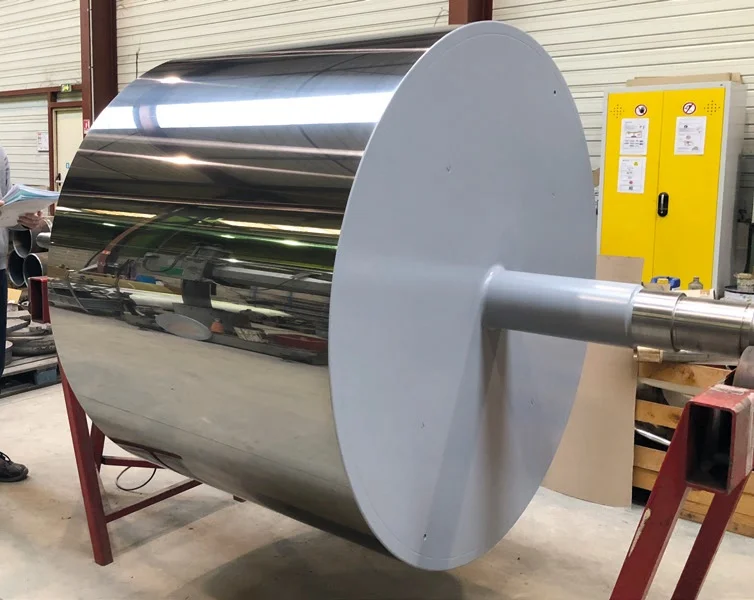
Calenders are a class of heavy-roller plastic processing machines used to convert softened polymer compounds into continuous sheet, film, coating, or embossed products by forcing material through one or more controlled roller gaps, or nips. In plastics manufacturing, the term usually refers to calendering machines rather than date planners; in Chinese, the correct industrial term is 压延机.
Within the plastics industry, calenders are especially important for PVC sheet and film, coated textiles, flooring, synthetic leather, wallcoverings, and certain technical laminates. The technology has a long history, originating in rubber processing and later expanding into thermoplastics as temperature control, roll alignment, and thickness regulation improved. Modern calender lines increasingly combine precision roll heating and cooling, automatic gauge control, surface embossing, downstream cooling, and digital process monitoring to improve uniformity, productivity, and energy efficiency.
History and Development
Calendering developed first in rubber processing, where the basic idea of passing material between heated rollers proved useful for sheet formation and fabric coating. Early machines were limited by difficulty in controlling the roll gap accurately, which restricted thickness precision and slowed broader adoption in plastics.
A second major milestone was the rise of PVC calendering, which made the process economically significant for plastic films, sheets, and coated goods because PVC softens and flows in a range well suited to roll-based forming. This shift established calenders as core equipment in flooring, artificial leather, and flexible sheet production.
A third milestone was the move from mechanically adjusted machines to high-precision lines with thermal management, automatic thickness control, and integrated downstream equipment such as cooling, embossing, traction, winding, and cutting units. These developments improved product consistency and enabled continuous production of wider webs and thinner gauges.
Technical Overview
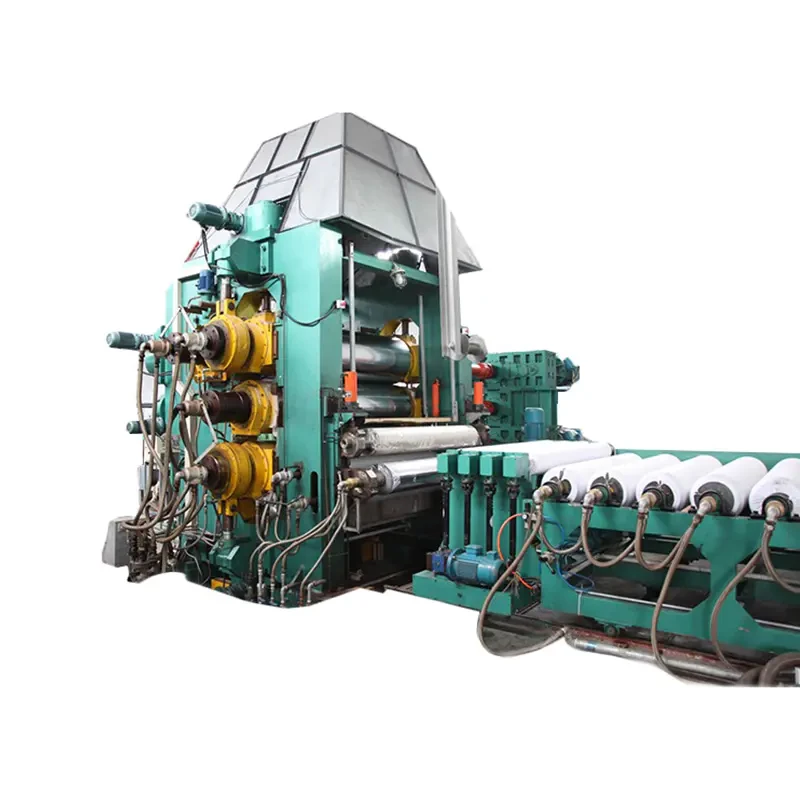
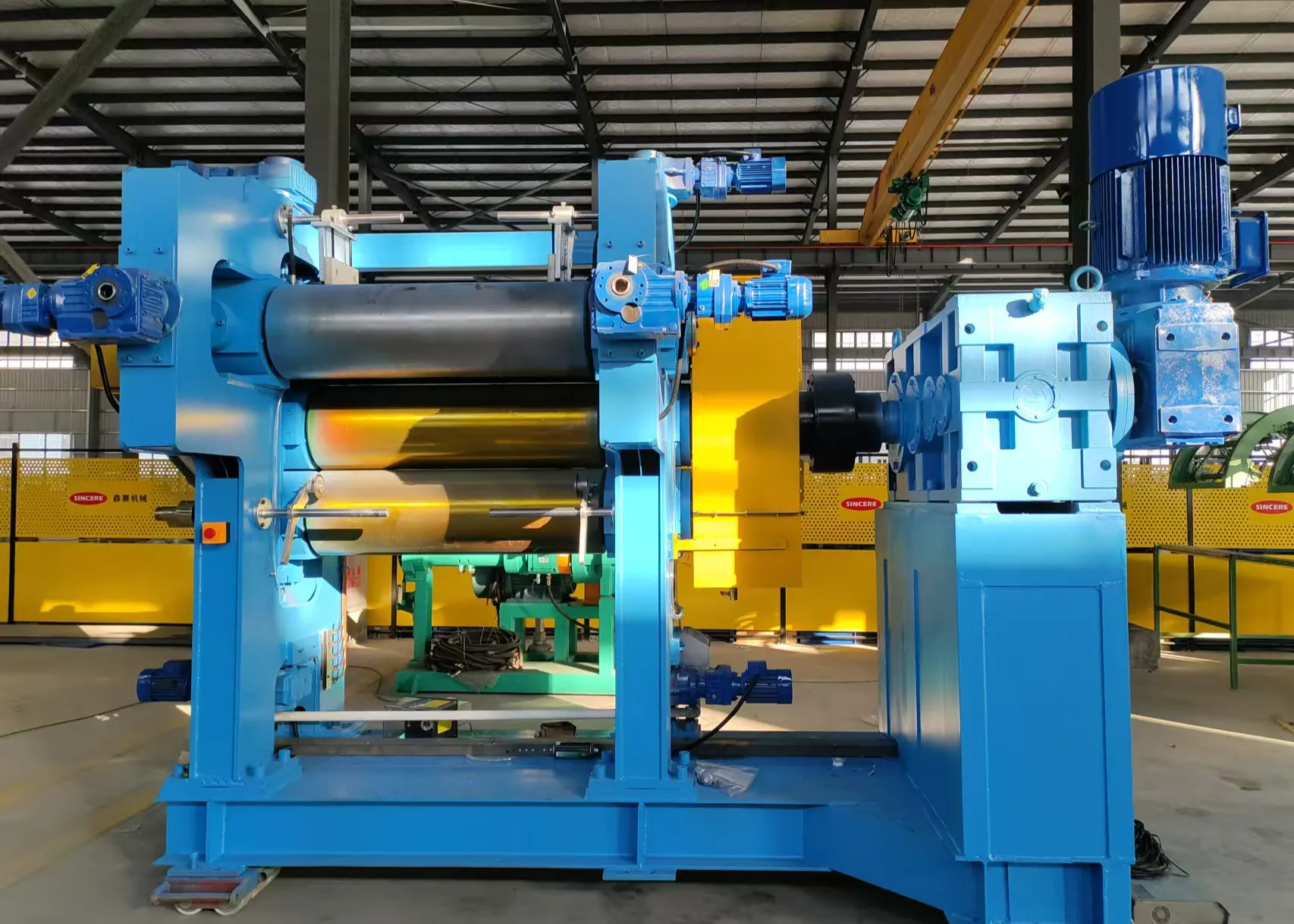
A calender typically consists of two or more parallel rollers arranged in a defined geometry, together with a frame, nip adjustment system, roll temperature control, drive train, lubrication, and control system. The material passes successively through the nips, where it is compressed, sheared, and extended into a continuous sheet or coated web.
Key operating principles include:
- Nip compression: the material is drawn into the gap by friction and compressed into a thinner layer.
- Shear and elongation: relative roll speed and pressure orient the polymer and improve surface finish.
- Thermal conditioning: heated or cooled rolls control viscosity, flow, gloss, and dimensional stability.
- Gauge control: precise roll spacing and roll bending systems help maintain thickness uniformity.
Typical calender configurations include two-roll, three-roll, four-roll, and five-roll machines, with three-roll and four-roll designs being especially common in plastics and rubber processing. Industry descriptions also distinguish I-type, L-type, and Z-type roll arrangements according to the path and function of the material flow.
Typical technical benchmarks
- Roll surface temperature control is often held within tight limits, and in rubber and PVC service can be managed around narrow bands such as ±1 °C in high-precision systems.
- Processing temperatures for many rubber and PVC calendering operations are commonly reported in the approximate 70–120 °C range, depending on compound formulation and product specification.
- Throughput varies widely by line width, number of rolls, and product thickness; industrial calender lines are generally designed for continuous, high-volume output rather than batch operation.
- In recycled polymer preparation associated with calender-fed sheet production, centrifugal dewatering systems can leave low residual moisture before downstream feeding; in industrial recycling contexts, such systems are commonly used to reduce moisture to levels suitable for stable extrusion or compounding, although exact values depend on the equipment train and polymer type.
- Some calendered products are produced from melt or highly softened compound, while others use compounded solids that are plastified upstream and then refined in the roll stack.
Types and Variations
| Type | Main characteristics | Typical use |
|---|---|---|
| Two-roll calender | Simplest configuration; useful for compaction, sheeting, and basic finishing | Rubber and some plastic sheet operations |
| Three-roll calender | Widely used; offers better control of gauge and surface finish | PVC film, rubber sheet, textile coating |
| Four-roll calender | Higher precision and more complex sheet paths; useful for multi-layer or high-uniformity products | Flooring, film, coated composites |
| Five-roll calender | Greater process flexibility and fine thickness control | Specialized sheet and coating lines |
| Embossing calender | Includes textured roll surfaces for pattern transfer | Flooring, artificial leather, decorative film |
| Coating calender | Applies polymer to textile or substrate webs | Tarpaulins, coated fabrics, technical laminates |
Calenders are also classified by function:
- Sheeting calenders for flat sheet and film
- Coating calenders for textile or fabric impregnation
- Profiling or shaping calenders for defined cross-sections
- Universal calenders that can perform several of these operations in one line
Applications and Uses
Calenders are used across a wide range of plastics and polymer-related sectors where continuous web production and controlled surface quality are required.
- PVC flooring: calenders produce homogeneous or layered sheet that may later be embossed and cooled into flooring products.
- Synthetic leather and coated textiles: polymer is applied to fabric carriers for upholstery, automotive trim, and industrial coverings.
- Wallcoverings and decorative films: the machine provides surface smoothness, print receptivity, and optional embossing.
- Flexible and rigid sheet: calenders are used for general thermoplastic sheeting, especially where close thickness control is needed.
- Technical laminates: certain barrier, insulation, shielding, or specialty sheets can be produced on adapted calender lines.
- Rubber products: calenders remain important for rubber sheet, fabric coating, and cord or canvas impregnation.
A poor-fit application is highly filled, thermally unstable, or very narrow-tolerance microstructured parts that require localized injection molding or precision extrusion rather than wide-web roll processing; calenders are optimized for continuous sheet and coating, not discrete part formation.
Process Design and Line Integration
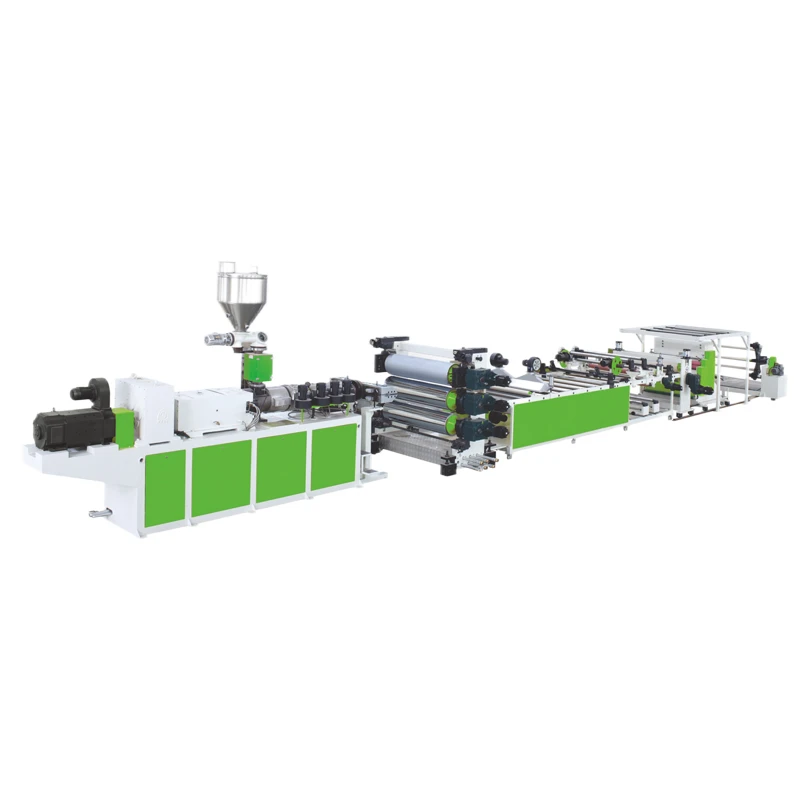
A complete calender line rarely consists of the roll stack alone. It is usually integrated with:
- upstream mixing, dosing, plastifying, or compounding systems
- traction or haul-off equipment
- embossing units
- cooling rolls or chill sections
- thickness measurement
- winding or cutting stations
This integration is important because the calender is both a forming unit and a web-quality control point. Small variations in feed temperature, viscosity, or roll alignment can affect gloss, thickness, internal stress, and surface texture.
Technological Innovations and Automation
Modern calenders increasingly use:
- Automatic nip control for stable gauge production
- Roll bending and cross-axis correction to reduce thickness variation
- Digital temperature control with oil, steam, electric, or hybrid heating systems
- Inline thickness and profile measurement
- Recipe-based automation for product changeover
- Condition monitoring for bearings, drives, and roll surfaces
Recent patent activity also shows continued work on dynamic thickness-change control and integrated foam-flooring or embossed-sheet lines, indicating that the technology remains active in specialized plastic processing segments.
Environmental and Sustainability Aspects
Calenders can support sustainability goals when they are used to improve material efficiency, reduce scrap, and enable recycling-compatible sheet production. Their continuous operation can be energy-intensive because roll heating, cooling, and drive systems must hold tight tolerances over long runs.
Sustainability considerations include:
- Energy efficiency through improved thermal insulation, optimized roll heating, and reduced idling
- Waste reduction by stable gauge control and fewer off-spec rolls
- Circularity through the use of recycled polymer blends in sheet and flooring products, where formulation permits
- Lower solvent use in some coating systems compared with alternative finishing routes, depending on product design
At the same time, the process can be sensitive to material variability, and recycled feedstocks may require tighter preprocessing and formulation control to maintain consistent calender performance.
Economic and Global Market Impact
Calenders occupy a strategically important niche in the plastics machinery sector because they serve high-volume, value-added sheet and coating markets rather than commodity resin conversion alone. Their strongest industrial roles are typically in regions with established PVC, flooring, artificial leather, and technical sheet manufacturing bases.
The economic value of calendering comes from:
- high continuous output for broad-web products
- strong influence on surface quality and final product value
- compatibility with multilayer and decorative finishes
- long service life when rolls, bearings, and controls are maintained properly
Because many calender products are sold in construction, furnishing, automotive, and industrial sectors, demand is tied not only to plastics output but also to building activity, interior materials, and technical textiles.
Current Challenges and Innovations
Major technical challenges include:
- maintaining uniform roll temperature
- preventing gauge variation across wide webs
- managing polymer degradation during thermal exposure
- reducing energy consumption
- handling recycled or variable feedstocks
- ensuring surface defect control at high line speeds
Current innovations focus on:
- tighter closed-loop control
- improved roll metallurgy and surface finishing
- faster recipe changeovers
- more compact line layouts
- better integration of embossing, cooling, and winding
- digital traceability and Industry 4.0-style monitoring
Future Outlook
Calenders are likely to remain important wherever manufacturers need continuous, precise, wide-format polymer webs with controlled surface properties. Future development will probably emphasize lower energy demand, more consistent performance with recycled content, and smarter automation for rapid product changeover.
The most promising directions are expected in:
- circular-material sheet production
- energy-optimized roll heating and cooling
- inline quality analytics
- multilayer functional films and flooring
- specialty surfaces and embossed finishes
Summary
Calenders are precision roller-based forming machines that convert softened polymer compounds into sheet, film, and coated webs. In plastics processing, they are especially associated with PVC, rubber, flooring, synthetic leather, and coated textile production, and their performance depends on accurate thermal control, nip geometry, and line integration.
References
- •
纺织百科. (n.d.). 纺织百科. https://baike.texnet.com.cn/view-20403.htmlLink
- •
Calendars. (2026). Calendars. https://www.calendars.com/calendars/calendarsLink
- •
Calender. (2004, December 22). In Wikipedia. https://en.wikipedia.org/wiki/CalenderLink
- •
朱诚记精密设备. (2023, February 7). 压延机常识大盘点. https://www.tszcj.com/News_detail/1.htmlLink
- •
自动压延机塑料硅胶压延设备高精度挤压成型设备. (n.d.). 自动压延机塑料硅胶压延设备高精度挤压成型设备. http://www.ad-automation.com/ProductDetail/6605189.htmlLink
- •
Appropedia. (2008, May 5). 聚合物压延. https://www.appropedia.org/Polymer_calendering/zhLink
- •
Calendars: Schedule planner. (2018, December 11). App Store. https://apps.apple.com/us/app/calendars-schedule-planner/id608834326Link
- •
大连华韩橡塑机械有限公司. (n.d.). 压延机. https://www.chinahuahan.com/yyj/Link
- •
华东理工大学. (n.d.). 第十章压延成型 [PDF]. https://clxy.ecust.edu.cn/_upload/article/files/cb/75/0b865f744945a02794421fdab622/955e99af-aef4-4ac9-95bb-b23b3c75e1ba.pdfLink
- •
压延机 (CN207072074U). (2017, July 17). Google Patents. https://patents.google.com/patent/CN207072074U/zhLink
- •
Tool-Temp. (n.d.). 用于层压、印刷和纺织品的高性能温度控制和冷却装置. https://tool-temp.ch/cn-cn/anwendungen/lamination-druck-textil/Link
- •
Dana Industrial. (2026, January 20). Calenders. https://allisonoffhighway.com/machine/calenders-2/Link
- •
二辊压延机厂家 橡胶压延机价格. (n.d.). 二辊压延机厂家 橡胶压延机价格. https://m.qiyeku.cn/product/42701985.htmlLink
- •
压延成型. (2013, June 4). In 维基百科. https://zh.wikipedia.org/wiki/%E8%BB%8B%E8%A3%BDLink
- •
ScienceDirect. (n.d.). Calenders - An overview. https://www.sciencedirect.com/topics/engineering/calendersLink
- •
广州普同. (2023, October 6). 广州普同. http://www.gzpotop.com/h-nr.html?groupId=73&jpt=4Link
- •
压延机介绍. (n.d.). 压延机介绍. https://blog.sina.com.cn/s/blog_6b2cd9750100lmrz.htmlLink
- •
2027 Calendars: Wall, mini, desk calendars & planners. (n.d.). Calendars.com. https://www.calendars.com/Link
- •
压延成型. (2013, June 4). In 维基百科. https://zh.wikipedia.org/zh-my/%E5%8E%8B%E5%BB%B6%E6%88%90%E5%9E%8BLink
- •
2026 Calendars & planners. (n.d.). Hallmark. https://www.hallmark.com/house-and-home/desk/calendars-and-planners/Link
- •
Definition of calenders. (2024, August 5). Merriam-Webster. https://www.merriam-webster.com/dictionary/calendersLink
- •
2026-2027 Calendars. (n.d.). Paper Source. https://www.papersource.com/collections/stationery-calendarsLink
- •
压延成型. (2022, May 26). 百度百科. https://baike.baidu.com/item/%E5%8E%8B%E5%BB%B6%E6%88%90%E5%9E%8B/10462939Link
- •
Calendar vs. calender: What's the difference? (2026, September 21). Grammarly. https://www.grammarly.com/commonly-confused-words/calendar-vs-calenderLink
- •
100 webkalenders om te downloaden. (n.d.). Webcal.guru. https://www.webcal.guru/nl-NL/kalendersLink
- •
Calender. (2026, June 25). Wikidata. https://www.wikidata.org/wiki/Q1365679Link
- •
100 webkalenders om te downloaden. (n.d.). Webcal.guru. https://www.webcal.guru/nl-BE/kalendersLink
- •
橡胶四辊压延机. (2026, June 30). 爱采购寻源宝典. https://b2bwiki.baidu.com/encyclopedic/rubber-four-roll-calenderLink
- •
Calendars. (n.d.). Staples. https://www.staples.com/Calendars/cat_CL166389Link
- •
Photo calendars. (2026, September 24). Shutterfly. https://www.shutterfly.com/calendars/Link
- •
Free and customizable calendar templates. (n.d.). Canva. https://www.canva.com/calendars/templates/Link
- •
压延机、发泡地板生产线及一次成型生产工艺 (WO2018113326A1). (2017, August 17). Google Patents. https://patents.google.com/patent/WO2018113326A1/zhLink
- •
压延控制装置及压延控制方法 (CN104690093B). (2014, December 10). Google Patents. https://patents.google.com/patent/CN104690093B/zhLink
- •
Calendar for year 2026 (United States). (n.d.). timeanddate.com. https://www.timeanddate.com/calendar/Link
- •
Calendars: Schedule planner. (2025, June 18). App Store. https://apps.apple.com/jp/app/calendars-%E3%82%AB%E3%83%AC%E3%83%B3%E3%83%80%E3%83%BC-%E3%82%B9%E3%82%B1%E3%82%B8%E3%83%A5%E3%83%BC%E3%83%AB%E7%AE%A1%E7%90%86/id608834326Link
- •
轧机/压延机. (n.d.). Flender. https://www.flender.com/zh/applications/rolling-mill-and-calendarLink
- •
Calendars・Daily planner, to do. (2024, July 6). App Store. https://apps.apple.com/tw/app/calendars-daily-planner-to-do/id608834326?l=en-GBLink
- •
连续压延机压延进行中的板厚变更装置 (CN1524636A). (2003, September 3). Google Patents. https://patents.google.com/patent/CN1524636A/zhLink
- •
Calendarr - Online calendars. (n.d.). Calendarr. https://www.calendarr.com/Link