
Introduction
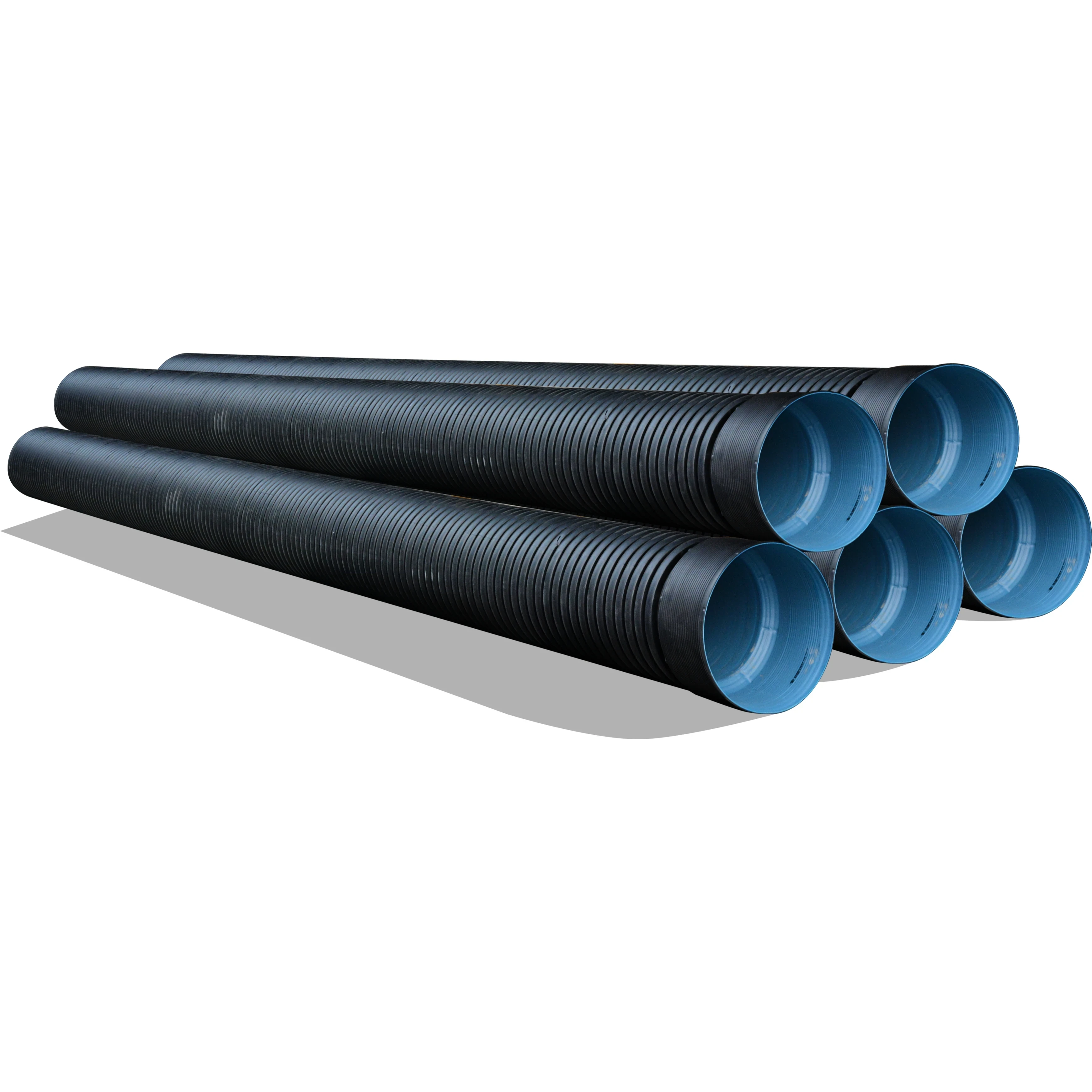
Pipe corrugators are specialized extrusion-line machines that shape molten polymer tube into a ribbed or corrugated profile, producing lightweight pipes that combine flexibility with high ring stiffness. They are central to the manufacture of corrugated plastic pipe for drainage, cable protection, sewage, stormwater, automotive conduits, and many other technical applications.
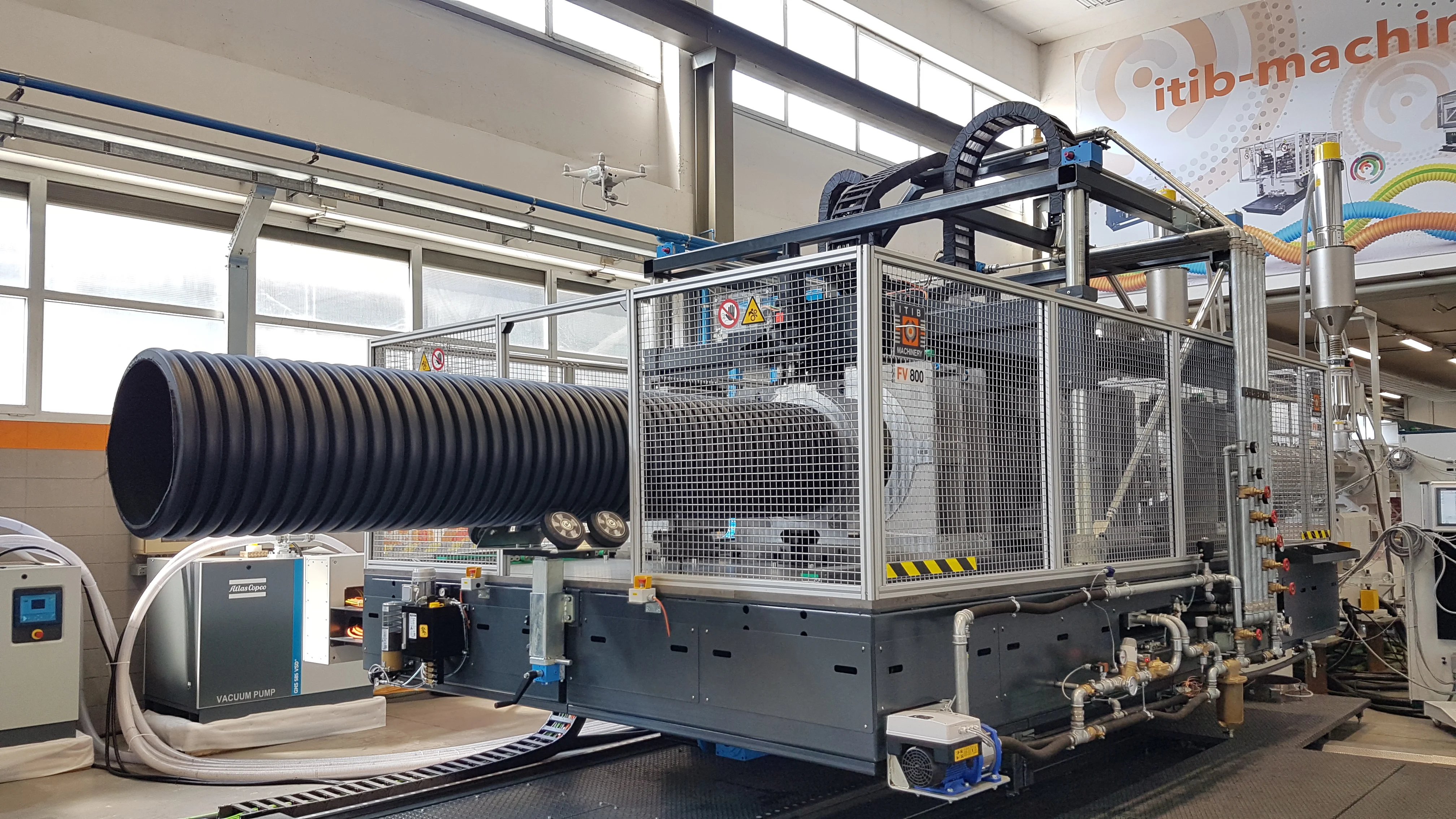
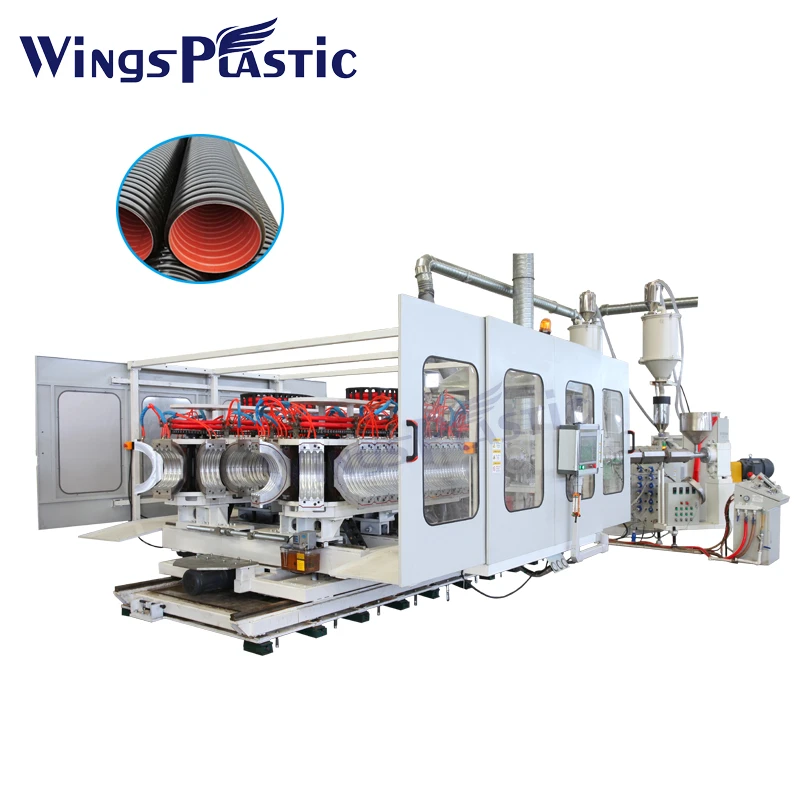
In industrial practice, a pipe corrugator is usually the forming section of a complete corrugated-pipe extrusion line, operating downstream of the extruder and die head and upstream of cooling, haul-off, cutting, and stacking equipment. The technology has evolved from early mechanically driven forming systems into highly automated lines using vacuum forming, precise temperature control, multi-layer coextrusion, and servo-controlled block movement for stable production at high speed.
Corrugated pipe systems are produced in single-wall, double-wall, and multi-layer configurations, with material choices that commonly include HDPE, PP, PVC, PE, PA, EVA, PVDF, and specialty thermoplastics for technical and chemical-service uses. The broad market for corrugated pipe has also pushed corrugator design toward larger diameters, higher output, improved energy efficiency, and greater compatibility with recycled and recycled-content polymers.
History and Development
The modern pipe corrugator emerged from the broader development of continuous plastic extrusion and from earlier corrugated metal pipe technology, which demonstrated the structural advantages of corrugation in underground service applications. Industrial corrugated pipe production later adapted those principles to thermoplastics, where lower weight, corrosion resistance, and lower installation cost created a major market.
Key milestones in the development of pipe corrugators include:
- Industrialization of continuous extrusion corrugation: pipe corrugators became established as continuous forming machines that move mold blocks past a fixed extrusion point, allowing endless corrugated products to be produced with consistent geometry.
- Expansion into double-wall pipe: corrugator systems were adapted to produce pipes with a corrugated outer wall and smooth inner bore, improving hydraulic performance while preserving stiffness for drainage and sewer applications.
- High-speed, large-diameter systems: contemporary manufacturers now supply corrugators for products ranging from very small technical tubes to large drainage pipes, with published product ranges extending from a few millimeters up to about 2,400 mm in diameter, depending on the supplier and pipe structure.
Technical Overview
A pipe corrugator forms the pipe wall while the polymer is still hot and deformable. In a typical line, melt from the extruder passes through the die head, then enters the corrugator where paired mold chains or mold blocks define the external profile. Vacuum assists the polymer into the cavities, and cooling locks in the corrugated geometry before the pipe is cut to length.
Core operating principle
The corrugator’s forming unit usually relies on:
- Opposed mold blocks or chains that travel continuously around a forming track.
- Vacuum-assisted shaping, commonly reported in the range of about −0.03 to −0.08 MPa, to draw the soft tube into the block cavities.
- Controlled cooling, often with water or air-water systems, to stabilize dimensions and reduce ovality.
- Synchronized haul-off, which must match melt output and forming speed to avoid wall thinning or profile instability.
Typical technical benchmarks
Published industry information indicates that corrugated pipe systems can cover a very wide size and performance range:
- Pipe diameter range: from very small technical corrugated tubes around 1–3 mm up to large drainage pipes around 1,800–2,400 mm, depending on machine class and product type.
- Application-dependent size bands: smaller pipes are common below 50 mm, medium sizes often run from about 50 mm ID to 500 mm OD, and large infrastructure products may reach several meters in diameter.
- Line speed: some corrugated pipe corrugators are marketed with speeds around 30,000 mm/min, although actual output depends on diameter, material, wall thickness, cooling demand, and profile complexity.
- Materials processed: PP, PE, PVC, PA, EVA, PVDF, TPE, and related compounds are used across technical, cable, and drainage markets.
Mechanical and product engineering
Corrugation improves structural efficiency by increasing bending resistance and ring stiffness without making the pipe excessively heavy. The geometry also helps the pipe tolerate soil loads and handling stresses while preserving flexibility for installation around bends and in constrained trenches.
For double-wall products, the smooth inner layer reduces flow resistance and improves cleanability, while the corrugated outer layer carries much of the external load. This combination is especially important in stormwater, culvert, and sewage systems, where hydraulic efficiency and burial strength must be balanced.
Types and Variations
| Type of corrugator / pipe system | Main product form | Typical strengths | Common uses |
|---|---|---|---|
| Single-wall corrugator | Corrugated outer and inner surface | High flexibility, low weight, low material use | Cable ducting, appliance hoses, technical tubing, some drainage uses |
| Double-wall corrugator | Corrugated outer wall with smooth inner bore | Better hydraulics and high ring stiffness | Sewage, stormwater, culverts, drainage |
| Multi-layer corrugator | More than two functional layers | Tailored barrier, strength, or recycled-content structures | Specialty conduits, technical and industrial pipes |
| Large-diameter corrugator | Large drainage and infrastructure pipe | High output, heavy forming tooling, robust cooling | Stormwater, sewer, manholes, civil engineering |
| Small-tube corrugator | Small-diameter technical tubing | Fine pitch, precise control, high line speed | Automotive, medical, household appliance ducts |
Applications and Uses
Pipe corrugators support a broad range of end markets because corrugated pipe can be optimized for flexibility, stiffness, chemical resistance, and weight reduction.
- Infrastructure and drainage: double-wall and large-diameter corrugated pipes are widely used for sewage, stormwater, culverts, land drainage, and underground retention systems.
- Cable protection and telecom ducting: corrugated conduits protect electricity, fiber-optic, and communication lines in buildings, roadways, and underground networks.
- Building services: smaller pipes serve as conduits for electrical wiring, plumbing protection, hot- and cold-water systems, and ventilation ducts.
- Automotive: small corrugated tubes are used for wire harness protection and for fuel or fluid lines in some vehicle systems.
- Household appliances: corrugated hoses appear in washing machines, dishwashers, air conditioners, and vacuum cleaners.
- Specialty industrial uses: technical corrugated pipes are used for aggressive fluids, landfill gas extraction, leachbed drainage, and certain process-utility lines.
A poor-fit application is high-pressure potable water distribution, because corrugated geometry is generally chosen for flexibility and external-load resistance rather than for the smooth-bore, pressure-focused requirements of long-distance high-pressure water mains. That function is usually better served by smooth-wall pressure pipe systems.

Technological Innovations and Automation
Contemporary pipe corrugators increasingly integrate:
- Servo-driven block movement for tighter profile control and reduced mechanical wear.
- Advanced vacuum and cooling management to stabilize wall thickness and minimize deformation.
- Multi-layer coextrusion compatibility for functional layers such as barrier, recycled, or color-coded skins.
- Digital monitoring and recipe control for diameter changes, defect tracking, and repeatability across shifts and plants.
The trend toward automation is especially important in large corrugated-pipe lines, where even small instability in forming temperature, vacuum, or haul-off synchronization can create ovality, poor interlock, or inconsistent ring stiffness.
Environmental and Sustainability Aspects
Corrugated pipe technology is closely tied to material efficiency because the ribbed structure delivers stiffness with less polymer than many smooth-wall alternatives. This makes pipe corrugators relevant to sustainability discussions in both product design and plant operation.
Important sustainability dimensions include:
- Material savings through hollow rib geometry and optimized wall distribution.
- Lower transport emissions because corrugated pipe is lighter than many conventional alternatives.
- Recycled-content potential, especially in non-potable drainage and infrastructure products where performance specifications permit recycled PE or PP blends. This is an industry direction rather than a universal standard, because acceptance depends on application and local regulation.
- Energy efficiency pressure on machine builders to reduce heating, cooling, and vacuum losses in continuous production.
At the same time, corrugated-pipe production can be energy intensive because the line must heat the polymer, cool it quickly, and maintain synchronized mechanical motion over long continuous runs. Sustainability gains therefore depend not only on pipe design, but also on line efficiency, scrap reduction, and the use of stable process control.
Economic and Global Market Impact
Pipe corrugators are strategically important in the global plastics machinery sector because they serve infrastructure, construction, utilities, transportation, and technical-duct markets simultaneously. Suppliers such as Corma, UNICOR, Drossbach, and other machinery makers are positioned around corrugated-pipe production technology and turnkey line supply.
The economic value of the segment is shaped by several factors:
- Infrastructure spending, especially on drainage, sewer rehabilitation, stormwater systems, and utility expansion.
- Urbanization and underground utility growth, which increase demand for electrical conduit and telecom ducting.
- Automotive and appliance technical tubing, which supports steady demand for small-diameter corrugated systems.
- Regional manufacturing competition, with suppliers in Europe, Asia, and North America competing on line speed, diameter range, automation, and application know-how.
Current Challenges and Innovations
The main engineering challenges in pipe corrugation include:
- Dimensional stability, especially in large diameters and thick-walled products.
- Heat removal, which becomes more difficult as pipe size and wall thickness increase.
- Tooling durability, because mold blocks and chains experience constant thermal and mechanical cycling.
- Profile consistency, particularly when switching among materials with different melt strength and cooling behavior.
- Balancing stiffness and hydraulics, especially in double-wall products designed for gravity-flow systems.
Recent innovation efforts focus on higher output, more precise block synchronization, improved vacuum distribution, better cooling design, and production flexibility for multi-material and recycled-content pipes.
Future Outlook
Pipe corrugators are likely to move toward smarter, more modular extrusion lines that can switch product sizes faster, tolerate broader material windows, and record process data for quality assurance and maintenance planning.
The strongest growth potential remains in stormwater management, utility ducting, drainage rehabilitation, and technical tubing for automotive and building systems. Demand will likely continue to favor equipment that can reduce resin use while maintaining mechanical performance, because infrastructure buyers and pipe producers increasingly evaluate life-cycle cost rather than material cost alone.
In the longer term, the most competitive corrugator platforms are likely to combine higher automation, energy-aware cooling and vacuum systems, and compatibility with circular-economy materials, while still preserving the geometric precision that corrugated pipe depends on for load-bearing performance.
References
- •
Corma Inc. (n.d.). Corma Inc. https://corma.com/Link
- •
Applications. (2022, October 24). ITIB Machinery. https://itib-machinery.com/applications/Link
- •
Unicor Holding AG - Company profile and news. (2026, August 26). Bloomberg Markets. https://www.bloomberg.com/profile/company/567809Z:GRLink
- •
Corrugator technologies: Overview and new developments. (2016, August 1). Plastics.gl. https://www.plastics.gl/extrusion-profile/corrugator-technologies-overview/Link
- •
Corrugators. (2025). DirectIndustry. https://www.directindustry.com/industrial-manufacturer/corrugator-149671.htmlLink
- •
Unicor products services brochure. (2025, June 27). Scribd. https://www.scribd.com/document/448429035/Unicor-products-services-brochureLink
- •
Handbook of steel drainage & highway construction... (n.d.). CSPI. https://cspi.ca/wp-content/uploads/2021/04/handbook_chapter02.pdfLink
- •
What does corrugated pipe mean? Types and uses. (2026, March 12). Science Insights. https://scienceinsights.org/what-does-corrugated-pipe-mean-types-and-uses/Link
- •
What is a corrugated pipe extrusion line? (n.d.). JWELL. https://jwellanhui.com/what-is-a-corrugated-pipe-extrusion-line-key-components-process/Link
- •
Corrugated pipe corrugator - All industrial manufacturers. (2025). DirectIndustry. https://www.directindustry.com/industrial-manufacturer/corrugated-pipe-corrugator-265606.htmlLink
- •
DROSSBACH. (n.d.). DROSSBACH. https://www.drossbach.de/en/Link
- •
Corma Inc, #1124, Regus Grandeur, Ea... (n.d.). Kompass. https://www.kompass.com/z/ww/c/corma-inc/in447625/Link
- •
Cable ducting + electrical conduit - Corrugators. (n.d.). Corma Inc. https://corma.com/cable-ducting-electrical-conduit/Link
- •
Our products. (n.d.). Volcano Flexitech. https://volcanoflexitech.com/Link
- •
Evaluating a corrugator for small tube applications. (2025, April 1). Plastics Technology. https://www.ptonline.com/articles/evaluating-a-corrugator-for-small-tube-applicationsLink
- •
Extrusion line corrugators. (2025). DirectIndustry. https://www.directindustry.com/industrial-manufacturer/extrusion-line-corrugator-150690.htmlLink
- •
Pioneers of corrugated pipe machinery industry. (2026, February 9). UNICOR. https://www.unicor.com/en/Link
- •
Corrugated pipes: Applications and product properties. (2022, January 17). GREMCO. https://www.gremco.de/en/magazin/applications-properties-corrugated-pipes/Link
- •
UNICOR GmbH: Production machines. (2025). DirectIndustry. https://www.directindustry.com/prod/unicor-gmbh-78128.htmlLink
- •
What is corrugated pipe? Definition from Trenchlesspedia. (2018, February 10). Trenchlesspedia. https://trenchlesspedia.com/definition/2475/corrugated-pipeLink
- •
Corrugated pipe machine factory - Corrugated pipe machinery manufacturer from China. (2024, June 11). Qingzhou Suba Machinery. https://www.pipe-corrugator.com/Link
- •
Unicor 2 | PDF | Extrusion | Pipe (Fluid Conveyance). (2025, October 27). Scribd. https://www.scribd.com/document/305738855/Unicor-2Link
- •
Corrugators. (n.d.). Corma Inc. https://corma.com/corrugators/Link
- •
Corrugated steel pipe in vertical construction applications. (2024, September 23). Contech Engineered Solutions. https://www.conteches.com/knowledge-center/learn/the-pipe-blog/corrugated-steel-pipe-in-vertical-construction-applications/Link
- •
Inline Plastics, Inc. (2008). Thomasnet. https://www.thomasnet.com/suppliers/southern-california/all-cities/corrugated-pipe-58361502Link
- •
Corma Inc.: Leading manufacturer of corrugated plastic pipes. (n.d.). PlasteMart. https://www.plastemart.com/Upload/Ecamp/kolsite/newsletter12/Corma-Inc-Leading-Manufacturer-of-Corrugated-Plastic-Pipes.htmLink
- •
Sewage + drain. (n.d.). Corma Inc. https://corma.com/sewage-drain/Link
- •
What is a corrugated pipe and how does it work? (2026, January 9). Engineer Fix. https://engineerfix.com/what-is-a-corrugated-pipe-and-how-does-it-work/Link
- •
Pipe corrugating equipment. (2013). Arlington Machinery. https://www.arlingtonmachinery.com/plastic-extruder/pl.c.1096.0/pipe-corrugators/Link
- •
Contech Engineered Solutions LLC. (2017). Thomasnet. https://www.thomasnet.com/suppliers/usa/corrugated-pipe-58361502Link
- •
13 corrugated pipe manufacturers in 2026. (n.d.). Metoree. https://us.metoree.com/categories/7600/Link
- •
Chapter 4 –Products & applications. (n.d.). Plastic Pipe Institute. https://plasticpipe.org/common/Uploaded%20files/1-PPI/Manuals-Design%20Guides/Drainage%20Handbook/1st%20Edition/Chapter%204_Application%20Chapter_Final.pdfLink
- •
What is corrugated pipe? Uses, how it works & top companies... (2025, October 8). LinkedIn. https://www.linkedin.com/pulse/what-corrugated-pipe-uses-how-works-top-companies-2025-gm5vfLink
- •
Green Pipe & Supply, Inc. (n.d.). Thomasnet. https://www.thomasnet.com/suppliers/indiana/all-cities/corrugated-pipe-58361502Link
- •
ID1600mm double wall corrugated pipes. (n.d.). ZhongyunTech. https://pipecorrugator.com/11-case.htmlLink
- •
List of top 10 corrugated pipe making machine brands... (2024, October 30). Machinery Hitech. https://www.machinery-hitech.com/blog/list-of-top-10-corrugated-pipe-making-machine-brands-popular-in-european-and-american-countries-305111.htmlLink
- •
What is a corrugated pipe? (2024, December 30). Rothenplast. https://rothenplast.com/what-is-a-corrugated-pipe/Link
- •
Stainless steel corrugated pipes: The comprehensive guide. (n.d.). Metal Strip Solutions. https://www.metalstripsolutions.com/stainless-steel-corrugated-pipes/Link
- •
HDPE corrugated pipe: Benefits, sizes & applications. (2024, November 27). TDR Pipe. https://tdrpipe.com/hdpe-corrugated-pipe-benefits-and-applications/Link
- •
The meaning and construction of corrugated pipe. (2019, November 22). Corrugated Metal Culvert. https://www.corrugatedmetalculvert.com/news/meaning-and-construction-of-corrugated-pipe.htmlLink
- •
Why do corrugations give strength to pipes? (n.d.). Engineering Stack Exchange. https://engineering.stackexchange.com/questions/14165/why-do-corrugations-give-strength-to-pipesLink
- •
5. Strength on the outside... (2026, January 19). CMPBT. https://www.cmpbt.com/what-is-the-advantage-of-corrugated-pipe/Link
- •
What is a compensator? (n.d.). Steeljrv. https://www.steeljrv.com/what-is-a-compensator.htmlLink
- •
Corrugated pipes: A comprehensive guide to types, features, and... (2023, October 19). Pars Ethylene Kish. https://en.parsethylene.com/corrugated-pipes/Link
- •
Top 100 corrugated pipe manufacturers in 2026. (2025, February 18). Ensun. https://ensun.io/search/corrugated-pipeLink
- •
What is the function of a corrugated tube? (2025, July 16). WKK Europe. https://www.wkk-europe.com/news/post/what-is-the-function-of-a-corrugated-tube/Link
- •
Best corrugated pipe making machine suppliers. (n.d.). SourceReady. https://www.sourceready.com/supplier/list/corrugated-pipe-making-machine-suppliersLink
- •
HDPE corrugated handbook. (n.d.). Plastic Pipe. https://conduitcalc.plasticpipe.org/drainage/Link
- •
Corrugated pipe: Topics by Science.gov. (n.d.). Science.gov. https://www.science.gov/topicpages/c/corrugated+pipe.htmlLink
- •
What is a corrugated drain pipe? (2024, April 29). Plasgain. https://plasgain.com.au/what-is-corrugated-drain-pipe/Link