
Introduction
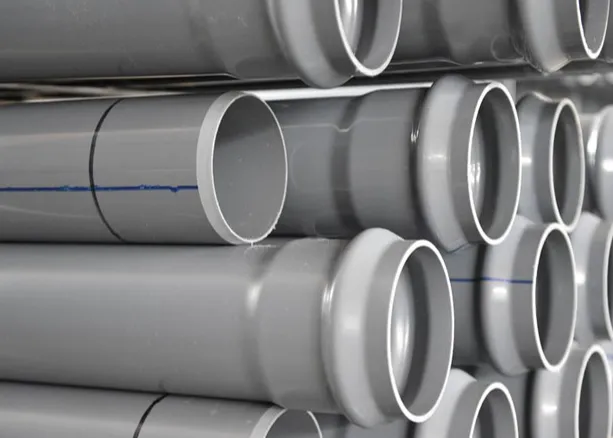
Pipe belling & socketing machines are downstream plastic-processing machines that form an enlarged end, or bell/socket, on thermoplastic pipes so that one pipe can join to another by push-fit assembly, rubber-ring sealing, or solvent-cement bonding. They are most commonly used with PVC, but are also applied to PP, PE, CPVC, and specialty structured-wall pipes, with machine configurations ranging from manual and semi-automatic units to fully automatic in-line systems.
In modern pipe extrusion plants, these machines are closely integrated with cutting, handling, calibration, and inspection systems to improve joint consistency, reduce installation time, and support standards-based piping for water supply, drainage, sewerage, conduit, and industrial fluid transport. Their evolution has been shaped by faster cycling, more precise thermal control, servo and pneumatic motion systems, and improved tooling for gasket grooves, solvent-weld sockets, and ring-retention geometries. Sustainability concerns now focus on lower energy use, reduced scrap at the pipe end, water-efficient cooling, and better compatibility with circular-economy pipe systems through repeatable, durable joints that extend service life.
History and Development
The belling of plastic pipe emerged as thermoplastic pipe systems replaced metal and clay lines in building services, water distribution, and sewerage. Early machines relied on relatively simple heating and manual or pneumatically assisted forming, but the basic process remained the same: heat the pipe end, expand it over a mandrel, then cool it in a controlled shape.
Several practical milestones defined the technology’s industrialization:
- Thermoforming-based socket creation became the dominant method for rigid thermoplastic pipes, using ovens or heaters plus a forming mandrel and cooling station to produce repeatable sockets.
- In-line belling was developed to connect directly to pipe extrusion lines, allowing cut pipe lengths to be socketed immediately after production and reducing handling and storage steps.
- Multi-station and rotary systems improved throughput by overlapping heating, forming, cooling, and unloading, with some machines socketing multiple pipes per cycle or using indexed rotary layouts for higher output.
Patent literature also reflects incremental refinements in mandrel geometry, sealed forming chambers, compressed-air assistance, and shorter cycle-time control strategies, indicating a steady shift from simple forming toward more tightly controlled thermoforming systems.
Technical Overview
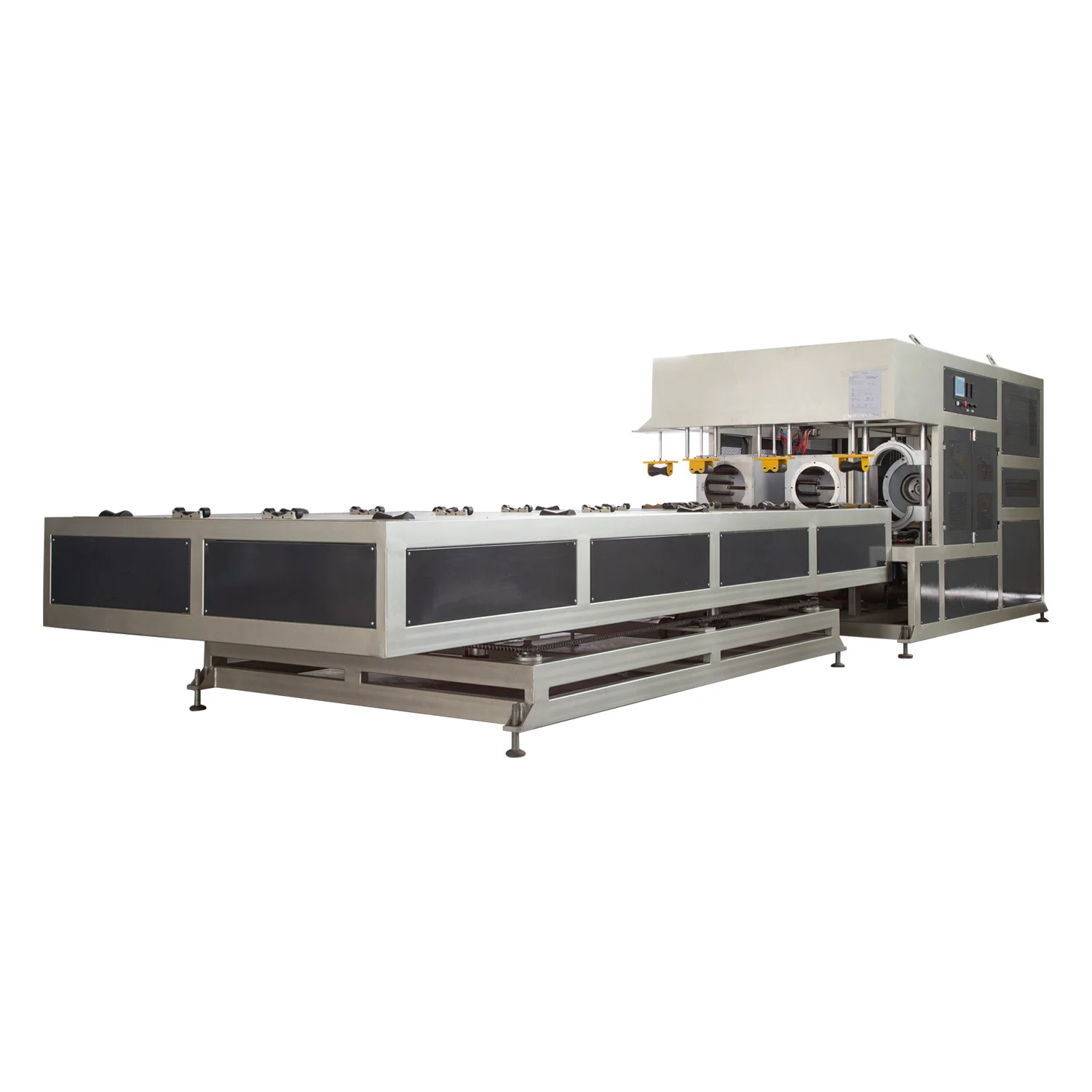
A pipe belling machine performs controlled end-forming on a thermoplastic pipe. The machine typically includes pipe feeding and clamping, heating, socket-forming tooling, cooling, and ejection or transfer stations.
Working principle
The pipe end is softened by heat until it reaches a plastic state, then expanded mechanically and/or pneumatically against a forming mandrel or cavity. After the socket profile is achieved, the part is cooled to stabilize dimensions and preserve groove geometry or bell length.
Common process steps are:
- Feeding and alignment
- Clamping
- End heating
- Forming over a mandrel or in a pressurized chamber
- Cooling
- Ejection and, in some systems, marking or inspection
Typical engineering parameters
- Pipe diameter range: roughly 20 mm to 720 mm across commercial inline systems, depending on machine class.
- Cycle time: about 15–180 seconds per pipe, strongly dependent on pipe diameter, wall thickness, material, and automation level.
- Output rate: from about 20 to 400+ pipes/hour in published machine ranges.
- PVC heating range: commonly around 120–140 °C for socket formation, with process windows adjusted by formulation and wall thickness.
- Cooling time: water cooling is often used to shorten cycle time; one published range cites approximately 15–30 seconds for the cooling stage in some PVC applications.
- Residual moisture after centrifugal dewatering: in related downstream pipe and recycling equipment, centrifugal dewatering commonly leaves material at low single-digit moisture levels; for socketing lines using spray or circulation cooling, the practical target is rapid surface stabilization rather than final drying, so residual moisture is typically managed by process control rather than a fixed universal value.
- Specific energy consumption: machine-specific figures vary widely with diameter and heating technology; in practice, energy use is driven mainly by heating load, cooling method, and number of stations rather than by forming force alone.
Key process technologies
- Contact heating using hot plates or heating mandrels
- Infrared heating for faster, cleaner heat transfer
- Hot-air or convection ovens for broad heat bands
- Compressed-air forming inside a sealed cavity
- Vacuum-assisted forming in some systems
- Water spray or internal water-circulation cooling to lock dimensions quickly
Types and Variations
Pipe belling and socketing machines are commonly classified by automation level, pipe material, and socket geometry.
| Type | Main characteristics | Typical use |
|---|---|---|
| Manual | Operator-loaded, low throughput, simple tooling | Small workshops, short runs |
| Semi-automatic | Mechanized heating and forming with manual or assisted loading/unloading | Medium-volume production |
| Fully automatic in-line | Directly integrated with extrusion line and automated transfer | High-volume pipe plants |
| Rotary belling machines | Indexed stations for parallel heating, forming, and cooling | Higher output and shorter idle time |
| Single-station machines | Simpler layout, lower capital cost | Smaller diameters or lower throughput |
| Multi-socket machines | Forms several sockets per cycle | Large-volume standardized production |
Socket geometries also vary:
- Smooth socket for solvent-cement jointing
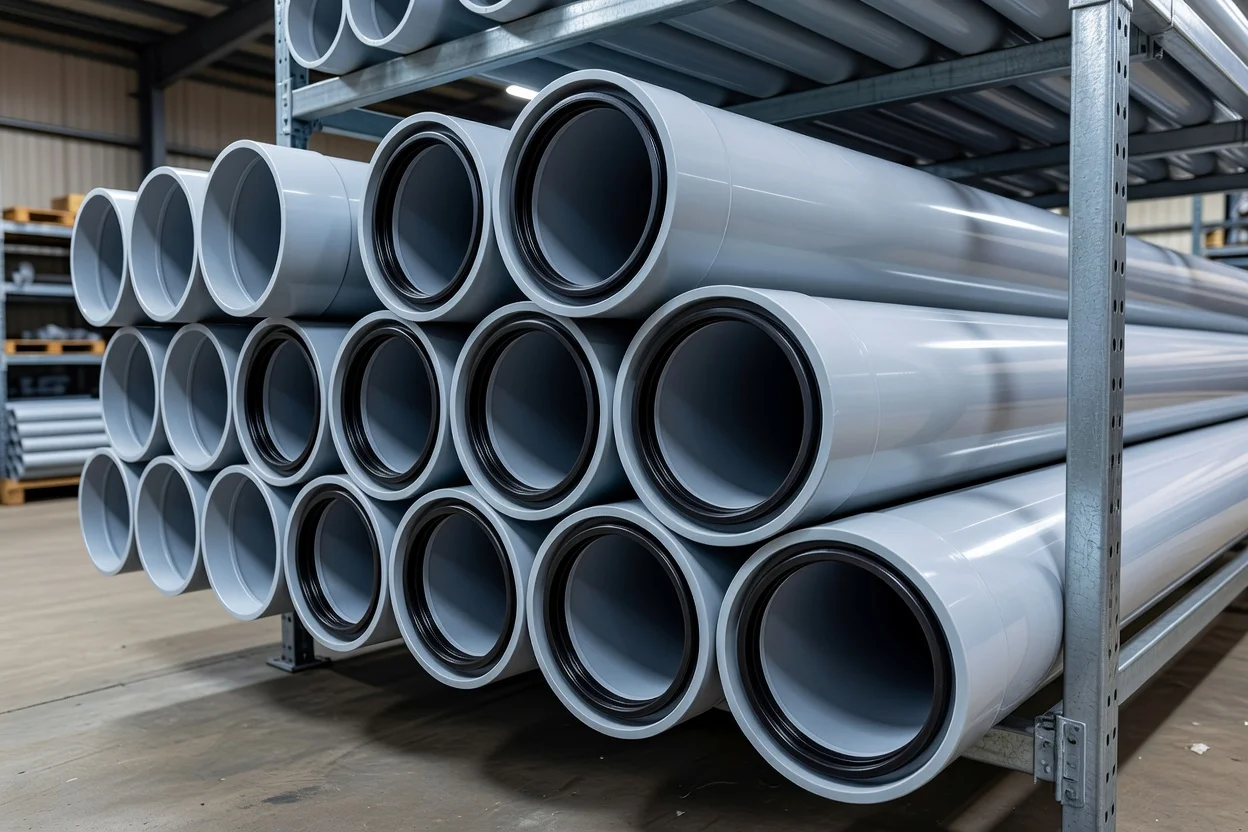
- Gasket socket for elastomeric sealing
- U-type socket
- R-type socket
- Square or special-profile socket
- Z-type or reinforced variants for selected systems
Material-specific variants include machines for:
- PVC and uPVC pipes
- PP pipes
- PE pipes
- CPVC pipes
- Structured-wall or corrugated systems, including specialized profiles for bioriented or reinforced pipe families.
Applications and Uses
Pipe belling and socketing machines are used wherever plastic pipes must join reliably and quickly in the field.
- Water supply and distribution: push-fit gasket sockets support long pipeline runs with rapid assembly.
- Sewerage and drainage: common for PVC SWR and sanitary pipes, where socket quality affects leakage resistance and installation speed.
- Electrical conduit: socketed pipe improves site assembly and reduces joining labor.
- Agricultural and irrigation systems: lightweight plastic pipes benefit from standardized sockets for fast installation.
- Industrial fluid transport: selected CPVC, PP, and PVC systems use socketed ends for chemical resistance and serviceability.
A less suitable application is high-temperature or high-pressure service beyond the polymer’s design envelope, where the pipe material, not the socketing machine, becomes the limiting factor; in such cases, solvent-weld or push-fit sockets may be inappropriate compared with fusion-based joining or metal piping.
Machine Construction and Components
A typical machine includes:
- Infeed or pipe traction unit
- Clamping system
- Heating oven or heater head
- Forming mandrel, plug, or bell horn
- Socket groove insert for gasket retention
- Cooling circuit
- Ejection station
- PLC-based control panel
- Sensors and limit switches
- Optional printing, marking, or vision inspection
Mechanical actuation may be pneumatic, hydraulic, electromechanical, or hybrid, with some newer systems emphasizing pneumatic motion to reduce hydraulic complexity and maintenance requirements.
Technological Innovations and Automation
Automation has become central to socket quality and line efficiency. Modern machines may synchronize pipe positioning, heating, forming, and cooling through PLC logic and non-contact sensing to reduce cycle overlap and improve repeatability.
Important developments include:
- Parallel process timing, where pipe positioning overlaps with heating to shorten cycle time.
- Servo and pneumatic motion control for faster and more repeatable indexing.
- Multi-pipe socketing, allowing several pipes to be processed simultaneously in larger systems.
- Integrated inspection, including dimensional checks for bell depth, ovality, and groove position.
- Tooling flexibility, enabling quick changeovers between U, R, square, and gasketed sockets.
The trade-off is that higher automation increases capital cost, controls complexity, and maintenance skill requirements, even as it improves productivity and dimensional consistency.
Environmental and Sustainability Aspects
Pipe belling machines contribute to sustainability mainly through joint reliability, production efficiency, and material utilization.
- Lower installation waste: properly formed sockets reduce field rework and leakage-related replacement.
- Reduced scrap: precise heating and forming lower the risk of cracked or distorted pipe ends.
- Energy efficiency: insulated heaters, optimized thermal profiles, and shorter cycle times reduce energy per socket.
- Water management: closed-loop or recirculated cooling is preferable to once-through cooling where feasible.
- Compatibility with long-life pipe systems: durable push-fit joints support extended service life and lower lifecycle material demand.
A key sustainability issue is balancing rapid cooling against energy and water use. Faster water-based cooling improves throughput but can increase utility demand if not managed in a closed or recirculated system.
Economic and Global Market Impact
The market for pipe belling and socketing machines is closely tied to the global PVC, PP, and PE pipe industries, particularly in infrastructure, housing, sanitation, and utility expansion. Demand is strongest where plastic pipe installation favors speed, low weight, and standardized joining methods.
Commercial offerings range from economical semi-automatic machines for smaller diameters to larger inline systems for continuous extrusion plants. Published vendor information shows broad price dispersion, with entry-level machines far below the cost of high-capacity inline systems, reflecting differences in automation, diameter capacity, and tooling sophistication.
Regional manufacturing clusters in Europe and Asia are especially visible in this segment, with established suppliers offering specialized lines for PVC sewer, pressure, and structured-wall pipe production.
Current Challenges and Innovations
The most persistent technical challenges are:
- Dimensional consistency across varying wall thicknesses and resin formulations
- Heat control, especially avoiding over-softening, burn marks, or residual stress
- Gasket-groove accuracy for leak-tight joints
- Short cycle time without deformation during cooling
- Changeover efficiency between pipe sizes and socket types
- Integration with downstream logistics and line automation
Recent innovation focuses on better temperature mapping, more stable forming mandrels, compact rotary systems, and machine designs that can handle broader material families with minimal tooling change. For structured-wall pipes and specialty profiles, machine builders have also introduced custom forming systems to preserve wall geometry while shaping the socket.
Future Outlook
Future development is likely to emphasize:
- Higher automation density with fewer manual interventions
- Energy-optimized heating using improved infrared or localized thermal systems
- Digital recipe control for rapid setup and repeatability
- Inline metrology to verify socket dimensions in real time
- Broader material compatibility, especially for multi-layer and specialty pipe constructions
- Industry 4.0 connectivity for traceability, maintenance analytics, and production monitoring
The long-term direction of the segment is toward machines that can form more complex sockets at higher speed while using less energy, less water, and less operator intervention. As plastic pipe systems continue to expand in infrastructure and building applications, belling and socketing machines will remain a critical link between extrusion output and field-installable piping systems.
References
- •
FASTFORM Belling Machine - Efficient & Accurate Pipe Socketing. (2026, July 9). https://sicaindia.com/fastform/Link
- •
Belling / Socketing Machines. (2013, January 15). https://www.hmg-extrusions.at/pipe-downstream/belling-machine/Link
- •
Pipe Belling Machine Price, Socketing .... (2025, September 2). https://www.yuyu-machinery.com/belling-machine/Link
- •
Socketing Belling Machine. (2022, January 17). https://plastechglobal.com/products/pipe-extrusion-lines/socketing-belling-machine/Link
- •
Belling Machine, Automatic PVC pipe Socketing Machine Manufacturer. (n.d.). https://www.benkpm.com/belling-machine/Link
- •
Belling machines. (n.d.). https://www.sica-italy.com/famiglia/belling-machines/Link
- •
Rotary Belling Machine. (2021, December 17). https://mptautomation.com/rotary-belling-machine/Link
- •
The Final Connection: Mastering the Socketing (Belling) Machine on PVC .... (2025, September 18). https://www.linkedin.com/pulse/final-connection-mastering-socketing-belling-machine-pvc-usabimana-ur1gfLink
- •
What Is a Belling Machine? - Yuyu Machinery. (2025, September 23). https://www.yuyu-machinery.com/what-is-a-belling-machine/Link
- •
Pipe Belling Machine - PVC Pipe Belling - Candour Machinery. (2020, September 1). https://candoursocketingmachine.com/product/pipe-belling-machine/Link
- •
Working Principle Socketing Machine Belling Machine Process. (2021, October 23). https://candoursocketingmachine.com/working-principle-socketing-machine-belling-machine-process/Link
- •
Inline pvc pipe belling machine - Prasad Plast Engineers. (n.d.). https://www.prasadplast.com/pvc-pipe-belling-machine.htmlLink
- •
Zhangjiagang Yusheng Machinery Co., Ltd. (2006, March 28). https://belling-machine.en.made-in-china.com/Link
- •
YUSHENG MACHINERY. (n.d.). https://www.bellingmachinery.com/Link
- •
What Is a Pipe Belling Machine? Automatic PVC .... (2026, February 25). https://www.chenxingmachinery.com/what-is-a-pipe-belling-machine.htmlLink
- •
Pipe Socketing Machine Pipe Belling Machine - Candour Machinery. (2021, October 16). https://candoursocketingmachine.com/pipe-socketing-machine-pipe-belling-machine/Link
- •
AIROPOWER SYSTEMS in Mumbai. (2025, January 1). https://www.aajjo.com/store/airopower-systemsLink
- •
PVC Pipe Belling Machine Manufacturer from Ahmedabad. (n.d.). https://www.plasticauxiliary.com/socketing-machine-belling-machine.htmlLink
- •
Belling Machine, Automatic Pipe Belling Machine Manufacturer. (2024, November 28). https://iplasticmachine.com/belling-machine/Link
- •
Pipe Beveling Machine Manufacturers, Suppliers ... - Tradeindia. (2026, September 3). https://www.tradeindia.com/manufacturers/pipe-beveling-machine.htmlLink
- •
Belling machine for pipes made of thermoplastic material, forming end sockets equipped with an integrated seal. (2011, March 15). https://patents.google.com/patent/US20110236520A1/enLink
- •
The working principle of PVC pipe belling machine. (n.d.). http://www.huahuisj.cn/en/content/?210.htmlLink
- •
Improved pipe belling/socketing device. (2008, October 10). https://patents.google.com/patent/WO2009074999A2/enLink
- •
Solution. (2022, July 14). https://www.bellingmachinery.com/solution.htmlLink
- •
46. (n.d.). https://www.ipm-italy.it/upld/news/doc/macplasinternationalatfakuma201512042021122045603.pdfLink
- •
PVC Pipe Belling Machine – Function, Types & Applications. (2026, April 19). https://polytechme.com/product/pvc-pipe-belling-machine/Link
- •
Ipm s.r.l. is happy to introduce the New pneumatic belling .... (2025, January 1). https://trends.directindustry.com/ipm-italian-plastic-machinery/project-125789-125830.htmlLink
- •
Pipe Bellers | Gasket & Solvent Weld Belling Machines | PEM. (n.d.). https://www.pemusa.com/bellersLink
- •
Belling machine for forming sockets on the ends of pipes made of thermoplastic material and method of forming a socket at the end of a pipe made of thermoplastic material. (n.d.). https://patents.google.com/patent/US8591789B2/enLink
- •
Pipe Belling Socketing Machine. (n.d.). https://www.plastemart.com/pouching-bag-maker-cutting-sealing-machines/manufacturer/pipe-belling-socketing-machine/523Link
- •
CPE - Automatic belling machine by SICA S.p.A. | DirectIndustry. (2025, March 11). https://www.directindustry.com/prod/sica-spa/product-77432-1409317.htmlLink
- •
SWR Types PVC PIPES Socketing (Belling) Machines. (2024, November 1). https://www.prasadplast.com/pvc-socketing-machine.htmlLink
- •
Automatic belling machine - All industrial manufacturers. (2025, January 1). https://www.directindustry.com/industrial-manufacturer/automatic-belling-machine-130364.htmlLink
- •
plastic PVC PP PE pipe Socketing Machine factory .... (2024, April 16). https://www.camelmachine.com/product/plastic-pvc-pp-pe-pipe-socketing-machine-factory-manufacture-144.htmlLink
- •
STARBELL BELLING MACHINES FOR BIORIENTED PIPES. (2024, January 30). https://www.sica-italy.com/prodotto/starbell-belling-machines-for-bioriented-pipes/Link
- •
PP pipe belling machines. (2025, January 1). https://www.directindustry.com/industrial-manufacturer/pp-pipe-belling-machine-134147.htmlLink
- •
PVC Pipe Belling Machine. (2024, December 1). https://dir.indiamart.com/impcat/pvc-pipe-belling-machine.htmlLink
- •
PVC Pipe Socketing Machine. (2017, January 1). https://www.candourmachinery.com/pvc-pipe-socketing-machine.htmlLink