

Introduction
Screening machines, classifiers, and dedusting systems for plastic pellets are post-pelletizing separation technologies used to remove oversize particles, fines, dust, streamers, and other contaminants from polymer granules before packaging, transport, storage, or downstream processing. In modern plastics production, these machines are critical for product consistency, machine protection, and quality assurance, especially in virgin resin, compounding, recycling, and masterbatch lines.
Although the terminology varies by supplier and process function, the equipment family generally includes mechanical pellet screeners for size separation, classifiers for tighter grading into one or more size fractions, and dedusters or air-based separators for removing fine dust and light contaminants. Some systems combine several functions in one machine, such as drying, cooling, sizing, and dedusting.
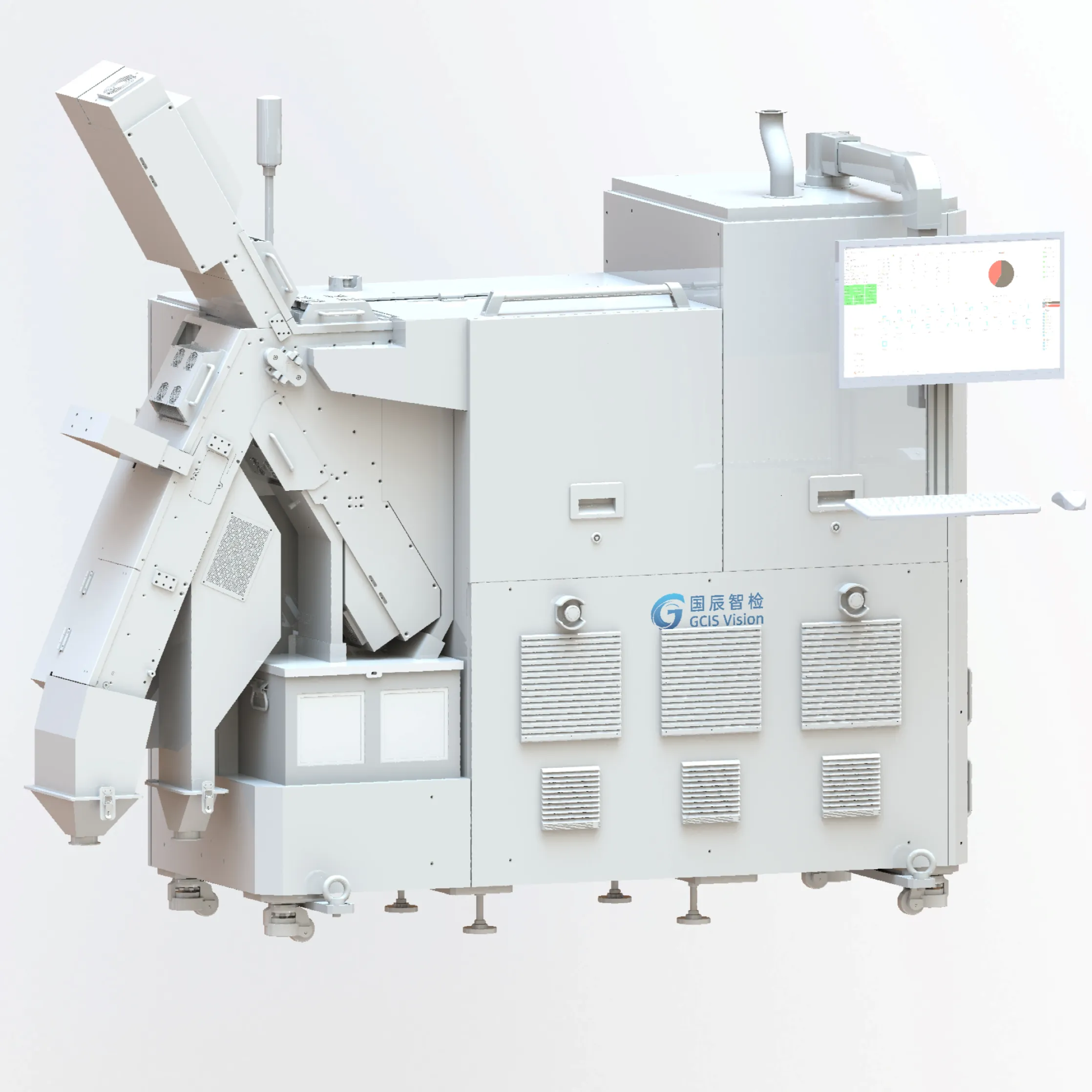
The technology has evolved from simple vibratory screens to highly engineered gyratory, circular vibratory, air-assisted, and electrostatic-neutralizing systems designed specifically for plastic pellets. Recent development has focused on higher throughput, gentler handling, lower energy use, easier screen changeover, and improved removal of ultrafine dust, including below 100 microns in advanced dedusting systems.
History and Development
The industrial use of pellet screening grew alongside continuous polymerization and pelletizing processes, when manufacturers needed a reliable way to sort off-size pellets and remove fines after extrusion or strand cutting. Early systems were largely adapted from general-purpose vibrating sifters, but plastics required gentler handling, tighter size control, and reduced dust blinding.
A major milestone was the development of plastics-specific classifiers and dedusters by established bulk-processing manufacturers. For example, Witte’s pellet classifiers were designed to address the demand for uniform pellets free of contamination, while Rotex, SWECO, and Gough introduced dedicated plastic pellet screeners with motion and deck configurations adapted to resin handling.
A second milestone was the rise of air-assisted dedusting, especially systems that combine airflow with mechanical separation to remove dust, streamers, and static-charged fines. Pelletron’s DeDuster line and similar systems from Kongskilde, Conair, Hosokawa, and others helped establish dedusting as a distinct process step rather than a simple screening function.
A third milestone has been the integration of multi-function classifier systems that dry, cool, classify, and dedust in one footprint. This reflects both plant-space constraints and the need to improve product quality immediately before silos, packing, or feed-to-machine transfer.
Technical Overview
At the core of these systems is particle separation by size, shape, density-related behavior in airflow, or a combination of these mechanisms. Mechanical screeners rely on mesh, perforated plate, or wedge-wire decks with controlled motion to move pellets across the surface while allowing undersized material to pass through openings.
Classifiers for plastic pellets commonly target several defect classes:
- Oversize pellets or “longs”
- Fines and broken fragments
- Streamers, tails, and spears from strand pelletizing
- Dust and light impurities
- Occasionally metallic or foreign particles, when combined with additional separation stages
Typical machine motions include circular vibratory, gyratory reciprocating, and multi-deck vibratory action. Gyratory motions are often used where precise stratification and gentle conveying are required, while circular vibratory machines are common for high-throughput grading and compact footprints.
Air-based dedusting systems generally use aspiration, counterflow, or air-wash principles. Clean pellets pass through a controlled airflow field while dust and streamers are lifted away to cyclones or filters. Some designs also use ionized air or electromagnetic/static-neutralization elements to break the attraction between pellets and attached fines.
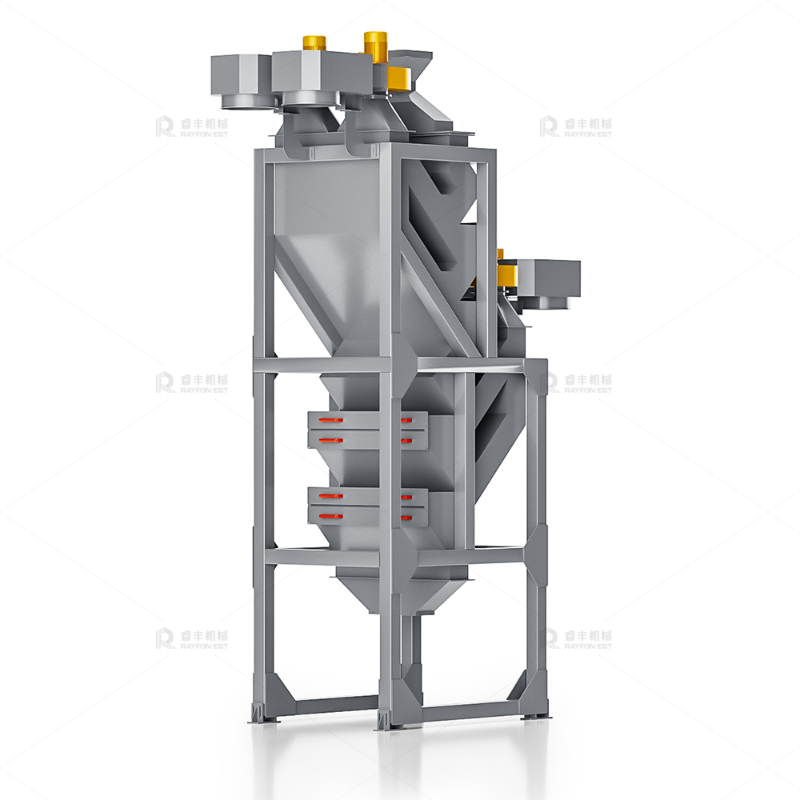
Quantitative performance depends strongly on resin type, pellet geometry, moisture condition, and contamination load, but published product examples provide useful benchmarks:
- Throughput
- Small-to-mid-size dedusters may handle around 500 lb/h in compact systems, while industrial units can reach 10,000 lb/h and standard systems may be available up to 150 t/h in larger installations.
- Rotor and motion intensity
- Vibratory pellet classifiers commonly use frequency- and amplitude-controlled motion rather than a single fixed rotor speed; where rotary separators are used, manufacturers tune motion to balance residence time and screen loading.
- Fines removal
- Advanced dedusters are reported to remove dust down to 100 microns in commercial systems, with some air/electrostatic designs claiming removal below this threshold.
- Residual moisture
- For wet or freshly washed product, vibrating dewatering and combined classifier systems can reduce surface moisture to low residual levels; RHEWUM notes that its wet screening concept can achieve residual moisture roughly half that of a conventional linear vibrating screen.
- Pellet geometry
- Classification systems for polymer pellets frequently use screen apertures matched to nominal pellet diameter, and perforated decks may be chosen to reduce blinding in long-pellet or chip-prone applications.
Specific energy consumption is typically lower than many thermal finishing steps, but it varies widely by design. Mechanical screeners usually consume less than integrated drying systems, while air-assisted dedusters add fan and aspiration power in exchange for better removal of light fines and improved downstream cleanliness.
Types and Variations
| Type | Primary function | Typical separation principle | Common advantages | Common limitations |
|---|---|---|---|---|
| Vibratory pellet screener | Remove oversize and fines | Mesh or perforated decks with vibration | High throughput, relatively simple maintenance | Screen blinding with dusty or static-laden material |
| Gyratory classifier | Tight size grading | Controlled gyratory motion | Gentle handling, good stratification | Larger footprint than some vibratory units |
| Air deduster / aspirator | Remove dust, streamers, light impurities | Airflow separation | Excellent fine removal, helps with static issues | Less effective for size-only separation |
| Combined dry/cool/classify unit | Drying, cooling, grading | Airflow plus screening decks | Multi-function footprint reduction | More complex control and service requirements |
| Wet dewatering screen | Remove free moisture from washed pellets or granules | Screen plus drainage/dewatering action | Useful after wet cleaning or recycling | Not a substitute for final drying where very low moisture is required |
Plastic pellet screeners may be floor-mounted, stand-elevated, or integrated into conveying and silo discharge lines. Some are designed for overlength separation in virgin polymer and compounding, while others are optimized for dust and streamer removal in strand pelletizing or dry-cut pelletizing.
Applications and Uses
These systems are used across nearly every plastics-processing sector where pellet uniformity affects product quality or machine reliability:
- Virgin resin production: removal of off-spec pellets, fines, and contamination before packaging or shipment.
- Compounding: grading additives-filled pellets and reducing fines that can affect feeding consistency and downstream dispersion.
- Strand pelletizing and dry-cut pelletizing: separation of spears, chains, tails, and multiples after pellet formation.
- Recycling and regrind handling: dedusting of flakes, reprocessed pellets, and lightly contaminated feedstock before extrusion or molding.
- Masterbatch production: removal of oversize fragments and dust that could impair color uniformity or feeding stability.
- Injection molding feed preparation: inline dedusting before dryers or hoppers to reduce screw and filter fouling.
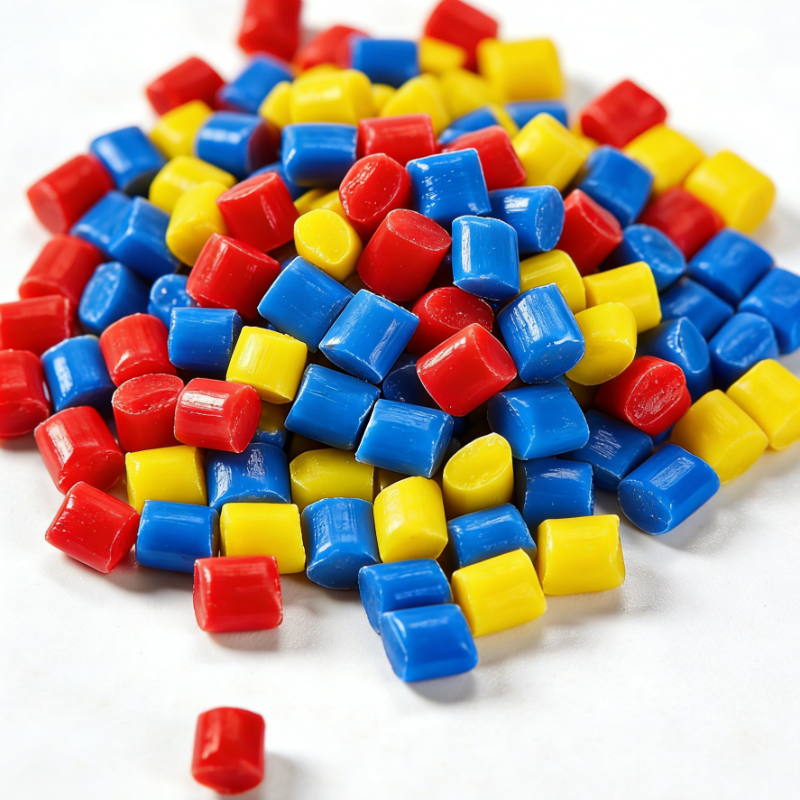
A poor-fit use case is highly sticky, irregular, or wet agglomerates that do not flow freely. These materials often bridge screens, blind apertures, and demand upstream drying, granulation, or different separation technology before a pellet screener becomes effective.
Technological Innovations and Automation
Recent product development has emphasized automation, quick changeover, and process integration. Removable screening decks, multi-deck configurations, and tool-less access reduce cleaning time and facilitate frequent grade changes in compounding or specialty resin production.
Manufacturers have also added:
- Integrated vacuum or de-dusting cabinets for better containment of fines and dust.
- Ionized-air cleaning stages to neutralize static and improve fines release.
- Closed-loop aspiration with cyclones and filters for dust recovery and improved housekeeping.
- Adjustable deck and airflow settings to tune separation performance for different polymers and pellet geometries.
Automation is especially valuable because pellet systems often sit directly upstream of packaging or process hoppers, where a clog, dust burst, or off-spec discharge can interrupt production. The trade-off is greater system complexity, more sensors, and higher dependence on calibration and maintenance discipline.
Environmental and Sustainability Aspects
Pellet screening and dedusting support sustainability primarily by reducing scrap, improving rework quality, and preventing contamination-driven rejects. In recycling, they help restore flake or regrind into a more usable feedstock by removing dust and light impurities before remelting or extrusion.
Energy use is generally modest relative to pelletizing or thermal drying, but sustainability performance depends on configuration. Air-based systems can increase electrical demand through fans and aspiration, while high-efficiency mechanical classifiers may offer lower power consumption but less removal of ultrafine dust.
Other sustainability-related benefits include:
- Lower machine wear from dust-free feed
- Longer filter life in downstream conveying and processing equipment
- Reduced off-spec packaging and customer complaints
- Better compatibility with circular-economy operations using recycled polymers
Economic and Global Market Impact
The market for these machines is tied directly to global polymer output, compounding activity, and plastics recycling expansion. Demand is strongest where quality specifications are strict, such as engineering resins, masterbatch, food-contact packaging resins, and high-value recycled pellets.
From an operational standpoint, the economic value comes from:
- Less scrap and rework
- Fewer machine stoppages caused by dusty pellets
- Better downstream feeding consistency
- Reduced customer rejection risk
- Improved packaging cleanliness and product appearance
Suppliers in this segment include specialized dedusting firms and broader separation-equipment manufacturers. Some are known primarily for pellet dedusting, while others offer pellet classifiers as part of a wider screening portfolio.
Current Challenges and Innovations
The main technical challenge is that pellet quality problems are rarely limited to one defect type. A single line may need to remove oversize pellets, fines, dust, tails, and static-held contaminants at the same time, which strains simple screening equipment.
Other challenges include:
- Screen blinding from dusty or statically charged material
- Shape sensitivity, especially with long pellets and irregular regrind
- Balancing throughput and precision
- Managing wear on meshes, decks, and seals
- Handling recycled streams with higher variability than virgin resin
Innovation is therefore moving toward combined systems that use staged decks, controlled air flow, and static-neutralization to achieve better performance without excessive material degradation.
Future Outlook
Future pellet screening and dedusting systems are likely to become more compact, sensor-based, and process-integrated. The strongest direction is toward machines that combine classification, cooling, dewatering, and dedusting in a single controlled enclosure with minimal manual adjustment.
Expected developments include:
- Better inline monitoring of pellet quality and dust load
- More adaptive airflow control for variable recycled feedstocks
- Faster cleaning and screen exchange
- Increased compatibility with recycled and bio-based polymers
- Lower specific energy use through optimized motion and fan control
As pellet quality requirements tighten and circular plastics use expands, these machines are likely to remain a small but strategically important part of the plastics-processing chain, sitting between pellet production and the final customer interface.
References
- •
Plastic Pellet Screeners and separators. (2026, July 21). The Rotex Group. https://therotexgroup.com/products/plastic-pellet-screener/Link
- •
Pellet Screen. (n.d.). Gough Engineering. https://www.goughengineering.com/en/sieves-screens-separators/pellet-screenLink
- •
The Witte Company. (n.d.). https://www.witte.com/Link
- •
Screening machines for polymers. (2023, October 20). Rhewum. https://www.rhewum.com/applications-screening-machines/polymersLink
- •
Competitive Pricing. Quick and Easy Set-Up. (n.d.). The Rotex Group. https://therotexgroup.com/wp-content/uploads/2025/04/Plastic-Pellet-Screener_US_Group_EMAIL.pdfLink
- •
Granule Sieve JEL Freischwinger: Coarse Sieving for Plastics. (2025, May 7). Engelsmann. https://www.engelsmann.de/en/sieving-machines/coarse-fine-screens/granule-sieve-jel-freischwinger/Link
- •
PELLET-DEDUSTER TS20 E. (n.d.). MBengineering. https://mbengineering.de/wp-content/uploads/2025/03/175709_MBengineering_pellet-deduster-TS20_EN.pdfLink
- •
SRK Oversize Separators for plastic pellets. (2022, March 21). Vibra Schultheis. https://www.vibra-schultheis.de/en/products/screening/srk-oversize-separators.htmlLink
- •
Vibratory Sieves, Screens and Separators. (n.d.). Gough Engineering. https://www.goughengineering.com/en/sieves-screens-separatorsLink
- •
MBengineering GmbH & Co. KG. (n.d.). https://www.kuteno.de/en/exhibitors/mbengineering-gmbh-co-kg-250150/Link
- •
Two-Stage Plastic Pellet Classifier Features Removable.... (2025, May 7). The Witte Company. https://www.witte.com/plastic-pellet-classifier-screening-deck/Link
- •
Key Benefits Of Vibrecon Pellet Screener for Plastic.... (2022, December 19). Gough Engineering. https://www.goughengineering.com/en/articles/key-benefits-of-plastic-pellet-screeningLink
- •
700 Series Plastic Pellet Classifier. (n.d.). The Witte Company. https://www.witte.com/700-classifier/Link
- •
Classifier. (2020, June 24). Glaves Innovations. https://www.pelletizerindia.com/products/classifier/Link
- •
SWECO Round Vibratory Separation Equipment - DC Classifier.... (n.d.). Sweco. https://sweco.com/separation/screener-dc-classifier-separator.phpLink
- •
P R O D U C T B U L L E T I N | P L A S T I C P E L L E T S C R E E N E R. (n.d.). Rotex. https://rotex.com/wp-content/uploads/2021/04/plastic_pellet_brochure.pdfLink
- •
Plastic Pellet Classifiers/Separators For Plastics Indusry | VibraScreener. (2025, March 4). VibraScreener. https://vibrascreener.com/plastics/Link
- •
Plastic pellet classifier - FRU/SRK. (2021, June 24). Maag Germany GmbH. https://www.directindustry.com/prod/maag-germany-gmbh/product-235124-2368557.htmlLink
- •
Demonstration of Screening Plastic Pellets with a Vibratory.... (2020, June 18). Kason. https://www.kason.com/resources/video-gallery/demonstration-of-screening-plastic-pellets-with-a-vibratory-screener/Link
- •
Granulate screening machines from the leading manufacturer | SPALECK since 1869. (2024, September 19). Spaleck. https://www.spaleck.eu/screening-machines/granulate-screening-machines/Link
- •
Plastic Pellet Classifiers. (n.d.). The Witte Company. https://www.witte.com/plastic-pellet-classifiers/Link
- •
PELLET-DEDUSTER TS1 0 E. (n.d.). MBengineering. https://mbengineering.de/wp-content/uploads/2025/03/172832_MBengineering_pellet-deduster-TS10_EN.pdfLink
- •
Plastics Screening and Separation Equipment. (2025, March 7). The Rotex Group. https://therotexgroup.com/en-gb/applications/plastics/Link
- •
dc classifier. (n.d.). Sweco. https://sweco.com/addinfo/Round-Separator-DC-Classifier.pdfLink
- •
400 Series Plastic Pellet Classifier. (n.d.). The Witte Company. https://www.witte.com/400-dryercoolerclassifier/Link
- •
Deduster for plastic granulate & pellets HELIO®Clean 3. (2026, May 8). Helios Systems. https://www.helios-systems.de/en/granulate-regrind-dedusting/helioclean3Link
- •
Monomex Equipments - Equipment: Pellet Classifier. (2025, November 11). Monomex. https://www.monomex.com/equipments/vibrating-screenerLink
- •
Clasificadora de pellets - Solución para la clasificación de pellets de plástico. (2026, July 8). Optical Color Sorting. https://opticalcolorsorting.com/es/clasificador-de-pellets/Link
- •
Screening Machine Removes Longs, Fines, Metal from.... (2012, November 9). Tinsley Company. https://www.tinsleycompany.com/vibratory-screen-to-remove-longs-fines-ferrous-metals-from-pellets/Link
- •
Pelletron Corporation. (2017, February 28). BulkInside. https://bulkinside.com/manufacturers/pelletron-corporation/Link
- •
SWECO Plastics Industry Separators. (n.d.). Sweco. https://sweco.com/swecoapps/sweco-separators-plastic.phpLink
- •
PelletPurge® - Pellet dedusting technology. (n.d.). Indpro Engineering. https://www.indpro.com/pellet-purge-system.htmlLink
- •
Deduster system is enhanced. (2015, August 4). Plastics Machinery Manufacturing. https://www.plasticsmachinerymanufacturing.com/thermoforming/article/13000660/deduster-system-is-enhancedLink
- •
Pellet screener, Pellet screening unit - All industrial manufacturers. (n.d.). DirectIndustry. https://www.directindustry.com/industrial-manufacturer/pellet-screener-187777.htmlLink
- •
Pelletron Corporation Introduces Re-Designed P5 Deduster. (2003, June 30). PlasticsNet. https://www.plasticsnet.com/doc/pelletron-corporation-introduces-re-designed-0001Link
- •
Kubota Releases a New Screening Machine for Plastic Pellet.... (2013, February 21). Kubota. https://www.kubota.com/news/2013/20130221.htmlLink
- •
Used Classifiers And Screeners For Sale. (n.d.). Arlington Machinery. https://www.arlingtonmachinery.com/plastic-extruder/pl.c.1117.0/classifier-screener/Link
- •
AirWash System for Plastic Dedusting & Conveying. (2026, July 13). Kongskilde Industries. https://kongskilde-industries.com/industrial/product/airwash-system/Link
- •
Classifiers For Separating Plastic Pellets. (n.d.). PlastiWin. https://plastiwin.com/product-category/plastic-ancillary-equipment/ancillarymisc-classifiers-ancillarymisc/Link
- •
Pellet Classifier. (2025, September 19). Trendelkamp Technology. https://www.trendelkamp.com/en/extrusion-technology/pellet-classifier/Link
- •
Dedusting and Separation Systems. (2025, August 4). Kongskilde Industries. https://kongskilde-industries.com/industrial/usa/applications/dedusting-and-separation-systems/Link
- •
Dedusting for Plastic Pellets and Regrind. (2026, April 7). Kongskilde Industries. https://kongskilde-industries.com/industrial/application/dedusting-of-pellets-or-regrind/Link
- •
mab counterflow deduster. (n.d.). MAB Switzerland. https://www.mab-switzerland.ch/files/Deduster.pdfLink
- •
DeDuster® Anthology – The Complete Guide. (n.d.). Making.com. https://making.com/wp-content/uploads/2021/06/Pelletron-dedusting-brochure.pdfLink
- •
Dedusting and Separation Systems - Kongskilde Industries. (2026, September 1). Kongskilde Industries. https://kongskilde-industries.com/industrial/applications/dedusting-and-separation-systems/Link
- •
Plastic Pellet Classifier with Perforated Fines Deck. (2012, June 8). Powder & Bulk Solids. https://www.powderbulksolids.com/screening-separation/plastic-pellet-classifier-with-perforated-fines-deckLink
- •
Dust Removal for Resins. (2023, January 11). Conair. https://www.conairgroup.com/products/conveying/dust-control/Link
- •
Dedusting for Plastic Pellets and Regrind. (n.d.). Kongskilde Industries. https://kongskilde-industries.com/industrial/usa/application/dedusting-of-pellets-or-regrind/Link
- •
Central Plastics Dust Collectors. (2026, February 2). Novatec. https://www.novatec.com/product/conveying/central-plastics-dust-collectors/Link
- •
Effective Dust Removal Improves Productivity. (2023, November 10). PlasticsToday. https://www.plasticstoday.com/plastics-processing/effective-dust-removal-improves-productivityLink
- •
Dedusting System for Plastic Pellets. (2024, May 31). Indpro. https://indpro.com/blog/dedusting-system-for-plastic-pellets/Link
- •
Centrifugal separator, Centrifugal classifier - All.... (n.d.). DirectIndustry. https://www.directindustry.com/industrial-manufacturer/centrifugal-separator-75619.htmlLink
- •
Pneumatic conveying system for particulate materials - European Patent Office - EP 2412652 A1. (n.d.). European Patent Office. https://data.epo.org/publication-server/rest/v1.0/publication-dates/20120201/patents/EP2412652NWA1/document.pdfLink
- •
Two-Stage Plastic Pellet Classifier Has Removable.... (2023, October 11). Powder & Bulk Solids. https://www.powderbulksolids.com/screening-separation/two-stage-plastic-pellet-classifier-has-removable-screening-deckLink
- •
Custom Pellet Classifier and Screen Deck. (2026, September 4). Cut2Size Metals. https://cut2sizemetals.com/blog/custom-pellet-classifier-and-screen-deckLink
- •
The Evolution of Modern High Capacity Pellet Classifiers. (n.d.). Kason. https://www.kason.com/resources/tech-library/the-evolution-of-modern-high-capacity-pellet-classifiers/Link