
Introduction
Machines & Equipment for Preprocessing and Recycling are the upstream systems that prepare post-industrial and post-consumer materials for sorting, washing, separation, compounding, or energy recovery. In plastics processing, this category typically includes pre-shredders, shredders, crushers, granulators, bale breakers, depackers, screens, separators, conveyors, dosing systems, dewatering units, and washing equipment, all of which convert irregular waste into a controlled, process-ready feedstock.
Their role is critical because recycling performance depends not only on the chemical composition of the polymer, but also on particle size, contamination level, bulk density, and moisture content. Modern preprocessing lines therefore serve as the mechanical interface between waste collection and secondary raw-material production, with machine selection shaped by the material stream: rigid plastics, films, mixed packaging, PET bottles, contaminated industrial scrap, or composite and multi-material waste.
The sector has evolved from simple mechanical size reduction toward integrated material-conditioning systems that combine opening, sorting, washing, dewatering, and controlled feeding. Recent developments emphasize higher torque at lower speed, reduced fines generation, better wear protection, automated load control, and compatibility with digital monitoring and plant-wide optimization.
Sustainability has become a defining design criterion. Energy-efficient drives, reduced transport of low-density waste, higher recovery yields, and better removal of contaminants all help improve circular-economy performance, while also lowering operating costs and downstream process instability.
History and Development
Early recycling plants relied on comparatively simple crushers and grinders designed mainly for volume reduction. As waste streams became more heterogeneous, the industry adopted specialized pre-shredders and separation systems to stabilize feed and protect downstream equipment.
Three concrete milestones illustrate the development path:
- Heavy-duty twin-shaft pre-shredders became a standard upstream technology for bulky, variable, or baled material, because they could open and tear feedstock while resisting shock loads and reducing bridging.
- Integrated plastics recycling lines evolved to combine washing, friction cleaning, centrifuges, squeezers, and thermal drying, enabling the processing of more contaminated plastics and materials with higher residual moisture.
- Mobile preprocessing systems expanded access to recycling and waste processing at transfer stations, demolition sites, and distributed collection points, reducing transport costs and allowing preliminary size reduction closer to the source.
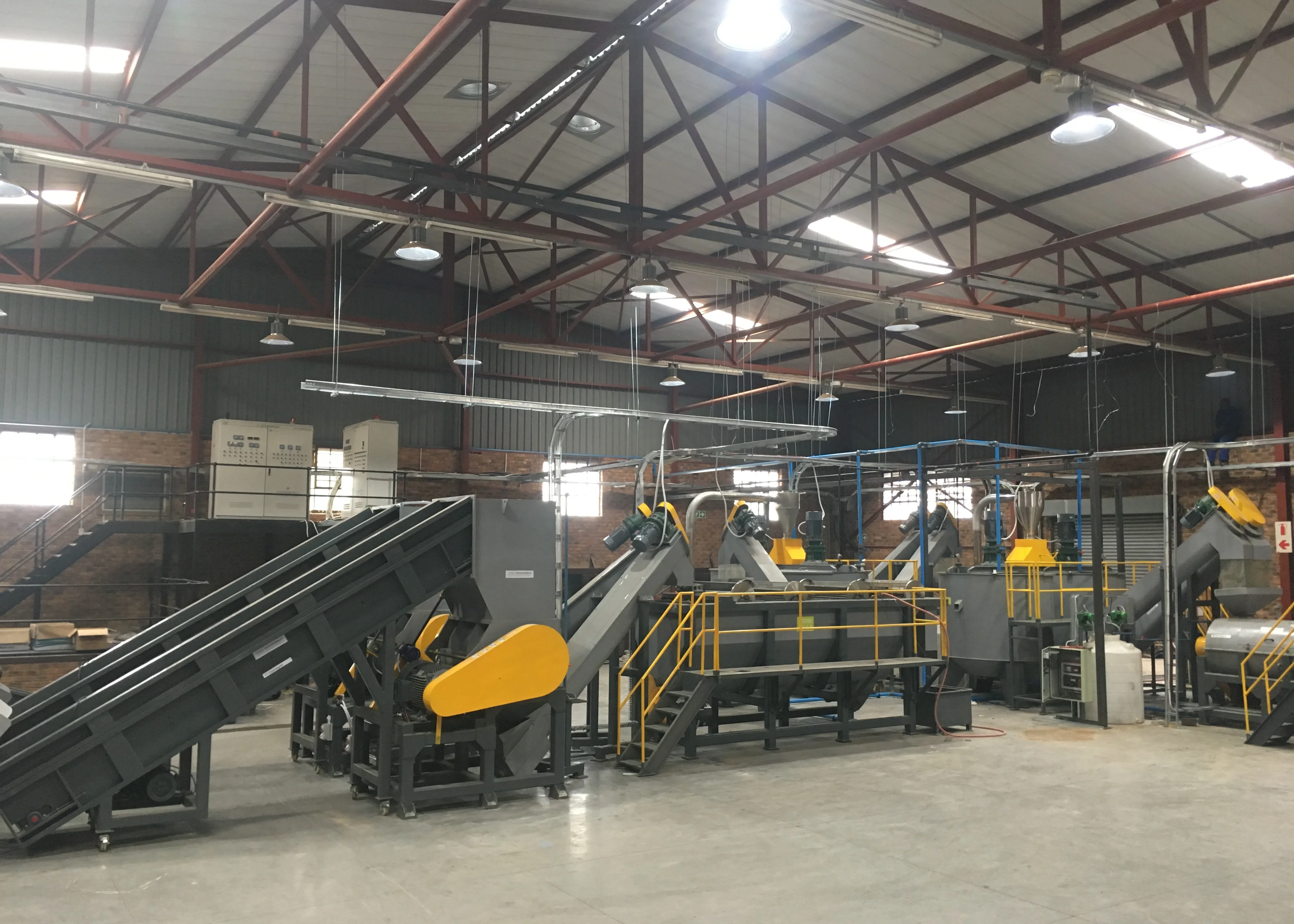
The current generation of equipment reflects both mechanical refinement and process integration, with many suppliers offering complete line packages from opening and dosing through shredding, screening, separation, and dewatering.
Technical Overview
At the core of preprocessing and recycling machinery is the need to transform irregular, mixed, and sometimes dangerous feedstock into a stable material stream. This is achieved through controlled torque, rotor geometry, cutter design, hydraulic or electric drive systems, and downstream classification equipment.
Main operating principles
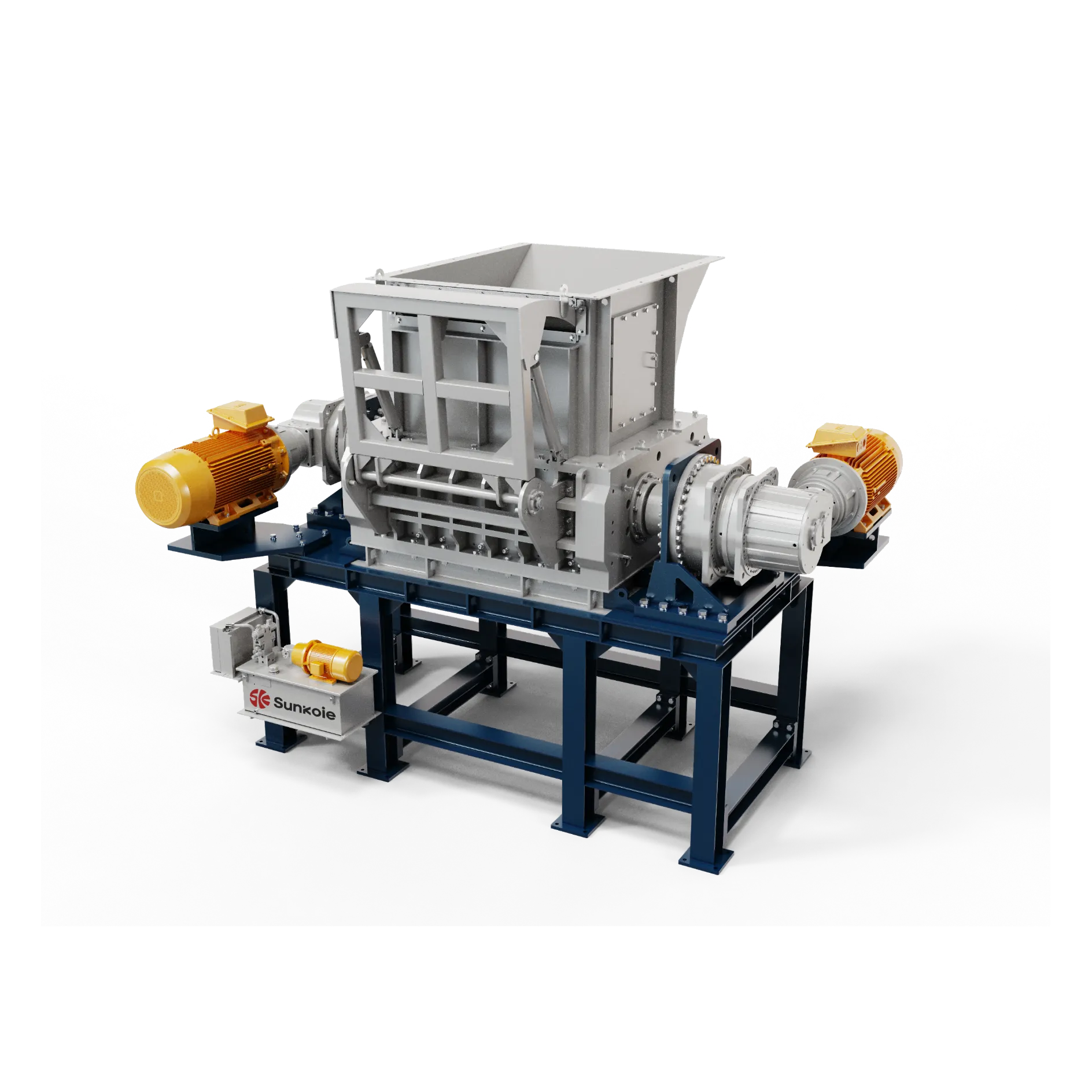
- Pre-shredders use slow-speed, high-torque cutting or shearing to open bags, break bales, reduce bulky items, and produce a more uniform feed for later stages.
- Shredders perform further size reduction, usually producing a more consistent fraction for sorting, washing, or RDF/SRF preparation.
- Granulators and crushers are used where smaller particle size and better liberation are needed, especially in plastics recycling and material reprocessing.
- Screens and separators classify material by size, density, magnetic properties, or airflow response, improving fraction purity before or after washing.
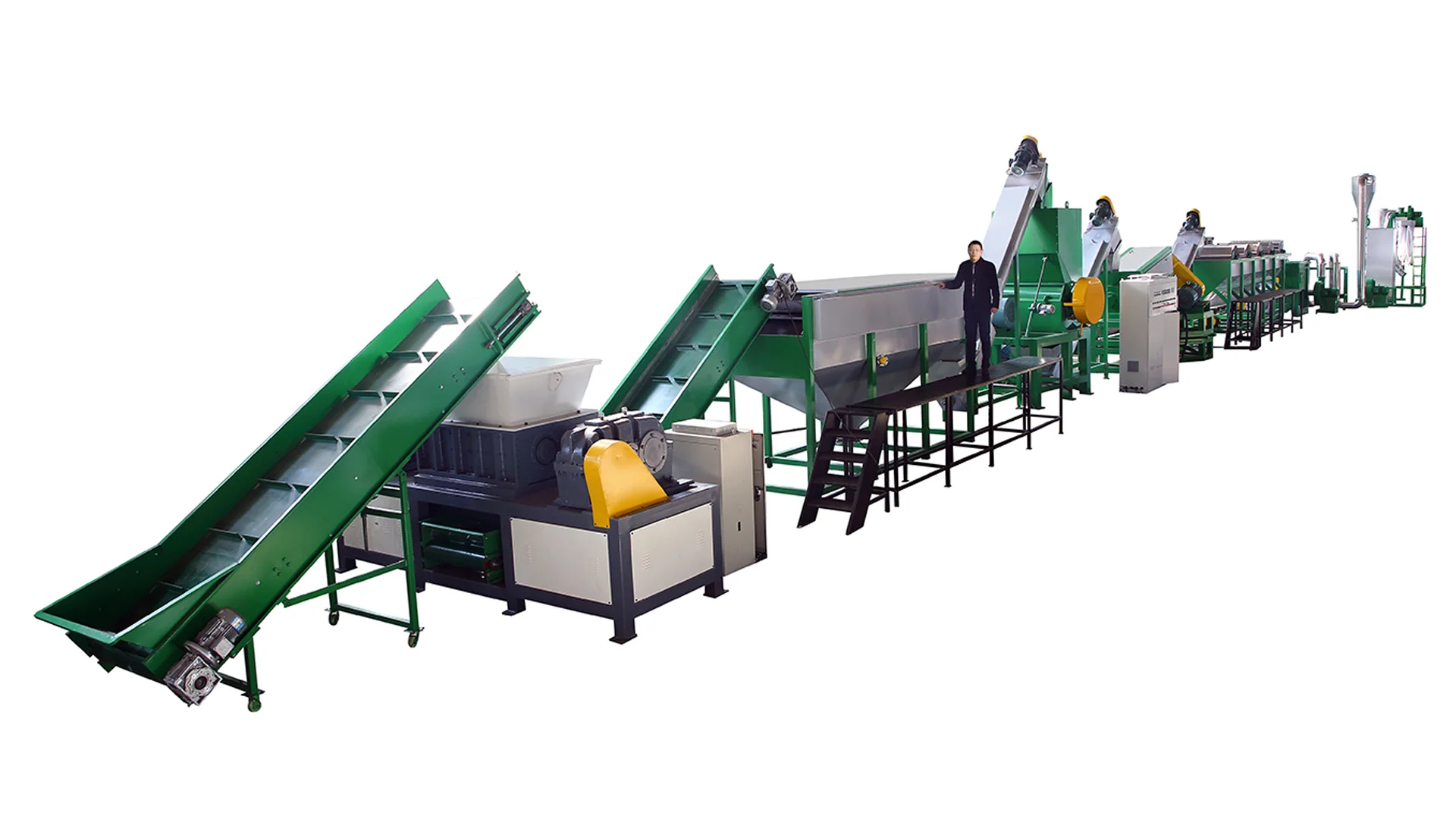
- Washing, squeezing, and dewatering systems remove dirt and free water from plastic flakes or fibrous materials before extrusion or pelletizing.
Typical technical benchmarks
- Pre-shredder output size is commonly in the range of a few centimeters to several tens of centimeters, depending on rotor geometry and machine settings.
- Heavy-duty twin-shaft pre-shredders may use rotors around 850 mm in diameter and large cutter packages for bulky feed.
- Industrial pre-shredders can reach throughputs up to 150 t/h in high-capacity metal and mixed-waste applications, while larger shredder plants in ferrous processing may exceed that range in specialized configurations.
- Rotor speeds are typically low to moderate in pre-shredding applications to maximize torque and minimize fines, whereas granulators run faster to achieve smaller flake sizes.
- In plastics washing lines, centrifugal dewatering is commonly used to reduce residual moisture before thermal drying or agglomeration, with the final moisture level depending on polymer type, flake geometry, and upstream wash intensity.
- Many preprocessing systems target lower specific energy consumption per ton by using slow-speed cutting, load-sensitive drives, and staged reduction instead of one-step grinding.
Flake and fraction control
For plastics recycling, the conditioning step is often designed to produce flakes suitable for washing and extrusion. Typical outputs include:
- PET bottle flakes
- PE/PP rigid flakes
- Film shred or agglomerate feed
- Mixed polymer fractions for further sorting
The quality objective is not merely size reduction, but liberation of contaminants and stabilization of feed to improve downstream separation efficiency and melt quality.
Main Machine Types and Variations
| Machine type | Primary function | Typical use | Key technical feature |
|---|---|---|---|
| Pre-shredder | Opens and pre-reduces bulky feed | Bales, mixed plastics, packaging, MSW, ELV residue | High torque, low speed, shock resistance |
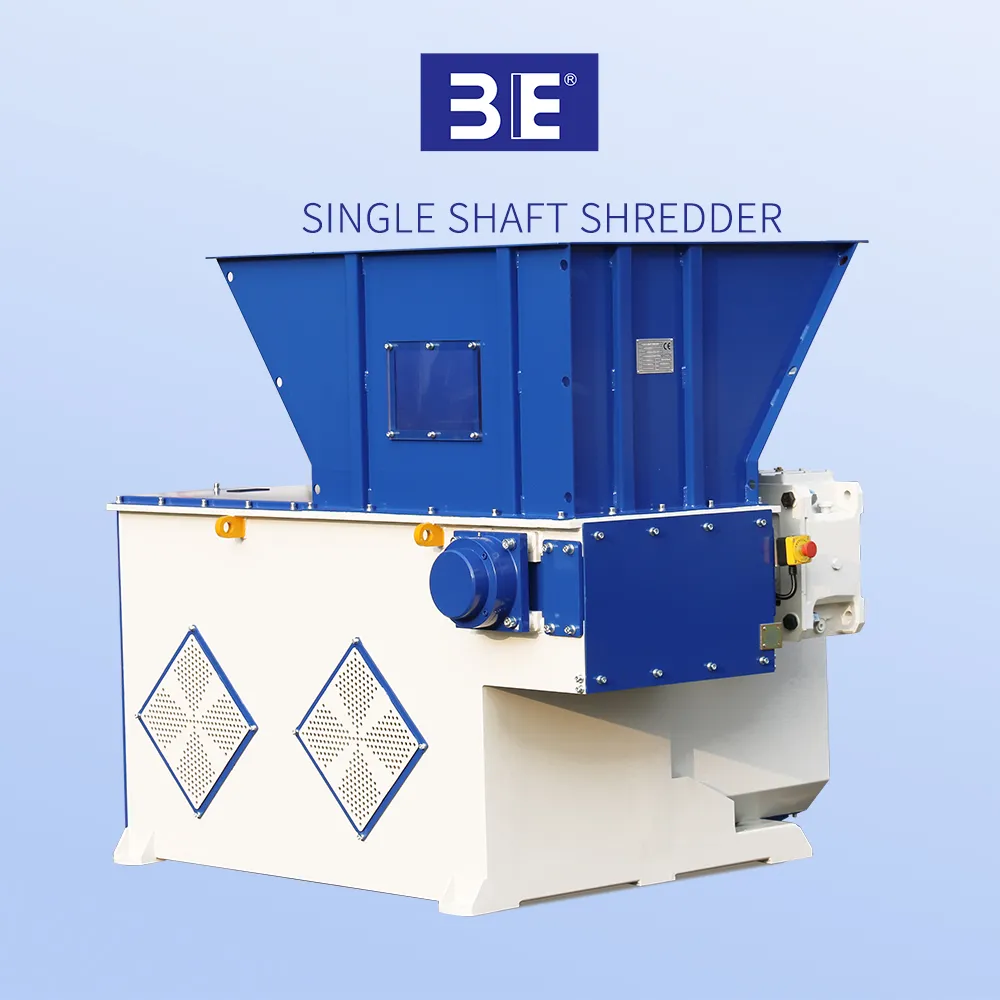
| Single-shaft shredder | Controlled size reduction | Plastics, films, lumps, light industrial scrap | Defined screen-controlled output |
| Twin-shaft shredder | Aggressive opening and tearing | Bulky, heterogeneous, contaminated waste | Two-rotor shearing action, strong intake |
| Granulator | Fine re-sizing | Clean plastics and regrind production | Higher rotor speed, uniform flakes |
| Crusher / pre-crusher | Initial breaking of rigid items | Rigid containers, profiles, large parts | Robust cutters and impact/shear action |
| Bale breaker / decompactor | Opens compressed feed | PET, film, packaging bales | Controlled bale loosening and dosing |
| Screen / trommel / vibrating screen | Size classification | Sorting and fraction control | Aperture-based separation |
| Separator | Material purification | Ferrous/non-ferrous/plastics separation | Magnetic, air, eddy-current, optical systems |
| Washing and dewatering unit | Contaminant and moisture removal | PET, PE/PP, film recycling | Friction washing, centrifuges, squeezers |
Applications and Uses
Preprocessing and recycling machinery is used wherever waste must be converted into a consistent, recoverable feedstock.
- Plastics recycling: PET bottles, PE/PP rigid packaging, films, post-industrial scrap, and contaminated mixed plastics are commonly processed using shredders, crushers, washing tanks, friction washers, centrifuges, and dryers.
- Metal scrap and WEEE: Pre-shredders and shredder plants prepare bulky metal scrap, white goods, and electronic waste for separation and melting.
- Municipal solid waste and RDF/SRF production: Opening, screening, air separation, and conveying systems create a combustible or sortable fraction for downstream treatment.
- Construction and demolition waste: Screens, crushers, and sorting systems separate mineral, wood, plastic, and metal fractions for recovery or disposal.
- Organics and depackaging: Depackers and preprocessing systems remove packaging from food waste and biomass streams before digestion or composting.
- Laboratory and small-scale recovery: Precision pre-crushing and size reduction support material testing, sample preparation, and quality control.
A poor-fit use is highly homogeneous, uncontaminated virgin polymer feed, where heavy preprocessing machinery is unnecessary and may create avoidable fines, wear, and energy use.
Technological Innovations and Automation
Automation is reshaping preprocessing lines in three main ways:
- Load-responsive drive control improves throughput stability and reduces power spikes by adapting rotor speed and torque to incoming material.
- Integrated conveying and metering systems ensure uniform feeding, which is essential for shredder protection and consistent particle size.
- Optical, magnetic, and density-based sorting is increasingly combined with mechanical preprocessing to improve fraction purity before washing or extrusion.
Mobile and modular systems are also expanding, allowing operators to redeploy equipment as waste streams change or as temporary projects require localized processing.
Environmental and Sustainability Aspects
Preprocessing equipment contributes to sustainability primarily by improving the recoverability of materials and reducing the cost of transport, landfill, and virgin feedstock substitution.
Key sustainability effects include:
- Lower transport intensity when bulky waste is compacted or pre-shredded near the source.
- Improved material recovery through better liberation of contaminants and more stable downstream feeding.
- Reduced moisture and contamination in plastics lines, which supports higher-quality regranulate and better extrusion efficiency.
- Compatibility with circular economy systems, especially where recycled content must meet stricter quality and traceability requirements.
At the same time, the sector faces a balancing act: more intensive preprocessing can increase wear parts consumption, dust generation, and energy demand if machine selection is poorly matched to the feedstock.
Economic and Global Market Impact
The market for preprocessing and recycling machinery is supported by rising demand for recycled raw materials, tighter waste regulations, and the need to process increasingly complex waste streams. Suppliers commonly offer complete systems rather than stand-alone machines because plant operators want higher uptime, stable quality, and integrated handling across the entire line.
Industrial buyers typically evaluate these systems on:
- Throughput
- Energy efficiency
- Downtime and maintenance burden
- Wear-part cost
- Output purity
- Flexibility across feed types
Some manufacturers are known for specific roles within the segment: Vecoplan is widely associated with shredding and residual-material preparation; Danieli Centro Recycling with high-capacity pre-shredding and scrap systems; Gamma Meccanica with plastics recycling lines for contaminated or high-moisture materials; and Eggersmann, M&J, and Pronar with broader waste processing and preprocessing systems.
Current Challenges and Innovations
The sector faces several technical and operational challenges:
- Feedstock heterogeneity makes stable throughput difficult and increases the risk of jams, blade wear, and quality variation.
- Contamination and moisture reduce recyclate value and require more intensive washing and dewatering.
- Energy and maintenance costs remain significant, especially in high-duty shredding and sorting plants.
- Material mix complexity, including composites, multilayer packaging, and dirty post-consumer waste, complicates mechanical recycling.
Current innovation focuses on:
- tougher cutter metallurgy and wear protection
- improved rotor geometry for controlled liberation
- smarter line control and predictive maintenance
- better dewatering and drying efficiency
- modular plants that can be reconfigured for changing waste streams
Future Outlook
Future preprocessing and recycling systems are likely to become more automated, data-driven, and feedstock-adaptive. The most important direction is not simply greater shredding power, but better integration of size reduction with sorting, washing, moisture control, and process analytics.
Likely trends include:
- higher use of sensor-based sorting before fine reprocessing
- more electric and digitally monitored drive systems
- stronger focus on low-moisture output for plastics extrusion
- growth of mobile and decentralized preprocessing units
- improved line designs for difficult waste streams such as multilayer packaging, composites, and contaminated films
As recycled content targets and extended producer responsibility schemes expand, preprocessing machinery will remain a foundational technology for making waste streams economically and technically usable in the plastics circular economy.
References
- •
Plastics 21xx. (n.d.). Expo21xx. https://www.expo21xx.com/plastics/17432_st3_preprocessing_recycling/default.htmLink
- •
Pre-shredders - Hard Recycle. (2025, August 3). Hard Recycle. https://hardrecycle.com/recycling-equipment-systems/shredders-and-crushers/pre-shredders/Link
- •
Tecnosa - Plastics & Rubber. (2026, May 21). Plastics & Rubber. https://www.plastics-rubber.es/en/exhibitor/tecnosa/Link
- •
Preprocessing & recycling machines and equipment. (n.d.). CENS. https://www.cens.com/censv1/en/product_list.jsp?SUP_ID=26818&CAT_ID=2150Link
- •
Products › Ironmaking and steelmaking › Shredder plants. (n.d.). Danieli. https://www.danieli.com/en/products/products-processes-and-technologies/product-lines/shredder-plants_26_149.htmLink
- •
Plastic recycling equipment for preprocessing. (2025, January 1). PRM Taiwan. https://www.prm-taiwan.com/enews/category/plastic-recycling-equipment-for-preprocessing_S0222Link
- •
Gamma Meccanica - Plastics & Rubber. (2024, November 14). Plastics & Rubber. https://www.plastics-rubber.es/en/exhibitor/gamma-meccanica-2/Link
- •
Waste recycling and processing equipment. (2025, June 23). Efactor3. https://efactor3.com/products/waste-recycling-equipment/Link
- •
Turbo Recycling: Depackaging equipment. (2022, January 28). Turbo Recycling. https://www.turborecycling.com/Link
- •
Recycling machines. (n.d.). Eggersmann GmbH. https://www.eggersmann-recyclingtechnology.com/en/recycling-machines/Link
- •
Pre-crusher, flake crusher - All industrial manufacturers. (n.d.). DirectIndustry. https://www.directindustry.com/industrial-manufacturer/pre-crusher-95889.htmlLink
- •
Pronar industrial machinery. (2019, January 1). TNV Equipment. https://www.tnvequipment.com/explore-equipment/pronarindustrialmachineryLink
- •
Pre-processing machines, Xrido machine. (2025, November 27). Xrido. https://www.xridoep.com/pre-processing-machines-in-a-waste-sorting-and-processing-system/Link
- •
Air separators ZIGZAG. (n.d.). Scrappers Recycling. https://scrappers-recycling.com/recycling-machines.htmlLink
- •
Recycling equipment & systems. (2024, November 16). Hard Recycle. https://hardrecycle.com/recycling-equipment-systems/Link
- •
Recycling machinery for metal processing | Lindemann. (2026, July 15). Lindemann. https://lindemann-metalrecycling.com/en/machinery/Link
- •
Recycling and waste management with RETSCH. (n.d.). RETSCH. https://www.retsch.com/applications/recycling-and-waste-management/Link
- •
Industrial waste recycling equipment for mixed waste streams. (2025, December 22). REI. https://www.gogreenrei.com/application/waste/Link
- •
Equipment guide - Find recycling equipment and systems. (2026, August 26). RecyclingInside. https://recyclinginside.com/equipment-guide/Link
- •
Recycling plants and separation lines by Stokkermill. (n.d.). Expo21xx. https://www.expo21xx.com/environmental_technology/22785_st3_recycling_reuse_recovery_manufacturer/default.htmLink