
Introduction
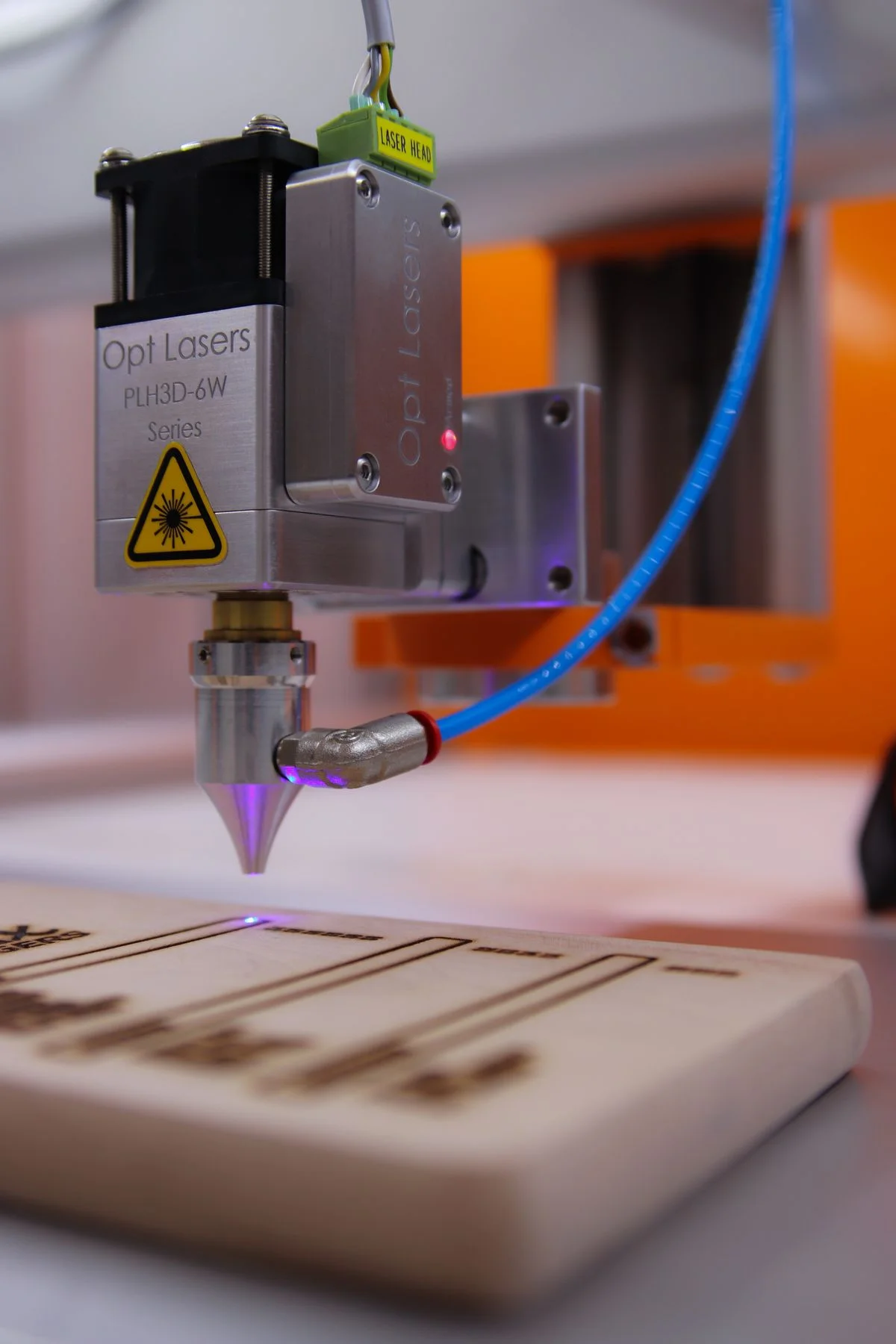
Marking equipment in the plastics industry refers to the machines, tools, and integrated systems used to apply permanent or temporary identification onto plastic parts, packaging, tooling, and auxiliary components. In manufacturing, these systems support traceability, branding, regulatory compliance, quality control, and automation, and they range from simple hand coders and labelers to high-speed laser, inkjet, thermal-transfer, dot-peen, and embossing systems.
Within plastics processing, marking equipment is used on molded parts, extruded profiles, blow-molded containers, thermoformed packs, caps and closures, films, pipes, cables, and packaging. The most common technologies are laser marking, inkjet coding, thermal-transfer printing, dot peen, and press or emboss marking, with the best choice depending on substrate, production rate, permanence, and legibility requirements.

Historically, marking evolved from manual stamps and mechanical punches to automated industrial systems capable of printing serial numbers, date codes, logos, and machine-readable codes directly on moving production lines. Current development is driven by the need for better part identification, tighter supply-chain visibility, and more efficient data capture for Industry 4.0 manufacturing.
Sustainability is now a central design factor. Modern marking equipment is increasingly selected for reduced consumable use, lower rework and scrap rates, cleaner operation, and compatibility with recyclable packaging and circular-economy workflows. Looking ahead, the sector is moving toward more connected systems, vision verification, and adaptive marking that can handle frequent product-changeovers with minimal downtime.
History and Development
Industrial marking began with manual and mechanical methods such as stamps, punches, scribers, and stencil-based systems, which were widely used for simple part identification and layout work.
Three important development milestones shaped modern marking equipment:
- Mechanical permanent marking matured through dot-peen, scribe, and embossing systems that created durable marks on metal and engineering plastics for part identification and traceability.
- Non-contact coding expanded with inkjet and laser systems, allowing high-speed marking on packaging, molded parts, and sensitive substrates without physical contact.
- Connected automated marking stations emerged with part handling, camera inspection, software-driven code generation, and line integration for serialisation and compliance reporting.
In plastics, the shift has been especially pronounced in packaging and molded-component manufacturing, where high-throughput lines require fast code generation, low maintenance, and reliable legibility on curved or variable surfaces.
Key Characteristics and Technical Overview
Marking equipment is defined by the type of mark it produces, the substrate it can process, and the degree of integration with production machinery. In plastics processing, the technical priorities are usually adhesion or permanence, contrast, readability, cycle time, and substrate compatibility.
Main operating principles
- Inkjet coding deposits ink droplets onto the surface, making it suitable for date codes, batch numbers, and variable text on films, cartons, bottles, and caps.
- Laser marking uses a focused beam to alter the surface, discolor the polymer, ablate a coating, or create a permanent mark with no consumable ink.
- Thermal-transfer printing transfers pigment from a ribbon onto labels or films, giving sharp text and barcodes for packaging and flexible films.
- Dot-peen marking uses a stylus to create a pattern of indents, producing durable marks often used on tooling, fixtures, and robust industrial parts.
- Embossing or press marking mechanically forms raised or recessed characters, often used where a tactile mark is desirable.
Typical technical benchmarks
- Laser marking speeds can support high-volume production lines, especially for small codes and serial numbers; exact throughput depends on code size, dwell time, and contrast requirements.
- Dot-peen systems are commonly used for low- to medium-volume permanent marking because they balance cycle time and durability.
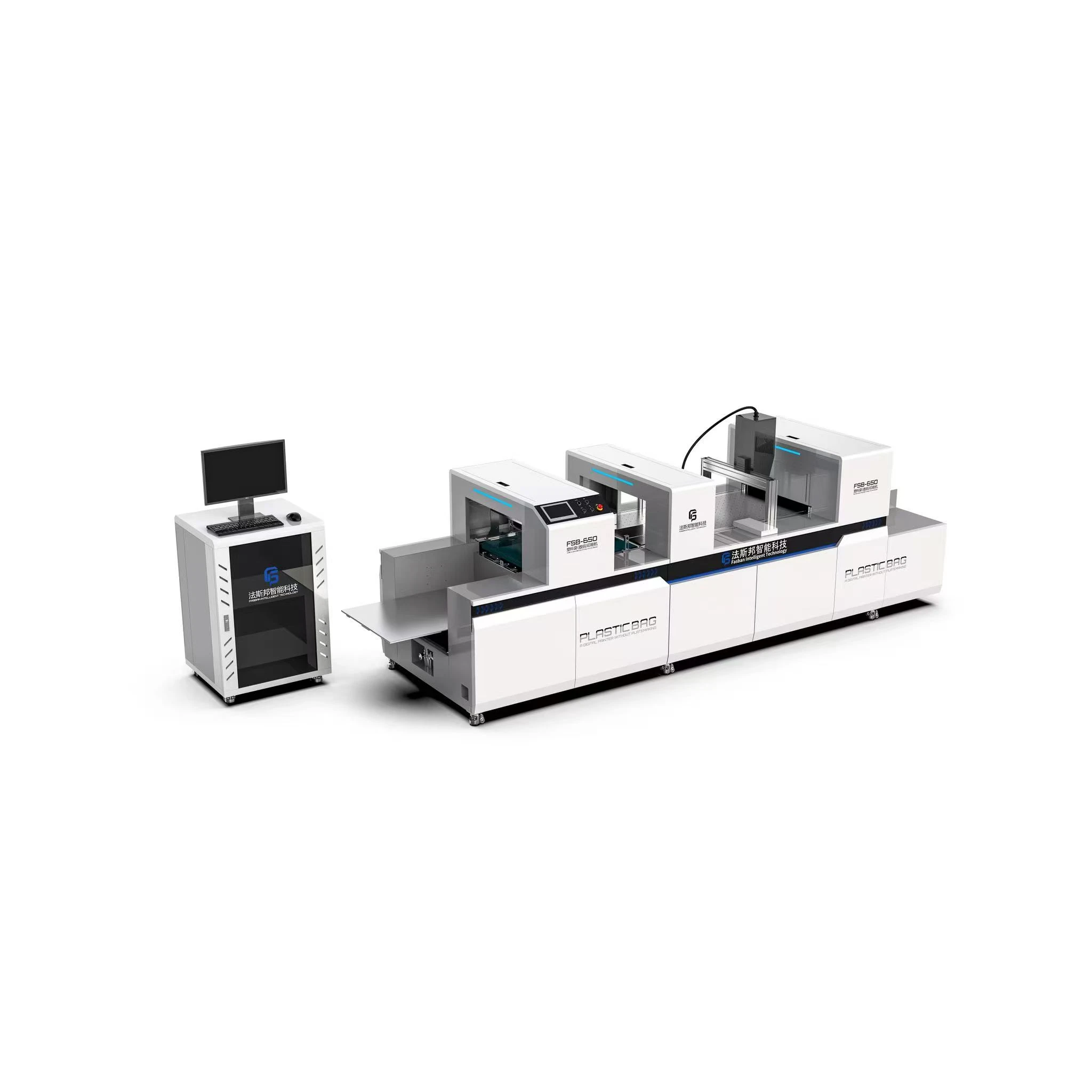
- Inkjet systems are often preferred for fast-moving packaging lines because they can print variable data continuously with minimal mechanical contact.
- Centrally integrated marking stations often include part holding, cameras, guarding, and software-driven code generation to reduce operator error and support traceability.
Performance considerations in plastics
Plastic substrates introduce unique engineering constraints:
- Low surface energy materials such as polyethylene and polypropylene may require surface treatment, specialized inks, or laser parameter optimization for consistent adhesion or contrast.
- Heat sensitivity matters for thin films, foams, and delicate molded parts, where excessive laser energy or contact force can distort the part.
- Curved or textured surfaces can reduce readability, making vision verification and focused fixturing important.
- Colorant and filler content in plastics affects laser contrast, ink wetting, and mark durability.
Common quantitative ranges
Exact values vary by machine class and substrate, but industrial marking systems in plastics typically operate within these broad ranges:
- Throughput: from a few parts per minute for deep or permanent marks to very high-speed continuous coding on packaging lines.
- Mark size: from small alphanumeric date codes to larger logos, 1D/2D codes, and regulatory text.
- Consumable use: near-zero for laser systems, moderate for inkjet and thermal-transfer systems, and none for mechanical dot-peen beyond tool wear.
- Integration level: standalone bench units, handheld devices, and fully automated in-line systems.
Types and Variations
| Type | Typical mark | Best suited materials | Main strengths | Main limitations |
|---|---|---|---|---|
| Laser marking | Permanent text, logos, 2D codes | Many plastics, labels, coated parts | Clean, non-contact, high precision | Requires parameter tuning; some plastics mark poorly |
| Inkjet coding | Date codes, batch numbers, variable text | Films, bottles, cartons, closures | Fast, flexible, low cost per code | Ink adhesion and drying can be limiting |
| Thermal-transfer printing | Barcodes, labels, flexible packaging | Labels, films, sleeves | Sharp print quality | Ribbon and media handling required |
| Dot-peen marking | Permanent indented characters | Tooling, fixtures, rigid parts | Durable, robust, low consumable use | Not ideal for thin or decorative plastics |
| Embossing / press marking | Raised or recessed marks | Packaging, labels, formed parts | Simple and durable | Limited flexibility and code complexity |
| Handheld marking units | Portable IDs, inspection marks | Field parts, large components | Flexible deployment | Lower repeatability than fixed systems |
Among plastics processors, laser marking and inkjet coding are the most visible categories because they combine speed with the need to print variable information on molded and packaged goods.
Applications and Uses
Marking equipment is used across nearly every plastics-processing segment.
- Injection molding: cavity IDs, part numbers, date codes, revision marks, and supplier traceability on housings, caps, connectors, and technical parts.
- Extrusion: length markings, batch codes, line identification, and compliance data on pipes, profiles, tubing, and wire insulation.
- Blow molding: product codes, recycling marks, and expiry information on bottles and containers.
- Thermoforming and packaging: lot codes, barcodes, branding, and regulatory information on trays, cups, lids, and flexible packs.
- Cable and wire processing: sequential printing, meter marks, and identification for installation and maintenance.
- Tooling and fixtures: permanent identification for molds, inserts, jigs, and assembly aids using dot-peen or laser marking.
A poor-fit application is deep, highly permanent marking on very thin or highly flexible films, where mechanical marking can deform the substrate and laser energy must be tightly controlled to avoid burn-through or distortion.
Technological Innovations and Automation
Modern marking systems increasingly operate as part of an automated traceability chain rather than as isolated devices. Typical innovations include:
- Automatic data generation from ERP, MES, or machine controllers.
- Vision inspection to verify code presence, contrast, and placement.
- Robot or conveyor integration for synchronized marking at line speed.
- Handheld-to-stationary conversion for plants that need both portable and fixed marking capability.
- Multi-technology platforms that allow a manufacturer to shift between laser, dot-peen, or inkjet depending on the part mix.
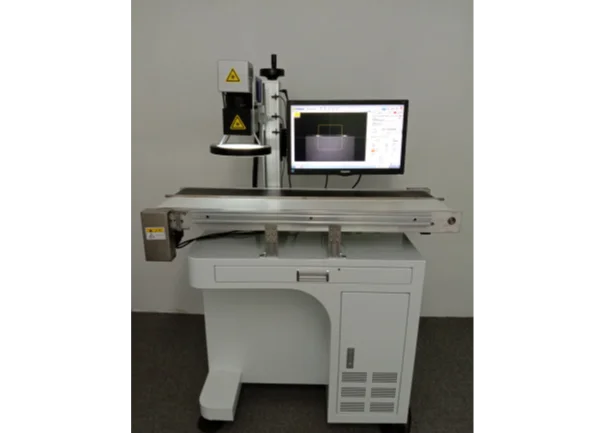
Automation adds consistency and data integrity, but it also raises engineering demands: code quality must remain stable across speed changes, part geometry, and environmental variation, especially on high-cavitation molding lines and high-speed packaging machines.
Environmental and Sustainability Aspects
Marking equipment affects sustainability in both direct and indirect ways.
- Laser systems can reduce consumables by eliminating ink or ribbons, which lowers waste streams.
- Inkjet and thermal-transfer systems create ongoing consumable demand, but they remain efficient when correctly matched to line speed and code format.
- Accurate marking reduces scrap, relabeling, recalls, and downstream sorting errors by improving traceability.
- Permanent identification can support circular-economy workflows by helping sort materials, track regrind, and identify resin families or additive packages more reliably.
The main sustainability trade-off is between low-consumable technologies and process robustness: the most resource-efficient technology is not always the most suitable if it increases reject rates or maintenance downtime.
Economic and Global Market Impact
Marking equipment is a small but strategically important segment of industrial machinery because it sits at the intersection of production efficiency, compliance, and brand protection. Demand is driven by plastics packaging, automotive components, electronics, medical devices, and logistics, where readable codes and part identity are essential.
Manufacturers with recognized roles in this segment include suppliers specializing in dot-peen and laser marking, industrial inkjet coding, and complete marking stations with guarding and part handling. In practice, purchasing decisions are often influenced less by machine price alone than by uptime, code quality, integration cost, and lifetime consumable expense.
Current Challenges and Innovations
Several technical challenges continue to shape the market:
- Mark consistency on difficult plastics: pigments, fillers, recycled content, and surface finishes can change mark contrast or ink adhesion.
- Miniaturization: small molded parts require finer codes and more precise registration.
- Regulatory pressure: industries increasingly require permanent, legible, machine-readable identification.
- Line-speed variability: marking equipment must stay synchronized with fast and changing production conditions.
- Maintenance and cleanliness: ink systems require periodic service, while lasers require enclosure, safety controls, and parameter management.
Current innovation is focused on adaptive software, lower-maintenance print heads, more compact laser sources, improved code verification, and better compatibility with recycled or bio-based plastics.
Future Outlook
The future of marking equipment in plastics processing is likely to be shaped by five trends:
- Greater use of laser marking where permanence and reduced consumables justify higher capital cost.
- Wider use of 2D codes for full traceability of parts, materials, and production history.
- Smarter automation with camera verification and direct data exchange from plant software.
- Better marking on recycled plastics through improved parameter control and substrate-aware software.
- Portable/stationary hybrid systems for plants that need both in-line and off-line identification capability.
As plastics manufacturing becomes more data-driven, marking equipment will remain a core enabling technology rather than a peripheral accessory, because the mark itself increasingly functions as the link between the physical part and the digital record.
Summary
Marking equipment in plastics processing includes the technologies used to identify parts, packages, and tooling with codes, text, logos, and symbols. Its main families are laser, inkjet, thermal-transfer, dot-peen, and embossing systems, each optimized for different substrates, line speeds, and permanence requirements.
Its importance extends beyond labeling: marking supports traceability, quality assurance, supply-chain control, regulatory compliance, and circular-economy practices, making it a fundamental part of modern plastics manufacturing.
References
- •
List of 18 marking tools and their uses [names and pictures] PDF. (2024, July 12). The Engineer's Post. https://www.theengineerspost.com/marking-tools/Link
- •
Metal marking equipment. (n.d.). Hitt Marking. https://www.hittmarking.com/category/metal-marking-equipmentLink
- •
Types and overview of marking machinery. (2026, May 14). IQS Directory. https://www.iqsdirectory.com/articles/marking-machinery.htmlLink
- •
Marking systems and tools. (2025, February 18). Pannier. https://www.pannier.com/marking/Link
- •
Industrial marking equipment: Which type fits your parts. (2024, January 29). HeatSign. https://www.heatsign.com/top-7-industrial-marking-tools/Link
- •
Types of marking tools explained [PDF]. (2025, November 3). Scribd. https://www.scribd.com/presentation/395284988/JenniferLink
- •
Marking tools. (2025, November 6). Grainger Industrial Supply. https://www.grainger.com/category/tools/measuring-layout-tools/marking-toolsLink
- •
Marking machinery - Industrial and commercial suppliers. (n.d.). IQS Directory. https://www.iqsdirectory.com/marking-machinery/Link
- •
Pavement marking and maintenance. (2023, September 6). Graco. https://www.graco.com/us/en/contractor/products/pavement-marking-maintenance.htmlLink
- •
Stencils and inks. (2024, August 20). Durable Tech. https://www.durable-tech.com/blog/kinds-of-marking-tools-explainedLink
- •
Products. (n.d.). MB Metal Technologies. https://www.mbmetaltech.com/products/Link
- •
Different types of marking tools. (2022, November 1). Durable Tech. https://www.durable-tech.com/blog/different-types-of-marking-toolsLink
- •
Marking products. (n.d.). Marking Machines. https://marking-machines.net/Marking-Products.htmlLink
- •
Marker equipment in the real world: 5 uses you'll actually see. (2025, October 1). LinkedIn. https://www.linkedin.com/pulse/marker-equipment-real-world-5-uses-youll-actually-mdficLink
- •
Marking tools. (n.d.). Tooled-Up.com. https://www.tooled-up.com/marking-tools/cat/100361/Link
- •
Marking equipment. (2024, January 1). VBA Solutions. https://www.vbasolutions.com/marking-equipment.htmlLink
- •
Marking tools explained - Uses, types and benefits. (2025, December 16). Buyohlic. https://www.buyohlic.com/blogs/news/marking-tools-explained-uses-types-and-benefitsLink
- •
Marking equipment and machines. (2025, August 15). Zoro. https://www.zoro.com/marking-machines/c/9857/Link
- •
Marking machines in the real world: 5 uses you'll actually see. (2025, October 1). LinkedIn. https://www.linkedin.com/pulse/marking-machines-real-world-5-uses-youll-actually-see-2025-4yhfeLink
- •
Industrial marking and coding solutions. (2026, June 19). Practical Packaging Solutions. https://www.practicalpackaging.com/packaging-machinery/marking-coding/Link
- •
Marking machine manufacturer, laser marking, traceability. (2026, April 4). SIC Marking. https://www.sic-marking.com/Link
- •
Industrial marking tools and accessories. (n.d.). Strapmark. https://www.strapmark.com.au/product_categories/tools-accessories/Link
- •
Marking types. (2025, April 10). Technomark Marking. https://www.technomark-marking.com/en/marking-types/Link
- •
Field marking and painting equipment and supplies. (2021, October 21). Beacon Athletics. https://beaconathletics.com/product-category/field-maintenance/field-marking-layout/field-marking/Link
- •
Road marking equipment - road marker. (n.d.). Road Marker. https://en.road-marker.com/Link
- •
The complete guide to marking machines. (n.d.). LFC. https://www.lfc.com.sg/blog/detail/marking-machineLink
- •
Marking systems for glass, plastic and steel. (n.d.). Marvel Marking. https://www.marvelmarking.com/Link
- •
Coding and marking equipment - Inkjet and laser coding machines. (2026, August 29). Crown Packaging. https://shop.crownpack.com/equipment/coding-markingLink
- •
American marking - High performance industrial markers for. (n.d.). American Marking. https://www.americanmarking.com/Link
- •
Marking tool - All industrial manufacturers. (2025, January 1). DirectIndustry. https://www.directindustry.com/industrial-manufacturer/marking-tool-67745.htmlLink
- •
Marking machines: Process, mechanism, and applications. (2025, October 24). HeatSign. https://www.heatsign.com/marking-machine/Link
- •
Marking out tools: What are the types and what should you. (2021, July 9). Expondo. https://www.expondo.co.uk/inspirations/marking-out-tools/Link
- •
Usage and classification of road marking machines. (2023, July 31). TOPROAD. https://toproadtraffic.com/usage-and-classification-of-road-marking-machines/Link
- •
10 applications of road marking machine. (2025, September 2). Kaushik Engineering Works. https://www.kaushikengineeringworks.com/road-marking-machine-applications/Link
- •
What equipment is used for line marking? (2024, August 28). C&R Ltd. https://c-r.co.uk/insights-updates/what-equipment-is-used-for-line-marking/Link
- •
10 marking tools used in sewing (and my favourite). (2024, September 22). Sew Guide. https://sewguide.com/marking-tools-in-sewing/Link
- •
Road line marking machine in the real world. (2025, October 10). LinkedIn. https://www.linkedin.com/pulse/road-line-marking-machine-real-world-5-uses-vp2qfLink
- •
Tool traceability marking machines. (n.d.). Gravotech USA. https://www.gravotech.us/applications/tool-identification-and-equipment-traceabilityLink
- •
Laser marking machine: Precision and versatility. (2026, June 22). Youkong Laser. https://www.youkonglaser.net/news/Laser-Marking-Machine-Precision-and-Versatility.htmlLink
- •
Automated marking equipment for production line integration. (2025, January 17). HeatSign. https://www.heatsign.com/automated-marking-equipment-for-production-line-integration/Link
- •
The line marking machine: A crucial tool for precision and safety. (2025, January 23). Wistron China. https://www.wistronchina.com/the-line-marking-machine-a-crucial-tool-for-precision-and-safety/Link
- •
Usage of road marking machine: A comprehensive guide. (2026, May 13). Roadsky. https://roadskymarking.com/usage-of-road-marking-machine-a-comprehensive-guide.htmlLink
- •
Road marking equipment 2025: The ultimate guide to high. (2025, February 10). Lanxing. https://lanxingco.com/road-marking-equipment/Link
- •
11 essential measuring and marking tools. (2022, April 7). Fine Woodworking. https://www.finewoodworking.com/project-guides/hand-tools/11-essential-measuring-and-marking-toolsLink
- •
Precise marking with marking gauge and combination square. (2023, January 29). Dictum. https://www.dictum.com/en/blog/precise-marking-with-marking-gauge-and-combination-squareLink
- •
What are marking tools? (2020, June 23). The Quilt Show. https://thequiltshow.com/quiltipedia/what-are-marking-toolsLink
- •
Exploring the versatility of handheld marking machine in industries. (2024, April 1). MarknStamp. https://marknstamp.com/handheld-marking-machines-industrial-applications/Link
- •
SIC marking dot peen machine: Types, material standards, and. (2026, February 28). Alibaba. https://www.alibaba.com/product-insights/sic-marking-dot-peen-machine.htmlLink
- •
The importance of measuring and marking tools in DIY projects. (2023, July 3). Hanboost. https://www.hanboost.com/blogs/guide/importance-diy-projectLink
- •
What are the machines used in road marking? (2025, January 23). Estraffic. https://everstartraffic.com/what-are-the-machines-used-in-road-marking%EF%BC%9F/Link
- •
What are the best / most useful measuring/marking devices you have? (2022, September 25). Reddit. https://www.reddit.com/r/woodworking/comments/xnde03/what_are_the_best_most_useful_measuringmarking/Link
- •
Portable marking solutions: Laser, dot peen and inkjet. (2025, November 24). HeatSign. https://www.heatsign.com/portable-marking-solution-all-that-you-need-to-know/Link