
Introduction
Silo discharge devices are bulk-solids handling systems installed at or beneath silos, hoppers, and bins to ensure controlled material outflow when gravity alone is insufficient. In plastics processing, they are especially important for powders, flakes, regrind, and additives that may bridge, rathole, compact, or segregate during storage and transfer.
These devices are used in a broader family of discharge aids, which can be passive or active and may rely on hopper geometry, vibratory motion, fluidisation, or mechanical extraction to restore reliable flow. Selection depends on material properties, downstream feed demand, moisture, wall friction, abrasiveness, and whether the installation is a retrofit or part of a new silo design.
Within plastics plants, silo discharge technology is closely linked to process stability, contamination control, and throughput consistency in compounding, extrusion, pellet handling, and powder dosing. The field has also evolved toward more automated, energy-aware, and maintenance-friendly systems, including vibration cones, aerated bottoms, screw reclaimers, and control valves integrated with sensors and plant control systems.
History and Development
Early bulk-solids discharge systems were largely gravity-based, with outlet geometry and cone angle used to influence flow. As industrial storage grew larger and materials became more cohesive, engineers increasingly adopted active aids to overcome bridging and arching.
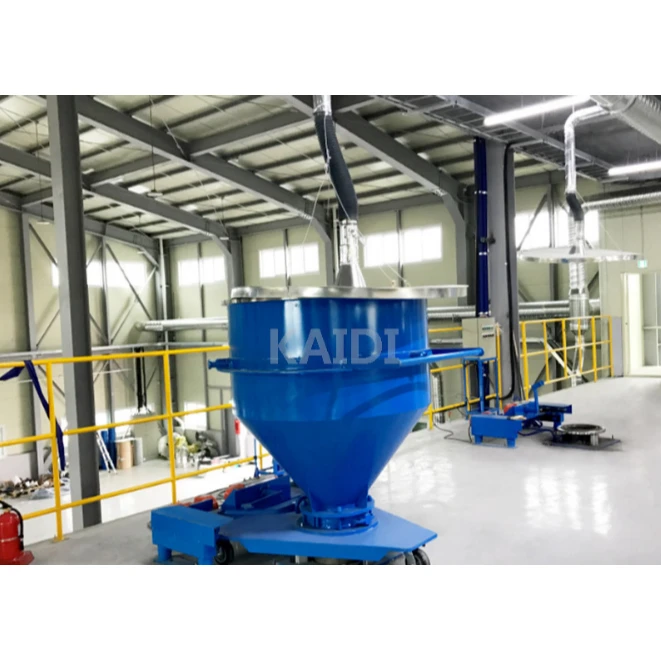
A major development was the wider industrialisation of vibratory bin activators, which use controlled vibration to mobilise material in the lower silo cone and promote mass flow. This approach became a common solution for cohesive powders and granular materials in cement, minerals, and later in plastics-related bulk handling.
Another milestone was the adoption of pneumatic aeration systems, including aeration pads, air jets, and fluidising cones, which inject low-pressure air to reduce internal friction and create a more flowable state for compatible powders. More recently, mechanical discharge systems such as screw dischargers, live-bottom reclaimers, and rotary discharge machines have expanded the options for difficult or non-free-flowing materials.
Technical Overview
A silo discharge device is usually designed to do one or more of four things: restore flow, meter discharge, prevent build-up, and match outlet flow to downstream equipment. The mechanism may be passive, such as a mass-flow hopper or low-friction liner, or active, such as vibration, aeration, or mechanical extraction.
Main operating principles
- Vibration loosens compacted material and reduces wall friction, allowing solids to collapse toward the outlet. Bin activators and vibrating cone bottoms are common examples.
- Fluidisation / aeration introduces air into the lower bulk bed, lowering effective internal strength and enabling fine powders to flow more uniformly.
- Mechanical extraction uses screws, discharge arms, reclaimers, or push floors to physically convey solids toward the outlet.
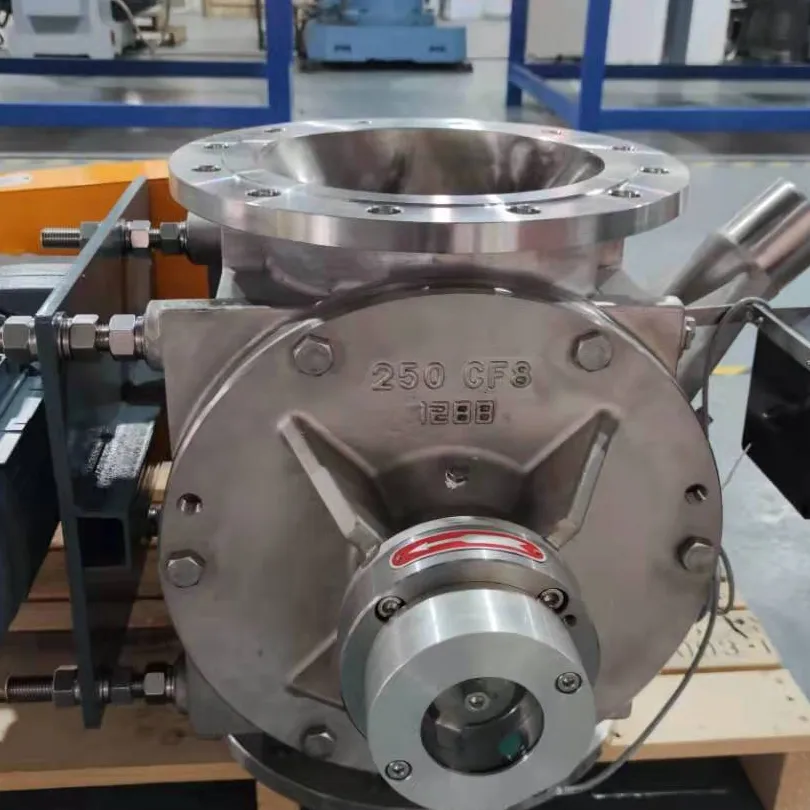
- Flow regulation is often provided by slide gates, butterfly valves, rotary valves, or electric flow-control valves mounted below the silo outlet.
Typical technical benchmarks
- Rotor or discharge-arm speeds vary widely by machine class; controlled mechanical discharge systems commonly vary speed to regulate outlet rate rather than running at a fixed speed.
- Throughputs range from small dosing rates in process silos to very high reclaim capacities in large bulk-storage systems; rotary reclaimers and large stockpile discharge machines can reach several thousand tonnes per hour in heavy-industry applications.
- Residual moisture after centrifugal or mechanical dewatering is not a standard silo-discharge metric for all systems, but in plastics and powder handling the relevant design goal is usually to preserve low moisture and prevent re-caking; when discharge is paired with dewatering or drying stages, final moisture targets are specified by the downstream process rather than the silo device itself. This is an engineering inference based on the role of discharge systems in process control.
- For fine powders, aeration pads and targeted air points are used where the material is sufficiently aeratable; these systems are less effective on sticky, wet, or highly cohesive solids.
Practical selection factors
- Material cohesion, time consolidation, particle-size distribution, wall friction, moisture, friability, and dust-explosion potential.
- Installation constraints such as available headroom, silo diameter, retrofit access, and utilities, especially compressed air versus electric drive power.
- Acceptable attrition, contamination risk, maintenance frequency, and discharge uniformity.
Types and Variations
| Type | Working principle | Best suited for | Typical limitations |
|---|---|---|---|
| Vibratory discharge devices | Controlled vibration loosens the lower bed and supports mass flow | Cohesive powders, granules, many powder blends | Can compact some materials if poorly selected or overdriven |
| Aeration / fluidising systems | Low-pressure air reduces interparticle friction | Fine, dry, aeratable powders | Ineffective on wet, sticky, or highly non-aeratable materials |
| Mechanical discharge systems | Screws, reclaimers, or rotating arms physically extract solids | Difficult, sluggish, or heavy materials | More moving parts, higher maintenance, potential wear |
| Passive flow-aid systems | Hopper geometry, liners, inserts, or flow modifiers improve natural discharge | Free-flowing or moderately cohesive materials | Limited when material strength is high or highly variable |
| Discharge gates and valves | Control opening size and outlet rate | Metering and isolation beneath silo outlets | Do not solve poor flow on their own |
Common configurations in industry
- Bin activators with vibrating cones for cohesive powders and granules.
- Aeration bottoms and fluidising cones for fine powders such as cement-like or mineral-type materials.
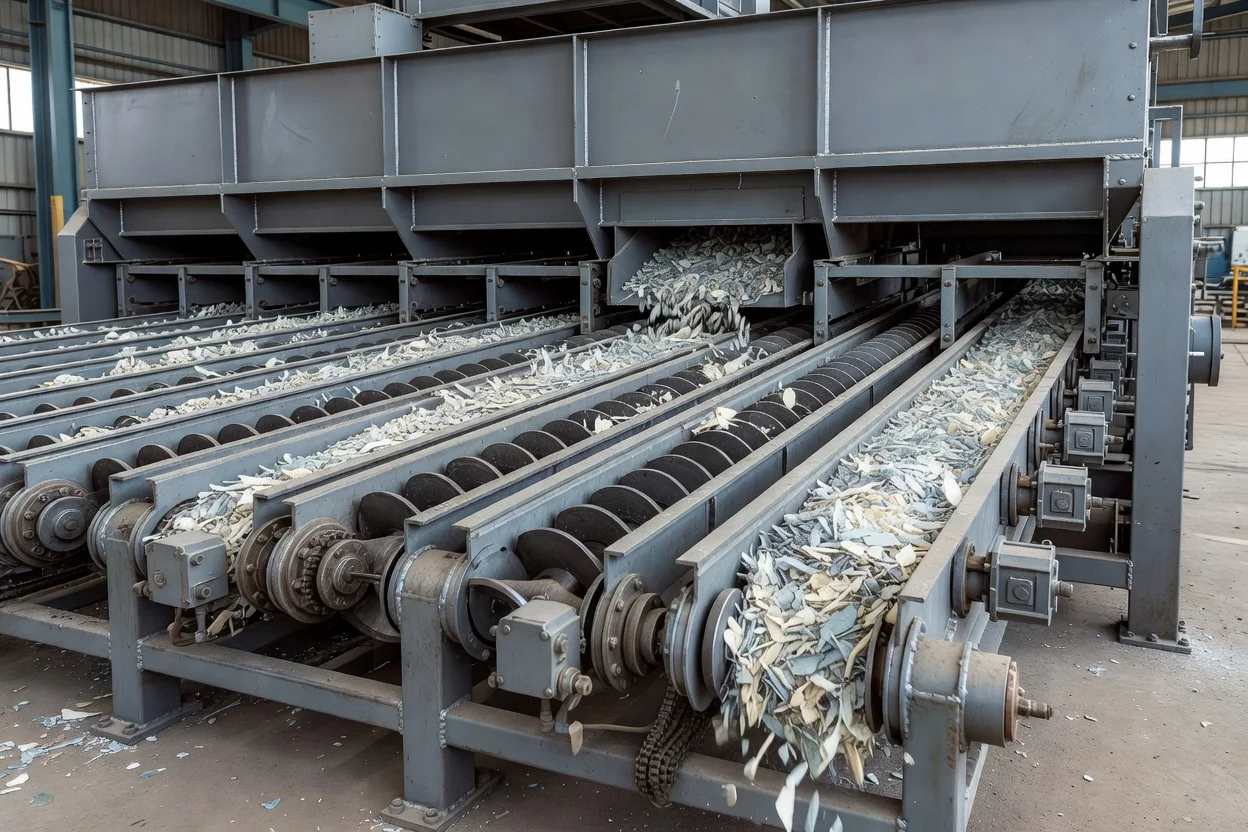
- Live-bottom screw systems for difficult or irregular materials that do not discharge reliably by gravity.
- Silo discharge machines with internal cones and rotating arms for controlled extraction of hot, wet, cohesive, or sluggish materials.
Applications and Uses
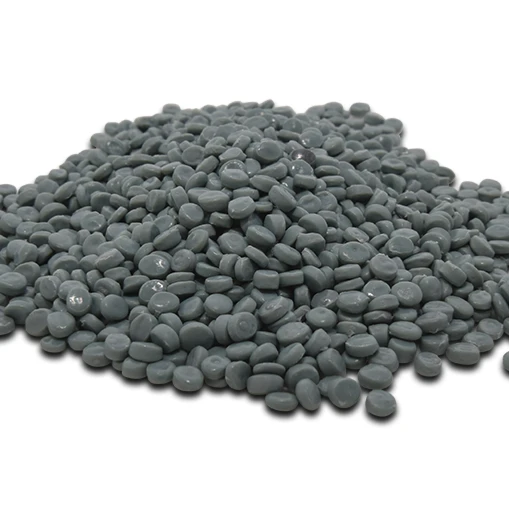
In plastics manufacturing, silo discharge devices are used wherever bulk materials must move reliably from storage to conveying, dosing, or processing equipment. Typical materials include plastic pellets, regrind, masterbatch, fillers, and some powdered additives used in compounding and formulation.
- Compounding plants use discharge aids to feed powders and pellets consistently into mixers, gravimetric feeders, and extruders.
- Injection moulding and extrusion facilities use silo outlets, valves, and discharge aids to stabilise resin transfer from central storage to day bins or drying systems.
- Recycling operations often handle flakes and irregular regrind that may bridge or segregate, making mechanical or vibratory discharge more useful than simple gravity flow.
- Cement, minerals, and biomass sectors are major users of vibratory, pneumatic, and live-bottom discharge systems, and their heavy-duty designs often influence equipment used in adjacent bulk-plastics applications.
One poor-fit use is highly sticky, wet, or caking material stored in a simple gravity-only cone, because such materials often require a more specialised discharge aid than basic outlet control can provide.
Technological Innovations and Automation
Modern silo discharge systems increasingly incorporate instrumentation and control logic to improve consistency and safety. Typical features include level sensors, flow monitoring, interlocks with downstream conveyors, and automated valve or vibrator sequencing.
A growing trend is the integration of discharge equipment with plant-wide automation so that flow rate, batch timing, and inventory control can be coordinated with mixing, drying, and conveying systems. This is particularly valuable in plastics production, where variations in feed rate can affect pellet transport, blender accuracy, and extruder stability.
Another innovation is the use of multi-point aeration, segmented fluidising zones, and hybrid systems combining vibration with aeration or mechanical extraction. These combinations are intended to widen the usable material window while reducing the risk of compaction or wall hang-up.
Environmental and Sustainability Aspects
Silo discharge devices can reduce waste by limiting material hang-up, uncontrolled purge, and manual clean-out. Reliable discharge also lowers the likelihood of process interruptions that lead to scrap, rework, or inefficient start-stop operation.
Energy use varies strongly by technology. Passive flow improvements generally consume little or no operating energy, whereas vibratory and pneumatic systems require continuous or intermittent power and compressed air. For this reason, engineers often balance discharge reliability against utility consumption and maintenance burden.
Sustainability considerations increasingly include:
- Lower dust emissions through controlled outlets and enclosed transfer points.
- Reduced material loss by avoiding arching and inconsistent emptying.
- Compatibility with recycled polymers and mixed streams, which often have less uniform flow behaviour than virgin resin.
- Avoidance of excessive aeration, which can increase energy use and, for some materials, worsen segregation or dusting.
Economic and Global Market Impact
Silo discharge devices are a comparatively small but strategically important segment of bulk-material handling, because they directly affect uptime, throughput, and process quality. In plastics plants, the cost impact is often indirect: poor discharge can interrupt extrusion lines, destabilise dosing, and increase labour for manual intervention.
Demand is strongest in industries that handle fine powders, cohesive solids, or variable bulk materials, especially where uninterrupted feeding is critical. Global suppliers span specialist silo-equipment manufacturers, bulk-handling integrators, and process-engineering firms, with regional strength often tied to cement, biomass, chemical, and plastics-processing markets.
Current Challenges and Innovations
The main engineering challenge is that bulk solids are not uniform. Flow behaviour changes with moisture, storage time, compaction pressure, particle shape, and temperature, so a discharge device that works well in one plant may perform poorly in another.
Other recurring issues include:
- Wear and abrasion in mineral-filled or glass-filled formulations.
- Dust control and explosion risk in fine polymer powders and additives.
- Retrofit constraints, especially limited headroom and existing silo geometry.
- Material segregation, which can alter downstream composition if discharge is not well controlled.
Current innovation is focused on hybrid discharge solutions, improved liners and inserts, better aeration zoning, and predictive control using sensors and process data.
Future Outlook
Future silo discharge technology in plastics processing is likely to emphasise hybrid systems, digital monitoring, and energy-efficient flow assurance. Systems that combine geometry, vibration, and controlled aeration are likely to remain attractive because they provide a wider operating window than single-function devices.
At the same time, the push toward recycled content and circular-economy feedstocks will increase the importance of discharge systems that can handle variable powders, flakes, and mixed regrind without excessive intervention. This will favour designs that are easier to clean, easier to automate, and more tolerant of changes in bulk properties.
Summary
Silo discharge devices are essential flow-assurance components that make bulk storage usable in real industrial conditions. In plastics processing, they help maintain stable feed, reduce downtime, and support consistent downstream operation, with the best solution depending on whether the material is free-flowing, cohesive, aeratable, abrasive, or highly variable.
References
- •
Discharge aids. (2025, December 29). The Solids Handling & Processing Association. https://shapa.co.uk/technical-advice/discharge-aids/Link
- •
Silo systems/discharge technology: Dosing and storage. (2024, October 21). F.A.T. https://www.f-a-t.de/en/bulk-solids-technology/technologies/silo-plants-discharge-technology/Link
- •
Silo loading, discharge and control equipment. (n.d.). PowderSilo. https://www.powdersilo.com/silo-accessory.htmlLink
- •
Silo discharge systems. (n.d.). VOLDE. https://www.volde.com/en/systems/raw-material-handling/silo-systems/silo-discharge-systems/Link
- •
Discharge systems for bulk materials. (2019, November 12). Loibl Förderanlagen GmbH. https://loibl-group.com/en/technologies/special-conveyor-solutions/discharge-systems.htmlLink
- •
Discharge aids for bulk solids handling. (n.d.). bulk-online. https://www.bulk-online.com/de/print/pdf/node/98354Link
- •
Silo discharge aids – Active devices to solve bulk material flow problems. (2020, August 3). bulk-online. https://www.bulk-online.com/en/article/white-paper/silo-discharge-aids-active-devices-solve-bulk-material-flow-problemsLink
- •
Discharge machines. (n.d.). DAPCO. https://www.dapco.co.th/en/products-detail/6/discharge-machinesLink
- •
Bin activators. (2026, June 18). Carolina Material Technologies. https://carolina-mt.com/bin-activators/Link
- •
Bin activators. (2026, August 31). Filquip. https://www.filquip.com.au/products/materials-handling-equipment/bin-activators/Link
- •
Hopper / silo discharging. (2026, January 6). Filquip. https://www.filquip.com.au/products/materials-handling-equipment/silo-discharging/Link
- •
Silo dischargers for bulk material handling. (2025, May 20). Laitex Oy. https://www.laitex.fi/product/silo-dischargers/Link
- •
The silo discharge of SEGLER. (2025, August 17). SEGLER. https://www.segler.eu/en/products/silo-discharge/Link
- •
Hosokawa Solids. (2025, December 16). Hosokawa Alpine. https://www.hosokawa-alpine.com/powder-particle-processing/technologies/pneumatic-conveying/discharging-devices/Link
- •
Steel silo discharge system. (n.d.). SRON. https://www.sronsilo.com/silo-systems/silo-storage-system/discharge-system/Link
- •
Silo discharge systems for bulk materials. (2024, November 29). Scribd. https://www.scribd.com/document/798643294/centrex-flyerLink
- •
Silo discharge device. (2025, March 11). Darko Tech. https://www.darko-tech.com/products/silo-bottom-discharge-device/Link
- •
Silo unloading system, silo discharge unit. (2025, January 1). DirectIndustry. https://www.directindustry.com/industrial-manufacturer/silo-unloading-system-262180.htmlLink
- •
Silo and discharge solutions for bulk goods. (n.d.). AZO GmbH. https://www.azo.com/en-de/solutions/silo-and-discharge-systemsLink
- •
Bin activators BA brochure. (2025, January 1). WAMGROUP S.p.A. https://pdf.directindustry.com/pdf/wamgroup-spa/bin-activators-ba-brochure/29492-172368.htmlLink
- •
Proven silo discharge technology for sludge & biomass storage. (n.d.). Saxlund Group. https://www.saxlundgroup.com/en/products/sliding-frame/Link
- •
Unloading equipment. (n.d.). ACT. https://www.act.us.com/unloading-equipment-actLink
- •
When considering the use of a silo discharge system to help. (n.d.). Vibra Screw. https://www.vibrascrew.com/wp-content/uploads/CHE_040124_SP_403423.pdfLink
- •
Silo discharge unit. (2023, February 6). AViTEQ Vibrationstechnik GmbH. https://www.directindustry.com/prod/aviteq-vibrationstechnik-gmbh/product-15626-53715.htmlLink
- •
Silo discharge machine. (2025, January 16). WTW Americas. https://wtwamericas.com/silo-discharge-machine/Link
- •
Discharge aids for bulk solids handling. (n.d.). Scribd. https://www.scribd.com/doc/134208136/Tech-Data-12Link
- •
Silo vibrating discharge: Key standards, physical properties, and. (2026, March 4). Alibaba. https://www.alibaba.com/product-insights/silo-vibrating-discharge.htmlLink
- •
Practical discharge of dry bulk solids. (2021, September 28). Vibra Screw Incorporated. https://www.vibrascrew.com/practical-discharge-of-dry-bulk-solids/Link
- •
Cement silo discharge system for stable powder flow. (2026, August 18). LVRUI. https://lvrui-conveyor.com/cement-silo-discharge-system/Link
- •
Components of the silo discharge system. (n.d.). BOOTEC. https://www.bootecgroup.com/news/components-of-the-silo-discharge-system/Link
- •
Choosing the right silo discharge system for smooth flow. (2025, November 22). LinkedIn. https://www.linkedin.com/posts/drymat-process-engineering_powderhandling-bulkmaterialhandling-silodesign-activity-7397809486595461120-Hae0Link
- •
How is a silo emptied? Systems and operation. (2026, June 25). Poggi S.p.A. https://www.poggi-spa.com/en/how-is-a-silo-emptied/Link
- •
How feeder design impacts silo discharge. (2022, December 20). Processing Magazine. https://www.processingmagazine.com/material-handling-dry-wet/powder-bulk-solids/article/21288105/how-feeder-design-impacts-silo-dischargeLink
- •
Discharge device operation manual. (2026, March 24). Scribd. https://www.scribd.com/document/478711067/Discharge-deviceLink
- •
Hopper bottom silo discharging. (2025, August 29). SRON Cement Silo. https://www.cementsilo.com/material-handling-system/discharging-system/hopper-bottom-silo-discharging.htmlLink
- •
Mass discharge silos. (n.d.). Symaga. https://symaga.com/wp-content/uploads/2024/10/mass-discharge-silos.pdfLink
- •
Discharge of high silos, ground floor and basement rooms. (n.d.). JPA-Tec. https://www.jpa-tec.com/en/products/material-handling-systems/silo-discharge/Link
- •
Silo discharge. (2024, January 1). IndiaMART. https://www.indiamart.com/portasilo-bulkhandling-system/silo-discharge.htmlLink
- •
Filling and emptying state of silos above discharge devices. (n.d.). Semantic Scholar. https://pdfs.semanticscholar.org/b6e4/b670572eee9a0d2ee6eb27bca87221146376.pdfLink
- •
Enhancing silo discharge and energy efficiency with vibrated insert. (2025, April 15). ScienceDirect. https://www.sciencedirect.com/science/article/pii/S0020740325002140Link