
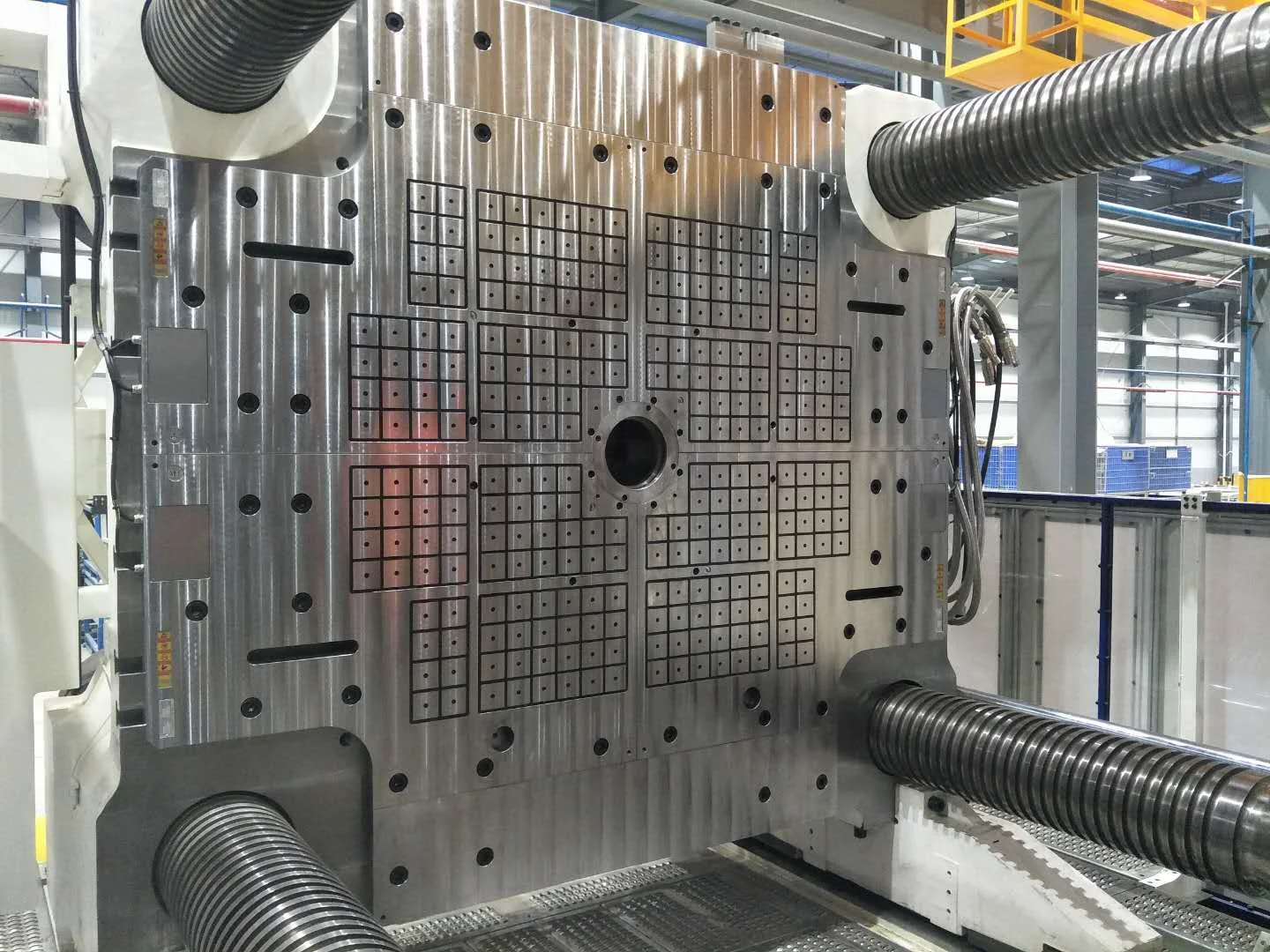
Introduction
Mold changing equipment is a class of auxiliary machinery and tooling used to remove, position, clamp, align, and reconnect molds during changeovers on injection molding machines, blow molding machines, die-casting machines, and related forming equipment. Its core purpose is to reduce nonproductive downtime, improve operator safety, and support high-mix manufacturing by enabling faster, more repeatable mold exchanges.
In plastics processing, mold changing equipment is closely associated with SMED (single-minute exchange of dies), a lean-manufacturing method that separates internal setup tasks from external ones so that changeovers can be completed in minutes rather than hours. Modern systems range from simple mold carts and rail systems to fully automated platforms combining hydraulic or magnetic clamping, mold transfer tables, quick couplers, and safety interlocks.
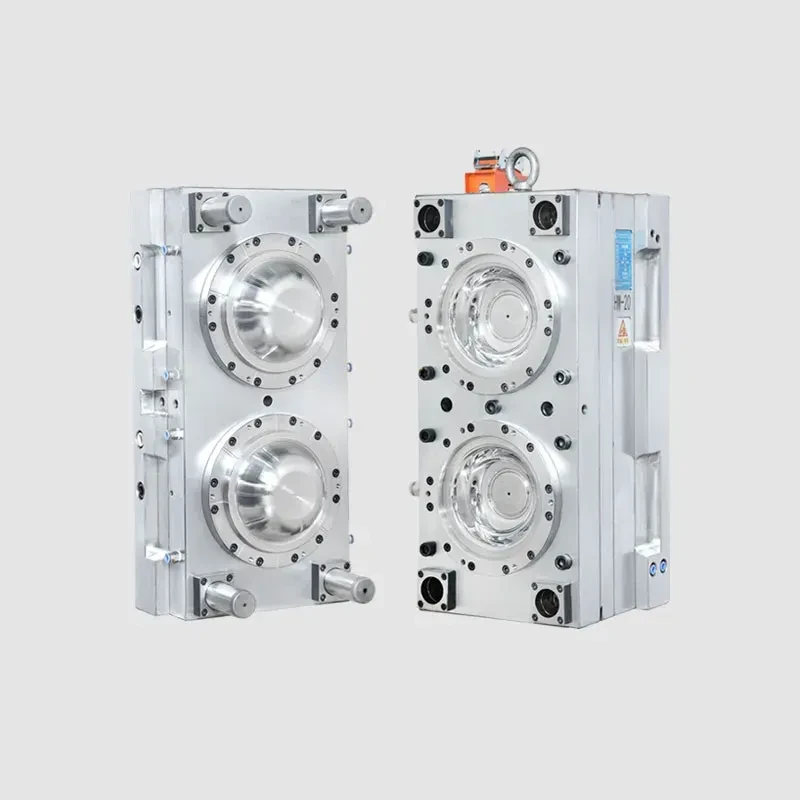
The technology developed in response to the increasing need for short production runs, more frequent product variation, and tighter delivery schedules. Its evolution has also been shaped by automation, with current systems increasingly integrating programmable controls, sensor feedback, quick utility couplings, and machine-specific tooling interfaces. At the same time, mold changing equipment has gained importance for sustainability because it can reduce wasted startup material, minimize energy consumed during idle changeover periods, and improve overall equipment effectiveness.
History and Development
Early mold changes in plastics processing were typically manual and labor-intensive, relying on cranes, bolts, and extensive alignment work. As press and injection molding machines became larger and production schedules more segmented, dedicated mold handling tools emerged to reduce physical strain and shorten setup time.
Three practical milestones shaped the modern sector:
- Mechanical quick-change systems introduced guided rails, bolsters, and carts to move heavy molds more predictably and reduce dependence on overhead lifting.
- Hydraulic and pneumatic clamping systems replaced much of the manual bolting process, allowing faster and more consistent clamping force application.
- Magnetic clamping and automated coupler systems further reduced setup time by enabling tool-free clamping and simultaneous connection of utilities such as water, air, hydraulics, and electrical circuits.
Recent development has emphasized automation and modularity. Suppliers now offer systems for horizontal and vertical loading, push-pull transport tables, mold rotators, ejector couplers, and integrated transfer equipment for fully or semi-automated workflows.
Technical Overview
Mold changing equipment is best understood as an integrated changeover system rather than a single machine. A complete installation may include the following elements:
- Mold clamps for securing the tool to the platen or bolster
- Mold carts or changers for transport and staging
- Transfer tables or shuttles for side-loading and precise positioning
- Quick couplers for water, air, hydraulic, and electrical connections
- Safety and control systems to supervise sequencing and prevent misalignment or operator exposure
Working principle
A typical changeover sequence is:
- The next mold is staged on a cart, table, or storage interface while the machine continues running.
- Process utilities and ejector interfaces are disconnected through quick-release or automatic couplers.
- The installed mold is unclamped and withdrawn using push-pull, cart, rail, or crane-assisted motion.
- The replacement mold is aligned, inserted, and clamped.
- Utility connections are re-established, and the machine resumes production.
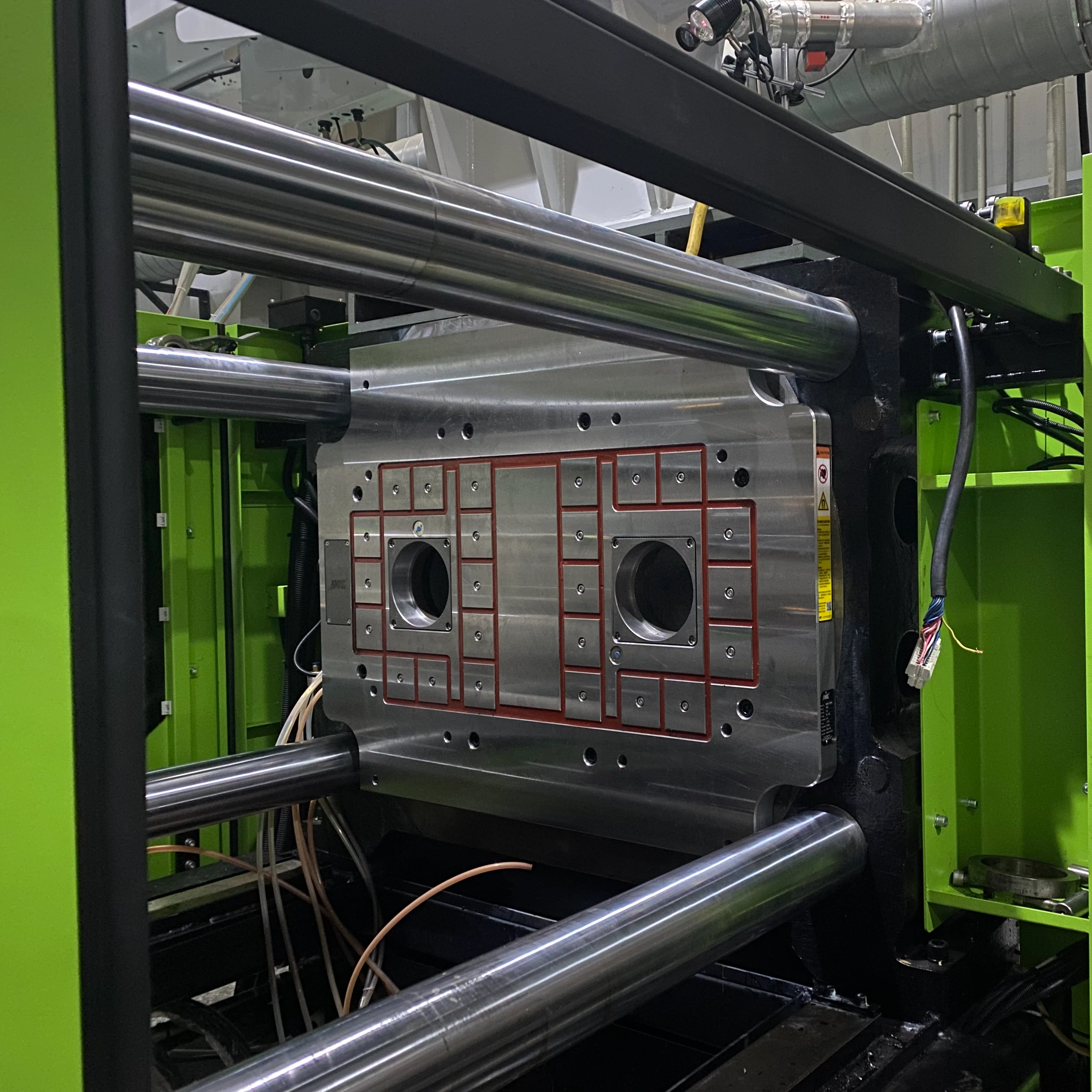
Common performance ranges
Although exact values depend on machine size and tooling mass, industry product descriptions and application notes indicate several practical benchmarks:
- Magnetic clamping cycle times: approximately 0.5 to 4.5 seconds for clamp and unclamp actions in some systems.
- Mold change tables and rotary bolsters: can position a selected mold in less than 10 seconds in certain configurations.
- Quick-change workflows: often reduce mold exchange from an hour or more to a few minutes, depending on mold weight, utilities, and automation level.
- Ejector rod changeover: one example reports a 100-ton injection molding machine reducing ejector rod swapping from 1 minute 6 seconds to 8 seconds.
Engineering characteristics
Mold changing equipment must balance rigidity, alignment accuracy, and motion control. Key design concerns include:
- Load capacity, which can range from compact carts for smaller tools to heavy-duty transporters for multi-ton molds and dies.
- Positional accuracy, especially for repeatable platen alignment and utility reconnects.
- Clamping force consistency, critical for preventing flash and maintaining part quality during high-pressure injection cycles.
- Safety interlocking, including motion limits, presence detection, and lockout logic for personnel protection.
Types and Variations
| Type | Main function | Typical strengths | Typical limitations |
|---|---|---|---|
| Mechanical quick-change systems | Guided positioning and mechanical locking | Simple, robust, comparatively low complexity | More manual intervention than automated systems |
| Hydraulic clamp systems | Clamp and release molds with hydraulic force | Fast operation, suitable for many IMM sizes | Requires hydraulic maintenance and leak management |
| Magnetic clamping systems | Secure molds by magnetic force | Tool-free operation, very fast changeovers | Higher capital cost and dependence on compatible platens |
| Mold carts and changers | Transport and stage molds | Improves handling of heavy tools and reduces crane dependence | Still requires accurate loading and alignment |
| Transfer tables and shuttles | Move molds in and out of the machine side or rear | Efficient for frequent changeovers | Requires floor space and machine integration |
| Integrated modular systems | Combine clamping, transfer, utilities, and controls | High automation and repeatability | More complex engineering and higher initial investment |
Applications and Uses
Mold changing equipment is used wherever production depends on frequent tooling changes and rapid return to production.
- Injection molding is the largest and most direct application, especially in automotive components, consumer goods, packaging closures, medical devices, and technical parts where part families change frequently.
- Blow molding facilities use fast mold change systems to reduce downtime in bottle, container, and hollow-part production, particularly where product dimensions or neck finishes vary often.
- Die casting operations use similar changeover equipment because die mass, alignment demands, and cooling connections make manual exchange slow and hazardous.
- Stamping and metal forming often share the same technology family, especially where rail-mounted carts, shuttles, and quick clamps are adapted from plastics processing practice.
- EPS and EPP shape molding can also use quick-change frames and shuttle configurations to support frequent product transitions and high-volume runs.
A poor-fit use case is very long-runs, single-product plants with infrequent tooling changes; in such settings, the cost of full automation may be harder to justify because the equipment remains underutilized.
Technological Innovations and Automation
Automation has transformed mold changing equipment from a handling aid into a production system component. Current innovations include:
- Programmable clamp sequencing with sensors and interlocks for repeatable operation.
- Automatic mold carts that stage and exchange tools without forklift dependence.
- Multi-coupler assemblies that connect water, air, and hydraulic circuits in one action.
- Magnetic platen systems that remove the need for bolts and reduce tool wear from repeated fastening.
- Rotators and flippers that safely reorient large molds without crane-guided manual handling.
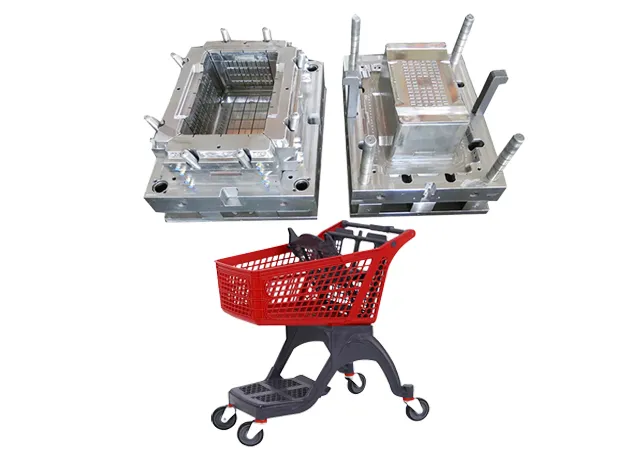
These innovations support Industry 4.0 integration by making changeovers measurable, traceable, and programmable. In higher-end installations, the mold change sequence can be linked to machine recipes, tool identification, and preventive maintenance logic.
Environmental and Sustainability Aspects
Mold changing equipment contributes to sustainability primarily through efficiency rather than direct material substitution.
- Reduced energy waste: shorter changeovers reduce the time machines spend idling, warming, or waiting in nonproductive states.
- Lower scrap generation: faster and more consistent setup can reduce startup rejects and purge losses, especially in color or resin changes.
- Less forklift and crane usage: automated handling lowers auxiliary energy use and reduces facility traffic risks.
- Improved resource utilization: high-mix production can be managed without sacrificing asset productivity, which supports more flexible manufacturing and potentially lower inventory.
The environmental trade-off is that highly automated systems require more capital equipment, control hardware, and maintenance. For plants with low change frequency, the sustainability benefit may be limited by underuse of the installed system.
Economic and Global Market Impact
Mold changing equipment has become economically significant because it directly affects availability, labor efficiency, and changeover-related downtime. In competitive plastics manufacturing, where margins are often sensitive to machine utilization, a reduction in setup time can materially improve throughput and return on capital.
The global market is shaped by three demand factors:
- Shorter product life cycles, which force more frequent mold changes.
- Labor and safety pressures, which encourage mechanized handling.
- Automation investment, especially in regions and sectors focused on high-mix, low-volume production.
Suppliers in the field commonly specialize by clamping technology, transport system, or machine application. Examples include hydraulic and magnetic clamping systems, mold carts, rotary tables, and complete turnkey quick mold change platforms.
Current Challenges and Innovations
Several engineering and operational challenges continue to shape product development:
- Compatibility across machine brands and platen geometries remains a common integration issue.
- Precision alignment is critical because even small misplacements can cause leakage, wear, or poor part quality.
- Utility connection reliability must be maintained under repeated cycling and contamination exposure.
- Operator training remains important even in automated systems because changeovers involve coordinated mechanical, hydraulic, and control functions.
Current innovation trends include:
- Modular systems that can be scaled from semi-automatic to fully automated installations.
- Electric transport carts for quieter, cleaner movement of heavy molds in plant environments.
- Improved safety logic and diagnostics that reduce the risk of partial clamp engagement or mis-sequenced motion.
- Standardized quick-change interfaces that shorten commissioning time and improve cross-machine portability.
Future Outlook
Future mold changing equipment is likely to move toward more data-integrated, energy-efficient, and platform-based designs. The most important developments are expected to include:
- broader use of sensor-rich clamping verification
- more electric and battery-powered transport systems
- faster automatic utility coupling
- tighter integration with MES and production planning software
- more modular systems that can be redeployed across machine platforms with minimal adaptation
As plastics processors face greater demand variability, mold changing equipment will remain a strategic enabler of agile manufacturing. Its value will be highest where frequent changeovers, high tool cost, and strict uptime requirements intersect.
Summary
Mold changing equipment improves the speed, safety, and repeatability of mold exchange in plastics processing by combining clamping, transport, alignment, and utility connection functions into a coordinated system. Its main forms include mechanical, hydraulic, and magnetic clamping systems, along with carts, shuttles, and transfer tables, and its strongest value lies in high-mix operations where downtime reduction directly translates into productivity gains.
References
- •
Mico দ্রুত ছাঁচ পরিবর্তন সিস্টেম. (n.d.). https://kyodoindia.com/micoLink
- •
Quick Mold Change Systems for plastic production. (2026, March 25). https://easchangesystems.com/application/quick-mold-change-systems/Link
- •
Quick Mold Change System. (n.d.). https://www.forwell.com/en/product/quick-mold-change-system.htmlLink
- •
Mold and Die Change Equipment Selection Guide. (n.d.). https://www.globalspec.com/learnmore/manufacturing_process_equipment/molding_equipment_supplies/mold_die_change_equipmentLink
- •
Automatic Mold Change System | MoldJet. (n.d.). https://moldjet.net/products/automatic-mold-change-system/Link
- •
Automatic Quick Mold Change Cart - Double Stations Cart | Over 37 Years. Sold in 30 Countries World-Class Automation Steel Coil Stamping Equipment Manufacturer | Shung Dar Industrial Co., LTD. (2025, February 17). https://www.shungdar.com.tw/en/product/automatic-quick-mold-change-cart_CAR2.htmlLink
- •
Quick Mold Change Systems for Injection Molding - KOSMEK. (n.d.). https://www.kosmek.eu/products/quick-mold-change-systems/Link
- •
Quick Mold Change System | Plastic Injection .... (2019, October 4). https://www.cens.com/cens/html/en/product/product_main_31554.htmlLink
- •
Quick Mold Change Systems: Comparison of 3 Types. (2023, March 21). https://www.hvrmagnet.com/blog/quick-mold-change-systems-comparison-of-3-types/Link
- •
Quick Die/Mold Change System, Automatic Clamp System & More - Forwell. (2018, May 10). https://www.forwell.com/en/product/Link
- •
Automation for Injection Molding Machines | Pascal Corporation. (2026, January 7). https://www.pascalenginc.com/manufacturing-solutions/injection-molding-machines/Link
- •
UK. (n.d.). https://www.lhs.uk.com/wp-content/uploads/2016/05/EASC5022-BR-MCT-UK-LR1.pdfLink
- •
Quick Mold Change System for Injection Molding | KingHou. (2024, October 11). https://www.kinghou.net/quick-mold-change-system/Link
- •
Quick Die Changes for injection machine. (n.d.). https://www.forwell.com/en/injection-molding/Link
- •
Mold & Die Changer | Pascal Corporation. (2022, May 12). https://www.pascalenginc.com/products/die-changer/Link
- •
Automated Hydraulic Pumps for Quick Die Changing. (2018, May 10). https://www.forwell.com/en/hydraulic-pumps/automated-pump-units-for-quick-die-changing.htmlLink
- •
Quick Mould Change. (n.d.). https://www.bekum.com/en/technologies/quick-mould-change/Link
- •
Mold changer, Die change system. (2025, January 1). https://www.directindustry.com/industrial-manufacturer/mold-changer-251511.htmlLink
- •
Mold replacement system. (2024, July 2). https://en.ckpem.com/display.php?id=274Link
- •
Quick Mold Change Solutions for Plastic Processing. (2023, July 19). https://www.milacron.com/products/quick-mold-changes/Link
- •
World's Leading Expert on Powered Clamping. (n.d.). https://www.kosmek.com/Link
- •
Pascal Engineering Inc. (2026, January 7). https://www.pascalenginc.com/Link
- •
Quick Mold Change System and Air Clamps. (2022, November 3). https://www.pascalenginc.com/products/quick-mold-change-system/Link
- •
MICO MYOUNGJIN, The Republic of Korea. (2016, May 8). https://www.komachine.com/en/companies/mico-myongjinLink
- •
Fast Mold change: how to reduce downtime on your EBM. (2026, May 15). https://www.technepackaging.com/en/technology/machine-features/fast-mold-change/Link
- •
Hedin USA - Battery Powered Solutions for Moving Heavy Loads. (2024, June 5). https://hedinusa.com/Link
- •
ROEMHELD to show electric mold change trolley and new .... (2026, August 5). https://www.adsalecprj.com/en/news/article_details/88884.htmlLink
- •
Quick Mold Change System Basic Guide : Overview, Tips, and Case Study. (n.d.). https://www.prm-taiwan.com/blog/quick-mold-change-101-overview-buying-tips-case-study_197Link
- •
All Products. (n.d.). https://www.sutuanmachinery.com/products.htmlLink
- •
Quick Change Molds. (n.d.). https://www.tiniusolsen.com/product-category/quick-change-molds/Link
- •
[PDF] Mold Change Table. (n.d.). https://easchangesystems.com/wp-content/uploads/Press-release-September-2021-MCT-GB.pdfLink
- •
FUJIKIKO Co.,Ltd.|List of Products and Services|IPROS GMS. (2026, July 6). https://mono.ipros.com/en/company/detail/51962/category/Link
- •
Bullet Swaging Die Makers. (1995, April 1). https://www.globalspec.com/industrial-directory/bullet_swaging_die_makersLink
- •
Product - (英語版)エムテックスマツムラ. (2025, September 18). https://www.mtex.co.jp/en/technology_equipment/products_equipment/Link
- •
Technology to Improve Operating Rates|Injection molding machine|PRODUCTS|UBE Machinery Corporation, Ltd. (n.d.). https://www.ubemachinery.co.jp/english/product/injection/utilization-rate.htmlLink
- •
China Block Making Machine Supplier, Manufacturer. (n.d.). https://www.cnqgm.com/block-making-machine.htmlLink
- •
EPS Shape Molding Machines - Epro Technologies. (n.d.). https://www.eprotechnologies.com/machines/eps-shape-molding/Link
- •
Qiaotian Intelligent Equipment - 桥田. (2026, May 28). https://quickqt.com/EN/index.htmlLink
- •
Casting machine for sanitary ware:Other | Products TOP. (2006, January 1). https://www.makino-co.co.jp/english/products/other/other04/Link
- •
7 Essential Tools Every Restoration Contractor Needs. (2025, June 15). https://www.xlrestorationsoftware.com/news/7-essential-tools-every-restoration-contractor-needsLink
- •
Mold Building Equipment List. (n.d.). https://www.reedcitygroup.com/wp-content/uploads/2020/10/equipment-list.docx-10.21.2020-1.pdfLink
- •
Mold Remediation Equipment Professionals Use to Kill Mold. (2025, October 16). https://gocodes.com/construction/mold-remediation-tools/Link
- •
Automatic Pet Bottle Blowing Filling Capping Machine Line .... (2025, October 20). https://pio-machinery.en.made-in-china.com/product/vYMUIjxlYiVE/China-Automatic-Pet-Bottle-Blowing-Filling-Capping-Machine-Line-for-Drinking-Water.htmlLink
- •
EPP Shape Moulding Machine. (n.d.). https://www.sutuanmachinery.com/epp-shape-moulding-machine/Link