
Introduction
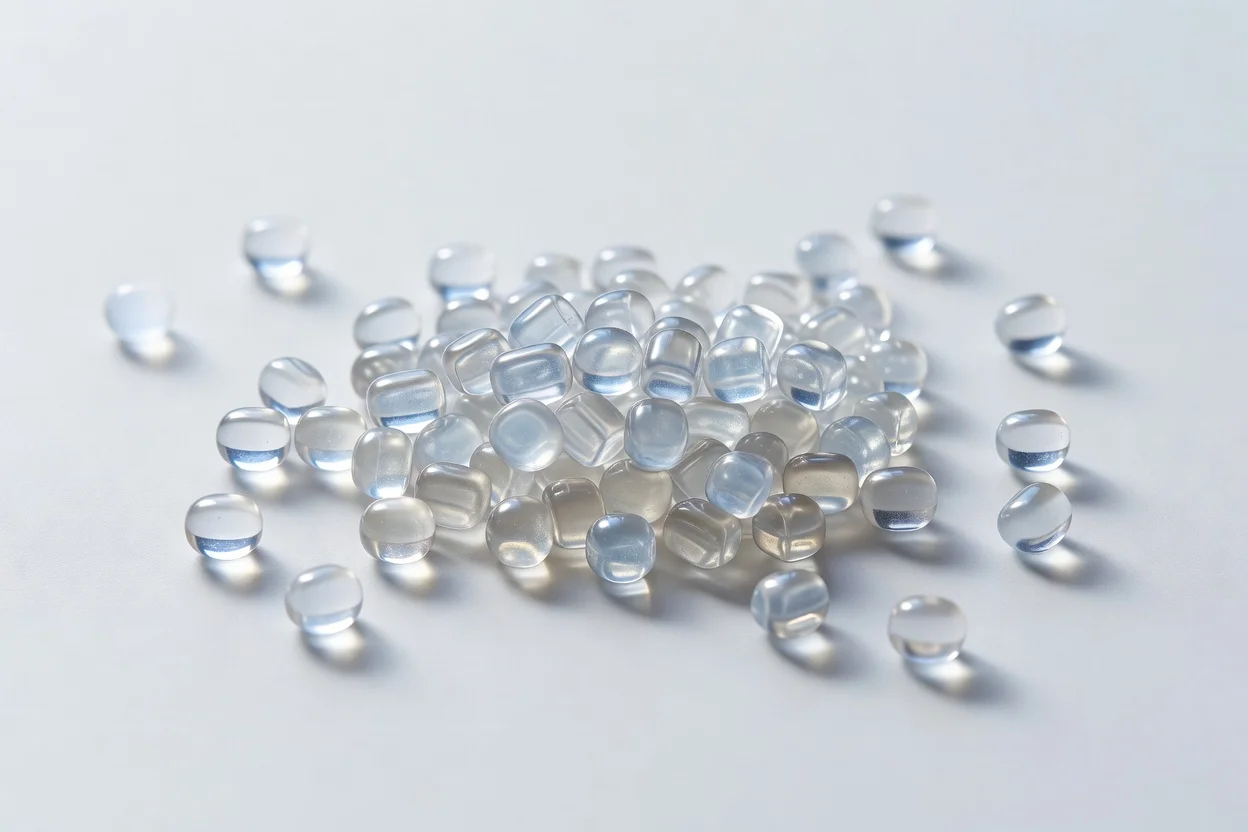
Recycled polymethyl methacrylate (rPMMA) is recycled acrylic resin derived from post-industrial or post-consumer PMMA waste, either as mechanically reprocessed material or, more commonly for high-value grades, as monomer recovered by chemical recycling and then repolymerized into new PMMA. It occupies a distinctive position in the plastics value chain because PMMA is one of the few widely used thermoplastics that can be depolymerized back toward near-virgin building blocks, allowing circular use in optical, construction, automotive, furniture, display, and selected medical applications.
The material has become strategically important as producers and converters seek lower-carbon alternatives without sacrificing the clarity, stiffness, weatherability, and processability that made PMMA a preferred engineering acrylic in the first place. Current industry practice distinguishes between mechanically recycled PMMA, which is best suited to noncritical or color-tolerant applications, and chemically recycled PMMA made from purified recycled methyl methacrylate, which can approach virgin-grade performance and is therefore suitable for more demanding uses.
History and Development
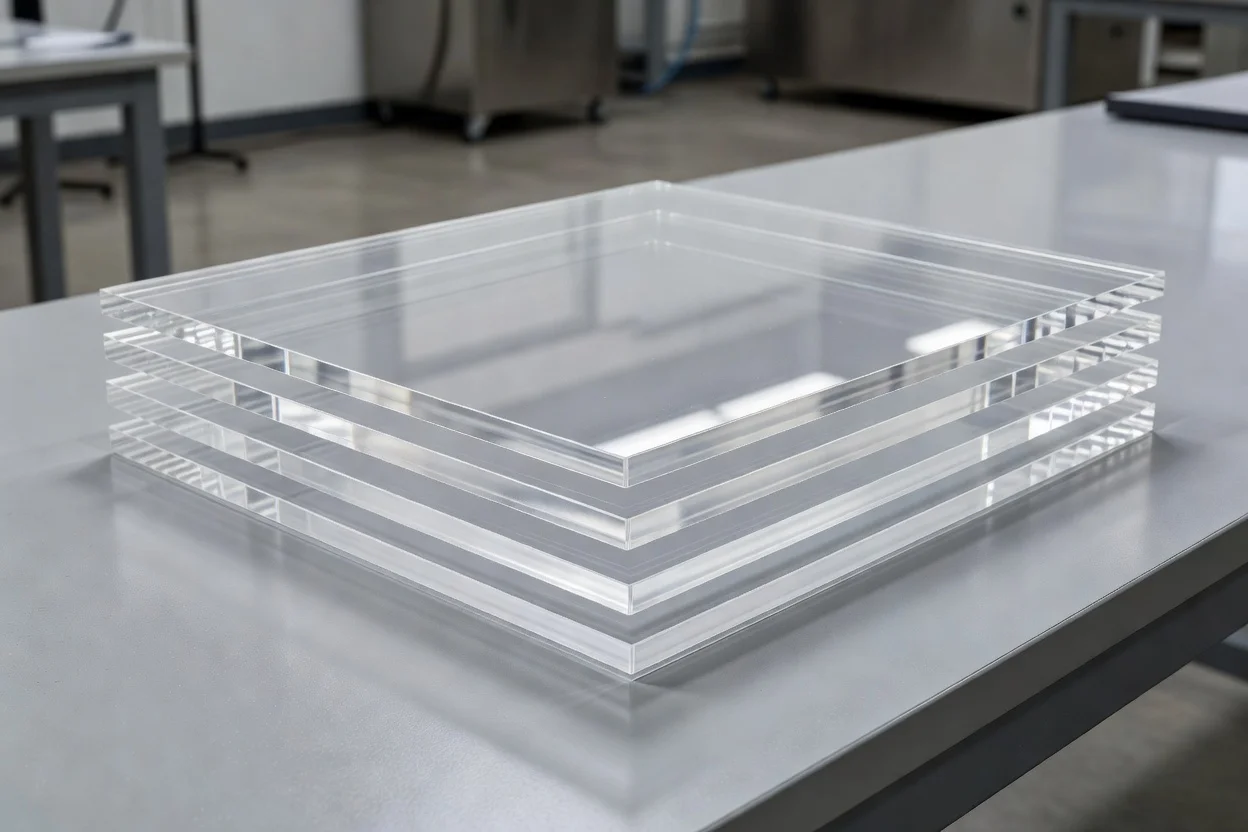
PMMA recycling developed from conventional mechanical recovery of clean acrylic scrap into more advanced depolymerization-based systems designed to recover methyl methacrylate monomer. This shift reflected a practical limitation of mechanical recycling: PMMA retains useful properties after reprocessing, but contamination, mixed colors, additives, and thermomechanical degradation can restrict its use in high-clarity or tightly specified products.
Industrial interest accelerated as major acrylic producers and circularity initiatives demonstrated that end-of-life PMMA could be converted back into high-purity monomer and reused in new PMMA with quality comparable to virgin material. Several companies have positioned chemical recycling as a core route for acrylic circularity, including efforts by Röhm, Sumitomo Chemical, Trinseo, and project consortia supported through European programs.
Chemical Structure and Key Properties (Technical Overview)
PMMA is an amorphous, transparent thermoplastic valued for optical clarity, rigidity, surface hardness, and outdoor weather resistance. rPMMA inherits these properties when it is repolymerized from purified recycled monomer, while mechanically recycled grades generally preserve much of the same base chemistry but may show broader variability in molecular weight, color, and residual impurity content.
Key property profile:
- Optical clarity: among the highest of common commodity and engineering plastics, which is why recycled acrylic is used in glazing, displays, and light guides.
- Weather resistance: useful for outdoor signage, architectural panels, and lamp covers.
- Rigidity and surface finish: supports decorative and precision parts, but also makes PMMA less impact-tolerant than polycarbonate in some applications.
- Chemical resistance: generally good against many dilute chemicals, but not universal.
Important technical limits include:
- Poor O₂ and grease barrier → PMMA is not a high-barrier packaging polymer → use multilayer structures or barrier coatings instead.[This limitation is consistent with PMMA’s known role as a transparent engineering plastic rather than a packaging barrier resin; the supplied sources emphasize other application domains rather than barrier performance.]
- Low surface energy before treatment → adhesion, printing, and coating can be difficult on untreated acrylic surfaces → use surface treatment, primers, or formulation changes.[This is a common processing limitation for many acrylic surfaces and is consistent with the emphasis in the sources on coatings and processing aids, although it is not stated explicitly in the provided results.]
A small but important formulation example is the use of recycled PMMA particles in denture base materials, where studies report incorporation levels such as 20% and 50% rPMMA powder to improve sustainability while retaining acceptable mechanical properties. Another example is depolymerization chemistry, where catalyst-free or low-temperature routes have been reported to improve monomer recovery efficiency, including an approach using doping to lower the effective depolymerization temperature.
Production Processes and Raw Feedstocks
rPMMA is produced through two principal routes:
- Mechanical recycling: collected PMMA is sorted, cleaned, shredded, and remelted or reprocessed into sheets, granules, or other molded products.
- Chemical recycling: PMMA waste is depolymerized back to methyl methacrylate, purified, and repolymerized into PMMA of near-virgin quality.
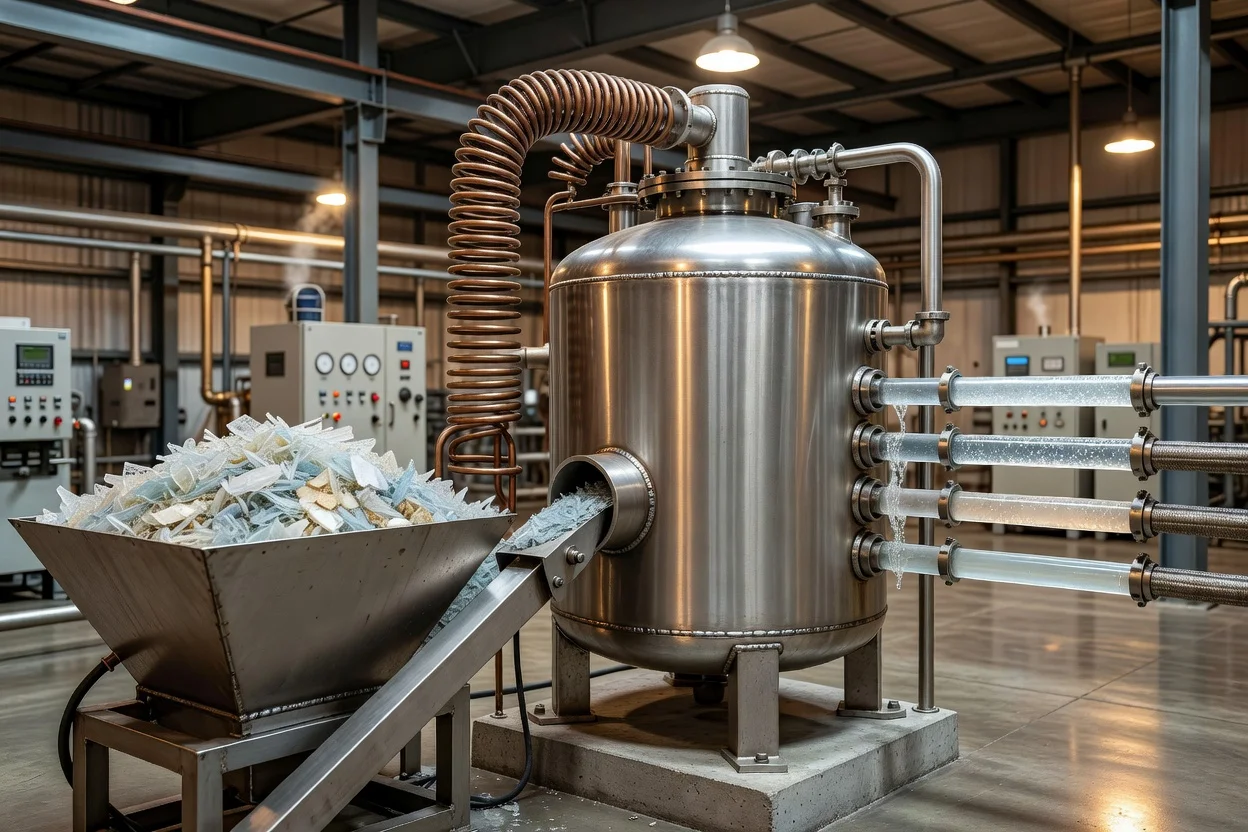
Chemical recycling is especially valuable because PMMA is a depolymerization-friendly polymer relative to many other plastics, enabling conversion back to monomer with high yields under optimized process conditions. Industrial and precommercial systems have reported more than 99% monomer purity in regenerated MMA streams, which is central to reentering demanding applications such as optical sheets and light guide plates.
Typical feedstocks include:
- post-industrial PMMA scrap from sheet and molding operations
- used signage, glazing, and display panels
- automotive lamp covers and interior components
- dental and medical acrylic waste
- optical and technical acrylic offcuts
Leading industry participants include Röhm, Sumitomo Chemical, Trinseo, and technology partners involved in depolymerization and purification systems, each contributing either process know-how, circular product lines, or commercial recycling alliances.
Applications and End-Use Markets
rPMMA is used where recycled content is desirable and the application can tolerate either moderate property variation or, in the case of chemical recycling, is demanding enough to require near-virgin quality.
| End-use sector | Typical rPMMA form | Usual process | Fit with rPMMA |
|---|---|---|---|
| Construction | sheets, panels, glazing | extrusion, casting, thermoforming | strong fit |
| Advertising and display | transparent sheets, light boxes, signage | sheet forming, CNC finishing | strong fit |
| Furniture and home appliances | decorative parts, covers | injection molding, sheet fabrication | strong fit |
| Automotive | lamp covers, trims, interior parts | molding, forming | strong fit |
| Medical and dental | dental base materials, barriers, device housings | powder blending, molding | selective fit |
| Additive manufacturing | filament and printed parts | extrusion-based 3D printing | growing fit |
| Optical/light-management parts | light guide plates, sensors | precision sheet or filament production | high-value fit if purity is high |
| Packaging barrier films | not typical | not preferred | poor fit |
Applications cited in industry materials include building facades, skylights, partitions, display stands, billboards, trophies, furniture parts, decorative lighting, automotive lights, dashboard covers, and selected medical enclosures. Recent research also supports use in additive manufacturing, optical fiber sensor systems, and denture base materials, reflecting the widening technical scope of recycled acrylic.
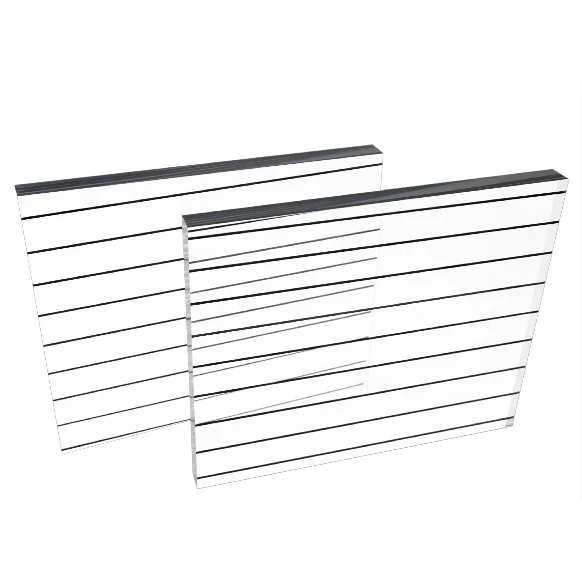
One poor-fit use is high-barrier food packaging, because PMMA is chosen for transparency and aesthetics rather than oxygen or grease barrier performance.[This inference follows from PMMA’s established application profile in the supplied sources and from standard polymer selection logic.]
Environmental and Sustainability Aspects
rPMMA is widely viewed as an enabling material for acrylic circularity because chemical recycling can recover monomer suitable for repeated reuse, reducing dependence on fossil feedstock and lowering waste disposal volumes. Industry and product-level life-cycle assessments cited by manufacturers indicate that recycled monomer content can materially reduce carbon footprint relative to virgin PMMA, with some reported reductions ranging from about 50% to 70% depending on process route, energy mix, and collection efficiency.
Sustainability benefits include:
- reduced demand for virgin petrochemical feedstocks
- lower landfill and incineration burdens
- potential for multiple recycling loops when monomer purity is maintained
Constraints remain significant:
- collection and sorting quality strongly affect yield and economics
- contamination, pigments, and mixed polymers complicate recycling streams
- mechanical recycling is suitable only for certain grades and applications
- chemical recycling requires energy and capital, so climate benefits depend on process efficiency and electricity source
From a circular-economy perspective, PMMA is unusually favorable because depolymerization can regenerate a feedstock that is close to the original monomer, enabling a closed loop more readily than for many mixed or heavily crosslinked plastics.
Economic and Global Market Impact
The market for PMMA recycling is expanding as brand owners, converters, and regulators increase demand for recycled-content materials in construction, transport, consumer goods, and technical components. Industry analyses identify automotive and construction as especially important downstream segments, while optical and display applications create premium demand for high-purity recycled monomer and repolymerized acrylic.
Economic value in rPMMA is shaped by:
- feedstock availability and collection logistics
- degree of contamination
- whether the output is mechanically recycled resin or purified MMA
- energy cost and purification efficiency
- performance requirements of the end application
High-purity recycled MMA can command strategic value because it supports the production of near-virgin acrylic with lower environmental intensity, helping producers meet recycled-content and decarbonization targets without fully redesigning end-use specifications.
Current Challenges and Innovations
The main technical challenge is balancing circularity, purity, and economics. Mechanical routes are simpler but more limited, while chemical routes are more versatile but require advanced depolymerization, purification, and quality assurance systems.
Key innovation areas include:
- lower-temperature depolymerization and catalyst-assisted recovery
- depolymerization of mixed or colored acrylic waste streams
- direct polymerization from crude pyrolysis oils in controlled settings
- upcycling into composites, filaments, coatings, and specialty parts
- medically oriented recycled formulations such as denture bases with controlled particle sizes and loadings
A notable industrial trend is the effort to make rPMMA not merely a substitute for virgin acrylic, but a platform for upgraded circular materials with traceable content, guaranteed purity, and application-specific performance.
Future Outlook
The outlook for rPMMA is favorable in markets that value transparency, durability, and lower carbon intensity at the same time. Growth is likely to be strongest in architectural sheets, displays, lighting, automotive trim, 3D printing, and selected medical or dental products, especially where chemically recycled monomer can deliver consistent quality.
Future progress will depend on:
- wider collection of end-of-life acrylic products
- better identification and separation of PMMA from mixed waste
- improved depolymerization efficiency and purification economics
- stronger design-for-recycling practices in acrylic products
- greater availability of certified recycled-content supply chains
If these conditions are met, rPMMA is likely to become a benchmark case for high-performance plastics circularity: a material category in which recycling can preserve both functional quality and economic value rather than forcing a trade-off between them.
Summary
rPMMA is a circular acrylic material derived from recycled PMMA waste, most importantly through chemical recycling back to monomer and repolymerization into near-virgin resin. Its significance lies in the combination of optical performance, broad application scope, and unusually strong compatibility with closed-loop recycling, making it one of the more credible examples of high-value plastics circularity in the current industry landscape.
References
- •
Industry overview [PDF]. (2025, November 29). HKEXnews. https://www1.hkexnews.hk/app/gem/2025/107646/a125171/gem25082501265.pdfLink
- •
Waste polymethyl methacrylate (PMMA): Recycling and high-yield monomer recovery. (n.d.). https://irantypist.com/media/new_research/samplefile/1670845223_9764.pdfLink
- •
Closing the loop: How recycled methyl methacrylate (MMA) supports a circular economy. (2025, November 13). MMA Chemicals. https://mmachemicals.com/recycled-methyl-methacrylate-circular-economy/Link
- •
Waste polymethyl methacrylate (PMMA): Recycling and high-yield monomer recovery. (n.d.). Springer. https://link.springer.com/referenceworkentry/10.1007/978-3-319-48281-1_164-1Link
- •
PMMA recycled. (2024, August 13). Snetor. https://www.snetor.com/en/produit/pmma-recycled/Link
- •
How are acrylic resins recycled? (2012, December 7). AZo Materials. https://www.azom.com/article.aspx?ArticleID=7945Link
- •
International Journal of Dental Materials, 2025;7(1):6-11. (n.d.). https://ijdm.co.in/index.php/dental-materials/article/download/176/185/1603Link
- •
Engineering response and printability of recycled PMMA ... (2025, October 29). Taylor & Francis. https://www.tandfonline.com/doi/full/10.1080/26889277.2025.2582376Link
- •
Cyclic economy driven additive manufacturing: Valorization of mechanically recycled poly(methyl methacrylate) scrap in material extrusion 3D printing. (2025, January 1). https://www.sciencedirect.com/science/article/abs/pii/S0959652624040885Link
- •
Chemical recycling of PMMA [PDF]. (n.d.). Sumitomo Chemical. https://www.sumitomo-chem.co.jp/english/rd/report/2025E_3.pdfLink
- •
PMMA chemical recycling: Making advanced materials ... (2025, February 10). Mitsubishi Chemical. https://www.mcgc.com/english/kaiteki_solution_center/oursolution/18.htmlLink
- •
回收及原生甲基丙烯酸甲酯的差異?瞭解Recycle MMA 的 ... (2025, February 10). https://qatransport.com/knowledge/chemical-r-mma/Link
- •
Recycled PMMA prepared directly from crude MMA obtained from ... [PDF]. (n.d.). DTU Orbit. https://backend.orbit.dtu.dk/ws/files/317453282/1_s2.0_S0956053X23002830_main.pdfLink
- •
PMMA breakthroughs in recyclable technology. (2025, April 1). Patsnap Eureka. https://eureka.patsnap.com/report-pmma-breakthroughs-in-recyclable-technologyLink
- •
PMMA recycling market size, share | CAGR of 7.4%. (2026, July 1). Market.us. https://market.us/report/pmma-recycling-market/Link
- •
Implementing a doping approach for poly(methyl ... (2024, February 21). ACS Publications. https://pubs.acs.org/doi/abs/10.1021/jacs.3c13223Link
- •
Pioneering tech recycles end-of-life plastic waste. (2024, March 29). CORDIS. https://cordis.europa.eu/article/id/450243-pioneering-tech-recycles-end-of-life-plastic-wasteLink
- •
Röhm launches advanced chemical recycling process ... (n.d.). ChemAnalyst. https://www.chemanalyst.com/NewsAndDeals/NewsDetails/rohm-launches-advanced-chemical-recycling-process-for-pmma-41635Link
- •
Depolymerization technology: Advancing PMMA circularity. (2024, July 30). Trinseo. https://www.trinseo.com/thought-leadership/2024/july/depolymerization-technology-advancing-pmma-circularityLink
- •
PMMA recycling market size to hit USD 743.94 Mn, globally, by 2033. (2024, August 12). Market.us. https://www.news.market.us/pmma-recycling-market-news/Link
- •
R&D : Améliorer la boucle d'économie circulaire d'un plastique. (n.d.). Ecologic France. https://www.ecologic-france.com/ecologic/comment-ameliorer-la-boucle-d-economie-circulaire-d-un-plastique.htmlLink
- •
Innovative acrylic (PMMA-polymethyl methacrylate) recycling technology complying with regulations | P2L | Project | Fact sheet | H2020 | CORDIS | European Commission. (2019, February 25). CORDIS. https://cordis.europa.eu/project/id/856103Link
- •
Recycled PMMA prepared directly from crude MMA ... (n.d.). ScienceDirect. https://www.sciencedirect.com/science/article/pii/S0956053X23002830Link
- •
Recycled acrylic rMMA manufactured with 100 ... (2008, January 1). Aikolon. https://www.aikolon.fi/en/products/optical-plastics/recycled-acrylicLink
- •
Europe-wide alliance for PMMA recycling. (n.d.). Röhm. https://www.roehm.com/en/sustainability/alliance-for-pmma-recyclingLink
- •
Polymethyl methacrylate (PMMA) recycling for the production of optical fiber sensor systems. (2017, November 27). PubMed. https://pubmed.ncbi.nlm.nih.gov/29221040/Link
- •
Recycled PMMA prepared directly from crude MMA ... (2023, June 1). PubMed. https://pubmed.ncbi.nlm.nih.gov/37059043/Link
- •
Lummus and Sumitomo Chemical announce collaboration agreements for circular and polyolefins technologies. (n.d.). PR Newswire. https://www.prnewswire.com/news-releases/lummus-and-sumitomo-chemical-announce-collaboration-agreements-for-circular-and-polyolefins-technologies-302150714.htmlLink
- •
Recycled PMMA particles from milled discs in denture base materials for improved sustainability. (2025, April 25). PubMed. https://pubmed.ncbi.nlm.nih.gov/40281526/Link
- •
Upcycling polymethyl methacrylate to methacrylic acid. (2024, December 31). RSC Publishing. https://pubs.rsc.org/en/content/articlelanding/2025/re/d4re00341aLink
- •
Lummus and Sumitomo Chemical announce commercial availability of PMMA chemical recycling technology. (2026, February 4). PR Newswire. https://www.prnewswire.com/news-releases/lummus-and-sumitomo-chemical-announce-commercial-availability-of-pmma-chemical-recycling-technology-302677872.htmlLink
- •
Chemical recycling of polymethacrylates. (2025, August 20). PubMed. https://pubmed.ncbi.nlm.nih.gov/40838400/Link
- •
The rise of recycled PMMA in eco-friendly light guide plate ... (2026, February 27). AML Acrylic. https://www.aml-acrylic.com/sustainable-illumination-the-rise-of-recycled-pmma-in-eco-friendly-light-guide-plate-manufacturing.htmlLink
- •
How ESG priorities are fueling the rise of recycled acrylic in ... (2026, January 13). Sunday Knight. https://www.sundayknight.com/how-esg-priorities-are-fueling-the-rise-of-recycled-acrylic-in-sustainable-packaging/Link
- •
Towards developing sustainable reconfigurable manufacturing systems. (n.d.). ScienceDirect. https://www.sciencedirect.com/science/article/pii/S2351978918311405Link
- •
Delivering a more sustainable solution with PMMA. (2026, February 3). Trinseo. https://www.trinseo.com/thought-leadership/2023/february/delivering-a-more-sustainable-solution-with-pmmaLink
- •
Röhm GmbH is pressing ahead with its sustainability strategy. (2023, October 17). Röhm. https://www.roehm.com/en/detail/rohm-gmbh-is-pressing-ahead-with-its-sustainability-strategy-plexiglas-r-molding-compounds-for-resource-efficient-designsLink
- •
Recent advancements towards sustainability in rotomoulding. (2023, June 9). PMC. https://pmc.ncbi.nlm.nih.gov/articles/PMC11173513/Link
- •
PMMA as an ideal material for the circular economy. (2025, March 17). CHEManager. https://chemanager-online.com/en/news/pmma-as-an-ideal-material-for-the-circular-economyLink
- •
How to minimize PMMA's carbon footprint? (n.d.). Patsnap Eureka. https://eureka.patsnap.com/report-how-to-minimize-pmma-s-carbon-footprintLink
- •
Reprocessed materials used in rotationally moulded sandwich ... (2022, September 19). PMC. https://pmc.ncbi.nlm.nih.gov/articles/PMC9501101/Link
- •
Sustainability. (2026, May 19). https://www.recycledmaterials.org/sustainability/Link
- •
Environmental impact of PMMA: Mitigation strategies. (2025, April 1). Patsnap Eureka. https://eureka.patsnap.com/report-environmental-impact-of-pmma-mitigation-strategiesLink
- •
PMMA sustainability: Emerging techniques and results. (2025, April 1). Patsnap Eureka. https://eureka.patsnap.com/report-pmma-sustainability-emerging-techniques-and-resultsLink
- •
Recycling as a key enabler for sustainable additive ... (2023, October 25). PMC. https://pmc.ncbi.nlm.nih.gov/articles/PMC10649055/Link
- •
Advancing sustainable manufacturing: A case study on ... (2024, December 31). Taylor & Francis. https://www.tandfonline.com/doi/full/10.1080/21693277.2024.2425672Link
- •
Sustainable manufacturing. (n.d.). US EPA. https://www.epa.gov/sustainability/sustainable-manufacturingLink
- •
Sustainable manufacturing for a circular economy. (2022, December 19). MDPI. https://www.mdpi.com/2071-1050/14/24/17010Link
- •
The essential guide to sustainable plastic manufacturing. (2023, April 5). Goodfish Group. https://www.goodfishgroup.com/the-essential-guide-to-sustainable-plastic-manufacturing-how-to-implement-eco-friendly-practicesLink
- •
Green manufacturing & circular economy. (2023, June 9). ASE. https://ase.aseglobal.com/esg/green-manufacturing/Link
- •
Sustainability in the manufacturing industry. (2024, January 4). Longboard Products. https://longboardproducts.com/sustainability-in-the-manufacturing-industryLink
- •
Sustainable plastic manufacturing. (2025, November 6). Sonoco. https://www.sonoco.com/insights/sustainable-plastic-manufacturingLink