
Introduction
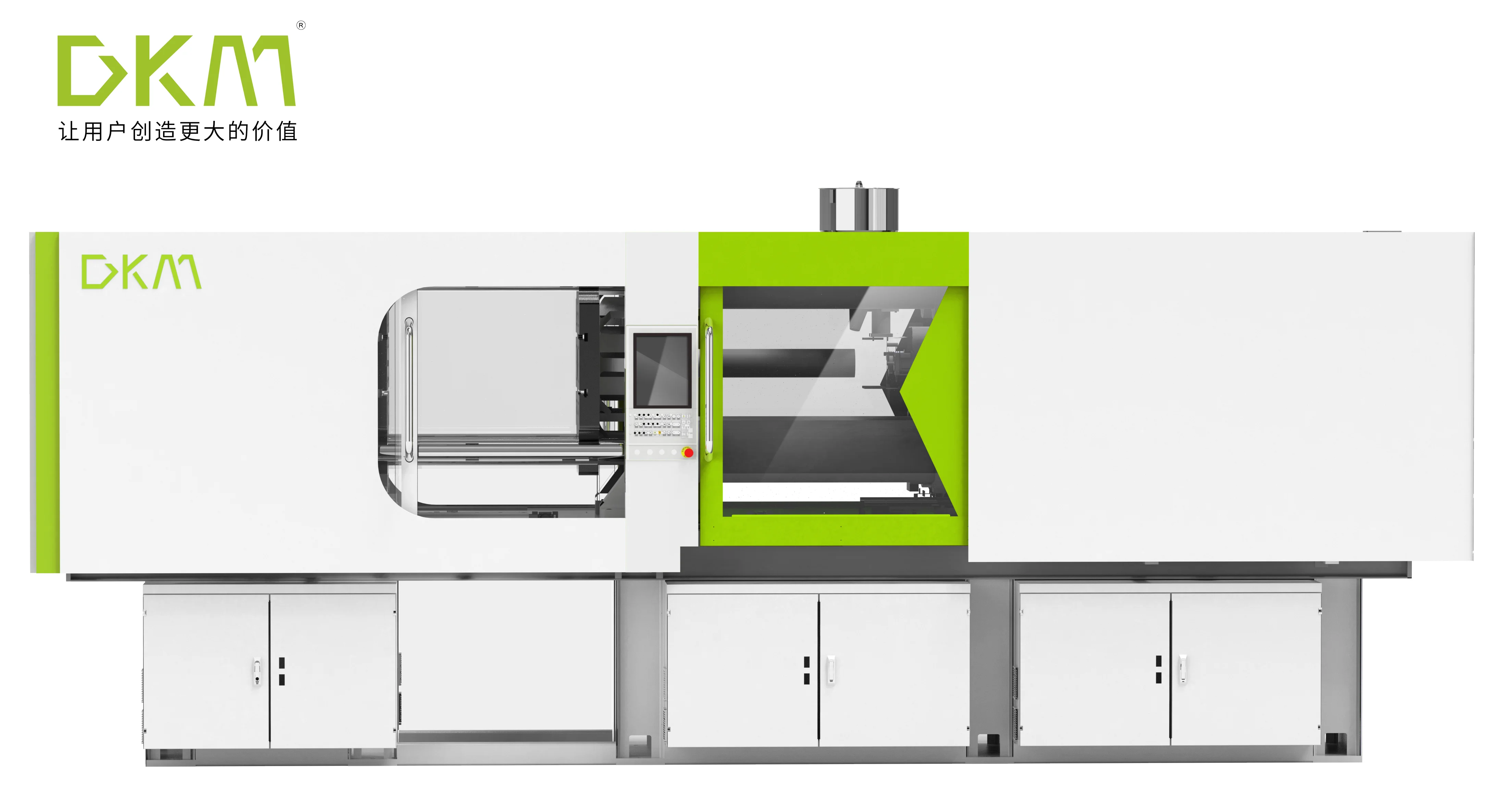
Injection molding machines for composites are specialized presses used to shape polymer-based composite materials, including fiber-reinforced thermoplastics, thermosets, and multi-material systems, into finished parts with high repeatability and relatively short cycle times. In practice, the term covers two closely related equipment families: conventional injection molding machines adapted to process filled and fiber-reinforced compounds, and purpose-built composite injection systems used for processes such as RTM, RIM, HP-RTM, infusion, and injection/compression molding.
These machines are important because they enable composite parts to be produced at industrial scale with automation, dimensional consistency, and lower post-processing than many traditional composite fabrication routes. Their development has been driven by demand for lightweight structural components in automotive, electrical, industrial, and consumer applications, as well as by the broader shift toward energy-efficient electric drives, multi-material processing, and higher process control. Sustainability pressures are also shaping this segment, since composite molding must balance weight reduction and part consolidation against challenges such as scrap handling, fiber recovery, and end-of-life recyclability.
History and Development
Early injection molding machinery was developed for thermoplastics, but composite processing expanded as industry sought stronger, stiffer, and more heat-resistant molded parts. Over time, several milestones shaped the present segment:
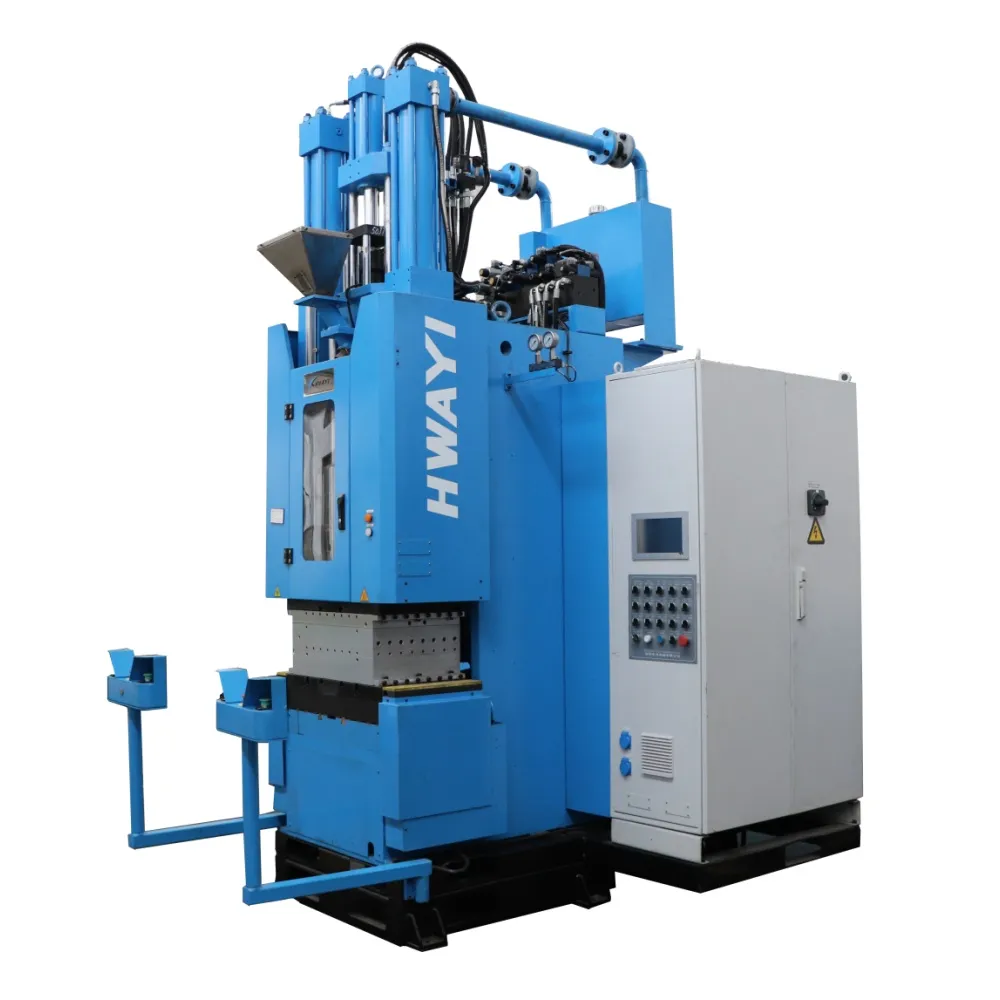
- Thermoset and resin-injection systems emerged for reaction molding routes such as RIM and RTM, making it possible to produce reinforced parts by injecting reactive resin into closed tools rather than hand-laying laminates.
- High-pressure and hybrid presses enabled more precise control of injection, clamping, and cooling, improving the feasibility of fiber-reinforced thermoplastics and multi-material parts in volume production.
- Injection/compression and overmolding processes expanded the usable design window for composites, especially for structural parts requiring better fiber orientation control, lower void content, and improved surface finish.
Recent development has been especially strong in automation, servo-hydraulic and all-electric actuation, and process monitoring, with suppliers increasingly offering machines designed for two-material, sandwich, and composite-overmolding applications.
Key Characteristics and Technical Overview
Composite-capable injection machines differ from standard plastics presses in how they manage material viscosity, fiber integrity, mold filling, venting, and cure or crystallization behavior. For thermoplastic composites, the machine must plasticize and inject compounded pellets or granules while minimizing fiber breakage; for thermosets and reactive systems, it must meter, mix, and inject reactive resins accurately before cure begins.
Core machine elements
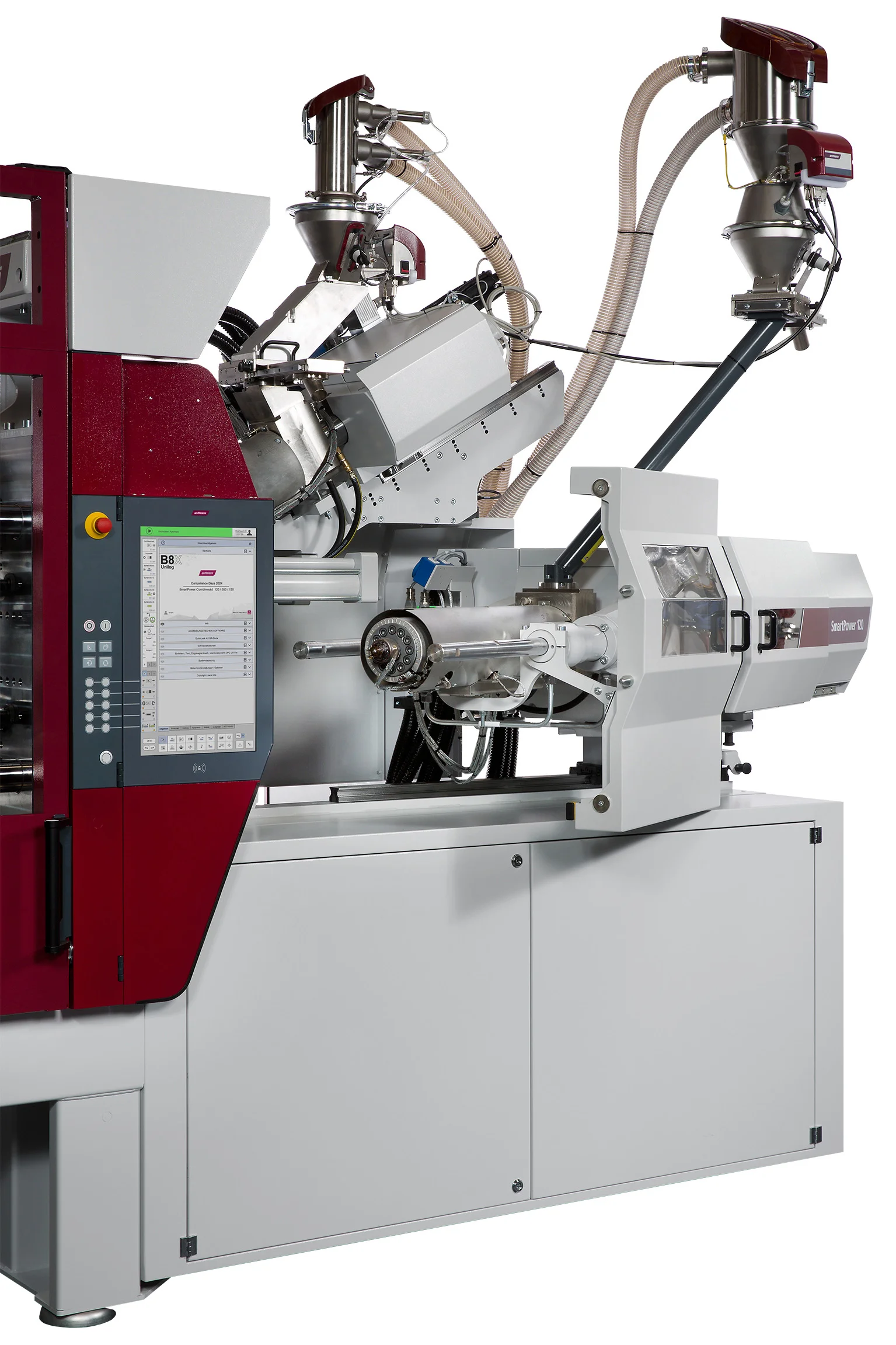
- Injection unit: plasticizes thermoplastic composite feedstocks or meters reactive resin systems for thermosets and RIM/RTM-style processes.
- Clamping unit: maintains mold closure under the required pressure, which is especially important for reinforced parts, thick sections, and multi-cavity tools.
- Control system: regulates temperature, pressure, shot size, injection speed, and mold timing; advanced systems also manage degassing, multi-stage infusion, and variable ratio dosing.
- Automation interface: commonly integrates robots, preform handling, insert loading, and part removal for repeatable composite production.
Typical process parameters
For many polymer-composite injection routes, the feedstock is dried before processing; one technical overview notes drying for 2–3 hours, plasticizing temperatures of about 230–250 °C, plasticizing cycles of 15–20 seconds, and mold cooling of 40–50 seconds before ejection. These values vary widely with resin chemistry, fiber content, part thickness, and tooling design.
For centrifugal dewatering or upstream pellet preparation in composite recycling and reprocessing lines, residual moisture targets are often low, and industrial systems commonly aim for levels in the low single-digit percent range or below before final drying; exact benchmarks depend on the polymer and reinforcement type. In composite injection lines, moisture control remains critical because residual water can drive voids, splay, hydrolysis, and surface defects.
Performance benchmarks and operating ranges
- Throughput: standard industrial machines used for composite parts may handle parts up to about 1.1 kg in academic bio-composite processing examples, while dedicated RTM/infusion systems can support much larger resin deliveries, including programmable infusion up to 1200 kg in one composite system example.
- Clamping force: composite-capable machines span from relatively small presses to large two-platen systems; commercial composite-oriented platforms are offered from roughly 45 to 650 tons in multi-component configurations, with larger two-platen presses used where mold area or cavity size is significant.
- Machine architecture: common layouts include horizontal, vertical, two-platen, toggle, and multi-injection systems, each chosen according to part geometry, insert handling, mold size, and material combination needs.
- Specific energy consumption: all-electric systems generally use less energy than conventional hydraulic presses, while hybrid machines seek a balance between energy efficiency and high clamping or injection force; actual consumption depends on duty cycle, part mass, and holding pressure requirements.
Types and Variations
| Type | Main role in composite processing | Typical strengths | Typical limitations |
|---|---|---|---|
| Thermoplastic injection molding machines | Process fiber-filled or short-fiber thermoplastic composites | High productivity, automation, good repeatability | Fiber breakage risk, orientation-induced anisotropy |
| Thermoset injection / resin-injection machines | Meter and inject reactive resin systems | Suitable for high-temperature or cured composite parts | Cure timing is critical; process window can be narrow |
| RTM / HP-RTM machines | Inject resin into a closed mold containing a preform | Good for structural composites and preform-based parts | Tooling and process control are capital intensive |
| RIM machines | Mix and inject reactive components into molds | Useful for large, complex, lower-density parts | Material systems are more specialized |
| Multi-material / overmolding machines | Combine composite substrates with skins, seals, or functional layers | Enables part consolidation and hybrid structures | Process coordination and adhesion control are demanding |
| Vertical injection machines | Assist insert molding and preform placement | Easier gravity-assisted insert handling | Less common for large structural parts |
| Two-platen machines | Support large molds with reduced machine footprint | Compact for large-part production | Higher tooling and machine complexity |
Some manufacturers specifically highlight composite-capable configurations such as multi-injection, full hydraulic, hybrid, vertical tie-bar-less, and two-platen presses for demanding applications.
Applications and Uses
Composite-capable injection molding is used where designers need a combination of light weight, stiffness, dimensional precision, and volume manufacturability.
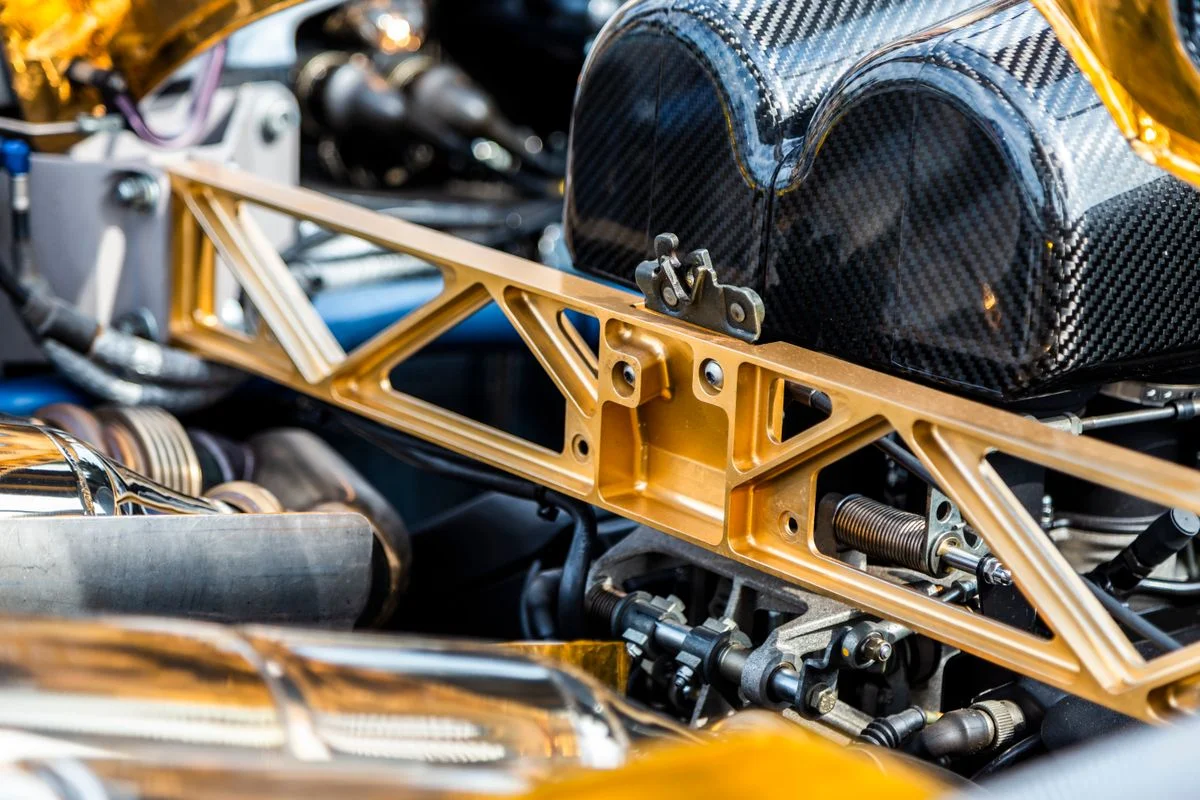
- Automotive: brackets, engine covers, air-intake components, seat shells, structural supports, and interior modules are common because composite molding can reduce mass while preserving rigidity.
- Electrical and electronics: housings, connector bodies, switchgear components, and insulating parts benefit from dimensional stability and electrical performance.
- Industrial equipment: clamps, screens, centralizers, brackets, machine covers, and wear-resistant housings are suited to composite molding where corrosion resistance and stiffness matter.
- Aerospace and defense: interior structures, supports, brackets, and lightweight modules use composite injection or injection/compression methods where repeatability is critical.
- Energy and utilities: composite insulators, cable accessories, and high-voltage parts are produced using specialized thermoset or rubber-composite injection systems.
- Consumer and sporting goods: lightweight durable products, from tools to sporting components, can exploit composite reinforcement for stiffness and impact resistance.
A poor-fit use is very low-volume, highly variable bespoke parts, where mold cost and process tuning often outweigh the advantages of injection-based composite production.
Engineering Principles and Material Behavior
Composite injection molding is governed by the interaction of the matrix, reinforcement, and processing path. Fiber length, fiber fraction, melt temperature, viscosity, and gate design all affect the final mechanical properties.
Important engineering effects include:
- Fiber orientation: flow aligns fibers, increasing stiffness in some directions while reducing it in others.
- Fiber breakage: excessive screw shear or aggressive injection can shorten fibers and reduce reinforcement efficiency.
- Void formation: inadequate venting, moisture, or poor impregnation can create porosity.
- Weld lines and jetting: common defects in multi-gate or thin-wall fills, with particular relevance for structural parts.
- Cure management: in thermosets and reactive systems, the part window is constrained by pot life and cure kinetics.
Injection/compression processes are especially valuable when the aim is to improve impregnation and reduce defect sensitivity compared with purely pressure-driven filling.
Technological Innovations and Automation
The segment is increasingly shaped by servo-driven hydraulics, all-electric motion, robotic handling, and multi-material capability.
Key innovations include:
- Injection compression molding for better fiber preservation and lower internal stress.
- Multi-material and sandwich molding for functionally graded parts and cost-efficient structural skins.
- Programmable multistage infusion for complex RTM and HP-RTM parts.
- Robotics integration for preform placement, insert loading, and demolding.
- Process monitoring with pressure, temperature, and flow sensing to improve repeatability and reduce scrap.
These advances have made composite molding more viable in series production, though the economics remain highly dependent on cycle time, part value, and tooling amortization.
Environmental and Sustainability Aspects
Composite injection machines contribute to sustainability mainly through light-weighting, material efficiency, and part consolidation. Lighter components can reduce energy use in vehicles and machinery over the use phase, while integrated molding can reduce assembly hardware and secondary operations.
At the same time, the sector faces real limitations:
- Recycling complexity is higher for fiber-reinforced and thermoset systems than for commodity thermoplastics.
- Scrap and trim management can be difficult, especially with cured thermoset composites and mixed-material parts.
- Energy use can be high for large heated molds, resin conditioning, and multi-stage cycle control, although all-electric and hybrid platforms improve efficiency.
Sustainability progress is likely to depend on recyclable matrices, reprocessable composites, lower-energy curing, and digital process optimization.
Economic and Global Market Impact
Composite-capable injection machines occupy a specialized but strategically important niche in the global plastics machinery market. Their value proposition is strongest where manufacturers need higher performance per part rather than the lowest possible tooling or machine cost.
Market demand is supported by:
- the electrification of vehicles and the resulting need for lightweight parts,
- industrial demand for corrosion-resistant and dimensionally stable components,
- growth in electrical insulation and safety-critical applications,
- expansion of automated composite production cells.
Because tooling is expensive and process development is nontrivial, the segment is concentrated in applications with stable design life and sufficient annual volume to amortize capital costs. Manufacturers such as ENGEL, Sumitomo Heavy Industries, Billion, and specialist composite-equipment firms supply machine platforms or process systems with composite-oriented capabilities, but the segment is application-specific rather than dominated by a single universal machine class.
Current Challenges and Innovations
- Fiber length retention remains a major challenge in short-fiber thermoplastic composites.
- Process window control is critical for thermoset and reactive resin systems.
- Mold wear and lifespan can be limiting where abrasive fibers are present.
- Dimensional stability can be affected by anisotropic shrinkage and residual stress.
- Qualification and traceability are increasingly required in automotive, aerospace, and electrical sectors.
Innovation is focused on better compounding, preform engineering, simulation, adaptive control, and closed-loop monitoring to reduce defects and improve reproducibility.
Future Outlook
The future of injection molding machines for composites is likely to be defined by three converging trends:
- More electric and hybrid machine platforms for lower energy consumption and tighter process repeatability.
- Greater integration of composite preforms, inserts, and multi-material layers to support part consolidation and lighter structures.
- Higher digitalization, including sensor-rich tools, data-driven parameter optimization, and traceability for safety-critical markets.
In technical terms, the most promising growth areas are likely to be fiber-reinforced thermoplastics, HP-RTM, injection/compression molding, and automated hybrid part production, especially where manufacturers can trade higher machine and tooling complexity for lower weight, fewer assembly steps, and better total system performance.
Summary
Injection molding machines for composites are a broad class of equipment enabling the industrial production of reinforced, hybrid, and reactive composite parts. Their importance lies in combining the shape flexibility of injection molding with the performance advantages of composite materials, while ongoing innovation is steadily improving automation, energy efficiency, and process control.
References
- •
Injection Molding Machines | Sumitomo Heavy Industries, Ltd. (n.d.).Link
- •
Manufacturer of custom injection moulding machines for ... (n.d.).Link
- •
Bio-Composite Processing. (n.d.).Link
- •
PLASTICS 21XX. (n.d.).Link
- •
HERCULE - Injection molding machine - Billion. (n.d.).Link
- •
▷ Vertical injection molding machine - ENGEL. (n.d.).Link
- •
Mesin Pengacuan Suntikan Getah Komposit - Tasu Machinery. (2025, October 16).Link
- •
Rubber Injection Molding Machine Manufacturer | DEKUMA. (2022, July 15).Link
- •
Products Lineup | Sumitomo Heavy Industries, Ltd. Industrial ... (n.d.).Link
- •
Composite Injection Molding: Process, Benefits & Uses. (2026, June 23).Link
- •
复合橡胶注射成型机 - 大苏机械. (2025, October 16).Link
- •
[PDF] Overview of Injection Molding Technology for Processing Polymers ... (n.d.).Link
- •
कंपोजिट रबर इंजेक्शन मोल्डिंग मशीन - तासु मशीनरी. (2025, October 16).Link
- •
Injection Molding Machine | Desktop & Benchtop. (n.d.).Link
- •
Isojet RTM Injection & Infusion Machines - Composite Automation, LLC. (2026, June 17).Link
- •
Technology - AP Composite. (2021, July 5).Link
- •
Machine Injection Composite RTM. (2025, September 16).Link
- •
Resin Injection Machine - CIJECT 2 - Composite Integration. (2026, May 13).Link
- •
Classification of injection molding machines. (n.d.).Link
- •
YIZUMI Global. (2026, August 25).Link
- •
Other machines for composites - Plastics Processing - DirectIndustry. (2025, January 1).Link
- •
Composite Injection Molding: Process, Benefits, and ... (2024, December 27).Link
- •
Table 7. (2022, January 1).Link
- •
Understanding Injection Molding Machine Types: Advantages and ... (2024, August 22).Link
- •
SAMRAT ENGINEERS in Ahmedabad. (2025, January 1).Link
- •
Composite Range. (n.d.).Link
- •
Composite Insulator Injection Molding Machine Commercial Furniture at Best Price in Dongguan | Dekuma Rubber And Plastic Technology (dongguan) Ltd. (2025, January 1).Link
- •
Molding of non-rubber materials. (2015, February 10).Link
- •
5.3 Polymers and Composite Materials | PDF | Extrusion. (2026, January 17).Link
- •
Types of Injection Molding Machines. (2024, April 30).Link
- •
A Study of Mold Technology for Manufacturing of CFRTP Parts. (2024, July 27).Link
- •
Types of Injection Molding Machine : Choose Hydraulic, Electric or ... (2024, July 22).Link
- •
In-Depth Look at Injection Molding Machine Types & Uses. (2024, February 26).Link
- •
Dosing, injection and infusion of resins - ISOJET Équipements. (2025, June 2).Link
- •
COMBIMOULD Multi-component HM Series. (2024, November 1).Link
- •
CATALOG 1816. (n.d.).Link
- •
Fiber composite solutions for advanced lightweight components. (n.d.).Link
- •
▷ Injection moulding machines at a glance - ENGEL. (2022, August 22).Link
- •
▷ Injection molding machines at a glance - ENGEL. (2022, August 22).Link
- •
Injection moulding - Wikipedia. (2003, September 23).Link
- •
What are injection molding machines ? What are the types? - EdeX. (n.d.).Link
- •
ADVANCES IN THERMOSETS. (n.d.).Link
- •
Standard Composite Manufacturing Machines & Equipment. (2026, September 1).Link
- •
Plastic Injection Molding Machines: Types, Parts, and Uses. (2022, April 29).Link
- •
Injection/Overmolding | CompositesWorld. (2026, September 1).Link
- •
Overview of Injection Molding Technology for Processing ... (2020, May 22).Link
- •
A Twist on Injection Molding: Injecting Conventional Resin Composites. (2025, January 23).Link
- •
Injection Moulding. (2025, July 30).Link
- •
Which Injection Molding Machine is Best for Your Project? (2019, July 10).Link
- •
Injection Molding of Polymers and Polymer Composites - PMC. (2024, June 25).Link
- •
What are the common applications of injection molding and ... (n.d.).Link
- •
Injection Molding - an overview. (2023, October 9).Link
- •
Advanced Injection Molding Methods: Review - PMC. (2023, August 24).Link
- •
Injection Molding. (2021, December 15).Link
- •
Composite Molding and Manufacturing: The Different ... (2023, April 17).Link
- •
What Products Can Be Made from Injection Molding? (n.d.).Link