
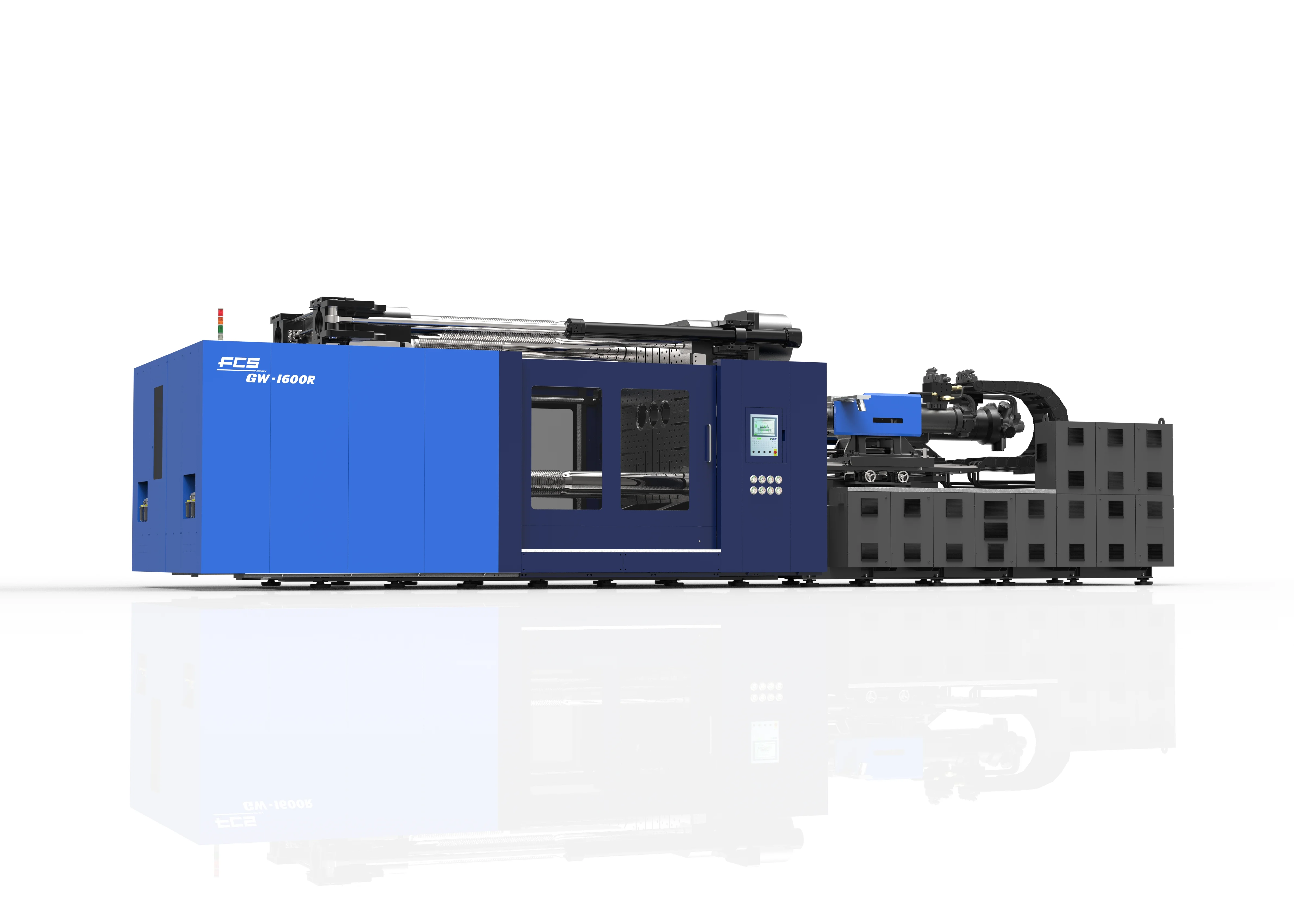
Introduction
Multi-component injection molding machines are specialized injection molding systems that produce one integrated plastic part from two or more materials, colors, or functional layers in a single coordinated cycle. They are used to combine properties such as rigidity and elasticity, structural strength and soft-touch surfaces, or transparent and colored zones, while reducing or eliminating secondary assembly operations.
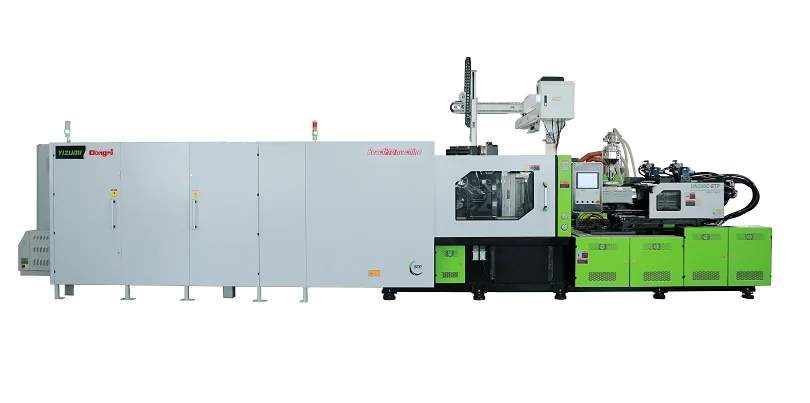
In industrial practice, these machines are also described as two-shot, 2K, multishot, or multi-material injection molding systems, although some users reserve multi-component for machines with two or more independently controlled injection units and a mold arrangement that repositions the first shot for the next. Typical configurations include rotary tables, turntables, moving cores, transfer systems, core-back mechanisms, and parallel or L-, V-, or S-type injection-unit layouts.
The technology has become important in automotive lighting, consumer products, medical devices, electrical components, and soft-touch functional parts because it improves design integration, part quality, and process efficiency. At the same time, it raises engineering demands in mold design, synchronization, material compatibility, and capital cost, which means that its economic value depends heavily on part complexity, production volume, and the cost of downstream assembly eliminated.
History and Development
Early multi-component processing evolved from conventional injection molding as manufacturers sought to combine multiple materials in one part rather than mold and assemble separate components. The key technical breakthrough was the pairing of multiple injection units with mold-repositioning mechanisms, allowing a first shot to be placed precisely before a second material is added.
Several milestones shaped the modern segment:
- Rotary and transfer molding concepts enabled the first practical two-material parts by moving a pre-molded substrate into alignment for overmolding.
- Co-injection and sandwich structures extended the idea beyond simple overmolding by controlling the sequence and distribution of two melts to create skin-core effects or decorative surface effects.
- Industrialized multi-shot platforms with servo-controlled rotary tables, modular unit arrangements, and automation interfaces made the process suitable for high-volume production in automotive, medical, and consumer-goods manufacturing.
Recent development has focused on smaller machine footprints, tighter rotary precision, more flexible unit layouts, and better digital process control. Manufacturers now offer configurations for two-, three-, and four-component molding, including parallel multi-unit architectures intended to reduce footprint while widening mold compatibility.
Technical Overview
A multi-component injection molding machine retains the core architecture of a standard injection molding press—injection unit, clamping unit, and mold assembly—but adds extra injection units and special mold movement or transfer capabilities. The machine may inject materials sequentially or simultaneously, depending on the process variant and mold design.
Main operating principle
The first material is injected to form a substrate or base component, then the part is repositioned or the cavity is reconfigured so that a second material can be injected into the correct location. The bond between materials may be mechanical, thermal, chemical, or a combination of these, depending on resin pairings, surface temperature, and interface design.
Typical machine elements
- Two or more injection units for separate materials, colors, or viscosities.
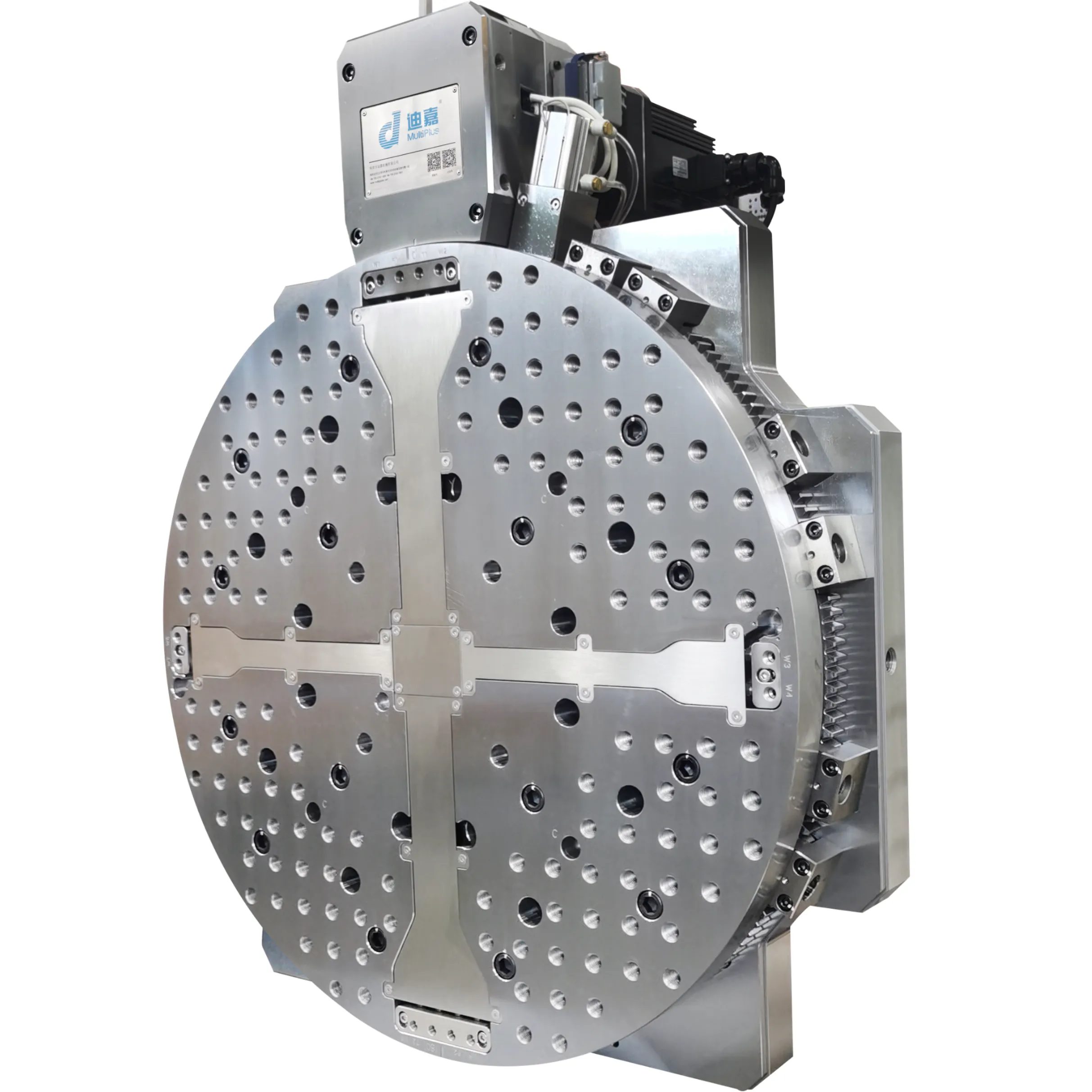
- Rotary table, turntable, transfer system, or moving core to reposition the part or create a new cavity region.
- Specialized mold design with separate gates, hot runners, cold runners, slides, or retractable cores.
- Automation systems such as robots for insert loading, part transfer, and demolding.
- Servo-electric or servo-hydraulic drive systems for accurate indexing, shot control, and repeatability.
Technical benchmarks
Published examples show that modern multi-component machines are engineered for both precision and high-volume output:
- Rotary positioning precision can reach ±0.005° on some high-end two-platen multi-component systems.
- Rotation angles commonly include 180° for two-color production and 120° for three-color arrangements.
- Injection-unit layouts may range from 2 to 6 units depending on machine family and application scope.
- Throughputs vary widely by part size and polymer, but industrial systems commonly cover small precision parts to larger automotive components; manufacturer portfolios span from compact presses to larger platforms adapted for bigger molds.
- Residual moisture after centrifugal dewatering is not a defining metric of the press itself, but in integrated recycling or reprocessing lines it is commonly specified in the low-percent range; for example, wash and flake preparation systems often target moisture reduction before downstream extrusion or molding. Because multi-component molding is primarily a forming process rather than a washing process, moisture control is usually managed by upstream drying rather than by the machine.
Process variants
| Variant | How it works | Typical use |
|---|---|---|
| Two-shot / 2K molding | Two materials are injected in sequence into one tool | Soft-touch parts, seals, consumer goods |
| Overmolding | A second material covers or bonds to a first-shot substrate | Handles, grips, medical housings |
| Co-injection | Two melts are injected together or in a controlled layered sequence | Sandwich structures, decorative effects |
| Core-back / core-pull | A core retracts to create new cavity volume for the second shot | Localized thick sections, seals |
| Transfer / rotary indexing | The preform is moved to another cavity position or station | High-volume multi-color parts |
| Multi-color molding | Different colors are combined in one cycle | Keypads, cosmetic trims, visual differentiation |
Types and Variations
Multi-component machines are usually classified by machine layout, number of components, and mold-motion strategy.
By machine layout
- Horizontal multi-component machines are common for automotive and consumer products where automated part transfer and high throughput are important.
- Vertical machines are often preferred for insert overmolding, gravity-sensitive inserts, or compact cell integration.
- L-shaped, V-shaped, S-shaped, and parallel-unit layouts are used to balance footprint, accessibility, and mold geometry.
By number of components
- Two-component machines are the most common and are used for rigid-soft, color-functional, and substrate-overmold combinations.
- Three-component machines add another material or color layer, often for complex aesthetic or functional parts.
- Four-component and higher configurations exist for specialized applications where multiple layers, materials, or colors are needed in one cycle.
By process strategy
- Sequential overmolding is the dominant approach for integrated parts requiring strong interface control.
- Simultaneous or near-simultaneous injection is used where layered flow structures or composite effects are required.
- Insert-assisted multi-component molding combines metal or preformed inserts with multiple polymers, often in medical or electrical products.
Applications and Uses
Multi-component injection molding is best suited to products that benefit from combining different performance profiles in one finished part. Common sectors include:
- Automotive
- Soft-touch controls, lighting lenses, seals, bezels, and interior trim
- Functional and decorative layers in a single part
- Medical and healthcare
- Ergonomic grips, instrument housings, seals, and overmolded LSR components
- Consumer goods
- Toothbrushes, tools, kitchenware, keypads, appliance parts, and personal-care items
- Electrical and electronics
- Switches, keys, housings, and multi-color indicators
- Packaging and closures
- Closure bodies with integrated seal rings and other functional closures
- Optical and lighting parts
- Transparent and colored structures, lens housings, light guides, and decorative lighting elements
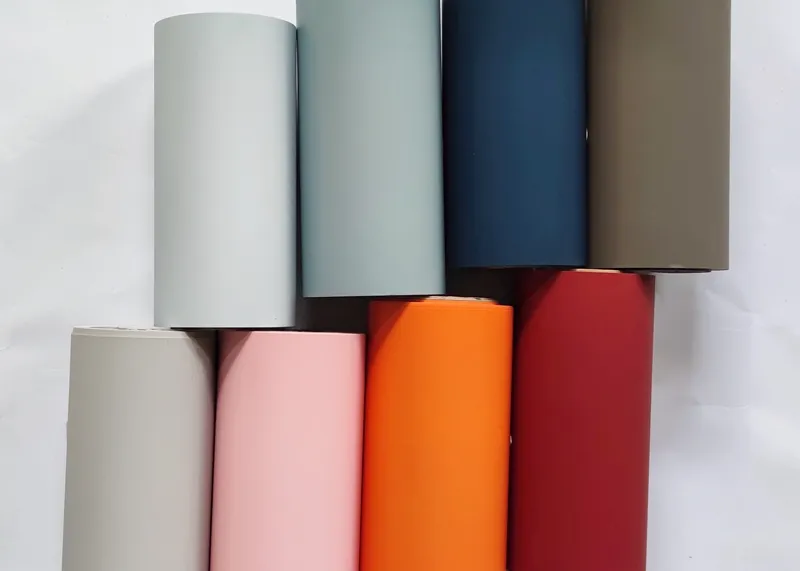
A poor-fit application is simple high-volume parts with no need for mixed materials or assembly elimination, because the extra machine complexity and tooling cost are usually not justified when a single-material part can meet requirements more economically.
Design and Engineering Considerations
The performance of a multi-component machine depends less on nominal clamp tonnage alone and more on interface control, mold accuracy, and thermal coordination between shots. Important design issues include:
- Material compatibility, especially melt temperature, shrinkage behavior, adhesion, and chemical bonding potential.
- Gate and runner design, which affects interface quality, color boundary definition, and pressure balance.
- Indexing accuracy, especially in rotary and transfer systems where misalignment can cause flash or poor registration.
- Cycle-time management, because the second shot must often be applied while the first shot is still at a temperature favorable to bonding.
- Tooling complexity, which rises sharply when slides, core-back actions, and multiple cavities are combined in one mold.
Part designers frequently use the technology to replace assemblies that would otherwise require ultrasonic welding, adhesive bonding, mechanical fastening, or manual fitting.
Technological Innovations and Automation
Recent machine development has emphasized servo drive precision, modular injection-unit placement, and integration with robotics and digital process monitoring. Some systems are designed with concentrated unit layouts to reduce machine footprint while preserving access to a wider range of molds.
Automation is especially important because multi-component production often requires precise part handling between shots or stations. Robots can place inserts, move preforms, and remove completed parts without disturbing orientation, which improves repeatability and supports higher output rates.
Digital controls are increasingly used to coordinate:
- shot-size consistency,
- mold rotation timing,
- pressure and velocity profiles,
- temperature management across multiple materials,
- and in-process quality monitoring.
Environmental and Sustainability Aspects
Multi-component molding can support sustainability when it replaces assemblies, reduces scrap, and improves part durability. By producing a finished part in one cycle, it may lower handling energy, reduce inventory, and remove downstream joining or finishing steps.
Its environmental advantages are most evident when it enables:
- material reduction through functional integration,
- waste reduction by eliminating glued or mechanically fastened subassemblies,
- lighter-weight designs through localized material placement,
- and longer part life from better sealing or wear-resistant surfaces.
The technology also has limits. Tooling is more complex, machine platforms are more expensive, and some material combinations are difficult to recycle when permanently bonded. For circular-economy applications, designers increasingly consider polymer compatibility, regrind strategy, and whether the bond can be separated or redesignated for recycling streams.
Economic and Global Market Impact
Multi-component injection molding occupies a premium niche in the broader injection molding machine market because it serves parts where performance, aesthetics, and assembly reduction justify higher capital cost. Manufacturers such as ARBURG, KraussMaffei, WITTMANN BATTENFELD, Milacron, Haitian, YIZUMI, Tederic, and others offer systems or process families in this segment, generally with emphasis on different machine sizes, layouts, and application strengths.
The economic rationale is strongest when the process reduces:
- part count,
- assembly labor,
- defect opportunities at interfaces,
- and logistic complexity between separate molding and assembly lines.
Demand is closely tied to automotive interiors, consumer electronics, medical devices, and premium consumer goods, where functionality and appearance are both critical.
Current Challenges and Innovations
The segment faces several technical and commercial challenges:
- High tooling cost, especially for rotary or transfer molds with precise indexing and multiple hot-runner systems.
- Material pairing limitations, since not all polymers bond effectively or shrink compatibly.
- Longer setup and validation times, particularly in regulated sectors such as medical manufacturing.
- Complex process windows, where temperature, pressure, and timing must be matched across materials.
- Repair and maintenance demands, because more motion axes and injection circuits increase service complexity.
Innovation is focused on more compact layouts, better servo control, easier mold changeover, and broader process flexibility for multi-material and multi-color production. There is also growing interest in combining multi-component molding with digital twin methods, machine learning, and closed-loop quality control to stabilize interface quality and reduce trial-and-error setup.
Future Outlook
The future of multi-component injection molding is likely to be shaped by greater material integration, higher automation, and more compact machine architectures. As product designers continue to demand softer grips, better sealing, higher visual quality, and fewer assembly steps, the technology is expected to remain attractive for functional consumer and industrial parts.
Three trends are especially important:
- Broader adoption of multi-material functional design, especially where a single molded part replaces an assembly.
- Expansion of modular machine platforms, allowing one press to be configured for multiple component counts and mold families.
- Tighter sustainability requirements, which will favor designs that use compatible polymers, reduce scrap, and support disassembly or recycling when possible.
Summary
Injection molding machines for multi-component production are advanced systems that combine multiple materials or colors in one integrated cycle, using specialized injection-unit arrangements and mold-motion mechanisms. Their main value lies in functional integration, aesthetic flexibility, and assembly reduction, while their main constraints are tooling complexity, material compatibility, and higher capital cost.
References
- •
Multi-component injection moulding. (n.d.). Arburg. https://www.arburg.com/en/solutions/by-technology/multi-component-injection-moulding/Link
- •
Multi-component injection molding machines for complex.... (2026, July 31). Yizumi. https://www.yizumi.com/en/news/product/industry-trend/multi-component-injection-molding-machines-built-for-complexityLink
- •
Core competence: Multi-component injection molding. (2026, March 5). Rkt. https://www.rkt.de/en/mold-making-expertise/core-competence-multi-component-injection-molding/Link
- •
Yizumi global. (2026, August 25). Yizumi. https://www.yizumi.com/en/Link
- •
BM series - Borche. (2024, January 25). Borche. https://borche.co.uk/products/bm-series/Link
- •
Multi the multi-function machine. (n.d.). Interempresas. https://www.interempresas.net/FeriaVirtual/Catalogos_y_documentos/197307/TP_Multi_gb.pdfLink
- •
Multi-component injection moulding - Arburg. (n.d.). Arburg. https://www.arburg.com/en/gb/solutions/by-technology/multi-component-injection-moulding/Link
- •
Modular allrounders for multi-component technology. (n.d.). Arburg. https://www.arburg.com/en/us/solutions/by-technology/multi-component-injection-moulding/Link
- •
Discover DD. (n.d.). Tedericglobal. https://www.tedericglobal.com/sites/default/files/2020-12/DH-mm-en.pdfLink
- •
Adding components to add value. (n.d.). Kraussmaffei. https://www.kraussmaffei.com/Processes/IMM/01%20Mehrkomponenten/Mulitinject/KM_BR_Multinject_en.pdfLink
- •
Haitian multi-component injection molding.... (n.d.). Mesimaquinas. https://www.mesimaquinas.com.br/wp-content/uploads/2022/08/HT_MULTI_Image_20210810_EN.pdfLink
- •
HM multicomponent 400 kN–2700 kN. (n.d.). Wittmann Group. http://www.wittmann-group.ru/fileadmin/templates/docs/imm/hmkomponenten_40-270_en.pdfLink
- •
Combimould – Multi-component technology. (n.d.). Wittmann-group. https://www.wittmann-group.com/en/combimould-multi-component-technologyLink
- •
Multi-component injection moulding - Efficient plastic solutions. (2025, December 9). Ke-technik. https://www.ke-technik.de/en/technology/injection-moulding/multi-component-injection-moulding/Link
- •
Multi component injection moulding | two shot LSR. (2021, April 28). Simtec-silicone. https://www.simtec-silicone.com/blogs/two-shot-lsr-expertise-and-experience/Link
- •
Arburg launches a new series for production-efficient multi-component injection molding: The Allrounder More, with its particularly flexible configuration, can be perfectly adapted to specific customer and market requirements. (2022, January 20). Specialchem. https://www.specialchem.com/plastics/news/arburg-injection-molding-all-rounder-000225357Link
- •
What can artificial intelligence do for multi-material injection molding. (n.d.). Sciltp. https://media.sciltp.com/articles/2604003737/2604003737.pdfLink
- •
Tederic DD multi-component injection molding machine. (2025, July 29). Hitech-machinery. https://hitech-machinery.com/injection-molding-machine/tederic-imm/dd-machine/Link
- •
UN260-BTP – MultiPro injection moulding solution - PBE-Roboplas. (2018, November 19). Pbe-roboplas. https://pbe-roboplas.com.au/un260-btp-high-end-multi-component-injection-molding-machine/Link
- •
© 2015 Milacron LLC. All Rights Reserved. Mold- Masters® and the Mold-Masters. (n.d.). Milacron. https://s3-us-east-2.amazonaws.com/milacron-website-media-offload/wp-content/uploads/2015/08/12195857/Multi-Component-Technology-Retrofit-Sell-Sheet1.pdfLink
- •
Multi-component molding | Accuplast accurate plastics solutions. (n.d.). Accuplast. http://www.accuplast.com/node/45Link
- •
New multicomponent injection molding machine line launches. (2025, February 4). Ptonline. https://www.ptonline.com/products/new-multicomponent-injection-molding-machine-line-launchesLink
- •
Multi-component molding: Which way should you go? (2025, September 16). Ptonline. https://www.ptonline.com/articles/multi-component-molding-which-way-should-you-goLink
- •
Introduction of multi-component injection molding process. (2023, November 2). Gudmould. https://gudmould.wordpress.com/2023/11/02/introduction-of-multi-component-injection-molding-process/Link
- •
High-end multi-component injection molding machine - Yizumi. (n.d.). Yizumi. https://www.yizumi.com/uploads/2024-01-19/7b98cdbf-9ad2-4407-976e-677352c151fc1705655255906.pdfLink
- •
Injection: High performance injection molding machines. (2025, July 21). Milacron. https://www.milacron.com/injection/Link
- •
Ht-multi-ma.pdf. (n.d.). Haitian. https://www.haitian.com.tr/uploads/docs/ht-multi-ma.pdfLink
- •
Multi-material injection molding. (2016, January 28). Wikipedia. https://en.wikipedia.org/wiki/Multi-material_injection_moldingLink
- •
Arburg-examples of multi component mould designs GB PDF. (2025, August 29). Scribd. https://www.scribd.com/document/306914112/ARBURG-Examples-of-multi-component-mould-designs-GB-pdfLink
- •
Multi-component injection molding and 2K technology. (2025, October 21). Tedesolutions. https://www.tedesolutions.pl/en/blog/multi-component-injection-molding-2k-technologyLink
- •
Multi-color injection molding: Process, benefits and.... (2023, June 1). Clf. https://www.clf.com.tw/en/article/Multi-color-Plastic-Injection-Molding-Machine-tips.htmlLink
- •
Multicomponent. (2026, August 26). Ptonline. https://www.ptonline.com/topics/multicomponentLink
- •
Multi-component injection molding machine - OUCO. (2024, January 16). Ouco-machinery. https://ouco-machinery.com/multi-series/Link
- •
Two shot injection molding / 2K molding - Trelleborg. (n.d.). Trelleborg. https://www.trelleborg.com/en/medical/products-capabilities/custom-designs/multicomponent-moldingLink
- •
10 parts of an injection molding machine - Xometry. (2022, April 29). Xometry. https://www.xometry.com/resources/injection-molding/injection-mold-components/Link
- •
Is a multi-component injection molding machine worth.... (2026, February 25). Yizumi. https://www.yizumi.com/en/news/product/IMM/is-a-multi-component-injection-molding-machine-worth-the-investmentLink
- •
How injection molding machines work. (2024, October 14). Rjginc. https://rjginc.com/back-to-basics-how-does-a-plastic-injection-molding-machine-work/Link
- •
What is plastic injection molding and how does it work? (2023, December 11). Essentracomponents. https://www.essentracomponents.com/en-us/news/manufacturing/injection-molding/what-is-plastic-injection-molding-and-how-does-it-workLink
- •
How does an injection molding machine work with animation. (2023, September 30). Boyanmfg. https://boyanmfg.com/how-does-injection-molding-machine-work/Link
- •
Injection moulding. (2003, September 23). Wikipedia. https://en.wikipedia.org/wiki/Injection_mouldingLink
- •
Different types of injection molding technology. (2025, February 3). Rapiddirect. https://www.rapiddirect.com/blog/types-of-injection-molding-technology/Link
- •
Comprehensive guide to plastic injection molding. (2022, April 29). Xometry. https://www.xometry.com/resources/injection-molding/basics-of-plastic-injection-molding/Link