
Introduction
Infrared reflective pigments are colorants engineered to reflect a substantial portion of near-infrared (NIR) solar radiation while maintaining a desired visible color, thereby reducing heat buildup in coated or compounded materials. In plastics and coatings, they are used to improve thermal comfort, reduce warpage and degradation, and lower cooling demand in end-use applications such as building exteriors, automotive parts, outdoor furniture, and agricultural products.
The technology emerged from specialized military and aerospace thermal-signature control work and later expanded into commercial “cool color” systems for architecture, transportation, and polymer products. Today, the field includes several material families, notably complex inorganic color pigments, mixed metal oxides, metal-flake-based systems, and other engineered inorganic pigments designed to combine visible color with high NIR reflectance.
From a plastics-industry perspective, infrared reflective pigments are important auxiliaries because they enable darker or more saturated colored plastics to stay cooler than conventional pigments, which can improve dimensional stability and service life. Their sustainability value is tied mainly to energy savings and longer product durability, although the pigments themselves are typically mineral-based and must be evaluated within broader circularity, cost, and formulation constraints.
History and Development
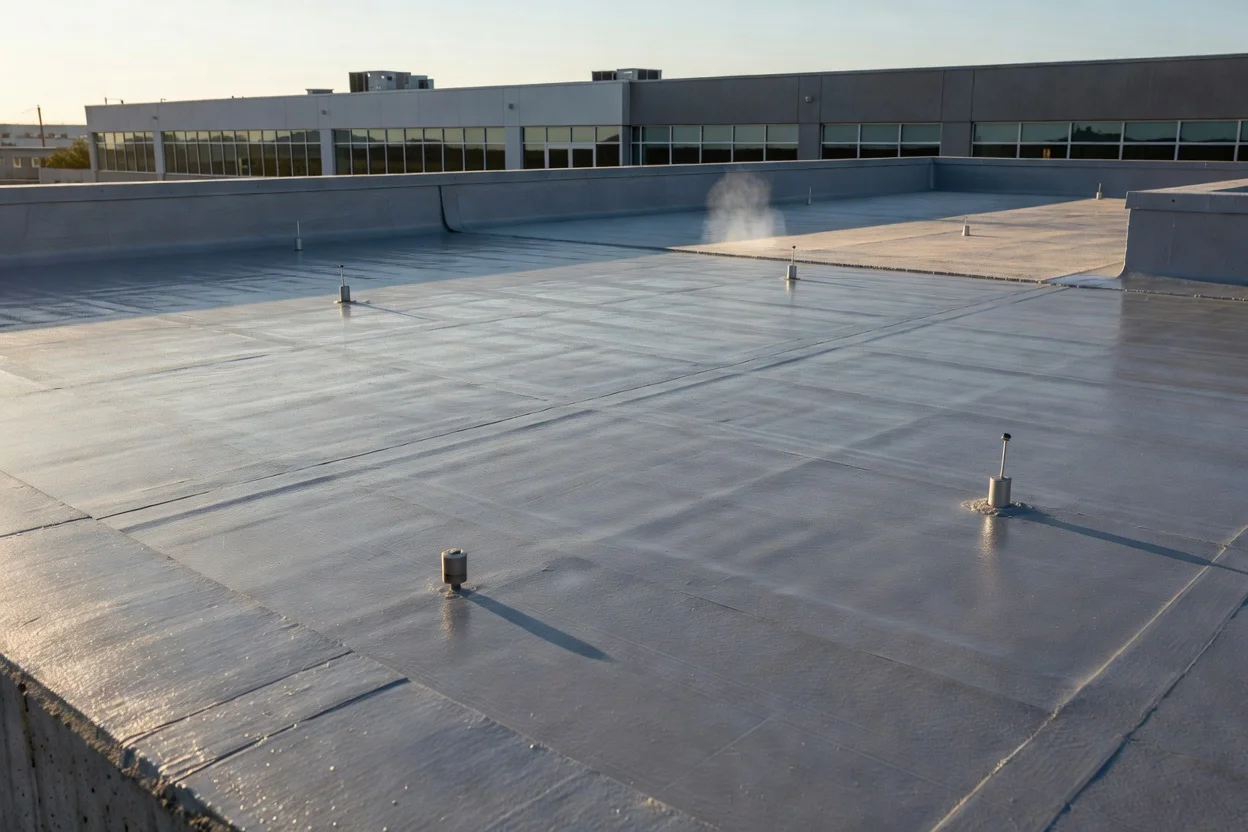
Early development was closely linked to military camouflage and heat-management coatings, where optical tailoring in the visible and near-infrared regions was used to manage detection and surface temperature. By the 1980s, IR-reflective pigments were being used to reduce solar heat-induced warping in rigid PVC, and by the late 1990s they had become a major technology in cool-roof products supporting energy-efficiency programs.
As formulation science advanced, pigment suppliers developed complex inorganic color pigments that could deliver darker, more chromatic colors while reflecting more NIR radiation than conventional organic pigments or carbon black. This shift opened new applications in architectural coatings, polymer compounds, and automotive interiors, where heat buildup and substrate distortion are practical concerns.
Chemical Structure and Key Properties
Infrared reflective pigments are not defined by a single chemistry, but by function: they reflect or scatter a significant fraction of NIR radiation, typically in the range of about 700 to 2500 nm, while still producing a visible color or opacity in the final article. Common approaches include complex metal oxides, mixed oxide perovskite-like structures, coated or flake-based inorganic pigments, and engineered chromatic pigments with NIR-transparent or NIR-reflective layers.
Their performance depends on particle size, crystal structure, refractive index contrast, surface coating, and dispersion quality in the resin or coating matrix. In practice, pigments with high NIR reflectance reduce the amount of absorbed solar energy, lowering surface temperature and the temperature transmitted into the substrate.
Key limits and practical workarounds
- Limit: Some dark shades still absorb too much heat → Cause: visible-black pigments often also absorb strongly in NIR → Workaround: use complex inorganic color pigments or NIR-transparent black pigments designed to reflect or transmit NIR while retaining visible darkness.
- Limit: Performance can fall if the pigment is poorly dispersed → Cause: agglomeration reduces effective scattering and optical selectivity → Workaround: use optimized surface treatments, proper let-down procedures, and resin-compatible grades.
- Limit: Organic pigments usually weather less robustly in exterior cool-color systems → Cause: UV and thermal instability can cause fading or property loss → Workaround: favor inorganic cool pigments for demanding exterior and high-temperature uses.
- Limit: High IR reflectance can be less effective in thin, highly translucent, or highly absorptive formulations → Cause: substrate and binder interactions influence the final optical path → Workaround: adjust pigment loading, hiding power, and film thickness, or use multi-pigment formulations.
Typical functional mechanisms
- Selective absorption/reflection: pigments absorb visible wavelengths needed for color and reflect NIR, which reduces heat gain.
- Diffuse scattering: particle morphology and refractive-index mismatch increase scattering of NIR radiation.
- Multilayer interference: some engineered pigments use oxide or metal-oxide layers to reinforce NIR reflection.
A practical formulation example is a cool roof coating using a complex inorganic color pigment at a few weight percent of the total coating solids, often combined with titanium dioxide or other white extender pigments to improve hiding and solar reflectance; the exact dosage depends on hue, opacity, and binder system. Another example is a black or dark polymer compound using an NIR-transparent black pigment instead of conventional carbon black, allowing a dark appearance while lowering solar heat gain.
Production Processes and Raw Feedstocks
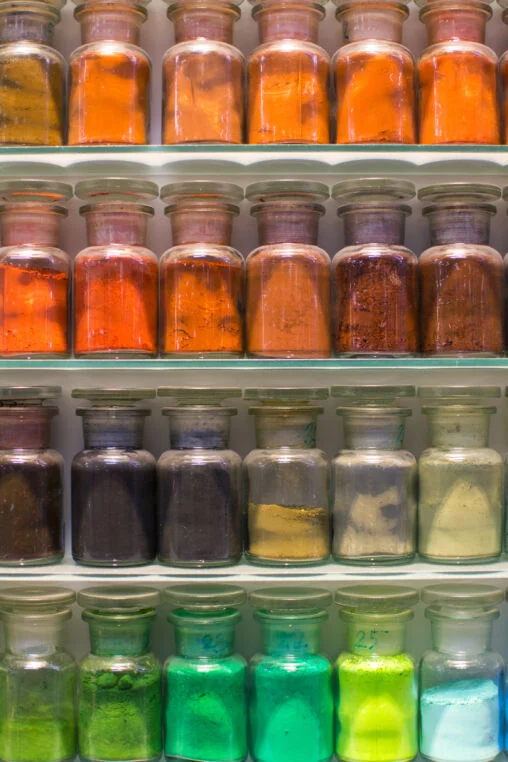
Most infrared reflective pigments are produced through inorganic synthesis routes rather than simple organic dye chemistry. Common manufacturing approaches include calcination of mixed oxides, solid-state reactions, precipitation followed by thermal treatment, coating of core particles, and controlled surface engineering to tune optical response.
Typical raw feedstocks include metal oxides, transition-metal salts, titanium-containing compounds, zinc compounds, and other mineral precursors selected for crystal-structure control and thermal stability. For advanced flake or multilayer pigments, metal substrates, oxide interference layers, and additional surface treatments may be used to create the final optical architecture.
From a plastics auxiliaries standpoint, the most important production variables are:
- crystal phase and calcination temperature,
- particle size distribution,
- surface chemistry and compatibility with polymers,
- and weathering resistance under outdoor exposure.
Applications and End-Use Markets
Infrared reflective pigments are used wherever appearance and temperature control must be balanced.
| Application area | Typical material system | Usual function in the end product |
|---|---|---|
| Roof coatings and cool roofs | Architectural coatings, coil coatings, roofing membranes | Reduces solar heat gain and cooling load |
| Exterior walls, façades, stucco | Building coatings and renders | Lowers surface temperature and thermal stress |
| Automotive exteriors and interiors | OEM and aftermarket coatings, vinyl, trim compounds | Improves cabin comfort and protects polymer parts from heat aging |
| PVC profiles and siding | Rigid PVC compounds and coatings | Reduces warpage and heat-induced deformation |
| Outdoor consumer goods | Furniture, playground equipment, pool decks, garden products | Lowers touch temperature and improves durability |
| Industrial surfaces | Tanks, enclosures, metal structures | Helps control surface temperature and thermal cycling |
| Camouflage and defense | Specialized coatings and netting | Tailors visible/NIR reflectance for signature management |
In plastics, a notable strength of IR-reflective pigments is their ability to improve the thermal behavior of colored compounds without forcing designs toward white or light pastel shades. A poor-fit use is highly transparent or optically clear plastic articles, where the pigment’s scattering and opacity work against the requirement for clarity; in those cases, the technology is generally incompatible unless the formulation is intentionally translucent or tinted.

Environmental and Sustainability Aspects
The main sustainability argument for infrared reflective pigments is use-phase energy savings. By lowering surface temperature, they can reduce air-conditioning demand in buildings and lower thermal stress in exposed polymer products, potentially extending service life and reducing replacement frequency.
In cool-roof and cool-wall systems, the benefit is especially pronounced in hot climates and dense urban areas, where NIR reflectance can contribute to mitigating the urban heat island effect. For plastics, cooler surfaces can also reduce warpage, color fade, and thermal aging in profiles, outdoor furniture, and automotive components.
Recyclability depends more on the host polymer than on the pigment itself. Since most infrared reflective pigments are inorganic, they are generally compatible with mechanical recycling streams in principle, but they can complicate sorting, reprocessing, or color-matching if used in heavily engineered or dark formulations. Bio-based or recycled-polymer alternatives do not remove the need for pigment selection; they mainly shift the binder or substrate carbon footprint, while the pigment still determines solar performance.
Carbon-footprint considerations are mixed:
- the pigments are typically energy-intensive to manufacture because of calcination and mineral processing,
- but they can reduce operational energy use over the product life cycle,
- and in many exterior uses, the use-phase savings can outweigh the pigment production burden.
Economic and Global Market Impact
Market demand is driven by building energy codes, cool-roof standards, vehicle comfort targets, and the increasing need for thermally stable colored plastics. Recent industry analyses describe the market as growing steadily through 2030 as cool-color adoption expands in construction and transportation.
Leading suppliers include specialist pigment companies that focus on complex inorganic color pigments and cool-color technologies, alongside broader colorant manufacturers serving coatings and plastics. Commercial competition is shaped by:
- NIR reflectance performance,
- weatherability,
- color space coverage,
- dispersion behavior in polymer matrices,
- and cost relative to conventional pigments.
Current Challenges and Innovations
The technical challenge is to achieve three goals at once: color, durability, and low heat absorption. The best-performing products often require careful compromise among hue, hiding power, cost, and processability.
Key innovation directions include:
- darker cool pigments with improved black and deep-tone options,
- NIR-transparent black pigments that preserve a dark visible appearance,
- multicomponent complex inorganic pigments with higher reflectance across broader solar bands,
- and formulations tailored for plastics rather than only coatings.
A useful formulation insight is that some pigment systems can be combined to optimize performance across shade and reflectance, rather than relying on a single pigment type. This is especially relevant in polymer compounding, where the matrix, processing temperature, and part thickness all influence the final thermal behavior.
Future Outlook
Infrared reflective pigments are likely to expand beyond roofs and façades into more polymer-intensive applications, including automotive interiors, outdoor equipment, and durable consumer goods. Growth will depend on whether suppliers can continue improving dark-color performance, weather resistance, and cost efficiency while making the technology easier to formulate in plastics, not only in coatings.
Longer term, the most important opportunity is system-level: combining solar-reflective pigments with lightweight polymers, recycled materials, and low-carbon building or transport designs can reduce both embodied and operational emissions. Innovation will therefore focus less on pigment color alone and more on the total thermal and lifecycle performance of the finished article.
Summary
Infrared reflective pigments are functional colorants that help polymer and coating systems reflect NIR radiation, reduce heat buildup, and improve durability. Their value is highest in cool roofs, exterior construction, automotive, and outdoor plastics, where surface temperature directly affects energy use and product life.
References
- •
Introduction to IR-reflective pigments. (2005, August 1). PCI Magazine. https://www.pcimag.com/articles/83468-introduction-to-ir-reflective-pigmentsLink
- •
Infrared reflective pigment market size & share 2025-2032. (2025, November 10). 360iResearch. https://www.360iresearch.com/library/intelligence/infrared-reflective-pigmentLink
- •
IR reflective. (2026, July 6). The Protech Group. https://www.theprotechgroup.com/technology/ir-reflective-coatings/Link
- •
Arctic® | Infrared reflective pigments. (2026, April 29). The Shepherd Color Company. https://www.shepherdcolor.com/product-range/arctic/Link
- •
When black is white. (2011, December 13). PCI Magazine. https://www.pcimag.com/articles/86552-when-black-is-whiteLink
- •
IR-reflecting pigments. (2011, October 1). PCI Magazine. https://www.pcimag.com/articles/92566-irreflecting-pigmentsLink
- •
紅外反射顏料_百度百科. (n.d.). Baidu. https://baike.baidu.hk/item/%E7%B4%85%E5%A4%96%E5%8F%8D%E5%B0%84%E9%A1%8F%E6%96%99/4969553Link
- •
Infrared reflectance of pigments. (2024, July 19). Ranbarr. https://ranbarr.com/infrared-reflectance-of-pigments/Link
- •
Infrared reflective pigmentation technologies and the future of coatings part 2: The science behind the technology. (2007, August 1). PCI Magazine. https://www.pcimag.com/articles/87154-infrared-reflective-pigmentation-technologies-and-the-future-of-coatings-part-2-the-science-behind-the-technologyLink
- •
IR-reflective pigments: A black rainbow of options. (2017, January 3). PCI Magazine. https://www.pcimag.com/articles/102920-ir-reflective-pigments-a-black-rainbow-of-optionsLink
- •
红外反射颜料. (2023, October 26). Baidu. https://baike.baidu.com/item/%E7%BA%A2%E5%A4%96%E5%8F%8D%E5%B0%84%E9%A2%9C%E6%96%99/4969553Link
- •
Pigments which reflect infrared radiation from fire. (1996, March 27). Google Patents. https://patents.google.com/patent/US5811180A/enLink
- •
Infrared reflected (IR) paint manufacturing industry. (2025, January 1). NIIR Project Consultancy Services. https://www.niir.org/blog-archive/blog.php?id=1043Link
- •
http://dx.doi.org/10.1590/0104-1428.1869. (n.d.). SciELO. https://www.scielo.br/j/po/a/dkmgYstmPR4rXwcTmxpLKrw/?format=pdf&lang=enLink
- •
Pigments for infrared reflective coatings. (n.d.). Fineland Chem. https://www.finelandchem.com/pigments-for-infrared-reflective-coatings/Link
- •
红外反射颜料及其应用. (2024, July 22). 上海精颜化工. https://www.shzgf.com/ylzs/3024.htmlLink
- •
Formulating infrared coatings for defence applications. (n.d.). Defense Technical Information Center. https://apps.dtic.mil/sti/tr/pdf/ADA267555.pdfLink
- •
Infrared colorants for cool coatings. (2016, January 5). PCI Magazine. https://www.pcimag.com/articles/101516-infrared-colorants-for-cool-coatingsLink
- •
Improve energy efficiency with infrared reflective pigments. (n.d.). Vibrantz Technologies. https://vibrantz.com/wp-content/uploads/2024/04/Vibrantz_CS_Cool-Colors_Brochure_04182024_Digital.pdfLink
- •
Arctic® | 红外反射颜料. (2026, May 6). The Shepherd Color Company. https://www.shepherdcolor.com/%E4%BA%A7%E5%93%81%E7%B3%BB%E5%88%97/arctic/?lang=zh-hansLink
- •
CN101115683B - 红外线反射用黑色颜料、涂料和树脂组合物. (2006, February 8). Google Patents. https://patents.google.com/patent/CN101115683B/zhLink
- •
有人对IR染料或颜料了解吗? (2013, December 26). 联众涂料论坛. http://bbs.coatu.com/forum.php?mod=viewthread&action=printable&tid=97387Link
- •
Type of the paper (article). (n.d.). MDPI. https://mdpi-res.com/d_attachment/applsci/applsci-13-12903/article_deploy/applsci-13-12903.pdfLink
- •
複合酸化物顔料 (CICP). (n.d.). Asahi Kasei. https://www.asahikasei.co.jp/products/irrpig/Link
- •
反射紅外線色料. (n.d.). 鼎星實業股份有限公司. https://www.worldchem.com.tw/index.php?lang=tw&do=product&act=detail&product_tp_id=15&id=84Link
- •
NIR reflective pigments to mitigate the urban heat islands effect (UHIE). (n.d.). E3S Web of Conferences. https://www.e3s-conferences.org/articles/e3sconf/pdf/2020/32/e3sconf_nsb2020_03006.pdfLink
- •
红外反射颜料(NIR Reflectance Pigments). (n.d.). 复合无机颜料. https://www.jolychem.com/product/nir-reflectance-pigments/Link
- •
红外线反射方法. (2010, February 26). Google Patents. https://patents.google.com/patent/CN102355957B/zhLink
- •
紅外反射顏料批發. (2019, February 15). 1688. https://tw.1688.com/item/-BAECCDE2B7B4C9E4D1D5C1CF.htmlLink
- •
NIR & IR reflection. (n.d.). Harold Scholz & Co. GmbH. https://www.harold-scholz.de/en/areas-of-application/nir-ir-reflectionLink
- •
Thermal infrared reflective pigments for coatings. (2004, July 12). Google Patents. https://patents.google.com/patent/US7455904B2/enLink
- •
Colored paints containing NIR-reflective pigments exposed to accelerated ultraviolet radiation aging with possible application as roof coatings. (n.d.). IRIS Università di Trento. https://iris.unitn.it/bitstream/11572/283569/1/coatings-10-01135%20-%202020.pdfLink
- •
Special infrared reflective pigments make a dark roof reflect almost like a white roof. (n.d.). Cool Roof Toolkit. https://www.coolrooftoolkit.org/wp-content/uploads/2012/05/Special-Infrared-Reflective-Pigments-Make-a-Dark-Roof-Reflect-Almost-Like-a-White-Roof.pdfLink
- •
應用產業. (n.d.). 鼎星實業股份有限公司. https://www.worldchem.com.tw/index.php?lang=tw&do=app&act=detail&app_id=22&id=84Link
- •
Infrared reflective color pigment. (1998, October 26). Google Patents. https://patents.google.com/patent/US6174360B1/enLink
- •
Near infrared reflecting composition and coverings for ... (2011, December 2). Justia Patents. https://patents.justia.com/patent/20140335329Link
- •
近红外透明| 红外反射黑色颜料| 尼克韦尔. (2025, November 7). Nichwell Chem. https://nichwellchem.com/zh-CN/ir-transmission-pigment/Link
- •
Prediction of heat build-up of solar reflecting coatings based on physico-chemical properties of complex inorganic colour pigments (CICPs). (2011, October 18). ScienceDirect. https://www.sciencedirect.com/science/article/abs/pii/S0300944011000427Link
- •
透射红外辐射并呈现颜色稳定性的涂料组合物及相关涂层体系. (2012, May 29). Google Patents. https://patents.google.com/patent/CN103649239B/zhLink
- •
反射红外辐射的白色颜料、其制造及其用途. (n.d.). Google Patents. https://patents.google.com/patent/CN102660147A/zhLink
- •
NIR reflective pigments for cool roof applications. (2021, September 1). ScienceDirect. https://www.sciencedirect.com/science/article/abs/pii/S0959652621020448Link
- •
Infrared-reflective pigment and infrared-reflective coating composition. (2015, July 9). Google Patents. https://patents.google.com/patent/CN106574129A/enLink
- •
Infrared reflectance spectra for selected paint pigments. (n.d.). Defense Technical Information Center. https://apps.dtic.mil/sti/tr/pdf/AD0729354.pdfLink
- •
防近红外侦察伪装涂料技术研究! (n.d.). http://hwjs.nvir.cn/cn/article/pdf/preview/10.3969/j.issn.1001-8891.2003.01.022.pdfLink
- •
IR reflecting pigments. (2024, September 16). Irisem. https://www.irisem.com/ir-reflecting-pigments/Link
- •
适用于隔热领域的红外反射颜料有哪些? (2025, April 11). 富发久. https://www.jufa88.com/xinwenzixun/1712.htmlLink
- •
赤外反射性顔料及び赤外反射性塗料組成物. (2015, July 9). Google Patents. https://patents.google.com/patent/WO2016006664A1/jaLink
- •
近红外反射复合颜料. (2001, December 21). Google Patents. https://patents.google.com/patent/CN1359982A/zhLink
- •
1. (n.d.). Repositório Aberto da Universidade do Porto. https://repositorio-aberto.up.pt/bitstream/10216/137979/2/503650.pdfLink
- •
Development of effective infrared reflective coatings. (n.d.). MDPI. https://www.mdpi.com/2076-3417/13/23/12903Link
- •
Decoding the structure and properties of near-infrared ... (2022, July 25). Phys.org. https://phys.org/news/2022-07-decoding-properties-near-infrared-pigments.htmlLink