
Introduction
Liquid silicone rubber (LSR) injection molding solution refers to the integrated machine-and-process system used to meter, mix, inject, cure, and demold two-part liquid silicone into finished elastomer parts. It is a high-precision, highly automated process favored for medical devices, automotive sealing, consumer electronics, baby-care products, and optics, where cleanliness, dimensional stability, and repeatable elastomer performance are critical.
In industrial practice, an LSR solution usually combines a specialized injection molding machine, A/B metering and mixing equipment, a heated mold with a cold-runner or cold-deck system, and automation for part removal and inspection. The technology is distinguished by its platinum-catalyzed, two-component chemistry, low-viscosity flow, rapid vulcanization in a hot cavity, and strong suitability for thin-wall, fine-feature, and multi-material parts.
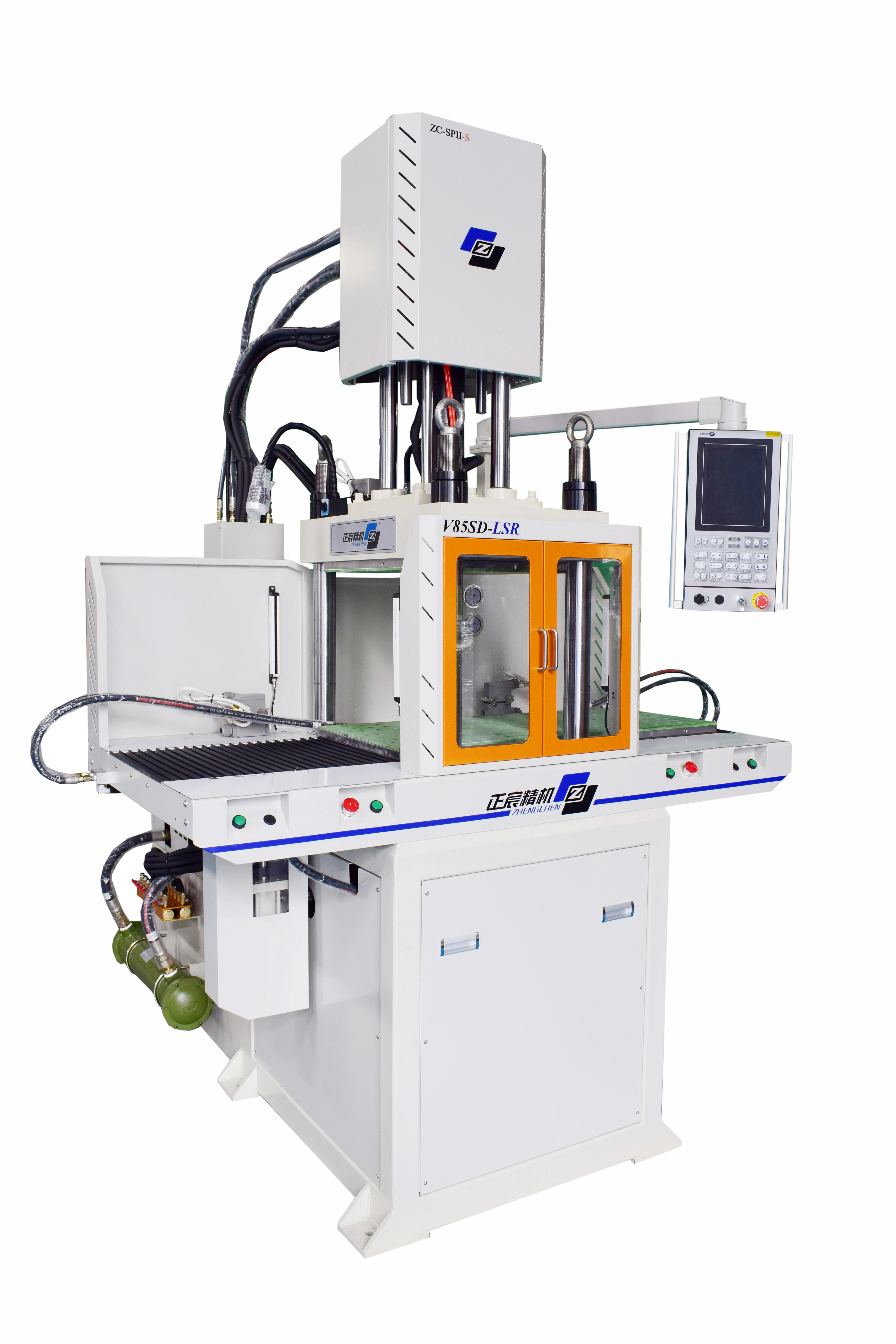
LSR molding has become an established production method since the late 1970s, and it has continued to evolve through tighter process control, improved shut-off and mixing systems, and growing use of robotic handling, cavity pressure monitoring, and multi-shot overmolding. Its sustainability profile is mixed but increasingly favorable: the process can reduce scrap through precise dosing and near-net-shape molding, yet it remains energy-intensive because molds are heated and some applications require post-curing to remove volatiles.
History and development
LSR emerged as a practical industrial material family in the late 1970s, when liquid silicone formulations and dedicated processing systems made high-volume molding of silicone elastomers more repeatable. This was an important shift from earlier silicone rubber processing, which relied more heavily on compression or transfer molding and was less suited to automation and fine-detail replication.
A second milestone was the maturation of liquid injection molding (LIM) equipment, which enabled accurate 1:1 metering, in-line mixing, and injection into heated molds without premature cure. This development transformed LSR from a specialty material into a scalable manufacturing platform for sealing, medical, and consumer products.
A third milestone has been the move toward system integration and multi-component molding, including LSR-to-thermoplastic overmolding for automotive and sanitary-engineering parts. More recent process advances include better static mixers, positive-shutoff nozzles, automated de-flashing, and software-guided process monitoring for medical and regulated production environments.
Technical overview
LSR is typically a two-part, platinum-catalyzed silicone elastomer supplied as separate components, commonly called Part A and Part B. The components are stored apart, metered in a precise ratio, mixed immediately before injection, and then cured in a heated mold.
Core process sequence
- Metering and mixing: Precision pumps deliver the two components from drums or pails into a static or dynamic mixer, usually at a 1:1 ratio.
- Injection: The mixed material is kept cool in the feed system and injected into a heated mold, often through a cold-runner or cold-deck arrangement.
- Vulcanization: Heat triggers the platinum-catalyzed cross-linking reaction, converting the liquid into a solid elastomer.
- Demolding: Parts are ejected automatically or with robotic assistance; the material’s release behavior often reduces or eliminates the need for mold release agents.
Typical process benchmarks
- Mold temperature: about 150–210 °C, with many applications clustered near 170–200 °C.
- Cycle time: commonly 20–180 seconds, depending on thickness, geometry, and formulation.
- Cure rule of thumb: roughly 4–6 seconds per millimeter of wall thickness is often cited in practice.
- Fill pressure: often in the range of 50–150 bar for many LSR parts.
- Throughput: production cells commonly range from small-part output in the hundreds of parts per hour to larger systems running at high-volume, multi-cavity rates; throughput depends heavily on cavity count, shot size, and cure time.
Engineering characteristics
LSR has very low initial viscosity, which allows it to fill fine details, thin walls, and complex sealing geometries with relatively low injection stress. This property is especially valuable for parts that require:
- sharp edges and fine ribs
- micro features and thin membranes
- smooth skin surfaces
- repeatable compression-set behavior
- clean parting lines and low contamination risk
The material also has a thermoset behavior: once cured, it cannot be remelted like a thermoplastic. That gives LSR parts excellent heat stability and elastic recovery, but it also means process errors cannot be corrected by reheating and remolding.
Dimensional and material-control considerations
Reported industry practice notes several important design and process facts:
- Shrinkage: about 2.0–3.5% during curing, requiring cavity oversizing.
- Post-cure: sometimes 1–4 hours at around 200 °C for low-volatility or critical sealing applications.
- Residual moisture: unlike dried hygroscopic thermoplastics, LSR processing is more concerned with contamination, trapped air, and volatile extraction than with pellet moisture control; conventional drying is generally not the central process variable.
Types and variations
LSR injection molding solutions are implemented in several machine-and-tool configurations.
| Type | Main feature | Typical use |
|---|---|---|
| Standard LSR injection molding cell | Dedicated LSR dosing unit attached to an injection press | General sealing, baby products, medical parts |
| Cold-runner LSR system | Keeps material cool until the cavity entrance | High-volume parts, reduced waste, better thermal control |
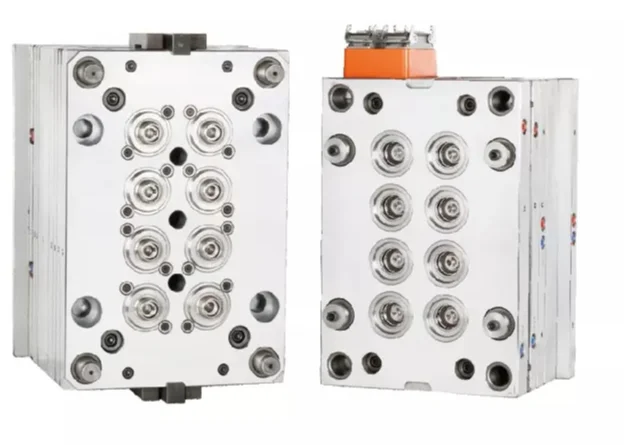
| Multi-cavity tool | Many cavities in one mold | Small medical parts, nipples, seals, keypads |
| LSR overmolding cell | LSR molded onto thermoplastic or metal inserts | Automotive seals, sanitary components, wearables |
| Micro-LSR molding system | Very small shot sizes and tight metering accuracy | Microfluidic, medical, and miniature electronics parts |
| Optical-grade LSR system | Controlled for clarity and low yellowing | Light guides, lenses, LED optics |
A practical distinction also exists between general-purpose LSR and medical/implant-grade LSR, the latter requiring tighter control of extractables, documentation, and validation.
Applications and uses
LSR injection molding is used where elasticity, thermal resistance, biocompatibility, and dimensional precision are all needed at the same time.
- Medical devices: seals, valves, diaphragms, syringe components, respiratory interfaces, and other patient-contact parts.
- Baby-care products: bottle nipples, pacifiers, and teething items, where purity and softness are central.
- Automotive: connector seals, gaskets, sensor boots, LED headlamp seals, and vibration-damping parts.
- Consumer electronics: waterproof gaskets, button covers, wearable bands, and soft-touch interfaces.
- Industrial and sanitary engineering: grommets, bellows, valves, and overmolded sealing components.
- Optics and lighting: transparent or translucent lenses and light-management parts in LED systems.
A comparatively poor-fit use is high-load structural components, because LSR is an elastomer optimized for sealing and flexibility rather than stiffness and load-bearing performance.
Tooling and machine requirements
A successful LSR solution depends on more than the resin itself. The system typically includes:
- a metering unit for precise A/B ratio control
- a static mixer or dynamic mixer
- a positive-shutoff nozzle to prevent drool and backflow
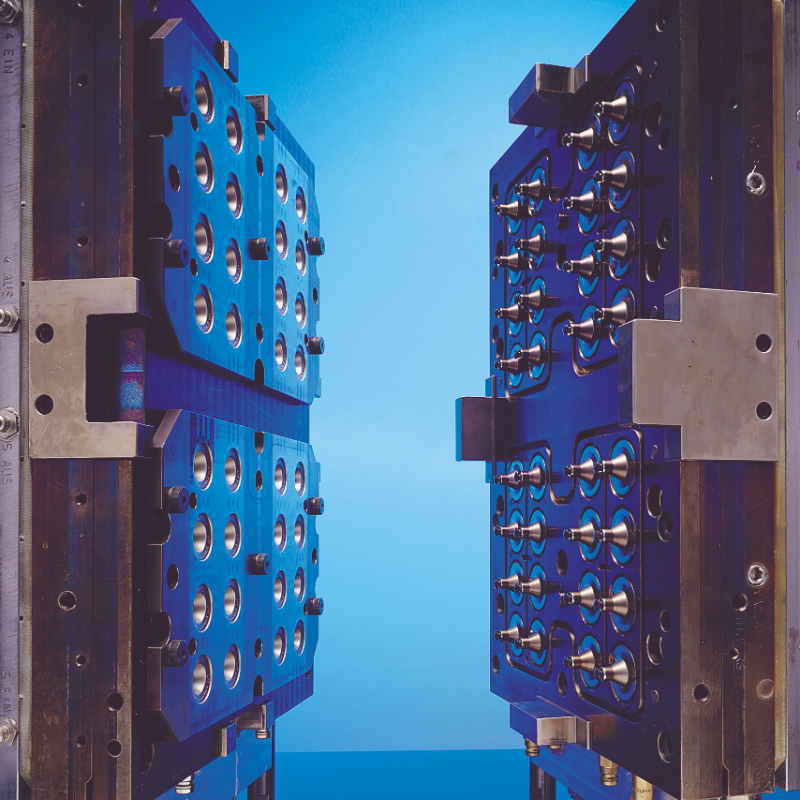
- a heated mold with controlled venting
- a cold runner or cold deck
- automated ejection or pick-and-place robotics
- optional vision inspection and leak testing
Tool design is particularly important because LSR’s low viscosity can expose weak shut-offs, poor venting, or mismatched parting lines. In practice, tight mold precision is essential for flash control, especially for medical and optical parts.
Technological innovations and automation
Modern LSR solutions increasingly emphasize closed-loop control and automation. Important innovations include:
- servo-driven dosing units for stable mix ratio
- in-line color and additive dosing
- robotic demolding and nesting
- camera-based inspection
- cavity pressure and temperature monitoring
- multi-shot molding with thermoplastics
- digital recipe control and traceability for regulated production
The strongest trend is toward fully integrated cells that combine molding, part handling, inspection, and packaging with minimal manual intervention. This reduces contamination risk and improves consistency, especially in medical manufacturing.
Environmental and sustainability aspects
LSR solutions can support sustainability goals in several ways. Accurate metering and efficient cold-runner design can reduce material waste, while automated demolding and repeatable cure cycles help lower reject rates. Long service life in sealing applications also supports durability and replacement reduction.
At the same time, the process has notable sustainability challenges:
- molds must be maintained at elevated temperature
- some products require energy-intensive post-curing
- silicone recycling infrastructure remains less mature than for many thermoplastics
- flash and purge waste can become significant if process control is poor
For manufacturers, the environmental balance depends heavily on tool design, cavity utilization, scrap recovery, and part lifetime rather than on the resin alone.
Economic and global market impact
LSR injection molding is economically attractive where part performance justifies higher tooling and cell complexity. The process is especially valuable in markets that demand high volumes, tight tolerances, and regulatory consistency.
Its global importance is strongest in:
- medical device supply chains
- automotive sealing and sensor systems
- consumer electronics waterproofing
- baby-care and food-contact products
- industrial sealing and electrical insulation
The broader market is shaped by trends toward miniaturization, electrification, medical outsourcing, and higher compliance burdens. These trends favor LSR because the process can produce repeatable soft parts at scale, but they also raise the bar for documentation, validation, and traceability.
Current challenges and innovations
The main engineering challenges are:
- flash control
- mix-ratio stability
- air entrapment and venting
- cure consistency across cavity count
- part deformation during demolding
- cleanliness in regulated production
- compatibility in multi-material assemblies
Recent innovation focuses on tighter process windows, improved mixer design, and better machine software. In medical and automotive applications, the emphasis is increasingly on predictive control and process data capture rather than simple cycle-time reduction.
Future outlook
LSR injection molding is likely to continue expanding where manufacturers need soft, clean, durable, and highly repeatable components. Growth opportunities are strongest in medical wearables, EV sealing systems, compact electronics, optics, and automated sanitary-engineering parts.
Future development is likely to emphasize:
- more multi-material and insert-molded assemblies
- lower waste through better cold-runner and dosing design
- improved digital validation for regulated sectors
- more energy-efficient heating and machine control
- specialized LSR grades for optical, conductive, and low-extractable applications
As machine control, material formulations, and mold engineering continue to advance, LSR injection molding will remain a core manufacturing solution for precision elastomer parts that must combine flexibility with strict performance control.
References
- •
Liquid silicone rubber injection molding. (n.d.). Protolabs. https://www.protolabs.com/services/injection-molding/liquid-silicone-rubber-molding/Link
- •
LSR injection molding guide: Process & design. (2026, April 20). Hordrt. https://www.hordrt.com/lsr-injection-molding-guide/Link
- •
Liquid silicone rubber injection molding. (n.d.). Qmed. https://qmed.com/sites/default/files/LSR-White-Paper_5-9-11_Jeff-Lefan.pdfLink
- •
LSR injection molding: Process, cost & materials (2026). (2026, June 15). Meitu-Engelhardt. https://meitu-engelhardt.com/lsr-injection-molding-guide/Link
- •
Liquid silicone rubber (LSR) injection molding. (2023, January 27). Simtec Silicone. https://www.simtec-silicone.com/capabilities/liquid-silicone-rubber-old/Link
- •
Injection molding of liquid silicone rubber. (2006, October 14). Wikipedia. https://en.wikipedia.org/wiki/Injection_molding_of_liquid_silicone_rubberLink
- •
LSR injection molding: Definition, benefits & applications. (2023, March 17). Jesilicone. https://www.jesilicone.com/blog/LSR-jnjection-molding-comprehensive-guide.htmlLink
- •
Comprehensive guide to LSR liquid silicone rubber. (n.d.). Churubber. https://www.churubber.com/en/articles/lsr-liquid-silicone-rubber-complete-guideLink
- •
Liquid silicone injection molding. (2026, June 4). Stockwell. https://www.stockwell.com/liquid-silicone-injection-molding/Link
- •
Liquid silicone rubber (LSR) injection molding. (2025, May 19). Fictiv. https://www.fictiv.com/articles/lsr-liquid-silicone-rubber-injection-moldingLink
- •
Liquid silicone rubber (LSR) injection molding. (n.d.). Trelleborg. https://www.trelleborg.com/en/medical/products-capabilities/custom-designs/lsr-injection-moldingLink
- •
What is injection molded liquid silicone rubber (LSR)? (2024, July 9). Jiga. https://jiga.io/injection-molding/silicon-injection-molding-guide/Link
- •
Liquid silicone rubber – injection molding guide. (n.d.). Pentasil. https://www.pentasil.eu/images/Liquid%20Silicone%20Rubber%20Users%20Guide.pdfLink
- •
Guide to liquid silicone rubber (LSR) material. (2026, August 27). Simtec Silicone. https://www.simtec-silicone.com/blogs/lsr-injection-molding/Link
- •
Guide to design & the LSR injection molding process. (2021, April 23). Simtec Silicone. https://www.simtec-silicone.com/blogs/injection-molding-guide-the-lsr-injection-molding-process/Link
- •
Designing for liquid silicone rubber. (n.d.). Protolabs. https://www.protolabs.com/resources/design-tips/designing-for-liquid-silicone-rubber/Link
- •
Liquid silicone rubber (LSR) molding machines. (2021, July 7). Negri Bossi. https://www.negribossi.com/en-us/technologies/lsr/Link
- •
Complete guide to liquid silicone rubber (LSR) injection molding. (2026, June 22). Meitu-Engelhardt. https://meitu-engelhardt.com/liquid-silicone-rubber-injection-molding/Link
- •
Liquid silicone rubber (LSR) injection molding. (n.d.). Cirtec Medical. https://www.cirtecmed.com/capabilities/liquid-silicone-rubber-injection-moldingLink
- •
MC-injection molding with liquid silicone rubber (LSR) and thermoplastics. (2023, October 2). PMC. https://pmc.ncbi.nlm.nih.gov/articles/PMC10574965/Link
- •
Liquid silicone rubber (LSR). (2025, November 5). Dow. https://www.dow.com/en-us/product-technology/pt-elastomers-rubber/pg-elastomers-lsr.htmlLink
- •
The science behind liquid silicone rubber injection molding. (2026, February 25). Moldtech Rubber. https://moldtechrubber.com/the-science-behind-liquid-silicone-rubber-injection-molding/Link
- •
Custom liquid silicone rubber molding. (n.d.). Xometry. https://www.xometry.com/capabilities/injection-molding-service/liquid-silicone-rubber-lsr/Link
- •
Molded silicone parts, liquid injection molding for LSR. (2026, June 4). Stockwell. https://www.stockwell.com/molded-lsr/Link
- •
The LSR injection molding process: Creating durable, biocompatible parts. (2025, December 9). ProMed Molding. https://promedmolding.com/blog/lsr-injection-molding-process/Link
- •
The history of LSR and injection molding. (2024, March 15). Newtop Silicone. https://www.newtopsilicone.com/revolutionizing-manufacturing-the-history-of-lsr-and-injection-molding/Link