
Introduction
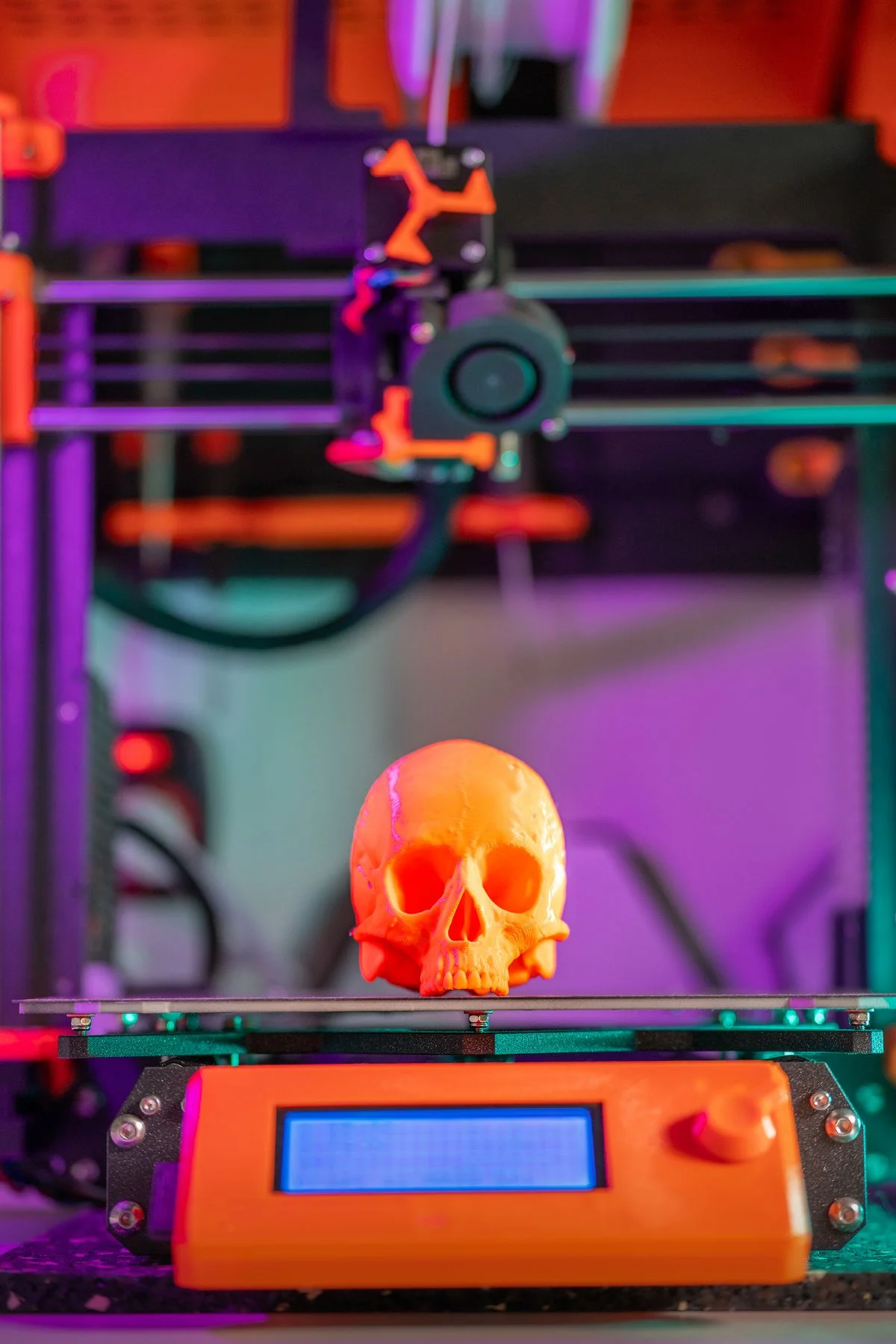
3D solutions in the plastics and manufacturing context usually refers to the integrated tools and workflows used to create, simulate, print, inspect, and optimize three-dimensional products and production aids. In industrial practice, the term most often covers 3D design software, additive manufacturing systems, metrology, reverse engineering, and digital workflow platforms rather than a single machine class.
Within plastics processing, 3D solutions have become important because they shorten development cycles, support rapid prototyping, enable jigs and fixtures, and increasingly support bridge production and end-use parts in low- to medium-volume applications. Their value is strongest where geometry is complex, customization is high, or lead time matters more than the lowest possible unit cost.
The field has evolved from desktop modeling and prototype visualization into an industrial production toolchain spanning CAD, simulation, additive manufacturing, inspection, and factory integration. Sustainability is now a central design criterion, with emphasis on material efficiency, reduced tooling waste, localized production, and better part consolidation, although energy use, post-processing, and feedstock cost remain important trade-offs.
History and Development
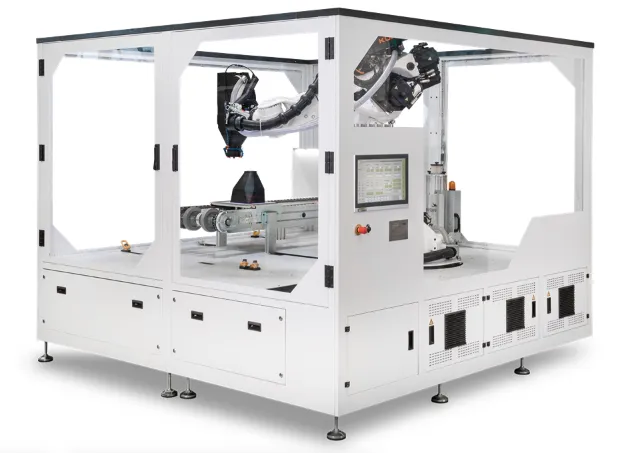
The modern 3D solutions landscape emerged from three major developments. First, 3D printing was invented by 3D Systems co-founder Charles Hull, establishing the technical foundation for additive manufacturing as an industrial process. Second, commercial CAD and 3D modeling software matured into mainstream engineering tools, making digital part definition and design iteration routine across manufacturing sectors. Third, industrial additive systems progressed from prototyping devices into production-grade platforms capable of printing plastics, metals, and specialized materials for end-use applications.
A useful milestone was the shift from concept modeling to functional prototyping and then to tooling and production aids, which expanded 3D solutions from design departments into the factory floor. Another milestone was the rise of application-specific systems, such as high-throughput resin, pellet-extrusion, and metal platforms designed for industrial throughput rather than hobby-scale output. A third milestone has been the integration of software, simulation, reverse engineering, and inspection into connected manufacturing workflows, allowing digital data to move more smoothly from design to validated part.
Key Characteristics and Technical Overview
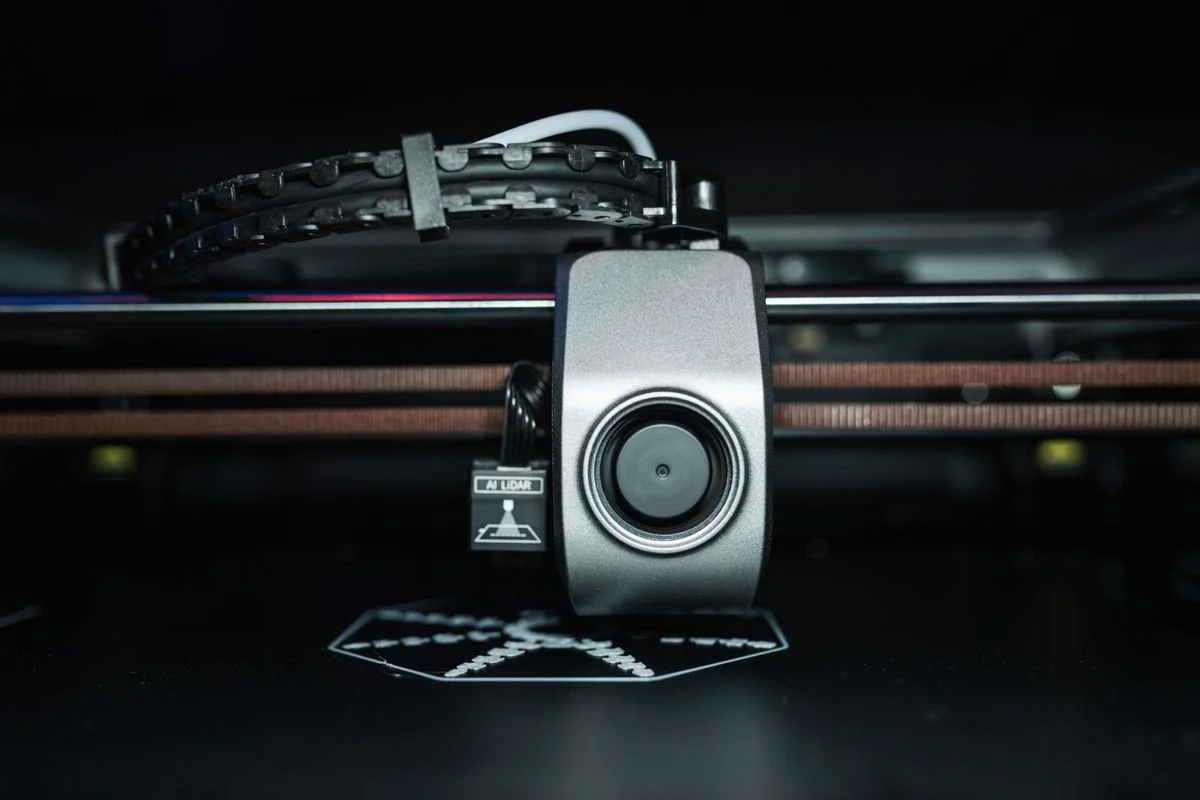
A 3D solutions workflow typically begins with 3D modeling, proceeds through simulation and print preparation, and then moves into fabrication and quality verification. In industrial use, this may include parametric CAD, scanning or reverse engineering, slicing or toolpath generation, machine calibration, in-process monitoring, and post-build inspection.
For additive manufacturing applications, the most common polymer-process families include FDM/FFF, vat photopolymerization, powder-based polymer processes, and pellet-based extrusion. Each has a different balance of dimensional accuracy, surface finish, throughput, and material cost.
Typical technical benchmarks include:
- Layer height: often about 0.05–0.30 mm for polymer printing, depending on technology and application.
- Build throughput: from small desktop parts to industrial systems capable of production-scale output; pellet extrusion and multi-laser polymer systems are generally used where higher throughput is required.
- Rotor speed / deposition rate equivalents: in extrusion-based systems, performance is often described by volumetric flow or mass throughput rather than rotor speed; pellet extrusion platforms are favored when high deposition rates are needed.
- Part quality: functional prototypes and tooling often prioritize strength, thermal stability, and repeatability over cosmetic finish.
- Specific energy use: additive manufacturing can reduce material waste, but machine energy per kilogram of delivered part varies widely by process, part geometry, and utilization, so energy efficiency must be assessed case by case.
For supporting post-processing and materials handling in additive workflows, residual moisture control is important for hygroscopic polymers such as PA, PETG, and TPU. In practice, industrial drying systems aim to keep feedstock moisture low enough to avoid bubbles, weak interlayer bonding, or dimensional defects; exact targets depend on resin and supplier specification, so process control is usually defined by material datasheet rather than a universal number.
In industrial plastics production, 3D-related workflows also interact with inspection and reverse engineering. Scanning and inspection software are used to compare printed or molded parts against CAD, while digital twin and simulation tools help predict deformation, shrinkage, and assembly fit.
Main Types and Variations
| Type | Main function | Typical strengths | Typical limitations |
|---|---|---|---|
| 3D CAD / modeling software | Creates digital part geometry | Design iteration, documentation, simulation readiness | Requires engineering skill and data discipline |
| Simulation and digital twin tools | Predicts performance and process behavior | Reduces trial-and-error, improves design robustness | Model quality depends on input data |
| 3D printing / additive systems | Fabricates parts layer by layer | Complex geometry, customization, short lead time | Post-processing, material cost, build size limits |
| 3D scanning / reverse engineering | Captures real geometry digitally | Replacement parts, legacy tooling, inspection | Accuracy depends on surface and scan conditions |
| Inspection and metrology solutions | Verifies dimensions and tolerances | Quality assurance, process validation | Requires calibration and trained operators |
Within additive manufacturing, the most relevant industrial variations for plastics are:
- FDM/FFF systems, commonly used for prototypes, fixtures, and durable functional parts.
- Vat photopolymerization systems, used for high-detail prototypes, dental work, and mold masters.
- Pellet extrusion systems, used for large-format parts, furniture-scale components, and tooling where throughput and low material cost are important.
- Hybrid solutions, combining software, printers, and inspection in one connected workflow.
Applications and Uses
3D solutions are used across many sectors because they support both development speed and part customization.
- Automotive: prototypes, fixtures, jigs, custom tooling, replacement parts, and lightweight functional components.
- Aerospace and defense: lightweight brackets, ducts, housings, test articles, and complex tooling where weight and performance matter.
- Medical and dental: surgical guides, implants, orthotics, dentures, aligner tooling, and patient-specific devices.
- Industrial manufacturing: manufacturing aids, end-of-arm tooling, assembly fixtures, maintenance parts, and low-volume end-use components.
- Architecture and construction: presentation models, scale prototypes, and concept visualization.
- Consumer products: customized accessories, footwear, eyewear, furniture components, and product visualizations.
- Education and research: teaching models, lab prototypes, and experimental hardware.
One poor-fit use case is high-volume, lowest-cost commodity parts with simple geometry, where conventional injection molding usually remains more economical once tooling is amortized.
Technological Innovations and Automation
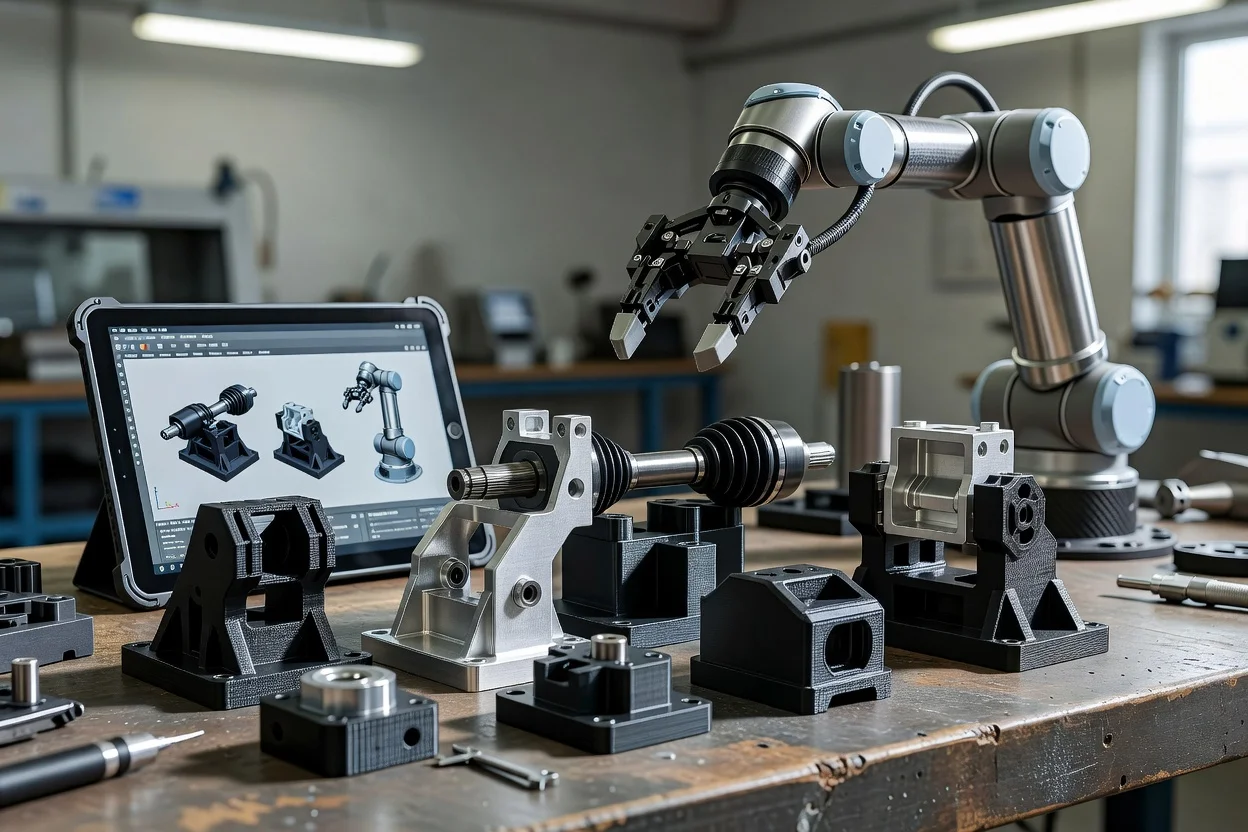
Recent development in 3D solutions has focused on automation, connectivity, and application-specific productivity. Software platforms increasingly connect design, simulation, print preparation, and machine management across multiple sites.
Notable innovation areas include:
- AI-assisted design optimization for part consolidation and weight reduction.
- Automated inspection and reverse engineering for faster quality decisions.
- High-throughput additive systems for large-format or short-run production.
- Digital thread integration linking CAD, production, and supply chain data.
- Application-specific materials for heat resistance, biocompatibility, or structural performance.
For plastics manufacturers, automation is especially valuable where 3D solutions support tooling, maintenance, and spare-parts logistics. In those cases, the digital file becomes a stored asset that can be produced on demand, reducing inventory pressure and response time.
Environmental and Sustainability Aspects
3D solutions can reduce waste by producing only the geometry required, by enabling part consolidation, and by making localized or on-demand production feasible. This is particularly relevant for tooling, prototypes, and spare parts, where traditional subtractive manufacturing or long supply chains may generate avoidable material and transport burdens.
However, sustainability benefits are not automatic. Additive manufacturing may involve energy-intensive printers, support structures, failed builds, and post-processing steps such as curing, cleaning, or finishing. The environmental performance therefore depends on machine utilization, recycling of scrap, polymer choice, and how much conventional tooling or warehousing is displaced.
A strong sustainability case exists when 3D solutions:
- reduce scrap from machining or trimming,
- eliminate molds or tooling for short runs,
- extend the life of legacy equipment through spare-part reproduction,
- enable lighter parts that lower downstream energy use.
Economic and Global Market Impact
Economically, 3D solutions reduce the barrier between concept and physical part, which improves product development speed and can lower the cost of customization. This is why industrial users often deploy them first in prototyping, fixtures, and bridge production, where return on investment can be clearer than in mass production.
The market is also shaped by software ecosystems. Companies offering integrated design, simulation, and production platforms have an advantage because manufacturers increasingly want a connected workflow rather than isolated tools. At the same time, specialist suppliers continue to compete through materials performance, application engineering, and printer throughput.
Global adoption is broadening across aerospace, medical, automotive, industrial equipment, and consumer goods, with demand strongest where customization, geometry complexity, or supply-chain resilience justify the cost premium.
Current Challenges and Innovations
Despite rapid progress, several challenges remain:
- Unit cost: 3D solutions are still expensive for simple, high-volume parts compared with conventional molding.
- Qualification and repeatability: regulated sectors require validation, traceability, and stable process windows.
- Surface finish and tolerances: many printed parts need secondary machining or finishing.
- Material limits: not every polymer grade is suited to all additive processes.
- Workforce skills: successful deployment requires both design and process expertise.
Current innovation is addressing these issues through better materials, faster printers, in-process sensing, and tighter software integration. Another important trend is the growing use of 3D solutions for manufacturing aids and point-of-need production, where even modest gains in lead time can outweigh higher per-part cost.
Future Outlook
The future of 3D solutions in plastics processing is likely to be defined by greater industrialization, broader software integration, and more application-specific materials. Large-format polymer printing, multi-material systems, and AI-assisted engineering are expected to expand the number of parts that can move from prototype to production.
The strongest growth opportunities are likely to remain in:
- tooling and fixtures,
- spare parts and maintenance,
- customized medical and dental products,
- low-volume end-use parts,
- hybrid manufacturing cells combining printing, scanning, and inspection.
In plastics manufacturing specifically, 3D solutions are becoming less of a novelty and more of a digital production capability that complements injection molding, extrusion, thermoforming, and machining rather than replacing them.
Summary
3D solutions are the digital and physical tools that support three-dimensional design, additive manufacturing, inspection, and production optimization. In the plastics industry, they are most valuable for rapid prototyping, tooling, short-run production, customization, and supply-chain agility, while their long-term significance will depend on continued progress in speed, cost, repeatability, and sustainability.
References
- •
3D Tech Applications - CDG. (2026, April 22). https://cdg.uk.com/3d-tech-applications/Link
- •
3D Cloud: 3D Product Visualization Software. (2026, August 24). https://3dcloud.com/Link
- •
Shapr3D: 3D Modeling software | Windows & Mac & iPad. (n.d.). https://www.shapr3d.com/Link
- •
Application of 3D printing in industry - Sinterit. (2025, September 5). https://sinterit.com/3d-printing-guide/applications-of-3d-printing/application-of-3d-printing-in-industry/Link
- •
List of 3D modeling software - Wikipedia. (2009, July 24). https://en.wikipedia.org/wiki/List_of_3D_modeling_softwareLink
- •
10 Applications of 3D Printing: Uses and Examples. (2023, May 18). https://www.xometry.com/resources/3d-printing/applications-of-3d-printing/Link
- •
Top 10 3D Printing Applications and Examples for 2025. (2025, March 24). https://www.gs-proto.com/blog/3d-printing-applications/Link
- •
3D Technology in the Real World: 5 Uses You'll Actually See. (2025, October 2). https://www.linkedin.com/pulse/3d-technology-real-world-5-uses-youll-actually-see-2025-ofp6fLink
- •
12 applications of industrial 3D printer - 3DGence. (2023, November 15). https://3dgence.com/america/3dnews/10-applications-of-industrial-3d-printer/Link
- •
APPLICATIONS OF 3D PRINTING IN A MULTITUDE OF INDUSTRIES. (n.d.). https://s3.ap-southeast-1.wasabisys.com/ijmanuscripts/manuscripts/v10i3/V10I3-1170.pdfLink
- •
Solutions | Third Dimension. (2022, January 1). https://www.3rdim.com/solutionsLink
- •
Industries | Dassault Systèmes. (2022, August 17). https://www.3ds.com/make/solutions/industriesLink
- •
3D solutions. (n.d.). https://www.3d-solutions.si/en/Link
- •
3D Printing Applications: 12 Industries and Examples. (2024, June 24). https://www.raise3d.com/blog/3d-printing-applications/Link
- •
Applications of 3D printing - Wikipedia. (2017, February 24). https://en.wikipedia.org/wiki/Applications_of_3D_printingLink
- •
Five Industries Utilizing 3D Printing. (2023, December 19). https://markforged.com/resources/blog/five-industries-utilizing-3d-printingLink
- •
Transforming Industries, Markets and Customer Experiences. (2022, February 15). https://www.3ds.com/industriesLink
- •
Which Industries Use 3D Printing? 10 Game-Changing Sectors in 2025. (2025, June 28). https://www.3d-printed.org/which-industries-use-3d-printing/Link
- •
Product Portfolio | Dassault Systèmes. (2022, August 3). https://www.3ds.com/productsLink
- •
Top 10 Industries Using 3D Printing. (2017, September 5). https://www.treatstock.com/blog/top-10-industriesLink
- •
Applications. (n.d.). https://go3d.in/applicationsLink
- •
25 (Unexpected) 3D Printing Use Cases. (2022, February 15). https://formlabs.com/blog/25-unexpected-3d-printing-use-cases/Link
- •
3D design software - Adobe Substance 3D. (2026, January 12). https://www.adobe.com/products/substance3d.htmlLink
- •
10 Best 3D Modeling Software That I Reviewed (and Loved). (2025, May 6). https://learn.g2.com/best-3d-modeling-softwareLink
- •
What can you make with a 3D printer? (n.d.). https://www.hp.com/us-en/printers/3d-printers/learning-center/what-can-you-make-with-3d-printer.htmlLink
- •
3D Design Software | 3D CAD Design. (2026, March 17). https://www.autodesk.com/solutions/3d-design-softwareLink
- •
Industrial Applications of 3D Printing: The Ultimate Guide. (2019, January 25). https://www.amfg.ai/post/industrial-applications-of-3d-printing-the-ultimate-guideLink
- •
Rhino - Rhinoceros 3D. (n.d.). https://www.rhino3d.com/Link
- •
Online CAD software | 3DEXPERIENCE CATIA - Dassault Systèmes. (2026, July 14). https://www.3ds.com/products/catia/3dexperience-catiaLink
- •
Software. (2017, January 16). https://www.3dsystems.com/softwareLink
- •
Industries. (n.d.). https://3dprototechsolutions.com/industriesLink
- •
3D Systems Transforming Manufacturing with Application-Specific Solutions at RAPID + TCT 2025. (2026, May 5). https://www.3dsystems.com/press-releases/3d-systems-transforming-manufacturing-application-specific-solutions-rapidtct-2025Link
- •
3D Systems - Wikipedia. (2006, March 1). https://en.wikipedia.org/wiki/3D_SystemsLink
- •
What Industries Use 3D Printing? (2025, February 17). https://www.sharrettsplating.com/blog/3d-printing-industries/Link
- •
Dassault Systèmes: Virtual Worlds for Real Life. (2026, August 4). https://www.3ds.com/Link
- •
3D Modeling Uses: 9 Industries that Can't Do Without it. (2019, January 2). https://www.cadcrowd.com/blog/3d-modeling-uses-9-industries-that-cannot-do-without-it/Link
- •
3D Manufacturing for 3D Printed Parts. (2023, June 14). https://www.3dsystems.com/additive-manufacturingLink
- •
Introduction to 3D Buildings—ArcGIS Solutions | Documentation. (2025, October 28). https://doc.arcgis.com/en/arcgis-solutions/11.5/reference/introduction-to-3d-buildings.htmLink
- •
Cutting-Edge 3D Printing Technologies from Office to Factory Floor | 3D Systems. (2024, May 29). https://www.3dsystems.com/Link
- •
What Is a 3D Toolkit? | Definition, Examples & SDK Solutions. (2024, January 1). https://www.spatial.com/glossary/3d-toolkitLink
- •
What's the meaning of 3d | Filo. (2025, November 21). https://askfilo.com/user-question-answers-smart-solutions/whats-the-meaning-of-3d-3432343538313634Link
- •
About 3D Systems. (2017, January 20). https://www.3dsystems.com/about-usLink
- •
3D Problem-Solving means listening, tearing down silos and sending people home happy - UAB. (2022, January 10). https://www.uab.edu/reporter/research-innovation/3d-problem-solving-means-listening-tearing-down-silos-and-sending-people-home-happyLink
- •
3D Definition & Meaning. (n.d.). https://www.merriam-webster.com/dictionary/3DLink
- •
3D Visualization Definition - Arena Solutions. (2025, December 2). https://www.arenasolutions.com/resources/glossary/3d-visualization/Link
- •
3D - Wikipedia. (2002, February 25). https://en.wikipedia.org/wiki/3DLink
- •
3-D. (2025, January 1). https://dictionary.cambridge.org/dictionary/english/3-dLink
- •
Introduction to 3D (video) | Coordinates | Khan Academy. (2025, August 1). https://www.khanacademy.org/math/class-11-tg/xf4336c7640240adb:three-dimensional-coordinates/xf4336c7640240adb:coordinates/v/introduction-to-3dLink
- •
3D - Definition, Meaning & Synonyms - Vocabulary.com. (n.d.). https://www.vocabulary.com/dictionary/3DLink
- •
3-D | Stereoscopic, Animation, & Imaging. (2025, September 11). https://www.britannica.com/technology/3-DLink
- •
3D Definition & Meaning. (n.d.). https://www.dictionary.com/browse/3dLink
- •
3D Solutions - LinkedIn. (n.d.). https://www.linkedin.com/company/3dsolutions-llcLink
- •
What is 3D (three dimensions or three-dimensional)? (2024, March 1). https://www.techtarget.com/whatis/definition/3-D-three-dimensions-or-three-dimensionalLink