
Introduction
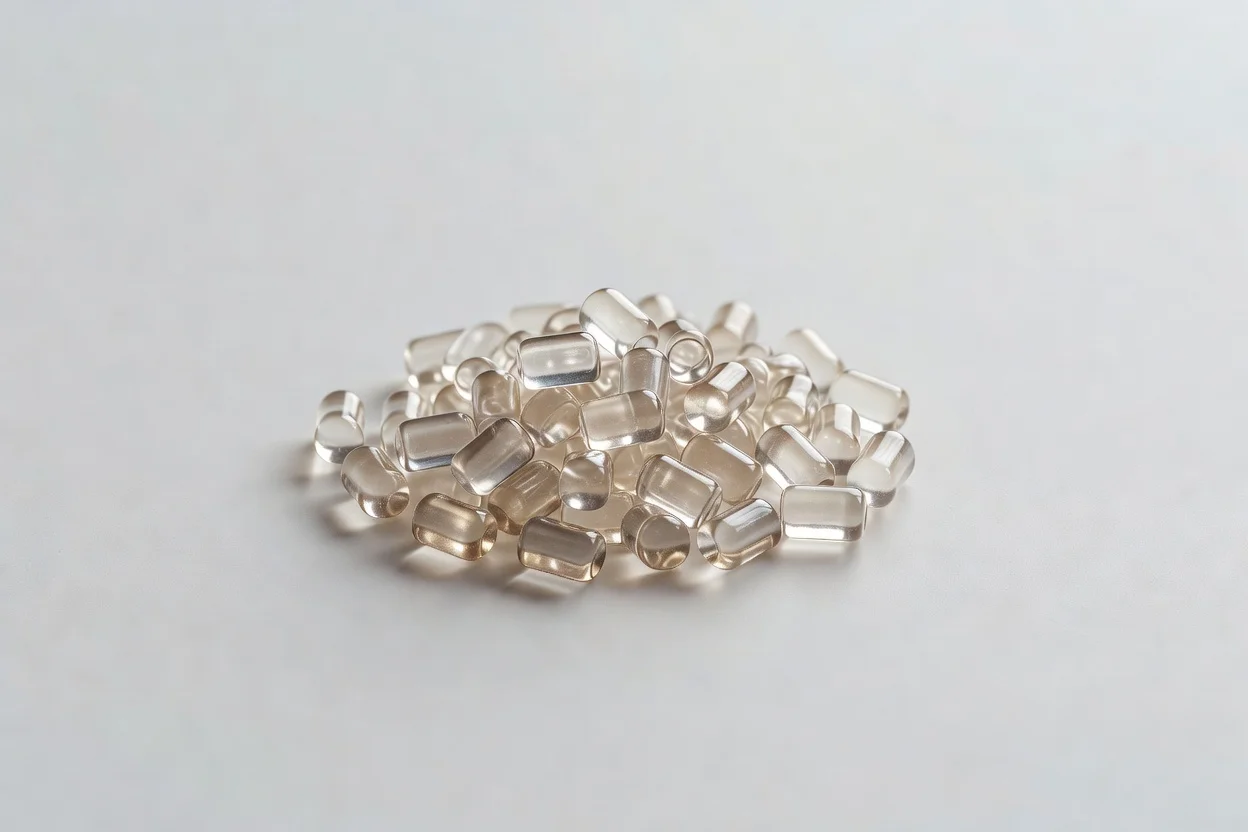
Polyethylene furanoate (PEF) is a bio-based polyester positioned as one of the most advanced renewable alternatives to PET in packaging and selected fiber applications. It is primarily made from 2,5-furandicarboxylic acid (FDCA) and ethylene glycol, and its furan-based backbone gives it a distinctive combination of high gas-barrier performance, strong mechanical properties, and full recyclability potential.
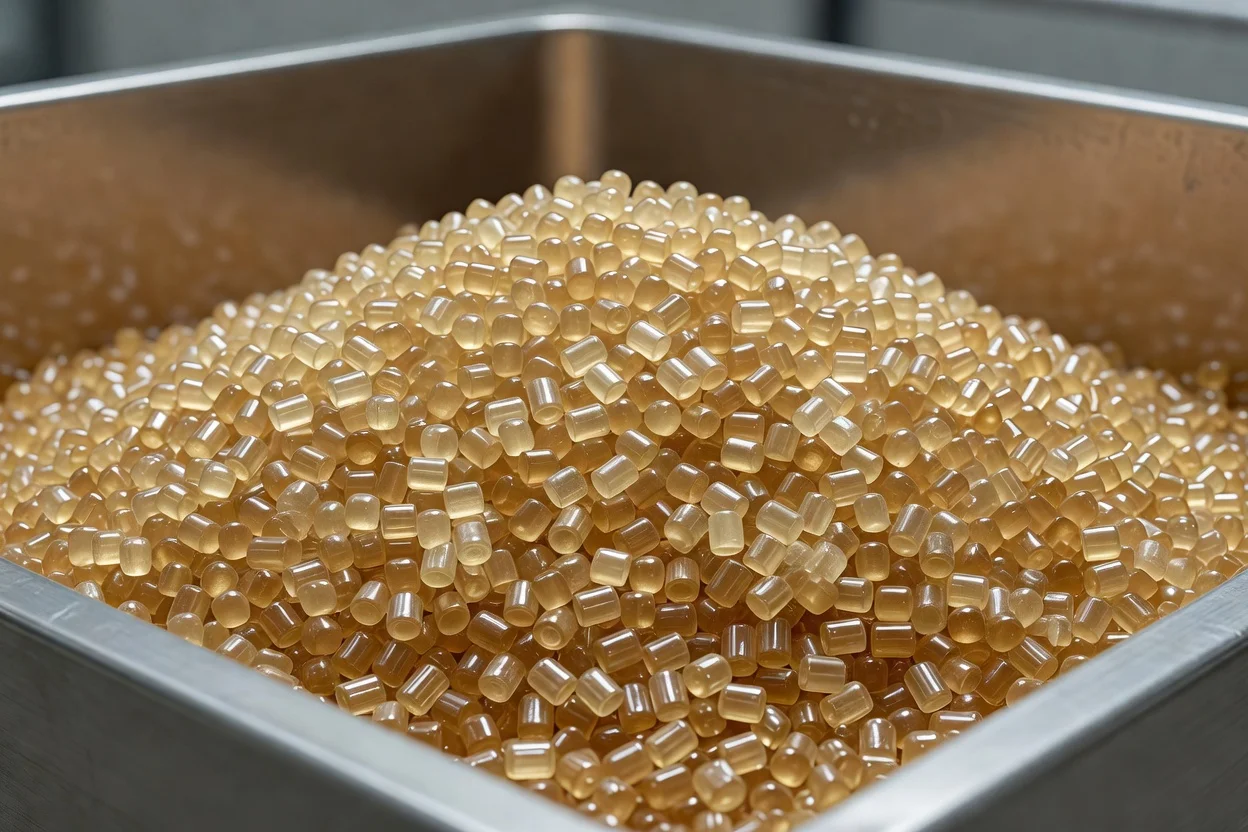
PEF has attracted sustained interest because it can be produced from renewable feedstocks while offering property upgrades that are difficult to achieve simultaneously in conventional polyesters: better oxygen and carbon-dioxide barrier, higher stiffness and tensile strength, and a higher glass-transition temperature that improves hot-fill and ambient thermal stability. Its development reflects a broader shift in the plastics industry toward drop-in or near-drop-in biobased materials that can fit existing polyester infrastructure with limited process changes.
Although PEF has a long scientific history, modern commercial attention accelerated after FDCA was identified as a promising biobased substitute for terephthalic acid in the early 2000s. Today, the material is viewed as a candidate for premium food and beverage packaging, technical films, and some fiber uses, while its high cost, limited monomer scale, and end-of-life sorting requirements still constrain adoption.
History and Development
PEF was reported in the patent and scientific literature decades ago, but it remained largely a laboratory curiosity until the rise of industrial biorefining and interest in FDCA as a renewable platform chemical. The material gained renewed momentum after 2004, when FDCA was highlighted as a bio-based replacement for terephthalic acid in polyester production.
Early synthesis routes used conventional melt polycondensation of FDCA and ethylene glycol, often requiring high temperatures and strong vacuum to achieve high molecular weight. More recent work has explored ring-opening polymerization of cyclic intermediates and other process intensification strategies to improve molecular weight control, reduce residence time, and enable bottle-grade PEF. These developments matter because industrial viability depends not only on properties but also on scalable polymerization, viscosity control, and downstream conversion into bottles, films, or fibers.
Commercial and pre-commercial efforts have also focused on integrating PEF into existing PET-oriented equipment. This is strategically important because the plastics industry generally favors materials that can use established polyester processing lines, including extrusion, injection stretch blow molding, thermoforming, and fiber spinning.
Chemical Structure and Key Properties
PEF is an alipharomatic polyester: one part of the chain comes from ethylene glycol, while the acid component contains a furan ring rather than a benzene ring. That structural change is the origin of most of its performance differences versus PET.
The furan ring introduces chain rigidity and a geometric “kink” that reduces segmental mobility, which helps explain the material’s higher glass-transition temperature and much lower gas permeability. At the same time, the lower melting point compared with PET can reduce some processing energy demands, particularly in remelting and post-processing steps.
Key property profile
| Property | PEF | Typical significance |
|---|---|---|
| Bio-based content | Up to 100% | Can be made from renewable feedstocks if both monomers are biomass-derived |
| Oxygen barrier | About 6 to 10 times better than PET in many reports | Extends shelf life for oxygen-sensitive foods and beverages |
| Carbon dioxide barrier | Often reported as 4 to 19 times better than PET | Useful for carbonated beverages and aroma retention |
| Water-vapor barrier | Better than PET, but improvement is smaller than for O2/CO2 | Helps in packaging, though not a universal moisture-barrier solution |
| Glass-transition temperature | Roughly 75 to 88 °C | Improves heat resistance and dimensional stability |
| Melting temperature | Roughly 210 to 230 °C | Lowers some processing temperatures relative to PET |
| Stiffness and tensile strength | Higher than PET in many studies | Enables lightweighting and thinner-gauge articles |
Practical limits and workarounds
- Lower melting temperature → easier softening during some high-heat applications → workaround: optimize thermal design, hot-fill protocol, crystallization management, or use multilayer structures where appropriate.
- Higher gas barrier but not universal moisture-proofing → excellent for oxygen and CO2, less transformative for all water-sensitive uses → workaround: combine with coatings, blends, or barrier-layer architectures when extreme moisture protection is required.
- Feedstock and monomer cost sensitivity → FDCA and biobased ethylene glycol are not yet as commoditized as PTA and fossil MEG → workaround: scale biorefinery integration, improve FDCA yield, and use catalyst/process intensification.
- Recycling stream compatibility concerns → PEF is recyclable, but it is chemically distinct from PET → workaround: sorting discipline, controlled limited-content blending where validated, and dedicated collection or labeling systems.
Production Processes and Raw Feedstocks
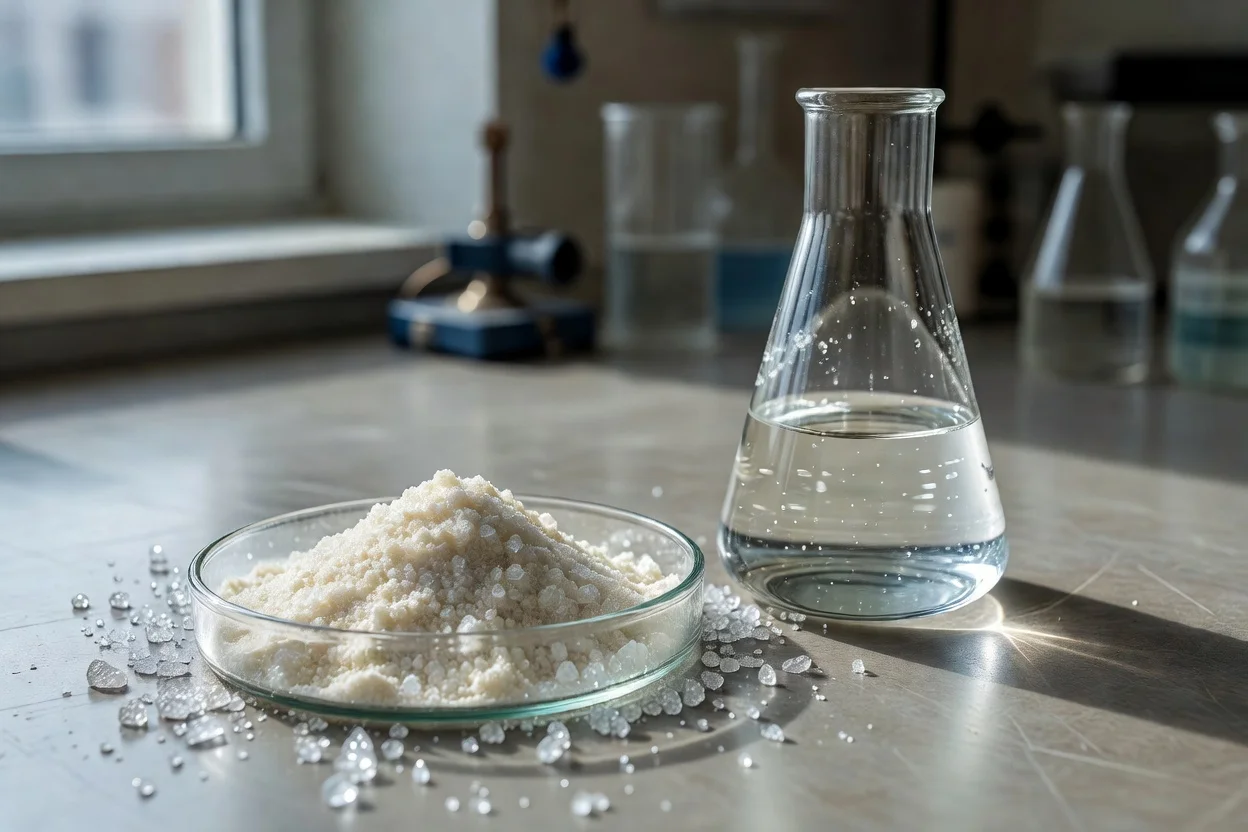
PEF is typically produced by polycondensation of FDCA with ethylene glycol, or through routes that first create a cyclic intermediate and then use ring-opening polymerization. In both cases, the core industrial logic is the same: build a high-molecular-weight polyester with tight control over intrinsic viscosity, residual monomers, and thermal behavior.
Main feedstocks
- FDCA: the key dicarboxylic-acid monomer and the defining renewable replacement for terephthalic acid.
- Ethylene glycol: can be derived from bio-based sources or conventional petrochemical routes, depending on supply strategy.
- Biomass carbohydrates: in many proposed routes, sugars are dehydrated or upgraded to furan intermediates before FDCA is made.
Typical synthesis pathway
- Biomass-derived sugars are converted into furan intermediates such as HMF or related compounds.
- These intermediates are oxidized to FDCA.
- FDCA reacts with ethylene glycol by esterification or transesterification.
- Polycondensation, often under elevated temperature and reduced pressure, builds the final polymer.
- Solid-state polymerization or related finishing steps may be used to raise molecular weight for bottle-grade or fiber-grade applications.
Industry leadership
The leading industrial interest in PEF has been associated with companies and technology developers working at the intersection of biorefining and polyester processing, especially groups advancing FDCA production and PEF scale-up. Sulzer has positioned PEF as a next-generation polyester application area and highlights major property and sustainability advantages relative to PET. Avantium has been one of the best-known technology developers in the field and has contributed substantially to the visibility of FDCA and PEF in the packaging sector.
Applications and End-Use Markets
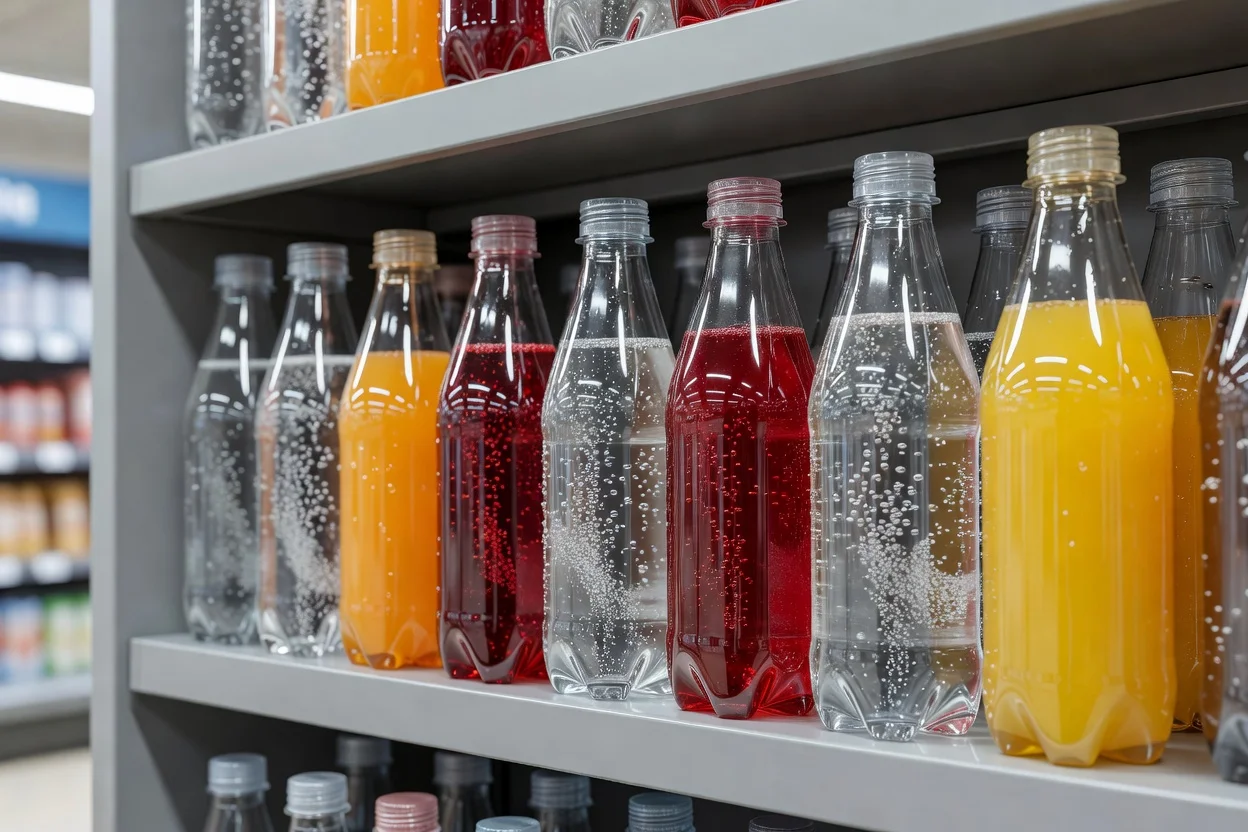
PEF’s strongest commercial case is in high-performance packaging, where barrier performance can translate into shelf-life extension, thinner walls, and lighter packs.
Major application sectors
- Beverage bottles → usually bottle-grade, high-IV PEF; best suited where oxygen or CO2 barrier performance is valuable.
- Food packaging films and trays → oriented film or thermoformed-sheet grades; particularly relevant for oxygen-sensitive foods, aroma retention, and premium fresh-food packs.
- Technical fibers and yarns → melt-spun fiber grades; attractive where higher modulus and thermal stability are useful.
- Nonwovens → specialty grades for filtration or thermal-function fabrics; research is expanding, especially for high-temperature thin webs.
- Multilayer packaging → barrier layer or functional layer in structures that combine PEF with other polymers or coatings.
- Poor-fit use: extreme high-heat engineering parts → the polymer is not a natural substitute for high-temperature engineering plastics, because its melting point and thermal envelope are optimized more for packaging and fibers than for under-the-hood or structural engineering uses.
Usual grade-to-process matching
| End use | Usual grade | Typical process |
|---|---|---|
| Bottles for water, juices, carbonated drinks | Bottle-grade PEF | Injection stretch blow molding |
| Food films | Film-grade PEF | Cast film, blown film, orientation |
| Trays and containers | Sheet/thermoforming grade | Extrusion and thermoforming |
| Fibers | Fiber-grade PEF | Melt spinning, drawing, heat-setting |
| Nonwovens | Fine-viscosity or spunbond/meltblown-adapted grades | Nonwoven spinning and web formation |
The most compelling market logic for PEF is not broad substitution across all plastics, but targeted substitution where a premium barrier or thermal-performance advantage can justify the cost of a biobased polyester.
Environmental and Sustainability Aspects
PEF is widely discussed as a fully biobased and recyclable polyester, but it is not biodegradable under normal current-use conditions. That distinction is important: the sustainability case for PEF is rooted primarily in renewable carbon sourcing, potential greenhouse-gas reduction, and improved material efficiency, not in compostability.
Recent industry-oriented analyses and process assessments suggest that PEF can reduce non-renewable energy use and greenhouse-gas emissions relative to PET, although exact values depend on feedstock origin, process energy, and allocation assumptions. One widely cited industry estimate places cradle-to-grave non-renewable energy use at roughly 40% to 50% of PET and greenhouse-gas emissions at roughly 45% to 55% lower than PET.
Recyclability and circularity
- PEF can be mechanically recycled in principle.
- Compatibility with PET recycling streams is a key practical question, because even small amounts of a new polyester can influence color, crystallization, or downstream properties.
- The most credible circularity pathway is likely controlled collection, clear labeling, and either dedicated recycling or tightly managed limited blending where validated.
Bio-based alternative landscape
PEF is often compared with PET, PLA, and other bioplastics, but it occupies a distinct niche.
- Compared with PET, PEF offers better barrier and similar or improved mechanical performance.
- Compared with PLA, PEF generally offers better heat resistance and a more mature polyester-like performance profile for bottles and barrier packaging.
- Compared with multilayer barrier laminates, PEF may reduce material complexity if its barrier is sufficient on its own.
Economic and Global Market Impact
According to recent industry analyses, the PEF market remains small but is expected to grow from a niche base as packaging customers seek lower-carbon, higher-performance materials. One market estimate places the global market at USD 36.66 million in 2024, with growth projected toward USD 54.15 million by 2030.
The economics of PEF are shaped by several structural factors:
- Feedstock economics: FDCA production cost remains a major hurdle because it is not yet a mature commodity on the scale of PTA.
- Scale and capital intensity: dedicated biorefinery and polyester assets require large up-front investment and stable offtake.
- Performance premium: in applications where shelf-life extension or downgauging is valuable, PEF can partially offset its higher resin cost.
- Brand and regulation: packaging converters and consumer brands increasingly value renewable-content and lower-emission materials, especially where food-contact and recycling claims are supportable.
In market terms, PEF is less likely to replace PET universally than to win premium niches where performance, decarbonization, and brand differentiation align.
Current Challenges and Innovations
PEF’s technical case is strong, but its commercial pathway still depends on innovation across the value chain.
Main challenges
- Monomer scale-up: FDCA supply remains limited relative to the scale required for mass packaging markets.
- Processing window management: PEF’s lower melting point and different crystallization behavior complicate some established PET processing assumptions.
- Recycling system integration: sorting and polymer identification remain necessary to avoid contamination of PET streams.
- Cost competitiveness: the polymer must either fall in cost or deliver enough value in downgauged or shelf-life-sensitive applications to justify adoption.
Active innovation areas
- Catalyst development for faster, cleaner polycondensation and higher molecular weight.
- Ring-opening polymerization routes for more efficient bottle-grade polymer production.
- Copolymer and blend design to tune crystallization, impact resistance, or processing stability.
- Barrier-layer engineering in multilayer films and containers.
- Fiber and nonwoven processing for technical textiles and filtration materials.
A useful chemical example is the use of very small amounts of additives or processing aids to control melt behavior and color formation during polyester processing; in PEF, such formulation work is still important because polyesters are highly sensitive to moisture, thermal degradation, and residence time. In practice, the molecular-level goal is to preserve chain length while preventing hydrolysis and side reactions during extrusion and melt finishing.
Future Outlook
PEF’s future depends on whether it can become more than a promising alternative to PET and instead establish a durable position in premium packaging and specialty fiber markets. The most likely growth path is not commodity displacement, but selective adoption where barrier performance, renewable content, and recyclability together create measurable value.
If FDCA production scales successfully and recycling pathways become clearer, PEF could play a significant role in next-generation beverage bottles, food packaging, and technical textiles. Its combination of renewable origin and strong functional performance gives it strategic relevance in the broader transition from fossil-derived polymers to lower-carbon material systems.
Summary
PEF is a renewable polyester with a PET-like backbone but notably better barrier and stiffness performance, making it especially attractive for packaging and some fiber applications. Its main strengths are high oxygen and CO2 barrier, higher glass-transition temperature, and the possibility of full biobased sourcing, while its main constraints are feedstock cost, scale-up complexity, and recycling-system integration.
References
- •
Poly (ethylene furanoate) (PEF): Advances in synthesis. (2026, March 24).Link
- •
Polyethylene furanoate (PEF) – a biobased alternative to PET. (n.d.).Link
- •
Polyethylene furan-2,5-dicarboxylate. (2016, May 31).Link
- •
Polyethylene furanoate (PEF). (n.d.).Link
- •
Biobased polyethylene furanoate: Production processes. (n.d.).Link
- •
Polyethylene furanoate (PEF). (n.d.).Link
- •
Polyethylene furanoate in science and health: A bio-based polymer. (2025, April 29).Link
- •
Polyethylene furanoate (PEF) as a renewable bioplastic. (2021, February 19).Link
- •
Technology profile: Polyethylene furanoate production (PEF). (2019, May 3).Link
- •
Polyethylenfuranoat. (2018, November 22).Link
- •
Electrospun biomass polyethylene furanoate nonwoven substrates. (n.d.).Link
- •
Polyethylene furanoate. (n.d.).Link
- •
Poly(ethylene furanoate) along its life-cycle from a. (2021, February 23).Link
- •
Polyethylen-furan-2,5-dikarboxylát. (2023, February 1).Link
- •
Bottle-grade polyethylene furanoate from ring-opening. (2018, July 24).Link
- •
PEF - the polymer for the future. (n.d.).Link
- •
Polyethylene furanoate (PEF) production from FDCA. (2025, July 31).Link
- •
Bottle-grade polyethylene furanoate from ring-opening. (2018, July 24).Link
- •
Solid-state polymerization of poly(ethylene furanoate) biobased. (2018, April 25).Link
- •
A perspective on PEF synthesis, properties, and end-life. (2020, July 31).Link
- •
Meltblow processing of poly (ethylene furanoate)-bio-based polyester nonwovens. (2025, January 24).Link
- •
Diffusion behavior of polyethylene furanoate (PEF) and Tritan. (2025, October 2).Link
- •
A bottom-up synthetic approach to polyethylene furanoate. (2026, January 6).Link
- •
Is PEF the future of fresh food packaging? (2025, May 16).Link
- •
Polyethylene furanoate market size report, 2025-2030. (n.d.).Link