
Introduction
Thermoplastic polyurethane (TPU) is a family of thermoplastic elastomers that combines rubber-like flexibility with plastic-like melt processability. It occupies a distinctive position in the plastics value chain because it can be formulated to span soft, elastic grades and relatively hard, engineering-like grades, making it useful in applications ranging from footwear and cable jacketing to medical tubing, films, seals, and protective automotive layers.
TPU is not a single polymer but a class of segmented block copolymers built from hard and soft segments, typically produced from a diisocyanate, a long-chain diol or polyol, and a chain extender. This architecture is the basis for its tunable hardness, high abrasion resistance, good low-temperature flexibility, and strong resistance to oils and greases. Commercial TPU has also become important in additive manufacturing, coatings, and high-value protective films.
Historically, TPU emerged in the mid-20th century as part of the broader development of polyurethanes and thermoplastic elastomers, offering a processable alternative to vulcanized rubber and a more durable option than many flexible plastics. Since then, the material has diversified into polyester-based, polyether-based, and polycarbonate-based families, each optimized for different balances of abrasion resistance, hydrolysis resistance, weathering, and mechanical performance.
TPU’s versatility has made it a commercially significant specialty polymer, with recent industry analyses estimating a multi-billion-dollar global market and continued growth driven by footwear, automotive interiors and paint-protection films, electronics, medical products, and industrial components. At the same time, TPU faces sustainability scrutiny because most commercial grades are still fossil-derived and because its segmented chemistry can complicate recycling and circularity, even though its thermoplastic nature does allow re-melting and reprocessing in principle.
History and Development
TPU was first developed in the 1930s and later commercialized as a processable elastomer that could bridge the performance gap between rubber and rigid thermoplastics. Its rise was closely tied to advances in polyurethane chemistry, particularly the understanding that controlled phase separation between hard and soft segments could generate rubber-like elasticity while preserving thermoplastic behavior.
Over time, formulation science expanded TPU into multiple subfamilies. Polyester-based TPU became known for strong abrasion and oil resistance; polyether-based TPU for improved hydrolysis resistance; and polycarbonate-based TPU for enhanced durability and weathering in demanding environments. This evolution transformed TPU from a niche engineering material into a broad platform resin used across consumer goods, industrial parts, healthcare, and transportation.
Chemical Structure and Key Properties
TPU is a linear segmented block copolymer with two primary domains: soft segments that provide flexibility and hard segments that provide strength and physical crosslinking through hydrogen bonding and phase segregation. The soft segment is usually derived from a polyol, while the hard segment is formed from diisocyanate and chain extender chemistry.
Typical property profile
| Property | Typical meaning for TPU |
|---|---|
| Elasticity | Rubber-like recovery after deformation |
| Hardness range | Wide tunability from soft to semi-rigid grades |
| Abrasion resistance | Strong resistance to wear in sliding or repeated-contact applications |
| Low-temperature flexibility | Retains flexibility better than many rigid plastics |
| Oil and grease resistance | Useful in automotive, industrial, and footwear uses |
| Transparency/colorability | Important for films, cases, and consumer products |
Commercial sources consistently describe TPU as having high elongation, strong tensile performance, abrasion resistance, and good oil/grease resistance.
Real limits and practical workarounds
- Limit: poor oxygen and grease barrier in thin-film packaging uses → Cause: TPU is not a high-barrier polymer and its segmented structure does not inherently block small molecules well → Workaround: use multilayer laminates, barrier coatings, or blend/coat TPU with barrier materials rather than using it as a standalone packaging film.
- Limit: low surface energy before treatment in bonding, printing, or coating operations → Cause: the polymer surface is relatively inert and flexible, so inks and adhesives may wet poorly → Workaround: apply corona, plasma, flame treatment, primers, or specific TPU surface-modification formulations before secondary processing.
- Limit: hydrolysis sensitivity in some polyester-based grades → Cause: ester linkages can be attacked under hot, humid, or alkaline conditions → Workaround: use polyether-based TPU where moisture resistance matters, or specify stabilized polyester grades for drier service environments.
Common grade families
- Polyester TPU: higher abrasion and oil resistance; widely used in industrial belts, hoses, and demanding wear parts.
- Polyether TPU: better resistance to hydrolysis and moisture; often preferred for medical tubing, seals, and cable applications.
- Polycarbonate TPU: strong impact resistance and weathering performance; used in protective housings and outdoor components.
Production Processes and Raw Feedstocks
TPU is produced by polyaddition between diisocyanates and diols or polyols, with chain extenders used to control molecular weight and hard-segment content. The exact ratios and chemistry determine hardness, melt viscosity, phase morphology, and end-use performance.
Main raw materials
- Diisocyanates: commonly aromatic or aliphatic types, selected for reactivity and final performance
- Polyols or long-chain diols: determine the soft segment and flexibility
- Chain extenders: short diols that increase hard-segment content and reinforce the polymer network
Production routes
- One-shot or prepolymer processes: used to build controlled molecular architecture
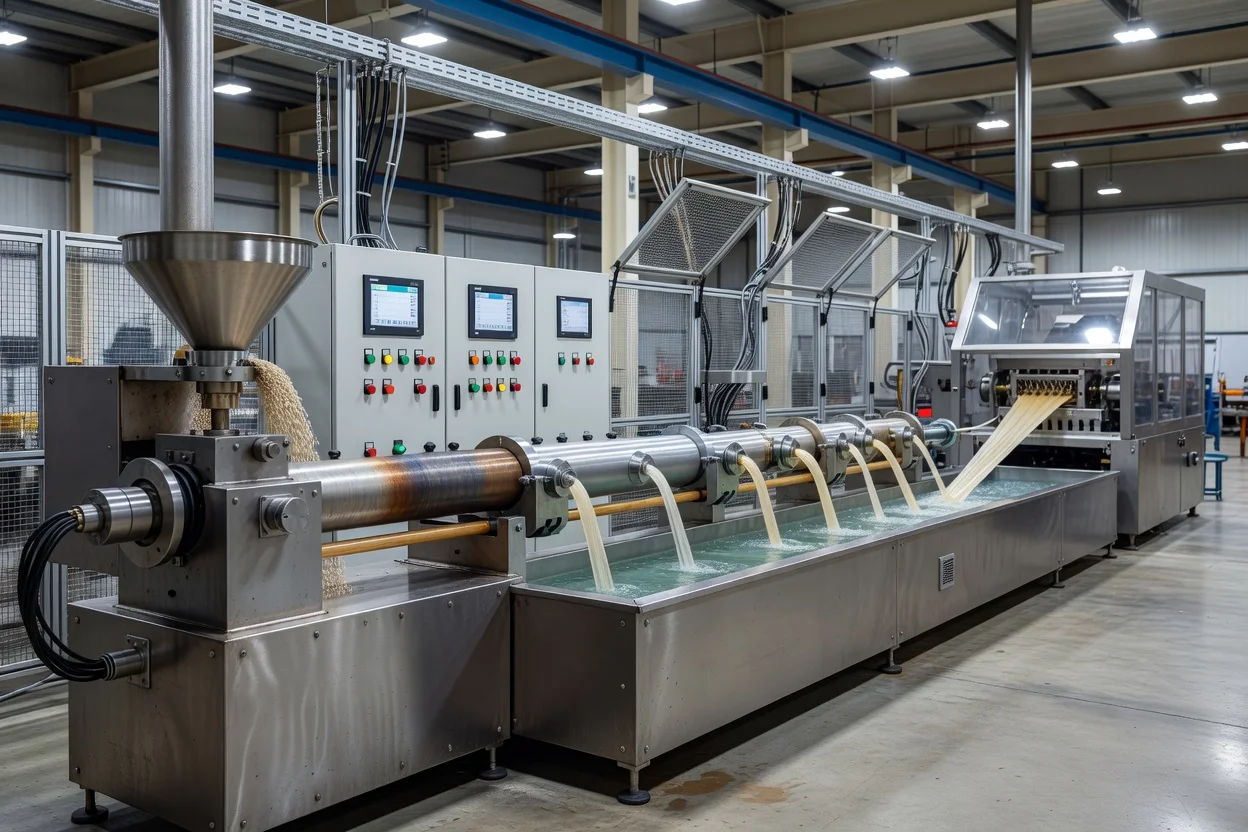
- Extrusion compounding: used for pellets, blends, and specialty formulations
- Solvent-based and melt-processing routes: selected according to grade and downstream product requirements
Because TPU is thermoplastic, it can be processed by conventional equipment such as injection molding, extrusion, blow molding, calendering, and film coating, which is a major reason for its industrial adoption. This processing flexibility also supports recycling streams more readily than thermoset polyurethane systems, although contamination and property loss remain practical obstacles.
Applications and End-Use Markets
TPU’s market role is defined by the combination of flexibility, toughness, wear resistance, and processability. Its end-use portfolio is broad, but several sectors dominate.
| Sector | Common TPU grade/use | Typical process | Why TPU fits |
|---|---|---|---|
| Footwear | Abrasion-resistant TPU for soles, midsoles, and outsoles | Injection molding, extrusion, compounding | Wear resistance, resilience, design freedom |
| Automotive | Interior trim, cable protection, hoses, seals, paint-protection film | Molding, extrusion, coating | Toughness, tactile quality, weathering, abrasion resistance |
| Medical | Tubing, catheters, membranes, wearable-device parts | Extrusion, molding, film conversion | Flexibility, biocompatibility in suitable grades |
| Electronics | Protective cases, cable jackets, strain reliefs | Injection molding, extrusion | Impact absorption and abrasion resistance |
| Industrial | Belts, rollers, gaskets, vibration-damping parts | Extrusion, molding | Durability and repeated-flex performance |
| 3D printing | Flexible functional parts and prototypes | Filament-based additive manufacturing | Elasticity and impact resistance |
Major uses
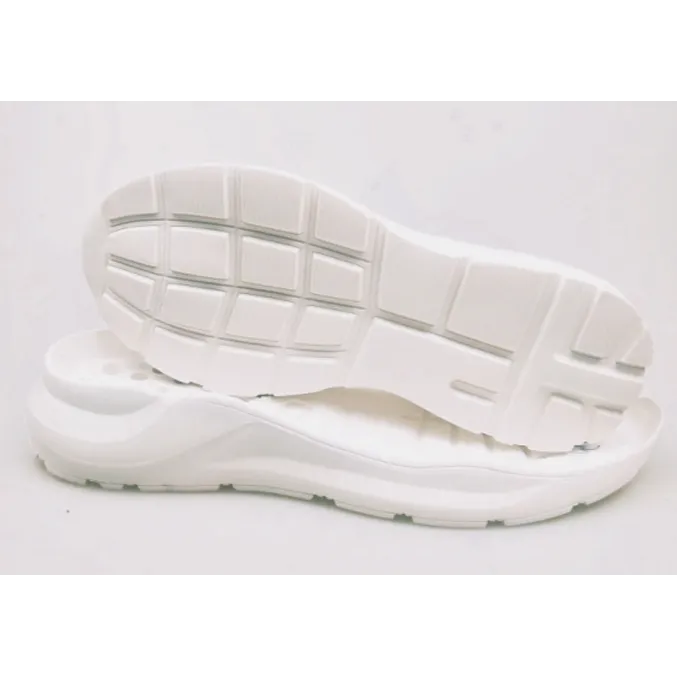
- Footwear: TPU is one of the most important elastomers in shoe soles, especially where abrasion resistance, resilience, and styling flexibility are required.
- Films and coatings: TPU films are used in protective layers, laminates, and high-value automotive paint-protection films.
- Cable and wire: TPU provides flexible jacketing with strong crack and wear resistance.
- Medical products: Selected grades are used for tubing, catheters, membranes, and wearable components because of their flexibility and biocompatibility profile.
- Industrial parts: Belts, seals, rollers, and vibration-damping elements benefit from TPU’s fatigue resistance and toughness.
- 3D printing: TPU is widely used in fused deposition modelling for flexible parts such as gaskets, grips, wearables, prosthetic prototypes, and protective housings.
Poor-fit use
- General packaging as a stand-alone barrier film: TPU is usually a poor fit where high oxygen, moisture, or aroma barrier is required, because its strengths lie in toughness and elasticity rather than barrier performance.
Environmental and Sustainability Aspects
TPU has a mixed sustainability profile. On the positive side, it is a thermoplastic, so scrap can in principle be remelted and reprocessed, unlike thermoset polyurethane rubbers. TPU also supports lightweighting in transportation and durable-product design, which can reduce replacement frequency in some applications.
On the negative side, most TPU remains fossil-derived, and its chemistry depends on isocyanates and polyols whose upstream footprints can be significant. Recycling is technically possible but often constrained by sorting challenges, contamination, property degradation, and the difficulty of separating TPU from multilayer or bonded structures.
Sustainability pathways
- Mechanical recycling: regrind and reprocess clean production scrap and selected post-industrial waste
- Chemical recycling: emerging route for recovering polyurethane feedstocks, though system economics remain challenging
- Bio-based polyols: partial substitution of fossil polyols with renewable feedstocks
- Design for disassembly: easier recovery from monomaterial or separable products
- Long-life applications: use TPU where durability offsets higher material complexity
The sustainability debate therefore centers on whether TPU’s long service life and recyclability potential can offset its petrochemical origin and recycling limitations.
Economic and Global Market Impact
TPU is a specialty resin with strong commercial momentum. Recent market analyses estimate the global TPU market at several billion dollars, with continued growth through the next decade driven by footwear, automotive films, consumer electronics, medical uses, and industrial elastomers. Automotive paint-protection film and premium footwear are especially important value segments because they use higher-margin, performance-optimized grades.
Leading producers and technology owners include major polyurethane and specialty polymer companies such as Covestro, Lubrizol, Huntsman, and Hexpol-related supply chains, along with other global and regional compounders and converters. Competition is shaped less by commodity scale than by formulation expertise, regulatory compliance, grade consistency, and downstream processing support.
Current Challenges and Innovations
Key challenges
- Recycling complexity: multi-material assemblies reduce recovery value.
- Hydrolysis and weathering trade-offs: no single TPU grade performs best in all environments.
- Flammability and smoke performance: many applications require additives or compounding for fire safety.
- Processing sensitivity: moisture control is important during extrusion and molding.
- Cost pressure: TPU is typically more expensive than commodity polymers and many standard rubbers.
Innovation directions
- Flame-retardant TPU nanocomposites: recent research explores nanofillers and hybrid systems to improve fire safety and mechanical performance.
- Medical and wearable TPU grades: tailored formulations for sterilization, flex-fatigue, and biocompatibility.
- Bio-based TPU: substitution of fossil polyols and exploration of renewable supply chains.
- Additive manufacturing grades: improved rheology and printability for flexible functional parts.
- High-performance coatings and films: TPU is increasingly used where abrasion resistance and optical clarity are needed together.
Future Outlook
TPU is likely to remain a strategically important elastomer because it addresses a rare combination of needs: flexibility, durability, processability, and design freedom. Growth is expected to be strongest in premium footwear, automotive surface protection, medical devices, flexible electronics, and functional 3D-printed parts.
Future competition will likely be shaped by three forces: sustainability, specialization, and integration. Sustainability will favor recyclable, bio-based, and lower-carbon TPU systems; specialization will reward grades tuned for hydrolysis resistance, weathering, fire safety, or biocompatibility; and integration will increase the use of TPU in multilayer structures, hybrid composites, and additive manufacturing workflows.
Summary
TPU is a thermoplastic elastomer defined by a segmented block-copolymer structure that gives it an unusual combination of elasticity, abrasion resistance, toughness, and reprocessability. Its broad usefulness across footwear, automotive, medical, industrial, and additive manufacturing sectors has made it a major specialty material in the plastics industry. At the same time, TPU’s future will depend on how effectively the sector addresses fossil feedstock dependence, recycling constraints, and application-specific performance trade-offs while extending the material’s already strong role in high-value durable products.
References
- •
Thermoplastic polyurethane. (2008, September 26). Wikipedia.Link
- •
Thermoplastic polyurethane: Key properties, processing, .... (2026, April 13). SpecialChem.Link
- •
A guide to thermoplastic polyurethanes (TPU). (n.d.). Huntsman.Link
- •
What is TPU? Properties and Applications Explained. (n.d.). Chemdo.Link
- •
What is TPU and when should you use it?. (n.d.). Hubs.Link
- •
TPU (Thermoplastic Polyurethane) properties & uses - Iplast. (2025, March 13). Iplast.Link
- •
TPU: What It is, properties and industrial uses. (2026, January 29). Corti.Link
- •
What Is TPU Material? Properties, Types & Applications. (2025, June 21). HLC Metal Parts.Link
- •
Thermoplastic polyurethane, do you know all its .... (n.d.). Synthesia.Link
- •
What is TPU | Thermoplastic Polyurethane Materials. (2024, July 4). Hexpol.Link
- •
Thermoplastic Polyurethane: Comprehensive Analysis Of .... (n.d.). Eureka PatSnap.Link
- •
Thermoplastic Polyurethane (TPU). (2025, January 1). Lubrizol.Link
- •
TPU Elastomer Benefits and Applications. (n.d.). Protolabs.Link
- •
Thermoplastic Polyurethane Industrial Applications. (n.d.). Eureka PatSnap.Link
- •
Polyurethane Applications. (n.d.). American Chemistry Council.Link
- •
synthesis, fabrication techniques, blends, composites, and .... (n.d.). Springer.Link
- •
Thermoplastic Polyurethane Material: Comprehensive Analysis Of .... (n.d.). Eureka PatSnap.Link
- •
TPU Material Details. (n.d.). University of Basel.Link
- •
Thermoplastic Polyurethane. (n.d.). Covestro.Link
- •
Tpu Extrusion 3d Printing. (2021, October 20). Wevolver.Link
- •
What Is TPU Material? Properties, Types & Applications. (2026, May 22). UD Machine.Link
- •
Recent advances in thermoplastic polyurethane-based .... (n.d.). ScienceDirect.Link
- •
Thermoplastic Polyurethane (TPU) Overview | PDF. (2025, May 2). Scribd.Link
- •
What is TPU 3D Printing & Uses. (2025, January 31). Markforged.Link
- •
Thermoplastic Polyurethane (TPU) Market Size, Share & .... (n.d.). Fortune Business Insights.Link
- •
Mechanical Properties of Additively Manufactured .... (2020, December 16). PMC.Link