
Introduction
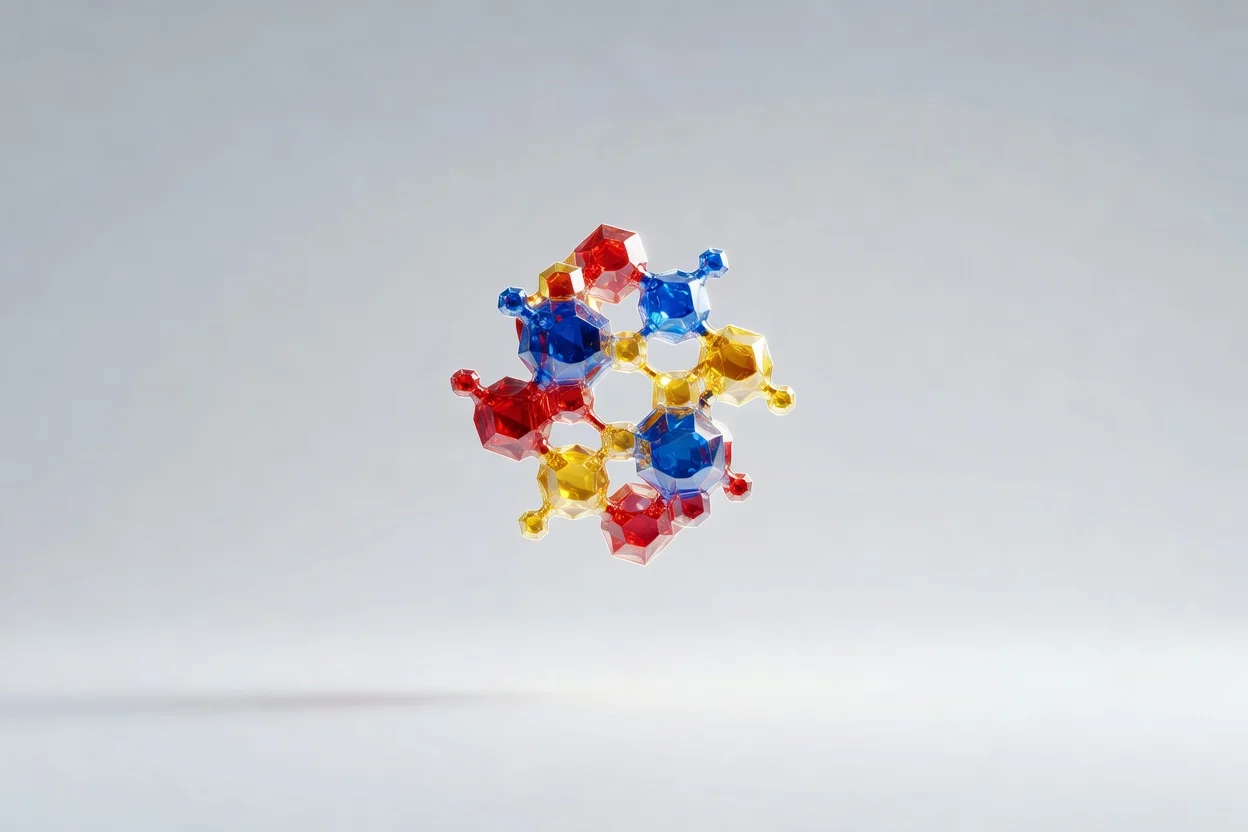
Pigment synergist is a specialty additive used in pigment dispersions to improve the adsorption and effectiveness of polymeric dispersants, thereby increasing pigment stabilization, color strength, gloss, and storage stability. In the plastics and coatings value chain, it is best understood as a small-molecule or pigment-derivative “bridge” that adsorbs strongly to pigment surfaces and helps larger dispersant molecules anchor more efficiently, especially for difficult-to-disperse organic pigments and carbon black.
Although pigment synergists are most widely discussed in inks and coatings, the same dispersion principles are relevant to plastics masterbatches, colored compounds, and solvent-free or low-solvent formulations where high pigment loading, good rheology, and stable color development are required. The chemistry is highly application-specific: synergists are often designed to resemble part of the pigment structure while carrying ionic or bulky groups that disrupt crystal growth, promote steric or electrostatic stabilization, and reduce flocculation.
History and development
Pigment synergists emerged from broader work on pigment wetting, dispersing, and crystallization control in organic colorants. Patent literature and technical reviews describe them as derivatives or structurally related compounds that interact selectively with pigment surfaces, an approach that became especially useful for high-performance organic pigments such as phthalocyanines, quinacridones, yellows, reds, violets, and carbon black.
As pigment demand shifted toward higher color strength, lower VOC systems, and more demanding application windows, synergists gained importance as formulation tools that could extend the performance of polymeric dispersants rather than replace them. Recent academic work has also expanded the concept into waterborne systems and topology-controlled polymers, showing that synergist design can influence adsorption, steric hindrance, and dispersion stability in a more rational way.
Chemical structure and key properties
Pigment synergists are not a single chemical family but a functional class defined by behavior: they are compounds with strong affinity for specific pigment types, often because they share structural motifs with the pigment core or contain surface-active groups that interact through pi-pi attraction, hydrogen bonding, ionic interactions, or steric effects.
Key properties include:
- Strong pigment affinity: selective adsorption to the pigment surface, often enhanced by structural similarity to the parent pigment.
- Dispersant promotion: improved adsorption of polymeric wetting and dispersing agents onto pigment particles.
- Crystal-growth control: in some systems, synergists act as crystal growth inhibitors or modifiers, limiting particle growth and re-aggregation.
- Rheology improvement: reduced grinding viscosity and improved flow in pigment concentrates are commonly reported product benefits.
Important practical limits include:
- Pigment selectivity limit → cause → workaround: a synergist effective for phthalocyanine blue may perform poorly with quinacridones or carbon black because surface chemistry differs → the additive is tuned to a narrow pigment family → use pigment-specific synergist grades or screen combinations with the intended dispersant.
- Over-addition limit → cause → workaround: excessive synergist can destabilize the balance between adsorption and steric repulsion → surplus low-molecular species may compete with the dispersant or increase viscosity → optimize dosage by pigment surface area and let-down trials rather than fixed universal loading.
- System-compatibility limit → cause → workaround: a synergist optimized for solvent-borne systems may not translate directly to waterborne or UV-curable formulations → polarity, solubility, and ionization behavior change the adsorption regime → use waterborne-specific topologies or solvent-free grades designed for the target binder package.
Production processes and raw feedstocks
Pigment synergists are typically synthesized from pigment-derived intermediates, aromatic heterocycles, or small-molecule analogs that retain a recognizable fragment of the pigment chromophore while adding functional groups that improve adsorption or dispersibility. Patent disclosures describe materials that may be structurally similar to the parent pigment, derive from the pigment itself, or function as separate additives with comparable surface affinity.
Common design elements include:
- Pigment-mimicking aromatic cores for selective surface recognition.
- Ionic substituents that create electrostatic interactions or surface polarity shifts.
- Bulky substituents that interfere with crystal growth and re-agglomeration.
- Polymer-compatible tails or anchor groups that help polymeric dispersants attach more efficiently.
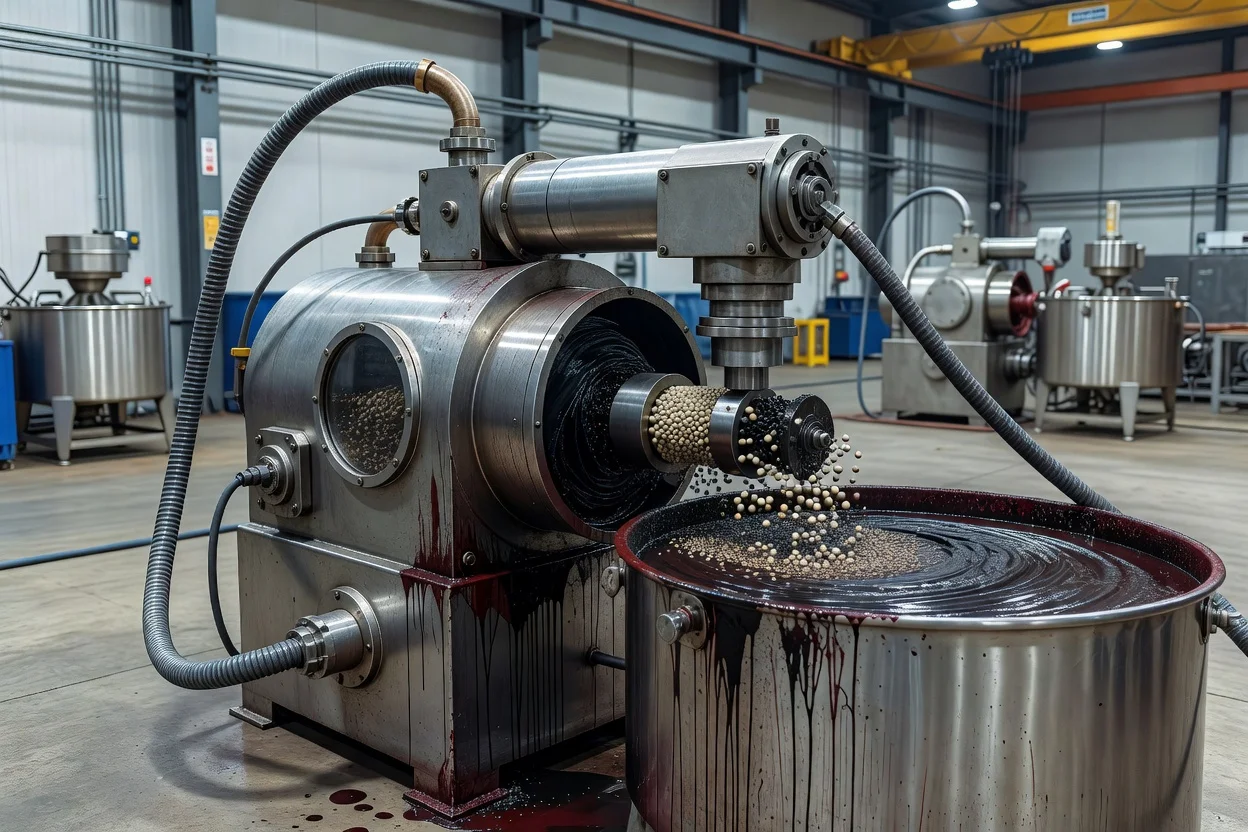
In commercial practice, synergists are incorporated into pigment milling, let-down, or concentrate preparation, where they can lower grinding viscosity, improve wetting, and raise achievable pigment loading. In some systems, they are added alongside the resin and solvent before the dispersant to maximize surface priming of the pigment.
Applications and end-use markets
Pigment synergists are primarily used wherever high-performance color dispersion matters, especially for organic pigments and carbon black.
| End use | Typical role of synergist | Usual formulation context |
|---|---|---|
| Printing inks | Improves dispersion stability, gloss, and color strength | Solvent-borne, solvent-free, and some UV systems |
| Industrial and architectural coatings | Enhances wetting and lowers viscosity of pigment concentrates | High-solids, solvent-borne, solvent-free systems |
| Automotive coatings | Supports stable, high-chroma dispersions and reproducibility | OEM and refinish coatings |
| Plastic color concentrates and masterbatches | Helps disperse difficult organic pigments and carbon black during compounding | Thermoplastics, solvent-free color concentrates, specialty compounds |
| Specialty inks and color filters | Improves nanoparticle-level pigment dispersion and optical performance | High-purity, fine-particle systems |
Typical pigment families that benefit include phthalocyanine blue and green, organic yellow, orange, red, violet pigments, and carbon black. A poor-fit use is broad, low-cost pigment systems where pigment surface chemistry is already easy to wet and disperse, because the incremental benefit may not justify the added formulation cost and optimization effort.
In plastics processing, the main value is not color alone but dispersion efficiency: better pigment wetting can improve color consistency, reduce specking or agglomerates, and permit higher pigment loading in masterbatch or compound production. That said, the evidence base in the supplied sources is stronger for coatings and inks than for commodity plastics, so plastics use should be understood as an extension of the same dispersion physics rather than a separately documented primary market.

Environmental and sustainability aspects
Pigment synergists can support more resource-efficient formulations by enabling lower-viscosity, higher-solids pigment concentrates and by reducing waste from poor dispersion, rework, or excessive grinding energy. In that sense, they may indirectly lower material and process intensity even though they are themselves petrochemical or specialty-chemical products in many cases.
Sustainability considerations include:
- Recyclability: better pigment dispersion can improve color quality in recycled-content compounds, but synergists do not by themselves solve polymer contamination or color sorting challenges.
- Bio-based alternatives: the supplied sources do not establish a mature bio-based synergist category; research on waterborne synergists suggests that greener solvent and binder systems may be a more immediate route than full bio-based replacement.
- Carbon footprint: the net footprint effect depends on dosage and process savings. If a synergist prevents remilling, reduces rejected batches, or enables higher pigment efficiency, it can lower total impact despite adding another ingredient.
Because these additives are used at low concentration, their absolute mass is small, but their formulation leverage can be large. The most credible sustainability argument is therefore process-efficiency improvement rather than direct material substitution.
Economic and global market impact
Pigment synergists occupy a niche but strategically important segment of the coatings, inks, and colorants market, where performance differentiation is often tied to dispersion quality and reproducibility. Commercial offerings from major additive suppliers indicate sustained demand for grades optimized for phthalocyanine blues and greens, organic yellows, oranges, reds, violets, and carbon black.
Market value is concentrated in high-performance formulations rather than commodity pigments. In practical terms, the business case is strongest when synergists allow:
- higher pigment loading,
- lower milling energy,
- improved tint strength,
- better gloss and storage stability,
- fewer formulation defects such as flooding or floating.
Current challenges and innovations
Current technical challenges center on selectivity, cost-performance balance, and compatibility across increasingly diverse binder systems. Since synergists are often pigment-family-specific, formulators may need multiple additive packages across a product portfolio, increasing complexity.
Innovation trends include:
- Molecularly tailored synergists: derivatives designed for specific pigments such as quinacridone or phthalocyanine families.
- Waterborne synergists: polymer-topology work shows that branched or engineered polymers can enhance adsorption and steric stabilization in aqueous systems.
- Integrated dispersant packages: synergists are increasingly positioned as performance multipliers for polymeric hyperdispersants rather than stand-alone stabilizers.
- Lower-viscosity, higher-solids formulations: additives that improve pigment loading and flow are especially valuable in solvent reduction and VOC minimization strategies.
A useful practical example is a phthalocyanine blue concentrate where a small amount of pigment synergist is combined with a polymeric dispersant to improve surface adsorption and stabilize a high-chroma dispersion; commercial guidance and data sheets describe this as a route to reduced grinding viscosity and improved gloss and color strength. Another example is the use of branched polyether-based synergists in waterborne dispersion studies, where adsorption and steric hindrance were both implicated in better particle stabilization.
Future outlook
Pigment synergists are likely to evolve toward more precisely engineered, pigment-specific molecules and polymer architectures that deliver stronger adsorption with lower dosage. The most important growth areas are expected to be high-performance inks, low-VOC coatings, and specialty color concentrates where dispersion stability directly determines commercial quality.
For plastics and adjacent sectors, the long-term opportunity lies in additive systems that improve dispersion in recycled-content, low-solvent, and high-solids compounds while reducing processing energy and defects. The field is moving from empirical formulation toward more mechanism-driven design, in which surface chemistry, polymer topology, and pigment identity are matched deliberately rather than by trial and error.
Summary
Pigment synergists are surface-active pigment derivatives or closely related compounds that strengthen pigment-dispersant interactions and improve dispersion stability. Their main value is highly targeted: they are most useful for difficult pigments, demanding color performance, and formulations where viscosity, gloss, tint strength, and storage stability matter.
References
- •
Synergist. (2025). Weblio. https://ejje.weblio.jp/content/synergistLink
- •
Synergists for quinacridone magenta pigments. (2020, May 29). https://patents.google.com/patent/US11427557B2/frLink
- •
Synergist - HROC. (2024, February 17). https://hroc.in/product/synergist/Link
- •
Pigment composites comprising synergists and polymer coatings. (2014, December 16). https://patents.google.com/patent/WO2015095105A2/enLink
- •
Color InkJet Dispersions Utilizing Synergists as Dispersants. (n.d.). https://library.imaging.org/admin/apis/public/api/ist/website/downloadArticle/print4fab/30/1/art00082_1Link
- •
Blue pigment synergist ... (KR102284849B1). (2016, June 1). https://patents.google.com/patent/KR102284849B1/enLink
- •
Pigment synergist. (2005, February 4). https://patents.google.com/patent/CN102020871B/enLink
- •
Magenta pigment synergist ... (KR101935322B1). (2017, April 20). https://patents.google.com/patent/KR101935322B1/enLink
- •
Synergists. (2025). Lubrizol. https://www.lubrizol.com/solutions/technologies/dispersants/synergistsLink
- •
All products. (n.d.). BYK. https://www.byk.com/en/product/additive-guide/byk-synergistLink
- •
Data Sheet. (n.d.). https://mychem.ir/uploads/tds/19182.pdfLink
- •
Five member ring stabilizers for quinacridone-type pigments in solid ink. (1997, January 28). https://patents.justia.com/patent/8449096Link
- •
How Pigment Synergist Works — In One Simple Flow (2025). (2025, October 14). LinkedIn. https://www.linkedin.com/pulse/how-pigment-synergist-works-one-simple-flow-2025-ai-technology-tool-jdygeLink
- •
Dispersant for solvent based and UV system. (n.d.). https://www.chemipol.co.za/wp-content/uploads/2024/05/Pigment-Synergists.pdfLink
- •
Invited Review. (n.d.). https://www.jstage.jst.go.jp/article/isj/55/6/55_692/_pdfLink
- •
Effect of synergists on organic pigment particle charging ... (n.d.). PubMed. https://pubmed.ncbi.nlm.nih.gov/24488726/Link
- •
NON-AQUEOUS PIGMENT DISPERSIONS USING DISPERSION SYNERGISTS (EP 1960479 B1). (n.d.). https://patentimages.storage.googleapis.com/a3/2d/ab/57402b3961d1ca/EP1960479B1.pdfLink
- •
Synergists. (n.d.). Lubrizol. https://espanol.lubrizol.com/Coatings/Technologies/Dispersants/SynergistsLink
- •
Pigment modified synergist, pigment dispersed solution and ink composition. (2016, May 30). https://patents.google.com/patent/KR20170135142A/enLink
- •
Non-aqueous pigment dispersions using dispersion synergists. (2010, October 15). https://patents.google.com/patent/WO2011054652A1/enLink
- •
BYK-SYNERGIST 2105. (n.d.). BYK. https://www.byk.com/en/products/additive-guide/byk-synergist-2105Link
- •
Best Synergist DA5000 Manufacturer and Factory | Hermeta. (2024). https://www.hermetachem.com/synergist-da5000-product/Link
- •
Wie Wirken Mehrere Wirkstoffe In Einer Depigmentierungslösung Synergistisch? Optimieren Sie Microneedling-Ergebnisse. (2026, February 10). https://de.belislaser.com/faqs/how-do-multiple-active-ingredients-in-a-depigmentation-solution-work-synergistically-during-the-microneedling-delivery-processLink
- •
BYK-SYNERGIST 2100 - Pigment synergist for coating systems. (n.d.). BYK. https://www.byk.com/en/products/additive-guide/byk-synergist-2100Link
- •
Dispersants Product Guide - 22-2259. (2025, July 31). Scribd. https://www.scribd.com/document/810206679/Dispersants-Product-Guide-22-2259Link
- •
MAgik 51 Blue Pigment Synergist. (2018). https://www.mallakchemicals.com/Paint-Coating-Inks-and-Pigments/Magik-51-Blue-Pigment-Synergist.htmlLink
- •
Synergists. (n.d.). National Pesticide Information Center. https://npic.orst.edu/ingred/ptype/synergist.htmlLink
- •
What is synergy and how does it benefit my skin? (n.d.). https://designerpluscosmeceuticals.com/blogs/girl-scientist-blog/what-is-synergy-and-how-does-it-benefit-my-skinLink
- •
Patent/CN-119143768-A. (2024, December 17). PubChem. https://pubchem.ncbi.nlm.nih.gov/rest/rdf/patent/CN-119143768-ALink
- •
Effect of polymer topologies on pigment dispersion. (2023, October 24). https://pubs.rsc.org/en/content/articlehtml/2023/ra/d3ra06427aLink
- •
Polyether-based waterborne synergists: effect of polymer topologies on pigment dispersion. (n.d.). https://pubs.rsc.org/en/content/articlepdf/2023/ra/d3ra06427aLink
- •
BYK® -SYNERGIST 2100 BYK - coatings. (2024, July 26). SpecialChem. https://www.specialchem.com/coatings/product/byk-byk-synergist-2100Link
- •
Improving nanoparticle dispersions of pigment and its application to a color filter: New phthalocyanine derivatives as synergist. (n.d.). https://www.sciencedirect.com/science/article/abs/pii/S1226086X17305099Link
- •
The Art of Ingredient Synergy: Which Skincare Actives Work Together and Which Don’t? (2026, June 8). https://formulatorshaven.com/the-art-of-ingredient-synergy-which-skincare-actives-work-together-and-which-dont/Link
- •
Can You Mix Brightening Ingredients in Skincare? (2025, July 20). https://www.revivalabs.com/can-you-mix-brightening-ingredients-in-skincare-yes-heres-how/Link
- •
DE69008293T2 - Synergistic agent for skin depigmentation. (1995, June 20). https://patents.google.com/patent/DE69008293T2/enLink
- •
How Cosmetic Ingredients Work Together. (2023, April 15). Meder USA. https://mederbeauty.com/blogs/blog/how-cosmetic-ingredients-work-togetherLink
- •
[PDF] SYNERGISTIC ACTION OF PENETRATION ENHANCERS IN ... (n.d.). https://jddtonline.info/index.php/jddt/article/download/824/498Link
- •
Advances in Pigmentation Management. (n.d.). https://escholarship.org/content/qt7v36x54d/qt7v36x54d.pdfLink
- •
5 Synergistic Ingredient Pairings to Level Up Your Skincare Routine. (2022, March 8). Glow Recipe. https://www.glowrecipe.com/blogs/blog/5-synergistic-ingredient-pairings-to-level-up-your-skincare-routineLink
- •
The melanogenesis and mechanisms of skin‐lightening ... (n.d.). Wiley. https://onlinelibrary.wiley.com/doi/full/10.1111/j.1468-2494.2010.00616.xLink
- •
Biotech Skincare Brand Mother Science Launches Retinol Synergist. (2024, May 7). HAPPI. https://www.happi.com/breaking-news/biotech-skincare-brand-mother-science-launches-ret/Link
- •
Cosmetic Ingredient Synergy. (2023, March 24). Sophix Natural. https://sophixnatural.com/cosmetic-ingredient-synergy/Link
- •
Mechanisms Regulating Skin Pigmentation: The Rise and Fall of ... (2009, September 15). PMC. https://pmc.ncbi.nlm.nih.gov/articles/PMC2769151/Link
- •
High-Performance Dispersants for Pigments. (n.d.). Sinocure. https://www.sinocurechem.com/product/dispersant.htmlLink
- •
Your guide to. (n.d.). https://proportal.synergieskin.com/app/uploads/2024/09/SS_Product-Knowledge-Work-Book_Volume-2_Digital-1-compressed.pdfLink
- •
Topical treatment strategies to manipulate human skin ... (2020, February 21). PMC. https://pmc.ncbi.nlm.nih.gov/articles/PMC7442613/Link
- •
Modifying skin pigmentation – approaches through intrinsic ... (n.d.). PMC. https://pmc.ncbi.nlm.nih.gov/articles/PMC2678743/Link
- •
Skin Pigmentation Types, Causes and Treatment—A Review. (2023, June 18). PMC. https://pmc.ncbi.nlm.nih.gov/articles/PMC10304091/Link
- •
How Ferulic Acid Boosts the Efficacy of Vitamin C & E. (2024, October 27). https://www.letsmakebeauty.com/blog/post/synergistic-antioxidants-how-ferulic-acid-boosts-the-efficacy-of-vitamin-c-and-eLink
- •
Working together: Synergistic antioxidant combination treats signs of ... (2020, November 13). Dermatology Times. https://www.dermatologytimes.com/view/working-together-synergistic-antioxidant-combination-treats-signs-aging-photoagingLink