
Introduction
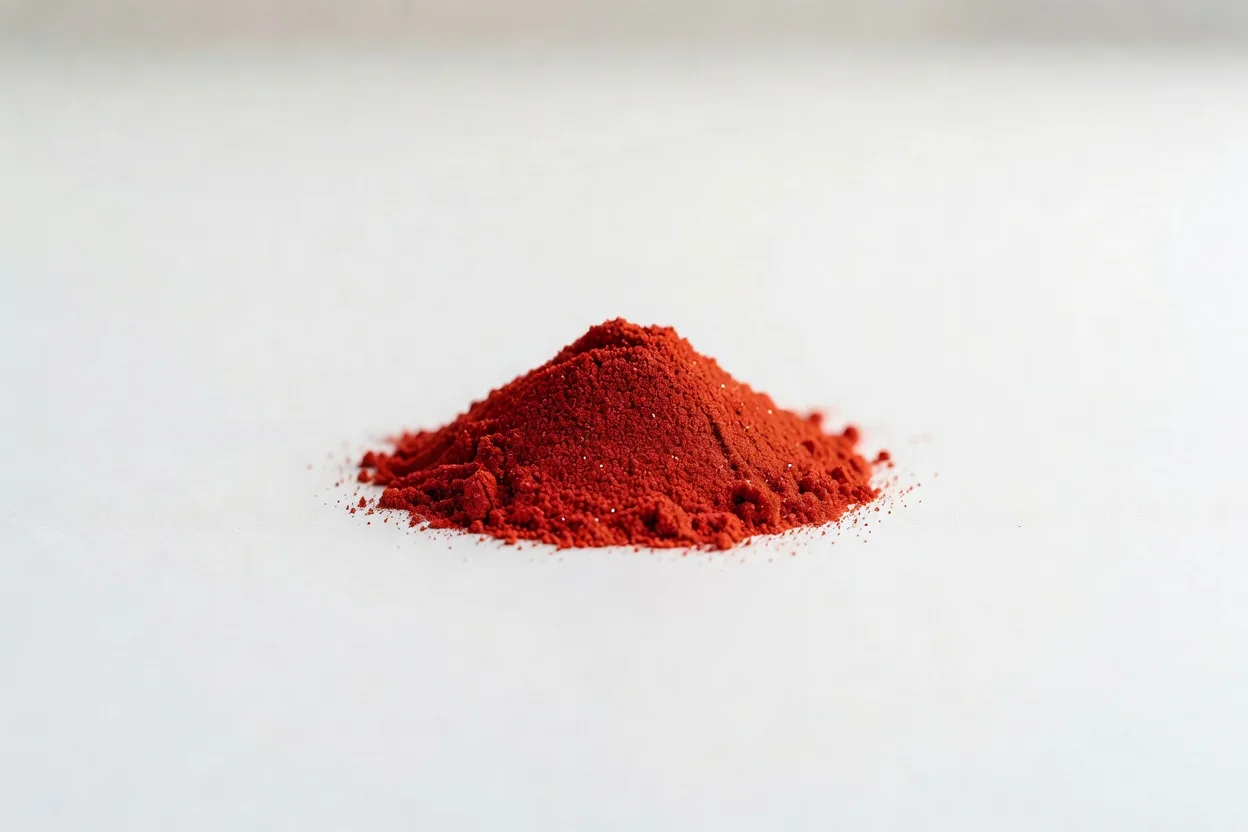
Azo pigments are a major class of organic colorants used primarily in plastics, printing inks, coatings, and related industrial applications, especially in the yellow, orange, and red shade range. They are structurally related to azo dyes, but unlike dyes they are essentially insoluble in the application medium, which makes them function as dispersed solid particles rather than dissolved colorants.
In plastics, azo pigments are valued for their bright chroma, broad shade coverage, and tunable balance of cost, opacity, and fastness. Their industrial importance is amplified by the large number of available chemistries, including monoazo, diarylide, naphthol, benzimidazolone, and related pigment families. At the same time, the class sits within a broader sustainability debate because pigment performance, migration behavior, and residual impurity profiles can affect regulatory acceptance, recyclability, and end-of-life options.
History and Development
Azo colorants emerged as an industrially important family after the development of diazotization and coupling chemistry in the late nineteenth century, which enabled relatively simple synthesis of strongly colored aromatic compounds. Over time, pigment chemists shifted from soluble dye-like structures toward insoluble, particulate pigment forms that offered better resistance to bleeding and improved suitability for non-textile uses such as plastics and coatings.
A key development was the diversification of molecular classes within azo pigments, including condensed, insoluble, and later higher-performance structures designed to improve weather resistance, thermal stability, and migration resistance. This evolution was particularly important for plastics, where processing temperatures, shear, and long-term exposure can rapidly expose weaknesses in less robust colorants.
Chemical Structure and Key Properties
Azo pigments contain one or more azo chromophores, usually expressed as an azo linkage between aromatic or heteroaromatic systems, although some pigments exist predominantly in hydrazone or tautomeric forms. Their color arises from extended conjugation, which shifts absorption into the visible region and allows precise tuning of hue through substitution patterns and crystal form.
Unlike azo dyes, azo pigments are particulate solids with very low solubility in water and in most application media. This insolubility is the central technical reason for their use in plastics: the colorant remains dispersed as solid particles, rather than migrating into surrounding phases as a dissolved species.
Key performance attributes
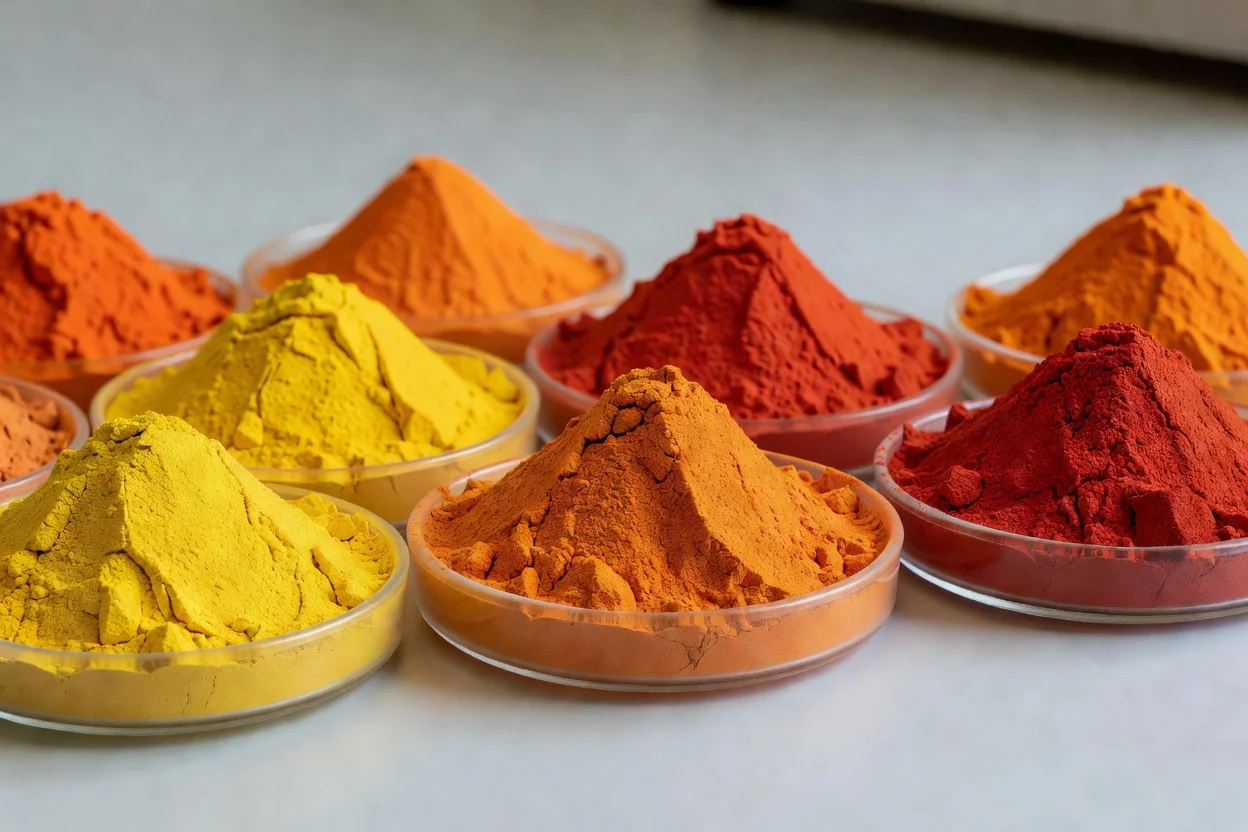
- Hue range: mainly yellow, orange, red, and some brown shades.
- Brightness: typically high, especially in low-to-mid opacity systems.
- Fastness: performance can be strong, but depends heavily on chemical class and crystal form.
- Migration resistance: generally better than soluble dyes, but still formulation-dependent in demanding plastics.
- Thermal stability: varies widely; many standard grades are suitable for common polymer processing, while higher-performance grades are required for engineering plastics.
Practical limits and workarounds
- Limit: lower heat resistance in some economy grades → Cause: smaller, less stabilized molecular frameworks or less robust crystal packing → Workaround: use benzimidazolone or other higher-performance pigments, and select grades validated for the processing temperature window.
- Limit: migration or bleeding in some polymer systems → Cause: insufficient insolubility or compatibility with the host resin → Workaround: choose low-migration pigment grades, optimize dispersion, and use surface-treated pigment preparations when needed.
- Limit: poorer weathering in some yellow and red grades → Cause: photochemical degradation of the chromophore under UV and oxygen exposure → Workaround: combine with UV stabilizers, hindered amine light stabilizers, or more lightfast pigment chemistries.
Production Processes and Raw Feedstocks
Azo pigments are generally made by diazotization of aromatic amines followed by coupling with an electron-rich component such as naphthols, pyrazolones, acetoacetanilides, or related aromatic systems. The diazonium intermediate then forms a water-insoluble precipitate, which is isolated, washed, finished, and often surface-treated or size-controlled for specific end uses.
Typical manufacturing sequence
- Preparation of diazonium salt from an aromatic amine.
- Coupling reaction with a suitable aromatic coupling component.
- Precipitation and crystallization to generate the pigment particle.
- Filtration, washing, and drying to remove salts and byproducts.
- Finishing and conditioning to control particle size, dispersion behavior, and fastness.
Main feedstocks
- Aromatic amines
- Naphthols and related coupling components
- Acids, bases, and process salts
- Finishing agents and dispersants for particle engineering
Because pigment performance depends strongly on particle morphology, the same chemical family can behave very differently depending on crystal habit, particle size distribution, and surface treatment. This is one reason why industrial azo pigments are not defined solely by molecular formula, but also by manufacturing route and post-processing.

Applications and End-Use Markets
Azo pigments are used across plastics, inks, coatings, and other solid-color applications, with plastics representing an important but not dominant segment relative to printing inks and coatings. In plastics, their main value lies in cost-effective, vivid coloration where the material can tolerate the pigment’s thermal and lightfastness profile.
Typical plastics applications
| Application | Typical pigment requirements | Usual process context |
|---|---|---|
| Films | Bright shade, good dispersion, low haze where needed | Extrusion, blown film, cast film |
| Injection-molded parts | Fastness, color consistency, migration resistance | General-purpose thermoplastics |
| Masterbatch | High tint strength, easy dispersibility | Concentrate production for downstream dilution |
| Fibers and textile-related plastics | Good process stability, low bleed | Melt spinning, dope coloration |
| Rigid packaging | Low migration, regulatory compliance | Blow molding, thermoforming |
| Consumer goods | Cost-performance balance, attractive shade | Injection molding, extrusion |
| Engineering plastics | Higher heat and solvent resistance | Specialized higher-performance azo grades |
Important sector-specific notes
- Films: used where strong yellow, orange, or red shades are needed at relatively low dosage, especially in commodity film and packaging applications.
- Bottles and rigid packaging: only certain grades are appropriate, because migration and regulatory constraints can be more demanding.
- Cable: coloration is possible in some compounds, but thermal and electrical specification constraints narrow the usable pigment set.
- Agriculture: colored films and related plastic products can use azo pigments when weathering and UV resistance are adequate.
- Geomembrane: performance demands are severe; only carefully selected, stable pigments are suitable.
- Rotomolding: heat exposure and long cycle times require pigments with strong thermal robustness.
- UHMWPE wear and medical uses: use is more selective because of purity, migration, and biocompatibility requirements.
- PEX: pigmentation may be used in pipe products, but long-term heat and service stability matter greatly.
A somewhat poor-fit use is high-temperature engineering plastics when only standard economy azo grades are considered, because some grades can discolor, fade, or migrate under prolonged thermal stress.

Environmental and Sustainability Aspects
Azo pigments are generally insoluble and particulate, which can reduce migration in use compared with soluble dyes. However, their environmental profile depends not only on insolubility, but also on synthesis inputs, residual impurities, product durability, and the behavior of the colored plastic at end of life.
Recyclability
In mechanical recycling, pigments can be beneficial when they remain stable through reprocessing and do not contaminate the recycled stream with excessive discoloration. The main challenge is color mixing: once an intensely colored plastic enters a recycling stream, it can reduce the flexibility of the recyclate unless sorting and formulation are well controlled.
Bio-based alternatives
Bio-based colorants and renewable feedstocks are under development, but they have not yet displaced azo pigments across mainstream plastics because of cost, shade breadth, processing robustness, and supply-chain maturity. In practice, sustainability decisions often involve trade-offs between renewable content, performance, and durability.
Carbon footprint and chemistry concerns
The carbon footprint of azo pigments is influenced by aromatic feedstock sourcing, multi-step synthesis, purification, and drying energy. In addition, some azo colorants have faced regulatory scrutiny where decomposition products or residual aromatic amines raise safety concerns, particularly in applications with direct human contact or stringent migration limits. That scrutiny has pushed the market toward cleaner synthesis, tighter impurity control, and more application-specific qualification.
Economic and Global Market Impact
Azo pigments are widely described as the largest group of organic pigments because of their relatively easy synthesis and strong technical performance. They occupy a central position in the industrial colorant market, especially in yellow, orange, and red segments.
Their economic importance is tied to:
- Large-volume demand in inks, coatings, and plastics
- Broad shade coverage at competitive cost
- Flexible chemistry and formulation options
- Compatibility with masterbatch production and high-throughput plastics compounding
According to recent industry analyses, global demand remains anchored in packaging, consumer goods, construction-related plastics, and printing-related sectors, with Asia-based production and consumption playing a particularly large role in the broader colorants market. Publicly visible producer landscape data are incomplete, but the market is commonly associated with major international pigment suppliers and a large number of regional manufacturers serving plastics compounding and printing ink chains.
Current Challenges and Innovations
Current development is focused on solving the classic trade-off between vivid color and durability. In plastics, the most important technical challenges are dispersion, migration resistance, heat stability, and regulatory conformity.
Main challenges
- Achieving stable color under high processing temperatures
- Preventing bleeding into adjacent polymers or packaging contents
- Maintaining brightness while improving weatherfastness
- Managing impurity profiles for food-contact and consumer applications
- Designing pigments that remain effective in recycled plastics
Notable innovations
- High-performance pigment classes such as benzimidazolones for improved fastness and heat resistance.
- Particle engineering to improve dispersion and reduce agglomeration.
- Surface-treated pigments for better compatibility with specific resin systems.
- Lower-migration formulations for regulated packaging and sensitive applications.
- Cleaner synthesis and purification to reduce residual aromatic amines and byproducts.
A useful formulation example is the use of a low dosage pigment loading in masterbatch production, often on the order of fractions of a percent to a few percent in the final polymer depending on shade depth; the mechanism is physical light absorption and scattering by dispersed pigment particles, rather than molecular dissolution. Another common strategy is combining an azo pigment with a UV stabilizer package so the pigment provides hue while the stabilizer slows photodegradation of both pigment and polymer matrix.
Future Outlook
The future of azo pigments in plastics will likely be shaped by three forces: tighter regulation, demand for higher-performance colorants, and circular-economy requirements. The class is unlikely to disappear, because it offers a rare combination of low cost, strong chroma, and established industrial infrastructure.
The most promising directions are:
- Higher heat and weather resistance for durable plastics
- Better recyclate compatibility and color retention
- Reduced migration and improved purity for sensitive uses
- More efficient, lower-emission synthesis routes
- Pigment designs optimized for compounding and masterbatch dispersibility
In practice, azo pigments are expected to remain foundational in commodity and semi-specialty plastics, while losing some marginal applications to higher-performance organic pigments, inorganic alternatives, or bio-based colorant concepts where compliance or sustainability objectives dominate.
Summary
Azo pigments are insoluble organic colorants that dominate much of the yellow-to-red pigment space and remain essential in plastics because they combine strong color, adaptable chemistry, and industrial scalability. Their technical value depends on molecular design, particle engineering, and formulation compatibility, while their long-term role will increasingly depend on regulatory compliance, recyclability, and cleaner manufacturing pathways.
References
- •
Azo dye. (2005, August 24). Wikipedia. https://en.wikipedia.org/wiki/Azo_dyeLink
- •
Azo (Hydrazone) pigments: General principles. (2021, April 1). https://ui.adsabs.harvard.edu/abs/2021PhSRv...7..148C/abstractLink
- •
What is azo pigment. (2025, August 1). Fineland Chem. https://www.finelandchem.com/what-is-azo-pigment/Link
- •
Survey of azo-colorants in Denmark. (n.d.). https://www2.mst.dk/udgiv/publications/1999/87-7909-548-8/pdf/87-7909-546-1.pdfLink
- •
Azo compound (azo dye). (2022, September 1). EBSCO. https://www.ebsco.com/research-starters/chemistry/azo-compound-azo-dyeLink
- •
Technical aspects of azo colorants. (n.d.). https://www2.mst.dk/udgiv/Publications/1999/87-7909-548-8/html/kap03_eng.htmLink
- •
Azo pigments history, chemistry and applications. (n.d.). Heubach. https://admin.heubach.com/wp-content/uploads/2022/05/SSCT-June-2022-Azo-Pigments-History-Chemistry-Applications.pdfLink
- •
What are azo pigments? (2026, February 25). VICHEM. https://vichem.vn/en/what-are-azo-pigments/Link
- •
Azo pigment. (2024, December 30). Pigment Chemical. http://www.pigmentchemical.com/info/azo-pigment-102768850.htmlLink
- •
Azo colours organic pigment material: Comprehensive analysis of.... (n.d.). Patsnap Eureka. https://eureka.patsnap.com/materials/azo-colours-organic-pigmentLink
- •
Azo colors. (2026, May 10). Museum of Fine Arts Boston. https://cameo.mfa.org/wiki/Azo_colorsLink
- •
Safety review of the use of certain azo-dyes in cosmetic products. (n.d.). European Commission. https://ec.europa.eu/health/archive/ph_risk/committees/sccp/documents/out155_en.pdfLink
- •
Azo colours chemical material: Comprehensive analysis.... (n.d.). Patsnap Eureka. https://eureka.patsnap.com/materials/azo-colours-chemical-materialLink
- •
Azo pigment. (2025, June 24). Britannica. https://www.britannica.com/technology/azo-pigmentLink
- •
Azo colours specialty chemical: Comprehensive analysis of.... (n.d.). Patsnap Eureka. https://eureka.patsnap.com/materials/azo-colours-specialty-chemicalLink
- •
Azofarbstoffe. (2004, April 21). Wikipedia. https://de.wikipedia.org/wiki/AzofarbstoffeLink
- •
Pigment. (2002, April 18). Wikipedia. https://en.wikipedia.org/wiki/PigmentLink
- •
What are azo pigments? Types, applications & market trends in India. (2026, April 16). Manali Pigments. https://www.manalipigments.com/blogs/azo-pigments-india-types-applications-market-trendsLink
- •
Azo compound. (2004, October 29). Wikipedia. https://en.wikipedia.org/wiki/Azo_compoundLink
- •
TMG industrial chemicals (Taiwan) company limited. (n.d.). https://www.tmg-chemicals.com.tw/en/g4.htmlLink
- •
Pigmente. (2003, May 5). Wikipedia. https://de.wikipedia.org/wiki/PigmenteLink
- •
Classifications, properties, recent synthesis and applications.... (2020, January 31). PMC. https://pmc.ncbi.nlm.nih.gov/articles/PMC7002841/Link
- •
Azo dyes. (n.d.). Wiley Online Library. https://onlinelibrary.wiley.com/doi/10.1002/0471238961.01261503082104.a01Link
- •
Danish Environmental Protection Agency. (2010, September 22). https://www2.mst.dk/udgiv/publications/1999/87-7909-548-8/html/helepubl_eng.htmLink
- •
Chemistry and applications of azo dyes: A comprehensive.... (2022, October 1). Journal of Chemical Reviews. https://www.jchemrev.com/article_154655.htmlLink
- •
2 Azo-colorants in textile dyeing and printing. (n.d.). https://www2.mst.dk/udgiv/publications/1999/87-7909-136-9/html/kap02_eng.htmLink
- •
Amines from azo dyes and carcinogenic dyes. (n.d.). REWE Group. https://www.rewe-group.com/content/uploads/2020/12/FS-Amines-and-Carcinogenic-Dyes.pdfLink
- •
The continuous flow synthesis of azos. (2024, January 26). PMC. https://pmc.ncbi.nlm.nih.gov/articles/PMC11169052/Link
- •
合成工程1:アゾ顔料の合成工程と各論. (2024, July 20). J-STAGE. https://www.jstage.jst.go.jp/article/shikizai/97/7/97_211/_article/-char/enLink
- •
Azo dyes: Properties, uses, and synthesis. (2023, February 27). https://www.dyespigments.net/blog/azo-dyes-properties-uses-and-synthesis-comprehensive-guide/Link
- •
Azo pigment. (n.d.). Wiktionary. https://en.wiktionary.org/wiki/azo_pigmentLink
- •
Testimonial. (2025, July 22). Scribd. https://www.scribd.com/document/414733677/testimonialLink
- •
Screening assessment aromatic azo and benzidine-based.... (n.d.). Government of Canada. https://www.canada.ca/content/dam/eccc/migration/ese-ees/9c4da306-4b10-4ca1-8143-a4ae9cf53f15/fsar_grouping-azo-pkg2-monoazo-20pigments_en.pdfLink
- •
What properties give azo dyes superior vibrancy compared.... (2025, July 24). Reddit. https://www.reddit.com/r/chemistry/comments/1m8fsyo/what_properties_give_azo_dyes_superior_vibrancy/Link
- •
Classifications, properties, recent synthesis and.... (n.d.). ScienceDirect. https://www.sciencedirect.com/science/article/pii/S240584402030116XLink