
Introduction
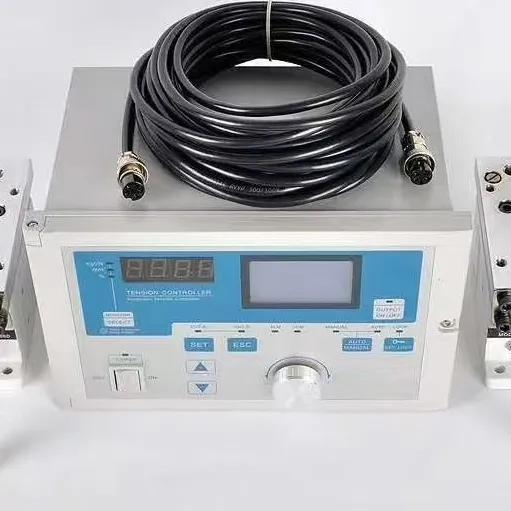
Closed-loop control equipment for tensile stress of film and sheet refers to the sensing, control, and actuation systems used to maintain a set web tension in plastic film and sheet processing lines. In plastics manufacturing, the phrase usually denotes web tension control rather than laboratory tensile testing: the equipment regulates the tensile load in moving film or sheet during unwinding, drawing, coating, laminating, slitting, printing, and winding so that elongation, wrinkling, gauge distortion, and roll defects remain within specification.
These systems are typically built around a tension sensor or dancer roll, a controller with PID logic, and an actuator such as a brake, clutch, servo drive, or variable-frequency drive. Compared with open-loop control, closed-loop systems continuously compare measured tension with a setpoint and correct deviations in real time, which makes them the preferred solution for thin films, high-speed web lines, and multilayer laminates where small variations can affect product quality.
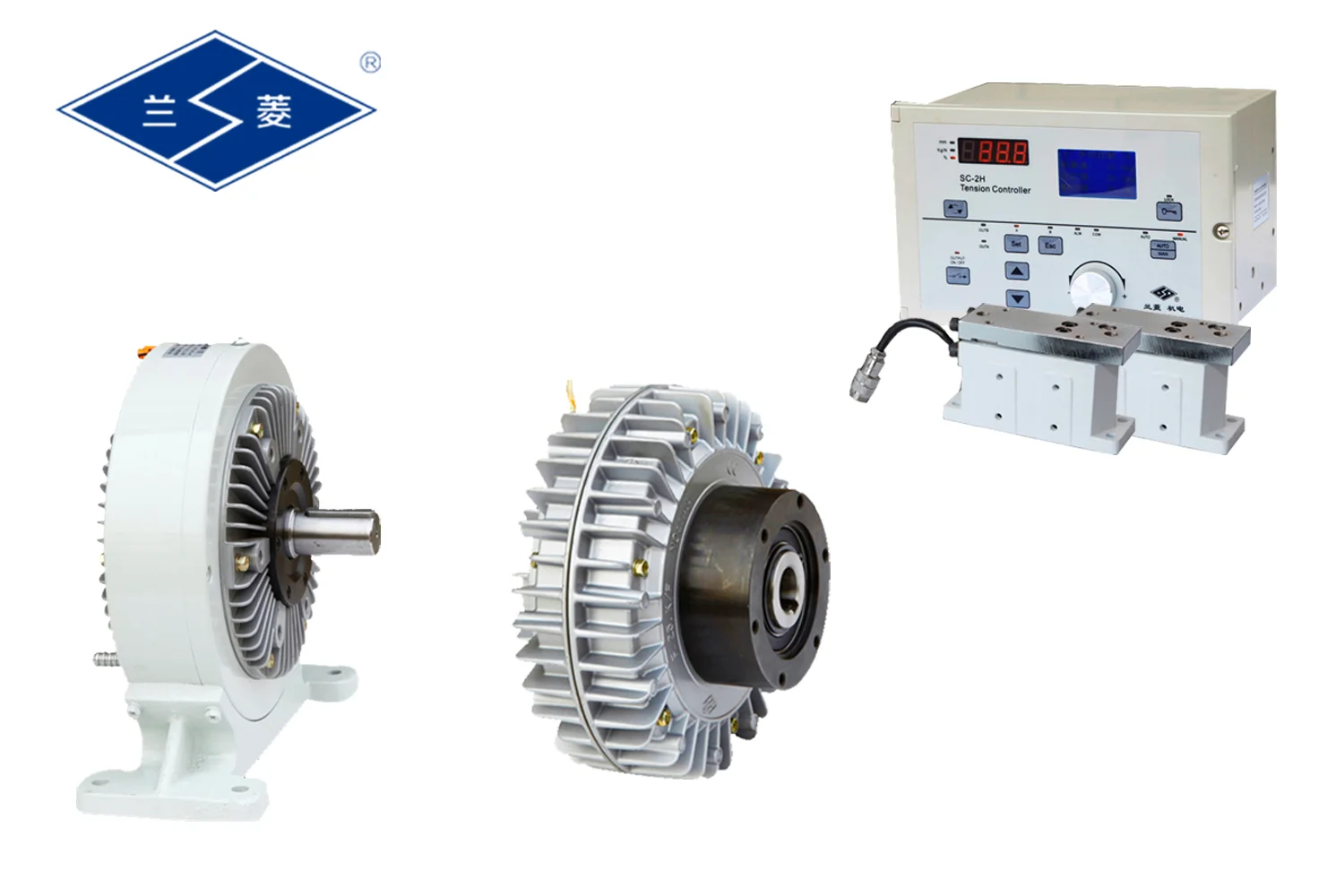
The technology developed from mechanically buffered dancer systems toward electronic feedback control based on load cells and strain gauges, then toward PLC-integrated, networked, and recipe-driven control architectures. Current systems increasingly support multi-zone coordination, automatic splicing, roll-diameter compensation, and predictive diagnostics, while also helping reduce scrap and improve energy efficiency through more stable line operation.
History and Development
Early web-handling equipment relied largely on operator adjustment, friction brakes, and dancer arms to compensate for variations in roll diameter and line speed. These systems provided basic stability but could not react quickly or precisely enough for modern thin-gauge films and high-speed converting lines.
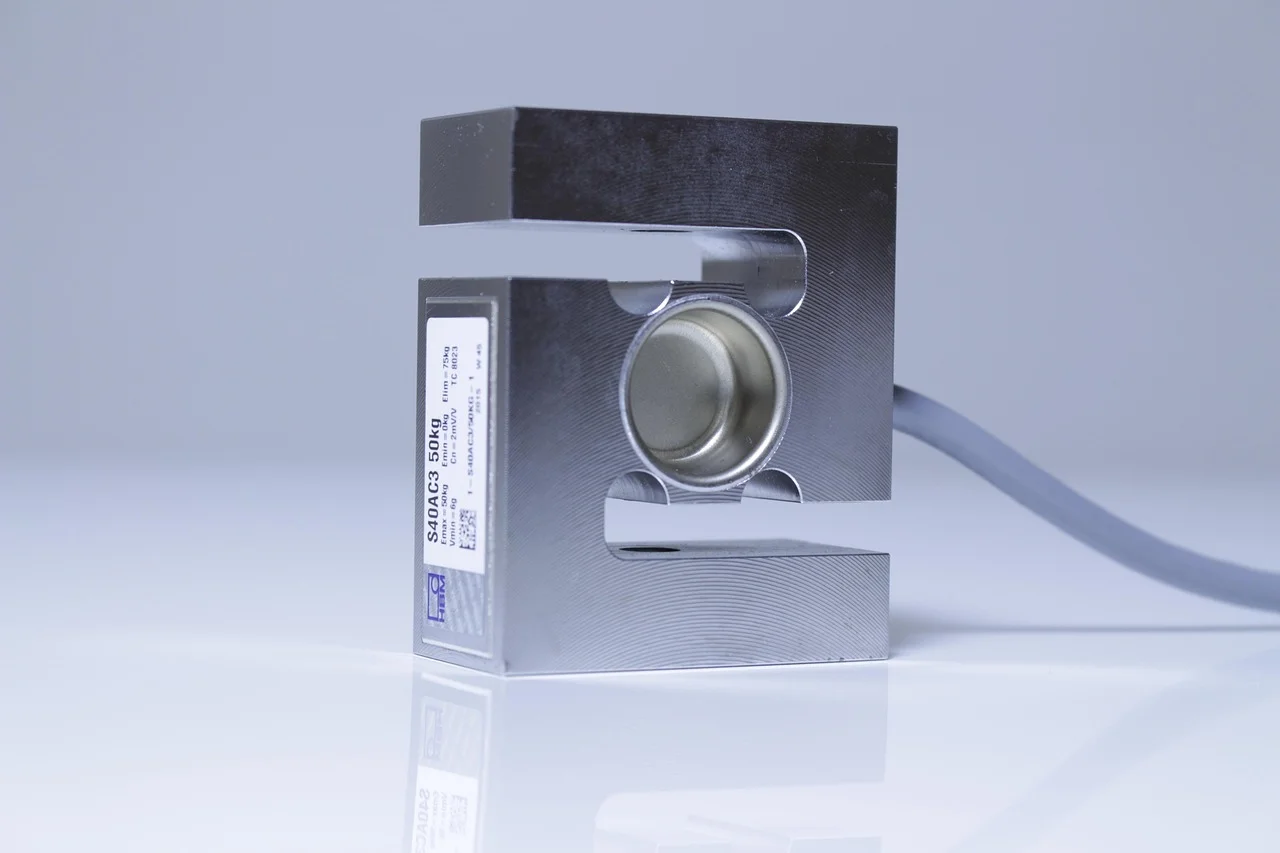
A major milestone was the widespread adoption of load cell-based feedback, in which a transducer measures web tension directly and sends the signal to a controller. According to technical literature, the load cell/strain gauge arrangement converts small mechanical deformation into an electrical signal proportional to applied force, enabling more precise closed-loop correction than purely mechanical systems.
A second milestone was the integration of digital PID control with PLCs and servo drives. This architecture allows the controller to adjust brake torque, motor speed, or web velocity dynamically, including during acceleration, deceleration, and roll changes. In converting industries, this shift improved repeatability and made tension settings easier to store as recipes for different materials and product formats.
A third milestone is the move toward multi-zone and networked control, in which different sections of a line are coordinated through Ethernet-enabled amplifiers, servo drives, and centralized HMI/SCADA systems. This is especially important in flexible packaging, where unwind, process, and rewind zones may each require different tension profiles.
Technical Overview
A closed-loop tension-control system in film and sheet processing generally includes the following functional elements:
- Sensor element: load cell, strain-gauge transducer, or dancer position sensor.
- Controller: dedicated tension controller or PLC with PID algorithm.
- Actuator: pneumatic brake, magnetic particle brake, clutch, servo motor, or VFD-driven roll.
- Feedback signal: analog or digital signal proportional to measured tension or dancer position.
The controller repeatedly compares the measured value with the setpoint and adjusts output to minimize error. In direct tension control, the feedback comes from a tension transducer; in indirect control, a dancer roll or floating roll position is used as the proxy variable.
Typical engineering characteristics for film and sheet lines include:
- Control accuracy: commonly described in industry practice as within about ±1–2% in well-tuned high-speed web systems, with tighter control possible in specialized applications.
- Loop response: multiple updates per second to many times per second, depending on controller and sensor architecture.
- Actuation modes: torque control on unwind/rewind shafts, speed trimming on driven rolls, or combined speed-and-torque control.
- Recipe handling: stored tension setpoints for different polymers, thicknesses, and line speeds.
For film and sheet applications, tension must be matched to material behavior. A common operating principle is to keep tension high enough to stabilize the web but low enough to avoid permanent stretch, neck-in, or stress whitening. Technical guidance in the web-converting sector often treats the usable range as a fraction of the material’s tensile capacity, with the exact value depending on thickness, modulus, orientation, temperature, and line speed.
Practical performance notes
- Thin films often require faster, more sensitive control than thicker sheet because low stiffness makes them more prone to flutter and wrinkle formation.
- Acceleration and deceleration are critical moments, since inertia changes can temporarily raise or lower tension unless the controller applies feed-forward and PID correction.
- Splicing and roll change operations can benefit from automatic compensation, reducing tension spikes that may cause telescoping, web breaks, or edge damage.
Types and Variations
| Type | Main sensing principle | Typical strengths | Typical limitations |
|---|---|---|---|
| Load-cell closed-loop control | Direct measurement of web force | High accuracy, good repeatability, suitable for demanding film lines | Requires correct mechanical installation and calibration |
| Dancer-roll closed-loop control | Indirect control by dancer position | Cost-effective, mechanically tolerant, effective for buffering | Less direct than force measurement, may respond more slowly |
| Open-loop torque control | Preset brake or drive torque | Simpler and lower cost | Cannot compensate well for changing roll diameter or disturbances |
| Hybrid control | Combination of direct sensing and dancer buffering | Balances stability and disturbance absorption | More complex tuning and integration |
Common variations in film and sheet machinery include:
- Unwind tension control
- Interstation tension control
- Rewind taper tension control
- Multi-zone lamination tension control
- Slitting-line tension control
- Edge-oriented tension balancing for wide sheet
Applications and Uses
Closed-loop tension control is used across the plastics processing value chain, especially where moving film or sheet must remain dimensionally stable.
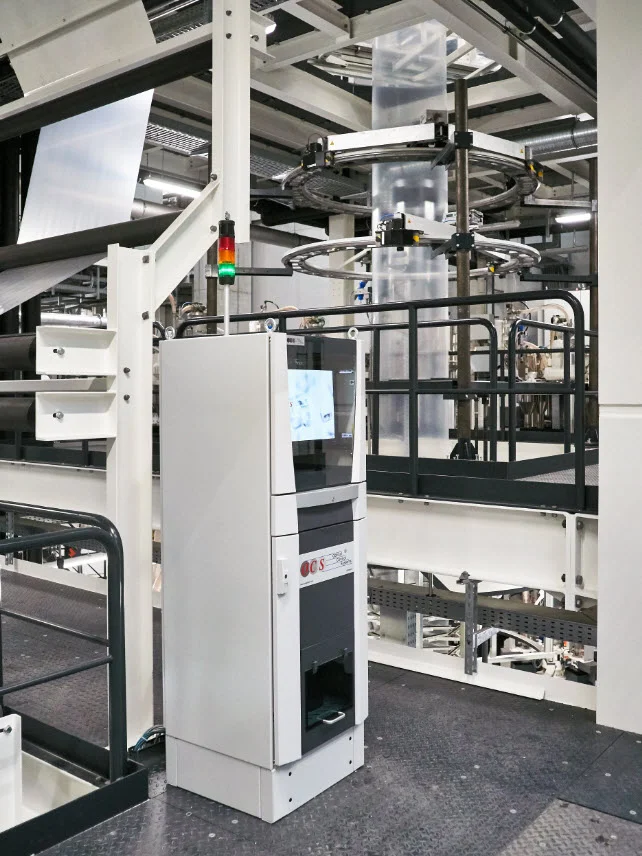
- Blown film and cast film conversion: stabilizes puller and winder tension to reduce gauge nonuniformity and roll defects.
- BOPP, BOPET, and other oriented film lines: helps maintain stable draw conditions and avoid web breaks during orientation and winding.
- Extruded sheet finishing: controls sheet drawdown, cooling-section tension, and winding tension to avoid edge curl and surface marking.
- Lamination and coating: maintains matching tensions between webs to prevent registration drift, wrinkles, and adhesive nonuniformity.
- Slitting and rewinding: preserves slit-edge quality and roll hardness by regulating rewind torque and taper tension.
- Printing and metallizing: supports registration accuracy and coating uniformity on thin substrates.
- Flexible packaging converting: widely used because multilayer webs are sensitive to stress mismatch across stations.
A poor-fit use case is very rigid, short-span stock handling, where the material does not behave like a compliant web and tension variation is minimal; in such cases, simpler feed or position control is usually more appropriate than a full web-tension closed loop.
Key Engineering Parameters
The exact setpoints depend on polymer type, thickness, width, temperature, and process stage, but several quantitative benchmarks are commonly referenced in the converting industry.
- Web tension levels are often specified relative to material thickness or tensile strength rather than by a single universal value, because PET, PE, PP, PA, and laminated structures behave very differently.
- Dancer systems are used where some mechanical buffering is beneficial, especially during transient disturbances.
- Load cells and strain-gauge transducers are preferred when the goal is direct force measurement and tighter control loops.
- Controller update rate must be fast enough to correct tension disturbances introduced by roll eccentricity, acceleration, and splice events.
For film and sheet applications, the associated tensile testing literature provides useful context for material behavior, although it addresses laboratory measurement rather than line tension control. Thin-film tensile tests are commonly run on low-force universal testing machines, reflecting the relatively low breaking loads of films compared with bulk plastics. In contrast, in-process tension control must act continuously at production speed, not just at failure.
Technological Innovations and Automation
Modern closed-loop systems increasingly combine sensing, control, and diagnostics.
- PLC integration allows linewide coordination of unwind, process, and rewind zones.
- Servo-driven architecture enables faster and smoother torque changes than purely brake-based systems.
- EtherNet/IP and similar industrial networks support remote monitoring, data logging, and multi-zone synchronization.
- Auto-splicing algorithms reduce tension excursions during roll change.
- Predictive maintenance uses tension drift, brake wear, dancer friction, and sensor offset trends as diagnostic indicators.
These developments are particularly important for high-speed packaging lines, where even small tension fluctuations can translate into waste, off-spec rolls, or downstream conversion problems.
Environmental and Sustainability Aspects
Closed-loop control contributes to sustainability mainly through scrap reduction, better roll quality, and lower rework rates. By keeping tension stable, the system reduces web breaks, telescoping, wrinkling, and edge damage that would otherwise lead to waste material and lost production time.
Energy performance also benefits indirectly. Servo and drive-based systems can avoid unnecessary overbraking, and stable tension can reduce operator intervention and repeated start-stop cycles. At the same time, higher automation can increase electrical and electronic complexity, so lifecycle impact depends on the balance between operating efficiency and component replacement requirements.
In circular-economy applications, stable tension control is especially valuable when processing recycled content, which can show more variation in modulus, thickness uniformity, and melt history than virgin resin. Better control helps compensate for these fluctuations, improving manufacturability without demanding excessive safety margins.
Economic and Global Market Impact
The global importance of this equipment tracks the growth of flexible packaging, film extrusion, sheet conversion, and high-speed finishing. As film widths increase and line speeds rise, closed-loop tension systems become less optional and more fundamental to productivity.
From an investment perspective, the value proposition typically rests on:
- lower scrap and fewer breaks,
- improved machine uptime,
- tighter quality consistency,
- faster product changeover,
- reduced operator dependence,
- better compatibility with automated production records.
Suppliers in this field include specialized tension-control companies, drive and automation vendors, and machine builders that integrate proprietary control logic into winders, slitters, laminators, and coating lines.
Current Challenges and Innovations
Key technical challenges include:
- PID tuning complexity, especially when web properties vary across a production run.
- Sensor drift and calibration maintenance, which can degrade accuracy over time.
- Roll diameter variation, which changes the relationship between torque and web tension during winding.
- Material variability, especially in recycled or multilayer webs.
- Vibration and mechanical friction, which can interfere with dancer stability and signal quality.
Current innovation trends include model-based control, better feed-forward compensation, more compact digital load-cell amplifiers, and tighter integration with manufacturing execution systems. These trends reflect a broader shift from standalone machine control toward data-rich, linewide process orchestration.
Future Outlook
Future closed-loop tension systems for film and sheet are likely to emphasize adaptive control, predictive analytics, and material-aware recipes. Systems may increasingly infer optimal setpoints from thickness, orientation ratio, substrate temperature, and historical quality data rather than relying only on fixed operator recipes.
As plastic processing lines move toward higher speed, greater automation, and more recycled feedstock, tension-control equipment will remain a core enabling technology. Its role will be especially important in applications where dimensional stability, surface quality, and downstream convertibility determine commercial value.
Summary
Closed-loop control equipment for tensile stress of film and sheet is a central part of modern plastics converting and finishing lines. By using feedback from load cells or dancer systems to regulate brakes, clutches, or servo drives, it maintains stable web tension, reduces defects, and supports high-speed, high-quality production in film, sheet, lamination, coating, slitting, and winding operations.
References
- •
Avery Dennison. (n.d.). Tension control—Technical bulletin. https://label.averydennison.com/content/dam/averydennison/lpm-responsive/asia-pacific/en-sa/documents/customer-tools/technical/tb-tension-control.pdfLink
- •
Dover Flexo Electronics. (2026). Tension control for flexible packaging manufacturing. https://dfe.com/applications/flexible-packaging-tension-control/Link
- •
Study on fracture behavior in stiff-thin-film-on-soft-substrate structures under biaxial stress state. (n.d.). https://www.sciencedirect.com/science/article/pii/S0020768321000895Link
- •
Jota Machinery. (2025). What is web tension? Definition, control, and best practices. https://www.jotamachinery.com/what-is-web-tension/Link
- •
张力控制系统 [Tension control system]. (n.d.). https://baike.baidu.com/item/%E5%BC%A0%E5%8A%9B%E6%8E%A7%E5%88%B6%E7%B3%BB%E7%BB%9F/2412375Link
- •
Shimadzu. (n.d.). C220-E003. https://www.quark-gulf.com/quark/public/storage/Products/gynGTetHuFjf0qnYm1f2BDZekbESroVJdtgRWX8n.pdfLink
- •
National Institute of Standards and Technology. (n.d.). Tensile testing of thin films: Techniques and results. https://www.govinfo.gov/content/pkg/GOVPUB-C13-53cae9b8bf968882c8ca474f904cb14a/pdf/GOVPUB-C13-53cae9b8bf968882c8ca474f904cb14a.pdfLink
- •
Web tension control systems. (n.d.). https://3.imimg.com/data3/MJ/PG/MY-7468802/web-tension-control-systems.pdfLink
- •
Technical Association of the Pulp and Paper Industry. (n.d.). Table of contents. https://www.tappi.org/content/PRESS/TOC/20WEBHANTOC.pdfLink
- •
Instron. (n.d.). ISO 6892-1:2016 ambient tensile testing of metallic materials. https://www.instron.com/wp-content/uploads/2024/06/ISO6892.pdfLink
- •
Abadias, G., Chason, E., Keckes, J., Sebastiani, M., Thompson, G. B., Barthel, E., Doll, G. L., Murray, C. E., Stoessel, C. H., & Yu, X. (2018). Review article: Stress in thin films and coatings: Current status, challenges, and prospects. Journal of Vacuum Science & Technology A, 36(2), Article 020801. https://pubs.aip.org/avs/jva/article/36/2/020801/246484/Review-Article-Stress-in-thin-films-and-coatingsLink
- •
Arise. (2023). What is tension control system. https://www.arisewebguiding.com/what-is-tension-control-systemLink
- •
Shimadzu. (n.d.). Tensile tests of films. https://shimadzu-testing.com/wp-content/uploads/2025/04/Shimadzu_Tensile_tests_of_films_jpi313007.pdfLink
- •
Dover Flexo Electronics. (2026). Web tension control fundamentals. Paper, Film & Foil Converter. https://www.pffc-online.com/news/15515-web-tension-control-fundamentalsLink
- •
CBBmachine. (2025). Tension controller: Types, importance, applications and more. https://www.cbbmachine.com/news/industry-news/tension-controller-types-importance-applications-and-more.htmlLink
- •
Closed-loop control of product properties in metal forming. (n.d.). https://www.sciencedirect.com/science/article/pii/S0007850616301949Link
- •
Hardt, D. E. (1985). Closed-loop control of sheet metal forming processes. In J. L. Swedlow (Ed.), Computer applications in production and engineering (pp. 3–12). Springer. https://link.springer.com/chapter/10.1007/978-1-4613-2411-9_3Link
- •
PLC Programming. (2026). Web tension control: Methods & PLC control (2026). https://plcprogramming.io/blog/web-tension-control-explainedLink
- •
Arise. (2024). Innovations in tension control technology for multi-material processing. https://www.arisewebguiding.com/innovations-in-tension-control-technology-for-multi-material-processingLink
- •
ZwickRoell. (n.d.). ASTM D882: Film tensile test. https://www.zwickroell.com/industries/plastics/thin-sheeting-and-plastic-films/astm-d882-film-tensile-test/Link
- •
Hionix. (n.d.). Advanced stress analysis. https://hionix.com/stress/Link
- •
Sridhar, N., & Srolovitz, D. J. (n.d.). Stresses and failure modes in thin films and multilayers. https://groups.seas.harvard.edu/hutchinson/papers/462-5.pdfLink
- •
Mechanical structure of tension control system of plastic film compounding machine. (2009). https://patents.google.com/patent/CN201483856U/enLink
- •
Tension stability control system for film winding conveyance. (n.d.). https://patents.google.com/patent/CN102530624A/enLink
- •
Automation World. (2012). Winder technology for printing on ultra-thin plastic film. https://www.automationworld.com/products/control/article/13306503/winder-technology-for-printing-on-ultra-thin-plastic-filmLink
- •
University of Texas at Dallas. (n.d.). Toho FLX-2320-S wavelength stress measurement. https://cores.research.utdallas.edu/manuals/toho-flx-2320-s-wavelength-stress-measurement/Link
- •
Delish Machine. (2025). On the core secret of stable operation of film slitting. https://m.delishmachine.com/blog/202509181139.htmlLink
- •
Residual stresses in deposited thin-film materials. (2022). PMC. https://pmc.ncbi.nlm.nih.gov/articles/PMC9783026/Link
- •
テンション制御した巻取機 [Tension-controlled winder]. (1999). https://patents.google.com/patent/JP2988932B1/jaLink
- •
Performance improvement of automatic tension control in winding process. (n.d.). https://aast.edu/pheed/staffadminview/pdf_retreive.php?url=24795_45_31_OK_MEPCON%202017_PID5111263.pdf&stafftype=staffpdfLink
- •
Sinstar. (2026). Mastering web tension in solventless lamination machines for defect-free packaging. https://www.sinstarsl.com/mastering-web-tension-in-solventless-lamination-machines-for-defect-free-packagingLink
- •
Loop control system—An overview. (n.d.). ScienceDirect. https://www.sciencedirect.com/topics/engineering/loop-control-systemLink
- •
AD. (n.d.). https://apps.dtic.mil/sti/tr/pdf/ADA042660.pdfLink
- •
Pre-web guide system. (2025). How the tension control system works. https://www.pre-webguidesystem.com/news/how-the-tension-control-system-works-84996984.htmlLink
- •
Dover Flexo Electronics. (2024). Tension control 101: Closed loop PID control. https://dfe.com/support-resources/tension-101/Link
- •
ITM-lab. (n.d.). How to test tensile strength of film: ASTM D882. https://www.itm-lab.com/article/how-to-test-tensile-strength-of-film.htmlLink