
Introduction
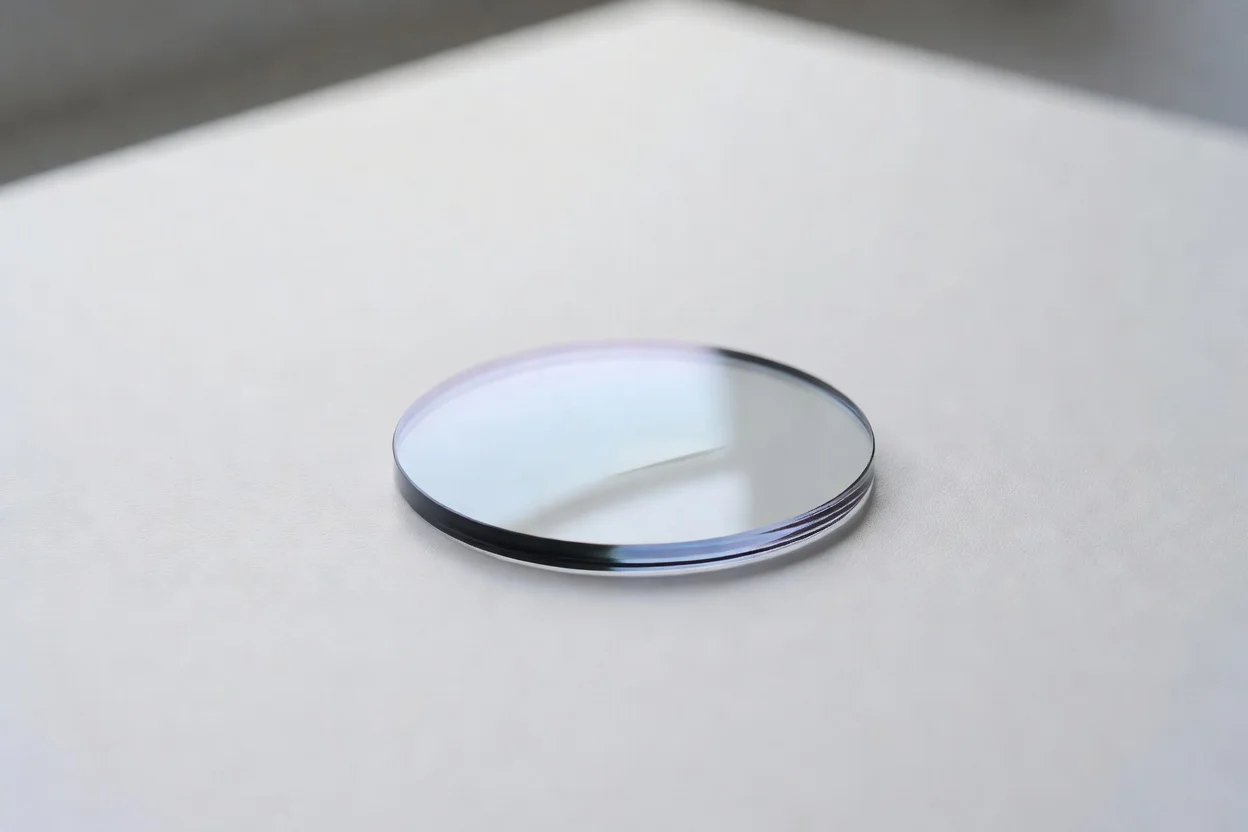
Blue-light absorbers are functional additives or dyes designed to selectively absorb high-energy visible light in the blue-violet region, typically around 380 to 450 nm, while maintaining high transmission in the rest of the visible spectrum. In plastics and related optical products, they are used to reduce glare, improve visual comfort, and protect materials or users from photochemical stress, especially in lenses, films, coatings, and display-related components.
Although the term is used broadly, blue-light absorbers are not a single chemical family. Commercial products include organic dye systems, specialty chromophores, and tailored formulations optimized for clarity, solubility, processing stability, and low fluorescence; some are marketed specifically for lens substrates or transparent films. Their role is especially important in consumer electronics, ophthalmic optics, and protective films, where selective filtering must be balanced against color neutrality and transparency.
From a plastics-industry perspective, blue-light absorbers sit at the intersection of optical engineering, additive science, and human-facing product design. They are often paired with UV absorbers, tint systems, or reflective coatings to tune spectral performance, and they may be incorporated into the polymer matrix itself rather than applied only as a surface layer. Sustainability questions are increasingly relevant because their function can extend product lifetime and reduce discomfort, but they also add formulation complexity and can complicate recycling if used in multilayer or highly specialized optical plastics.
History and Development
Interest in blue-light filtering grew alongside the expansion of LED lighting, digital displays, and clear ophthalmic and safety lenses, all of which increased exposure to short-wavelength visible light in everyday environments. In parallel, the optical industry developed dyes and coatings that could attenuate blue wavelengths without the strong yellowing associated with older tinted solutions.
More recent products emphasize higher visible-light transmittance and less color cast than traditional amber or yellow filters, which has broadened the use of blue-light absorbers in clear lenses and transparent plastics. This shift reflects a broader materials trend: instead of simply blocking more light, modern formulations aim for spectral selectivity, optical clarity, and application-specific performance.
Chemical Structure and Key Properties
Blue-light absorbers are defined more by function than by a single molecular scaffold. Commercial systems commonly use organic chromophores engineered to absorb in the blue-violet region while remaining color-stable, non-fluorescent, and compatible with transparent polymers.
Core performance characteristics
- Selective absorption: Targets short-wavelength visible light, commonly around 380–450 nm.
- High clarity: Designed to preserve transparency in the rest of the visible spectrum.
- Low fluorescence: Important in clear optical applications to avoid unwanted haze or color shift.
- Solubility and compatibility: Critical for uniform dispersion in lens resins, coatings, and films.
- Thermal and photostability: Needed for processing and long service life in outdoor or illuminated environments.
Practical limits and workarounds
- Limit: blue attenuation can cause visible tinting → Cause: the absorber necessarily removes part of the visible spectrum → Workaround: use narrow-band absorbers, lower loadings, or combine with higher-transmittance formulations.
- Limit: additive migration or extraction in some systems → Cause: insufficient compatibility with the polymer matrix or solvent exposure → Workaround: select polymer-matched grades, use reactive or higher-molecular-weight chromophores, or lock the absorber into coatings or lens substrates.
- Limit: thermal or UV-induced degradation → Cause: chromophore breakdown under processing heat or prolonged irradiation → Workaround: add stabilizer packages and choose more photostable dye families.
Typical dosage and mechanism examples
- In clear lens or film formulations, blue-light absorbers are often used at low phr or low wt% levels because the aim is spectral tuning rather than bulk coloration; the exact loading depends on path length, target transmittance, and the absorption coefficient of the dye.
- Mechanistically, the absorber takes up blue photons and dissipates the energy as non-optical energy, typically as heat, thereby reducing transmission in the targeted band.
Production Processes and Raw Feedstocks
Blue-light absorbers are manufactured as specialty organic compounds or formulated blends, usually through multi-step synthetic organic chemistry followed by purification, milling, drying, or solution preparation. While specific structures are often proprietary, the production logic is similar across many optical dyes: build a chromophore with the desired absorption band, control substituents to tune wavelength and solubility, then optimize purity for low haze and stable color.
Common feedstock and manufacturing considerations
- Aromatic intermediates used in specialty dye synthesis
- Solvent systems for formulation and compounding
- Polymer-compatible carriers for masterbatches or lens additives
- Surface-treatment or coating chemistries for post-compounding optical films
Processing routes
- Bulk incorporation into lens polymers during molding or polymerization
- Masterbatch dilution into transparent thermoplastics for films or sheets
- Coating application on lenses, displays, or films for surface-level filtering
- Hybrid systems combining absorption with interference or reflective coatings.
Because optical requirements are stringent, production focuses heavily on purity, color consistency, and batch-to-batch reproducibility. Even minor impurities can shift hue, raise haze, or alter absorption peak position.
Applications and End-Use Markets
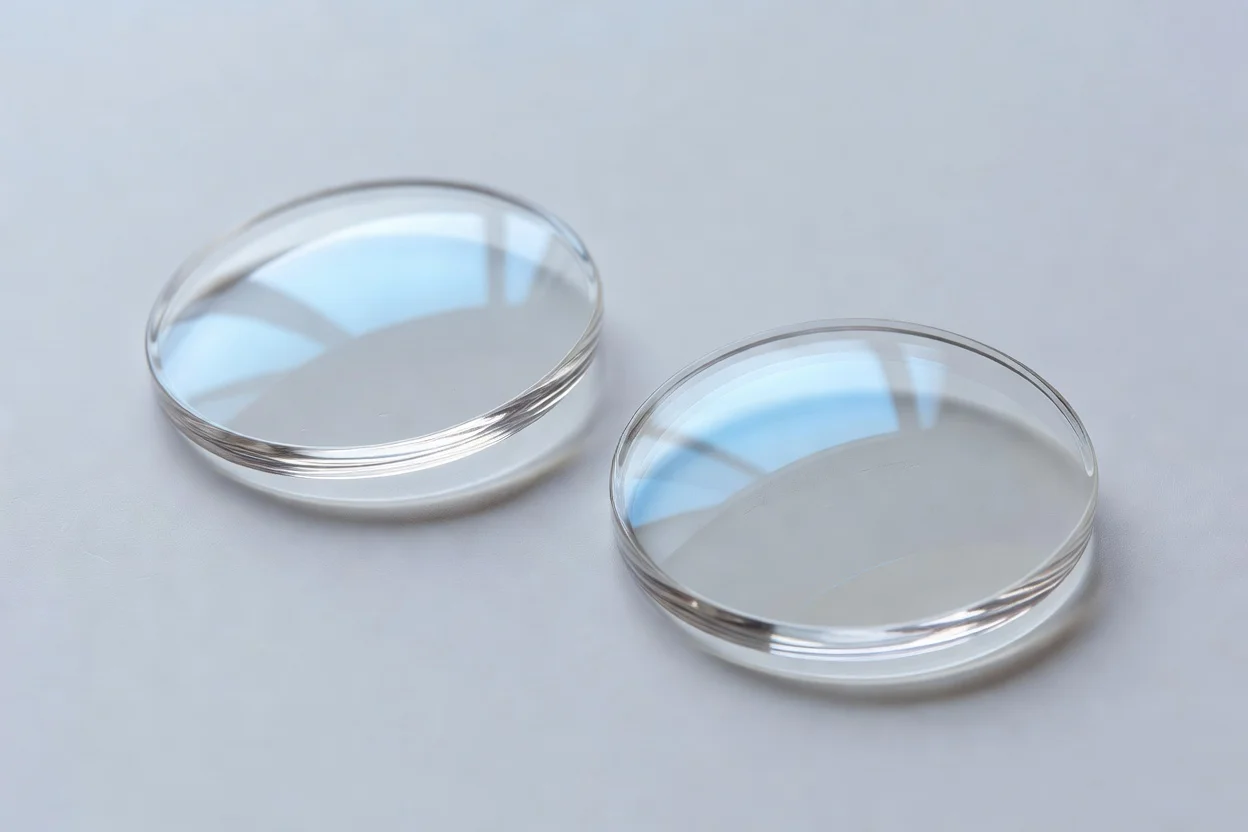
Blue-light absorbers are used wherever selective attenuation of short-wavelength visible light is needed while preserving transparency and aesthetics.
| Application area | Typical material form | Usual performance goal | Fit quality |
|---|---|---|---|
| Ophthalmic lenses | Lens substrate additive or coating | Reduce blue transmission with minimal tint | Excellent |
| Sun lenses and filter lenses | Dye-loaded or coated polymer lens | Blue-light reduction and glare control | Excellent |
| Display films and protective films | Transparent film additive/coating | Visual comfort and spectral tuning | Excellent |
| Consumer electronics optics | Transparent plastics and covers | Reduce HEV exposure from illuminated surfaces | Good |
| Textiles and coatings | Specialty dye or finish | Blue-light management and niche functional effects | Good |
| General packaging plastics | Transparent packaging | Usually limited use due to cost and optical specificity | Poor fit |
Major end uses
- Ophthalmic and spectacle lenses: Blue-light absorbers are widely used in lens substrates and coatings to create blue-light-filtering eyewear and photochromic systems.
- Display-related optics: They are used in films and protective components for digital devices, where selective filtering can reduce perceived harshness without severe distortion.
- Sun lenses and safety filters: Some formulations are designed for outdoor comfort and glare reduction while maintaining color recognition.
- 3C consumer electronics: The materials are used in products serving the computer, communication, and consumer-electronics sectors, where optical appearance and user comfort are important.
A notable poor-fit use is in general-purpose packaging, where the cost and optical specialization of blue-light absorbers are usually unnecessary and may interfere with recyclability or product appearance.

Environmental and Sustainability Aspects
The sustainability profile of blue-light absorbers is mixed and depends strongly on use case, dosage, and product architecture.
Potential benefits
- They can extend usable life of optical products by improving comfort and reducing photochemical stress on sensitive components.
- In lenses and protective optics, they may reduce the need for heavier tinting or opaque barriers, allowing lighter-weight transparent materials.
- By enabling targeted spectral control, they can improve function without major redesign of the polymer product.
Main environmental concerns
- Many are specialty organic compounds with complex synthesis routes, which can increase embodied energy and manufacturing cost.
- If used in multilayer lenses, coatings, or bonded optical assemblies, they can complicate mechanical recycling and polymer identification.
- Their environmental fate depends on the specific molecule, and proprietary systems are not always fully transparent in public documentation.
Circularity considerations
- Best case: incorporated at low levels into mono-material transparent parts that can still be collected and recycled with limited performance loss.
- More difficult case: embedded in coated or laminated optical structures that are hard to separate.
- Emerging direction: development of more durable, low-migration, and polymer-compatible blue-light absorbers that support longer service life and lower replacement rates.
In broader lifecycle terms, the most defensible sustainability argument is not that blue-light absorbers are inherently green, but that they can improve performance in applications where long product life, optical clarity, and user comfort matter.
Economic and Global Market Impact
Blue-light absorbers occupy a niche but strategically valuable segment within specialty additives and optical materials. Demand is shaped by the growth of digital devices, LED lighting, premium eyewear, and high-performance transparent plastics.
The market is fragmented and application-specific, with suppliers offering proprietary absorber families for lenses, films, and coatings. Publicly visible vendors include companies marketing blue-light absorber dyes and HEV-light absorber systems for lens and optical use.
Market drivers
- Growth in anti-blue-light eyewear and optical accessories
- Expansion of premium display films and coatings
- Consumer interest in visual comfort and circadian-light management
- Continued demand for transparent, functional plastics in electronics and healthcare optics
Market constraints
- Clinical evidence for some consumer claims remains mixed, particularly for digital eye strain in everyday use.
- Formulation costs are higher than those of conventional tint systems.
- Regulatory and marketing claims require careful substantiation, especially in ophthalmic products.
Current Challenges and Innovations
Challenges
- Balancing spectral filtering with color fidelity and high visible transmission
- Ensuring compatibility with a wide range of polymers and coatings
- Preventing yellowing, migration, or loss of performance over time
- Aligning consumer expectations with evidence-based performance claims
Innovation directions
- Narrow-band absorbers that target harmful short wavelengths while preserving perceived brightness
- Higher-transmittance formulations for clear lenses and premium display applications
- Combined systems pairing absorption with UV blocking, photochromism, or anti-reflective coatings
- Improved polymer integration to reduce migration and improve durability.
A practical chemical design trend is the move toward absorbers that function at very low loading yet deliver strong attenuation in the desired band, thereby limiting haze and preserving lens aesthetics.
Future Outlook
Blue-light absorbers are likely to remain important in optical plastics rather than becoming a mass-market bulk additive. Their strongest future lies in precision applications: clear lenses, high-value display films, medical optics, and specialty consumer products that require selective spectral control.
Future development will probably emphasize three themes:
- Better selectivity: sharper absorption bands with less color shift
- Better durability: improved heat and photostability in processing and service
- Better circularity: easier recycling compatibility and lower additive migration
As transparency, comfort, and sustainability become more tightly linked in plastics design, blue-light absorbers will continue to act as a small but technically significant bridge between polymer chemistry and human-centered optical performance.
Summary
Blue-light absorbers are specialty optical additives that selectively attenuate blue-violet visible light while preserving transparency in plastics and coatings. They are most important in lenses, films, and display-related applications, where they enable spectral tuning, visual comfort, and functional protection with relatively low loading.
Their value lies in precision rather than volume: they are a niche class of materials with disproportionate impact in high-performance transparent plastics, but they also bring formulation, recycling, and evidence-claims challenges that continue to shape product development.
References
- •
Blue-light Cut/Absorbers. (n.d.). https://www.lotchemistry.com/blue-light-cut-absorbers/Link
- •
Blue Light Absorbers: The Invisible Guardian of Your Eyes. (n.d.). https://www.chitec.com/research-detail20.htmLink
- •
Choose the Most Suitable Blue Light Absorber to Protect. (n.d.). https://www.chitec.com/research-detail21.htmLink
- •
लेंस, फिल्म और कोटिंग्स के लिए ब्लू लाइट एब्जॉर्बर | निकवेल. (2025, October 21). https://nichwellchem.com/hi/blue-light-absorber/Link
- •
藍光吸收劑. (2018, January 1). http://www.eutec.com.tw/en/article/detail/21Link
- •
蓝光吸收剂| 保护高分子材料与人眼. (n.d.). https://www.jxlotchem.com/blue-light-cut-absorbers/Link
- •
How Blue Light Absorbers Works — In One Simple Flow .... (2025, October 14). https://www.linkedin.com/pulse/how-blue-light-absorbers-works-one-simple-flow-2025-zslpcLink
- •
Epolin's High Energy Visible (HEV) Light Absorber Dyes. (n.d.). https://epolin.com/epolin_product/hev-light-absorbers/Link
- •
Seeing Clearly! A Novel Blue Light Absorber. (2019, April 26). https://everlight-uva.com/aboutus/news/seeing-clearly!-a-novel-blue-light-absorberLink
- •
China Visible light absorber 489nm Blue .... (n.d.). https://www.topwelldyes.com/visible-light-absorber-489nm-blue-light-absorber-product/Link
- •
Is the blue light filter for spectacle and intraocular lenses helpful in improving ocular health? A systematic review of the literature. (2020, February 1). https://www.scielo.org.mx/scielo.php?pid=S2604-12272020000100023&script=sci_abstract&tlng=enLink
- •
Blue and violet light absorbers. (2025, December 4). https://www.megactco.com.tw/en/blue-light-absorberLink
- •
Application of blue light absorbers in anti blue light lenses. (2025, September 8). https://www.lotchemistry.com/news/application-of-blue-light-absorbers-in-anti-blue-light-lenses.htmlLink
- •
What Is a Blue Blocker and Does It Actually Work? (2026, March 26). https://scienceinsights.org/what-is-a-blue-blocker-and-does-it-actually-work/Link
- •
Lutein and Zeaxanthin: 2020 and Beyond | Clinical Education. (n.d.). https://www.clinicaleducation.org/resources/reviews/lutein-and-zeaxanthin-2020-and-beyond/Link
- •
Carotenoids | Linus Pauling Institute | Oregon State University. (2014, April 28). https://lpi.oregonstate.edu/mic/dietary-factors/phytochemicals/carotenoidsLink
- •
Zeaxanthin: Health Benefits and Top Food Sources. (2021, October 12). https://www.healthline.com/nutrition/zeaxanthinLink
- •
The Effects of Blue Light–Filtering Intraocular Lenses on the .... (2019, December 5). https://pmc.ncbi.nlm.nih.gov/articles/PMC6901063/Link
- •
Filter | Multilens. (2023, October 30). https://www.multilens.com/en/assortment/filter/ml-filter-assortmentLink
- •
194. (n.d.). https://cejsh.icm.edu.pl/cejsh/element/bwmeta1.element.ojs-doi-10_15584_ejcem_2024_1_13/c/articles-40521372.pdf.pdfLink
- •
ZEISS Introduces the Next Generation of Photochromic .... (2022, February 22). https://www.zeiss.com/vision-care/en/newsroom/news/2022/zeiss-photofusion-x.htmlLink
- •
OBA - Jaffs Dye Chem. (n.d.). https://jaffsdyechem.in/oba/Link
- •
2.9 Photosynthesis - IB Biology HL - Weebly. (n.d.). https://mysciencesquad.weebly.com/29-photosynthesis.htmlLink
- •
Chitec Technology Co., Ltd. (n.d.). https://www.chitec.com/products-search13.htmLink
- •
Optical brightener - Wikipedia. (2001, October 31). https://en.wikipedia.org/wiki/Optical_brightenerLink
- •
What Do Blue Lens Glasses Actually Do? - ScienceInsights. (2026, March 12). https://scienceinsights.org/what-do-blue-lens-glasses-actually-do/Link
- •
Do Blue Light Glasses Work and Do You Need Them? (2024, November 22). https://www.theeyedoctors.net/eye-care-resources/do-blue-light-glasses-workLink
- •
Blue Light: the Good and the Bad. (2022, October 16). https://www.zeiss.com/vision-care/us/eye-health-and-care/understanding-vision/blue-light-the-good-and-the-bad.htmlLink
- •
Filter Explorations. (n.d.). https://www.ligo.caltech.edu/LA/system/media_files/binaries/280/original/Filter_explorations.pdf?1454769914Link
- •
Blue Light Blocking Glasses Health Benefits. (n.d.). https://www.sanmarcosvision.com/blog/blue-light-blocking-glasses.htmlLink
- •
3 Potential Benefits of Wearing Blue-Light Glasses. (2025, January 8). https://www.nike.com/a/benefits-of-blue-light-glassesLink
- •
Fluorescent Brightener 251. (2025, January 1). https://www.benchchem.com/product/b111666Link
- •
What is blue light and how can I protect my eyes from it? (2022, April 10). https://www.zeiss.com/vision-care/us/eye-health-and-care/health-prevention/what-is-blue-light-and-how-can-i-protect-my-eyes-from-it.htmlLink
- •
Fullerene derivatives—Promising blue light absorbers suppressing visual hazards for efficient indoor light harvesters. (n.d.). https://pubs.aip.org/aip/apl/article/121/13/133905/2834353/Fullerene-derivatives-Promising-blue-lightLink
- •
Are blue light glasses effective? - Mayo Clinic Health System. (2022, July 5). https://www.mayoclinichealthsystem.org/hometown-health/speaking-of-health/are-blue-light-blocking-glasses-a-must-haveLink
- •
Vær opmærksom på dette: Absorption vs. Refleksion. (2025, July 14). https://alinasleep.com/en/da/blogs/lees-meer-over-jouw-nachtrust/let-hierop-absorptie-vs-reflectieLink
- •
How Do Blue Light Glasses Work and Are They Worth It? (2026, May 4). https://scienceinsights.org/how-do-blue-light-glasses-work-and-are-they-worth-it/Link
- •
ECS Journal of Solid State Science and Technology, 2 (2) R3059-R3070 (2013). (n.d.). https://citeseerx.ist.psu.edu/document?repid=rep1&type=pdf&doi=d50e7f430f8183f76d1f1e2659f64da4341e3b40Link
- •
Do Blue Light Glasses Work? - Cleveland Clinic Health Essentials. (2026, April 22). https://health.clevelandclinic.org/do-blue-light-blocking-glasses-actually-workLink
- •
Do Blue Light Glasses Always Have a Tint? - Curae Lens. (2024, September 16). https://curaelens.com/blogs/education/do-blue-light-glasses-have-a-tintLink
- •
Blue Light Exposure: Ocular Hazards and Prevention—A Narrative .... (2023, February 18). https://pmc.ncbi.nlm.nih.gov/articles/PMC9938358/Link
- •
Apa Itu Kacamata Anti Cahaya Biru dan Bagaimana Cara .... (2020, March 13). https://www.carecredit.com/well-u/health-wellness/blue-light-blocking-glasses/Link
- •
Colored Or Tinted Lenses. (2024, October 1). https://www.eyecarebusiness.com/issues/2024/october/back-to-basics/Link
- •
Blue Filter Lens Technologies. (n.d.). https://www.visionease.com/wp-content/uploads/2017/02/BlueFilterLensTechnologiesSelfStudy1116.pdfLink
- •
How Do Blue Light Glasses Work? (n.d.). https://www.blockbluelight.com/blogs/news/how-do-blue-light-glasses-workLink
- •
Blue-light-filtering spectacle lenses in managing vision-related .... (2026, January 24). https://pmc.ncbi.nlm.nih.gov/articles/PMC12833160/Link
- •
[PDF] Blue light protecting cosmetic active ingredients: a case report. (n.d.). http://medcraveonline.com/JDC/JDC-01-00023.pdfLink
- •
Do Blue Light Glasses Work? (n.d.). https://www.eyebobs.com/blogs/news/do-blue-light-glasses-workLink
- •
What are your thoughts on blue light glasses? Do you believe they provide real benefits, or are they just a marketing gimmick ?. (2025, January 28). https://www.reddit.com/r/productivity/comments/1icdnp8/what_are_your_thoughts_on_blue_light_glasses_do/Link
- •
Blue Light Protection: What the Evidence Shows. (2025, August 4). https://www.westbrowardeyecare.com/blue-light-protection-what-the-evidence-shows/Link
- •
Blue-light filtering spectacle lenses for visual performance, .... (2023, August 18). https://pubmed.ncbi.nlm.nih.gov/37593770/Link