

Introduction
Antifoam agents are chemical additives used to prevent the formation of foam or to destabilize foam that has already formed in liquid systems. In the plastics industry, they are important auxiliaries in polymer manufacture, compounding, emulsions, coatings, adhesives, cleaning fluids, wastewater treatment, and other process streams where entrained gas and stable bubbles can impair mixing, pumping, surface quality, or product consistency.
Although the terms antifoam, defoamer, and foam control agent are often used interchangeably, strict usage distinguishes antifoams as additives introduced to suppress foam formation before it becomes stable, while defoamers act on existing foam to collapse it. Most commercial products belong to a few broad chemistries, especially silicone-based systems, polyether-based systems, hydrocarbon or mineral-oil systems, and combinations that include hydrophobic silica or waxy solids.
Their role is small in dosage but large in process impact: foam-control additives are commonly effective at low levels, often around 0.01 to 0.5 wt.%, depending on the system and formulation. In plastics-related processing, that low dosage can prevent overflow in reactors and mixers, improve degassing, reduce defects in coatings and adhesives, and help maintain throughput and surface appearance.
The technology has evolved from simple oil-and-solid antifoams to highly tailored emulsions, polyether-modified silicones, and application-specific blends designed for aqueous systems, high-temperature processing, food-contact restrictions, wastewater treatment, and sensitive biochemical or polymerization environments. Current development is driven by tighter quality requirements, greater process automation, and sustainability pressures that favor lower-VOC, lower-residue, and more biodegradable or bio-based options where performance allows.
History and Development
Foam-control agents emerged from industrial practice rather than from a single invention. Early formulations relied on mineral oils, fatty oils, waxes, and hydrophobic solids to suppress froth in fermentation, textiles, paper, and chemical processing. As industrial liquid systems became more complex, especially with surfactants, dispersants, and emulsions, antifoams were refined to work in narrower operating windows and to remain effective under heat, shear, pH variation, and long residence times.
Silicone-based antifoams became especially important because their low surface tension and chemical robustness made them effective across many aqueous and non-aqueous systems. More recent development has focused on improving dispersion stability, compatibility with downstream processes, and compliance with food, personal-care, and environmental requirements.
Chemical Structure and Key Properties
Antifoam agents are defined more by function than by one fixed molecular structure. They typically combine a low-surface-tension liquid phase with hydrophobic particles or waxes that help penetrate foam films and destabilize bubble walls.
Main formulation classes
| Class | Typical constituents | Principal role |
|---|---|---|
| Silicone-based | Polydimethylsiloxane fluids, silicone emulsions, silicone-modified systems | Strong foam suppression, broad thermal stability |
| Hydrocarbon-based | Mineral oils, paraffinic oils, waxes | Cost-effective foam reduction in oil-rich systems |
| Polyether-based | Polyalkylene glycols, polyether blends | Useful in water-based and process-sensitive systems |
| Organic/non-silicone | Fatty acids, fatty alcohols, esters, natural oils | Lower residue, sometimes better biodegradability |
| Hybrid systems | Silicone plus hydrophobic silica or wax | Improved efficiency and persistence |
Mechanism of action
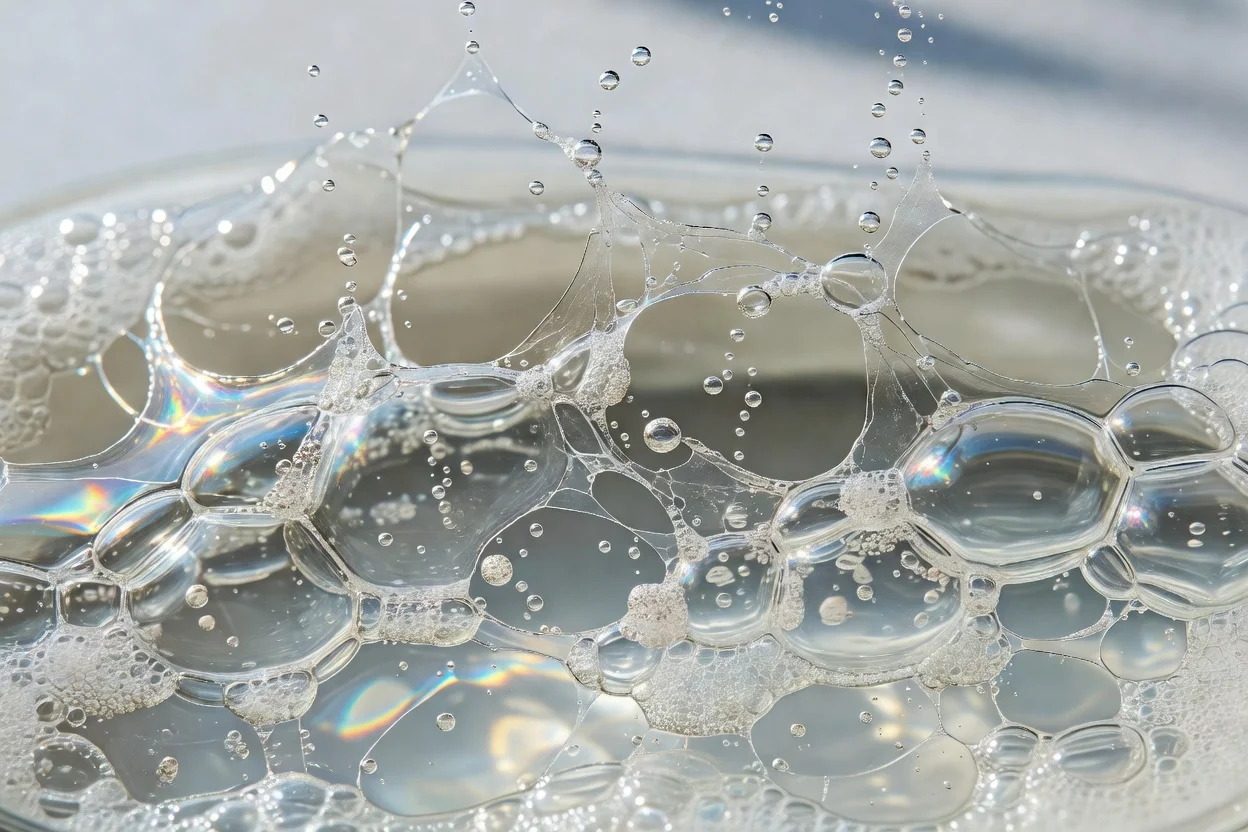
Antifoams work by weakening the foam lamella, the thin liquid film between bubbles. A dispersed antifoam droplet or particle reaches the gas-liquid interface, spreads, displaces stabilizing surfactants, and promotes film rupture; larger bubbles then rise and escape more quickly. In many aqueous systems, the antifoam phase must be sufficiently hydrophobic to enter and disrupt the foam film effectively.
Key performance properties
- Low surface tension is essential for rapid spreading at the interface.
- Limited solubility in the foaming medium often improves persistence and interface disruption.
- Hydrophobicity is critical for breaking foam films in aqueous systems.
- Shear and thermal stability matter in polymer processing, cleaning fluids, and high-temperature operations.
- Compatibility with pigments, fillers, surfactants, and resins determines whether the additive suppresses foam without causing defects or haze.
Practical limits and workarounds
- Limit: Poor compatibility can cause surface defects or loss of transparency → Cause: the antifoam may be too insoluble or too persistent in the matrix → Workaround: use a more compatible polyether-modified silicone, lower dosage, or a pre-emulsified grade.
- Limit: Silicone antifoams can create downstream contamination or fouling in sensitive processes → Cause: persistent silicone residues may interfere with adhesion, coating, or analytical performance → Workaround: select non-silicone, low-residue, or food- and process-certified alternatives.
- Limit: Some systems show reduced efficiency at very low or very high viscosities → Cause: the additive cannot spread properly or reach the bubble interface → Workaround: tailor droplet size, carrier oil, and emulsifier package to the liquid rheology.
Production Processes and Raw Feedstocks
Antifoam agents are manufactured by blending active liquids, carriers, emulsifiers, and hydrophobic solids into products suited to a particular medium. The exact process depends on whether the product is an oil, an emulsion, a powder, or a solvent-free concentrate.
Common feedstocks
- Silicone fluids such as polydimethylsiloxane for high-performance antifoams.
- Mineral oils and paraffins for lower-cost, general-purpose systems.
- Polyether polyols and polyalkylene glycols for water-compatible formulations.
- Hydrophobic silica as a foam-film disruptor and dispersion stabilizer.
- Vegetable oils, fatty acids, and esters for more biodegradable or food-compatible products.
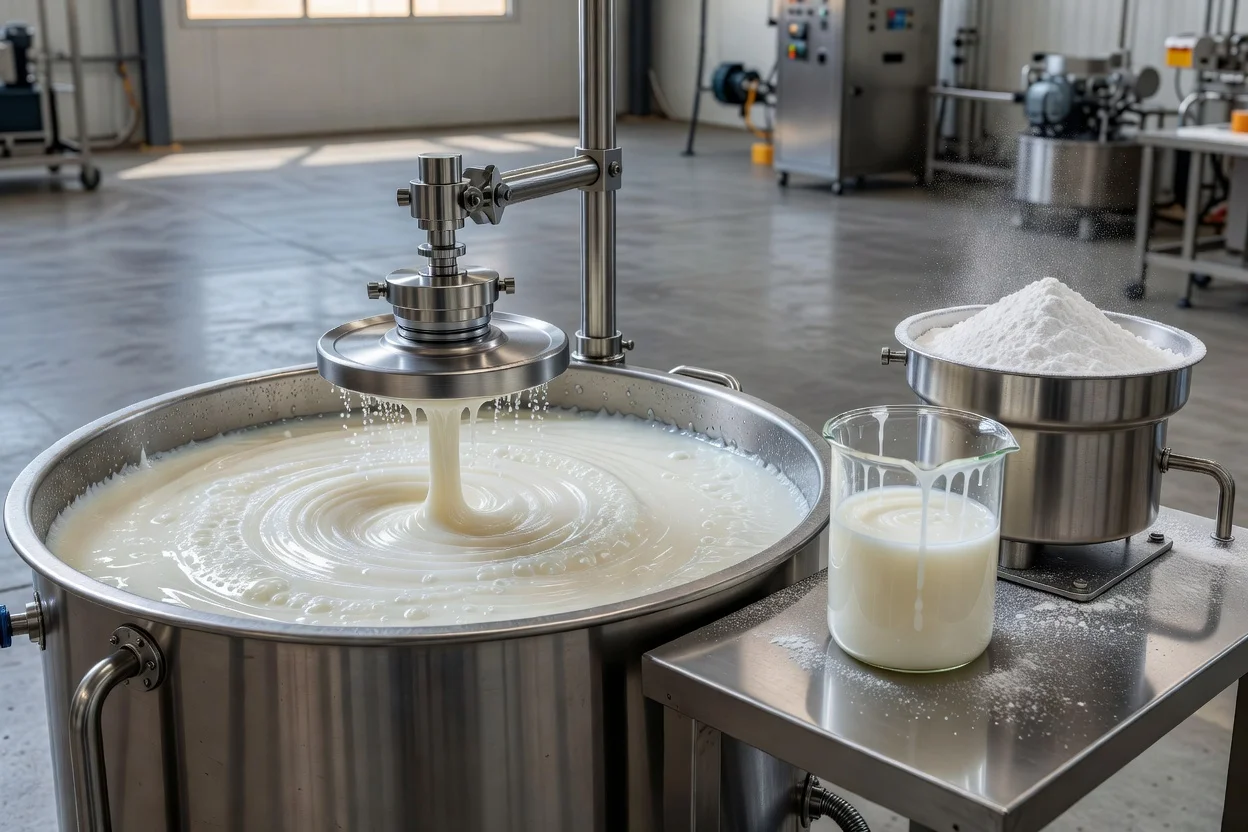
Typical manufacturing routes
- Base liquid selection according to the foaming medium.
- Addition of hydrophobic solids or waxes to improve interface rupture.
- Emulsification or dispersion in water or another carrier when rapid dosing is needed.
- Adjustment of particle size, viscosity, and emulsifier package for process stability.
- Performance screening for foam knockdown, persistence, and downstream compatibility.
A common practical dosage range is low: many systems operate effectively with only 0.01 to 0.5 wt.% additive, although higher or lower concentrations may be required in bioprocesses, detergents, coatings, or high-foam slurry systems.
Applications and End-Use Markets
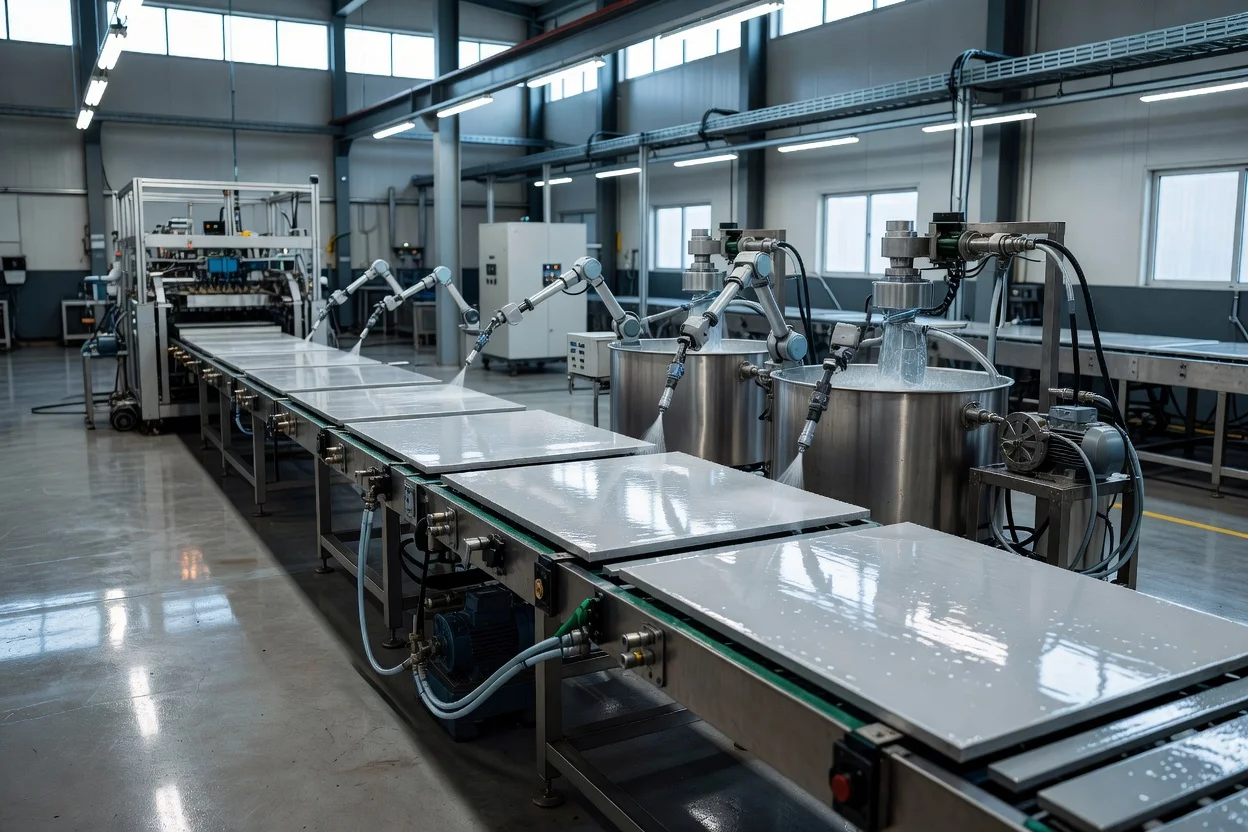
Antifoam agents are used wherever trapped air or stable foam causes operational or product-quality problems. In plastics-related value chains, they are especially relevant in polymerization, resin compounding, pigment dispersions, latex systems, coatings, adhesives, cleaning, and wastewater treatment.
Major application areas
| Sector | Typical use | Usual antifoam type | Process note |
|---|---|---|---|
| Polymer and resin manufacture | Reactor foam suppression, antifoam in emulsions | Silicone, polyether, mineral oil | Helps stabilize throughput and reduce overflow |
| Coatings and inks | Deaeration, film-quality improvement | Silicone or low-residue non-silicone | Must avoid craters, fisheyes, and haze |
| Adhesives and sealants | Bubble control during mixing and application | Silicone-modified or tailored organic types | Prevents viscosity rise and air entrapment |
| Water treatment | Foam control in aeration and tanks | Silicone, mineral oil, polyether | Selected for wastewater chemistry and cost |
| Textile and pulp processing | Foam suppression in wet processing | Silicone emulsions, specialty blends | Used where rinseability and compatibility matter |
| Cleaning and industrial fluids | Foam control in circulation and spraying | Silicone, polyether, hydrocarbon blends | Important for pumpability and spray behavior |
Performance-linked examples
- Silicone emulsions are often used in aqueous processing at very low concentration because their spreading efficiency is high and they remain effective under heat and shear.
- Polyether-modified silicones are favored when a balance is needed between foam control and compatibility with water-based formulations such as textile or paper-processing auxiliaries.
- Non-silicone organic antifoams may be selected where low residue is a priority, although their durability can be lower in demanding systems.
Poor-fit use
A poor-fit application is any system that requires very high optical clarity or extremely clean interfacial behavior, because an incompatible antifoam can create craters, haze, or deposition rather than improve quality.
Environmental and Sustainability Aspects
Environmental assessment of antifoam agents is application-specific. Their small dosage lowers material intensity, but their chemistry can still affect wastewater treatment, recyclability, residue profiles, and food-contact or pharmaceutical compliance.
Recyclability and process impacts
- Silicone residues can persist in equipment and downstream streams, sometimes complicating adhesion, painting, or filtration.
- Oil-based and wax-based products may leave residues that are easier to handle in some systems but can be less stable at high temperature.
- Water-based emulsions often improve dosing convenience and dispersion, but they still require careful formulation to avoid instability or excess surfactant load.
Bio-based and lower-impact alternatives
Natural oils, fatty alcohols, fatty acid esters, and other non-silicone systems are increasingly promoted for applications that value biodegradability or food-related acceptance. These options can reduce reliance on silicones or mineral oils, but they do not universally match silicone performance, especially under severe thermal or shear conditions.
Carbon footprint considerations
The carbon footprint of an antifoam product depends on feedstock origin, synthesis route, transport, dosage efficiency, and whether the product prevents larger losses elsewhere in the process. Because antifoams are used at low concentrations, the most important sustainability metric is often function per unit dose rather than bulk mass alone.
Economic and Global Market Impact
The antifoam market is tied to broad industrial activity in coatings, chemicals, water treatment, food, pulp and paper, and bioprocessing, rather than to plastics alone. Demand is strongest where foam directly affects throughput, quality, or safety, making the market relatively resilient across economic cycles.
Leading suppliers in industrial foam control include major silicone and specialty-chemical manufacturers such as Dow, Momentive, Elkem, and other regional formulators that supply application-specific grades. Competitive advantage generally comes from formulation expertise, regulatory support, and the ability to tailor products for low residue, food contact, high temperature, or wastewater robustness.
Current Challenges and Innovations
Key challenges
- Achieving foam control without surface defects, especially in coatings and adhesives.
- Maintaining performance across variable pH, temperature, and electrolyte levels.
- Balancing silicone efficiency against residue or contamination concerns.
- Meeting stricter requirements for food, personal care, and environmental compatibility.
Recent innovation themes
- Polyether-modified silicones that improve compatibility in water-based systems.
- Low-VOC and low-residue emulsions for cleaner processing.
- Bio-based antifoams using vegetable oils or fatty derivatives for selected uses.
- Application-specific blends designed to optimize foam knockdown, persistence, and downstream cleanliness.
Future Outlook
Future development is likely to focus on more selective, lower-residue, and more sustainable foam-control systems that can be tailored to specific process chemistries rather than used as universal products. In plastics and allied industries, the strongest opportunities lie in resin manufacture, waterborne coatings, adhesives, and recycling-related process streams where foam control improves yield, energy efficiency, and quality consistency.
Silicone technologies will probably remain dominant in high-performance applications because of their robustness and efficiency, while non-silicone and bio-based systems will expand where compliance, biodegradability, or residue minimization are more important than maximum foam suppression.
Summary
Antifoam agents are indispensable processing auxiliaries that control foam by lowering interfacial stability and accelerating bubble collapse. Their chemistry ranges from silicone fluids and hydrophobic silica to mineral oils, polyethers, and bio-based alternatives, with each class offering a different balance of efficiency, compatibility, residue, and sustainability. In the plastics value chain, they are especially valuable in polymer processing, coatings, adhesives, cleaning, and wastewater systems, where even small amounts can prevent defects, improve throughput, and support more reliable production.
References
- •
Antifoaming agent - An overview. (n.d.). ScienceDirect. https://www.sciencedirect.com/topics/pharmacology-toxicology-and-pharmaceutical-science/antifoaming-agentLink
- •
Antifoam agent: Definition, types, applications & selection guide. (2026, June 1). JF ChemTech. https://www.jfchemtech.com/antifoam-agent-definition-types-applications-selection-guide.htmlLink
- •
Antifoaming agent - An overview. (n.d.). ScienceDirect. https://www.sciencedirect.com/topics/medicine-and-dentistry/antifoaming-agentLink
- •
Antifoam agents. (n.d.). PMG Engineering. https://pmg.engineering/Technology/516/antifoam-agents/Link
- •
Antifoam agent. (2021, May 19). Energy Glossary - SLB. https://glossary.slb.com/en/terms/a/antifoam_agentLink
- •
Mechanistic understanding of the modes of action of foam control agents. (n.d.). https://costd43.lcpe.uni-sofia.bg/files/publications/2014/2014-03-ND-KM-SC-Modes-of-action-of-foam-control-agents.pdfLink
- •
Application cases. (2024, September 13). Patsnap Eureka. https://eureka.patsnap.com/blog/what-is-antifoam/Link
- •
Antifoaming agents (Review). (n.d.). JETIR Research Journal. https://www.jetir.org/papers/JETIR2302235.pdfLink
- •
The quick guide to antifoam: Mechanisms, benefits and use. (2024, September 13). Patsnap Eureka. https://eureka.patsnap.com/blog/material-tech-resources/what-is-antifoam/Link
- •
Antifoaming agents. (n.d.). Wiley Online Library. https://onlinelibrary.wiley.com/doi/abs/10.1002/0471440264.pst411.pub2Link
- •
Anti-foaming agents. (n.d.). Surface technology encyclopedia technical terms. https://www.surface-technology.info/topics/encyclopedia/technical-terms/anti-foaming-agentsLink
- •
Antifoams - An overview. (n.d.). ScienceDirect. https://www.sciencedirect.com/topics/engineering/antifoamsLink
- •
Defoamers/Anti-foaming agents for paint & coatings selection guide. (2025, July 8). SpecialChem. https://www.specialchem.com/coatings/guide/defoamers-antifoaming-agent-coatings-selection-guideLink
- •
What are the types of defoamers? (2024, July 21). Rise Chemical. https://www.risechemical.com/news/what-are-the-types-of-defoamersLink
- •
10 Antifoaming and defoaming. (n.d.). https://rpc-cms-re4-upscope.web.cern.ch/RPC/Safety/CMS%20Foam/Theory/Documentation/BubbleandFoamChemistrybyPugh2016/antifoaming_and_defoaming.pdfLink
- •
Understanding the best anti foaming agent: Types, applications, benefits. (2025, July 1). Sixin Defoamer. https://www.sixindefoamer.com/blog/best-anti-foaming-agent-types-applications-benefits/Link
- •
Antifoams / Defoamers. (2016, January 1). Harvest Chemical. https://www.harvestchemical.co.id/antifoams-defoamersLink
- •
Antifoaming agents: What you need to know. (2022, May 9). Crucible Chemical. https://cruciblechemical.com/antifoaming-agents-what-you-need-to-know/Link
- •
Antifoam selection for bioreactors: Types, screening & dosing. (2026, August 3). Bioprocess Tools. https://bioprocesstools.com/blog/antifoam-selection-bioreactor/Link
- •
SILFOAM custom foam control. (n.d.). HellermannTyton. https://www.hellermanntyton.pl/binaries/content/assets/downloads/pl/rozszerzony-zakres-produktow/silfoam_foam_control_en.pdfLink
- •
Defoamers and antifoam agents: How are they used? (2022, April 21). Brewer International. https://brewerint.com/news-insights/101-guides/what-are-defoamers-and-antifoam-agents-and-how-are-they-used/Link
- •
Difference between defoamer and antifoam. (2025, September 17). Wotai Chem. https://wotaichem.com/defoamer-and-antifoam/Link
- •
Antifoaming agent - An overview. (n.d.). ScienceDirect. https://www.sciencedirect.com/topics/chemistry/antifoaming-agentLink
- •
Industrial antifoam solutions. (n.d.). Momentive. https://www.momentive.com/content/dam/momentive/en-us/products/marketing-documents/antifoams/Industrial%20Antifoam%20Solutions%20Brochure.pdfLink
- •
Top 10 antifoaming agent examples you need to know for effective use. (2025, December 17). Sixin Defoamer. https://www.sixindefoamer.com/blog/top-antifoaming-agent-examples-for-effective-use/Link
- •
Foam control. (2003, October 21). ScienceDirect. https://www.sciencedirect.com/topics/materials-science/foam-controlLink
- •
Antifoaming agent for lubricating oil: Preparation, mechanism. (2023, March 31). PMC. https://pmc.ncbi.nlm.nih.gov/articles/PMC10095646/Link
- •
Foam control agents. (2025, November 5). Dow. https://www.dow.com/en-us/product-technology/pt-antifoams.htmlLink
- •
Top 10 anti foaming agents: Uses, benefits, and applications. (2025, December 29). Sixin Defoamer. https://www.sixindefoamer.com/blog/top-10-anti-foaming-agents-uses-and-benefits/Link
- •
Antifoaming agents. (n.d.). DrugBank. https://go.drugbank.com/categories/DBCAT001607Link
- •
Silicone antifoam agents & foam control. (n.d.). Elkem. https://www.elkem.com/products/silicones/silicone-foam-control/foam-control-surface-agents/Link
- •
What is an anti foaming agent in food and how does it work? (2026, January 6). Sixin Defoamer. https://www.sixindefoamer.com/blog/anti-foaming-agent-in-food-and-how-it-works/Link
- •
Guide to antifoams & defoamers. (2026, May 4). Applied Material Solutions. https://www.appliedmaterialsolutions.com/guide-to-antifoams-defoamers/Link
- •
Select defoamers / anti-foaming agents for adhesives. (2025, July 7). SpecialChem. https://www.specialchem.com/adhesives/guide/select-defoamers-antifoaming-agents-for-adhesivesLink
- •
Antifoams. (2023, October 14). Sigma-Aldrich. https://www.sigmaaldrich.com/US/en/technical-documents/technical-article/cell-culture-and-cell-culture-analysis/microbial-cell-culture/antifoamsLink