

Introduction
Surface pretreatment equipment refers to the machinery and integrated process systems used to clean, activate, roughen, de-grease, dry, or otherwise condition a substrate before coating, printing, bonding, metallizing, or other downstream finishing operations. In plastics processing, the term is especially associated with improving adhesion on polymers, but in the broader industrial context it also includes equipment for metals, wood, glass, composites, and concrete.
In plastics manufacturing, surface pretreatment is critical because many polymers have low surface energy and therefore resist wetting by inks, adhesives, paints, and functional coatings. Typical equipment classes include corona treaters, plasma systems, flame treaters, chemical pretreatment washers, and, in some industrial lines, mechanical or abrasive systems where roughening or contaminant removal is needed.
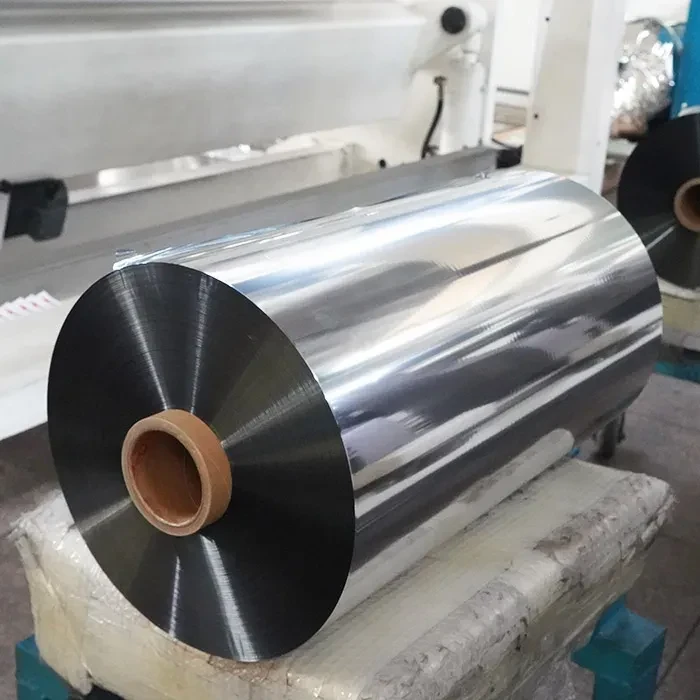
The field has evolved from simple cleaning and abrasion toward highly controlled, automated, and energy-aware systems that combine surface activation, inline inspection, drying, and process monitoring. Current development trends emphasize lower scrap rates, reduced solvent use, tighter adhesion control, and compatibility with circular-economy processing, including recycled polymers and lightly contaminated feedstocks.
History and Development
Surface pretreatment grew out of early industrial cleaning and de-rusting practices, then expanded with the rise of protective coatings, electrocoating, and high-speed packaging and printing lines. As polymer processing expanded after the mid-20th century, equipment makers increasingly adapted pretreatment methods to plastics that required adhesion promotion rather than only contamination removal.
A major milestone was the industrialization of corona treatment for films, sheets, and extrusion lines, which made inline activation possible at production speed for polyethylene, polypropylene, and similar low-surface-energy materials. This approach became foundational in packaging and converting because it could be integrated directly into continuous web processes.
A second milestone was the spread of atmospheric plasma systems, which extended surface activation to more geometries and materials, including molded plastics, technical components, glass, textiles, and composites. These systems were particularly important where solvent-free, localized, and highly controllable treatment was required.
A third development was the expansion of automated spray and dip pretreatment lines for parts finishing, especially in metal coating and powder coating operations. These lines standardized stages such as degreasing, rinsing, phosphating, drying, and sometimes conversion coating, improving corrosion resistance and coating reliability.
Technical Overview
Surface pretreatment equipment operates by changing the outermost surface condition of a workpiece so that subsequent layers adhere more effectively or perform more consistently. The main mechanisms are mechanical removal, chemical cleaning, thermal activation, electrical discharge activation, and plasma-induced surface modification.
For plastics, the objective is usually not bulk material removal but a controlled rise in surface energy and wettability. Treatment equipment creates reactive sites, removes weak boundary layers, and improves ink, adhesive, or coating spreading. In practical terms, successful pretreatment is often measured by dyne level, contact angle, or adhesion test performance rather than by visible surface change alone.
For metal pretreatment lines, the process is commonly built around washing, rinsing, chemical conversion, drying, and sometimes blast preparation. These systems remove oils, oxides, salts, and particulates before coating, which improves corrosion resistance and reduces coating failure.
Typical engineering parameters vary widely by machine class:
- Corona treatment lines for film and sheet usually run inline with web or extrusion equipment and are selected for high-speed continuous processing of polyolefins and similar substrates.
- Atmospheric plasma systems are used for localized activation, microfine cleaning, and improved adhesion on plastics, metals, glass, cardboard, textiles, and composites.
- Flame treatment systems use controlled combustion to oxidize polymer surfaces and raise surface energy, especially on containers, caps, and some molded parts.
- Spray pretreatment washers for industrial parts typically use enclosed tunnel zones, circulation pumps, spray nozzles, filtration, and drying units.
- Dip pretreatment lines immerse parts in tanks and are better suited to complex geometries or high-contamination loads.
- Mechanical blasting and grinding systems are used when contaminant removal, profile creation, or coating removal is required rather than chemical activation.

Quantitative process benchmarks depend on the application, but several practical ranges are commonly cited in industry:
- Centrifugal dewatering in washer-based pretreatment can reduce residual moisture substantially before drying, often leaving only a thin film that is removed in the oven stage; exact values depend on part geometry and drainage design.
- Abrasive blast nozzle pressures for steel preparation are commonly in the 80 to 120 psi range for controlled profile creation.
- Shot blasting equipment is used for high-throughput metal pretreatment, with line capacities ranging from small batch systems to large automated plate and profile lines handling heavy structural components.
- Flame and plasma systems are selected for treatment intensity and speed matched to the line, with plasma favored where low thermal load and precise localization are important.
Major Types and Variations
| Type | Main function | Typical substrates | Strengths | Limitations |
|---|---|---|---|---|
| Corona treatment | Surface activation by electrical discharge | Films, sheets, webs | Inline, fast, widely used on polyolefins | Limited to accessible web surfaces |
| Atmospheric plasma | Activation and microfine cleaning | Plastics, metals, glass, composites, textiles | Precise, solvent-free, highly adaptable | Higher capital cost than simpler methods |
| Flame treatment | Oxidative activation by controlled flame | Containers, molded parts, caps | Fast, simple, effective on many polymers | Thermal management required |
| Spray pretreatment line | Degreasing, rinsing, phosphating, drying | Metal parts, painted components | Automated, high throughput, repeatable | Requires water and chemical management |
| Dip pretreatment line | Immersion cleaning and conversion | Complex-shaped parts | Good coverage, strong cleaning action | More tank space and chemical inventory |
| Mechanical blasting / grinding | Cleaning, roughening, coating removal | Metal, concrete, some composites | Strong profile creation, good for corrosion or paint removal | Dust, media handling, operator protection needed |
Polymer-focused systems
Corona treaters are widely used in packaging because they can be mounted directly on film extrusion, printing, laminating, and slitting lines. They are particularly useful where adhesion must be improved without adding primers or solvents.
Plasma pretreatment systems are used when treatment must be highly localized or when the part geometry is complex. They are common in electronics, medical devices, automotive interior components, and technical packaging because they can increase wettability and reduce reject rates.
Flame treaters are often used for bottles, caps, drums, and molded polypropylene or polyethylene parts. Their advantage is rapid treatment of three-dimensional parts, but they require strict process control to avoid overheating or deformation.
Metal-finishing systems
Spray wash pretreatment lines are central to powder coating, liquid coating, and e-coat operations. They typically include alkaline cleaning, rinsing, surface conversion, and drying, sometimes with oil separation and water recycling.
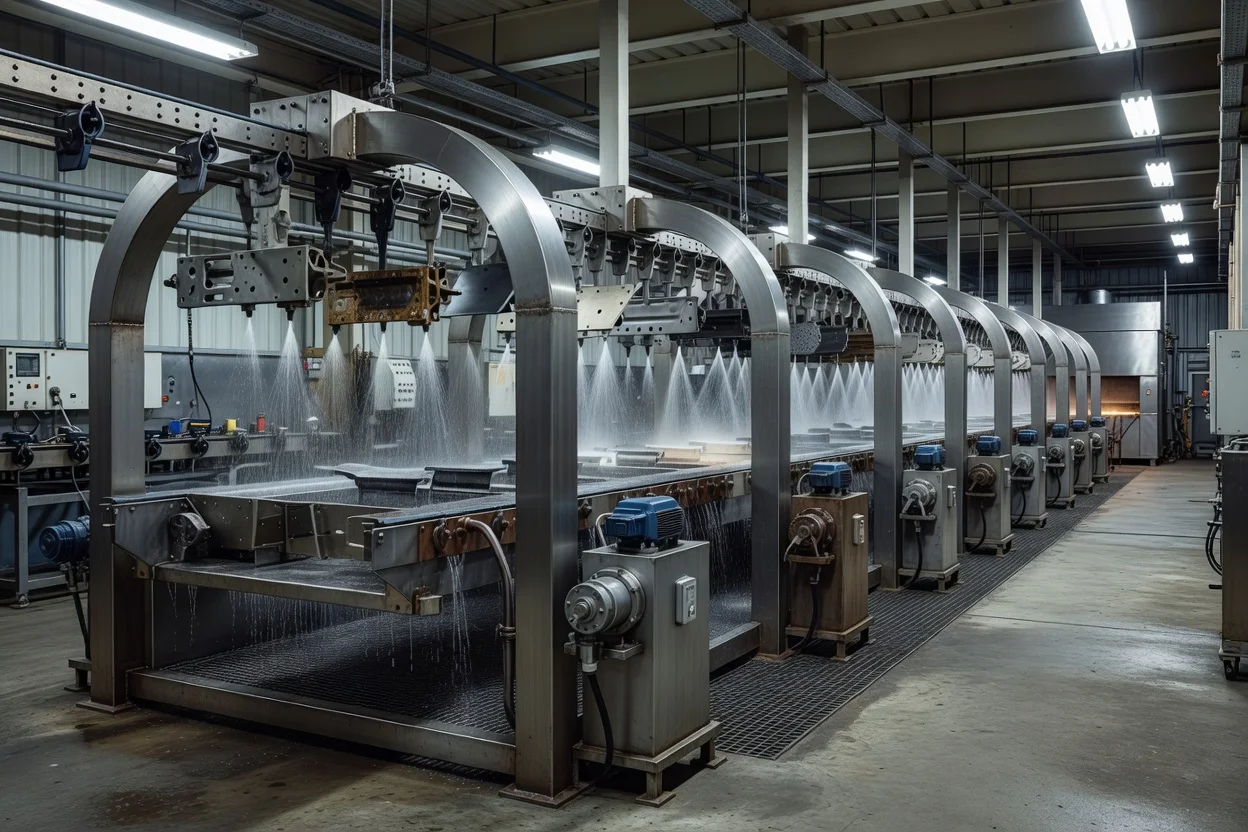
Dip pretreatment plants are used for heavily soiled or geometrically complex workpieces where spray impingement alone may not reach internal cavities or recesses.
Mechanical surface preparation systems
Mechanical pretreatment includes blast cabinets, shot blasting machines, sandblasting booths, vacuum-blasting tools, floor grinders, needle scalers, and bristle blasters. These systems are used when the goal is to remove rust, scale, burrs, old coatings, or contaminants and to create a controlled anchor profile.
Applications and Uses
Surface pretreatment equipment is used across the plastics industry and adjacent manufacturing sectors wherever adhesion, appearance, corrosion resistance, or process reliability matter.
- Packaging and film converting: corona treatment is dominant for printed films, laminated structures, labels, and flexible packaging because it supports high-speed inline processing.
- Injection-molded plastics: plasma and flame systems are used on housings, caps, trim parts, medical components, and decorative items before printing or coating.
- Automotive: pretreatment is used on plastic interior and exterior parts, metal body components, e-coat lines, and underbody or corrosion-sensitive parts.
- Electronics: plasma pretreatment supports adhesion of conductive coatings, display layers, printed circuits, and encapsulation-related processes.
- Powder coating and industrial finishing: spray and dip pretreatment systems prepare metal fabrications, cabinets, frames, and appliances for durable coatings.
- Construction and infrastructure: blasting and high-pressure water systems are used on steel, concrete, bridges, tanks, and structural components.
- Wood and furniture: dedusting, surface cleaning, and activation systems prepare panels, moldings, and doors for finishing.
- A poor-fit use: highly heat-sensitive thin films or delicate low-melting plastics are generally poor candidates for aggressive flame, abrasive, or high-temperature pretreatment because thermal distortion or surface damage can outweigh adhesion gains. This is an inference from the operating principles of the equipment and the materials cited by suppliers.
Technological Innovations and Automation
Modern pretreatment systems increasingly integrate PLC control, recipe management, inline sensors, closed-loop chemistry control, and conveyor synchronization. In automated spray wash lines, this improves repeatability and reduces operator dependence.
Plasma and corona systems now often include power monitoring and real-time process verification to stabilize surface activation across changing line speeds and substrate thicknesses. This is particularly valuable in packaging and electronics, where small variations can affect bond strength or print quality.
Another innovation is water recycling and effluent treatment, which has become a significant part of pretreatment plant design. Recycling, filtration, oil separation, and wastewater handling reduce operating cost and help meet environmental requirements.
Industry users also increasingly combine pretreatment with automated inspection and drying stages so that the surface is not only cleaned but also transferred into the next process window with minimal delay. That reduces recontamination and improves coating consistency.
Environmental and Sustainability Aspects
Pretreatment equipment has a mixed but increasingly manageable environmental profile. Wet chemical systems can consume water, generate effluent, and require chemical replenishment, but these impacts are mitigated through filtration, recycling, and optimized spray architecture.
Plasma and corona systems are attractive from a sustainability perspective because they can replace primers, reduce solvent use, and support dry, inline processing. In packaging and technical plastics, that can lower VOC emissions and reduce material waste from adhesion failures.
Mechanical systems such as blasting and grinding may eliminate chemical cleaners, but they can create dust, media waste, and containment requirements. Vacuum-blasting and enclosed systems are therefore important in sensitive or environmentally constrained sites.
Pretreatment also supports circularity by improving the reliability of coatings and adhesives on recycled polymers and remanufactured parts. The main challenge is that recycled feedstocks often show more variability in contamination, additives, and surface chemistry, which can make process control more difficult.
Economic and Global Market Impact
Pretreatment equipment influences the economics of the entire finishing chain because adhesion failures, corrosion defects, and rework costs are often more expensive than the pretreatment line itself. For that reason, producers often justify pretreatment investment through lower scrap rates, longer coating life, and improved throughput stability.
The market spans high-volume packaging lines, automated industrial finishing plants, and specialized systems for aerospace, electronics, and medical devices. Suppliers such as Arcotec, Enercon, Plasmatreat, Sprimag, Riveer, and pretreatment-line manufacturers in Asia and Europe serve distinct niches in plasma, corona, coating pretreatment, and wash-line integration.
Regional demand is shaped by local coating industries, export manufacturing, environmental regulation, and labor cost. As a result, automation and closed-loop chemical control are especially important in plants seeking stable quality with reduced operator intervention.
Current Challenges and Innovations
One persistent challenge is matching treatment intensity to substrate variability. Polymers differ in formulation, fillers, mold release residues, and aging behavior, so a setting that works for one part may underperform on another.
A second challenge is process validation. Manufacturers must often demonstrate that treatment remains effective across line speed changes, part geometry changes, and production shifts. This is especially important in automotive, electronics, and medical applications where adhesion or contamination failure can be costly.
A third challenge is balancing chemical performance with sustainability. Wet pretreatment lines can deliver excellent corrosion resistance and coating durability, but they require water, heat, treatment chemistry, and wastewater controls. Dry systems reduce many of these burdens but may not replace all functions in every application.
Current innovation efforts focus on:
- Lower-energy activation for plastics and recycled materials.
- More compact lines for constrained factory layouts.
- Better effluent recovery and filtration in spray and dip systems.
- Improved dust control and containment in mechanical surface preparation.
- Multi-material capability for plants handling plastics, metals, and composites on the same line.
Future Outlook
Surface pretreatment equipment is likely to become more data-driven, more modular, and more tightly integrated with coating and printing lines. The strongest growth potential lies in systems that can treat difficult-to-bond recycled polymers, mixed-material assemblies, and high-value technical parts with minimal chemical input.
Plasma, corona, and flame systems will remain central in plastics processing, but they will increasingly be selected for narrow process windows, low energy demand, and inline quality control rather than only for adhesion improvement.
At the same time, wet pretreatment lines will continue to evolve toward lower water use, more efficient spray geometry, improved drying, and smarter chemistry management. In heavy industry, blast and waterjet systems will remain essential where profile creation, corrosion removal, and coating stripping are required at scale.
Summary
Surface pretreatment equipment is a foundational part of plastics finishing and industrial coating systems because it determines whether inks, coatings, and adhesives will bond reliably. Its main technologies—corona, plasma, flame, spray and dip wash lines, and mechanical blasting—serve different substrates and production goals, but all aim to improve surface condition before the next manufacturing step.
The sector is moving toward more automated, resource-efficient, and process-verified systems, with strong emphasis on adhesion control, waste reduction, and compatibility with recycled and complex materials.
References
- •
Riveer. (2026, July 29). Pretreatment. https://riveer.com/capabilities/pretreatment/Link
- •
Arcotec. (2026, March 10). Your specialist for pre-treatment systems. https://arcotec.com/en/Link
- •
Novatek. (2021, March 26). Surface prep. https://www.novatekco.com/products/surface-prep/Link
- •
Enercon Industries. (2026, August 19). Plasma surface treater machines and systems to improve adhesion. https://www.enerconind.com/plasma-treating/Link
- •
National Painting Equipment Authority. (2026, March 12). Surface preparation equipment before painting. https://nationalpaintingequipmentauthority.com/surface-preparation-equipment.htmlLink
- •
Pro Tool & Supply. (2025, May 14). Types of surface preparation equipment & which is right for your project. https://www.protoolandsupply.com/how-to-choose-the-right-surface-preparation-equipment-for-your-projectLink
- •
Rapid Prep, LLC. (2026, May 13). Surface prep tools. https://www.rapidprep.com/accessories-abrasives/power-tools/Link
- •
Total Finishing Systems. (2025, May 14). Chemical surface pretreatment washers. https://totalfinishingsystems.com/chemical-pretreatmentLink
- •
Sprimag. (n.d.). Surface pretreatment. https://us.sprimag.com/coating-machines-products/surface-coating/surface-pretreatmentLink
- •
Riley Surface World. (n.d.). Surface treatment process plant & equipment. https://www.rileysurfaceworld.co.uk/surface_treatments.aspLink
- •
Sintokogio. (n.d.). Surface treatment equipment lineup. https://www.sinto.co.jp/en/product/surface/lineup/apparatus/Link
- •
DirectIndustry. (2025, January 1). Plasma surface treatment machines. https://www.directindustry.com/cat/surface-treatment-equipment/plasma-surface-treatment-machines-AO-1210-_2.htmlLink
- •
Galatek. (n.d.). Surface pretreatment. https://www.galatek.cz/en/surface-pretreatment/Link
- •
Itshotblasting.com. (2026, July 28). Products. https://www.itshotblasting.com/productsLink
- •
Parker Engineering. (n.d.). Pretreatment equipment / E-coat equipment. https://www.parker-eng.co.jp/en/product/ms-plant/maeshori-dencyaku/Link
- •
MontiPower. (2024, February 29). Tools for surface preparation. https://montipower.com/tools-for-surface-preparation/Link
- •
StoneAge. (2022, September 23). StoneAge: Industrial waterjetting tools for surface preparation. https://www.stoneagetools.com/Catalog/products/application/surface-preparationLink
- •
GBM Industries. (n.d.). Top pre-treatment plant manufacturers in India. https://gbmindustries.com/product_category/pre-treatment-plant/Link
- •
LinkedIn. (2025, October 1). Surface preparation machines in the real world: 5 uses you'll actually use. https://www.linkedin.com/pulse/surface-preparation-machines-real-world-5-uses-youll-actually-vibjfLink
- •
Intechfinishing.com. (n.d.). ITEB 010824 pretreatment plant buyers guide. https://intechfinishing.com/wp-content/uploads/2025/01/ITEB-010824-Pretreatment-plant-buyers-guide.pdfLink
- •
Venjakob. (n.d.). Surface pretreatment for coatings. https://www.venjakob.de/en/processes/surface-pre-treatmentLink
- •
SMD Carbon Tower. (2020, July 8). Pre treatment plant. https://www.smdcarbontower.com/pre-treatment-plant.htmlLink
- •
Matech Makina. (n.d.). Surface pretreatment systems. https://www.matechmak.com/en/urunler/yuzey-temizleme-sistemleri/Link
- •
Hinah Coating Line. (2025, January 7). Powder coating pretreatment system. https://www.hinahcoatingline.com/products/powder-coating-pretreatment-systemLink
- •
Powder-coating.online. (n.d.). Spray wash pretreatment line. https://powder-coating.online/en/machines/spray-wash-pretreatment-lineLink
- •
Techexpert India. (2025, February 28). Pre-treatment system. https://www.techexpertindia.com/pre-treatment-system-world-class-surface-finishing-system/Link
- •
Production Systems-USA. (2020, July 1). Sand blast booth for pretreatment and surface preparation. https://productionsystems-usa.com/pretreatment-and-surface-prep-booths/Link
- •
PPG. (2024, September 4). Industrial pretreatment products. https://www.ppg.com/en-US/industrialcoatings/pretreatmentLink
- •
Plasmatreat. (n.d.). Industry solutions. https://www.plasmatreat.com/en/industry-solutionsLink
- •
Zhyao Powdercoatingline. (n.d.). Powder coating pretreatment system. https://zhyao-powdercoatingline.com/ourproducts/cp5/271.htmlLink
- •
Parker Engineering. (n.d.). Pretreatment equipment. https://www.parker-eng.co.jp/en/product/l-plant/maeshorisouchi/Link
- •
Metoree. (n.d.). 31 plasma processing equipment manufacturers in 2026. https://us.metoree.com/categories/2962/Link
- •
Number Analytics. (2025, June 12). Surface treatment equipment essentials. https://www.numberanalytics.com/blog/ultimate-guide-surface-treatment-equipment-metallurgical-designLink
- •
Qingguo Intelligent. (n.d.). China coating pre-treatment equipment supplier, manufacturer and factory. https://www.coating-lines.com/coating-pre-treatment-equipmentLink
- •
LinkedIn. (2021, May 26). How to choose the right pre-treatment system of powder coating line. https://www.linkedin.com/pulse/how-choose-right-pre-treatment-system-powder-coating-line-claire-shiLink
- •
Alibaba. (2024, August 28). Surface treatment machines. https://www.alibaba.com/showroom/surface-treatment-machines.htmlLink
- •
Granalladopro. (2025, May 12). Products. https://granalladopro.com/products/Link
- •
Brighton Science. (2025, December 1). Surface treatment methods: A practical guide for manufacturers. https://www.brighton-science.com/blog/a-summary-of-surface-treatment-methods-for-manufacturersLink
- •
Total Finishing Systems. (2025, January 1). Surface pretreatment. https://totalfinishingsystems.com/surface-pretreatmentLink
- •
LinkedIn. (2025, November 11). Types of surface treatments and their industrial applications. https://www.linkedin.com/pulse/types-surface-treatments-industrial-applications-vxntfLink
- •
Academia.edu. (2018, December 11). Surface preparation and application. https://www.academia.edu/37960320/Surface_Preparation_and_ApplicationLink
- •
Hydromer. (2025, April 18). What is surface treatment - benefits & types for medical devices. https://hydromer.com/what-is-surface-treatment/Link
- •
Mastercraft Finishers. (2025, January 2). Surface prep and pre-treatment: The unsung heroes of the coating industry. https://mastercraftfinishers.com/surface-prep-and-pre-treatment-the-unsung-heroes-of-the-coating-industry/Link
- •
Kayako Cvib. (2025, November 8). What are the stages of surface treatment application? https://kayakocvib.com/what-are-the-stages-of-surface-treatment-application/Link
- •
Kluthe. (2019, January 1). Surface pretreatment. https://kluthe.com/en/products/surface-pretreatment/Link