
Introduction
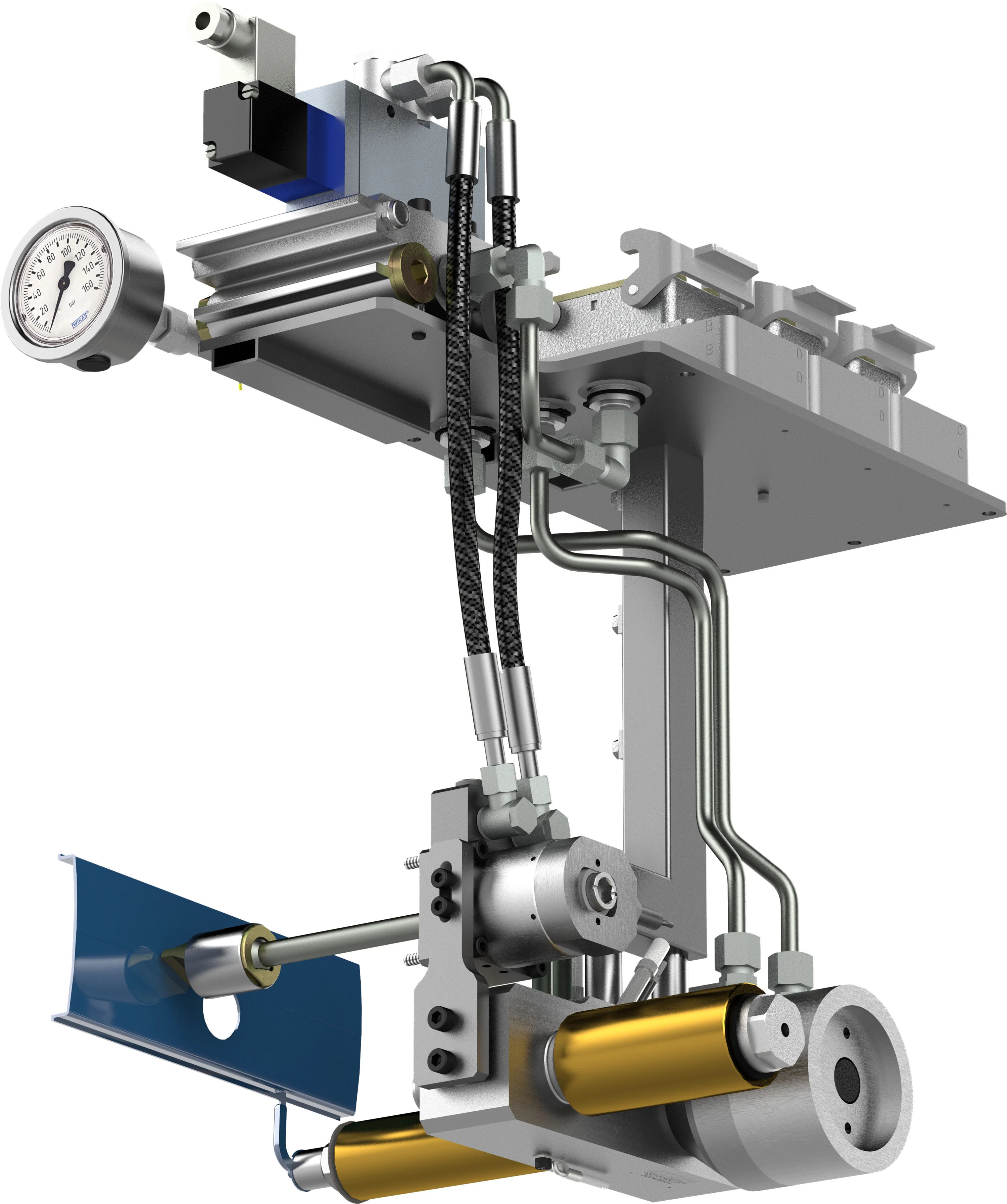
Heat impulse welding machines are thermoplastic joining systems that generate heat only during the weld cycle by passing electrical current through a high-resistance heating element, typically a thin strip or wire. The process is valued for precise energy control, clean seams, and low idle power consumption, making it widely used for films, technical textiles, packaging, and other heat-sealable plastic assemblies.
In industrial plastics processing, the term usually refers to impulse welding or thermal impulse welding, where the tooling heats rapidly, melts the interface locally, and then cools under pressure before release. This on-demand heating method reduces thermal stress on adjacent material and can improve seam appearance and dimensional stability compared with continuously heated tools.
The technology spans several machine classes, including bag and pouch sealers, awning and textile welders, conveyor-belt and membrane welders, and impulse heat staking systems for plastic assembly. Across these variants, the core engineering principle is the same: short electrical pulses create a controlled weld zone, followed by a pressure-held cooling phase that solidifies the joint.
Interest in the process has strengthened alongside demands for energy efficiency, automation, and repeatable quality in packaging, medical, automotive, and technical textile production. Future development is likely to focus on tighter closed-loop control, faster cycle times, and broader integration with digital production monitoring.
History and Development
Impulse welding developed as an alternative to continuously heated sealing bars, particularly where thin films, temperature-sensitive materials, or precise seam geometries required better thermal control. The process became established in industrial sealing and fabric welding because it allowed heat to be generated only when needed, rather than keeping tools at temperature throughout production.
Key milestones include:
- Adoption of resistance-heated narrow bands: early impulse systems replaced bulk heating with thin metal heater bands, which could heat and cool quickly because of their low thermal mass.
- Expansion into industrial fabric welding: the process moved beyond small seals into long-seam welding for tarpaulins, awnings, membranes, and technical textiles, where controlled cooling under pressure improved seam quality.
- Automation and feedback control: modern machines increasingly use closed-loop temperature or energy control to maintain consistent weld quality across changing material batches and production speeds.
Working Principle and Technical Overview
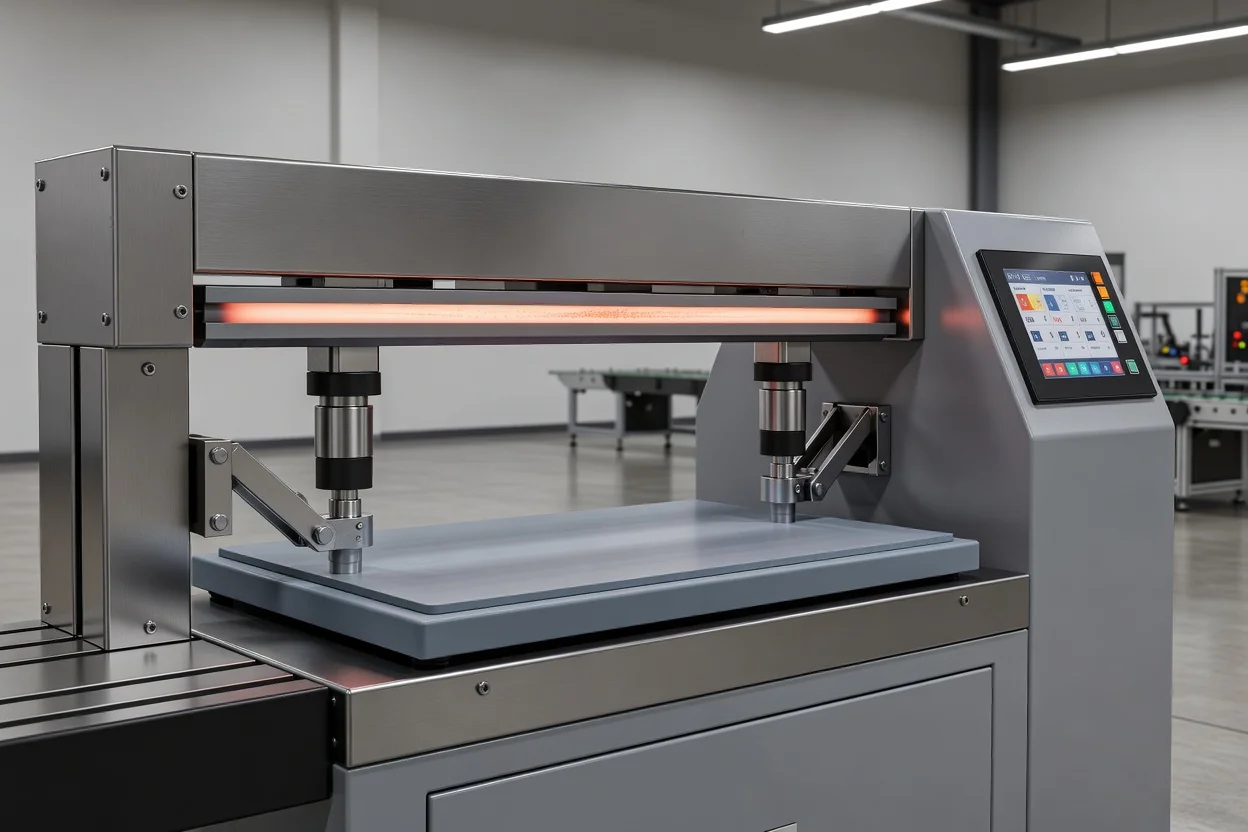
A heat impulse welding machine typically consists of an upper heated bar or strip, a lower support surface often made of silicone or another heat-resistant backing material, a pressure mechanism, and a control system that regulates current, dwell time, and cooling.
Process sequence
- The material layers are positioned and clamped.
- Electrical current passes through the resistance element for a short interval.
- The heater raises the seam temperature only in the weld zone.
- Pressure is maintained while the seam cools.
- The tool releases after solidification, producing a fused joint.
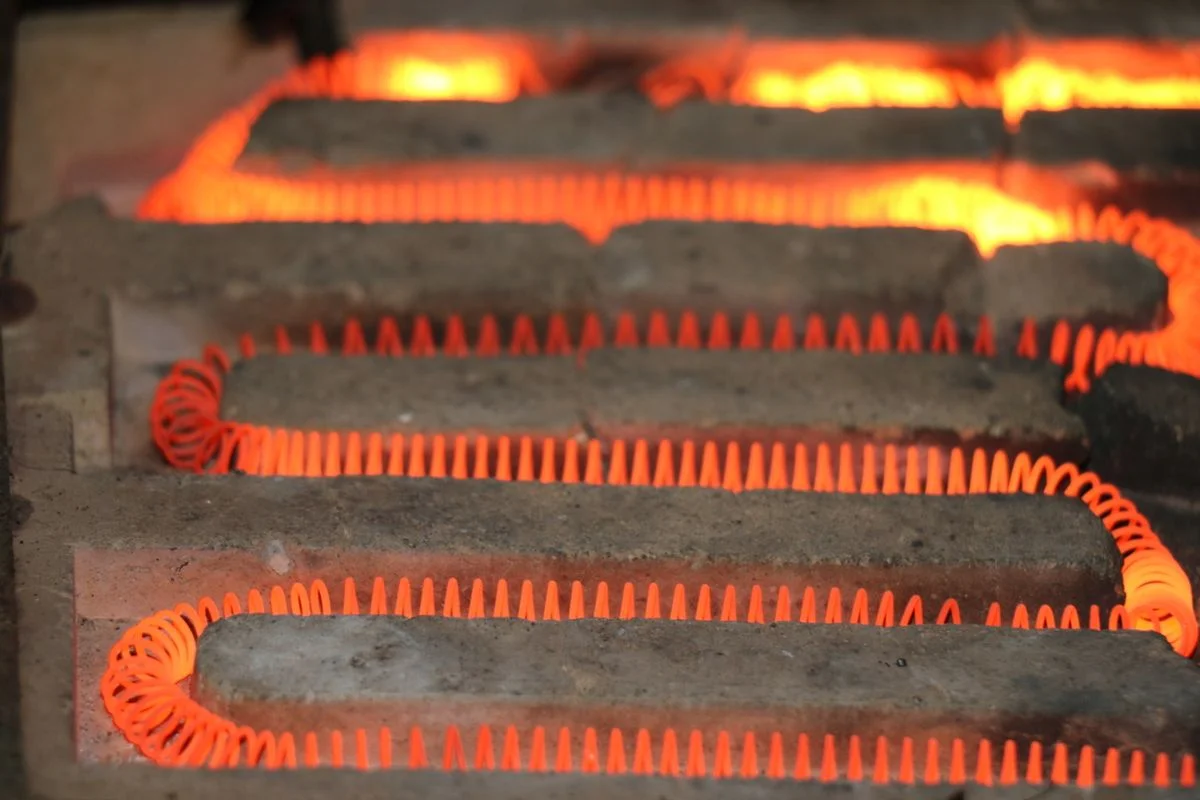
This on-demand heating is the defining technical advantage of the process. In many systems, the heater band can reach welding temperature very rapidly and then cool quickly after current stops, which reduces overheating, sticking, and distortion.
Typical technical characteristics
| Parameter | Typical range or feature | Notes |
|---|---|---|
| Welding width | 3 to 45 mm | Common for straight and contoured heater bands. |
| Heating response | About 0.5 s to reach roughly 20 to 200°C in cited thermal impulse systems | Reflects low thermal mass and rapid response. |
| Seal length | Up to 5 m in one pass in some long-bar machines | Used in large-format textile and membrane work. |
| Temperature window | Roughly 200°F to 650°F in some fabric sealing equipment | Depends on material and machine design. |
| Cooling mode | Pressure cooling, sometimes with air or liquid-assisted cooling | Improves seam integrity and appearance. |
In practice, the exact parameters depend heavily on polymer type, layer thickness, coating chemistry, seam geometry, and line speed. Impulse welding is particularly suited to thin or medium-gauge thermoplastic materials such as PVC, PE, PP, coated fabrics, and some technical films.
Types and Variations
Heat impulse welding machines are not a single machine family but a group of related systems optimized for different products.
Common variants
- Flat-bar impulse sealers for bags, pouches, and film webs.
- Long-seam textile welders for awnings, tarpaulins, tents, and banners.
- Pulse welding machines for conveyor belts and industrial strips, often with double-sided heated bars to shorten cycle time.
- Impulse heat staking systems for plastic assembly, where a heated tip forms a boss into a mechanical head.
- Automated impulse lines for repeatable high-volume sealing or long-format membrane fabrication.
Comparison of major use classes
| Machine class | Main function | Typical strengths | Typical limitation |
|---|---|---|---|
| Packaging sealers | Hermetic or near-hermetic film sealing | Clean seals, low idle heating | slower than continuous band sealing for very high throughput |
| Fabric welders | Long seams in coated textiles and membranes | Good seam appearance, controlled heat input | Requires careful tension and alignment control |
| Conveyor-belt welders | Joining technical belts and profiles | Strong seams and good process repeatability | Often application-specific tooling is required |
| Heat staking machines | Forming plastic bosses into permanent heads | Good for electronics and cosmetic parts | Limited to suitable boss geometries and thermoplastics |
Applications and Uses
Impulse welding machines are used wherever localized thermal fusion and clean pressure cooling are more important than continuous heating.
- Packaging: bags, pouches, blister-style assemblies, and hermetic closures for food, medical, and industrial products.
- Technical textiles: awnings, shade structures, banners, tarpaulins, curtains, and architectural fabrics.
- Inflatables and flexible membranes: air-retaining seams, waterproof barriers, and environmental liners.
- Medical and healthcare products: sterile or contamination-sensitive packaging and sealable flexible components.
- Automotive and transportation: seat covers, interior trim laminates, and vinyl-based assemblies where clean seams are important.
- Electronics assembly: heat staking of bosses on housings, shields, and subassemblies.
A less suitable application is very thick, highly conductive, or rigid engineering plastics that require deep bulk heating or structural fusion beyond what a narrow impulse seam can supply. In such cases, ultrasonic, vibration, hot-plate, laser, or other joining methods may be more appropriate, depending on geometry and material response.
Material Compatibility and Seam Quality
Impulse welding is most effective on thermoplastics and thermoplastic-coated substrates. The process is widely associated with PVC, PE, PP, and coated technical fabrics, because these materials soften and re-solidify predictably under controlled heating and pressure.
Seam quality is influenced by:
- Melt window of the polymer
- Thickness and layering
- Coating formulation and fillers
- Pressure distribution
- Cooling time under load
- Tool geometry and bar alignment
Because the heating is localized, the surrounding material experiences less thermal exposure, which can help reduce wrinkling, burn-through, and unnecessary material shrinkage.
Technological Innovations and Automation
Recent machine development has emphasized closed-loop control, digital recipe management, and process repeatability. Some systems regulate welding temperature in real time to maintain seam integrity despite ambient variation or material changes.
Notable innovations include:
- Energy-based control instead of simple time-based dwell control, improving consistency across operators and resin batches.
- Double-sided heating bars that reduce heat-up and cool-down times, improving throughput.
- High-speed pulse welding concepts for extremely short sealing times in specialized packaging, including sensitive food applications.
- Modular automation for long seams, with guided motion, integrated tension control, and programmable cycle sequences.
Environmental and Sustainability Aspects
Impulse welding is often considered relatively efficient because the machine heats only during the weld cycle, rather than maintaining a continuously heated tool at all times.
Sustainability advantages include:
- Lower standby energy demand compared with continuously heated sealing systems.
- Reduced thermal waste because heat is concentrated at the seam.
- Potential material savings through better seam consistency and lower scrap rates.
- Compatibility with lightweight flexible packaging and textile structures, which can reduce material mass per finished part.
The main trade-off is that some impulse systems can have longer cycle times than continuous thermal methods, especially when long cooling periods are needed for thicker seams or larger bars.
Economic and Global Market Impact
Impulse welding machines occupy an important niche in plastics processing where moderate capital cost, low energy consumption, and high seam quality are valued more than maximum throughput. They are widely used by manufacturers of flexible packaging, industrial textiles, protective covers, membranes, and medical disposables.
The market includes specialized manufacturers of heat and impulse sealers, often serving regional or application-specific segments such as awnings, conveyor belts, medical packaging, and industrial fabric conversion. Demand is shaped by growth in flexible packaging, technical textiles, infrastructure membranes, and automated finishing systems.
Current Challenges and Innovations
Despite its advantages, the technology faces several engineering challenges:
- Cycle-time limits for very high-volume production, especially where cooling time governs output.
- Narrow process windows for some multilayer or coated materials, which require careful setup.
- Seam uniformity over long lengths, where pressure distribution and bar flatness become critical.
- Material variability, especially in recycled or formulation-shifted thermoplastics, which can alter melt behavior.
Innovation is therefore concentrated on faster thermal response, better feedback control, more uniform pressure systems, and automation-friendly platforms that can stabilize quality without increasing energy use.
Future Outlook
Heat impulse welding machines are likely to remain important in sectors that need clean, repeatable, and energy-conscious thermoplastic joining. The strongest growth prospects are in automated textile fabrication, medical and technical packaging, membrane construction, and precision heat staking for electronics and lightweight assemblies.
Future equipment development will probably emphasize:
- Shorter heating and cooling cycles
- Broader recipe libraries for mixed materials
- More integrated sensing and quality monitoring
- Higher levels of robotic handling and line integration
- Improved compatibility with recycled and bio-based thermoplastics
As production systems become more data-driven, the value of impulse welding will lie not only in the seam it creates, but in its ability to deliver controlled heat input, low idle losses, and repeatable quality with minimal material damage.
References
- •
Impulse Welding Machine Technology. (n.d.). Weldmaster.Link
- •
Heat-pulse welding machines (WI). (n.d.). Schirmacher.Link
- •
Munekata Industrial Machinery. (2018, August 22). IMPULSE WELDER. https://munekata.com/english/ipw/Link
- •
Forsstrom High Frequency AB. (2025, June 16). Impulse welding machine. https://www.forsstrom.com/en/impulse-welding-machine/Link
- •
ISM Series pulse welding machine. (n.d.). Schirmacher.Link
- •
Zemat Technology Group. (2025, April 25). PULSA ECO - Linear, impulse heat sealer. https://www.zemat.com/impulse-welders/pulsa-eco/Link
- •
Awning welder | Shade welding machine | Impulse extreme. (n.d.). Weldmaster.Link
- •
Other welding processes. (n.d.). Schirmacher.Link
- •
Impulse heat staking equipment. (n.d.). U.S. Heatstake.Link
- •
IPROS GMS. (2021, October 14). Resin bonding machine "Impulse Welder". https://mono.ipros.com/en/product/detail/2000613410/Link
- •
Top 5 ways impulse welding excels in industrial applications. (2025, November 3). Weldmaster. https://www.weldmaster.com/blog/impulse-welding-excels-industrial-applicationsLink
- •
What is industrial impulse welding? (2020, March 31). Weldmaster. https://www.weldmaster.com/blog/what-is-industrial-impulse-welding?Link
- •
最新资讯. (2020, November 10). https://www.szhyhf.com/xingyezixun/20-37.htmlLink
- •
Zemat Technology Group. (2025, November 25). Technology solutions and industrial equipment. https://www.zemat.com/Link
- •
Thermal impulse welding. (2019, March 6). Schirmacher GmbH. https://schirmacher-hf.de/en/thermal-impulse-weldingLink
- •
New machines. (2023, July 7). TTF LTD. https://www.ttfltd.co.uk/new-machines/Link
- •
High-speed pulse welding - HIS. (2025, January 8). Fraunhofer IVV. https://www.ivv.fraunhofer.de/en/processing-machinery/sealing-and-welding-processes/his.htmlLink
- •
High-frequency, impulse, thermal & ultrasonic welding for plastics. (2024, September 25). Matrelec. https://www.matrelec.com/en/welding/Link
- •
Four reasons to turn on the power of impulse welding. (2019, April 23). Radio Frequency Welding. https://radiofrequencywelding.com/follow-your-impulse/Link
- •
Matrelec high-frequency & impulse welders. (n.d.). Aeronaut Automation.Link
- •
Impulse welder のProduct Line. (2024, June 24). 精電舎電子工業. https://mono.ipros.com/en/company/detail/102333/category/48481/Link
- •
Vertrod impulse welder sealer for fabric. (n.d.). PAC Machinery.Link
- •
TOOLTEX_FLYER-IMPULSE_STAKING_PRESS-081216. (n.d.). Tooltex. https://www.tooltex.com/documents/TOOLTEX_FLYER-IMPULSE_STAKING_PRESS-081216.pdfLink
- •
RESISTRON vs CIRUS (which for which applications). (2026, August 4). ROPEX. https://www.ropex-group.com/guide/resistron-vs-cirus-which-for-which-applications/Link
- •
Hochgeschwindigkeits Impuls Schweißen von Kunststofffolien (HIS). (2026, April 24). Fraunhofer. https://publica.fraunhofer.de/entities/publication/c2a07d03-3dc9-409d-80d6-04b57ca1ea58Link
- •
Why use multiple-impulse resistance welding? (2004, November 9). The Fabricator. https://www.thefabricator.com/thewelder/article/shopmanagement/why-use-multiple-impulse-resistance-weldingrLink
- •
Comparing packet welding and impulse welding. (2026, April 27). Novaseal. https://www.novaseal.com/comparing-packet-welding-and-impulse-welding/Link
- •
Industrial fabric welding machines. (n.d.). Weldmaster.Link
- •
Impulse welding. (2025, January 20). Alibaba. https://www.alibaba.com/showroom/impulse-welding.htmlLink
- •
Pulse MIG welding: How it works & when to use it. (2025, March 25). Car-O-Liner. https://car-o-liner.com/en-us/pulse-mig-welding/Link
- •
Impulse welders – Impulse awning welders, impulse sealing. (2025, April 25). Zemat Technology Group. https://www.zemat.com/impulse-welders/Link