
Introduction
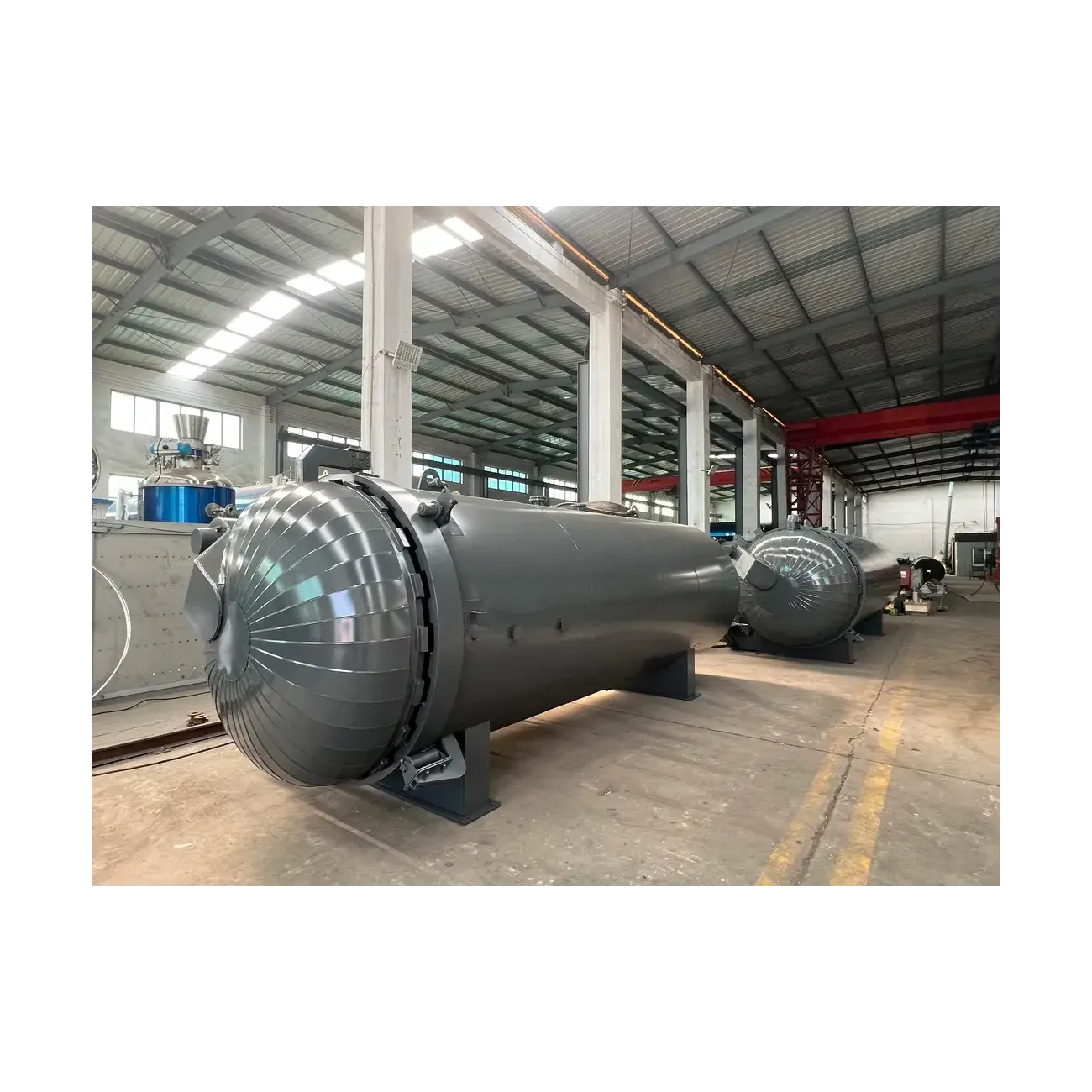
Vulcanizers are machines, vessels, or presses used to cure elastomeric materials by applying heat, pressure, and time so that polymer chains form a cross-linked network with improved strength, elasticity, heat resistance, and dimensional stability. In plastics processing, the term is used most often for rubber and elastomer curing equipment rather than for thermoplastics, although some industrial vendors also apply it broadly to curing systems for rubber-plastic composites and related materials.
In practical manufacturing, vulcanizers are central to the production and repair of tires, conveyor belts, hoses, seals, gaskets, rubber sheets, footwear components, and molded technical rubber goods. The equipment range includes plate presses, autoclaves, transfer and injection curing presses, continuous vulcanizers, and portable belt vulcanizers, each optimized for a different product geometry, production volume, and service environment. Their importance has grown alongside tire automation, high-performance elastomers, and stricter requirements for energy efficiency, process consistency, and workplace safety.
History and Development
Vulcanization itself is historically associated with the work of Charles Goodyear, whose pioneering discoveries established sulfur-based cross-linking as the foundation of modern rubber technology. The industrial vulcanizer emerged later as manufacturers sought controlled heat-and-pressure equipment capable of producing repeatable cure states for increasingly complex rubber products.
Key milestones in equipment development include:
- Batch steam and hot-pressure curing systems, which became the standard for early molded rubber goods and large tire components, especially where long cure cycles and heavy tooling were acceptable.
- Autoclave and press-based vulcanizers, which improved process control by separating heating, pressure generation, and mold closure, enabling more reliable curing of tires, hoses, and composite parts.
- Automated and continuous vulcanizers, which support higher throughput, tighter temperature control, and reduced operator dependence in modern belt, sheet, and tire production lines.
More recently, equipment suppliers have emphasized digital controls, better insulation, shorter cycle times, and integration with plant automation, reflecting both productivity demands and energy-cost pressure.
How Vulcanizers Work
A vulcanizer applies thermal energy and usually mechanical pressure to a rubber compound for a controlled period so that the curing system activates cross-linking reactions. In sulfur vulcanization, sulfur or sulfur-containing systems create bridges between polymer chains, while accelerators and activators regulate cure speed and final properties.
The basic sequence is:
- The compound or green product is loaded into a mold, press, chamber, or onto a belt-splice stack.
- Heat is applied by steam, electric resistance, hot air, thermal oil, or another heating medium.
- Pressure is maintained to consolidate the part, eliminate voids, and ensure conformity to the mold or splice geometry.
- The material is held for a defined cure time until the target cross-link density is reached.
The result is vulcanized rubber, which is generally less tacky, more resilient, and more resistant to heat, wear, and chemicals than the uncured compound.
Key Characteristics and Technical Overview
Vulcanizers are engineered around four process variables: temperature, pressure, time, and cure medium. Their technical design depends strongly on whether they are used for molded goods, continuous sheet or belt curing, or field repairs.
Typical performance and design characteristics include:
- Temperature range: Many industrial rubber vulcanizers operate roughly in the 120–200 °C range, depending on elastomer type and product geometry.
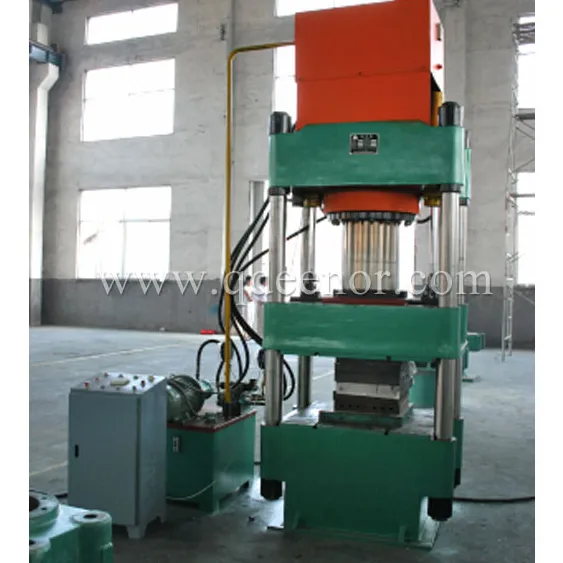
- Pressure application: Press systems may use hydraulic or pneumatic loading to maintain uniform contact across molds or splice platens.
- Cure control: Modern systems often include programmable timers, automatic pressure supplementation, and temperature feedback control.
- Heating media: Common options include steam, electric heat, hot air, and thermal oil, selected according to energy source, cycle speed, and part size.
For conveyor-belt and sheet applications, technical practice commonly targets a uniform cured rubber bond across the full width of the splice or panel, because localized undercure can lead to delamination and overheated zones can accelerate aging.
Quantitative operating benchmarks
Published supplier material and industry descriptions indicate the following typical ranges:
- Continuous vulcanizers are used for high-volume production where a rubber sheet or belt is fed through a heated zone continuously, improving throughput compared with batch presses.
- Conveyor-belt vulcanizers are often used for on-site splicing and repairs, with portable units favored for remote mining or bulk-handling installations.
- Flat vulcanizing machines are widely used for rubber sheets, mats, and simple technical articles, especially where uniform platen heat transfer is critical.
- A centrifugal dewatering benchmark is not standard for vulcanizers themselves, because that metric belongs to recycling machinery rather than curing equipment; in vulcanizer applications, process control is instead measured through cure time, platen temperature uniformity, and final mechanical properties.
Practical technical notes
- Overcuring can reduce elasticity and increase brittleness.
- Undercuring can leave a part dimensionally unstable or mechanically weak.
- Pressure non-uniformity can create thickness variation or poor adhesion in splices and laminated goods.
- Temperature uniformity is especially important for thick sections and large-diameter tires, where heat penetration is slower.
Types and Variations
| Type | Main use | Notable characteristics |
|---|---|---|
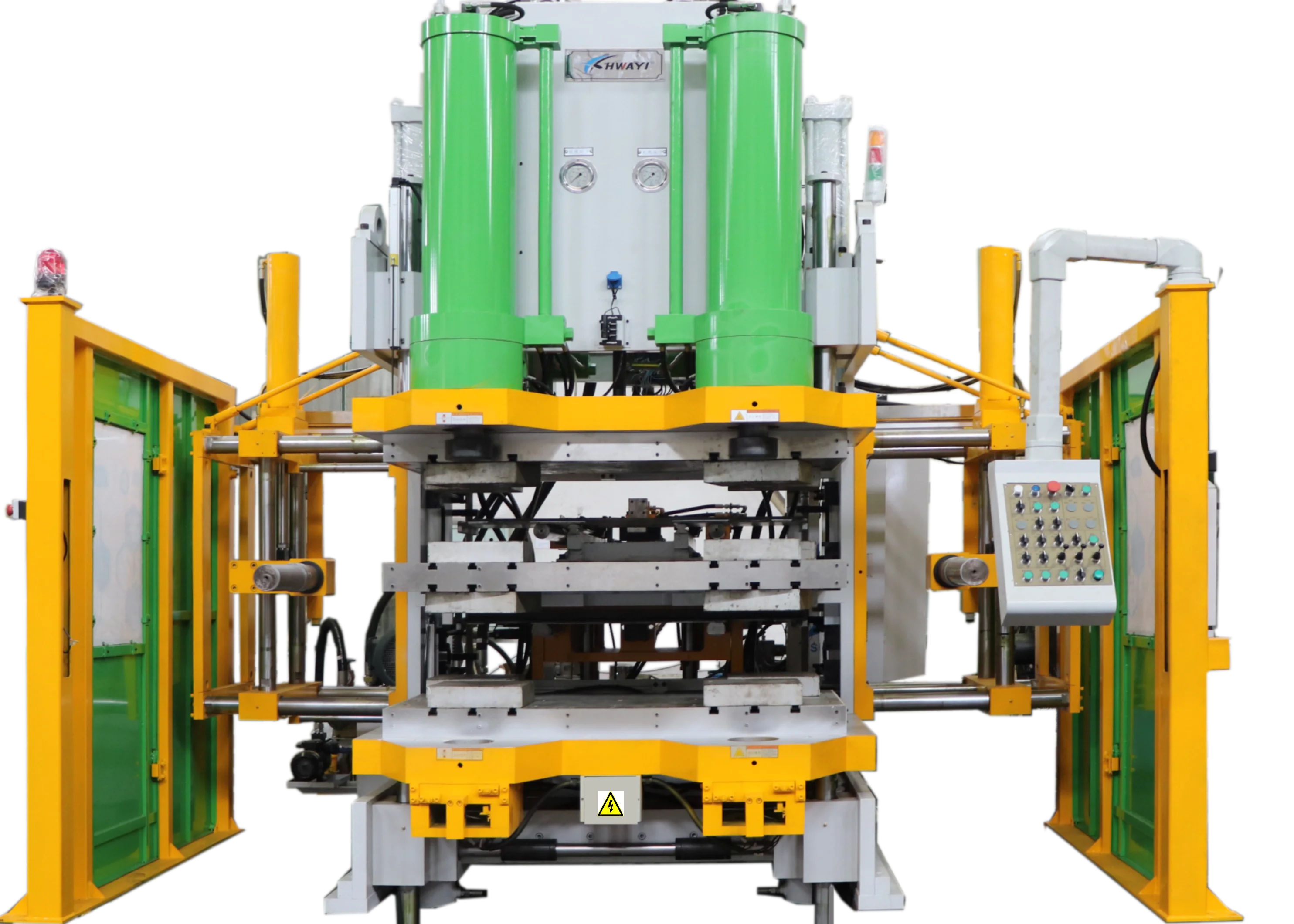
| Press vulcanizer | Molded rubber goods, tires, seals, gaskets | Uses heated platens and hydraulic pressure for precise shape control. |
| Autoclave vulcanizer | Large parts, composites, general curing | Pressure vessel design; suitable for batch curing of bulky or irregular articles. |
| Continuous vulcanizer | Belts, sheets, continuous profiles | High throughput and consistent line production. |
| Injection or transfer curing press | Complex molded elastomer parts | Combines material delivery with cure in one controlled cycle. |
| Conveyor belt vulcanizer | Splicing and repair | Portable or stationary units used in mining, logistics, and manufacturing. |
| Cold vulcanizer | Field repair work | Uses chemical curing at ambient temperature, typically for small repairs rather than factory production. |
Applications and Uses
Vulcanizers are used wherever elastomers must be converted from a soft, processable state into a durable service material.
- Automotive: tire curing, hoses, seals, gaskets, vibration-isolating components, and specialty rubber parts.
- Mining and bulk material handling: conveyor-belt splicing and repair for haulage and processing systems.
- Construction: rubber sheets, sealing products, insulation-related components, and heavy-duty belts.
- Footwear: rubber soles and molded outsole components.
- Industrial manufacturing: belts, hoses, sheets, technical rubber goods, and molded service parts.
- Food processing and logistics: belt repair and maintenance where hygienic and continuous operation requirements are important.
One comparatively poor-fit use is thermoplastic part production, because vulcanizers are designed primarily for cross-linking elastomers, not for melting and reshaping thermoplastics in the way injection molding or extrusion equipment does.
Technology, Automation, and Process Control
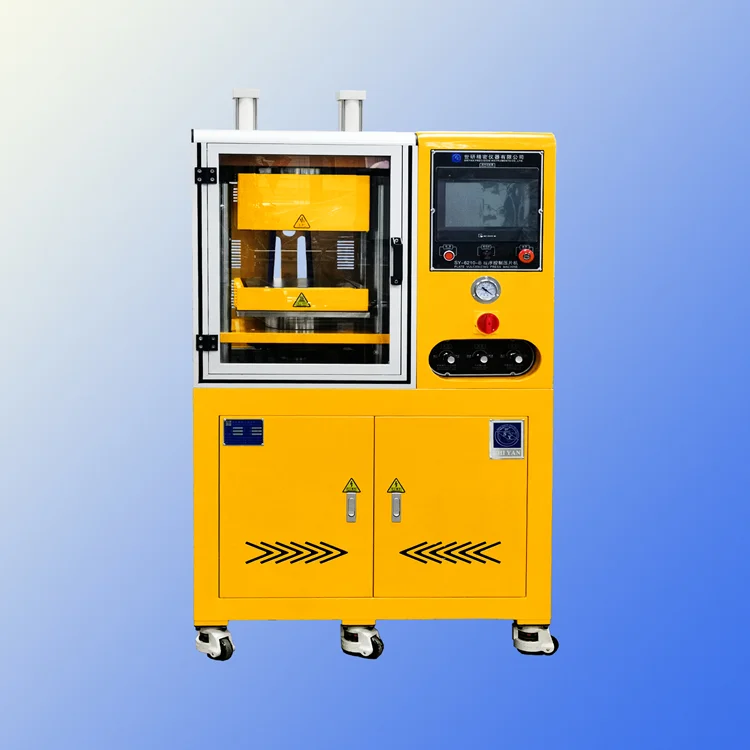
Modern vulcanizers increasingly incorporate PLC control, recipe management, real-time temperature monitoring, automatic pressure compensation, and alarms for end-of-cycle and fault conditions. These features improve repeatability, reduce operator dependence, and support traceability in regulated or high-value production.
Typical automation trends include:
- Closed-loop temperature control for more uniform cure state across the platen or chamber.
- Programmable cure profiles to match different elastomers, thicknesses, and tooling loads.
- Integrated material handling in higher-volume plants, especially in tire and conveyor-belt production lines.
- Predictive maintenance and condition monitoring for heating elements, seals, hydraulics, and insulation systems, which helps reduce downtime.
Automation improves consistency, but it also raises capital cost and control-system complexity, particularly for plants handling mixed product families or frequent changeovers.
Environmental and Sustainability Aspects
Vulcanizers influence sustainability mainly through energy use, scrap reduction, and product life extension. A well-controlled vulcanization process reduces rejects, improves durability, and can extend the service life of tires, belts, and seals, which lowers material turnover over time.
Important sustainability considerations include:
- Energy efficiency: improved insulation, faster heat-up, and optimized cure cycles reduce thermal losses.
- Waste reduction: stable temperature and pressure control lowers scrap from undercure, surface defects, and adhesion failure.
- Circular-economy relevance: belt repairs, tire retreading, and refurbishment workflows can delay replacement and reduce raw-material demand.
- Emissions and workplace exposure: modern systems seek to limit heat loss, odor, and process variability, especially in large-scale rubber curing environments.
Economic and Global Market Impact
Vulcanizers occupy a strategically important segment of rubber-processing machinery because they sit at the point where value is locked into the final product performance. Tire manufacturing is a major demand center, while conveyor-belt vulcanizers are strongly tied to mining, logistics, and heavy industry.
The market is shaped by:
- Automotive demand, especially for passenger, commercial, and industrial tires.
- Infrastructure and mining activity, which influences conveyor-belt repair and replacement demand.
- Regional manufacturing concentration, particularly in Asia, where tire and industrial rubber production remain substantial.
- Aftermarket service business, including portable splicing equipment and repair systems for field maintenance.
Because vulcanizers are capital equipment, purchasing decisions often depend on throughput, uptime, energy cost, and the value of quality consistency rather than on machine price alone.
Current Challenges and Innovations
The main technical challenges are cure uniformity, cycle-time reduction, energy consumption, and process robustness. Thick sections and large-format products remain difficult because heat must penetrate the full cross-section without overcuring the surface.
Ongoing innovations include:
- Improved thermal design to reduce hot spots and shorten heating time.
- Advanced control algorithms that adapt cure time and pressure to product geometry.
- Modular portable systems for faster field installation and safer belt repair.
- Hybrid heating concepts combining electric and steam or other media to balance responsiveness and energy efficiency.
Future Outlook
Future vulcanizer development is likely to emphasize digital process control, lower energy intensity, higher uptime, and better compatibility with sustainable rubber formulations. The most visible direction is the integration of curing equipment with plant-wide data systems, allowing operators to track temperature curves, pressure history, and maintenance intervals more precisely than in conventional batch operations.
Demand should remain supported by tire replacement, industrial maintenance, mining logistics, and technical rubber goods, while equipment designers continue to adapt to faster cure cycles, lower scrap rates, and more demanding quality standards.
Summary
Vulcanizers are essential curing machines in the rubber and elastomer industry, converting uncured compounds into durable products through controlled heat, pressure, and time. Their design spans batch presses, autoclaves, continuous lines, and portable repair units, with applications ranging from tires and belts to seals, hoses, and molded industrial parts.
References
- •
Merriam-Webster. (2024, August 5). Definition of vulcanizers. https://www.merriam-webster.com/dictionary/vulcanizersLink
- •
Merriam-Webster. (n.d.). Vulcanizer. https://www.merriam-webster.com/dictionary/vulcanizerLink
- •
Vocabulary.com. (n.d.). Vulcanizer. https://www.vocabulary.com/dictionary/vulcanizerLink
- •
Dictozo. (2024, April 18). Vulcanizer. https://dictozo.com/w/vulcanizerLink
- •
WordWeb Online. (n.d.). Vulcaniser. https://www.wordwebonline.com/en/VULCANISERLink
- •
Market Prospects. (2022, August 30). What does a vulcanizer do? https://www.market-prospects.com/articles/what-does-a-vulcanizer-doLink
- •
Superb Heating. (2025, May 23). What is a vulcanizer? An essential tool for rubber manufacturing and tire production. https://www.superbheating.com/info/what-is-a-vulcanizer-an-essential-tool-for-ru-102941027.htmlLink
- •
The Free Dictionary. (n.d.). Vulcanizer. https://www.thefreedictionary.com/vulcanizerLink
- •
Wordnik. (n.d.). Vulcanizer. https://www.wordnik.com/words/vulcanizerLink
- •
Drick Instruments. (2013, April 3). The application fields of vulcanizer. https://www.drickinstruments.com/az/news/the-application-fields-of-vulcanizer/Link
- •
ChenCai Machine. (2024, May 29). Understanding the vulcanizing machine. https://www.chencaimachine.com/understanding-the-vulcanizing-machineLink
- •
Alibaba. (2025, January 20). Industrial vulcanizer. https://www.alibaba.com/showroom/industrial-vulcanizer.htmlLink
- •
LinkedIn. (2025, October 21). Top 5 uses of rubber vulcanizers in 2025. https://www.linkedin.com/pulse/rubber-vulcanizer-real-world-5-uses-youll-actually-see-0ykxeLink
- •
LinkedIn. (2025, October 1). Tyre vulcanizer in the real world: 5 uses you'll actually see. https://www.linkedin.com/pulse/tyre-vulcanizer-real-world-5-uses-youll-actually-see-fzysfLink
- •
YourDictionary. (n.d.). Vulcanizer definition. https://www.yourdictionary.com/vulcanizerLink
- •
Wikipedia. (2022, August 30). Vulcanization. https://en.wikipedia.org/wiki/VulcanizationLink
- •
DictAI. (n.d.). Vulcanizer. https://www.dictai.org/w/vulcanizerLink
- •
Vocabulary.com. (n.d.). Vulcanize. https://www.vocabulary.com/dictionary/vulcanizeLink
- •
WSF Inc. (2021, October 7). Vulcanizing autoclave systems. https://wsf-inc.com/vulcanizing/Link
- •
OneLook. (n.d.). Vulcanizer. https://www.onelook.com/?loc=dmapirel&w=vulcanizerLink
- •
Lab Testing Machine. (2024, September 12). What is a vulcanizing machine used for? https://www.lab-testingmachine.com/news/what-is-a-vulcanizing-machine-used-for-187710.htmlLink
- •
LinkedIn. (2025, October 8). Rubber vulcanizing machines in the real world: 5 uses you'll actually see. https://www.linkedin.com/pulse/rubber-vulcanizing-machines-real-world-5-uses-youll-actually-8ftycLink
- •
Loyicn Machinery. (2021, September 15). Zhuhai Loyicn Machinery Co., Ltd. https://www.loyicn.com/Blog/1928985079043235840.htmlLink
- •
Vulcanizers.com. (2023, August 1). Conveyor belt vulcanizer. https://vulcanizers.com/conveyor-belt-vulcanizer/Link
- •
Number Analytics. (2025, June 10). Vulcanization in modern industries. https://www.numberanalytics.com/blog/vulcanization-modern-industriesLink
- •
MarketBeacons Insights. (2025, May 20). Flat vulcanizing machine market: By application. https://sites.google.com/view/marketbeaconsinsights/top-reports/flat-vulcanizing-machine-market-by-applicationLink
- •
Merriam-Webster. (2026, April 30). Vulcanization. https://www.merriam-webster.com/dictionary/vulcanizationLink
- •
Bondtech Corporation. (2020, March 6). Vulcanizing autoclaves. https://bondtech.com/autoclaves/rubber-vulcanizing/Link
- •
River Simulator. (n.d.). Page 1 of 5. http://www.riversimulator.org/Resources/History/Hoops/BoatHistory/02/VulcanizingUncuredRubberProcessAutoclaves.pdfLink
- •
ScienceDirect. (n.d.). Vulcanization. https://www.sciencedirect.com/topics/materials-science/vulcanizationLink
- •
Loyicn. (2021, September 15). Exploring the different types of conveyor belt vulcanizers. https://www.loyicn.com/Blog/1921379872569335808.htmlLink
- •
University of Technology. (n.d.). Slide 1. https://uotechnology.edu.iq/dep-materials/english/lecture/thirdclass/RubberTechnology3.pdfLink
- •
Strategic Market Research. (n.d.). Tire vulcanizer market research report. https://www.strategicmarketresearch.com/market-report/tire-vulcanizer-marketLink
- •
Studocu. (2022, November 7). Types of vulcanizing systems in rubber: CV, EV, and SV. https://www.studocu.vn/vn/document/hanoi-university-of-science/triet-hoc/types-of-vulcanizing-systems-cv-evsv/38195579Link
- •
Wikipedia. (2018, July 15). Sulfur vulcanization. https://en.wikipedia.org/wiki/Sulfur_vulcanizationLink
- •
Scribd. (2024, May 10). Vulcunization types. https://www.scribd.com/document/790958602/Vulcunization-TypesLink
- •
Loyicn. (2021, September 15). Understanding the role of a conveyor belt vulcanizer. https://www.loyicn.com/Blog/1860951708261797888.htmlLink
- •
Ouli Machine. (2026, January 14). What is a rubber vulcanizer and how does it work? https://www.oulimachine.com/blog/rubber-vulcanizer-and-its-function/Link
- •
Ware Inc. (2024, August 1). Vulcanization and the chemistry behind modern rubber. https://www.wareinc.com/helpful-resources/videos/vulcanization-the-chemistry-that-made-rubber-indispensable-steam-cultureLink
- •
Global O Ring. (2022, July 15). What is vulcanization and vulcanized rubber? https://www.globaloring.com/blog/what-is-vulcanization-and-vulcanized-rubber/Link
- •
Elastostar. (2024, November 1). Vulcanization: Process, benefits & uses. https://elastostar.com/what-is-vulcanization-and-vulcanized-rubber/Link
- •
Maryland Nonprofits. (n.d.). Automatic vulcanizing operator overview. https://jobs.marylandnonprofits.org/career/automatic-vulcanizing-operatorLink
- •
Conveyor Belt Vulcanizer. (2018, March 7). Conveyor belt types and functions. https://www.conveyorbeltvulcanizer.com/conveyor-belt-types-and-functions/Link