
Introduction
Splitting machines and peeling machines are industrial processing machines used to divide, remove outer layers from, or separate materials into thinner, more uniform product streams. In plastics and related materials processing, the terms most often refer to slitting/longitudinal cutting machines for continuous web and sheet materials, and to peeling/debarking/de-skinning machines in adjacent processing fields where surface removal or layer separation is required. Because the English and Chinese keyword pair also overlaps with food, leather, wire, metal, and wood-processing terminology, the most useful industrial interpretation is the family of machines that perform longitudinal cutting and surface-removal operations on manufactured materials and process media.
In plastics processing, these machines matter because they prepare films, foils, rubber sheets, composite webs, insulation layers, and strip materials for downstream converting, winding, lamination, extrusion, and packaging operations. Modern systems range from compact bench units to high-speed production lines with precision knife banks, automated tension control, in-line inspection, and blade sharpening or changeover systems. Their development has been shaped by the broader rise of continuous-web processing, tighter width tolerances, higher line speeds, and the growing demand for lower waste, better energy efficiency, and easier integration with digital production control.
History and Development
The modern machine classes associated with splitting and peeling emerged from different industrial needs but converged around the same engineering goals: repeatability, surface quality, and throughput. Early splitting and peeling devices were largely mechanical, manually adjusted, and limited in speed, while later systems incorporated powered drives, improved blade metallurgy, and closed-loop control.
Key milestones include:
- The expansion of industrial slitting lines in the 20th century, when converting industries such as paper, film, rubber, and metal began requiring narrow-width strips with consistent edge quality and high winding accuracy.
- The adoption of precision rotary knives, shear slitting, and score slitting configurations, which improved cut quality across a wider range of thicknesses and material stiffness.
- The introduction of automation, servo drives, and recipe-based controls, which reduced setup time and improved consistency in multi-job production environments.
In parallel, peeling technologies in adjacent sectors evolved from labor-intensive removal methods to mechanically assisted systems. Food-processing examples such as bean, lentil, and soybean peeling and splitting machines demonstrate the same process logic used in plastics finishing equipment: controlled abrasion, separation, and selective removal of outer layers without damaging the useful core.
Key Characteristics and Technical Overview
At a technical level, a splitting or peeling machine must control cutting force, layer separation, material tension, alignment, and product transport. The most important engineering parameters depend on the material class, but several common design elements recur across industries.
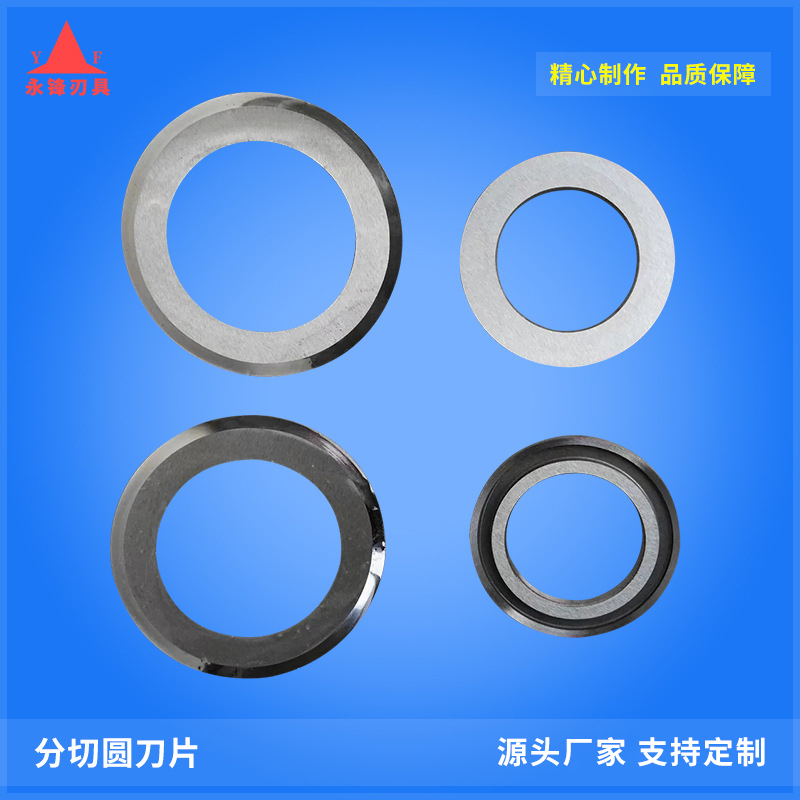
- Cutting or peeling element: rotary knives, circular blades, straight blades, abrasive rollers, peeling heads, or splitters between paired rolls or stones.
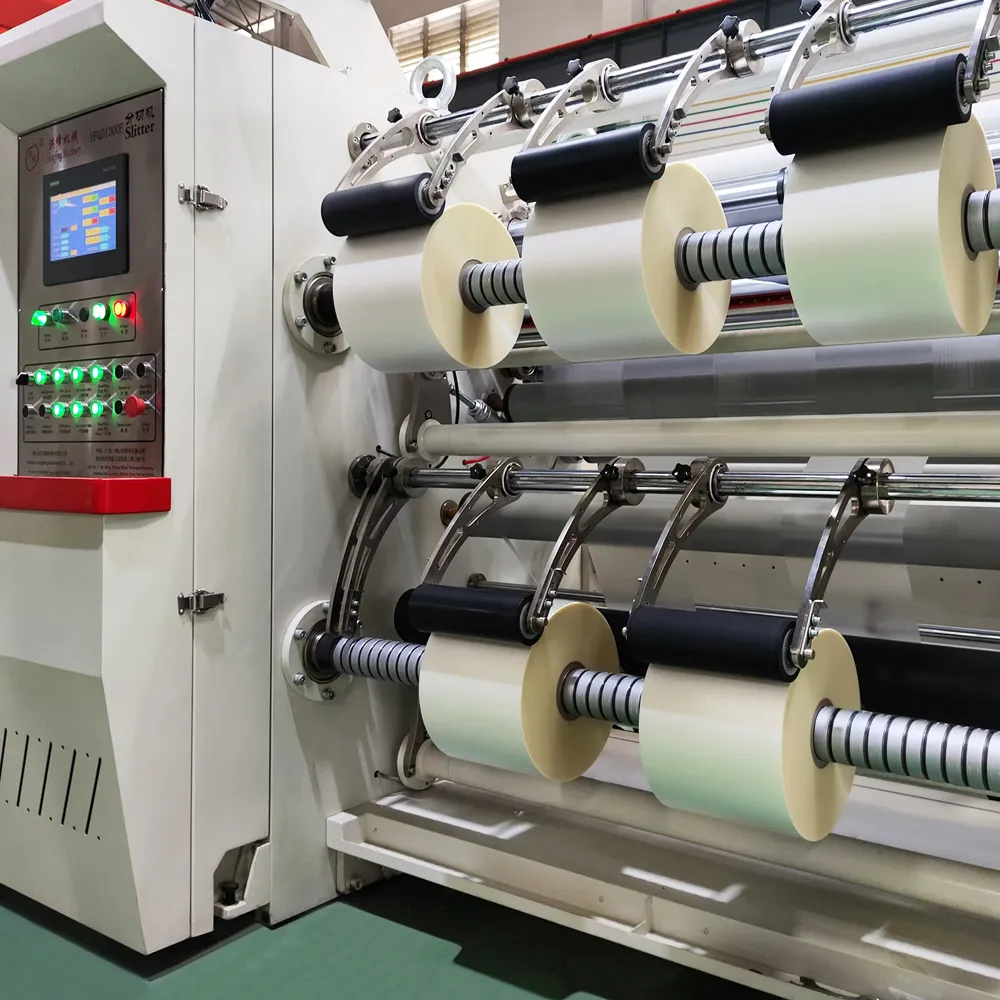
- Feed and tension system: unwind stand, nip rolls, guide rollers, and tension control to prevent wrinkling, wandering, or edge distortion.
- Drive and motion control: AC or servo-driven shafts for synchronized speed control.
- Collection and rewinding system: slit strips or peeled products are wound, discharged, or conveyed onward.
- Quality controls: edge-tracking, web inspection, thickness monitoring, and in advanced systems, closed-loop correction of line speed or knife position.
For plastics-oriented slitting lines, published industrial examples show wide operating envelopes. Corrugated and web-converting lines can reach maximum speeds of about 300 to 600 m/min, with effective widths up to 2,500 to 2,800 mm and multiple knife positions for simultaneous strip production. One industrial metal slitting line example describes wide-coil processing into narrow strips for downstream forming, illustrating the same continuous-web logic used in polymer converting.
Typical machine performance characteristics include:
- Web or sheet width: from narrow laboratory-format systems to production lines exceeding 2.5 m effective width.
- Thickness range: highly dependent on material; industrial slitting systems can handle thin films, foils, and thicker sheet or strip stock.
- Line speed: typically tens to several hundreds of meters per minute in converting applications.
- Knife count: configurable banks, often enabling multiple strips in one pass.
- Energy use: strongly dependent on drive size, blade load, and web tension; servo-driven systems usually improve specific energy performance through better matching of torque to demand.
Where the term “peeling” is used in other process industries, the same technical logic appears in different forms. For example, cable stripping systems can perform longitudinal cuts, cross cuts, and window stripping, while wood debarkers remove bark by knife cutting or abrasion. Industrial wood peelers may process logs at around 10 m/min in certain configurations, showing how peel-removal machines are optimized either for speed or for bulk throughput depending on the product.
Types and Variations
The term covers several distinct machine families.
| Machine type | Main function | Typical products | Key technical feature |
|---|---|---|---|
| Slitting machine | Cuts continuous webs into narrower strips | Plastic film, sheet, rubber, foil, nonwovens | Rotary knife banks and tension control |
| Longitudinal cutting machine | Cuts lengthwise along a roll or sheet | Corrugated board, film, laminates, industrial webs | High-speed knife positioning |
| Peeling machine | Removes an outer layer or skin | Logs, food products, cable insulation, some composite layers | Knife, abrasion, or friction-based removal |
| Debarking machine | Removes bark from wood | Logs and timber | Knife-head or trough-friction systems |
| Stripping machine | Removes insulation or surface layer from wire/cable | Electrical wire and cable | Axial or radial cut-and-strip heads |
| De-skinning machine | Removes skin or membrane | Meat, fish, and food products | Continuous conveyor and pressure rollers |
In plastics processing, the most relevant machine class is the slitting machine, especially for films, thin sheets, adhesive laminates, packaging webs, and specialty technical materials. For certain composites and coated substrates, “peeling” may refer to controlled separation of a protective liner or sacrificial layer rather than biological skin removal.
Applications and Uses
Plastics and polymer converting
Splitting and slitting equipment is widely used in the finishing of:
- Plastic films for packaging, agriculture, and industrial wrapping
- Sheet and plate stock for thermoforming or fabrication
- Rubber sheets and strips for seals, gaskets, and vibration isolation
- Laminated webs used in barrier packaging and labels
- Adhesive materials where edge quality and release control are important
In these applications, machine performance directly affects downstream winding stability, slit-edge quality, and scrap generation. Narrow-strip accuracy becomes especially important where the material is later die-cut, laminated, printed, or sealed.
Other industrial sectors
Although outside strict plastics processing, the same machine logic is used in:
- Paper and corrugated board, where longitudinal cutting and creasing are integrated into high-speed converting lines
- Metal coil processing, where wide strip is divided into narrower coils for stamping or tube making
- Wire and cable manufacturing, where jackets and insulation are removed by cutting and peeling heads
- Wood processing, where bark removal prepares logs for pulping or sawing
Poor-fit use case
A poor fit for this machine family is highly brittle, heavily filled polymer sheet when the objective is a cosmetic, chip-free edge at very tight tolerances without redesigning the material or using specialized tooling. In such cases, conventional slitting may create dusting, edge cracking, or delamination, and alternative cutting methods may be more appropriate.
Working Principles
The working principle depends on whether the machine is performing cutting, peeling, or a combined operation.
- Rotary slitting uses circular knives that shear the web against counter-knives or an anvil.
- Score slitting presses a blade into the material, which is useful for selected flexible substrates.
- Shear slitting uses opposed circular blades and gives cleaner edges on demanding materials.
- Peeling or de-skinning removes a surface layer through abrasion, friction, or a knife head that separates the outer layer from the substrate.
In plastics converting, the process is usually continuous: the web is unwound, guided, slit or separated, and rewound under controlled tension. The quality of the final strip depends on knife condition, web alignment, material temperature, coating behavior, and speed stability.
Technological Innovations and Automation
Recent development has emphasized automation, precision adjustment, and condition monitoring. Common innovations include:
- Servo positioning for knife banks and guide systems
- Recipe memory for repeated job setups
- Automatic tension control to stabilize thin films and sensitive laminates
- In-line inspection to detect edge defects, slitting dust, or web wandering
- Integrated sharpening or blade maintenance in some high-precision systems
- Remote diagnostics and production data capture for Industry 4.0 integration
These functions reduce changeover time and improve consistency, but they also increase system complexity and maintenance requirements. The trade-off is most visible in plants handling many short runs or mixed material grades.
Environmental and Sustainability Aspects
The main sustainability value of splitting and peeling machinery lies in waste reduction, yield improvement, and material recovery. Better slit quality reduces trim loss and improves the usability of edge trim for regrind, recycling, or reprocessing where permitted by the material specification.
Sustainability considerations include:
- Lower scrap generation through precise web control
- Reduced energy intensity through optimized drives and blade loading
- Compatibility with recycling streams when machines are used to separate, trim, or prepare reusable polymer materials
- Potentially lower labor demand, which can improve process efficiency but may require workforce reskilling
For plastics manufacturers, the largest environmental gains usually come from better cut accuracy, fewer rejected rolls, and higher material utilization rather than from the slitting machine alone.
Economic and Global Market Impact
These machines are important in global plastics converting because they sit between polymer production and final product manufacturing. A slitting or peeling system can determine whether an extrusion line, film plant, or laminating operation delivers saleable output at high yield.
Economic impact is strongest in sectors where:
- narrow-width products are sold at premium margins
- line uptime is critical
- scrap polymer is expensive or difficult to reclaim
- frequent product changeovers require flexible automation
Industrial suppliers in this field range from specialists in web converting and cable processing to broad machinery groups with slitting line portfolios. Competition tends to focus on precision, uptime, automation, serviceability, and the ability to process a wide material window without excessive knife wear.
Current Challenges and Innovations
Current engineering challenges include:
- Edge quality control on thin or highly elastic polymer webs
- Heat buildup and blade wear at high speed
- Static charge management in film and foil processing
- Changeover efficiency in short-run production
- Dust, particulate, or trim management in recycled-content materials
- Balancing automation with maintainability in cost-sensitive plants
Innovation is directed toward adaptive knife positioning, better blade materials and coatings, predictive maintenance, and process models that match slitting parameters to polymer type, thickness, and moisture or temperature condition.
Future Outlook
Future development is likely to concentrate on smart control, digital quality assurance, and higher material flexibility. As plastics processors shift toward more recycled content, multilayer structures, and narrower tolerance windows, slitting and peeling systems will need to handle more variable input materials while preserving edge quality and throughput.
The most significant technical direction is likely to be tighter integration between machine mechanics and process analytics: automatic correction of tension, knife gap, feed alignment, and blade wear before defects accumulate. For manufacturers, the strategic value of these machines will continue to lie not in the cut itself, but in how reliably they protect downstream productivity, material yield, and finished-product quality.
References
- •
WinTone Machinery. (n.d.). Grain peeling equipment, grain hulling equipment. https://www.wintonemac.com/products/peeling-hulling/Link
- •
Guangzhou Shengtian Machinery Co. LTD. (n.d.). Site index. https://www.stfoodmachinery.com/sitemap.htmlLink
- •
Grasselli. (n.d.). 剥皮. https://www.grasselli.com/zh/category/skinning/Link
- •
USSORT. (2023, February 17). Hulling and splitting machines. https://ussorttech.com/en/seed-cleaning-and-processing-machines/hulling-and-splitting-machines/Link
- •
Alibaba. (2026, February 26). Exploring apple peel split machine: Material grades, properties. https://www.alibaba.com/product-insights/apple-peel-split-machine.htmlLink
- •
Amazon. (2023, May 5). 1-48 of 176 results for "leather splitter". https://www.amazon.com/leather-splitter/s?k=leather+splitterLink
- •
Grasselli. (n.d.). Pork. https://www.grasselli.com/zh/category/pork/Link
- •
Juyou Machinery. (2025, September 24). Automatic apples peel separating industrial peeling apple coring and cutting machine. https://juyoumech.en.made-in-china.com/product/kxOYgboPsrUm/China-Automatic-Apples-Peel-Separating-Industrial-Peeling-Apple-Coring-and-Cutting-Machine.htmlLink
- •
Alibaba. (n.d.). 생산성과 강력한 렌즈콩 껍질 벗기기 및 분리 기계-상품 ID. https://korean.alibaba.com/g/lentils-peeling-and-splitting-machine.htmlLink
- •
eBay. (2025, January 1). Leather splitting machine. https://www.ebay.com/shop/leather-splitting-machine?_nkw=leather+splitting+machineLink
- •
Spectrum Technologies. (n.d.). Sienna 300. https://www.spectrumtech.com/zh-hans/product/%E6%BF%80%E5%85%89%E5%89%A5%E7%BA%BF%E6%9C%BA/sienna-300Link
- •
Robust Industrials. (n.d.). Skin peeling and blanching. https://www.exportersindia.com/robust-industrials/skin-peeling-and-blanching.htmLink
- •
Alibaba. (2026, January 8). Commercial electric apple peeler corer slicer automatic. https://www.alibaba.com/product-detail/Commercial-Electric-Apple-Peeler-Corer-Slicer_1601424384619.htmlLink
- •
Machinio. (n.d.). New & used soybean dehulling equipment. https://www.machinio.com/cat/soybean-dehulling-equipmentLink
- •
Wintone Machinery. (n.d.). Lentil peeling and splitting plant, lentil processing. https://www.wintone-machinery.com/plants/lentil_peeling_and_splitting_plant.htmlLink
- •
Alibaba. (2025, January 20). Yellow split peas peeling machine. https://www.alibaba.com/showroom/yellow-split-peas-peeling-machine.htmlLink
- •
Made-in-China. (2025, May 18). Bean flour packaging processing. https://www.made-in-china.com/products-search/hot-china-products/Bean_Flour_Packaging_Processing.htmlLink
- •
Etsy. (n.d.). Wuta leather splitter. https://www.etsy.com/market/wuta_leather_splitterLink
- •
Google Patents. (n.d.). Peeling machine. https://patents.google.com/patent/KR20100038574A/enLink
- •
Google Patents. (2016, April 28). Banana-peeling machine. https://patents.google.com/patent/US1088400A/enLink
- •
Shuliy Machinery. (n.d.). Industrial log debarker machine for sale | vertical & trough peelers. https://www.shuliyrecycle.com/zh/log-debarker-machine/Link
- •
JUTI. (n.d.). Microsoft Word - JUTI-Ravi. https://jurnal.seaninstitute.or.id/index.php/juti/article/download/486/273/1213Link
- •
Pwsannong. (n.d.). 蔬菜加工机械. https://www.pwsannong.com/c/2016-04-13/552444.shtmlLink
- •
DirectIndustry. (n.d.). 滚筒切割机. https://www.directindustry-china.cn/zhizaoshang-gongye/gun-qie-ge-ji-132239.htmlLink
- •
GEORG. (2024, January 1). 纵剪设备. https://www.georg.com/zh/%E4%BA%A7%E5%93%81/%E7%BA%B5%E5%89%AA%E8%AE%BE%E5%A4%87/Link
- •
Schleuniger. (n.d.). 剥皮加工. https://www.schleuniger.com/zh/%E4%BA%A7%E5%93%81/%E5%89%A5%E7%9A%AE%E5%8A%A0%E5%B7%A5/Link
- •
Alibaba. (2026, September 22). 橡胶纵切切割机、橡胶板切割机加工机、橡胶条切片机械. https://chinese.alibaba.com/product-detail/Rubber-Slitting-Cutting-Machine-Rubber-Sheet_1601172867204.htmlLink
- •
无锡邦洲机械制造有限公司. (n.d.). 无锡邦洲机械制造有限公司. https://www.wxbangzhou.com/Link
- •
BHS. (2026, September 4). 单机设备. https://www.bhs-world.com/cn/%E4%BA%A7%E5%93%81%E7%B3%BB%E5%88%97/%E7%93%A6%E7%BA%BF%E8%AE%BE%E5%A4%87/%E5%8D%95%E6%9C%BA%E8%AE%BE%E5%A4%87Link
- •
Baidu. (n.d.). 纵横切机. https://b2bwiki.baidu.com/encyclopedic/slitting-and-cross-cutting-machineLink
- •
肉类机械网. (n.d.). 剥皮设备_牛屠宰分割设备. http://www.mpmpc.cn/sell/list.php?catid=39Link
- •
聯新食品機械. (n.d.). 剝皮、剝筋膜設備. https://www.utt.tw/product_list.aspx?id=65Link
- •
农业工程. (n.d.). ½类作物去皮技术及设备研究进展与展望. http://www.d1ae.com/cn/article/pdf/preview/20200119001.pdfLink
- •
Wepack Expo. (n.d.). 2018华南国际瓦楞展. https://www.wepack-expo.com/content/dam/sitebuilder/rxch/sino-corrugated/sino-corrugated-cn/download-cn/2018corrugated-zhanpin.pdf.coredownload.748237794.pdfLink
- •
Victor Tube Mill. (2024, December 9). 纵剪机. https://cn.victortubemill.com/product-category/%E7%BA%B5%E5%89%AA%E6%9C%BA/Link
- •
Jingdiao. (n.d.). Sidebar. https://www.jingdiao.com/machines/product-detail?productid=50Link
- •
BHS. (n.d.). 纵切机. https://www.bhs-world.com/cn/%E4%BA%A7%E5%93%81%E7%B3%BB%E5%88%97/%E7%93%A6%E7%BA%BF%E8%AE%BE%E5%A4%87/%E5%8D%95%E6%9C%BA%E8%AE%BE%E5%A4%87/%E7%BA%B5%E5%88%87%E6%9C%BALink
- •
Schleuniger. (n.d.). 线缆剥皮机. https://www.schleuniger.com/zh/%E4%BA%A7%E5%93%81/%E5%89%A5%E7%9A%AE%E5%8A%A0%E5%B7%A5/%E7%BA%BF%E7%BC%86%E5%89%A5%E7%9A%AE%E6%9C%BA/Link