
Introduction
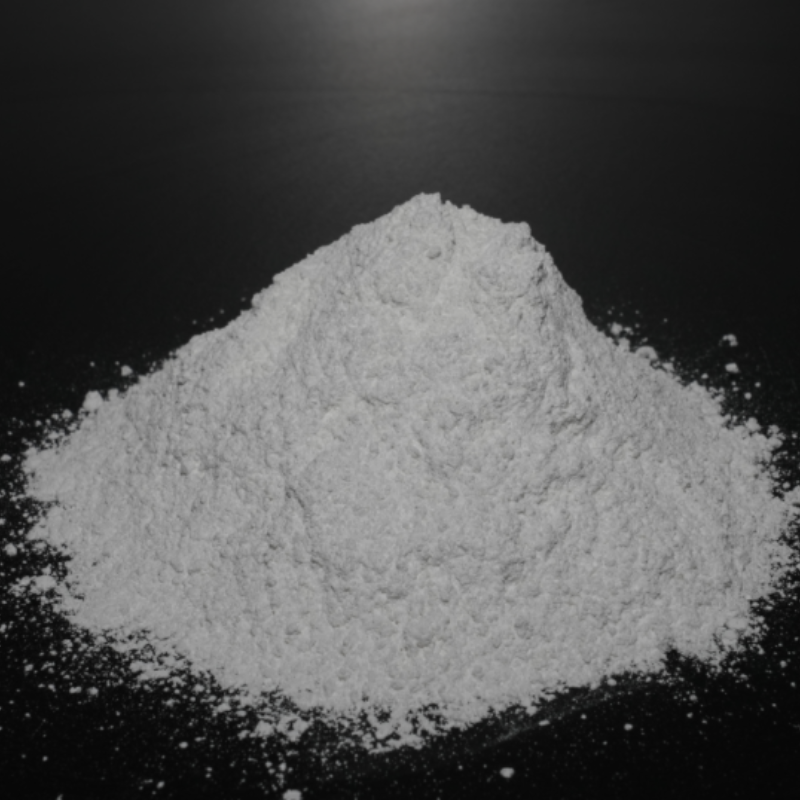
Powder & talc application equipment refers to machinery that meters, distributes, and deposits fine powders—most commonly talc—onto wire, cable, pipe, rubber, plastics, and related industrial surfaces during processing. In the plastics machinery context, this equipment is used mainly to reduce sticking, improve slip and workability, protect surfaces during downstream handling, and support continuous extrusion or winding operations.
The segment is closely associated with cable and wire extrusion lines, where talc is applied to insulated conductors, stranded cores, and green rubber tube products to create a controlled anti-adhesive layer. Related systems also handle other powders such as graphite, mica, stearates, and swelling powders, reflecting a broader application envelope than the name suggests. Over time, the technology has progressed from simple mechanical powder lay-on devices to more controlled systems featuring enclosed chambers, brushes, dehumidification, electrostatic assistance, and recovery or dust-control features.
In modern production, the central engineering trade-off is between uniform coverage and process cleanliness. Equipment must deliver a thin, even layer without contaminating the line, overloading the surface, or creating excessive airborne dust. Recent systems emphasize enclosure, automatic control, and dust suppression, alongside compatibility with high-line-speed extrusion and multi-core cable production. Sustainability considerations increasingly include powder loss reduction, improved occupational hygiene, lower rework rates, and the potential for more efficient material use.
History and Development
Early powder application in plastics-adjacent manufacturing emerged as a practical aid for preventing tackiness and easing separation during winding, coiling, and subsequent assembly. In cable manufacturing, the basic objective was to apply a dry release layer that would not interfere with insulation integrity or downstream jacketing.
A key development was the move toward purpose-built talc applicators for wire and cable lines, rather than manual dusting. Manufacturers began offering dedicated devices for continuous extrusion and stranding lines, with controlled feed, brushing, and surface-leveling mechanisms. This improved repeatability and reduced operator exposure.
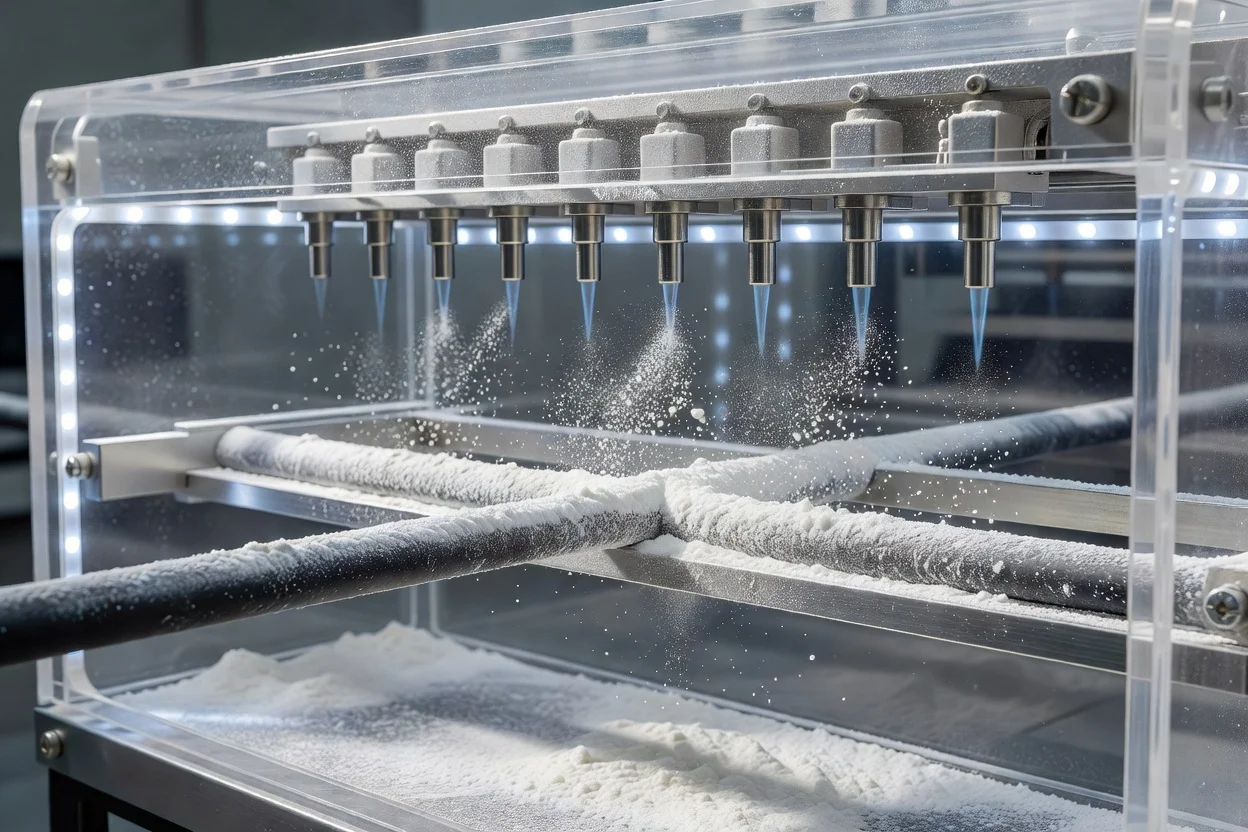
Another milestone was the incorporation of electrostatic application and enclosed chambers. Electrostatic talc applicators use charged particles and a controlled chamber to improve deposition uniformity on cable insulation surfaces, while also reducing dust escape. This approach reflects the broader evolution of powder-handling machinery toward closed, automated systems.
A further development has been the integration of multi-powder compatibility and line-specific customization. Contemporary applicators are offered for automotive, power, installation, and silicon cable designs, and can handle powders beyond talc, including graphite and mica. This expanded role shows the technology’s adaptation to more specialized polymer-processing and elastomer-processing workflows.
Technical Overview
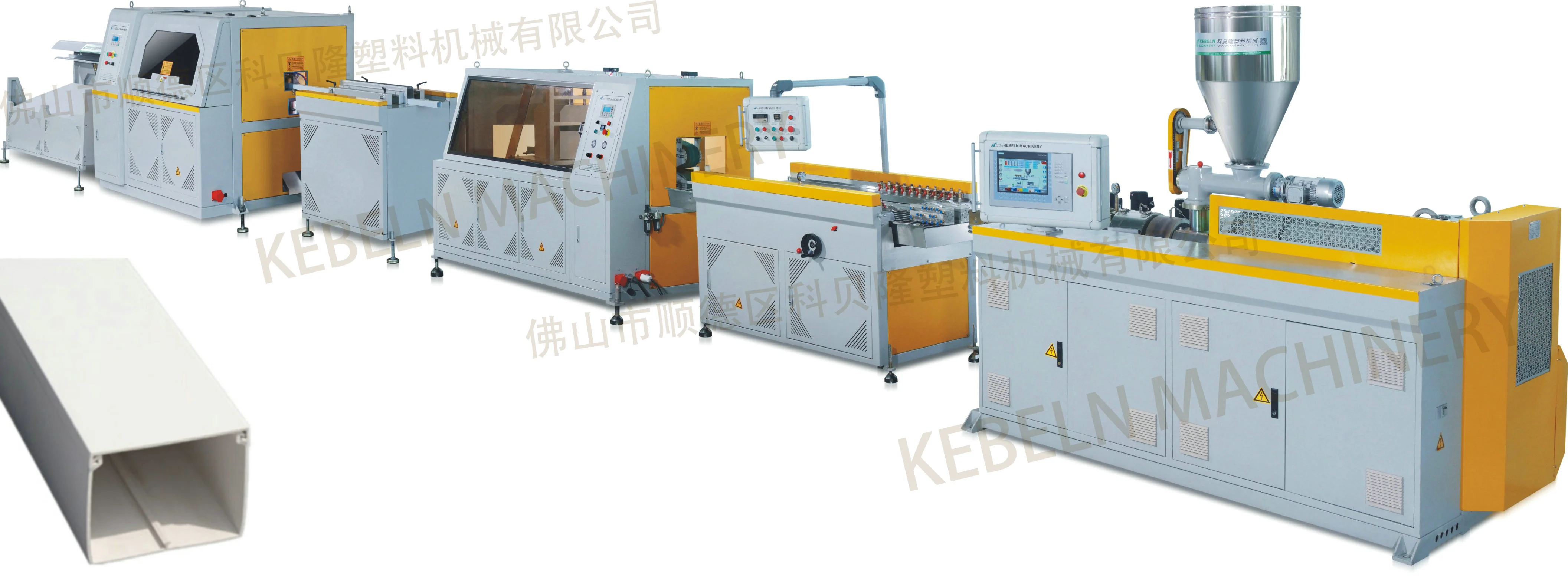
Powder & talc application equipment is typically installed inline with extrusion, stranding, braiding, or winding equipment. The machine’s function is to meter powder from a hopper or chamber, distribute it across the product surface, and remove excess powder through brushes, rollers, or air-management features.
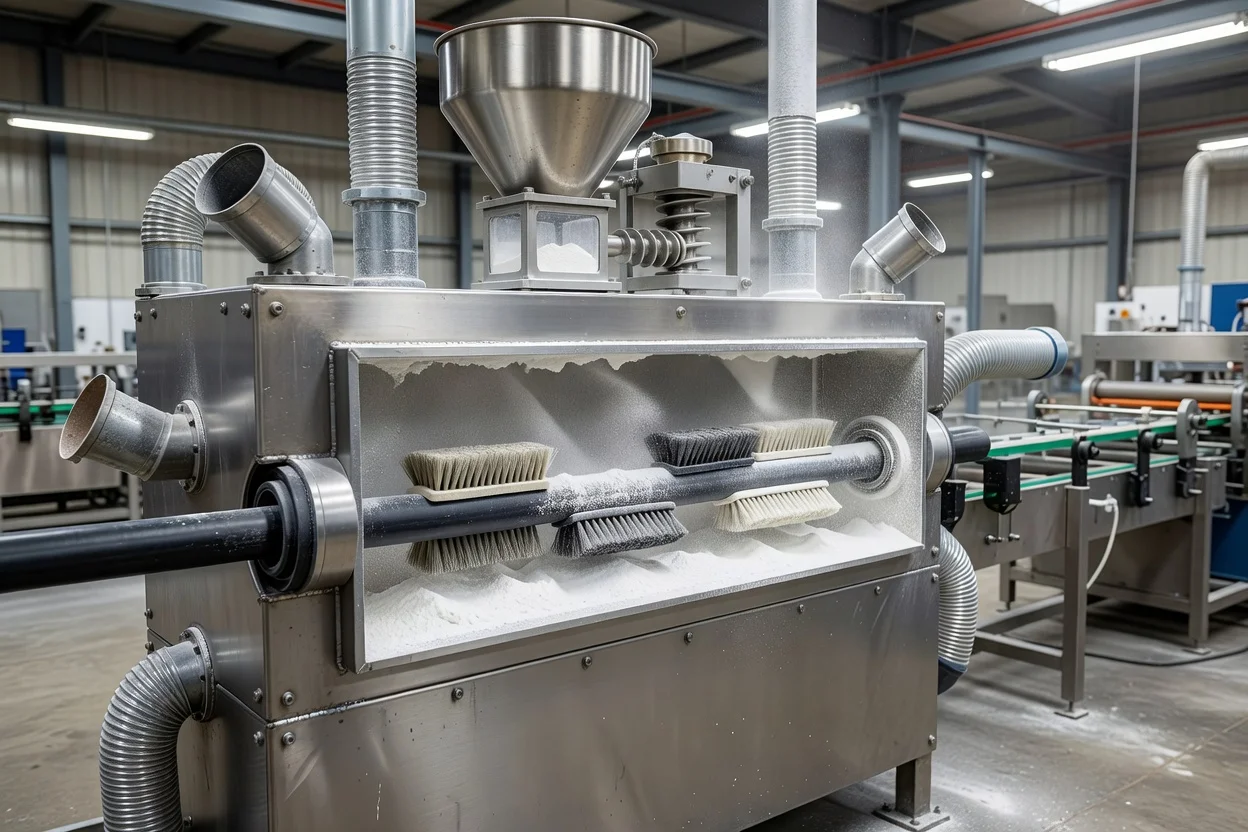
Typical systems include these core elements:
- Powder hopper or bin for storage and feed
- Metering screws, blades, or feed mechanisms for controlled discharge
- Application chamber or lay-on zone where the wire, cable, or tube passes through
- Brushes or wiping elements to remove excess powder and improve finish consistency
- Dust extraction or enclosure to maintain a cleaner working environment
- Optional electrostatic charging to improve particle adherence on the target surface
Typical operating characteristics vary by product and line speed, but the following ranges are representative of industrial practice:
- Powder form: fine talc or similar release powders; industrial talc commonly used in line applications is extremely fine and free-flowing, while broader talc processing can target micron-scale fineness for consistent behavior.
- Application layer: generally a thin, controlled film rather than a heavy coating, especially on cable and pipe surfaces.
- Surface target: insulated wire, cable cores, stranded materials, green rubber tubes, and some pipe surfaces.
- Powder types handled: talc, graphite, mica, stearates, and swelling powder in multi-purpose systems.
For higher-performance systems, mechanical details matter:
- Mechanical applicators may use helical blades, mixing zones, heating plates, and fur brushes to de-agglomerate powder and remove excess material.
- Electrostatic applicators place the product in a chamber where talc settles onto the surface by electrostatic action, improving coverage on moving cable blanks.
- Multi-screw or dual-screw arrangements are used in some designs to improve feeding stability and surface distribution.
Industrial talc handling outside the applicator itself often requires dust-tight transfer and controlled powder conditioning. Palamatic Process, for example, emphasizes airtight transfer and dedusting for talc systems, reflecting the material’s tendency to generate fine dust and the need for safe containment.
Main Types and Variations
| Type | Working principle | Typical strengths | Typical limitations |
|---|---|---|---|
| Mechanical talc applicator | Uses screws, blades, brushes, or similar mechanical elements to feed and level powder | Simple, robust, suitable for continuous cable lines | May produce more dust if poorly enclosed |
| Electrostatic talc applicator | Uses electrostatic attraction to deposit powder more uniformly on the surface | Better coverage control, reduced overspray, cleaner operation | More sensitive to material condition and grounding/setup |
| Custom line-mounted applicator | Configured for a specific cable or pipe extrusion line | Integrates well with process layout, can be optimized for product size | Less flexible across product families |
| Multi-powder applicator | Handles talc plus graphite, mica, stearates, and similar powders | Versatile for different release or surface-modification tasks | Requires careful cleaning and changeover management |
Materials and Process Compatibility
Powder and talc application systems are used where surface separation, low friction, or anti-stick behavior is required during or after forming.
Common compatibility areas include:
- Cable and wire extrusion, especially for insulated cores and stranded materials
- Power, installation, and automotive cable production, where surface separation is important during downstream handling
- Green rubber tube processing, where talc can prevent sticking before vulcanization or final assembly
- Pipe-surface treatment, particularly where a temporary release layer is useful
- Specialty polymer and elastomer lines, where a dry anti-adhesive layer improves throughput and handling
A poor-fit use case is any process requiring a permanent decorative or protective finish. For that purpose, powder coating equipment is used instead, with electrostatic guns, booths, and curing ovens serving a fundamentally different function from talc applicators.
Applications and Uses
- Wire and cable extrusion lines: Talc is applied to insulated wire, cable cores, and stranded materials to prevent sticking and improve separation during winding and downstream processing.
- Braiding and stranding machines: Dedicated applicators are used before or during strand assembly to improve product handling and reduce adhesion between elements.
- Rubber tube and green tire-related processes: Talc spray systems are used to reduce tackiness and aid handling of uncured elastomer products.
- Pipe and profile extrusion: Controlled talc layers can help with temporary surface release and handling during production.
- Multi-core cable manufacturing: Some systems are designed to apply powder between cores to improve separability in finished constructions.
Performance Metrics and Operational Considerations
The performance of powder & talc application equipment is judged less by bulk throughput than by coverage quality, consistency, dust control, and line integration. Important operating parameters include:
- Powder distribution uniformity across the product surface
- Residual excess powder after brushing or wiping
- Line-speed compatibility with continuous extrusion or winding
- Dust containment and working-environment cleanliness
- Ease of cleaning and changeover when switching among powder types
Because the equipment is typically inline rather than batch-based, throughput is usually defined by the host process. In cable and wire lines, the applicator must keep pace with continuous production without creating bottlenecks. Where dust is a concern, enclosed and dedusted systems are preferred to minimize airborne talc exposure and powder loss.
Technological Innovations and Automation
Recent innovations have focused on:
- Electrostatic deposition for improved particle adherence and more even coverage
- Enclosed dust-free operation to improve plant hygiene and operator comfort
- Customizable line integration for different cable diameters and product families
- Automated powder feed and control to stabilize application rate during speed fluctuations
- Broader powder compatibility for talc, graphite, mica, and related materials
Automation has made these systems more predictable, but it also increases the need for accurate setup. Powder condition, humidity, and feed stability can materially affect performance, especially with very fine powders.
Environmental and Sustainability Aspects
Powder and talc application equipment contributes to sustainability primarily through material efficiency and dust reduction. Better containment reduces powder loss, while more uniform application lowers the risk of rework, scrap, and contamination.
Key environmental considerations include:
- Dust control: Fine talc can become airborne easily, so enclosed systems and extraction are important for worker safety and housekeeping.
- Material efficiency: Controlled feed reduces over-application and waste.
- Occupational exposure: Industrial talc handling requires attention to exposure limits and dust management.
- Process compatibility with recycling: Where powders are used as temporary release aids, the overall process can support cleaner separation and less damage to reusable intermediate products.
Economic and Global Market Impact
The market is shaped by the global cable, wire, rubber, and extrusion industries, where process uptime and surface quality directly affect cost. Suppliers offer both standardized and customized machines for regional and sector-specific needs, with some emphasizing automotive, power, and installation cable production.
The commercial logic of these machines is straightforward:
- Lower sticking and drag can improve line continuity
- Better powder control can reduce rework and scrap
- Dust-free designs can reduce cleanup time and improve plant compliance
- Customizable systems can support product diversification in cable and elastomer plants
Current Challenges and Innovations
Despite their maturity, these systems still face several practical challenges:
- Powder bridging and feed instability in hoppers and bins
- Dust escape during loading, maintenance, or poor enclosure design
- Uneven coverage on complex geometries or varying line speeds
- Changeover contamination when moving between different powders
- Process tuning for different cable diameters, surface conditions, and humidity levels
Current innovation is therefore centered on improving feed reliability, enclosure design, powder recovery, and application uniformity. Systems that combine controlled metering with mechanical leveling or electrostatic deposition are particularly important where product consistency is critical.
Future Outlook
Future development is likely to focus on smarter control, better environmental containment, and greater integration with automated extrusion lines. Sensors for feed rate, surface coverage, and dust extraction performance may become more common as cable and elastomer manufacturers pursue tighter process control.
Broader adoption may also follow from the need to handle a wider range of powders in specialized polymer-processing applications, including anti-stick, slip, and functional additive deposition. As sustainability pressure increases, systems that minimize powder waste while maintaining stable, dust-free operation will be the most competitive.
Summary
Powder & talc application equipment is a specialized class of industrial machinery used to apply fine release powders, especially talc, to wire, cable, pipe, rubber, and related plastic-processing products. Its engineering value lies in delivering a thin, uniform anti-stick layer with minimal dust and minimal waste, making it an important auxiliary technology in continuous extrusion and elastomer processing.
References
- •
Powder applicator. (2021, August 24). Technical Development Corporation. https://technicaldevelopment.com/2021/08/24/powder-applicator/Link
- •
Products. (2016). Peku tech GmbH. http://www.jjlowe.com/principals/peku.htmlLink
- •
Chalk applicators. (2025, October 17). Ros&Ros. https://ros-ros.com/en/chalk-applicators/Link
- •
Mechanical Talc power applicator. (2026, August 4). Handing Machinery. https://www.handingmachinery.com/product/Mechanical-Talc-power-applicator.htmlLink
- •
Electrostatic talc spreader. (n.d.). Habsans. https://habsans.com/en/electrostatic-talc-spreaderLink
- •
Powder applicator machine for cable. (2010, September 6). IndiaMART. https://www.indiamart.com/proddetail/powder-applicator-machine-for-cable-20184409830.htmlLink
- •
Powder applications. (2022, May 27). Technical Development Corporation. https://technicaldevelopment.com/powder-applications/Link
- •
Automatic Talc powder applicator, Talc Powder Machine-Cabletec. (2024, December 12). Cabletec. https://www.chinacabletec.com/Product/Automatic-Talc-powder-applicator.htmlLink
- •
Mechanical Talc power applicator. (2025, August 10). Handing Machinery. https://www.handingmachinery.com/Product/Mechanical-Talc-power-applicator.htmlLink
- •
Talcum powder applicator. (n.d.). Habsans. https://habsans.com/en/talcum-powder-applicatorLink
- •
A beginner's guide to powder coating equipment systems. (2020, December 9). Reliant Finishing Systems. https://reliantfinishingsystems.com/a-beginners-guide-to-powder-coating-equipment/Link
- •
Talc applicator: Best tools for powder application. (2025, September 13). Accio. https://www.accio.com/plp/talc-applicatorLink
- •
Talc powder coating machine, Graphite machine. (2019, April 20). TradeKorea. https://www.tradekorea.com/product/detail/P764995/Talc-powder-coating-machine,-Graphite-machine.htmlLink
- •
Mechanical Talc powder applicator. (2024, December 12). Cabletec. https://www.chinacabletec.com/Product/Mechanical-Talc-powder-applicator.htmlLink
- •
What are the different types of powder filling machines? (2023, December 2). Vtops. https://www.vtops.com/questions/what-are-the-different-types-of-powder-filling-machines/Link
- •
Talc. (2025, December 15). Hosokawa Alpine. https://www.hosokawa-alpine.com/powder-particle-processing/industries/minerals-and-metals/talc/Link
- •
Best powder coating machine. (2024, July 26). EMS Powder Coating. https://ems-powdercoating.com/best-powder-coating-machine/Link
- •
Electro mechanical oscillators. (n.d.). Powdergun. https://www.powdergun.com/Oscillators.htmLink
- •
Talcum powder mixing machine, ribbon mixer manufacturer. (2025, July 25). Mill Powder Tech. https://www.millpowder.com/es/talcum-powder-mixing-machine/Link
- •
Powder coating equipment. (n.d.). OTC Industrial. https://otcindustrial.com/shop-products/finishing/powder-coating-equipment.htmlLink
- •
Talcum powder applicators. (2016, October 1). Manex. http://www.manex.com.pl/en/machinery/talc-powder-applicators/Link
- •
Application equipment for powder coating from WAGNER. (n.d.). WAGNER Group. https://www.wagner-group.com/us/industry/products/powder-coating/applying/Link
- •
Powder coating application. (2023, September 19). LinkedIn. https://www.linkedin.com/pulse/powder-coating-application-gazzea-consulting-srlLink
- •
Talcum powder packaging machine – ±1% fill, dust-free line. (2026, April 23). Litian Packing. https://litianpacking.com/product/talcum-powder-packaging-machine/Link
- •
Powder coating equipment. (n.d.). Sci-Hub. https://2024.sci-hub.se/2584/2ecee9d185e78f6d8b6786dd31d6379f/liberto2000.pdfLink
- •
Application equipment for powder coating. (2024, June 7). Erzinger. https://www.erzinger.com.br/en/painting-booths-6/Link
- •
Customize your GlobalSpec experience. (2025, January 1). GlobalSpec. https://www.globalspec.com/learnmore/manufacturing_process_equipment/materials_processing_equipment/powder_production_equipmentLink
- •
Powder grinder mill 12. (2014, October 28). SlideShare. https://www.slideshare.net/slideshow/powder-grinder-mill-12/40847638?nway-content_model=ALink
- •
Powder coating equipment specifications. (2025, January 1). GlobalSpec. https://www.globalspec.com/specsearch/searchform/manufacturing_process_equipment/surface_coating_protection/powder_coating_equipmentLink
- •
Powder coating equipment & systems. (2022, May 3). SurfacePrep. https://surfaceprep.com/product/powder-coating-equipment/Link
- •
Talc. (n.d.). Palamatic Process. https://www.palamaticprocess.com/powder-talcLink
- •
Industrial coating equipment. (2024, October 2). EMS Powder Coating. https://ems-powdercoating.com/industrial-coating-equipment/Link
- •
Electrostatic Talc powder coating machine. (2025, March 10). Technoline. https://www.technoline.com.tr/en/electrostatic-talc-powder-coating-machine/Link
- •
An overview of wire talc coating applicator: Standards, grades.... (2026, February 26). Alibaba. https://www.alibaba.com/product-insights/wire-talc-coating-applicator.htmlLink
- •
An overview of a powder coating line for fabricators. (n.d.). The Fabricator. https://www.thefabricator.com/thefabricator/article/finishing/an-overview-of-a-powder-coating-line-for-fabricatorsLink
- •
Guide to powder processing equipment: Definition and.... (2025, December 2). Mill Powder Tech. https://www.mill.com.tw/en/news/20251202-003.htmlLink
- •
Powder equipment. (n.d.). ECE Canada. https://ececanada.com/powder-equipment.htmlLink
- •
Understanding the different types of powder machines. (2025, July 4). Suden Machines. https://sudenmachines.com/understanding-the-different-types-of-powder-machines/Link
- •
Powder coating equipment. (n.d.). OEM Oven. https://www.oemoven.com/powderLink
- •
Talcum powder packaging machine – ±1% fill, dust-free line. (2026, April 23). Litian Packing. https://litianpacking.com/en_ca/product/talcum-powder-packaging-machine/Link
- •
Powder coating spray guns and applicators. (2025, January 1). GlobalSpec. https://www.globalspec.com/ds/3984/areaspec/view_powder_coating_equipmentLink
- •
Mill Powder Tech talcum powder grinding & mixing solutions. (n.d.). Mill Powder Tech. https://www.mill.com.tw/en/item/talcum-powder.htmlLink
- •
Handling bulk talc materials. (2025, October 7). Flexicon. https://flexicon.com/materials/talc/Link
- •
Talcum powder filling machine. (n.d.). Landpack Machine. https://landpackmachine.com/collections/talcum-powder-filling-machineLink
- •
Electrostatic talc powder spray system for green rubber.... (n.d.). Powdergun. https://www.powdergun.com/talc-powder-for-green-tyres.htmLink
- •
Types of powder coatings systems. (n.d.). AMPP. https://ampp.org/technical-research/what-is-corrosion/types-of-powder-coatings-systemsLink
- •
Do you know these five typical applications of talc in the.... (2025, June 12). EPIC Powder. https://www.epic-powder.com/do-you-know-these-five-typical-applications-of-talc-in-the-coating-industry/Link
- •
Application variables for powder coating systems. (2003, July 1). Products Finishing. https://www.pfonline.com/articles/application-variables-for-powder-coating-systemsLink
- •
Application of talc powder for industrial use. (2022, July 12). VtalC. https://www.vtalc.com/news/application-of-talc-powder-for-industrial-useLink
- •
Powder & talc application equipment suppliers. (2025, September 9). Chinaplas. https://www.chinaplasonline.com/eMarketplace/Quality/AllSuppliers/eng/?v=c7&Sprods=134&SearchBy=ExhLink
- •
Industrial applications of talc powder. (2025, April 23). LKAB Minerals. https://www.lkabminerals.com/news/industrial-applications-talc-powder/Link
- •
Comprehensive guide to industrial-grade talc powder. (2024, December 3). Vnapex. https://www.vnapex.com/blog/talcum-powderLink
- •
Talc dust collection. (n.d.). RoboVent. https://www.robovent.com/industrial-dust-collection/talc/Link