
Introduction
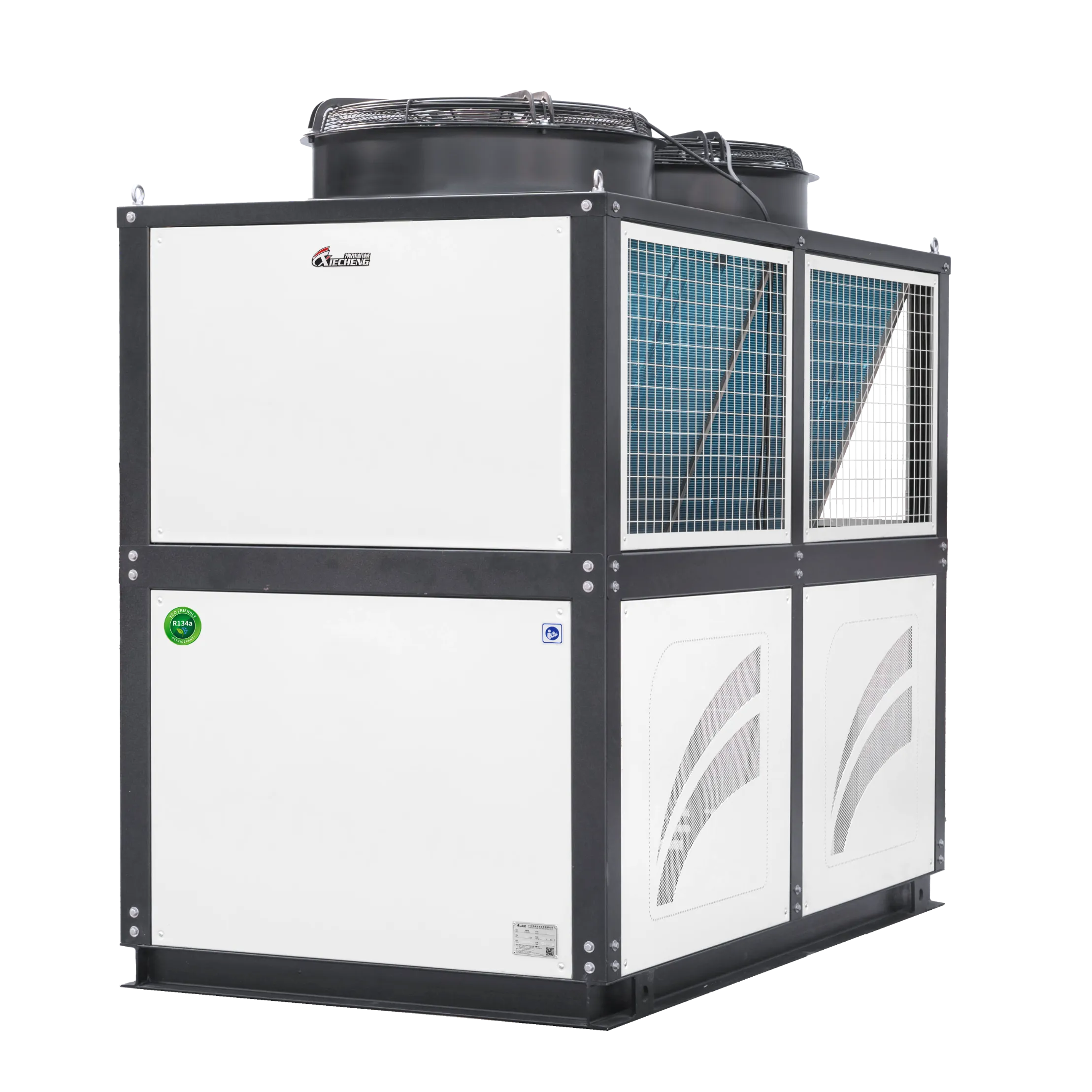
Heating & cooling technologies comprise the systems, components, and control strategies used to add, remove, or redistribute thermal energy in buildings, industrial plants, district networks, and process equipment. In the plastics industry, they are essential for mold temperature control, barrel and die heating, cooling water circuits, chiller systems, drying, and the thermal stabilization of extrusion, injection molding, blow molding, thermoforming, and recycling lines. Heating and cooling are also central to broader decarbonization because thermal energy is one of the largest end uses in the energy system, and efficient technologies can materially reduce energy use and emissions.
The field spans conventional systems such as furnaces, boilers, chillers, and vapour-compression heat pumps, as well as lower-carbon and emerging options including district heating and cooling, solar thermal, thermal storage, geothermal systems, and solid-state or alternative-cycle cooling. Most commercial heating and cooling technologies are mature and widely deployed, while newer solutions are advancing through electrification, digital controls, refrigerant transitions, and waste-heat integration.
For plastics processors, the engineering importance of heating and cooling is especially pronounced because thermal stability affects cycle time, dimensional accuracy, melt quality, surface finish, crystallinity, and scrap rates. Modern systems increasingly emphasize precision control, energy efficiency, low-GWP refrigerants, heat recovery, and automation, with future development likely to be shaped by electrification, circular-economy requirements, and tighter emissions regulation.
History and Development
Early industrial heating and cooling relied on direct combustion, steam distribution, and simple refrigeration machines. Over time, the field evolved toward electrically controlled systems, higher-efficiency heat exchangers, and automatic regulation, which enabled tighter temperature control and lower operating costs.
Several milestones shaped modern practice:
- The commercialization of vapour-compression refrigeration established the dominant cooling principle still used in most air conditioners, chillers, and refrigeration systems today.
- The diffusion of heat pumps made it practical to use electricity to move heat rather than generate it directly, improving efficiency for both space heating and cooling.
- Recent decades have seen rapid adoption of digital controls, variable-speed drives, smart thermostats, and building energy management systems, improving part-load efficiency and load matching.
In parallel, policy and market pressure have accelerated the shift toward lower-carbon technologies. Recent industry analysis and institutional reports emphasize electrification, low- and zero-carbon heat, thermal storage, district systems, and the replacement of high-global-warming-potential refrigerants with lower-impact alternatives.
Technical Overview
Heating and cooling systems are best understood as combinations of a thermal source, a delivery medium, and a control layer. In buildings, the source may be combustion, electricity, ambient heat, geothermal energy, solar thermal input, or waste heat. Delivery may occur through air, water, steam, refrigerant, or radiant surfaces, while control is managed by thermostats, sensors, variable-speed compressors, valves, and automation systems.
Core operating principles
- Heating adds energy to a fluid or surface and transfers that energy to the target space or process.
- Cooling removes heat from a target and rejects it to a sink such as outdoor air, water, or the ground.
- Heat pumps transfer heat rather than create it, which is why they can deliver several units of thermal energy per unit of electrical input.
- District systems centralize heat or cold production and distribute it through insulated networks, reducing the need for many individual units.
- Thermal storage shifts load in time, smoothing demand and improving compatibility with variable renewables.
Performance metrics
Typical engineering benchmarks vary by application, but recent technical literature gives useful reference points:
- Heat pumps often achieve coefficient of performance values well above direct electric resistance heating, and may provide multiple units of heating or cooling per unit of electricity consumed.
- Emerging alternative heating and cooling technologies reported in the literature often operate in the few-kilowatt to about 7 kW capacity range, with COP values between 1 and 10 depending on the cycle and application.
- In plastics recycling and recovery, centrifugal dewatering commonly leaves flake or regrind with low residual moisture before hot-air or thermal drying, while mechanical size reduction often targets flake sizes suitable for downstream washing and separation processes. Industry practice typically uses flake dimensions in the millimetre range, with final moisture targets determined by the downstream polymer and process requirements.
- Industrial cooling systems are frequently specified by capacity in kW, tonnes of refrigeration, or t/h of chilled water, while plastics extrusion and molding lines often require tightly controlled temperature loops rather than simply high capacity.
Plastic-processing relevance
In plastics machinery, heating and cooling technologies are not peripheral utilities; they are process-enabling subsystems. Examples include:
- Injection molding: barrel heaters, nozzle heaters, hot runners, mold-temperature controllers, cooling channels, and chillers.
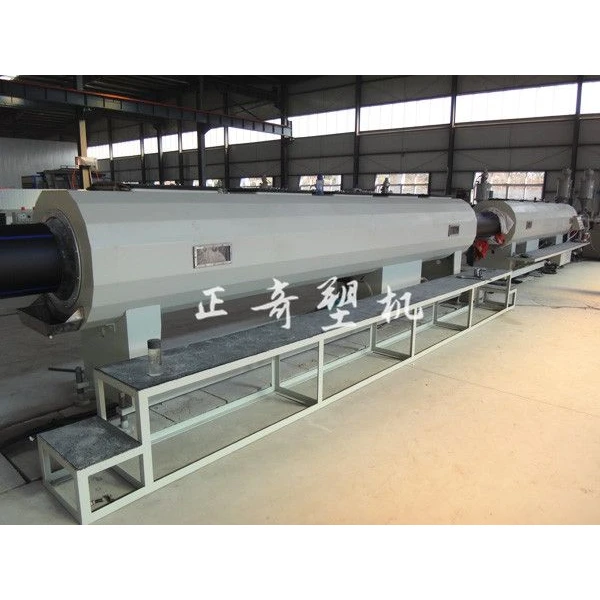
- Extrusion: barrel zone heaters, die heaters, screw cooling, vacuum calibration, and cooling tanks.
- Blow molding and thermoforming: preform or sheet heating, mold cooling, and air-conditioning of the production environment.
- Recycling: wash-line water heating, friction-wash temperature control, centrifugal dewatering, and thermal drying.
Precise thermal control improves repeatability, reduces warpage, and can shorten cycle time by maximizing controllable heat transfer while avoiding overcooling or overheating.
Types and Variations
| Type | Main principle | Typical strengths | Typical limitations |
|---|---|---|---|
| Boilers and furnaces | Combustion-based heat generation | High output, mature infrastructure | Emissions, fuel dependence |
| Heat pumps | Heat transfer from source to sink | High efficiency, electrification-ready | Performance depends on climate and system design |
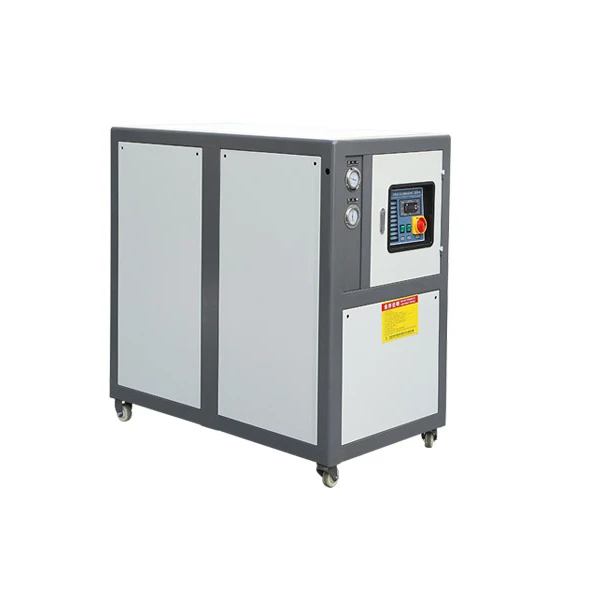
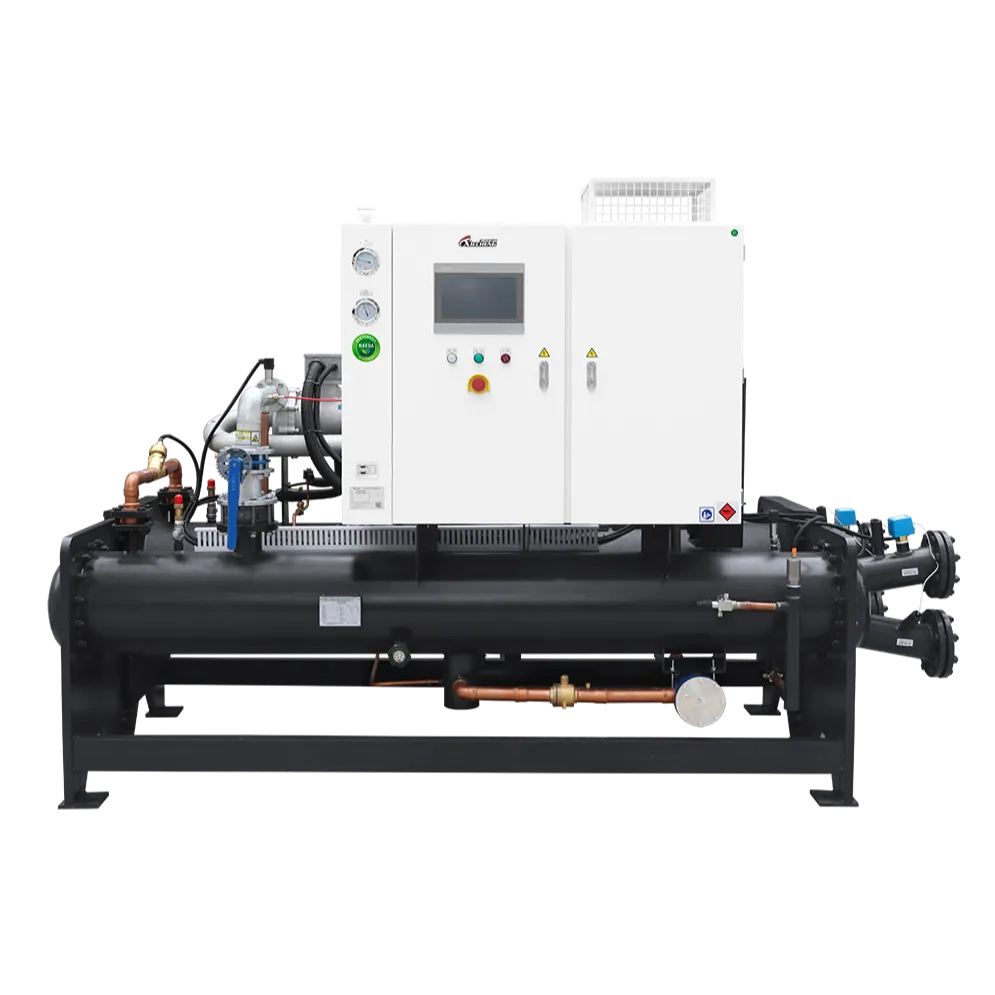
| Chillers | Mechanical cooling via vapour compression | Precise cooling, high reliability | Electricity demand, refrigerant issues |
| District heating and cooling | Centralized thermal production and distribution | Scale efficiency, waste-heat integration | High infrastructure cost |
| Geothermal systems | Use stable ground temperature | Strong seasonal performance | Site-specific installation complexity |
| Solar thermal systems | Capture solar energy for heat or cooling support | Low operating emissions | Intermittency, storage needs |
| Thermal storage | Store heat or cold for later use | Load shifting, flexibility | Added capital and footprint |
| Alternative and solid-state cooling | Non-vapour-compression cycles or caloric effects | Potentially lower-impact future options | Mostly emerging or limited in scale |
Within plastics processing, the most relevant categories are process heaters, industrial chillers, mold temperature controllers, cooling towers, heat recovery units, and refrigerated or chilled-water loops. The best choice depends on polymer type, throughput, ambient conditions, and product tolerances.
Applications and Uses
Heating and cooling technologies serve a wide range of sectors:
- Residential and commercial buildings use furnaces, boilers, air conditioners, and heat pumps for comfort conditioning.
- District energy networks supply multiple buildings from centralized plants, often improving efficiency and enabling waste-heat recovery.
- Industrial plants use process heating, process cooling, chilled water, and thermal management for continuous manufacturing.
- Data centers increasingly rely on advanced cooling architectures because of high power density and low tolerance for thermal excursions.
- Plastics manufacturing depends on accurate thermal control for molding, extrusion, and recycling operations.
A poor-fit use case is attempting to use a small comfort-oriented HVAC unit for high-duty industrial process cooling. Such equipment may provide temperature control in a room, but it is generally not suitable for the continuous, load-intensive, and tightly regulated thermal demands of plastic processing machinery.
Technological Innovations and Automation
Recent innovation is concentrated in four areas:
- Electrification, especially the replacement of combustion-based heating with heat pumps and electric process heaters.
- Digital control, including predictive maintenance, sensor fusion, fault detection, and AI-assisted optimization.
- Refrigerant transition, particularly the shift from high-GWP refrigerants toward lower-impact alternatives and natural refrigerants in appropriate applications.
- System integration, such as coupling HVAC with building automation, thermal storage, renewables, and waste-heat recovery.
For plastics equipment, automation is especially valuable because thermal fluctuations can propagate into product defects. Smart controllers can stabilize mold temperatures, reduce overshoot in barrel zones, and optimize cooling-water flow to balance cycle time against part quality.
Environmental and Sustainability Aspects
Heating and cooling are central to industrial decarbonization because they account for a very large share of final energy use and associated emissions. The main sustainability strategies are:
- Improve efficiency through insulation, heat exchangers, variable-speed drives, and better controls.
- Electrify thermal loads with heat pumps where performance and grid conditions are favorable.
- Recover waste heat from compressors, process equipment, refrigeration systems, and exhaust streams.
- Use low-impact refrigerants and reduce leakage from sealed circuits.
- Apply thermal storage to shift demand and support renewable integration.
In plastics plants, the sustainability case is often strongest when cooling water, compressed air, and process heat are treated as an integrated energy system rather than separate utilities. Heat rejected by chillers, compressors, and dryers can sometimes be reused for wash water, space heating, or preheating feed streams.
Economic and Global Market Impact
The global market for heating and cooling technologies is large because nearly every building and industrial facility requires thermal management. Institutional assessments note that commercially available low- and zero-carbon solutions already exist, but deployment is constrained by capital cost, infrastructure compatibility, installation complexity, and regional energy prices.
For manufacturers of plastics machinery, the market impact is indirect but significant:
- energy-efficient thermal systems lower operating cost for end users;
- lower utility demand can improve the competitiveness of converting and recycling plants;
- more sophisticated thermal management increases demand for sensors, controllers, pumps, valves, heat exchangers, and integrated automation packages;
- refrigerant regulation and electrification trends influence the design of auxiliary systems supplied with processing lines.
Recent industry reporting suggests strong growth in heat pumps, smart controls, and low-GWP HVAC equipment, while the industrial segment continues to expand in high-performance cooling for electronics, data centers, food processing, and precision manufacturing.
Current Challenges and Innovations
Key challenges include:
- Load matching: systems often operate far from optimal efficiency under partial load.
- Grid dependence: electrified heating and cooling can shift demand onto power systems that are not always ready for peak loads.
- Refrigerant governance: lower-GWP refrigerants may introduce flammability, toxicity, or design constraints.
- Capital cost: district systems, geothermal installations, and thermal storage require high upfront investment.
- Integration complexity: retrofitting existing plants is often harder than designing new ones.
Innovation is therefore focused on systems that are compact, modular, and digitally controllable. In recent market activity, manufacturers have emphasized next-generation heat pumps, advanced chillers, low-GWP refrigerants, and AI-enabled control platforms, reflecting a broader move from simple equipment sales toward lifecycle performance optimization.
Future Outlook
Future development is likely to follow three broad directions:
- Deeper electrification of heating and cooling with high-efficiency heat pumps and electrically driven process systems.
- More integrated thermal networks, combining district energy, storage, renewables, and waste-heat recovery.
- Next-generation cooling concepts, including solid-state and alternative-cycle technologies, although most remain early-stage or limited in capacity today.
For plastic processing, the most important near-term advances will probably be in closed-loop thermal control, predictive maintenance, energy benchmarking, and heat recovery between process stages. The long-term competitive advantage will belong to plants that can maintain narrow thermal tolerances while lowering energy intensity and carbon emissions.
Summary
Heating & cooling technologies are foundational to modern industry and particularly critical in plastics processing, where thermal control directly affects quality, productivity, and energy use. The sector is moving from conventional combustion and single-purpose cooling toward electrified, digitally managed, low-emission systems with higher efficiency and better integration across the production line.
References
- •
Korean scientists unveil 10 kW chemical adsorption heat pump prototype. (2026, August 24). PV Magazine.Link
- •
Best available technologies for the heat and cooling market in the European Union. (n.d.).Link
- •
Building heating and cooling systems. (n.d.).Link
- •
Geothermal heating and cooling technologies. (2014, October 28). U.S. Environmental Protection Agency.Link
- •
Types of heating & cooling systems explained. (n.d.). Carrier.Link
- •
New 2026 split AC innovations. (2025, December 7).Link
- •
12 HVAC trends reshaping heating and cooling in 2026. (2026, February 6).Link
- •
Key technologies driving efficiency in heating and cooling. (2025, November 11).Link
- •
Panasonic powering Europe's energy transformation at MCE 2026. (2026, July 28). Panasonic.Link
- •
Heating and cooling. (n.d.). MIT Climate Portal.Link
- •
Cooling technologies overview. (n.d.). Joule Heist.Link
- •
Low carbon heating and cooling technologies. (n.d.). Sustainable Energy Authority of Ireland.Link
- •
Panasonic redefining the future of HVAC&R with latest industry shaping climate innovations. (2026, March 31). Panasonic.Link
- •
Technology roadmap: Energy-efficient buildings—heating and cooling equipment. (n.d.). International Energy Agency.Link
- •
Cooling technologies surge at IFA 2026 amid European heatwaves. (2026, September 3). Chosun.Link
- •
Review of heating and cooling technologies for buildings. (n.d.). ScienceDirect.Link
- •
New HVAC technology 2026: What's changed and what's coming. (2026, July 15).Link
- •
Clean energy 101: Solid-state cooling. (2025, March 13). Rocky Mountain Institute.Link
- •
Building Technologies Office energy savings potential and research opportunities. (n.d.). U.S. Department of Energy.Link
- •
Heating & cooling technologies. (n.d.). Why Electrify.Link
- •
Low-carbon heating and cooling: Overcoming one of the most difficult challenges in the transition to net zero. (n.d.). The Royal Society.Link
- •
LG Electronics showcases high-efficiency HVAC and core component solutions at AHR Expo 2026. (2026, February 2). LG.Link
- •
New HVAC trends for 2026: Smart tech & energy efficiency. (2026, January 13).Link
- •
Space heating and cooling. (n.d.). IEA-ETSAP.Link
- •
Daikin unveils high-performance innovations at 2026 AHR Expo to tackle industry's toughest challenges. (2026, January 28). Daikin Applied.Link
- •
A review of recent advances in emerging alternative heating and cooling technologies. (2021, January 19). Energies, 14(2), 502.Link
- •
Overview of working fluids and sustainable heating, cooling and power generation technologies. (2017, December 1). International Journal of Low-Carbon Technologies, 12(4), 369–381.Link
- •
What HVAC contractors and plumbers need to know in 2026. (2026, July 1). Rheem.Link
- •
Emerging HVAC technology trends in 2026. (2026, January 7). Apollo.Link
- •
15 latest HVAC technologies & innovations + top 2026 trends. (2026, February 12). ServiceTitan.Link
- •
Heating & cooling systems. (n.d.). NYSERDA.Link
- •
Top 10 green heating and cooling technologies. (2011, April 25). HowStuffWorks.Link
- •
Top 21 HVAC industry trends and innovations to watch in 2026. (2026, August 5). Fieldex.Link
- •
Radiant heating and cooling. (2013, November 18). Wikipedia.Link
- •
HVAC trends in 2026: Electrification, refrigerants, and digitalization. (2026, May 22). LG.Link
- •
Top heating and cooling systems for homes 2026 trends. (2026, January 26).Link
- •
HVAC industry trends 2026: Smart HVAC, heat pumps, AI maintenance. (2026, March 23). Oxmaint.Link
- •
Looking ahead: 2026 HVAC trends. (2026, February 9). LinkedIn.Link
- •
Top HVAC trends homeowners will ask about in 2026. (2026, January 5). ECCO Supply.Link
- •
IEA ETP 2026 highlights heat pump technologies. (2026, March 31). Heat Pumping Technologies.Link