
Introduction
Assembly systems are organized combinations of machinery, robotics, tooling, sensors, material-handling devices, and control software used to join components and subassemblies into finished products in a coordinated, repeatable way. In plastics manufacturing, they are especially important where molded parts, extrusions, films, closures, housings, medical devices, automotive trim, or electronic enclosures must be fastened, welded, pressed, tested, or packaged into saleable assemblies.
Within the plastics industry, assembly systems sit at the intersection of molding, joining, inspection, and end-of-line logistics. They may be manual, semi-automatic, or fully automated, and are commonly built as fixed-automation transfer lines, rotary dial machines, linear pallet systems, or flexible robotic cells. Their design is shaped by product geometry, part count, required cycle time, joining method, changeover frequency, and quality-critical operations such as torque control, vision inspection, leak testing, and functional verification.
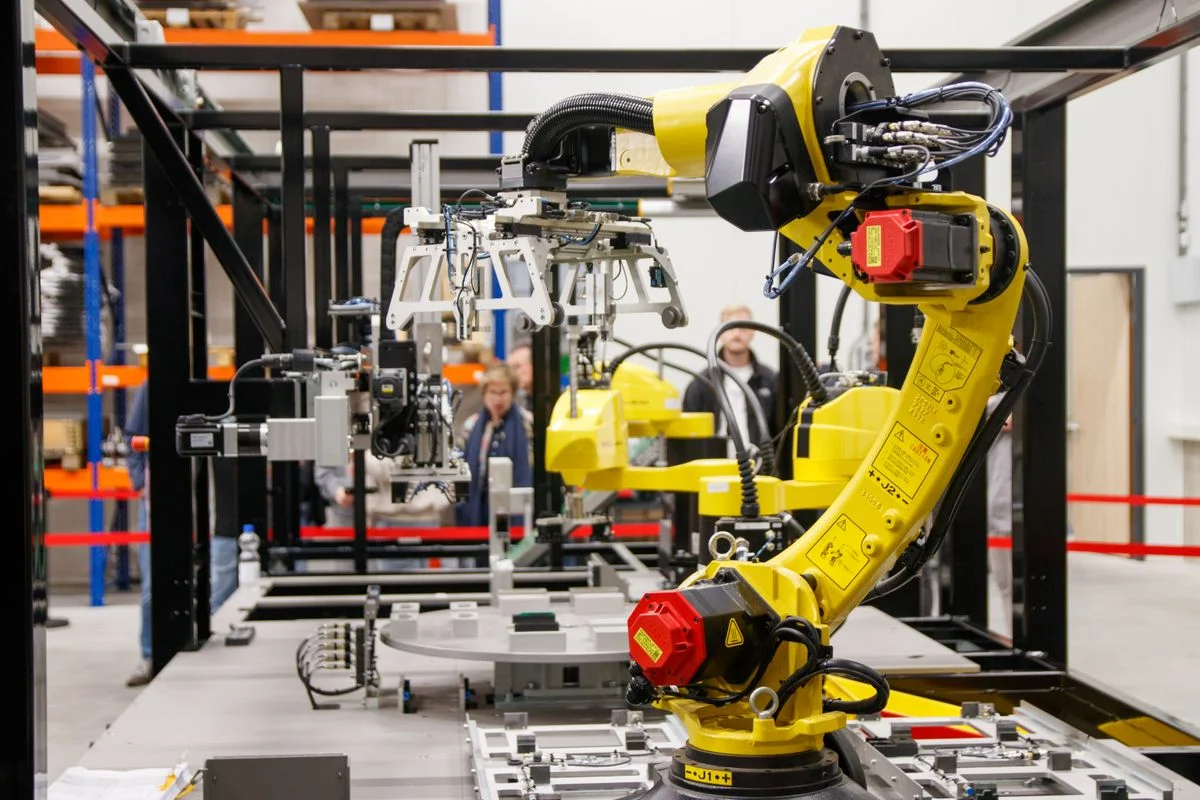
Historically, assembly evolved from human bench work to mechanized transfer systems, then to programmable automation, and more recently to data-connected, adaptive systems that support traceability and variant handling. Current development is driven by robotics, machine vision, servo control, digital twins, and Industry 4.0 connectivity, while sustainability pressures are pushing manufacturers toward lower energy use, reduced scrap, and easier disassembly for recycling.
History and Development
Assembly as a formal manufacturing discipline predates modern automation, but industrial assembly systems expanded rapidly with mass production and the rise of conveyor-based factories. In automated manufacturing, major milestones include the spread of synchronous transfer lines, the adoption of rotary dial and carousel machines for high-throughput repetitive assembly, and the later use of programmable robots and flexible cells for product variety.
Several concrete developments shaped the field:
- Transfer-line automation established the idea of moving parts through sequential stations with fixed timing, improving repeatability for high-volume products.
- Rotary indexing and dial machines became a standard solution for compact, high-speed assembly when the task sequence could be standardized across stations.
- Robotic and sensor-based assembly cells expanded the scope of automation to tasks requiring part variation handling, force feedback, and inspection, especially in automotive, electronics, and plastics component production.
More recent work in Assembly Systems 4.0 has focused on integrating process control with feeding systems, quality monitoring, and digital data exchange to improve responsiveness and traceability.
Technical Overview
At a systems level, an assembly system is usually divided into an assembly line subsystem that performs the physical joining operations and an assembly line feeding subsystem that presents, orients, and supplies parts to the stations. Typical hardware includes hoppers, vibratory feeders, bowl feeders, conveyor or pallet transport, pick-and-place devices, torque tools, servo presses, welding heads, vision cameras, and test modules.
Working principles
The basic operating sequence is:
- Part feeding and orientation
- Part transfer or indexing
- Insertion, fastening, welding, pressing, or bonding
- In-process inspection
- Functional or leak testing
- Discharge and traceability recording
In plastics assembly, the joining method may be mechanical fastening, snap-fit insertion, adhesive bonding, ultrasonic welding, vibration welding, heat staking, laser welding, or overmolding/in-line insertion processing. The choice depends on polymer type, wall thickness, surface condition, dimensional tolerance, and whether the joint must be permanent or serviceable.
Common performance benchmarks
Published and commercial system descriptions indicate that modern assembly systems vary widely in capacity, but several practical benchmarks are common:
- Rotary dial machines are often built with about 8 to 24+ stations, supporting compact high-speed cycles.
- Linear transfer systems use pallet or carrier motion along straight or looped paths and are selected when more process steps or larger product variants must be accommodated.
- Flexible robotic cells are favored when short changeovers or multiple part variants are required, although they usually trade some peak speed for flexibility.
- In plastics recycling-related preprocessing equipment used upstream of assembly-adjacent operations, centrifugal dewatering can reduce residual moisture to roughly 1–2% under well-controlled conditions, which is relevant when dried flakes or granules must be handled reliably in downstream automated feeding and assembly-adjacent packaging systems; this is an inference from processing practice rather than a universal assembly-system specification.
Where assembly systems include verification, force-displacement monitoring and torque traceability are especially important for press-fits, threaded joints, and sensitive plastic housings. In electronics and medical plastics, such systems often log process data to support validation and regulatory documentation.
Types and Variations
Assembly systems are commonly classified by work transfer method and physical configuration.
| Type | Main feature | Typical strength | Typical limitation |
|---|---|---|---|
| Continuous transfer | Parts move continuously through stations | Very high throughput | Complex synchronization |
| Synchronous transfer | All parts advance together step by step | Strong timing control | Lower flexibility |
| Asynchronous transfer | Parts move independently between stations | Better buffering and variety handling | More control complexity |
| Stationary-base-part systems | Product remains fixed while tools or robots move | Good for large or fragile products | Lower density of stations |
| In-line assembly machine | Stations arranged in sequence | Clear process flow, scalable | Requires space |
| Dial-type assembly machine | Stations arranged around a rotating dial | Compact, fast cycle times | Best for standardized tasks |
| Carousel assembly system | Hybrid circular workflow | Good balance of speed and access | More complex layout |
| Single-station assembly machine | All operations at one location | Simple and compact | Limited throughput |

Another practical distinction is between manual, semi-automatic, and fully automatic systems.
- Manual systems are common for low volume, frequent design changes, or highly dexterous tasks.
- Semi-automatic systems automate feeding, pressing, torqueing, or inspection while retaining human intervention for delicate or variable tasks.
- Fully automatic systems are used where output volume, repeatability, and labor reduction justify the capital cost.
For plastic products, hybrid systems are especially common because molded parts may need orientation, snap-fit insertion, surface-sensitive handling, or visual verification that benefits from human oversight or advanced sensing.
Applications and Uses
Assembly systems are used across most plastics-intensive sectors, especially where molded or extruded parts are combined with metal, rubber, electronics, seals, or fasteners.
- Automotive plastics: instrument panels, interior trim, exterior trim, fascias, door modules, wheel-related subassemblies, lighting housings, and EV charger components.
- Electronics and electrical enclosures: plastic housings, connectors, busbar-related assemblies, switchgear components, and charger subassemblies.
- Medical and laboratory products: disposable devices, diagnostic housings, fluid-handling components, and validated subassemblies requiring traceability.
- Consumer goods: closures, appliances, packaging components, and small molded mechanisms assembled by snap-fit, ultrasonic welding, or screwdriving.
- Industrial products: machine covers, pump housings, valves, instrumentation, and technical plastic modules.
A poor-fit use is very low-volume, highly variable custom work, where setup time and tooling cost usually outweigh the gains from automation.
Joining Technologies in Plastics Assembly
The assembly system itself is only one part of the process; the joining technology determines whether the final product meets strength, sealing, appearance, and serviceability requirements.
- Mechanical fastening is widely used because it is inexpensive, familiar, and often allows disassembly.
- Ultrasonic welding is important for many thermoplastic housings because it can create fast, localized joints with minimal consumables.
- Heat staking and thermal insertion are common when plastic bosses must capture metal inserts or threaded elements.
- Adhesive dispensing and curing are used when dissimilar materials or large bond areas are involved.
- Press fitting and servo pressing support controlled interference fits, especially in precision subassemblies.
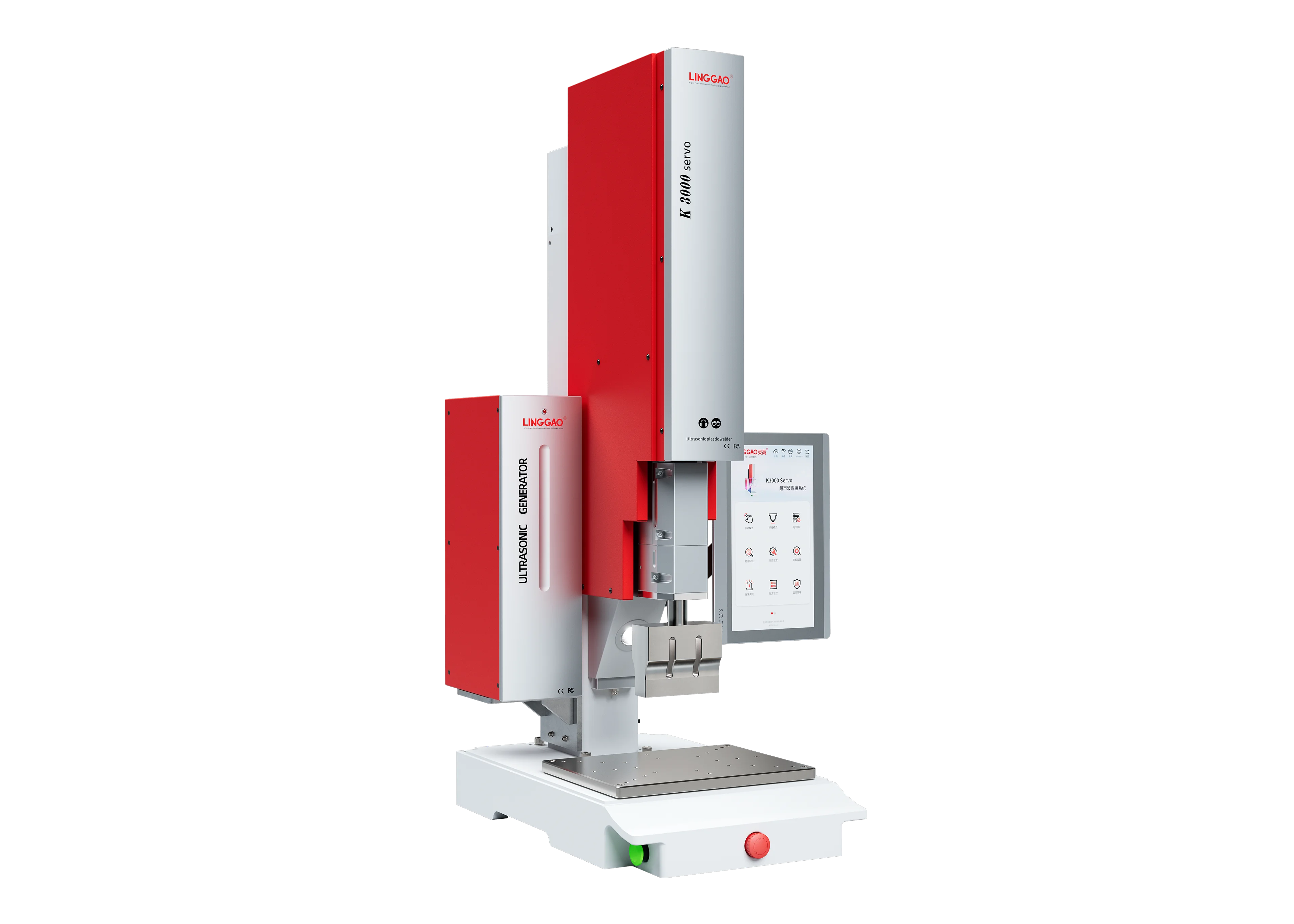
In plastics, joint design is closely linked to polymer selection, shrinkage behavior, moisture sensitivity, creep resistance, and whether the product must survive heat, vibration, chemicals, or repeated loading.
Technological Innovations and Automation
Modern assembly systems increasingly combine robotics, machine vision, force control, connected sensors, and software-based diagnostics. These technologies improve consistency and allow the system to detect defects during assembly rather than after final inspection.
Key innovations include:
- Vision-guided robotics for part localization, orientation correction, and missing-part detection.
- Force-displacement monitoring for press-fit validation and damage prevention.
- Connected traceability systems that record torque, force, cycle time, and inspection outcomes for each serial number.
- Flexible feeding systems that reduce dependence on tightly controlled part presentation.
- Digital integration with manufacturing execution systems and line control software to support scheduling, diagnostics, and analytics.
In plastics production, these features are especially useful because molded parts can vary in shrinkage, flash, warpage, or surface finish, all of which affect assembly success.
Environmental and Sustainability Aspects
Assembly systems influence sustainability primarily through material efficiency, energy consumption, rework reduction, and design for disassembly.
- Energy efficiency improves when servo-driven motion replaces compressed-air-intensive mechanisms.
- Scrap reduction comes from in-line inspection, better feeding, and closed-loop process control.
- Repairability and recyclability improve when assemblies use reversible joints, standardized fasteners, or separable subassemblies.
- Material utilization benefits when systems reduce damage to molded parts during handling and insertion.
There is also a trade-off: highly automated systems can consume more embedded energy in tooling, software, sensors, and auxiliary motion equipment, so lifecycle assessment is important when selecting the degree of automation. This is particularly relevant in plastics, where downstream assembly choices affect whether products can be economically sorted, repaired, or recycled.
Economic and Global Market Impact
Assembly systems are central to manufacturing productivity because they determine throughput, labor content, product consistency, and the economics of variant production. They are particularly valuable in regions and sectors where wage pressure, quality requirements, and supply-chain resilience encourage investment in automation.
For plastics manufacturers, assembly automation can reduce dependence on manual labor for repetitive tasks such as screwdriving, clipping, welding, dispensing, and inspection. At the same time, the capital intensity of automation means that adoption tends to be strongest where product volumes are stable, margins justify process control, and quality failures are costly.
Global demand is shaped by automotive electrification, medical device manufacturing, consumer electronics, and packaging-related machinery, all of which require high-speed, traceable assembly of plastic-rich products.
Current Challenges and Innovations
Several technical challenges continue to shape the design of assembly systems:
- Product variety increases changeover complexity and reduces the suitability of fixed automation.
- Part variation from molding tolerances, warpage, and surface defects can disrupt feeding and joining.
- Feeding reliability remains a major bottleneck, especially for small or flexible plastic parts that are difficult to orient.
- Integration complexity rises when assembly must combine joining, inspection, test, and data logging in one line.
- Labor–automation balance is still unresolved for products that need dexterity but not full manual labor.
Current innovations include adaptive feeders, more capable cobots, improved simulation for line balancing, and software tools that optimize line design for product variety and changeover cost.
Future Outlook
Future assembly systems are likely to become more modular, data-driven, and product-adaptive. In plastics manufacturing, this will favor systems that can switch between variants with limited downtime, compensate for molded-part variability, and document every critical joining step.
Likely directions include:
- Wider use of digital twins for commissioning and throughput optimization
- More AI-assisted inspection for surface and geometry defects
- Greater use of flexible feeding and robotic handling for mixed-part production
- Expansion of traceable joining for regulated sectors such as medical and automotive
- More emphasis on disassembly-aware design, especially in circular-economy applications
As plastic products become more integrated with electronics, sensors, and lightweight structural elements, assembly systems will increasingly determine not only production speed but also product reliability, recyclability, and total manufacturing cost.
Summary
Assembly systems are the manufacturing platforms that transform separate parts into finished products through coordinated feeding, joining, inspection, and testing. In the plastics industry, they are essential for converting molded and extruded components into reliable consumer, automotive, medical, and industrial products, with modern systems spanning manual stations, rotary dial machines, linear transfer lines, and flexible robotic cells.
References
- •
Assembly systems - IEEE Technology Navigator. (n.d.). https://technav.ieee.org/topic/assembly-systems/Link
- •
Automated Assembly Systems Overview | PDF. (2026, April 19). https://www.scribd.com/document/470812713/astomated-assembly-systemLink
- •
7.2 TYPES OF AUTOMATED ASSEMBLY SYSTEMS. (2013, May 14). https://rekadayaupaya.wordpress.com/2013/05/14/7-2-types-of-automated-assembly-systems/Link
- •
Overview of Automated Assembly Systems | PDF | Automation .... (2026, March 31). https://de.scribd.com/document/616169780/1579436653Link
- •
Assembly systems from ENGMATE. (2026, April 7). https://www.engmatec.de/en/seo-lp-assembly-system/Link
- •
UNIT 16 ASSEMBLY SYSTEM IN THE INDUSTRY. (n.d.). https://egyankosh.ac.in/bitstream/123456789/100439/1/Unit-16.pdfLink
- •
UNIT-3 Full Notes. (2025, August 23). https://www.scribd.com/document/850351858/UNIT-3-Full-NotesLink
- •
Assembly Types and Levels - Knowledge Base - NexPCB. (n.d.). https://knowledgebase.nexpcb.com/articles/assembly-types-and-levels/Link
- •
Introduction to Assembly 101. (n.d.). https://learn.toolingu.com/classes/introduction-to-assembly-101/Link
- •
Assembly System Design Issues. (n.d.). https://dspace.mit.edu/bitstream/handle/1721.1/35795/2-875Fall-2002/NR/rdonlyres/Mechanical-Engineering/2-875Mechanical-Assembly-and-Its-Role-in-Product-DevelopmentFall2002/9D792D7A-39F7-4C05-BE19-FCC839D692B8/0/AITL_SD02.pdfLink
- •
Assembly Manufacturing Technology - EMS. (2024, July 24). https://electronicmanufacturingservice.org/assembly-manufacturing-technology/Link
- •
Manual Assembly - an overview. (n.d.). https://www.sciencedirect.com/topics/engineering/manual-assemblyLink
- •
Automated Assembly. (2025, May 4). https://www.scribd.com/presentation/78428067/Automated-AssemblyLink
- •
Automated Assembly Machinery Types and Applications. (2020, June 17). https://norwalt.com/automated-assembly-machinery-types-applications/Link
- •
Assembly systems - ELWEMA Automotive GmbH. (n.d.). https://elwema.com/en/applications/assembly-systemsLink
- •
Custom Automated Assembly Machines | Design, Build & Integration. (2024, February 25). https://amdmachines.com/blog/automated-assembly-machines/Link
- •
Unit 14 Automated Assembly Systems. (2025, May 5). https://www.scribd.com/doc/139894112/Unit-14-Automated-Assembly-SystemsLink
- •
Automated assembly systems | PPTX. (2015, April 12). https://www.slideshare.net/slideshow/automated-assembly-systems/46899158Link
- •
About Us. (2023, May 31). https://assemblysystems.com/about-us/Link
- •
RECENT J. (2022), 68:131-137. (n.d.). https://www.recentonline.ro/2022/068/Barbu-R68.pdfLink
- •
8 automated assembly-systems | PPT. (2014, May 12). https://www.slideshare.net/slideshow/8-automated-assemblysystems/34602389Link
- •
Automated Assembly Systems Overview | PDF | Manufactured Goods. (2026, April 22). https://www.scribd.com/presentation/835670113/Module-3-1Link
- •
Design and management of assembly systems 4.0. (2022, January 2). https://www.tandfonline.com/doi/full/10.1080/00207543.2021.1990433Link
- •
Manufacturing Systems Overview. (n.d.). https://courses.edx.org/asset-v1:MITx+2.854.1x+2T2021+type@asset+block/Complete_Slides.pdfLink
- •
Automated Assembly Machines & Systems. (n.d.). https://amdmachines.com/solutions/assembly/Link
- •
[PDF] Assembly system design and operations for product variety. (n.d.). https://public.websites.umich.edu/~ykoren/uploads/Assembly_System_Design_and_Operations.pdfLink
- •
Types of Assembly Processes: From Manual to Automated. (2025, October 7). https://engineerfix.com/types-of-assembly-processes-from-manual-to-automated/Link
- •
Assemblies: definition and areas of application. (2023, November 25). https://www.tri-matic.ch/en/news/assemblies-definition-and-areas-of-application/Link
- •
Six Packaging & Industrial Applications that Benefit from Robotic .... (2023, March 16). https://www.remtecautomation.com/news/six-packaging-industrial-applications-that-benefit-from-robotic-automation/Link
- •
Introduction and fundamental concepts of assembly. (n.d.). https://link.springer.com/chapter/10.1007/978-1-4615-6393-8_1Link
- •
Industries - Orientech Automation Solutions. (2019, September 20). https://orientech.com/industries/Link
- •
Operating System Overview. (n.d.). http://courseware.npru.ac.th/admin/files/20170111111110_a0bcff31bbf57c81743c0da5b8aff197.pdfLink
- •
Cross-industry production solutions | Schaeffler Special Machinery. (n.d.). https://www.schaeffler-special-machinery.de/en/business-sectors/Link
- •
ABTech - ARS Technical Sales. (2026, July 26). https://arstechsales.com/products/abtech/Link
- •
Customized Mechanical Engineering Solutions - Gstech GmbH. (n.d.). https://www.gstech.de/en/gs-machine-building-gmbh/Link
- •
Assembly Systems. (2026, April 7). https://tessyautomation.com/capabilities/assembly-systems/Link
- •
Our Solutions and Technology. (n.d.). https://www.avantassemblysystems.com/our-solutionsLink
- •
Automated Assembly Line - an overview. (n.d.). https://www.sciencedirect.com/topics/engineering/automated-assembly-lineLink
- •
103. (n.d.). https://www.mtf.stuba.sk/buxus/docs/doc/casopis_Vedecke_prace/38/16_Vaclav.pdfLink
- •
Smart Adaptable Assembly Systems. (n.d.). https://www.sciencedirect.com/science/article/pii/S2212827116302943Link
- •
Assembly Technology. (n.d.). https://www.hahnautomation.group/assembly-technology/Link
- •
Overview of Automated Assembly Systems | PDF. (n.d.). https://www.scribd.com/document/616169780/1579436653Link
- •
Unparalleled Efficiency with Paint Shop and Final Assembly Systems. (2023, June 20). https://www.pcimag.com/articles/111456-unparalleled-efficiency-with-paint-shop-and-final-assembly-systemsLink
- •
Assembly Systems | System Integration by Edgewater .... (n.d.). https://www.automate.org/system-integration/edgewater-automation/assembly-systemsLink
- •
What Is Assembly Automation? A Complete Overview of Core .... (2026, March 16). https://global.iteschina.com/en/news/details/2819Link
- •
Special machines - WS - Walther Systemtechnik. (n.d.). https://www.walther-systemtechnik.com/en/special-machines/Link
- •
Introduction to assembly. (n.d.). https://archive.nptel.ac.in/content/storage2/courses/107103012/module7/lec1.pdfLink
- •
What is Assembly Line Automation? (2022, March 21). https://www.jrautomation.com/blog/what-is-assembly-line-automationLink
- •
Assembly. (2025, March 21). https://www.lightguidesys.com/products-solutions/assembly-solutions/Link
- •
Simulation Applications in Assembly. (2008, November 9). https://www.simio.com/blog/simulation-applications-in-assemblyLink
- •
Assembly language - Wikipedia. (2001, August 10). https://en.wikipedia.org/wiki/Assembly_languageLink
- •
Assembly systems – Automation all inclusive | SITEC Mechanical .... (n.d.). https://www.sitec-technology.com/en/products/assembly-systems/overviewLink
- •
Slip Ring Assembly Systems. (n.d.). https://www.precise-rotation.ru/STEMMANN/stemmann-technik_kolcevye_tokopriemiiki.pdfLink
- •
Assembly Automation Solutions. (2026, July 21). https://www.jrautomation.com/solutions/assemblyLink
- •
Assembly Machines. (2020, November 4). https://www.sciencedirect.com/topics/engineering/assembly-machinesLink
- •
Production Engineering and Management- Pordenone 16-17 June 2011. (n.d.). https://www.th-owl.de/elsa/download/584/9700/PEM_2016_Hinrichsen%20Riediger%20Unrau.pdfLink
- •
Assembly Solutions. (2023, July 10). https://assemblysystems.com/assembly-solutions/Link