
Introduction
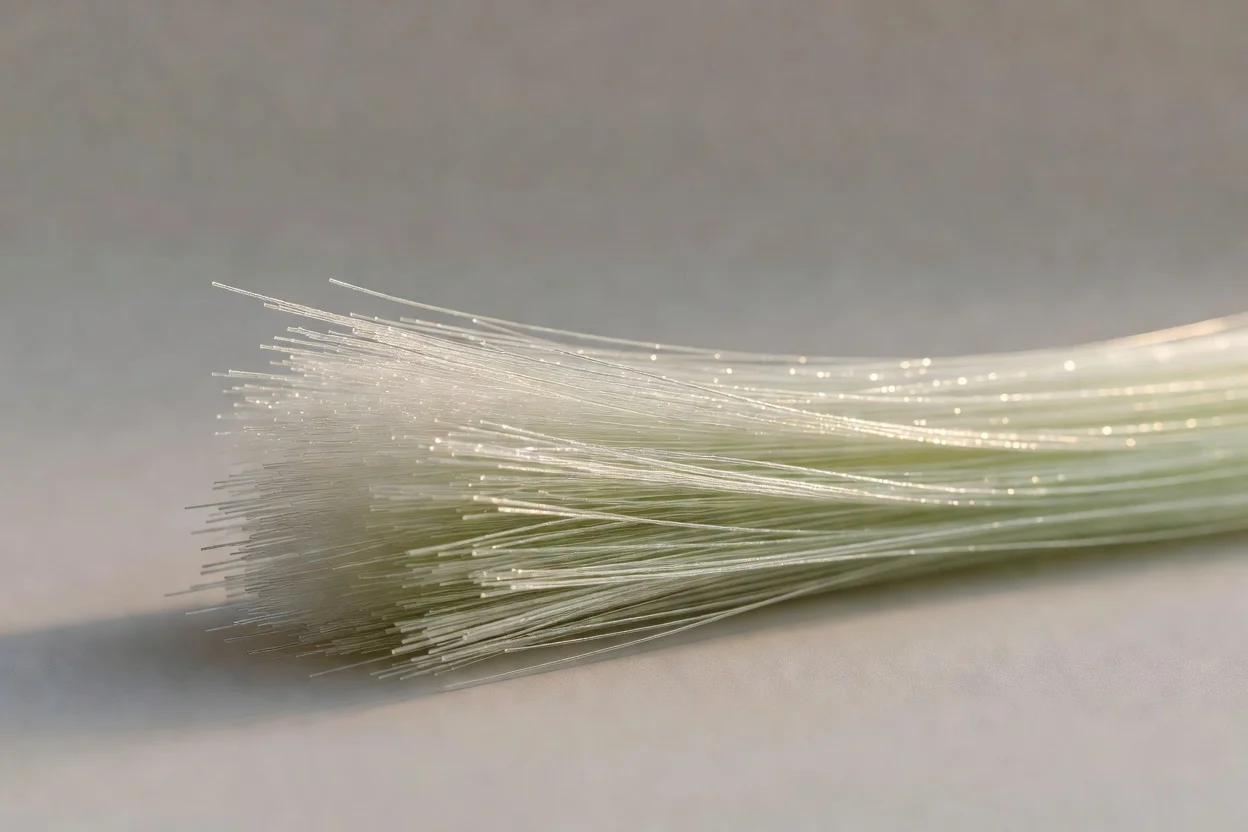
Recycled glass fiber is a secondary fiber material recovered from glass-fiber-reinforced products, production scrap, and related glass-fiber waste streams, then reprocessed for use in new composite, insulation, construction, and specialty applications. It occupies an important position in the circular economy of composites because it can substitute for part of the virgin glass-fiber supply, reduce landfill disposal, and support lower-cost, lower-carbon material solutions in selected end uses.
In industrial practice, recycled glass fiber is usually obtained from end-of-life glass-fiber-reinforced polymers, decommissioned wind-turbine blades, automotive composite parts, printed-circuit-board waste, and manufacturing offcuts. The material is typically reclaimed through mechanical size reduction, separation, cleaning, and in some cases thermal or hydrothermal treatment to restore usability for downstream processing. Depending on fiber length, cleanliness, and surface condition, recycled glass fiber can be supplied as chopped fibers, mats, powders, or blended reinforcement feedstocks.
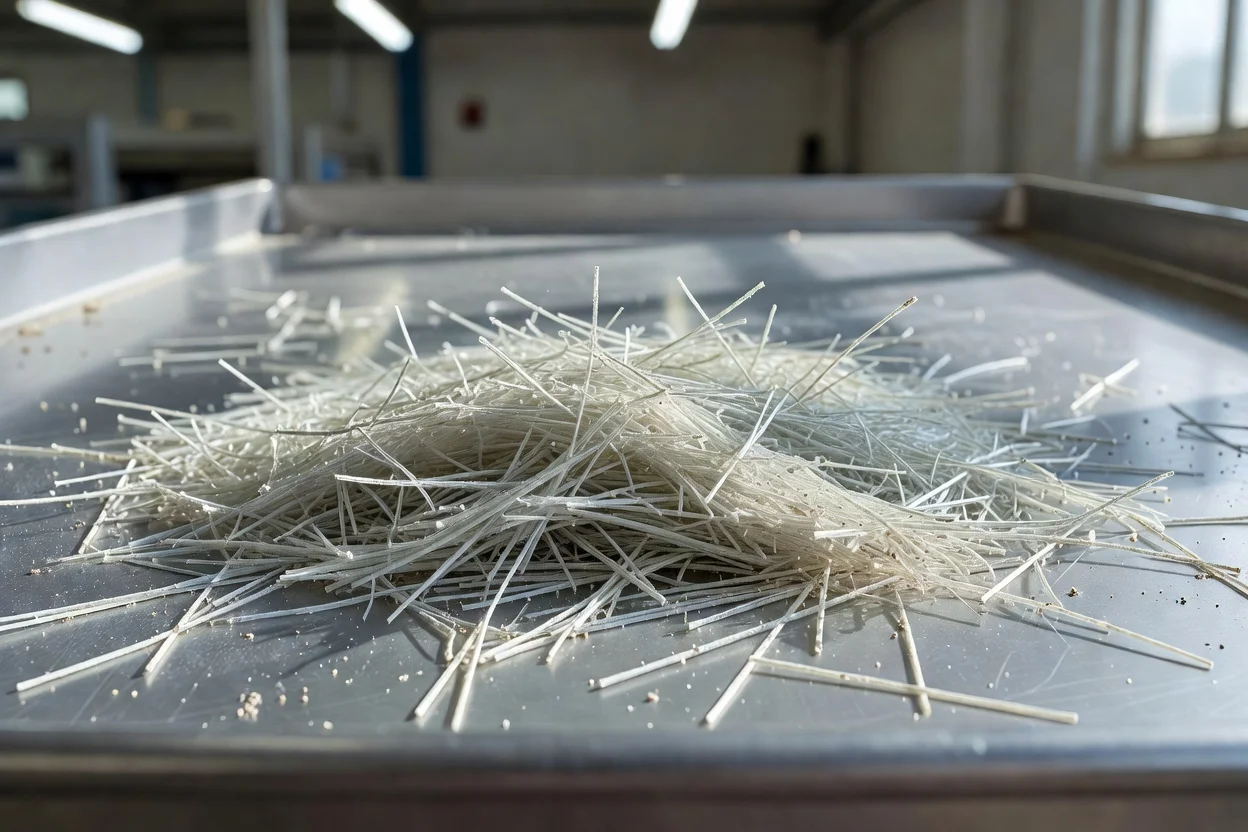
The material’s value lies in a combination of reinforcement efficiency, corrosion resistance, dimensional stability, and relatively low cost compared with many advanced fibers. At the same time, recycled glass fiber is not a universal replacement for virgin reinforcement, because recycling often shortens fibers, reduces aspect ratio, and can degrade sizing or interfacial bonding unless careful regeneration is used. As a result, recycled glass fiber is most successful in non-critical, semi-structural, and insulation-oriented applications where moderate mechanical performance, processability, and sustainability are prioritized together.
Recent industrial and research activity suggests strong momentum in construction materials, automotive interiors and non-structural parts, thermal and acoustic insulation, and recycled composite feedstocks for molding and additive manufacturing. Looking ahead, the field is being shaped by improved fiber-cleaning technologies, better compatibilization with thermoplastics, larger-scale wind-blade recycling, and growing regulatory and buyer pressure for lower-impact composite materials.
History and Development
Glass fiber itself became an established industrial reinforcement during the twentieth century, first as a lightweight alternative to metal reinforcement and later as a core ingredient in glass-fiber-reinforced plastics for transport, construction, energy, and consumer goods. Recycling emerged much later, initially as a practical solution for production scrap and then as a response to increasing volumes of end-of-life composites, especially in wind energy and transportation.
Early recycling efforts focused on mechanical crushing and grinding of scrap into short fibers or powder for use as filler or low-grade reinforcement. More recent work has aimed to preserve fiber length and surface functionality so that reclaimed fibers can retain more of the reinforcing value of the original material. This evolution reflects a broader shift from simple waste disposal toward resource recovery and performance-oriented reuse.
A particularly important development has been the recycling of wind-turbine blades, which contain large amounts of glass-fiber composites and are becoming an increasingly visible waste stream. Another significant line of work involves reclaimed glass fibers from waste printed circuit boards, where researchers have demonstrated uses in sound and thermal insulation materials. Parallel industrial efforts have also explored regenerated glass-fiber textiles and mats for roofing, wall coverings, automotive liners, and industrial insulation.
Chemical Structure and Key Properties
Recycled glass fiber is not a different chemical class from virgin glass fiber; rather, it is glass fiber whose source is recycled and whose performance depends on how much the original fiber structure, diameter, sizing, and length were preserved during recovery. The base material is an amorphous silicate glass, typically produced in fiber form through melting, fiberization, and rapid cooling. In recycled material, the main variables are fiber length distribution, surface contamination, residual resin, and whether the original sizing has been removed or altered.
Key properties include:
- Low density relative to mineral and metal reinforcements, which supports lightweight design in composites and insulation products.
- Good tensile reinforcement potential when the fiber length and interface quality remain adequate.
- Excellent corrosion resistance, which is important in marine, construction, and chemical-exposed environments.
- Thermal stability and non-combustibility advantages in insulation and building products.
- Dimensional stability in many thermoplastic and thermoset systems, especially when properly compounded.
Real limits are important:
- Reduced reinforcement efficiency → mechanical grinding shortens fibers and lowers aspect ratio → use in semi-structural parts, mats, blended compounds, or powder-filled systems instead of highly loaded primary structural parts.
- Weak fiber-matrix bonding → residual resin, degraded sizing, or surface contamination reduce interfacial adhesion → apply cleaning, re-sizing, compatibilizers, or coupling agents such as silane-based treatments.
- Moisture and contamination sensitivity → mixed waste streams can introduce organics, metals, or dust → use sorting, washing, screening, and controlled feedstock specifications.
Typical performance is highly application-dependent. For example, recycled glass fibers can be incorporated into thermoplastics such as polypropylene or polyamide for interior panels, under-hood shields, or molding compounds, but the fiber quality must be controlled if the part has demanding load-bearing requirements. In insulation products, shorter and more heterogeneous recycled glass fibers can still be valuable because thermal and acoustic performance depends less on long-fiber reinforcement continuity than on network structure and porosity.
Production Processes and Raw Feedstocks
The production pathway depends on whether the goal is to reclaim usable fiber from composite waste or to prepare recycled glass as a feedstock for new fiberization.
Common feedstocks include:
- End-of-life glass-fiber-reinforced polymer scrap from automotive, marine, and construction products.
- Wind-turbine blade sections and manufacturing offcuts.
- Waste printed circuit boards containing glass fiber reinforcement.
- Production scrap from fiberglass manufacturing and conversion processes.
- Recycled glass cullet used indirectly in fiberglass insulation and glass-fiber production.
Typical recovery steps include:
- Collection, dismantling, and sorting.
- Size reduction by cutting, shredding, crushing, or grinding.
- Separation of metals, dust, resin-rich fractions, and contaminants.
- Drying and classification by length or particle size.
- Optional re-sizing, surface treatment, or compounding into pellets, mats, or feedstock blends.
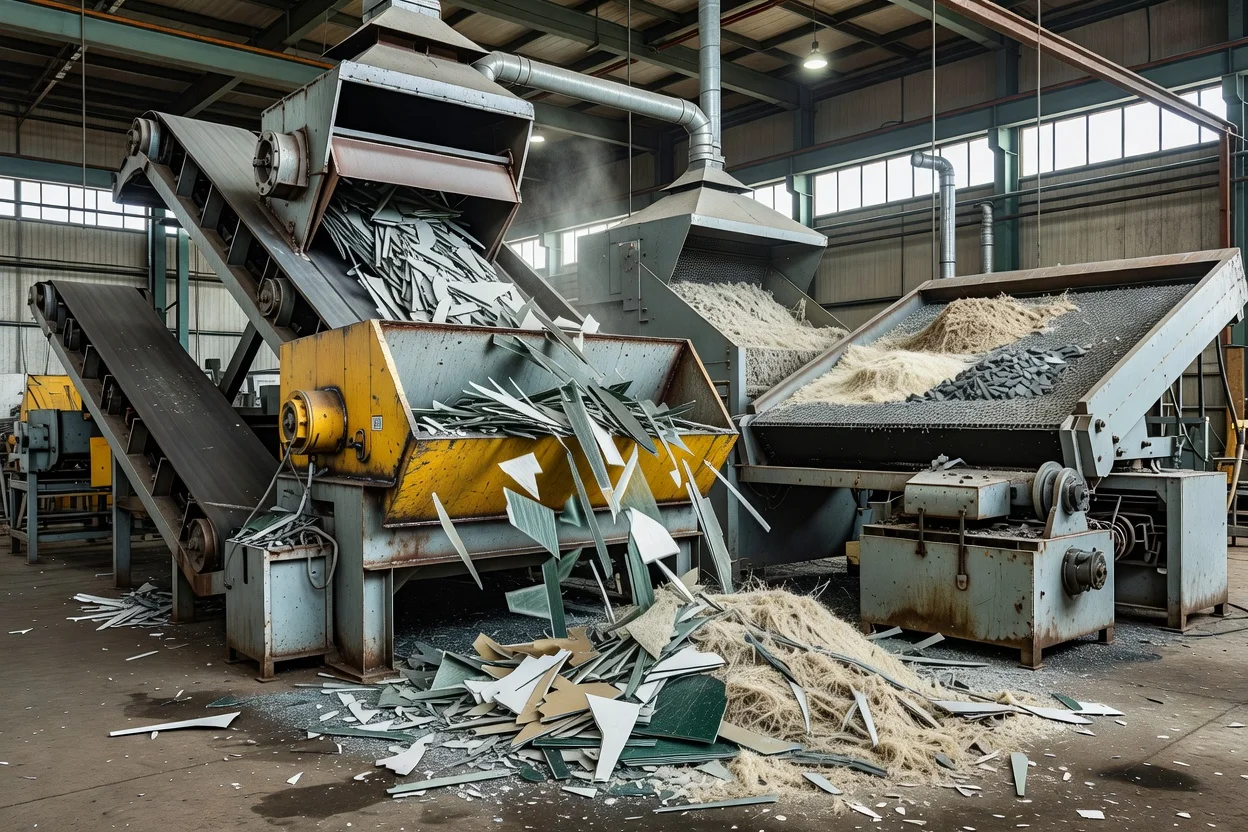
In a more conventional glass-fiber manufacturing route, cullet and raw minerals are melted in a furnace, then fiberized through bushings to create continuous filaments. In recycled glass fiber systems, however, the industry often works with reclaimed fibers already formed in a prior life cycle, so the main challenge is preservation and regeneration rather than melting and re-fiberization.
Leading industrial players and technology developers in this space include companies specializing in regenerated fiber textiles and composite recovery systems, with European firms particularly active in wind-blade and composite regeneration projects. Research institutions and pilot-scale technology providers have also contributed significantly to process development.
Applications and End-Use Markets
Recycled glass fiber is used most successfully where a balance of cost, sustainability, and moderate reinforcement is more important than maximum structural performance.
| End-use sector | Typical recycled fiber form | Usual process route | Main value proposition |
|---|---|---|---|
| Construction | chopped fiber, mats, powder, blended reinforcement | mortar, gypsum board, panels, cementitious composites | crack control, stiffness, insulation, cost reduction |
| Automotive | chopped strands, mats, thermoplastic compounds | compression molding, injection molding, sheet molding compounds | lightweighting, NVH improvement, non-structural reinforcement |
| Wind energy | reclaimed fiber from blades | downcycling into secondary composites or fillers | waste diversion, material recovery |
| Insulation | short fibers, mats, nonwoven structures | thermal and acoustic insulation products | heat retention, sound absorption, fire performance |
| Marine and outdoor products | chopped fiber, mats | corrosion-resistant composite parts | moisture resistance, durability |
| Electronics and electrical | fine fibers, insulation-grade recovered glass | housings, acoustic/thermal inserts | thermal management, dimensional stability |
| Additive manufacturing | short-fiber composite feedstock | pellet or filament extrusion | recycled composite prototyping and reusable components |
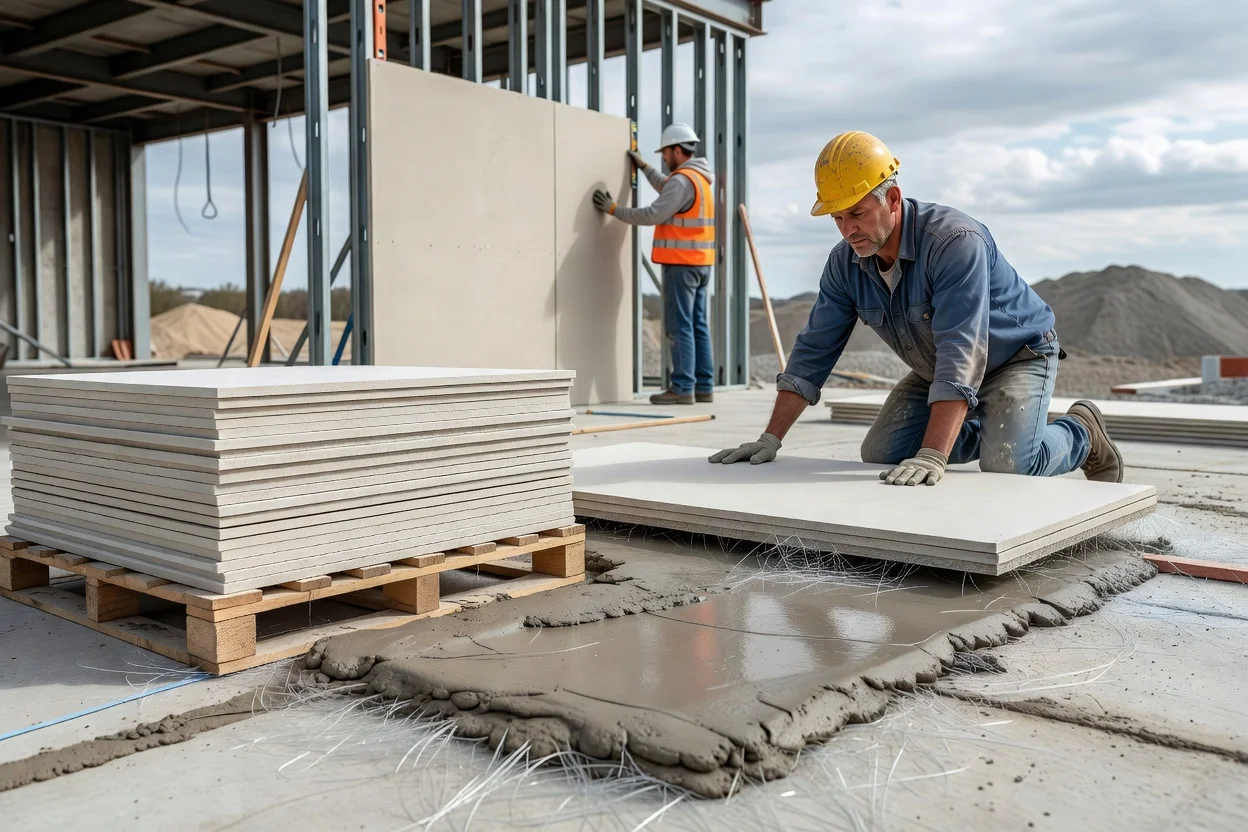
Construction is one of the strongest outlets because recycled glass fiber can improve shrinkage control, crack resistance, and in some cases thermal and acoustic performance in boards, mortars, and panels. Automotive uses include interior panels, bumpers, under-hood components, and other semi-structural parts where weight reduction is valuable and load demands are manageable.
One poor-fit use is highly stressed primary structural aerospace parts, where tight certification, long-term fatigue performance, and consistent fiber quality usually require more controlled virgin reinforcement or advanced qualification pathways. By contrast, recycled glass fiber is much more suitable for secondary structures, non-load-bearing parts, and building products.
Environmental and Sustainability Aspects
The main sustainability benefit of recycled glass fiber is resource displacement: recovered fibers reduce reliance on virgin raw materials and keep composite waste out of landfills or incineration streams. In fiberglass insulation manufacturing, recycled glass cullet has been reported to reduce energy demand relative to virgin materials, with one industry source citing a 25% energy reduction in that context.
Additional environmental benefits include:
- Lower landfill burden from composite waste and wind-turbine blade disposal.
- Reduced demand for virgin mineral raw materials when recycled glass is used in related fiber products.
- Lower embodied carbon in selected applications when recycled fiber substitutes for virgin reinforcement or mineral fill.
- Support for circular design in construction, automotive, and energy sectors.
However, the sustainability picture is not uniform. Mechanical recycling can degrade fiber length and create dust or mixed waste fractions that still require disposal or further treatment. If recycled fiber is used in low-value applications without strong displacement effects, the climate benefit may be modest. In addition, collection, sorting, cleaning, and transport can offset part of the benefit if systems are fragmented or geographically dispersed.
Bio-based alternatives are not direct substitutes for recycled glass fiber, but they compete in the broader lightweight-reinforcement market. Natural fibers can reduce fossil intensity further, yet they often lack the temperature resistance, dimensional stability, and moisture tolerance of glass-based reinforcement. This makes recycled glass fiber an important middle-ground option when performance requirements exceed what many bio-based reinforcements can deliver.
Economic and Global Market Impact
The economics of recycled glass fiber are shaped by feedstock availability, contamination levels, processing cost, and the value of the downstream product. The material is most attractive where waste disposal is expensive, sustainability credentials matter commercially, or the application can tolerate short-fiber reinforcement.
Recent industry analyses indicate that construction is a major consumption segment, followed by automotive and specialty applications. Some market reports also point to mats and rovings as commercially important product forms, with construction as a dominant demand center and automotive as a fast-growing area. While these figures vary by source and methodology, the common trend is clear: end users are increasingly seeking cost-effective reinforcement options with lower environmental impact than virgin materials.
The global market is still fragmented compared with the mature virgin glass-fiber industry, which remains dominated by large multinational producers with extensive melting, fiberizing, and compounding capacity. Recycled glass fiber, by contrast, is more often supplied by specialized recyclers, regional processors, and composite-recovery technology firms. This structure favors localized supply chains near wind farms, automotive hubs, and construction-material manufacturing clusters.
Current Challenges and Innovations
Major challenges include:
- Feedstock variability → mixed composite waste produces inconsistent fiber length and purity → solution: tighter sorting, standardization, and supply-chain contracts.
- Interfacial performance loss → recycled fibers may not bond as well as virgin fibers → solution: re-sizing, silane coupling, compatibilizers, and surface activation.
- Certification barriers → many industries require repeatable, well-characterized material behavior → solution: qualification databases, traceability, and application-specific specifications.
- Economics of collection → transport and preprocessing can be costly → solution: decentralized recycling hubs and regional reuse networks.
- End-of-life complexity → multi-material composites are hard to separate cleanly → solution: design for disassembly and reversible thermoplastic systems.
Innovation is moving in several promising directions:
- Regenerated glass-fiber textiles and mats for building and transport interiors.
- Recycled glass fiber composites for additive manufacturing feedstocks.
- Thermal recycling and hydrothermal treatment methods intended to preserve fiber properties more effectively than basic grinding.
- Upcycling routes that convert glass-fiber composite waste into higher-value products, including mineral-based intermediates and advanced reinforcement streams.
- Better recovery of fibers from wind-turbine blades and printed-circuit-board waste.
A concrete processing example is the use of recycled short glass fibers in thermoplastic compounds at low-to-moderate loadings, where the fibers act as stiffness enhancers and shrinkage reducers while the polymer matrix carries most of the load. Another example is fiberglass insulation, where recycled glass cullet and recovered fiber can support thermal and acoustic performance even when fiber continuity is less critical than in structural composites.
Future Outlook
The future of recycled glass fiber depends on whether recycling systems can move from opportunistic waste handling to designed material recovery across the full composite lifecycle. The strongest growth prospects are likely in construction products, insulation, automotive interiors, and other semi-structural applications where recycled fibers can deliver measurable environmental and cost benefits without demanding full virgin-fiber performance.
Policy pressure on composite waste, especially wind-turbine blades, is likely to accelerate investment in collection, separation, and regeneration infrastructure. At the same time, product developers are likely to improve resin compatibility, fiber surface treatment, and hybrid formulations that combine recycled glass fiber with fillers or virgin reinforcement to reach target performance at lower cost and carbon intensity.
As recycled-content claims become more important in procurement and regulation, the most competitive suppliers will likely be those that can prove traceability, consistent fiber quality, and reliable performance data. In that sense, recycled glass fiber is evolving from a simple waste-derived filler toward a qualified engineering material with a defined place in the next generation of circular plastics and composites.
Summary
Recycled glass fiber is a recovered reinforcement material that supports circularity in composites, construction, insulation, and selected automotive and industrial applications. Its strengths are lightweight reinforcement, corrosion resistance, thermal stability, and lower environmental burden than virgin supply in suitable uses, while its main constraints are fiber shortening, variable quality, and bonding challenges.
Its most important role is not to replace virgin glass fiber everywhere, but to extend the usable life of glass reinforcement through practical, lower-impact applications where performance and sustainability can be balanced effectively.
References
- •
Top 5 uses of recycled glass fibers in 2025. (2025, October 22). https://www.linkedin.com/pulse/glass-fiber-recycling-real-world-5-uses-youll-actually-6jlieLink
- •
Recycled glass fiber in the real world: 5 uses you'll actually use. (2025, September 21). https://www.linkedin.com/pulse/recycled-glass-fiber-real-world-5-uses-youll-actually-y7f1fLink
- •
Recycling of reinforced glass fibers waste: Current status. (2022, February 21). https://pmc.ncbi.nlm.nih.gov/articles/PMC8876600/Link
- •
What is recycled GFRP glass fiber? Uses, how it works & applications. (2025, October 5). https://www.linkedin.com/pulse/what-recycled-gfrp-glass-fiber-uses-how-works-extvcLink
- •
Recycled glass fiber market size, growth, forecast till 2032. (n.d.). https://www.reportprime.com/recycled-glass-fiber-r360Link
- •
A review on the valorization of recycled glass fiber reinforced polymer waste. (2025, October 1). https://pmc.ncbi.nlm.nih.gov/articles/PMC12526915/Link
- •
Recycled glass fiber market research report 2033. (2025, August 13). https://marketintelo.com/report/recycled-glass-fiber-marketLink
- •
Recycling glass and carbon fibers for reusable components in the automotive sector. (n.d.). https://re.public.polimi.it/retrieve/29a56cfe-caee-4e1d-8efa-8712534616d0/applsci-13-05848-v2.pdfLink
- •
Development and characterization of glass fiber reinforced composites. (n.d.). https://www.politesi.polimi.it/retrieve/26cf3f2b-0152-4808-911b-5c9e4c3f2c8e/2020_07_Manzano_Hernandez.pdfLink
- •
Novel application of glass fibers recovered from waste printed circuit boards as sound and thermal insulation material. (n.d.). https://link.springer.com/article/10.1007/s11665-013-0587-yLink
- •
What is recycled glass fiber? Uses, how it works & top companies. (2025, October 3). https://www.linkedin.com/pulse/what-recycled-glass-fiber-uses-how-works-top-companies-vfxxfLink
- •
Recycled glass fiber composites from wind turbine waste for 3D printing feedstock: Effects of fiber content and interface on mechanical performance. (2019, November 27). https://www.mdpi.com/1996-1944/12/23/3929Link
- •
Enhancing material properties of recycled glass fibres through sizing. (2025, September 15). https://www.brunel.ac.uk/research/projects/enhancing-material-properties-of-recycled-glass-fibres-through-sizingLink
- •
Development and characterization of glass fiber reinforced composites. (n.d.). https://lutpub.lut.fi/bitstream/handle/10024/161516/Diplomityo_Loikkanen_Mikko.pdf?sequence=1&isAllowed=yLink
- •
Development of FRC materials with recycled glass fibers. (n.d.). https://pdfs.semanticscholar.org/2a32/3c557472812ac82705b500544728bfeb76e7.pdfLink
- •
Glass fiber. (2002, December 13). https://en.wikipedia.org/wiki/Glass_fiberLink
- •
Evaluating the potential use of recycled glass fibers for the development of gypsum-based composites. (n.d.). https://www.sciencedirect.com/science/article/pii/S0950061822000149Link
- •
Use case 2: Thermal recycling of long fibers. (n.d.). https://link.springer.com/chapter/10.1007/978-3-031-22352-5_16Link
- •
Sustainable technology to integrate recycled glass fiber. (n.d.). https://www.verretex.com/technologyLink
- •
Recycling of glass fibre reinforced polymer (GFRP) composites. (n.d.). https://www.sciencedirect.com/science/article/pii/S2352012423006215Link
- •
Recycled glass fiber market size, share, trends. (2025, May 6). https://www.marketgrowthreports.com/market-reports/recycled-glass-fiber-market-106852Link
- •
What's going on in the world of glass fiber recycling. (2024, April 16). https://www.linkedin.com/pulse/whats-going-world-glass-fiber-recycling-ned-patton-ph-d-p-e--68ekcLink
- •
Fiberglass lifecycle from waste to wow. (2026, May 15). https://www.linkedin.com/posts/exalt-apparels-ltd_sustainability-circulareconomy-manufacturing-activity-7461060478752960512-h1jGLink
- •
Recycled glass fiber composites that fit your workflow. (2026, April 1). https://www.verretex.com/post/blog-recycled-glass-fiber-composites-drop-in-workflowLink
- •
International Journal of Engineering Materials and Manufacture. (2025). https://deerhillpublishing.com/index.php/ijemm/article/download/291/267/2348Link
- •
Systems and process for recycling glass fiber waste material into glass fiber product. (1997, October 28). https://patents.google.com/patent/WO1998019973A3/enLink
- •
Production process of glass fiber with waste. (2002, September 30). https://patents.google.com/patent/CN1486948A/enLink
- •
Systems and processes for recycling glass fiber waste material into glass fiber product. (1996, November 6). https://patents.google.com/patent/US6199778B1/enLink
- •
Process for recycling glass fiber. (2007, June 5). https://patents.google.com/patent/US7934393B2/enLink
- •
Recycling glass-fiber-reinforced plastic in a flash. (2024, March 21). https://www.plasticstoday.com/automotive-mobility/a-better-way-to-recycle-glass-fiber-reinforced-plasticLink
- •
Recycling waste fiberglass by powder grinding and direct molding. (2025, April 5). https://pmc.ncbi.nlm.nih.gov/articles/PMC11991333/Link
- •
AP-42, CH 11.13: Glass fiber manufacturing. (n.d.). https://www.epa.gov/sites/default/files/2020-10/documents/c11s13.pdfLink
- •
Enhancing environmental benefits through recycling glass to. (n.d.). https://www.sciencedirect.com/science/article/pii/S2772912525000995Link
- •
The making of glass fiber. (2026, August 24). https://www.compositesworld.com/articles/the-making-of-glass-fiberLink
- •
Fiber glass insulation industry. (n.d.). http://insulationinstitute.org/wp-content/uploads/2016/04/Recycled-Glass-Flyer-April-2016.pdfLink
- •
Home | Verretex | Regenerating glass fibers. (n.d.). https://www.verretex.com/Link
- •
What can be made from recycled glass? (2024, February 5). https://www.rippleglass.com/what-can-be-made-from-recycled-glass/Link
- •
Glass recycling facts & benefits. (n.d.). https://www.gpi.org/facts-about-glass-recyclingLink
- •
Recycled glass fibers boost sustainability of polyamide compounds. (2023, October 17). https://www.plasticstoday.com/sustainability/recycled-glass-fibers-boost-sustainability-of-polyamide-compoundsLink
- •
Recycled glass fiber market size, share | trends, 2035. (2025, July 7). https://www.businessresearchinsights.com/market-reports/recycled-glass-fiber-market-108357Link
- •
Fiberglass manufacturing. (n.d.). https://www.vetrotextextiles.com/technologies/fiberglass-manufacturingLink
- •
How is glass fibre transforming the textile industry? (2024, April 22). https://www.fibre2fashion.com/industry-article/10001/how-is-glass-fibre-transforming-the-textile-industryLink
- •
Glass commodities. (2025, May 5). https://www.recycledmaterials.org/education-and-events/recycled-materials/commodities/glass/Link