
Introduction
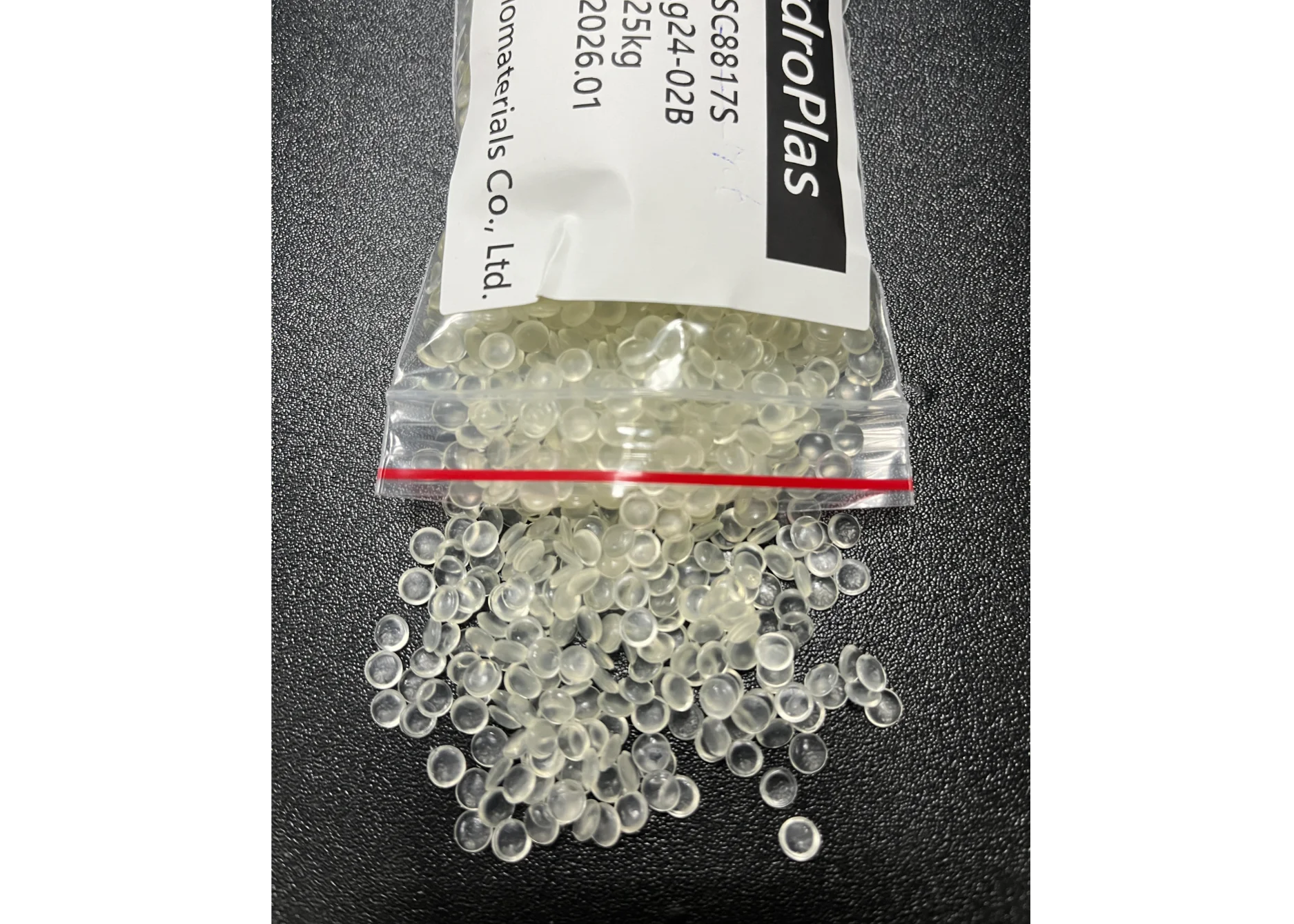
Polyvinyl alcohol (PVA, also written PVOH or PVAl) is a water-soluble synthetic polymer valued for its film-forming ability, adhesion to polar substrates, and tunable solubility, which make it a workhorse in textiles, paper, adhesives, coatings, packaging, and specialty hydrogels. Industrially, it is not produced by direct polymerization of vinyl alcohol; rather, it is made by hydrolyzing or alcoholyzing polyvinyl acetate, so its properties depend strongly on the degree of hydrolysis and molecular weight.
PVA has been used commercially since the early 20th century and remains important because it sits at the intersection of performance and processability: it can behave as a strong dry film, a water-removable sizing agent, a protective colloid, or a precursor for modified materials such as acetals, crosslinked hydrogels, and barrier coatings. At the same time, its sustainability profile is nuanced: many grades are water-dispersible or biodegradable under specific conditions, but the polymer is still largely derived from fossil feedstocks and its persistence varies with formulation, molecular architecture, and disposal pathway.
History and Development
PVA emerged from early polymer chemistry as a practical route to a synthetic, hydrophilic resin with unusual water solubility and strong film properties. Its industrial adoption accelerated in textiles and paper, where the ability to coat, size, and later remove the polymer with water created clear manufacturing advantages.
Over time, the technology diversified into:
- Partially hydrolyzed grades, which dissolve more easily in cooler water and are often used where rapid re-dispersibility matters.
- Fully hydrolyzed grades, which generally give stronger, more crystalline films and better resistance to oils and some solvents but require more severe conditions for dissolution.
- Modified and crosslinked systems, including hydrogels, barrier films, and biomedical formulations, which exploit PVA’s hydroxyl-rich backbone for further functionalization.
Chemical Structure and Key Properties (Technical Overview)
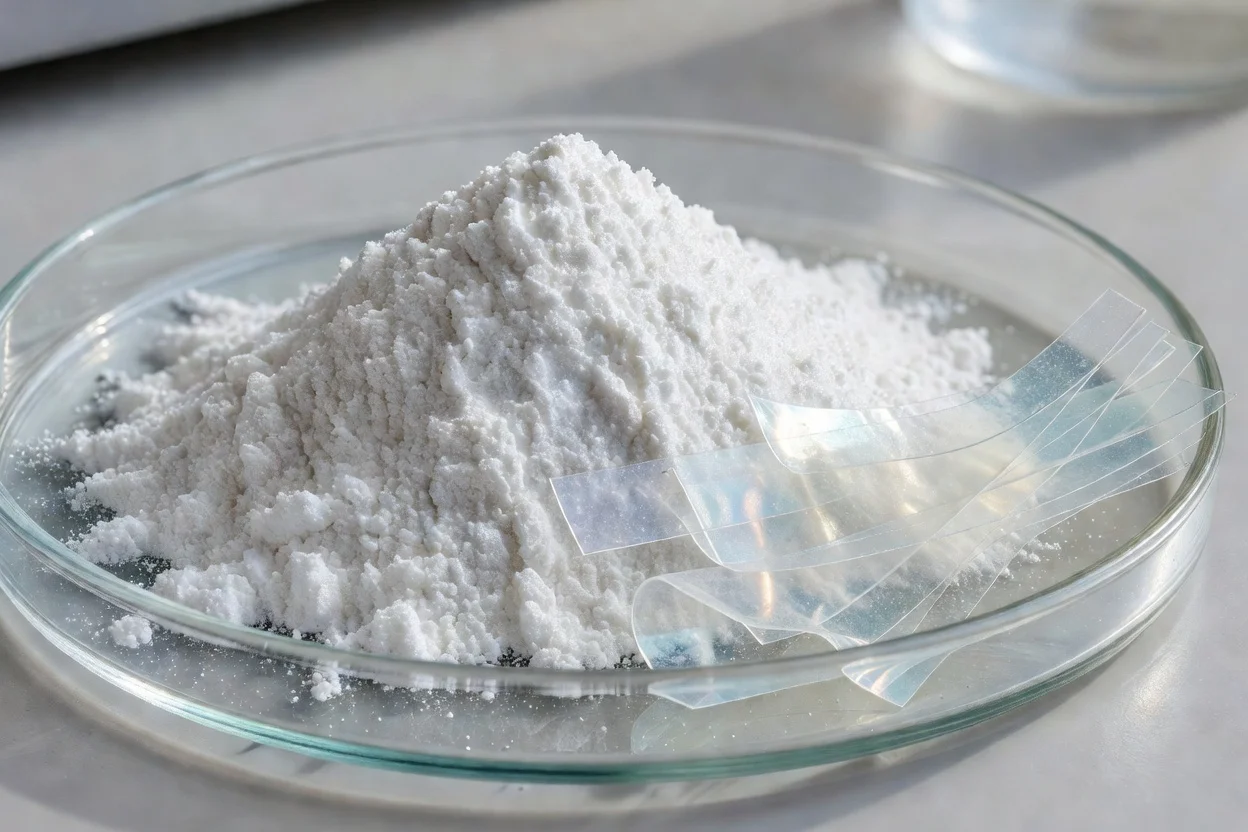
PVA is a linear polymer built from repeating vinyl-alcohol-derived units after hydrolysis of polyvinyl acetate. The abundance of hydroxyl groups creates strong intermolecular hydrogen bonding, which is central to its crystallinity, cohesive strength, and affinity for water.
| Property | Typical significance |
|---|---|
| Water solubility | Strongly depends on degree of hydrolysis and temperature; partial hydrolysis generally increases cold-water solubility, while full hydrolysis tends to require hotter water. |
| Film formation | Produces clear, flexible, tough films with good adhesion to polar surfaces such as paper, wood, and textiles. |
| Barrier behavior | Can provide good oxygen and aroma barrier in dry conditions, but this benefit drops as humidity rises because the polymer absorbs water. |
| Thermal limit | Practical processing is constrained because the polymer can discolor and undergo dehydration before clean melting behavior is useful; thermal degradation begins above typical processing windows. |
Real limits and workarounds:
- Poor moisture stability → water uptake weakens crystallinity and barrier performance → workaround: crosslinking, blending, multilayer structures, or hydrophobic topcoats.
- Limited melt-processing latitude → thermal degradation can begin before stable melt flow is achieved → workaround: process from aqueous solution, use lower-temperature compounding, or modify with plasticizers and stabilizers.
- Water-solubility can be too high for some end uses → dissolution in service may be undesirable → workaround: increase hydrolysis/crystallinity or chemically crosslink the network.
Two concrete formulation examples:
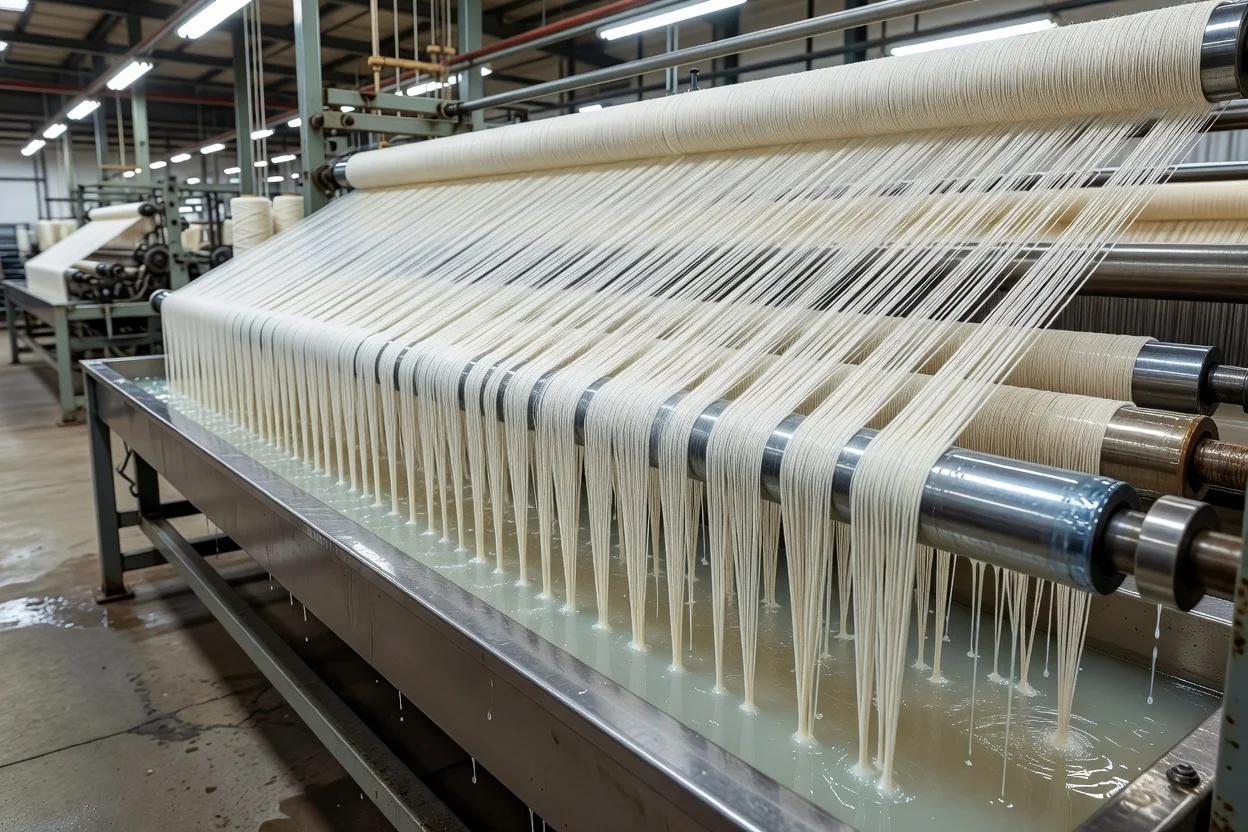
- Textile sizing: PVA is commonly applied from water as a warp-size film; the mechanism is temporary surface reinforcement that reduces abrasion and yarn breakage during weaving, then washes out after fabric formation.
- Barrier or adhesive formulations: low to moderate additions of PVA can raise film cohesion and adhesion through hydrogen bonding, improving wetting of cellulose-rich substrates and pigment binding in coatings.
Production Processes and Raw Feedstocks
Commercial PVA is produced by first making polyvinyl acetate and then converting acetate groups to hydroxyl groups by hydrolysis or alcoholysis. Because the backbone remains carbon-carbon, the final polymer is not the result of direct vinyl-alcohol polymerization, which is not industrially viable in the same way as many other monomers.
Key process variables include:
- Degree of hydrolysis, which controls solubility, crystallinity, and adhesion balance.
- Degree of polymerization, which affects viscosity, film strength, and solvent resistance.
- Residual acetate content, which influences surface activity and partial water affinity.
Typical upstream feedstock chain:
- Petrochemical or bio-attributed vinyl acetate route
- Polyvinyl acetate polymerization
- Hydrolysis/alcoholysis to PVA
- Optional post-modification into resins, films, hydrogels, or composite systems
Leading producers and industrial positions are not consistently reported in the provided sources, but the market is generally characterized by specialized global resin manufacturers supplying grades tuned for textiles, packaging, adhesives, and technical applications.
Applications and End-Use Markets
PVA is used most heavily in textiles, paper, adhesives, and coatings, with growing importance in packaging, membranes, and biomedical materials.
| End-use sector | Usual grade/process fit | Role of PVA |
|---|---|---|
| Textiles | Partially hydrolyzed, water-removable grades | Warp sizing, finishing, and temporary reinforcement. |
| Paper and packaging | Medium to high viscosity grades | Surface sizing, coating, pigment binding, stiffness improvement. |
| Adhesives | Water-based, often partially hydrolyzed grades | White glues, wood adhesives, emulsifier/protective colloid functions. |
| Coatings | Solution-applied or blended grades | Improves uniformity, oil resistance, and printability. |
| Films and soluble packaging | Controlled-solubility grades | Unit-dose or temporary-use films for detergents, chemicals, and hygiene products. |
| Biomedical and hydrogels | High-purity, sometimes crosslinked grades | Contact lenses, wound dressings, cartilage-mimicking hydrogels, and drug-delivery matrices. |
| Membranes and technical materials | Modified and composite grades | Porous membranes, separation layers, and functional composite films. |
One poor-fit use is long-term exposure as an unmodified packaging film in humid environments, because water uptake can undermine barrier performance and dimensional stability. For that reason, barrier packaging usually requires blending, crosslinking, or multilayer structures rather than relying on neat PVA alone.
Environmental and Sustainability Aspects
PVA occupies an unusual sustainability position among synthetic polymers. On one hand, it is often described as biodegradable or water-soluble, and some grades can break down under aerobic conditions or in appropriate biological environments. On the other hand, biodegradation is not universal across all grades, environments, and timescales, and water solubility should not be confused with complete environmental disappearance.
Main sustainability considerations:
- Recyclability: conventional mechanical recycling is limited because PVA is frequently used in thin films, water-soluble formats, or mixed systems that are difficult to recover cleanly.
- Bio-based alternatives: interest is rising in bio-attributed or lower-carbon feedstocks, but the core industrial route still relies heavily on petrochemical precursors.
- Carbon footprint: the footprint depends heavily on feedstock source, energy mix, and process efficiency; solvent-free or aqueous processing can improve the overall profile relative to many solvent-based polymers.
- End-of-life: soluble films may reduce persistent litter in some applications, but they can also transfer the burden to wastewater systems if dissolution is assumed to equal biodegradation.
A practical mechanism note is that crosslinking can improve water resistance and functional durability, but it often reduces solubility and can slow environmental breakdown, which creates a trade-off between service performance and end-of-life behavior.
Economic and Global Market Impact
According to recent industry and technical reviews, demand for PVA remains anchored in mature industrial uses such as textiles, paper, and adhesives, while higher-growth niches include soluble packaging, membranes, and biomedical materials. The material’s commercial value comes from its ability to replace more complex multi-component formulations with a single polymer that can both stabilize processing and deliver end-use functionality.
Market drivers include:
- Expansion of water-based adhesives and coatings
- Demand for temporary-use films and unit-dose packaging
- Growth in functional membranes and hydrogel platforms
- Continued reliance in textile processing, especially in high-volume manufacturing regions
Market constraints include:
- Feedstock and energy cost sensitivity
- Humidity-related performance limits in packaging
- Regulatory and consumer scrutiny over “biodegradable” claims
- Competition from starch-based, cellulose-based, and other water-soluble or compostable materials
Current Challenges and Innovations
Current development is focused on widening PVA’s utility while reducing its environmental and processing limitations.
Key innovation directions:
- Nanocomposites: incorporation of nanoclays, cellulose nanomaterials, and other fillers to strengthen films and improve gas barrier properties.
- Hydrogels: expanded use in medical, sensing, and soft-material applications through controlled crosslinking and blending.
- Barrier engineering: multilayer coatings and hybrid structures to compensate for moisture sensitivity.
- Solubility control: tuning hydrolysis and molecular weight to target specific dissolution windows for textiles, detergent films, and agricultural or sanitary products.
- Sustainability redesign: lower-carbon feedstocks, more recyclable packaging structures, and formulations aligned with wastewater treatment realities.
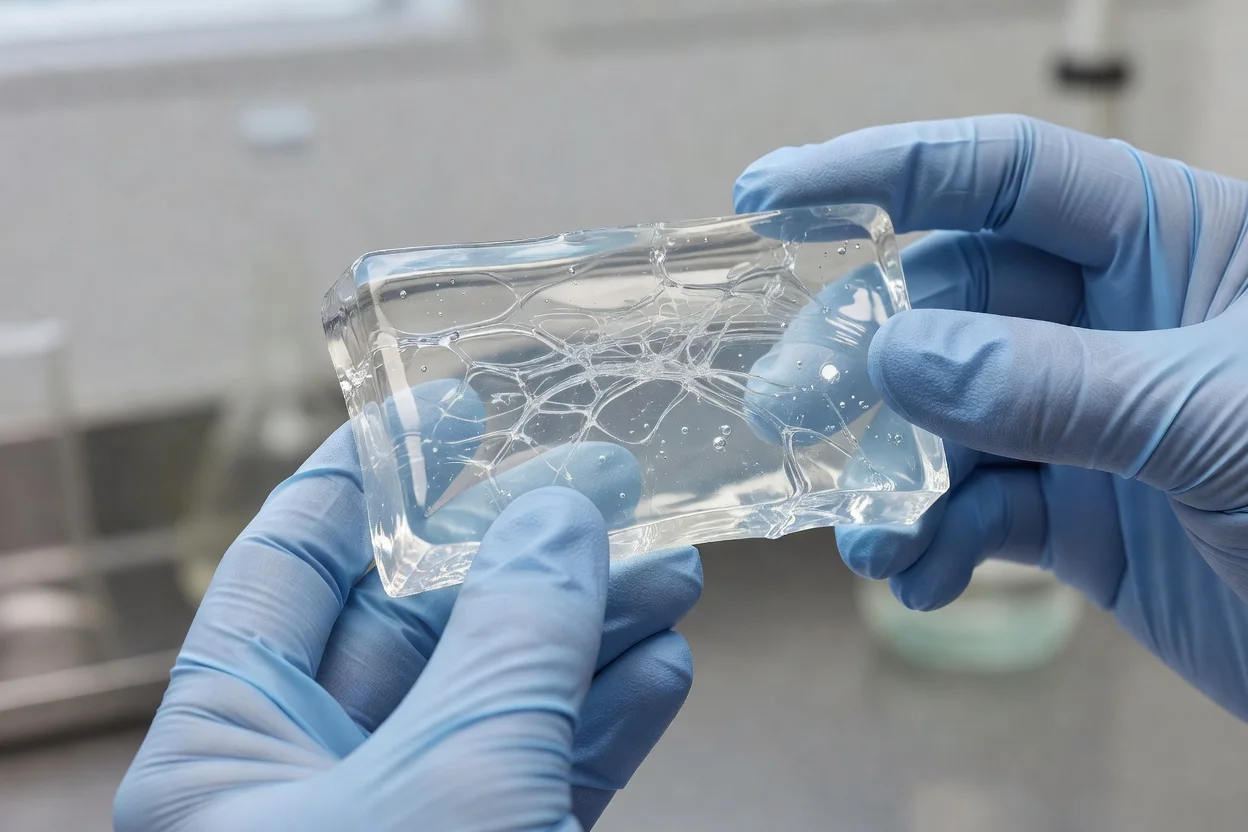
A noteworthy chemical example is the use of borate or aldehyde crosslinking in selected hydrogel or adhesive systems, where the mechanism is network formation through hydroxyl-rich chain interactions; this increases cohesion and water resistance but can reduce re-dispersibility.
Future Outlook
PVA is likely to remain a strategically important polymer because it combines a rare mix of water processability, adhesion, film strength, and functional tunability. The strongest future opportunities are expected in high-value, formulation-driven segments rather than in commodity bulk plastics.
Most plausible growth paths are:
- Sustainable packaging with controlled solubility and improved moisture resistance
- Biomedical and pharmaceutical materials, especially hydrogels and coatings
- High-performance membranes for separations and filtration
- Composite films and coatings that use PVA as a matrix or binder rather than as a stand-alone material
At the same time, long-term competitiveness will depend on whether the industry can better align PVA’s service-life advantages with credible end-of-life pathways, clearer biodegradation claims, and lower-impact feedstock sourcing.
Summary
PVA is a versatile hydroxyl-rich synthetic polymer whose value arises from its water solubility, strong film formation, and adaptable grade structure. It is most important in textiles, paper, adhesives, coatings, and specialized films, while newer growth areas include membranes and biomedical hydrogels. Its main technical constraints are moisture sensitivity and limited thermal/process windows, and its main sustainability challenge is distinguishing true biodegradation from mere water solubility.
References
- •
Polyvinyl alcohol. (2004, November 19). Wikipedia. https://en.wikipedia.org/wiki/Polyvinyl_alcoholLink
- •
Polyvinyl Alcohol (PVA): Properties, Uses, and Industrial .... (2025, October 11). Echemi. https://www.echemi.com/cms/2620441.htmlLink
- •
POLYVINYL ALCOHOL (PVA). (n.d.). Food and Agriculture Organization of the United Nations. https://www.fao.org/fileadmin/templates/agns/pdf/jecfa/cta/61/PVA.pdfLink
- •
Polyvinyl alcohol: Properties, Production process and Uses. (2024, April 24). Chemicalbook. https://www.chemicalbook.com/article/polyvinyl-alcohol-properties-production-process-and-uses.htmLink
- •
Polyvinyl Alcohol: A Comprehensive Overview. (2024, October 18). Open Access Journals. https://www.openaccessjournals.com/articles/polyvinyl-alcohol-a-comprehensive-overview-18066.htmlLink
- •
Polyvinyl alcohol. (2022, September 1). EBSCO. https://www.ebsco.com/research-starters/chemistry/polyvinyl-alcoholLink
- •
Polyvinyl alcohol (PVA). (2025, August 2). Britannica. https://www.britannica.com/science/polyvinyl-alcoholLink
- •
Properties and Applications of Polyvinyl Alcohol, Halloysite .... (2015, December 19). PMC. https://pmc.ncbi.nlm.nih.gov/articles/PMC6332455/Link
- •
Polyvinyl Alcohol - an overview. (2023, November 6). ScienceDirect. https://www.sciencedirect.com/topics/chemical-engineering/polyvinyl-alcoholLink
- •
The Science Behind Polyvinyl Alcohol: What You Need to .... (2024, November 29). Eureka. https://eureka.patsnap.com/blog/material-tech-resources/what-is-polyvinyl-alcohol/Link
- •
Polyvinyl Alcohol. (2016, November 1). ScienceDirect. https://www.sciencedirect.com/topics/pharmacology-toxicology-and-pharmaceutical-science/polyvinyl-alcoholLink
- •
Polyvinyl alcohol (PVA) as a biodegradable polymeric .... (2023, October 1). Taylor & Francis. https://www.tandfonline.com/doi/full/10.1080/1478422X.2022.2125621Link
- •
Polyvinyl Alcohol - an overview. (n.d.). ScienceDirect. https://www.sciencedirect.com/topics/medicine-and-dentistry/polyvinyl-alcoholLink
- •
What is Polyvinyl Alcohol? A comprehensive guide to PVA in .... (2025, July 16). Vichem. http://vichem.vn/en/what-is-polyvinyl-alcohol-a-comprehensive-guide-to-pva-in-adhesive-manufacturing/Link
- •
Polyvinyl Alcohol: Structure, Preparation, Properties & Uses. (n.d.). Aakash. https://www.aakash.ac.in/important-concepts/chemistry/polyvinyl-alcoholLink
- •
Polyvinyl alcohols (PVOH,PVA): Features and specifications. (2024, August 20). Gohsenol. https://gohsenol.com/en/knowledge/pvoh_propertyLink
- •
Poly(vinyl alcohol) (PVA) for gene delivery: A systematic review. (n.d.). ScienceDirect. https://www.sciencedirect.com/science/article/abs/pii/S1773224724008189Link
- •
Polyvinyl Alcohol (PVA)-Based Hydrogels: Recent Progress in .... (2024, September 29). Polymers, 16(19), 2755. https://pmc.ncbi.nlm.nih.gov/articles/PMC11478944/Link
- •
Poly(vinyl alcohol): review of its promising applications and insights into biodegradation. (2016, April 20). RSC Publishing. https://pubs.rsc.org/en/content/articlelanding/2016/ra/c6ra05742jLink
- •
What Is PVA and What Is It Used For? (2024, May 21). Consumer Reports. https://www.consumerreports.org/environment-sustainability/what-is-polyvinyl-alcohol-what-is-pva-used-for-a1054051485/Link
- •
Polyvinyl Alcohol-Based Membranes: A Review of Research .... (2025, April 9). PMC. https://pmc.ncbi.nlm.nih.gov/articles/PMC12030392/Link
- •
Enhancing polyvinyl alcohol (PVA) nanocomposites: Key properties, applications and challenges in advanced engineering. (n.d.). ScienceDirect. https://www.sciencedirect.com/science/article/pii/S2214914725001679Link
- •
Poly(vinyl alcohol) Hydrogels: The Old and New Functional Materials. (n.d.). Wiley. https://onlinelibrary.wiley.com/doi/10.1155/2021/2225426Link
- •
Recent Advances in Poly(vinyl alcohol)-Based Hydrogels. (2024, July 15). PMC. https://pmc.ncbi.nlm.nih.gov/articles/PMC11281164/Link
- •
Polyvinyl Alcohol: Recent Advances and Applications in Sustainable Materials. (2025, April 13). Taylor & Francis. https://www.tandfonline.com/doi/abs/10.1080/25740881.2024.2438046Link
- •
Polyvinyl Alcohol: Comprehensive Analysis Of Synthesis, Properties .... (n.d.). Eureka. https://eureka.patsnap.com/materials/polyvinyl-alcohol-synthesisLink
- •
Poly Vinyl Alcohol - an overview. (n.d.). ScienceDirect. https://www.sciencedirect.com/topics/materials-science/poly-vinyl-alcoholLink
- •
Research Progress of Polyvinyl Alcohol Water-Resistant Film .... (2022, March 20). PMC. https://pmc.ncbi.nlm.nih.gov/articles/PMC8953738/Link
- •
PVA Resin: Comprehensive Analysis Of Polyvinyl Alcohol .... (2026, April 20). Eureka. https://eureka.patsnap.com/materials/pva-resin-properties-synthesisLink
- •
Novel Applications of Polyvinyl Alcohol. (2022, April 22). AZoM. https://www.azom.com/article.aspx?ArticleID=21610Link