
Introduction
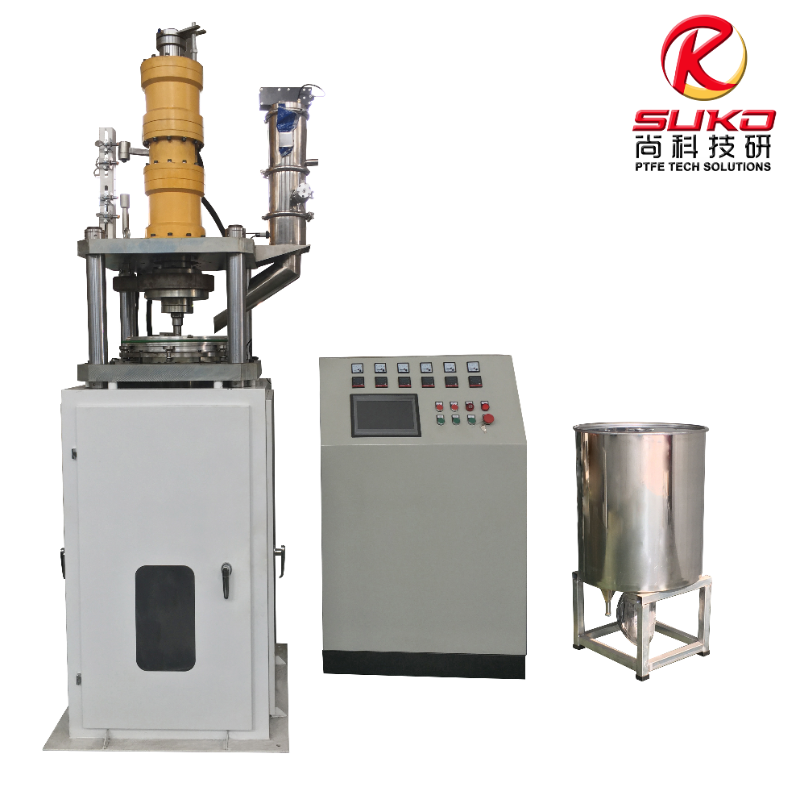
Ram extruders are discontinuous extrusion machines that use a reciprocating ram or plunger instead of a rotating screw to force material through a die. In plastics processing, they are most strongly associated with PTFE, UHMWPE, and other materials that are difficult to process in conventional screw extruders because of extremely high melt viscosity, poor flow, or heat sensitivity.
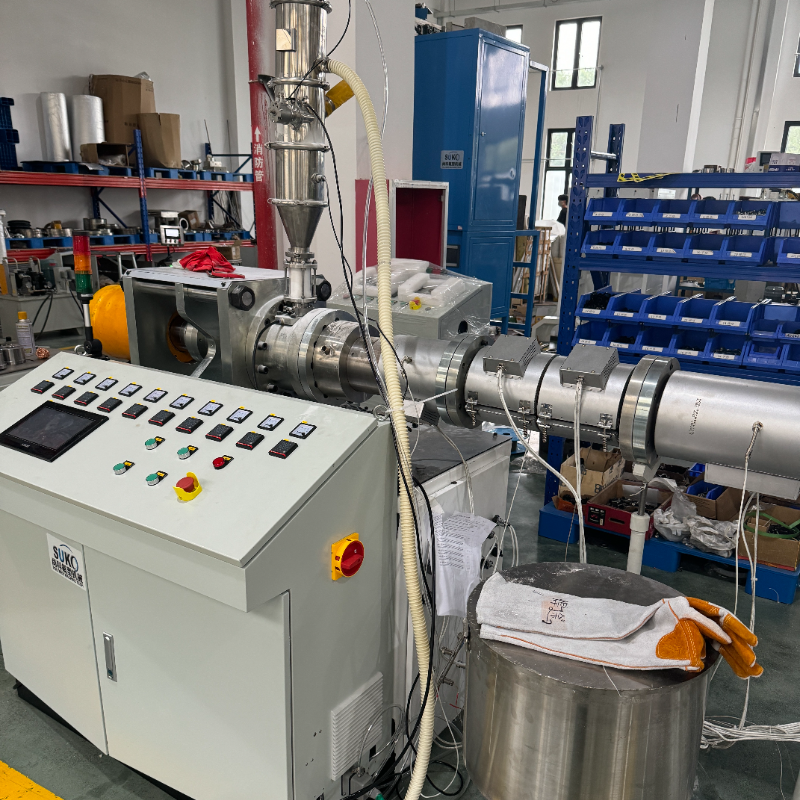
The basic process is straightforward: a premeasured charge, often powder or a compounded paste, is loaded into a heated barrel, compacted by the ram, and then pushed through a shaped die to form rods, tubes, profiles, sheets, or specialized preforms. Ram extrusion remains a niche but strategically important technology because it can deliver dense, low-void, low-shear products, sometimes with very tight tolerances, while avoiding the severe shear heating that can degrade sensitive polymers.
Historically, ram extrusion was among the earliest extrusion methods used in the plastics industry, and it continues to evolve through better hydraulic control, improved die heating, cleaner feeding systems, and increasing automation for specialty materials and high-integrity components. Its future is tied to applications demanding precise geometry, contamination control, and compatibility with high-performance and circular-material formulations, even though its batch nature and lower throughput than screw extrusion limit broad replacement in commodity plastics.
History and Development
Ram extrusion emerged before modern screw extrusion became dominant, and it was initially favored for simple profiles and for materials that could not be stably conveyed by a screw. Early industrial uses included profile and tubing production, with the process valued for its ability to compact powder into a coherent body before shaping.
A major development milestone was the adaptation of ram extrusion for PTFE, whose flow behavior makes conventional melt extrusion impractical. Another milestone was the refinement of UHMWPE ram extrusion, where powder is compacted and sintered into continuous profiles, enabling rods, tubes, and sheet-like sections from polymers that are otherwise notoriously difficult to process.
A third milestone has been the integration of closed-loop hydraulic control and improved temperature management, allowing more stable ram velocity, better dimensional consistency, and reduced defects from pressure fluctuation or incomplete sintering. More recent work has extended ram concepts into specialty fields such as pharmaceutical paste extrusion, ceramic shaping, and even additive manufacturing research, showing that the underlying force-and-die principle remains relevant across multiple materials systems.
Key Characteristics and Technical Overview
Ram extruders operate as intermittent pressure-driven systems rather than continuous conveying systems. The machine typically includes a heated barrel, a ram/plunger, a die, temperature control zones, and a hydraulic or pneumatic drive; some configurations are vertical and others horizontal, depending on floor layout, material handling, and product geometry.
The mechanism is best understood as repeated compaction and forcing of a charge through a restricted die channel. In powder-based polymer processing, the material is first compacted, air is expelled, and the compacted slug is then advanced into the heated die zone, where sintering, melting, or plasticization occurs before the profile emerges. This compaction-first behavior is one reason ram extrusion is effective for materials that need high pressure but limited shear.
Typical technical characteristics
| Parameter | Typical range or note |
|---|---|
| Process mode | Batch or cyclic, not continuous in the screw-extrusion sense |
| Drive | Hydraulic most commonly; pneumatic systems appear in smaller or auxiliary units |
| Orientation | Horizontal or vertical depending on machine design |
| Feed form | Powder, paste, compound, preform, or billet-like charge |
| Product forms | Rods, tubes, sheets, profiles, strips, cord, preforms |
| Shear level | Generally low compared with screw extrusion |
| Throughput | Highly application-specific; specialty lines are often lower in output than commodity screw lines, while industrial UHMWPE/PTFE lines are designed around the die and cycle rate rather than screw rpm |
For PTFE ram extrusion, manufacturers and technical literature emphasize unusually tight dimensional capability for specialty tubing, including wall thicknesses as low as 0.001 in and outer diameters as high as 0.400 in, with tolerances reported as low as ±0.0005 in in medical and precision-use contexts. For UHMWPE, the process can produce continuous profiles after powder compaction and sintering, but productivity depends strongly on heated-zone length, ram stroke or step, and the regularity of ram motion.
Although the process does not have a universal “rotor speed” in the way a screw extruder does, cycle performance is governed by ram velocity, stroke frequency, pressure, and dwell time in the heated zone. Where auxiliary compaction or dewatering is used upstream, specialty polymer processing literature often targets low residual moisture and dense preforms to improve repeatability, although exact values depend on the specific feedstock and are not standardized across all ram-extrusion applications.
Types and Variations
| Variant | Main use | Key features |
|---|---|---|
| Vertical ram extruder | Specialty profiles, PTFE, UHMWPE, compact plant layouts | Gravity feeding, smaller footprint, common in laboratory and specialty production |
| Horizontal ram extruder | Longer profiles, integrated handling, industrial lines | Easier inline support for long extrudates and cooling paths |
| Single-chamber ram extruder | Standard batch extrusion | One charge at a time, simple construction |
| Continuous or semi-continuous ram systems | Specialty profiles and advanced powder compaction | Improved charge sequencing and more stable output |
| Ram stuffer / hybrid feed systems | Light or difficult feed stocks into screw extruders | Uses a ram to force low-density material into a screw feed throat, bridging the gap between ram feeding and screw extrusion |
The most important material-oriented distinction is between high-shear screw extrusion and low-shear ram extrusion. Ram machines are chosen when shear must be minimized, when the material has poor melt strength or extraordinary viscosity, or when powder compaction and sintering are part of the process route.
Applications and Uses
Ram extruders are used where conventional screw extrusion is technically unsuitable or where product quality depends on compaction, low shear, and high pressure.
- PTFE tubing, rods, and profiles: This is one of the best-known uses, especially where fine-wall tubing, chemically resistant components, or medical-device elements are required.
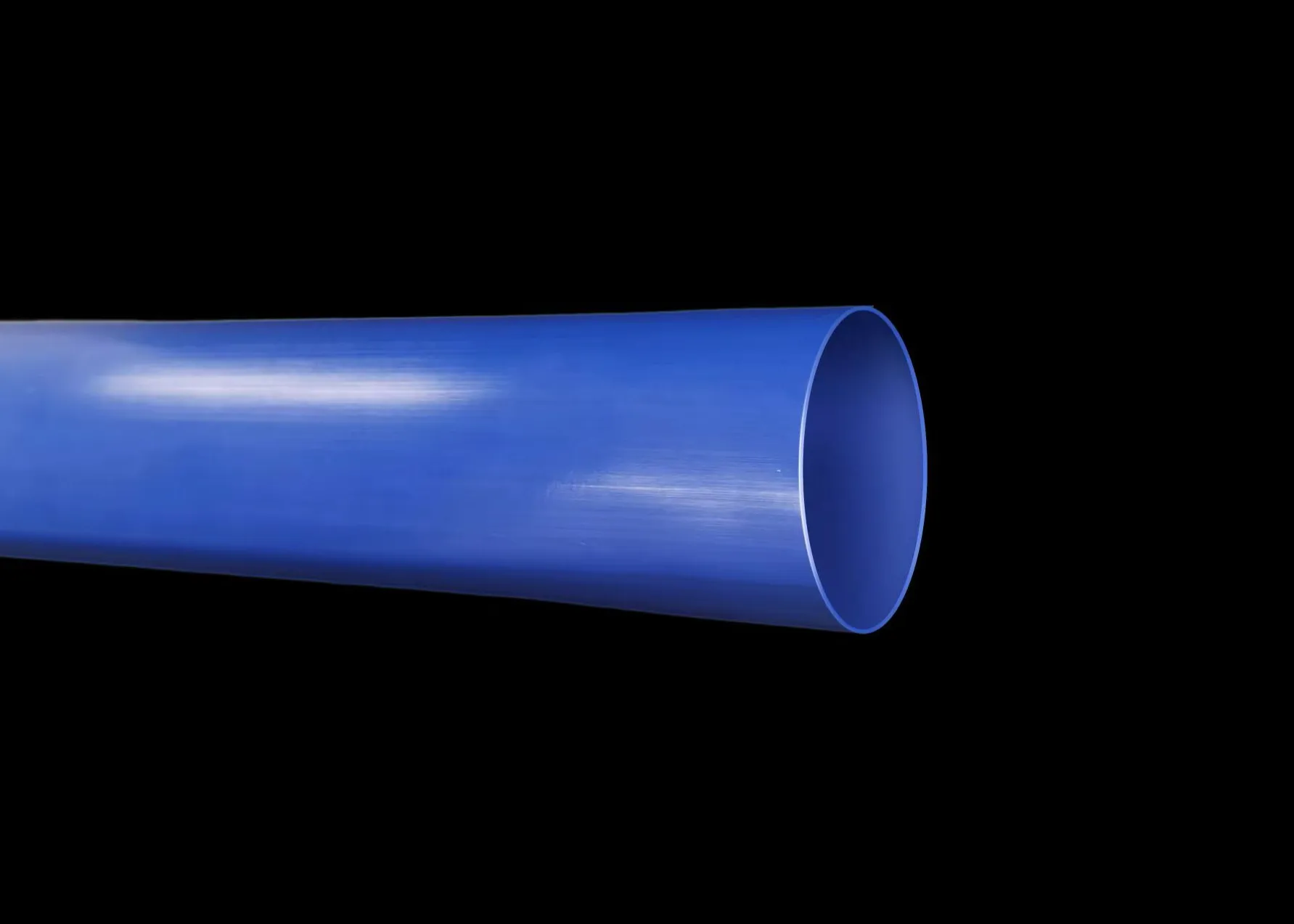
- UHMWPE rods, tubes, sheets, and panels: Ram extrusion enables powder consolidation into continuous extrudates, including wide thin panels developed in patent literature.
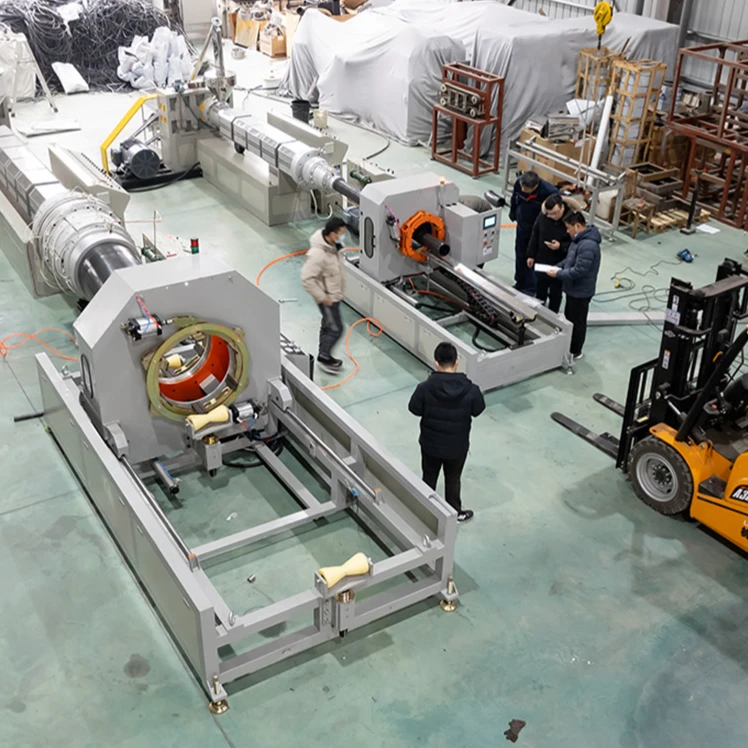
- Rubber and synthetic compound preforms: In rubber processing, ram-style machines are used for blanks, strips, cord, and preformed charges that feed downstream molding operations.
- Pharmaceutical and paste extrusion: Ram extrusion is used for controlled compaction of mixtures that require bubble-free, homogeneous forming.
- Ceramic and feedstock shaping: The same piston-driven logic is used in paste and high-solids systems, where pressure control governs flow and shape stability.
- Historic and legacy profiles: Older applications included lead pipes and cable sheathing, although these are now largely replaced by other technologies.
A poor-fit use is high-volume commodity thermoplastics such as standard packaging films or general-purpose pipe, because ram extrusion is discontinuous and usually lacks the output continuity and mixing capability of screw-based systems.
Technological Innovations and Automation
Modern ram extruders increasingly use closed-loop pressure control, servo or hydraulic control valves, and digital temperature regulation to stabilize the extrusion cycle and reduce scrap. These controls help maintain more uniform ram velocity and can improve repeatability in products where dimensional tolerance is critical.
Automation also appears in feeding and handling. In specialty rubber and polymer preforming systems, automated charge preparation and programmable stroke cycles reduce operator variability and improve batch consistency. In medical and contamination-sensitive production, clean-room configurations are used to limit particulate pickup and improve process hygiene.
Research has also extended ram extrusion into freeform and 3D-printing-related processes, where the ram becomes a volumetric actuator for controlled paste deposition. These developments suggest that the technology is not only a legacy manufacturing method but also a platform for precise, force-controlled material delivery.
Environmental and Sustainability Aspects
Ram extrusion can be efficient in materials that are difficult to reprocess by other means because it may reduce material loss, limit excessive shear heating, and avoid degradation from overprocessing. In PTFE and UHMWPE applications, the ability to compact powder directly into a near-net-shape form can reduce downstream waste and trimming in some product families.
At the same time, the process is not automatically low-carbon. Hydraulic systems consume energy, heated barrels and dies require significant thermal input, and the batch nature of operation can reduce equipment utilization if scheduling is poor. Sustainability performance therefore depends on factors such as insulation quality, heater efficiency, die design, charge preparation, and scrap recovery.
From a circular-economy perspective, ram extrusion is most promising where it can process reclaimed powders, regranulated compounds, or reclaimed rubber and polymer blends, provided the feedstock has sufficiently consistent particle size and flow behavior. The main challenge is maintaining density, porosity control, and dimensional stability when recycled feedstocks vary more than virgin resin.
Economic and Global Market Impact
Ram extruders occupy a specialty segment of the broader extrusion equipment market rather than the mass-market center of plastics processing. Their economic importance comes from the high value of the products they enable, particularly PTFE and UHMWPE components for medical, chemical, electrical, and industrial applications.
Companies active in the segment typically differentiate on process know-how, die design, clean-room capability, hydraulic performance, and application support rather than on sheer machine volume. In industrial practice, machine selection is driven more by material behavior and end-use tolerance requirements than by generalized throughput comparisons.
Because the machine class is specialized, capital justification often depends on:
- the difficulty of the material,
- the value per kilogram of the final product,
- the required dimensional precision,
- the cost of waste or rejected parts,
- and the degree to which alternative processes can meet the same performance standard.
Current Challenges and Innovations
The main technical challenge is the trade-off between pressure, temperature, and cycle stability. If pressure is too low, compaction is incomplete; if temperature is too high, the material can degrade or lose dimensional fidelity; if cycle timing is unstable, output quality varies from charge to charge.
Other challenges include:
- Limited throughput relative to screw extrusion in commodity applications.
- Die wear and thermal management, especially with abrasive or high-pressure formulations.
- Charge consistency, since powder density, moisture, and particle-size distribution strongly affect product uniformity.
- Process monitoring, because cyclic operation makes continuous quality control more complex than on steady-state screw lines.
Current innovation is focused on better motion control, smarter die heating, cleaner compaction, and hybrid systems that combine ram feeding with screw conveying where appropriate. For specialty polymers, these improvements are aimed less at maximizing bulk output and more at preserving product integrity, dimensional accuracy, and reproducibility.
Future Outlook
Ram extruders are likely to remain important in high-performance polymer processing, especially for PTFE, UHMWPE, specialty rubber, and other formulations that do not fit the screw-extrusion model. Their long-term competitiveness will depend on how well manufacturers can improve automation, reduce energy intensity, and integrate data-driven control without losing the low-shear advantages that define the process.
The strongest future opportunities are in:
- medical and pharmaceutical components, where cleanliness and precision matter;
- advanced industrial tubing and profiles, where chemical resistance and wall control are critical;
- recycled and reclaimed specialty compounds, where low-loss compaction can add value;
- and research-driven forming systems, including paste extrusion and emerging additive manufacturing methods.
In broader plastics processing, ram extrusion is unlikely to displace screw extrusion for mainstream thermoplastics, but it is likely to retain and refine its role as the preferred route for difficult materials, high-integrity parts, and applications where pressure-driven compaction is more valuable than continuous melt conveying.
Summary
Ram extruders are specialized piston-driven extrusion machines built for materials and product geometries that conventional screw extruders cannot handle effectively. Their enduring importance comes from low-shear compaction, strong pressure capability, and suitability for PTFE, UHMWPE, rubber preforms, and other demanding formulations.
References
- •
Ram extruder - an overview. (n.d.). ScienceDirect. https://www.sciencedirect.com/topics/engineering/ram-extruderLink
- •
Ram extrusion: Principles, processes, and applications. (n.d.). Flyriver. https://www.flyriver.com/g/ram-extruderLink
- •
Microsoft Word - 302-English.doc - Braskem. (n.d.). Braskem. https://www.braskem.com.br/Portal/Braskem/files/302%20RAM%20Extrusion.pdfLink
- •
Ram extruder. (n.d.). Industrial Extrusion Machinery. http://www.industrialextrusionmachinery.com/types_of_plastic_extruders_ram_extruder.htmlLink
- •
Design, construction. (n.d.). MIT DSpace. https://dspace.mit.edu/bitstream/handle/1721.1/29860/24426636-MIT.pdf?sequence=2Link
- •
RAM- vs. screw extrusion? (n.d.). Goettfert. https://www.goettfert.com/knowledge/rheo-info/for-capillary-rheometer/ram-vs-screw-extrusionLink
- •
RAM extruder. (n.d.). Wk-worek.com. https://wk-worek.com/plastic/ram-extruder/Link
- •
Extrusion die machine: Structure, specifications, and applications. (2026, March 12). Alibaba. https://www.alibaba.com/product-insights/extrusion-die-machine.htmlLink
- •
Methods of extrusion on demand for high solids loading ceramic. (n.d.). UT Austin. http://utw10945.utweb.utexas.edu/sites/default/files/2015/2015-27-Li.pdfLink
- •
Ram extrusion machine - COMER. (n.d.). Syracuse University. https://comer.syr.edu/equipment/ram-extrusion-machine/Link
- •
Ram extrusion presses. (2025, December 1). Macrodyne Technologies Inc. https://macrodynepress.com/hydraulic-presses/ram-extrusion-presses/Link
- •
ECO ram preformers and extruders. (2024, March 3). Barwell Global USA. https://barwellusa.com/products/eco-ram-preformers-and-extruders/Link
- •
EN_RI_RAM_vs_Screw_Extrusion. (n.d.). Goettfert. https://www.goettfert.com/fileadmin/assets/Downloads/EN/PDF/Rheo_Info/goettfert-rheo-info-RAM-vs-Screw-Extrusion-en.pdfLink
- •
[PDF] "Extrusion". In: Encyclopedia of polymer science and technology. (n.d.). DonNTU. https://masters.donntu.ru/2016/feht/glovatskiy/library/rauwendaal__extrusion.pdfLink
- •
Teflon PTFE ram extrusion guide. (2025, May 5). Scribd. https://www.scribd.com/document/545512545/teflon-ptfe-ram-extrusion-guideLink
- •
[PDF] Reclaim ram stuffer extruder. (n.d.). Davis-Standard. https://davis-standard.com/DS_wordpress/wp-content/uploads/2020/01/Reclaim_Ram-Stuffer-Extruder_EN.pdfLink
- •
ECO clean room ram rubber extruders. (2025, November 19). Barwell Global. https://barwell.com/products/eco-clean-room-ram-extruders/Link
- •
PPT - Extrusion process in plastics industry PowerPoint presentation. (2025, January 8). Slideserve. https://www.slideserve.com/jfugate/extrusion-powerpoint-ppt-presentationLink
- •
Engineering interventional solutions. (n.d.). Nordson Medical. https://interventional-solutions.nordsonmedical.com/files/interventional-solutions-nordsonmedical-com/Literature/White%20Papers/Engineering%20Interventional%20Solutions%20-%20Whitepaper%20Compendium.pdfLink
- •
UHMW ram extrusion process. (2018, January 11). PTFE Machinery. https://ptfe-machinery.com/uhmw-ram-extrusion-process/Link
- •
Ultimate guide: Types of extruders. (2021, November 29). Cowin Extrusion. https://www.cowinextrusion.com/ultimate-guide-types-of-extruders/Link
- •
Documentation. (2026, April 29). Naologic. https://naologic.com/resources/erp-industry-reports/2025-extruder-machine-industry-and-brand-reportLink
- •
Extrusion technique with ram speed control. (1997, December 23). Google Patents. https://patents.google.com/patent/US4240997A/enLink
- •
Extrusion rod or extrusion ram in aluminum extrusion press. (n.d.). Fszhelu. https://www.fszhelu.com/extrusion-ram-product/Link
- •
Naologic - Documentation. (2025, May 5). Naologic. https://naologic.com/erp-industry-reports/2025-extruder-machine-industry-and-brand-reportLink
- •
Polymer extrusion [5 ed.]. (2010, February 1). Dokumen.pub. https://dokumen.pub/polymer-extrusion-5nbsped-9781569905166.htmlLink
- •
Extrusión RAM. (2025, August 13). Scribd. https://es.scribd.com/document/423581456/Extrusion-RAMLink
- •
Extrusion basics. (2008, May 1). Ceramic Industry Magazine. http://www.ceramicindustry.com/articles/87808-extrusion-basics/Link
- •
Competitor outlook. (2025, October 1). Dataintelo. https://dataintelo.com/report/extrusion-equipment-marketLink
- •
Understanding the extrusion process and its benefits. (n.d.). Keyence. https://www.keyence.com/products/measure-sys/image-measure/resources/image-measure-resources/what-is-the-extrusion-process-types-and-advantages.jspLink
- •
1584625633. (2025, May 5). Scribd. https://www.scribd.com/document/630547779/1584625633Link
- •
Ram extruding thin panels of UHMW polymers. (2016, February 19). Google Patents. https://patents.google.com/patent/US20170239868A1/enLink
- •
Ram extrusion. (2023, January 6). Braskem. https://www.braskem.com.br/download/utec/21468?file=302%20RAM%20Extrusion.pdfLink
- •
Flexible actuation with intrinsic sensing for ram extrusion 3D printing. (2024, March 4). Springer. https://link.springer.com/article/10.1007/s00170-024-13298-0Link
- •
PTFE ram extrusion process explained. (2023, October 27). Poly Fluoro Ltd. https://polyfluoroltd.com/blog/ptfe-extrusion-ram-vs-paste-extruded-a-comparison-of-features/Link