
Introduction
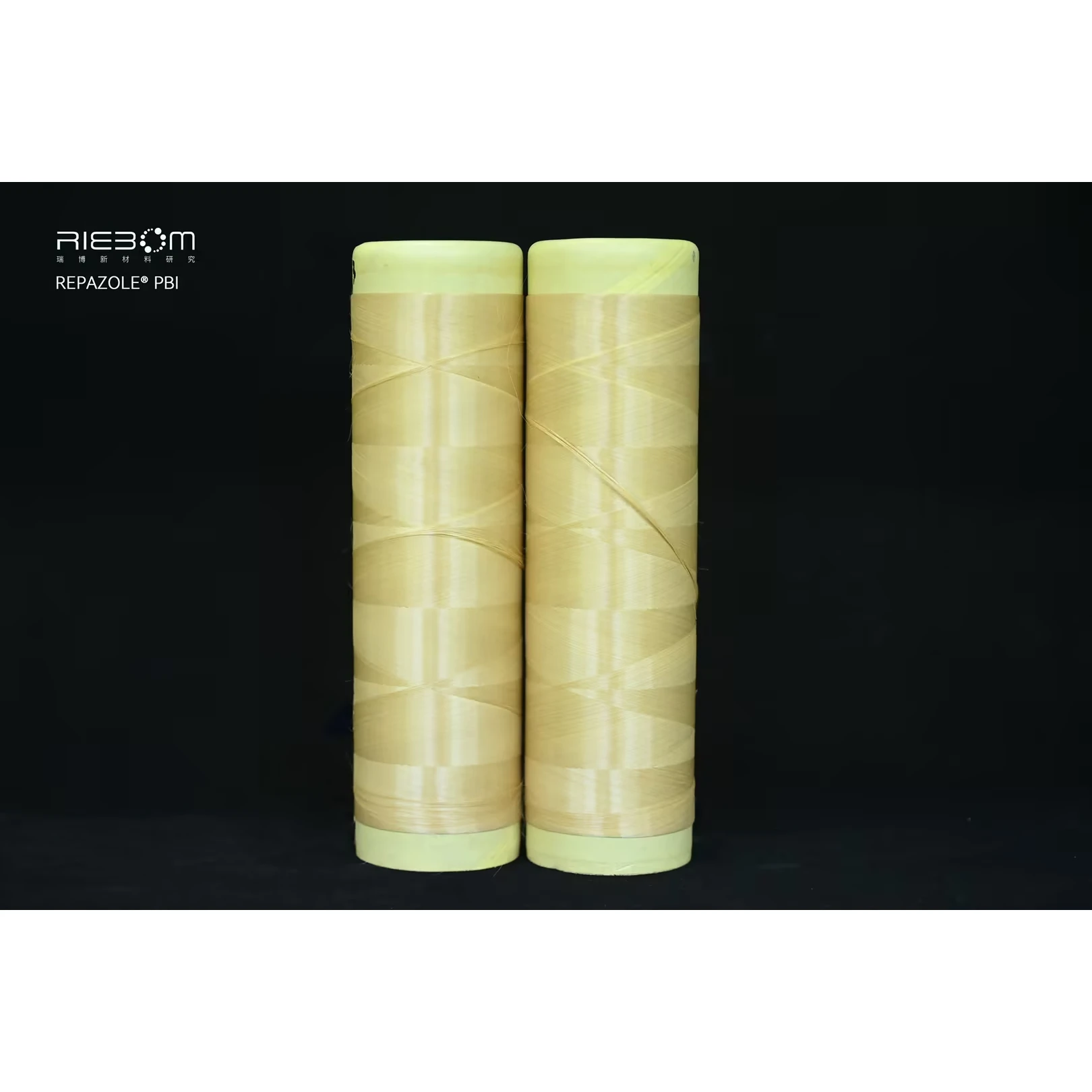
Polybenzimidazoles (PBIs) are a family of high-performance heterocyclic polymers distinguished by exceptional thermal stability, chemical resistance, flame resistance, and mechanical retention at temperatures where most engineering plastics fail. In plastics and technical textiles, PBIs are used primarily as fiber-forming resins, high-temperature membranes, electrical insulation materials, coatings, and specialty molded parts for extreme-environment service.
PBIs occupy a niche at the very top of the performance hierarchy: they do not melt in the conventional sense, they retain useful strength at elevated temperatures, and they are widely recognized for use in harsh conditions such as firefighter and aerospace protective clothing, high-temperature fuel-cell membranes, filtration media, and thermal protection systems. Their property profile arises from a rigid aromatic backbone combined with strong intermolecular hydrogen bonding, which suppresses chain mobility and contributes to unusually high glass-transition temperatures and decomposition temperatures.
From a materials-development perspective, PBIs have evolved beyond the original highly aromatic, rigid structures into copolymer and functionalized variants aimed at improving solubility, processability, proton conductivity, dielectric performance, and mechanical balance. These developments have broadened the material’s role in hydrogen technologies, advanced electronics, gas separation, and next-generation protective systems.
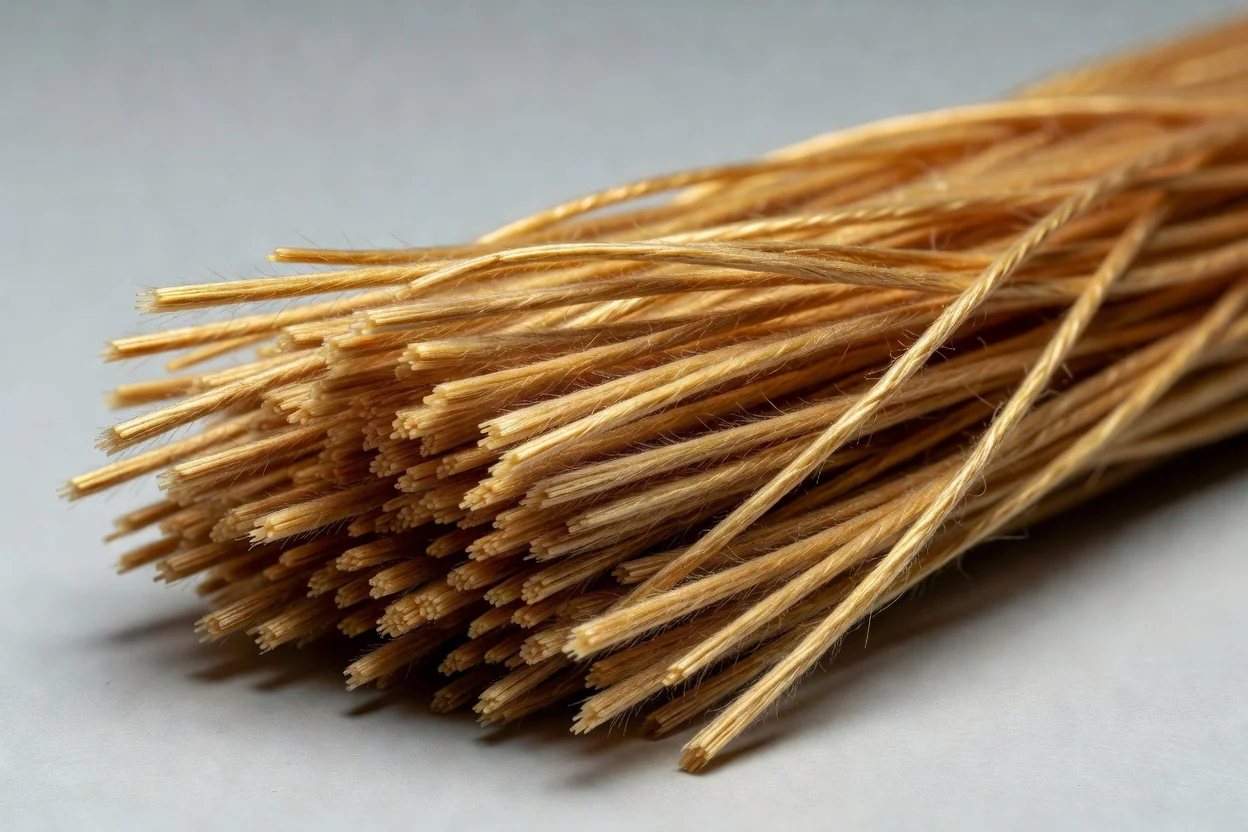
Sustainability considerations are mixed. PBIs are durable, long-lived, and enable energy-efficiency and safety applications, but they remain specialized, solvent-intensive, and comparatively expensive materials with limited end-of-life recycling infrastructure. Research into bio-based monomers, lower-solvent synthesis, and recyclable or self-healing PBI architectures indicates that future growth will likely depend on better manufacturability as much as on performance.
History and Development
PBIs emerged from mid-20th-century high-temperature polymer research aimed at materials that could outperform conventional aramids and polyimides under severe thermal and chemical stress. Commercial interest accelerated when fiber grades demonstrated a rare combination of flame resistance, dimensional stability, and comfort-related textile properties such as moisture regain and wearability in protective apparel.
A major milestone was the commercialization of PBI fiber in the 1980s, after which the material found a durable position in firefighter turnout gear, aerospace insulation, and industrial protective clothing. Later development expanded PBI beyond fiber into membranes and molded engineering parts, especially for high-temperature proton-exchange membrane fuel cells and extreme-environment structural components.
More recently, the PBI field has moved toward tailored copolymers and chemically modified structures. These variants target improved solubility, lower dielectric constant, better proton transport, reduced acid swelling, and in some cases self-healing behavior. This shift reflects a broader industry trend: for ultra-high-performance polymers, the innovation frontier is no longer only thermal endurance, but also processability, sustainability, and multifunctionality.
Chemical Structure and Key Properties
PBIs are aromatic heterocyclic polymers containing benzimidazole units in the backbone; the rigid ring system and high aromatic content are central to the material’s thermal and mechanical performance. The archetypal commercial PBI is poly[2,2’-(m-phenylen)-5,5’-bisbenzimidazole], though many related polybenzimidazole and poly(arylene benzimidazole) structures exist.
Key property profile
| Property | Typical significance for PBI |
|---|---|
| Glass-transition temperature | Very high; commonly reported above 400 °C for the classic rigid aromatic grade. |
| Thermal decomposition | Often above 500 °C, depending on grade and test atmosphere. |
| Flame resistance | Inherently self-extinguishing; very high limiting oxygen index values have been reported. |
| Chemical resistance | Resists strong acids, bases, and many aggressive solvents. |
| Mechanical strength | Retains strength unusually well at high temperatures. |
| Electrical behavior | Useful dielectric properties and low loss at elevated temperature. |
| Friction and wear | Favorable for high-temperature tribological components. |
Real limits and practical workarounds
- Poor processability / limited melt processing → the rigid aromatic backbone and very high thermal stability prevent conventional melt forming → workaround: solution processing, dry spinning, powder sintering, or use of copolymers designed for improved solubility.
- Difficult solubility in many solvents → strong interchain hydrogen bonding and high chain stiffness reduce dissolution → workaround: polyphosphoric acid routes, special polar aprotic solvents, and structural modification with less coplanar or more flexible monomers.
- High-cost, niche-material economics → complex synthesis and specialized processing restrict scale → workaround: focus on high-value uses such as fuel-cell membranes, protective textiles, and aerospace components where performance justifies cost.
- Not a good fit for ordinary commodity plastic applications → the material is overengineered and too expensive for general packaging or consumer goods → workaround: reserve PBI for extreme-service conditions rather than commodity substitution.
Mechanistic note
- The extraordinary heat resistance of PBI is not only a function of aromaticity; intermolecular hydrogen bonding acts as a non-covalent network that restricts segmental motion, helping preserve strength and dimensional stability at temperatures far above those tolerated by common thermoplastics.
Production Processes and Raw Feedstocks
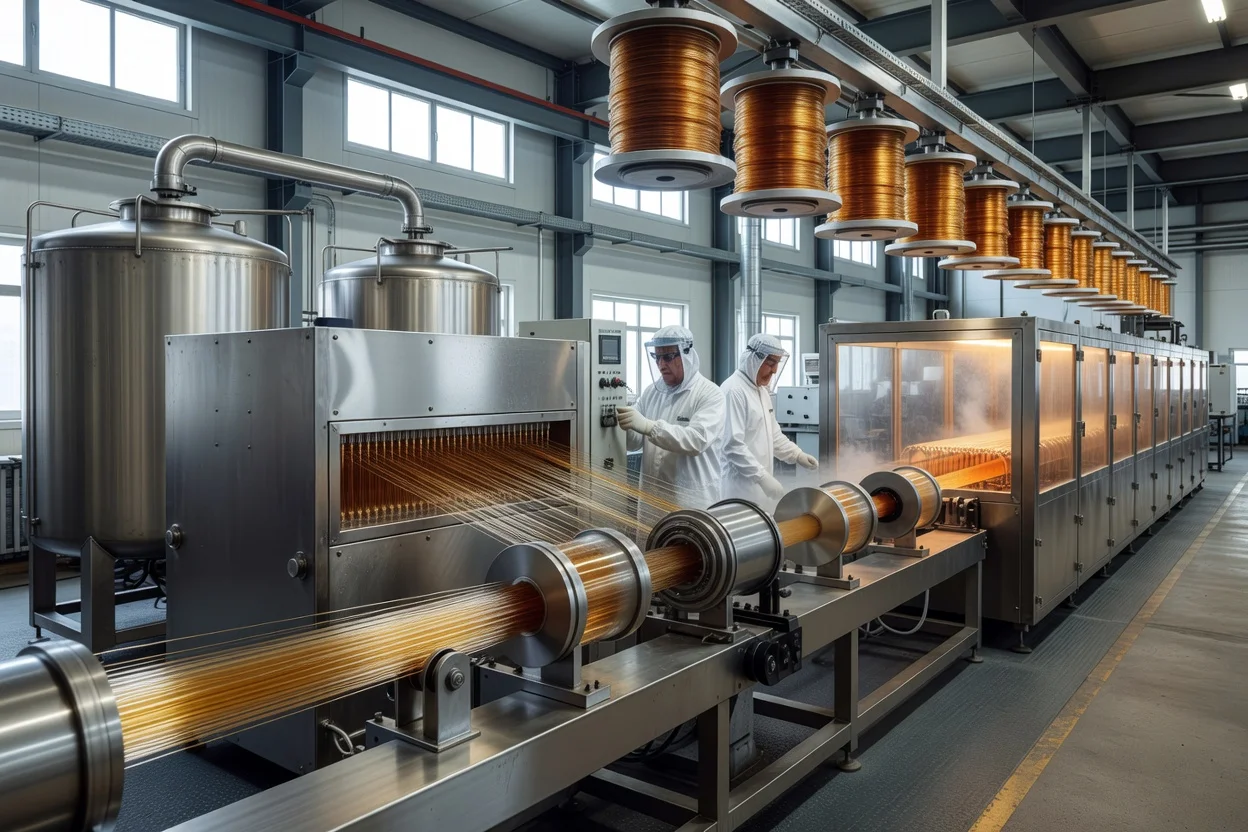
PBI production is based on step-growth polycondensation of aromatic diamines with aromatic dicarboxylic-acid derivatives or closely related monomers. The classic fiber route historically uses aromatic diamine and diester/acid-derived monomers, followed by solution spinning from a strong acidic or polar solvent system.
Typical manufacturing route
- Monomer preparation
- Aromatic diamines and aromatic dicarboxylate derivatives are selected to set rigidity, solubility, and final performance.
- Polycondensation
- High-temperature step-growth polymerization yields a highly aromatic, high-molecular-weight PBI precursor.
- Dissolution or dope preparation
- The polymer is formulated into a spinning dope in a strong solvent system; this is often the major processing hurdle.
- Shaping
- Fibers are produced by dry spinning; membranes and coatings can be cast; molded parts may be made by powder sintering at very high temperatures.
- Post-treatment
- Washing, stretching, acid treatment, or functionalization may be applied to tune final properties, especially for membrane or fiber grades.
Raw feedstocks and their influence
- Aromatic diamines contribute stiffness, thermal endurance, and chemical resistance.
- Aromatic dicarboxylic derivatives help define chain linearity and processability.
- Functional comonomers can improve solubility, proton conductivity, or dielectric behavior.
- Strong acids or polar solvents are often necessary for synthesis and shaping, which has implications for cost, recovery, and environmental footprint.
Mechanism note
- In acid-doped membrane grades, PBI functions by acid uptake and proton conduction through the doped polymer network, which is why it has become a leading host polymer for high-temperature proton-exchange membranes.
Applications and End-Use Markets
PBIs are used where organic materials must survive heat, flame, acid exposure, friction, or dimensional stress that would destroy conventional engineering plastics.
| End-use sector | Typical PBI form | Usual process / grade | Why PBI fits | One important limitation |
|---|---|---|---|---|
| Protective apparel | Fiber, staple fiber, blends | Dry-spun high-performance fiber | Flame resistance, thermal stability, comfort, chemical resistance | High cost limits mass-market use |
| Aerospace and defense | Fiber, fabrics, coatings, molded parts | Technical textiles, coatings, sintered parts | Thermal protection, low smoke, durability | Process complexity and qualification burden |
| Fuel cells | Membrane, film | Cast film, acid-doped membrane | High-temperature proton conductivity, low gas permeability, CO tolerance | Acid management and swelling control are critical |
| Filtration and industrial fabrics | Fiber, nonwovens | Staple, woven, nonwoven | Heat and chemical resistance | Limited use in low-temperature commodity filtration |
| Electrical insulation | Film, coating, molded insulation parts | Coatings, films, insulation systems | Dielectric stability at high temperature | Expensive compared with standard insulation polymers |
| Tribological parts | Molded parts, bearings, bushings | Powder sintering, machining | Wear resistance and low friction at high temperature | Not suited to ordinary injection-molded commodity parts |
| Batteries and separators | Membranes, polymer electrolyte supports | Functional membrane casting | Thermal shutdown resistance and dimensional stability | Needs careful electrolyte compatibility |
Major commercial roles
- Protective textiles: firefighter gear, industrial flame-resistant clothing, welders’ apparel, aircraft fabrics, and specialty gloves remain among the most visible uses.

- High-temperature membranes: PBI is widely used in high-temperature fuel cells because it maintains mechanical stability and acid tolerance at conditions around 120–200 °C.
- Aerospace thermal protection: PBI appears in seals, liners, insulation, and thermal protection systems for extreme environments.
- Engineering components: PBI can be machined or sintered into parts for bearings, seals, and electrical insulation where heat and wear are severe.
Poor-fit use
- General-purpose packaging is a poor fit for PBI because the polymer’s performance advantages are unnecessary, while its cost, processing difficulty, and supply-chain complexity are far higher than for PE, PP, PET, or PA-based materials.
Environmental and Sustainability Aspects
PBI has a sustainability profile that is best described as high-performance, low-volume, long-life. Its main environmental benefit is durability: in applications such as fire protection, fuel cells, and high-temperature insulation, the polymer enables safety and energy-performance gains that can outweigh its embodied complexity.
Recyclability and end of life
- Mechanical recycling is limited because many PBI applications are small-volume, highly contaminated, or composite-based.
- Fiber and membrane products are often difficult to separate from acid, coatings, or blended structures.
- Thermal recovery is possible in some waste streams, but the material’s value is usually lost if treated as ordinary plastic scrap.
Bio-based and lower-impact alternatives
- Bio-based PBI routes have been reported using monomers such as 3,4-diaminobenzoic acid in experimental work.
- Functionalized and copolymer PBIs may reduce solvent burden by improving solubility and processability.
- Self-healable or acid-suppressed-swelling membrane designs may extend service life and reduce replacement frequency.
Carbon and resource considerations
- The principal sustainability challenge is not use-phase emissions but manufacturing intensity: high-temperature synthesis, specialized solvents, and purification steps increase resource demand.
- However, the long service life of PBI in safety-critical systems can reduce total lifecycle impact versus frequent replacement of lower-grade materials.
- The strongest sustainability case for PBI is therefore substitution by function: using a small amount of a very durable polymer to prevent failure in extreme conditions.
Economic and Global Market Impact
PBI is a specialty polymer with a relatively small production base compared with commodity resins, but it commands premium pricing because it solves problems that few other plastics can address. Demand is concentrated in aerospace, defense, fire protection, hydrogen technologies, electronics, and industrial filtration.
Market structure
- Fiber grades dominate protective apparel and technical textiles.
- Membrane grades are strategically important in high-temperature fuel cells and gas separation.
- Molded and sintered grades serve niche engineering and tribological markets.
Industry leadership
Publicly visible commercial supply is relatively concentrated. PBI Performance Products is a long-established name in PBI fiber supply and processing, while specialty engineering-material suppliers and advanced materials divisions of large chemical companies provide molded PBI grades and membrane-related products. Mitsubishi Chemical Advanced Materials is one of the best-known suppliers for PBI engineering plastics in the market for high-temperature parts.
Economic significance
- PBI often competes not on price but on failure avoidance.
- In protective clothing, fuel cells, and aerospace systems, the cost of material is small relative to the cost of system failure.
- Market growth is tied to hydrogen infrastructure, electrification, and safety regulation rather than to volume growth in conventional plastics.
Current Challenges and Innovations
Main challenges
- Manufacturing complexity: synthesis and shaping remain specialized and solvent-dependent.
- Acid management in membranes: proton-conducting PBI systems must balance conductivity with swelling control and mechanical integrity.
- Cost and scale: limited production volumes constrain economies of scale.
- Design trade-offs: higher flexibility can improve processability but may reduce modulus and heat resistance.
Innovation directions
- Copolymer design to improve solubility, tune modulus, and adjust proton conductivity.
- Functionalized PBI membranes for higher conductivity, lower swelling, and better self-healing behavior.
- Nanofiller reinforcement for ablative, thermal, and barrier enhancement in extreme-service parts.
- Alternative solvents and greener synthesis routes to reduce environmental burden and improve industrial feasibility.
- Expanded membrane applications in hydrogen separation and high-temperature gas purification.
Future Outlook
PBI is likely to remain a premium, specialized polymer rather than a high-volume general-purpose plastic. Its strongest growth opportunities lie in applications where thermal endurance, flame resistance, chemical robustness, and proton conductivity are all essential at once.
The most important near-term trends are likely to be:
- Hydrogen and fuel-cell expansion, particularly in high-temperature PEM systems.
- Advanced protective textiles for fire, military, aerospace, and industrial safety.
- High-temperature electrical and electronic insulation as devices become more power-dense.
- Process innovation, especially around copolymers, greener synthesis, and solvent recovery.
- Longer-life membrane architectures that reduce cost per operating hour rather than cost per kilogram.
If current technical advances continue, PBIs may move from being viewed mainly as a niche extreme-temperature polymer to a broader enabling platform for hydrogen infrastructure, resilient electrification, and next-generation protective systems.
Summary
Polybenzimidazoles are among the most heat-resistant and chemically durable polymers used in the plastics industry. Their rigid aromatic backbone and strong intermolecular interactions create a rare combination of flame resistance, mechanical retention, and chemical stability that supports high-value uses in protective apparel, fuel-cell membranes, aerospace insulation, filtration, and extreme-service engineering parts.
At the same time, PBIs are constrained by complex synthesis, difficult processing, and high cost, which keep them in specialty markets rather than commodity plastics. Future development is centered on making the material easier to process, less solvent-intensive, and more functional in hydrogen, membrane, and safety technologies.
References
- •
Aliphatic polybenzimidazoles: Synthesis, characterization, and properties. (2023, March 11). https://pmc.ncbi.nlm.nih.gov/articles/PMC10055794/Link
- •
Polybenzimidazole. (2003, July 18). In Wikipedia. https://en.wikipedia.org/wiki/PolybenzimidazoleLink
- •
Polybenzimidazole - an overview. (n.d.). ScienceDirect. https://www.sciencedirect.com/topics/earth-and-planetary-sciences/polybenzimidazoleLink
- •
Polybenzimidazole: Comprehensive analysis of molecular.... (n.d.). PatSnap Eureka. https://eureka.patsnap.com/materials/polybenzimidazole-structureLink
- •
Polybenzimidazoles (PBIs) derived from non-coplanar dibenzoic acid containing imidazole (IDBA): Synthesis, characterization and properties. (n.d.). Wiley Online Library. https://onlinelibrary.wiley.com/doi/pdf/10.1002/macp.200900295Link
- •
Handbook of thermoplastics (2nd ed.). (n.d.). https://www.benicewiczgroup.com/UserFiles/benigroup/Documents/BB122.pdfLink
- •
Polybenzimidazole co-polymers: Their synthesis, morphology and high temperature fuel cell membrane properties. (2020, February 4). Royal Society of Chemistry. https://pubs.rsc.org/en/content/articlelanding/2020/py/c9py01403aLink
- •
Polybenzimidazole (PBI). (2020, May 30). MakeItFrom.com. https://www.makeitfrom.com/material-properties/Polybenzimidazole-PBILink
- •
Protective uses. (2022, March 25). Laird Plastics. https://lairdplastics.com/resources/what-is-polybenzimidazole-pbi/Link
- •
Polybenzimidazole polymer: Comprehensive analysis of.... (n.d.). PatSnap Eureka. https://eureka.patsnap.com/materials/polybenzimidazole-polymerLink
- •
Thermal resistant coatings using PBI resin. (n.d.). PBI Performance Products. https://pbipolymer.com/wp-content/uploads/2016/05/Thermal-Resistant-Coatings_Using-PBI.pdfLink
- •
Polybenzimidazole electrical insulation: Advanced material.... (n.d.). PatSnap Eureka. https://eureka.patsnap.com/materials/pbi-electrical-insulationLink
- •
Synthesis and properties of functionalized.... (2009, October 26). ACS Publications. https://pubs.acs.org/doi/10.1021/ma9015664Link
- •
Robust and self-healable polybenzimidazole membranes.... (2025, September 23). https://pmc.ncbi.nlm.nih.gov/articles/PMC12455580/Link
- •
Characterization of polybenzimidazole (PBI) film at high.... (n.d.). NASA Technical Reports Server. https://ntrs.nasa.gov/api/citations/19920014295/downloads/19920014295.pdfLink
- •
Infrared spectroscopy of polybenzimidazole in the dry and.... (n.d.). Monash University. https://researchmgt.monash.edu/ws/portalfiles/portal/344471660/344471492_oa.pdfLink
- •
Polybenzimidazole (PBI) is a high performance polymer.... (n.d.). Imperial College London. https://spiral.imperial.ac.uk/server/api/core/bitstreams/4af9f980-e7c8-45e8-a66a-0412f852ac52/contentLink
- •
Polybenzimidazole thermoplastic: Advanced engineering polymer for.... (n.d.). PatSnap Eureka. https://eureka.patsnap.com/materials/polybenzimidazole-thermoplasticLink
- •
Poly(arylene benzimidazole)s as novel high-performance polymers. (2013, June 5). Polymer Journal. https://www.nature.com/articles/pj201351Link
- •
Stepwise copolymerization of polybenzimidazole for a low dielectric constant and ultrahigh heat resistance. (2022, April 19). https://pmc.ncbi.nlm.nih.gov/articles/PMC9016846/Link
- •
Thermochemical characterization of polybenzimidazole with and without nano-ZrO2 for ablative materials application. (n.d.). Springer. https://link.springer.com/article/10.1007/s10973-020-10343-4Link
- •
Polybenzimidazole fiber. (n.d.). ChemEurope. https://www.chemeurope.com/en/encyclopedia/Polybenzimidazole_fiber.htmlLink
- •
Coatings for electrical insulation and thermal protection. (2025, August 15). PBI Performance Products. https://pbipolymer.com/high-temperature-coatings/Link
- •
Polybenzimidazole radiation resistant properties. (n.d.). PatSnap Eureka. https://eureka.patsnap.com/materials/pbi-radiation-resistanceLink
- •
Document NGbyemOYd00d5X2KZOwY0oaNb. (n.d.). Toxic Docs. https://www.toxicdocs.org/d/NGbyemOYd00d5X2KZOwY0oaNb?lightbox=1Link
- •
Poly[2,2’-(m-phenylene)-5,5’-bibenzimidazole] (PBI) is used in extremely high temperature harsh environment applications. (n.d.). OSTI. https://www.osti.gov/servlets/purl/1394601Link
- •
Hygrothermal behavior of polybenzimidazole. (2012, October 1). OSTI. https://www.osti.gov/pages/biblio/1394601Link
- •
Polybenzimidazole fiber: Comprehensive analysis of synthesis.... (n.d.). PatSnap Eureka. https://eureka.patsnap.com/materials/polybenzimidazole-fiberLink
- •
Molecular expressions microscopy primer: Specialized microscopy techniques - polarized light microscopy gallery. (2015, November 13). Florida State University. https://micro.magnet.fsu.edu/primer/techniques/polarized/gallery/pages/polybenzimidazolesmall.htmlLink
- •
Polybenzimidazole industrial applications. (n.d.). PatSnap Eureka. https://eureka.patsnap.com/materials/polybenzimidazole-applicationsLink
- •
PBI (polybenzimidazole). (2026, April 14). Polymershapes. https://polymershapes.com/product/pbi-polybenzimidazole/Link
- •
Polybenzimidazole. (n.d.). Museum of Fine Arts Boston. https://cameo.mfa.org/wiki/PolybenzimidazoleLink
- •
PBI-polybenzimidazole-fiber. (2025, October 23). Shenghe Tech. https://shenghetech.com/info-detail/what-is-pbi-fiber-polybenzimidazole-high-temperature,-flame-retardant-technical-fiberLink
- •
Cardo polybenzimidazole (PBI-O-PhT) based membrane.... (n.d.). MDPI. https://www.mdpi.com/2077-0375/12/10/956Link
- •
Polybenzimidazole fiber (PBI): Synthetic fibre from benzimidazole. (2020, January 1). Academia.edu. https://www.academia.edu/42099977/Polybenzimidazole_Fiber_PBI_Synthetic_Fibre_from_BenzimidazoleLink
- •
High temperature tribological properties of polybenzimidazole. (n.d.). ScienceDirect. https://www.sciencedirect.com/science/article/pii/S0032386117308881Link
- •
Polibenzimidazol. (2019, July 12). In Wikipédia. https://pt.wikipedia.org/wiki/Polibenzimidazol?oldformat=trueLink
- •
PBI. (n.d.). Swicofil. https://www.swicofil.com/commerce/products/pbi/316/applicationsLink
- •
How polybenzimidazole (PBI) fiber works — In one.... (2025, December 17). LinkedIn. https://www.linkedin.com/pulse/how-polybenzimidazolepbi-fiber-works-one-u42ucLink
- •
PBI. (2016, March 23). Bally Ribbon Mills. https://www.ballyribbon.com/fibers/pbi/Link
- •
Phosphonated PBI fiber. (2016, June 27). Google Patents. https://patents.google.com/patent/US20170009383A1/enLink
- •
How polybenzimidazole fiber works — In one simple.... (2025, October 19). LinkedIn. https://www.linkedin.com/pulse/how-polybenzimidazole-fiber-works-one-simple-flow-kv1ueLink
- •
WO2017007629A1 - Phosphonated PBI fiber. (2016, June 28). Google Patents. https://patents.google.com/patent/WO2017007629A1/enLink
- •
About PBI. (n.d.). PBI Performance Products. https://www.pbiproducts.com/about-pbiLink
- •
PBI fibers - Exceptional thermal and chemical stability. (2021, September 29). TenCate Fabrics. https://apac.tencatefabrics.com/blog/pbi-fibersLink
- •
Supplier data - Polybenzimidazole (PBI) (Goodfellow). (2003, February 21). AZoM. https://www.azom.com/article.aspx?ArticleID=1866Link
- •
PBI fibers - Superior inherent flame resistance and…. (2024, August 13). MiniFIBERS. https://www.minifibers.com/products/pbi-fibersLink
- •
Comprehensive overview of the polybenzimidazole (PBI).... (2026, August 13). LinkedIn. https://www.linkedin.com/pulse/comprehensive-overview-polybenzimidazolepbi-fiber-market-competitive-4kt5eLink