
Introduction
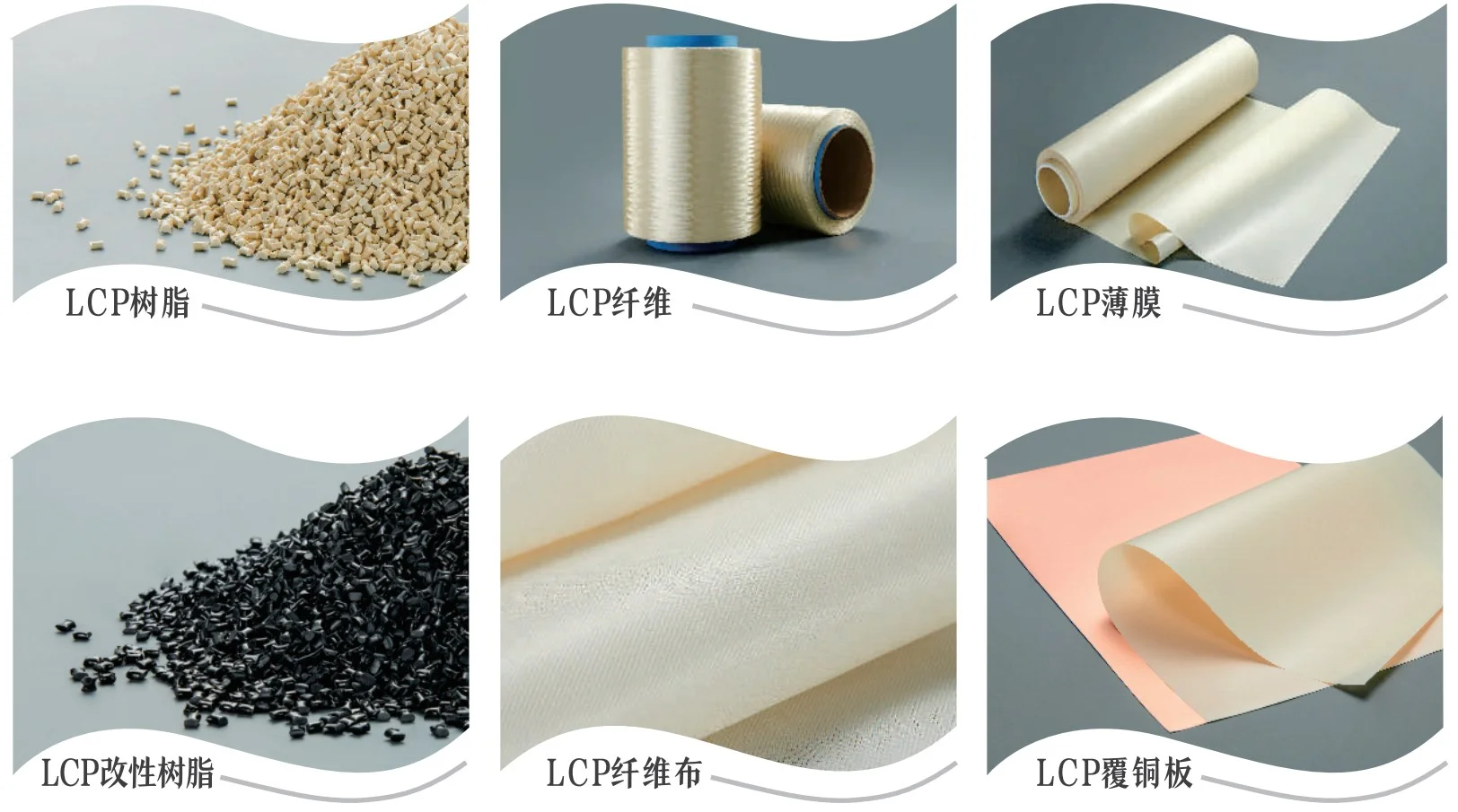
Liquid crystal polymer (LCP) is a high-performance thermoplastic distinguished by its ability to form an ordered liquid-crystalline phase in the melt, which gives molded parts unusually high stiffness, heat resistance, dimensional stability, and low dielectric loss. In the plastics industry, LCP is used primarily as an engineering resin and film material for demanding electrical, electronic, automotive, medical, and high-frequency communication applications, where miniaturization and thermal reliability are critical.
LCPs are typically wholly or predominantly aromatic polyesters based on rigid rod-like chains and related mesogenic structures; commercial families often derive from p-hydroxybenzoic acid and similar aromatic monomers. Depending on architecture, LCPs are commonly discussed as thermotropic main-chain liquid crystal polymers, with the most important industrial grades optimized for melt processing by injection molding, extrusion, film formation, and coextrusion.
The material has progressed from a niche high-end polymer to a strategic enabling material for compact electronics and next-generation connectivity, especially where low dielectric constant, low moisture uptake, and reflow-solder resistance are required. At the same time, sustainability discussions are increasingly relevant because LCP is an advanced petrochemical-based polymer with limited large-scale recycling pathways, even as its long service life and light-weighting benefits can reduce lifecycle impacts in certain applications.
History and Development
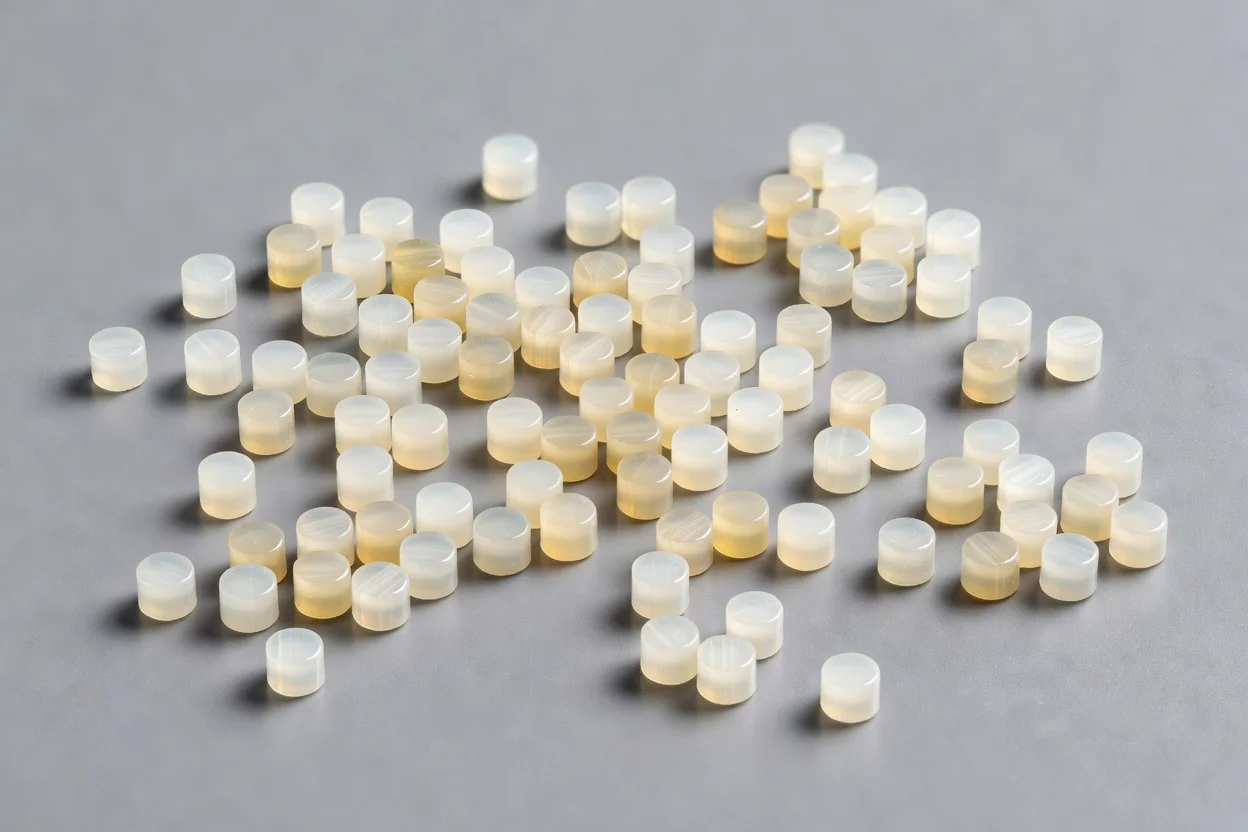
Liquid crystalline behavior in polymers became a major research topic in the late twentieth century as scientists sought materials combining the processability of thermoplastics with the alignment and anisotropy of liquid crystals. Early work established that rigid aromatic chains could organize into mesophases during melting, producing a polymer class with exceptional directional properties and unusual rheology.
Commercial LCPs emerged as engineering plastics rather than as display materials, with major development focused on thermotropic aromatic polyesters suitable for injection molding and thin-wall components. Over time, formulations were refined into multiple grades for connectors, chip carriers, flexible circuits, antenna substrates, fibers, and films, especially as electronics miniaturization increased the value of low warpage and high thermal resistance.
More recent development has centered on high-frequency communications, 5G and mmWave devices, lightweight automotive electrical systems, and advanced film products for flexible circuitry. This shift has reinforced LCP’s position as a specialty material at the intersection of polymer science, microelectronics, and precision manufacturing.
Chemical Structure and Key Properties
LCPs are characterized by rigid, anisotropic chain segments that align readily in the melt and retain order upon solidification. The most commercially important grades are aromatic polyester-based, often containing para-linked aromatic rings and ester linkages that promote chain stiffness, orientation, and liquid-crystalline behavior.
A simplified way to understand LCP performance is that the polymer behaves like a melt that is already partially ordered, so flow can generate highly oriented morphology with minimal energy input compared with many conventional thermoplastics. This leads to very low melt viscosity, high moldability in thin sections, and strong directional mechanical and electrical properties.
Key properties
- High heat resistance: LCPs retain useful properties at elevated temperatures and are used in parts exposed to soldering and hot-engine environments.
- Low dielectric constant and dissipation factor: This makes them highly suitable for high-frequency signal transmission and antenna applications.
- Low moisture absorption: This supports dimensional stability and electrical consistency in humid conditions.
- High dimensional stability: LCPs show very low thermal expansion, particularly along the flow direction after molding.
- Inherent flame retardancy: Some commercial grades achieve UL94 V-0 behavior without added flame retardants.
- Good chemical resistance: LCPs resist many solvents and processing chemicals, supporting use in aggressive service environments.
Important limits and workarounds
| Limit | Cause | Workaround |
|---|---|---|
| Anisotropic shrinkage and warpage | Strong molecular orientation in the melt creates direction-dependent properties and dimensional change. | Use balanced gate design, flow simulation, reinforced or modified grades, and careful mold cooling. |
| Low impact toughness in some grades | Highly rigid aromatic backbones favor stiffness and heat resistance over ductility. | Select impact-modified blends, redesign geometry, or use hybrid constructions. |
| Poor adhesion and bonding to some substrates | LCP’s chemically resistant, low-polarity surface can reduce interfacial bonding. | Use plasma, corona, etching, primers, or adhesive tie layers. |
| Low creep resistance under sustained load in certain applications | Chain stiffness does not automatically translate into long-term load-bearing performance in all geometries. | Increase wall thickness, use reinforced grades, or substitute a different engineering polymer where sustained structural loading dominates. |
Production Processes and Raw Feedstocks
Commercial LCPs are generally produced from aromatic monomers selected to create rigid, rod-like molecular structures and thermotropic liquid-crystal behavior. Industrial chemistry commonly uses aromatic hydroxy acids, aromatic diacids, and related monomers, with p-hydroxybenzoic acid frequently cited as a key building block in classic systems.
Production routes typically involve controlled polycondensation to form high molecular weight aromatic polyester chains, followed by pelletizing, compounding, or film extrusion depending on the intended end use. Because the melt already exhibits liquid-crystalline order, downstream processing conditions are tightly tuned to exploit orientation while avoiding defects from excessive shear or thermal degradation.
Main processing routes
- Injection molding for connectors, housings, sensor parts, and thin-walled precision components.
- Film extrusion and calendering for flexible circuits, antenna substrates, and laminates.
- Fiber and thread formation for specialty industrial applications where high strength and thermal stability are required.
- Extrusion and coextrusion for profiles, multilayer structures, and electrical components.
Industry leadership
- Celanese is widely recognized for its Vectra and Zenite LCP families and for shaping the commercial engineering-plastics market for LCP.
- Sumitomo Chemical is a major Japanese producer and developer of specialized LCP compounds for connectors, LEDs, and high-frequency uses.
- RTP Company and other compounders play an important role in filled and application-specific LCP formulations.
- Other global participants support film, fiber, and specialty compound supply, particularly in Asia, where consumption is concentrated.
Applications and End-Use Markets
LCP is most valuable where a part must combine miniaturization, thermal resistance, and electrical performance in a small package. Its application profile is unusually concentrated in advanced manufacturing sectors rather than commodity plastics.
| End-use sector | Typical LCP form/grade | Usual process | Why LCP is selected |
|---|---|---|---|
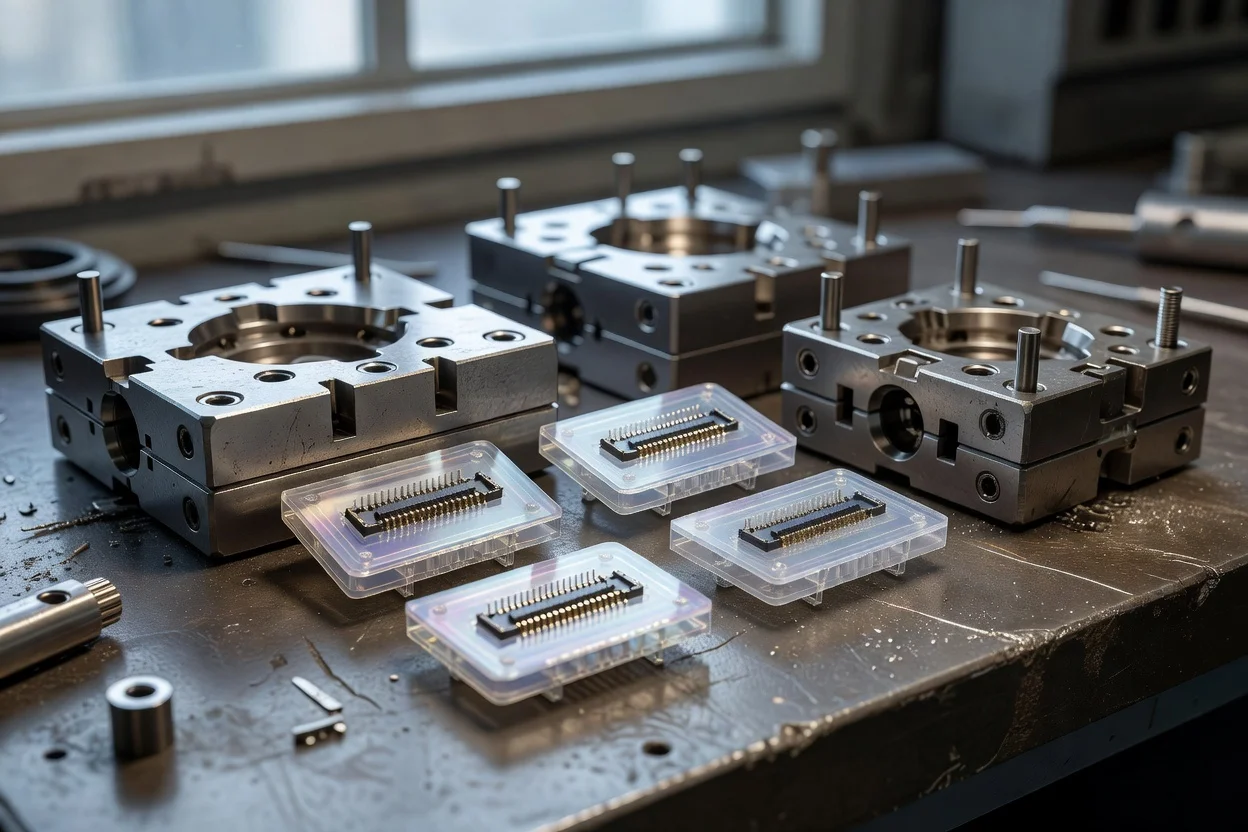
| Electronics and electrical connectors | Unfilled or reinforced molding grades | Injection molding | Thin-wall flow, heat resistance, dimensional precision, flame retardancy. |
| High-frequency communications | Film or laminate grades | Film extrusion, lamination | Low dielectric constant and low loss at high frequency. |
| Automotive electronics | Molding grades, often heat-stable | Injection molding | Connector reliability near hot zones and under vibration. |
| Medical devices | Biocompatible or sterilizable grades | Injection molding, precision molding | Dimensional stability, chemical resistance, sterilization tolerance. |
| Antennas and flexible circuits | Film grades | Film extrusion, patterning, lamination | Stable signal performance, low moisture uptake. |
| Fiber and thread applications | Specialty fiber grades | Spinning, drawing | High orientation, strength, and thermal stability. |
The strongest market pull comes from electronics, telecommunications, and semiconductor packaging, where miniaturized parts require materials that remain stable through solder reflow and high-frequency operation. LCP film is especially important in flexible circuit substrates and antenna modules for mobile devices and wearables.
A less natural fit is bulk structural parts that need high impact toughness and low cost; LCP’s value proposition is strongest in precision, thin-section, high-temperature, and high-frequency roles rather than general-purpose structural goods.
Environmental and Sustainability Aspects
LCP is not a bio-based commodity polymer, and its raw materials are generally derived from petrochemical aromatic feedstocks. As a result, its climate and circularity profile depends heavily on long service life, low mass per part, and whether it replaces heavier or less durable materials in demanding applications.
Sustainability considerations
- Recyclability: LCP can be reprocessed in some applications, and its thermal stability can allow regrind use in controlled manufacturing streams, but closed-loop recycling is limited by small volumes and contamination risks.
- Durability: Long service life can reduce replacement frequency, especially in electronics and automotive connectors.
- Light-weighting: Replacing metals or thicker thermoplastics can reduce part weight and material use.
- End-of-life complexity: The specialty nature of LCP-containing assemblies can complicate mechanical recycling and sorting.
- Bio-based alternatives: There is no widely established bio-based LCP at industrial scale comparable to mainstream commercial grades, though research continues into sustainable aromatic monomers and improved circularity pathways.
From a lifecycle perspective, the sustainability case for LCP is strongest when its performance enables smaller parts, thinner walls, lower failure rates, or material substitution that offsets its higher embodied production complexity.
Economic and Global Market Impact
Recent industry analyses place the LCP market in the billion-dollar range, with strong projected growth tied to electronics, medical devices, and telecommunications. One recent estimate put the global market at USD 1.75 billion in 2024, with growth projected to USD 5.11 billion by 2033. Another analysis estimated about USD 1.5 billion in 2025 and projected growth to more than USD 3.1 billion by 2034.
The market is geographically concentrated, with Asia Pacific accounting for the majority of demand in several reports, reflecting the region’s dominance in electronics manufacturing and component assembly. This regional concentration creates both opportunity and risk: demand growth is linked to consumer electronics cycles, but supply chains are also sensitive to semiconductor and connector manufacturing trends.
The highest-value growth areas are:
- 5G and next-generation wireless hardware.
- Semiconductor and connector packaging.
- Miniaturized medical and automotive electrical systems.
Current Challenges and Innovations
LCP’s core challenge is that the same structural features that produce performance advantages also create processing and design constraints, especially anisotropy and cost. For many engineers, the choice is not between LCP and a commodity plastic, but between LCP and another high-performance polymer, ceramic-filled resin, or metal-based solution.
Ongoing innovation themes
- Low-loss grades for mmWave and 5G: Development is focused on even lower dielectric loss and better signal integrity in high-frequency systems.
- Modified compound systems: Filled, reinforced, and blended grades are being tuned for connectors, LEDs, and thermal management.
- Film and laminate expansion: LCP film remains one of the most dynamic segments due to wearable electronics and flexible devices.
- Processing optimization: Mold-flow control, anisotropy management, and surface-treatment methods are improving part consistency.
- Circularity research: Interest is increasing in higher-value recycling, design-for-disassembly, and broader use of regrind where specifications allow.
Future Outlook
LCP is likely to remain a specialty growth polymer rather than a high-volume commodity, but its strategic importance is expected to increase as electronics continue to shrink and operating frequencies rise. The most attractive future markets are likely to include antenna-in-package structures, flexible circuits, high-density connectors, advanced sensor housings, and other parts where dimensional precision under thermal stress is essential.
Future growth will depend on several factors:
- Continued demand for high-frequency communications and low-loss substrates.
- Broader use in miniaturized automotive and medical electronics.
- Improvements in processability, adhesion, and recyclability.
- Development of new aromatic chemistries that preserve performance while improving sustainability and supply resilience.
Summary
LCP is a high-performance aromatic thermoplastic whose liquid-crystalline melt behavior enables exceptional orientation, heat resistance, dimensional stability, and electrical performance. Its principal commercial role is in precision electronics, high-frequency communications, and thin-wall engineered parts, with films, connectors, and specialized compounds representing the most important product forms. Despite sustainability and processing challenges, LCP remains one of the most important materials for advanced miniaturized hardware because it uniquely combines thermoplastic processability with near-ceramic performance in selected applications.
References
- •
Liquid crystal polymer - An overview. (n.d.). https://www.sciencedirect.com/topics/materials-science/liquid-crystal-polymerLink
- •
Liquid-crystal polymer. (2006, April 12). https://en.wikipedia.org/wiki/Liquid-crystal_polymerLink
- •
Liquid crystal polymer (LCP): Properties, types and processing. (2025, June 13). https://www.useon.com/liquid-crystal-polymer/Link
- •
Liquid crystalline polymer - An overview. (n.d.). https://www.sciencedirect.com/topics/engineering/liquid-crystalline-polymerLink
- •
What is liquid-crystal polymer? (2022, May 17). https://www.xometry.com/resources/materials/liquid-crystal-polymer/Link
- •
Liquid crystal polymer (LCP). (2023, August 17). https://www.rtpcompany.com/products/product-guide/liquid-crystal-polymer-lcp/Link
- •
Liquid crystal polymers. (2017, April 29). https://www.azom.com/article.aspx?ArticleID=13872Link
- •
LCP - PAGEV. (n.d.). https://pagev.org/lcp-enLink
- •
An up-to-date overview of liquid crystals and liquid crystal polymers. (2024, August 14). https://pmc.ncbi.nlm.nih.gov/articles/PMC11359798/Link
- •
Current trends in liquid crystal polymers and their applications. (2024, May 25). https://www.worldscientific.com/doi/10.1142/S2251237324300031Link
- •
Vectra liquid crystal polymer (LCP). (n.d.). https://www.celanese.com/-/media/Engineered%20Materials/Files/Product%20Technical%20Guides/LCP-027_VectraLCPDesignGuideTG_AM_0613.pdfLink
- •
LCP plastic. (n.d.). https://www.ensingerplastics.com/en-us/thermoplastic-materials/lcp-plasticLink
- •
Liquid crystal polymer LCP - Application. (n.d.). https://www.swicofil.com/commerce/products/lcp/209/applicationLink
- •
Liquid crystal polymer (LCP) for next-generation high-speed communication applications. (n.d.). https://www.sumitomo-chem.co.jp/english/rd/report/2024E_1.pdfLink
- •
LCP injection molding. (2023, September 26). https://www.fictiv.com/articles/lcp-injection-moldingLink
- •
LCP film: Enabling 5G, wearables, and aerospace advances. (2024, October 28). https://www.samaterials.com/content/lcp-film-enabling-5g-wearables-and-aerospace-advances.htmlLink
- •
Liquid-crystalline polymers. (n.d.). https://pubs.acs.org/doi/pdf/10.1021/bk-1990-0435.ch001Link
- •
Epoxies for liquid crystal polymer (LCP). (n.d.). https://www.masterbond.com/applications/liquid-crystal-polymers-lcpLink
- •
Liquid crystal polymer. (n.d.). https://www.sumitomo-chem.co.jp/sep/download/files/pdf/Technical_Note_SUMIKASUPER_EN.pdfLink
- •
Liquid crystal polymer resin: Advanced material properties and applications. (n.d.). https://eureka.patsnap.com/materials/liquid-crystal-polymer-resinLink
- •
Liquid crystal polymer high performance polymer. (n.d.). https://eureka.patsnap.com/materials/liquid-crystal-polymerLink
- •
Liquid crystal polymer (LCP) films and laminates market. (2024, November 16). https://www.reanin.com/reports/liquid-crystal-polymer-films-and-laminates-marketLink
- •
LCP introduction to liquid crystal polymers. (n.d.). https://www.zeusinc.com/wp-content/uploads/2023/09/Technical-Paper-Introduction-to-LCP-V1R1.pdfLink
- •
Polymers in liquid crystal displays (LCDs). (2025, October 22). https://www.intechopen.com/chapters/1171766Link
- •
Applications of LCP plastic material: Revolutionizing industries. (2025, March 19). https://en.wotlon.com/Blog_details/1902183325369159680.htmlLink
- •
LCP injection molding: Complete processing guide for manufacturers. (n.d.). https://zetarmold.com/lcp-injection-molding/Link
- •
Liquid crystal polymer material: Comprehensive analysis and applications. (n.d.). https://eureka.patsnap.com/materials/liquid-crystal-polymer-materialLink
- •
Uses of liquid crystal polymer (LCP) films in electronics. (n.d.). https://infinitamaterials.com/blog/uses-of-liquid-crystal-polymer-lcp-films-in-electronic-industry/Link
- •
Liquid crystal polymer market size, share report 2025-2033. (n.d.). https://www.grandviewresearch.com/industry-analysis/liquid-crystal-polymers-marketLink
- •
Liquid crystal polymer market | Global market analysis report - 2036. (2026, March 31). https://www.factmr.com/report/3968/liquid-crystal-polymer-marketLink
- •
The liquid crystal revolution. (2024, May 6). https://www.bccresearch.com/pressroom/pls/the-liquid-crystal-revolutionLink
- •
Liquid crystal polymers (LCP) market. (2025, April 17). https://prismaneconsulting.com/report-details/global-liquid-crystal-polymers-lcp-market-studyLink
- •
Liquid crystal polymer (LCP) | Vectra® & Zenite®. (n.d.). https://www.celanese.com/products/lcp-vectra-zeniteLink