
Introduction
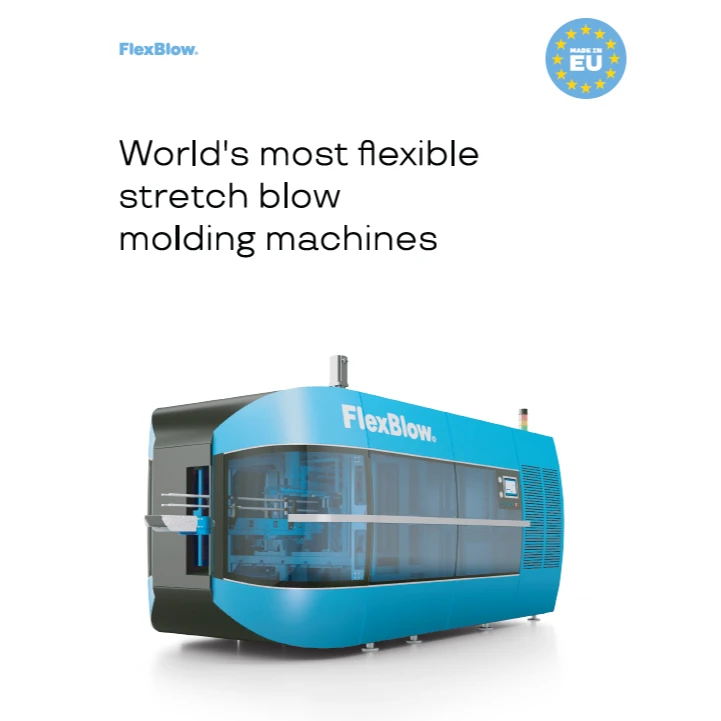
(Reheat) stretch blow molding machines are two-stage machines used to convert injection-molded polymer preforms into hollow containers, most commonly PET bottles for beverages, food, personal care, and household products. In the reheat process, preforms are first cooled and stored, then reheated—typically by infrared lamps or similar thermal modules—before being axially stretched and biaxially blown inside a mold to form the finished container.
This machine class is closely associated with high-clarity, high-strength, lightweight packaging, especially where precise neck finishes, good barrier performance, and strong top-load or pressure resistance are required. Compared with one-step injection stretch blow molding, the reheat route separates preform making from bottle forming, allowing production flexibility, higher throughputs, and large-scale bottle manufacturing on dedicated bottle lines.
Technically, reheat stretch blow molding systems range from compact semi-automatic units to large rotary or linear fully automatic platforms with multiple cavities, high-speed preform transfer, zoned infrared heating, and process monitoring for temperature uniformity and wall-thickness control. They remain especially important in PET packaging, though development continues in heating control, energy efficiency, preferential heating for non-round containers, and digital automation.
History and Development
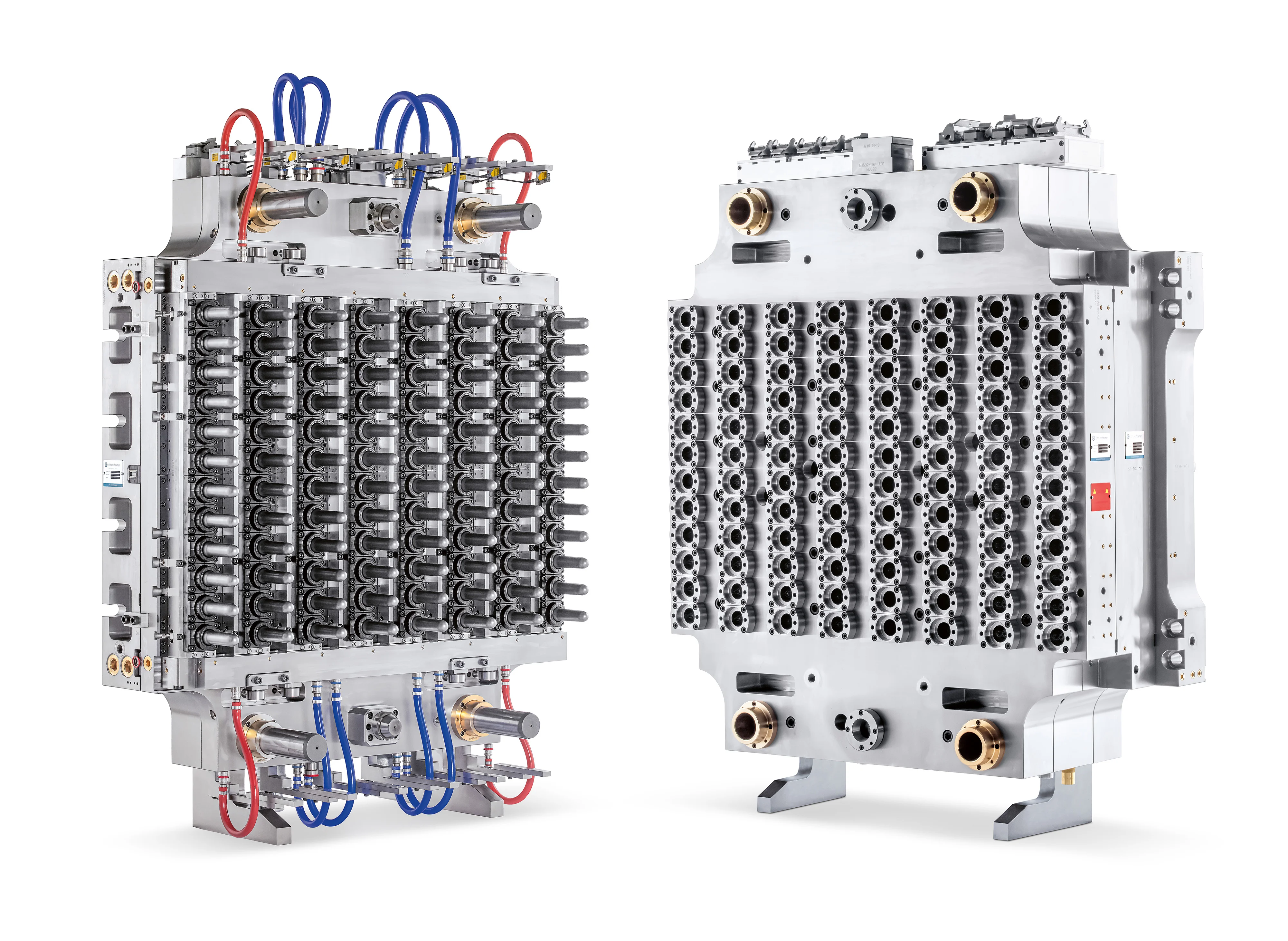
The reheat stretch blow molding route emerged as PET bottle packaging expanded after the industry recognized the advantages of biaxial orientation in improving strength, clarity, and gas-barrier performance. The process became particularly important as beverage brands required lighter bottles with better performance than conventional non-stretch blow molding could provide.
A key milestone was the transition from early stretch blow concepts to separated two-stage production, where preforms are injection molded in one operation and later reheated for bottle formation in a dedicated machine. This architecture enabled preform inventory, centralized preform production, and global shipping of standardized preforms to remote bottling plants.
Another milestone was the adoption of continuous-motion and rotary preform reheating systems, using infrared heating zones and controlled transport between heating and blow stations. This improved temperature consistency and cycle stability, which are critical for bottle weight reduction and neck/cavity accuracy.
A further development has been the move toward high-speed multi-cavity systems and more advanced control of heating profiles, including individualized heating zones and quick-change tooling for smaller batch flexibility. These improvements support both commodity beverage packaging and more specialized container geometries such as hot-fill bottles, large-volume oil containers, and returnable or heat-set PET formats.
Key Characteristics and Technical Overview
Reheat stretch blow molding machines operate in four main stages: preform loading, reheating, axial stretching, and high-pressure blowing into a chilled mold. The preform is reheated above the glass-transition range of PET so it can be stretched without tearing, then oriented in both the axial and hoop directions during blowing, which improves mechanical properties and often reduces material usage.
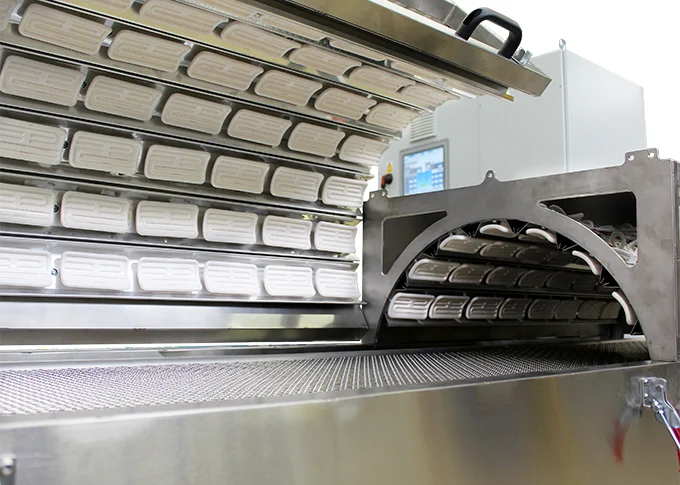
The heating system is one of the most important subsystems. Most machines use infrared heating lamps arranged in multiple zones so the operator can tune the thermal profile along the preform length. Uniformity matters because the finish, shoulder, body, and base typically need different energy inputs to control final wall distribution.
Typical technical characteristics include:
- Throughput: Compact machines may run around 1,700–2,300 bottles/hour per 2-cavity configuration, while larger industrial systems can exceed 10,000 bottles/hour and high-speed multi-cavity machines can reach roughly 16,800–19,200 bottles/hour in certain bottle sizes.
- Cavity count: Common formats include 1-, 2-, 4-, 6-, 8-, 10-, and 12-cavity configurations, depending on bottle size and speed target.
- Bottle size range: Systems may produce from small containers around 0.1–0.6 L up to 2 L, 3 L, 5 L, or even 5-gallon bottles on specialized machines.
- Heating architecture: Multi-zone infrared ovens with individually adjustable zones are common, and some machines advertise quick-change ovens for faster product changeover.
- Blowing pressure: Machine documentation commonly refers to high-pressure blow air in the range of about 30 bar for the forming stage.
- Heat-setting capability: Some two-step systems add secondary heat-processing or heat-setting steps for hot-fill or heat-resistant PET containers.
Performance depends strongly on temperature profile control. Industry and patent literature emphasize measuring or inferring preform temperature across transport from heater to mold so the machine can correct for cooling losses and preserve repeatability. Recent research also highlights intelligent temperature control as a key path to more stable wall thickness and lower scrap rates.
Where energy data are disclosed, the largest thermal load is usually the reheating stage, since the process must raise the preform from storage temperature to blowing temperature before deformation. Energy consumption therefore depends heavily on oven efficiency, lamp selection, thermal shielding, line speed, and the use of preferential heating strategies for asymmetric containers.
Types and Variations
| Type | Main feature | Typical use |
|---|---|---|
| Semi-automatic reheat stretch blow molding machine | Manual or assisted preform handling, lower capital cost | Small plants, pilot runs, specialty bottles |
| Fully automatic linear machine | Sequential transfer, moderate-to-high output, simpler maintenance | Medium-volume PET bottle production |
| Fully automatic rotary machine | Continuous motion, high cavity count, high output | Large beverage and water bottling lines |
| Heat-set / hot-fill variant | Additional thermal conditioning for dimensional stability | Hot-fill juices, sauces, tea, isotonic drinks |
| Large-volume container machine | Designed for bigger preforms and bottles | 5 L oil bottles, wide-mouth containers, 5-gallon bottles |
| Specialty contour / asymmetric machine | Preferential heating control | Flat, oval, handled, or unusual-shaped containers |
Semi-automatic systems are often favored where production volumes are lower or where frequent recipe changes make full automation less economical. By contrast, high-speed rotary platforms are used when bottle demand is continuous and large, especially for water and carbonated soft drinks.
A separate but related distinction is between standard reheat machines and heat-stabilized two-step systems. The latter apply additional controlled heating and cooling to produce bottles suitable for elevated filling temperatures and improved dimensional stability.
Applications and Uses
Reheat stretch blow molding machines are used across packaging segments that demand clarity, lightweighting, and dimensional precision.
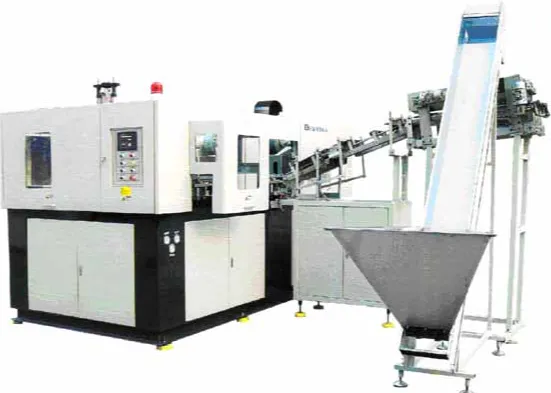
- Carbonated soft drinks: A core application, because biaxially oriented PET handles internal pressure and supports high-speed bottle production.
- Still water: High-volume commodity packaging often relies on high-speed rotary machines for low-cost, lightweight bottles.
- Juices and hot-fill beverages: Heat-set variants are used when container stability must be maintained at elevated filling temperatures.
- Personal care and cosmetics: The process supports attractive, clear, and custom-shaped bottles with precise neck finishes.
- Household chemicals and detergents: PET bottles are used where chemical resistance and appearance are important, though compatibility depends on formulation.
- Pharmaceutical and medical packaging: Clean, precisely formed containers and closures benefit from the process’s dimensional consistency.
- Edible oils and food containers: Larger-volume machines are used for oil bottles, including handled formats.
- Poor-fit use: The process is generally not ideal for very small, thick-walled technical parts that need high temperature resistance and are better served by injection molding or other rigid-container technologies.
For unusual shapes, flat or oval bottles, and some color- or barrier-sensitive formats, manufacturers may use preferential heating controls and customized preform designs to balance material distribution and final geometry.
Technological Innovations and Automation
Modern machines increasingly use servo drives, electronic temperature control, predictive monitoring, and recipe-based setup to improve repeatability and reduce operator dependence. Automatic cavity balancing and zone-by-zone lamp control help maintain the thermal profile when production speed changes or preform geometry varies.
Another important innovation is preferential heating, which allows localized heating differences around the preform circumference or length so that non-uniform bottles can be formed more accurately. This is especially relevant for oval or asymmetrical bottles, where standard uniform heating may cause distortion.
Machine builders also focus on fast changeover, tool modularity, and integrated line control. Some compact systems advertise quick-change ovens and short mold changeover times to improve responsiveness in short-run markets. For larger plants, digital interfaces and in-line diagnostics support higher uptime and more stable quality control.
Environmental and Sustainability Aspects
Reheat stretch blow molding supports sustainability mainly through lightweighting: biaxial orientation allows PET bottles to achieve needed performance with less resin than older container designs. Lower bottle mass reduces material consumption, shipping weight, and associated logistics emissions.
Energy use remains a central trade-off. Because the process reheats preforms before forming, it requires significant thermal input, and oven efficiency is therefore a major sustainability lever. Improvements in lamp efficiency, reflective design, and thermal zoning can reduce wasted heat and improve specific energy consumption.
The process is also compatible with circular economy strategies when paired with recycled PET supply chains, preform redesign for lower resin use, and improved sorting and wash systems upstream. At the machine level, lower reject rates and tighter temperature control reduce scrap and resin waste.
For some product classes, one-step systems can eliminate separate preform storage and reheating, but two-step reheat machines remain dominant where scale, logistics, and product flexibility matter more than process consolidation.
Economic and Global Market Impact
Economically, reheat stretch blow molding machines are central to the global PET bottle economy because they enable high-volume, standardized packaging with strong economics at scale. Beverage, food, and personal care producers rely on these machines either in-house or through contract packers to support continuous production.
The market is shaped by a few major machine families and suppliers, with manufacturers such as Sidel, Krones, Krupp Corpoplast, ASB, Tech-Long, FlexBlow, and others associated with specific machine classes or regional strengths. Their roles are especially visible in high-speed rotary systems, heat-set platforms, and specialized two-step lines.
Capital cost varies widely with cavity count, automation level, and bottle size range. Smaller semi-automatic systems reduce entry cost, while large high-speed lines justify their investment through high throughput, lower unit labor cost, and better consistency. For many packaging converters, machine selection is therefore a strategic decision balancing output, flexibility, energy use, and maintenance complexity.
Current Challenges and Innovations
The main technical challenge is uniform heat distribution in the preform, because even small temperature differences can cause wall-thickness variation, hazing, or weak bottle regions. This is especially important for lightweight bottles, where there is less material margin for error.
A second challenge is process sensitivity. Reheat stretch blow molding is influenced by preform design, ambient conditions, oven aging, transport timing, mold cooling, and air pressure stability. As bottle weights continue to fall, the process window narrows.
A third challenge is the growing demand for more complex container geometries. Flat, oval, handled, and heat-resistant containers often require preferential heating, customized molds, and more advanced preform engineering.
Current innovation directions include:
- more precise infrared spectral control,
- smarter thermal feedback and machine learning-based monitoring,
- reduced energy loss in ovens and transfer zones,
- better integration with lightweight preform design,
- improved handling of recycled-content PET,
- faster changeover between bottle families.
Future Outlook
Reheat stretch blow molding machines are likely to remain the dominant platform for large-scale PET bottle production because they combine speed, precision, and supply-chain flexibility. Future growth will depend less on basic forming principles and more on smarter heating, lower-energy operation, and better support for recycled and specialty materials.
The most important technical direction is closed-loop temperature control, which should help stabilize container quality as bottle walls become thinner and geometries more demanding. At the same time, energy efficiency improvements will remain central as converters respond to cost pressure and sustainability targets.
Another likely trend is broader support for non-standard formats such as asymmetric, refillable, and hot-fill containers, where preferential heating and advanced preform engineering can extend the process beyond traditional round beverage bottles.
References
- •
Reheat Pet Stretch Blow Molding Machinery (1700-2300 bottles/hour, 0.6L, 2 cavity). (2025, October 16). Made-in-China.com. https://blow-molding-machine.en.made-in-china.com/product/xqoEeGUAqIch/China-Reheat-Pet-Stretch-Blow-Molding-Machinery-1700-2300-Bottles-Hour-0-6L-2-Cavity-.htmlLink
- •
FlexBlow Model FB2 PET Reheat Stretch Blow Molding Machine. (2023, May 16). Internationalpack.com. https://www.internationalpack.com/product/flexblow-model-fb2-pet-reheat-stretch-blow-molding-machine/Link
- •
Blow Molding Process Comparison: Reheat Stretch Blow. (2010, April 7). Wilmingtonmachinery.com. https://wilmingtonmachinery.com/blow-molding-process-reheat-stretch-blow/Link
- •
Three-cavity blow molder - W. Amsler. (2010, August 26). Machinedesign.com. https://www.machinedesign.com/markets/packaging/article/21832684/three-cavity-blow-molder-w-amslerLink
- •
Reheat Stretch Blow Moulding for sale at PETmachinery Ltd. (n.d.). Petmachinery.com. https://www.petmachinery.com/reheat-stretch-blow-mouldingLink
- •
Tech-Long Model CPX (6) Cavity PET Reheat Stretch Blow Molding Machine. (2024, February 8). Internationalpack.com. https://www.internationalpack.com/product/tech-long-model-cpx-6-cavity-pet-reheat-stretch-blow-molding-machine/Link
- •
Siapi EA7/4 PET Reheat Stretch Blow Molding Complete Line and Molds. (2021, March 19). Internationalpack.com. https://www.internationalpack.com/product/siapi-model-ea7-4-pet-reheat-stretch-blow-molding-machine-with-molds-complete-line/Link
- •
FlexBlow 4-Cavity Reheat & Stretch Bl... #6438 | Meadoworks. (2026, March 30). Meadoworks.com. https://www.meadoworks.com/equipment/blow-molding-machinery/flexblow-6438Link
- •
High-Speed 5 Ltr Reheat Stretch Blow Molding Machine. (2025, February 14). Cnziqiang.com. https://www.cnziqiang.com/products/bottle-blowing-machine/72.htmlLink
- •
Reheat Stretch Blow Molding Machines. (n.d.). Packaging-equipment-sales.com. https://www.packaging-equipment-sales.com/Reheat-Stretch-Blow-Molding-Machines.htmlLink
- •
How Does a One-Step ISBM Machine Work? The Full Process from Resin to Finished Bottle Explained. (2026, March 17). Onestepblowmachine.com. https://onestepblowmachine.com/application/how-does-a-one-step-isbm-machine-work-the-full-process-from-resin-to-finished-bottle-explained/Link
- •
Blomax Archives - International Packaging Company. (2013, September 1). Internationalpack.com. https://www.internationalpack.com/product-tag/blomax/Link
- •
Sidel SBO 8/10 Archives - International Packaging Company. (2013, September 1). Internationalpack.com. http://www.internationalpack.com/product-tag/sidel-sbo-8-10/Link
- •
Reheat Pet Stretch Blow Molding Machine Price (ZQ-B600-4). (2019, October 5). Made-in-China.com. https://blow-molding-machine.en.made-in-china.com/product/vSQEXwKlEYki/China-Reheat-Pet-Stretch-Blow-Molding-Machine-Price-ZQ-B600-4-.htmlLink
- •
Century Packaging Ltd. (2008, January 1). Centurypackaging.com. https://www.centurypackaging.com/Link
- •
Taizhou Fupusi Machinery CO .,LTD – Over 15 years. (2024, October 15). Fupusiblowmachine.com. https://fupusiblowmachine.com/Link
- •
Blow molding. (2005, June 12). Wikipedia. https://en.wikipedia.org/wiki/Blow_moldingLink
- •
The HSO Series machines from ASB are Two-Step reheat. (n.d.). Asbindia.com. https://asbindia.com/hso1.htmlLink
- •
Blow Moulding Machine in Karnal - Durable, Efficient, High-Quality. (2026, August 22). Justdial.com. https://www.justdial.com/jdmart/Karnal/Blow-Moulding-Machine/jdm-1009832-ent-2-22314661Link
- •
Used Sbo 12 for sale. Sidel equipment & more | Machinio. (2008, June 1). Machinio.com. https://www.machinio.com/cat/sbo-12Link
- •
Blow Molding: Reheat. (2011, January 1). Blowmolding.org. http://www.blowmolding.org/bmreheat.htmlLink
- •
Used Krupp Corpoplast for sale. Krupp equipment & more | Machinio. (2000, June 1). Machinio.com. https://www.machinio.com/manufacturer/krupp-corpoplastLink
- •
Fully/Semi Automatic Series Reheat Stretch Blow Moulding Machine. (n.d.). Weiliplastics.com. http://weiliplastics.com/main/spec/WL-PC-MP-V11-110510.pdfLink
- •
MANUAL 120726 BLOW MOULDING.pdf. (2025, May 8). Scribd. https://www.scribd.com/document/379446331/MANUAL-120726-BLOW-MOULDING-pdfLink
- •
Pet Blow Molding Machine Manufacturers in Toronto. (n.d.). Petallmfg.com. https://www.petallmfg.com/pages/products/pet-blow-molding-machinesLink
- •
Manual 120726 Blow Moulding | PDF | Valve. (2026, February 4). Scribd. https://www.scribd.com/document/337105254/Manual-120726-Blow-MouldingLink
- •
Understanding Energy Saving Thinget Bottle Blowing Machine. (2026, March 13). Alibaba.com. https://www.alibaba.com/product-insights/energy-saving-thinget-bottle-blowing-machine.htmlLink
- •
Semi-Auto 5 Gallon Bottle Blow Molding Machine. (n.d.). Jndmachine.com. https://jndmachine.com/1-1-3-semi-auto-reheat-stretch-blow-molding-machine.htmlLink
- •
Pre-form reheat oven for stretch blow molding machines. (1999, December 24). Patents.google.com. https://patents.google.com/patent/US3995990A/enLink
- •
Preform reheating oven system |The IR Heating Experts Team. (2026, June 1). Ir-heating-team.com. https://ir-heating-team.com/en/posts/preform-reheating-oven-system/Link
- •
Method and device for determining temperature profiles throughout the thickness of a polymer preform, method for manufacturing containers using a reheat stretch blow molding process and reheat stretch blow molding machine. (2003, February 27). Patents.google.com. https://patents.google.com/patent/EP1342550B1/enLink
- •
PET bottle life cycle and NIR heating technology - PETnology online. (2024, January 6). Petnology.com. https://www.petnology.com/online/news-detail/pet-bottle-life-cycle-and-nir-heating-technologyLink
- •
Injection Blow Molding: Blow Moulding Products Manufacturing. (2023, August 17). Sungplastic.com. https://sungplastic.com/injection-blow-molding-manufacturing/Link
- •
stretch blow moulder Factory,Exporter. (2024, November 12). Moldingmachinetepai.com. https://www.moldingmachinetepai.com/productstags/stretch-blow-moulder.htmlLink
- •
[PDF] A literature survey of the influence of preform reheating and stretch. (n.d.). Semanticscholar.org. https://pdfs.semanticscholar.org/0c64/ebe6fa76161b1edf70435fdc792100f69985.pdfLink
- •
Carbon black with large primary particle size as reheat additive for polyester and polypropylene resins. (2012, January 3). Patents.justia.com. https://patents.justia.com/patent/8436086Link
- •
Blow Molding. (2025, July 22). Scribd. https://id.scribd.com/document/83322408/Blow-MoldingLink
- •
Blow Molding Machine. (2024, August 27). Celduc-relais.com. https://www.celduc-relais.com/en-us/blow-molding-machine/Link
- •
Guide to Blow Molding. (n.d.). Formlabs.com. https://formlabs.com/blog/blow-molding/Link
- •
Intelligent Temperature Control of a Stretch Blow Molding Machine. (2023, June 22). Mdpi.com. https://www.mdpi.com/2227-9717/11/7/1872Link
- •
Guide to Injection Stretch Blow Molding: Advantages and Applications. (2025, July 29). Full-shine.com. https://www.full-shine.com/guide-to-injection-stretch-blow-molding-advantages-and-applicationsLink
- •
Here Is Everything You Need to Know About Blow Molding. (2019, March 26). Maycointernational.com. https://maycointernational.com/here-is-everything-you-need-to-know-about-blow-molding/Link
- •
Plastics Blow Moulding 101. (2017, December 29). Ulprospector.com. https://www.ulprospector.com/knowledge/7594/pe-blow-moulding-101/Link
- •
Stretch Blow Molding Machines Market - Future Market Insights. (2026, January 22). Futuremarketinsights.com. https://www.futuremarketinsights.com/reports/stretch-blow-molding-machine-marketLink