
Introduction
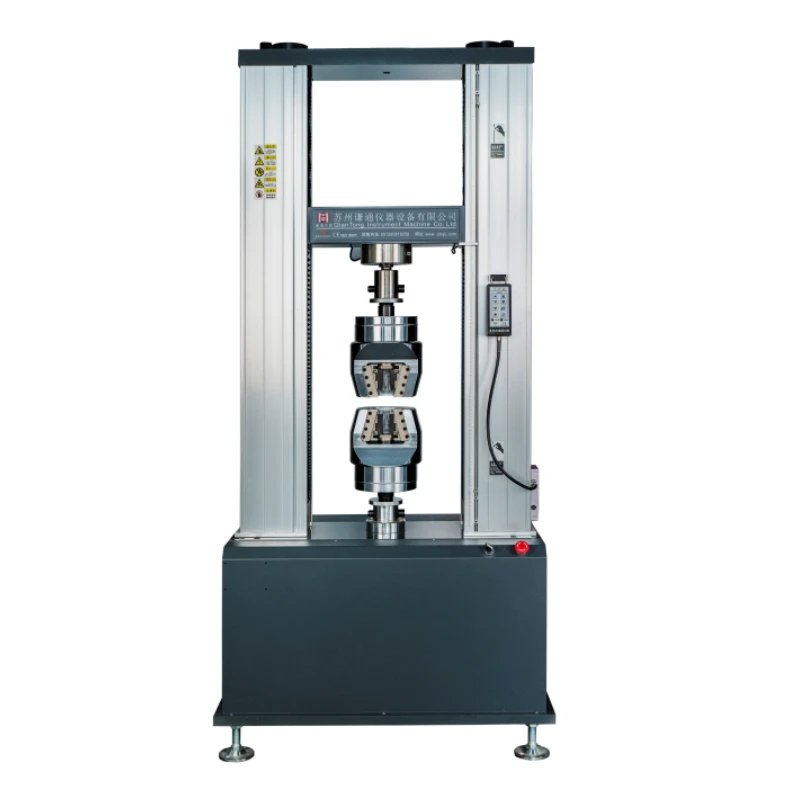
Measuring and testing equipment for mechanical or dynamic properties comprises the laboratory and production-floor instruments used to quantify how materials and components respond to force, deformation, impact, vibration, cyclic loading, and time-dependent stress. In the plastics industry, this equipment is central to polymer qualification, process validation, incoming inspection, failure analysis, and product development, because it links material formulation and processing history to real performance in service.
The category spans universal testing machines, dynamic and fatigue testing systems, impact testers, hardness testers, friction and wear testers, and dynamic mechanical analyzers (DMA), alongside fixtures, extensometers, environmental chambers, and specimen-preparation tools. For plastics, these systems are especially important because viscoelasticity, temperature sensitivity, strain rate, crystallinity, orientation, filler content, and aging can all alter mechanical behavior in ways that static tests alone do not fully capture.
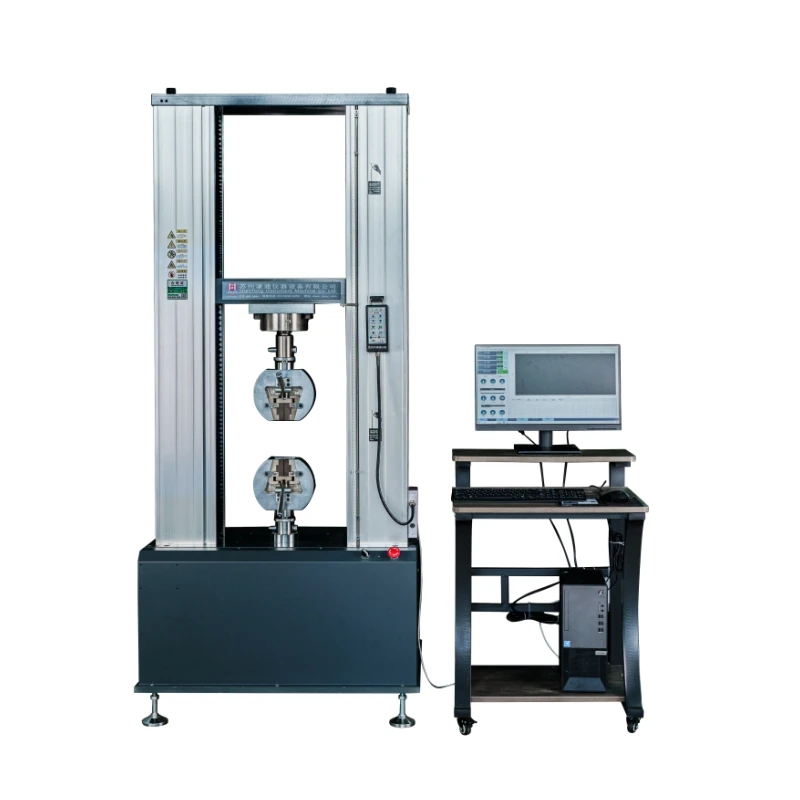
Historically, the field developed from simple lever-and-weight testers into servo-controlled electromechanical and servohydraulic systems capable of precise load, displacement, and frequency control, while modern digital instrumentation added automated reporting, closed-loop control, and compliance with internationally standardized methods. Current platforms increasingly integrate robotics, environmental conditioning, and data analytics, while future growth is likely to center on higher-throughput automation, more realistic multi-axial loading, and tighter links to digital quality systems and Industry 4.0 workflows.
History and Development
Mechanical testing began with basic tensile and impact methods used to compare material strength and brittleness, then evolved into standardized laboratory practice as plastics, metals, rubber, textiles, and composites became industrial materials requiring repeatable qualification methods. In plastics, the rise of polymer engineering made it necessary to measure not only ultimate strength but also modulus, creep, stress relaxation, damping, and temperature-dependent transitions.
Key development milestones include:
- The adoption of universal testing machines for tensile, compression, bending, and shear testing, which established a versatile platform for standardized mechanical characterization across many material classes.
- The growth of dynamic mechanical analysis and dynamic fatigue testing, which made it possible to study viscoelastic properties, cyclic durability, and frequency- and temperature-dependent behavior that are especially relevant to polymers and elastomers.
- The expansion of automated and computer-controlled systems, including servo-electric, servohydraulic, and linear-motor drives, which improved test precision, repeatability, and the ability to simulate service conditions over a wider load range.
Key Characteristics and Technical Overview
Mechanical and dynamic test equipment is generally defined by the loading mode it applies, the property it measures, and the control variables it can maintain. Common control modes include force control, displacement control, strain control, and cyclic waveform control.
Main measurement principles
- Tensile and compression testing measure strength, yield, elongation, modulus, and deformation behavior under monotonic loading.
- Flexural testing evaluates bending stiffness and flexural strength, which are important for sheet, profile, and molded-part performance.
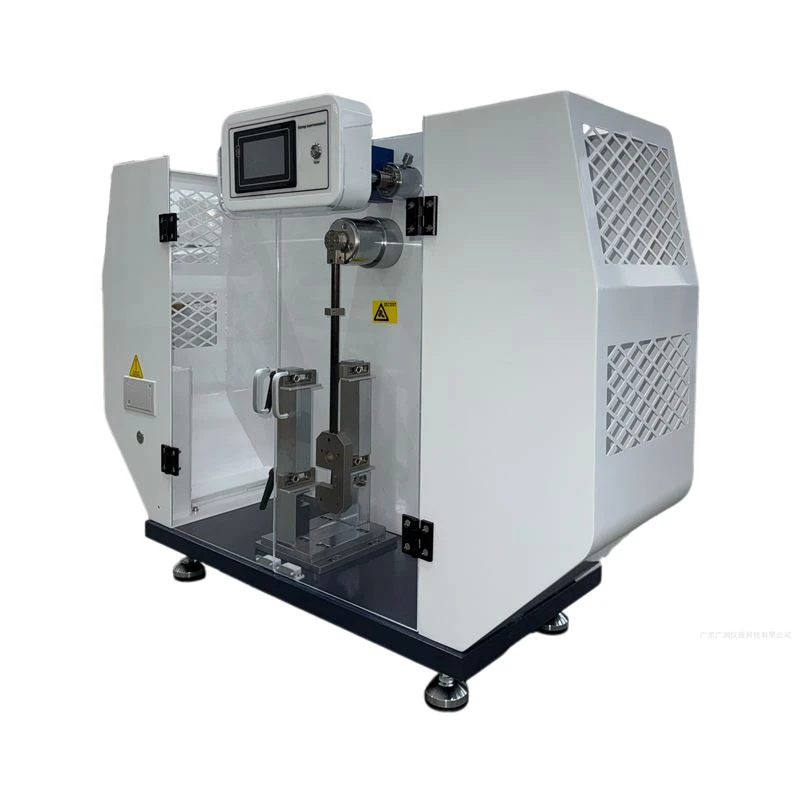
- Impact testing measures energy absorption and brittle-versus-ductile response under high-rate loading, commonly via Charpy or Izod methods.
- Hardness testing estimates resistance to indentation or scratching, often as a fast quality-control proxy for surface condition or cure state.
- Fatigue testing subjects a specimen or component to repeated loading to estimate life under cyclic service conditions.
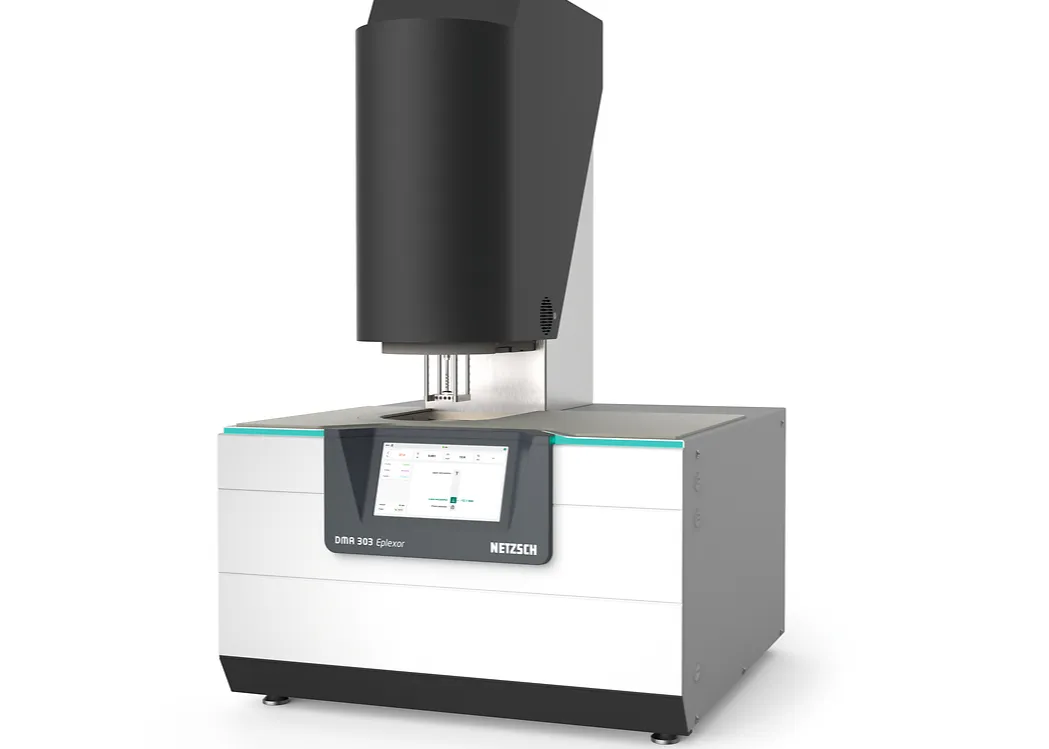
- Dynamic mechanical analysis (DMA) applies small oscillatory deformation to determine storage modulus, loss modulus, damping behavior, relaxation, and transition temperatures such as glass transition.\(\)
Typical technical ranges and benchmarks
- Universal testing machines for laboratory plastics work are commonly configured with single- or dual-column frames, load cells, grips, and extensometers; dynamic systems for fatigue and fracture mechanics are available from small force ranges up to very high-capacity frames.
- Dynamic testing systems may use servohydraulic, servo-electric, or linear-motor drive technologies depending on required force, frequency, and waveform fidelity.
- DMA instruments typically operate with small periodic deformations over controlled temperature and frequency ranges to separate elastic and viscous response.
- In plastics and rubber characterization, DMA is used to quantify storage modulus \(E'\), loss modulus \(E''\), and loss tangent \(\tan \delta\), which are especially valuable for damping and transition analysis.
- Dynamic validation rigs for plastic parts may operate in frequency ranges such as 5 Hz to 500 Hz, depending on the test stand and application.
- Dynamic characterization of polymers often uses servohydraulic fatigue testers and DMA because they capture deformation behavior under frequencies and temperatures similar to service conditions.
Practical performance notes
- Flake or specimen preparation matters: poor cutting, machining, or conditioning can distort results, especially for thin films, laminates, and filled plastics.
- Environmental chambers are frequently used when temperature dependence is significant, because plastics may stiffen, soften, embrittle, or relax across service temperatures.
- Extensometers and strain measurement devices are critical when accurate modulus and elongation values are required, since crosshead displacement alone may overstate strain in compliant materials.
Types and Variations
| Equipment class | Primary property measured | Typical use in plastics |
|---|---|---|
| Universal testing machine | Tensile, compression, flexural, shear properties | Resins, molded parts, films, sheets, pipes, composites |
| Dynamic mechanical analyzer | Viscoelasticity, damping, transition behavior | Thermoplastics, thermosets, elastomers, filled polymers |
| Fatigue testing system | Cyclic durability, crack growth, life prediction | Structural plastic parts, joints, elastomeric components |
| Impact tester | Toughness, notch sensitivity, brittle failure | Sheets, profiles, housings, packaging, compounds |
| Hardness tester | Surface resistance to indentation or scratching | Finished parts, coatings, foams, films, elastomers |
| Friction and wear tester | Coefficient of friction, abrasion resistance | Sliding parts, films, packaging, coatings |
| Torsion and multi-axis system | Twist response, combined loading | Fasteners, connectors, rotating components |
Variants are often distinguished by drive technology, force capacity, temperature capability, and degree of automation. For plastics, electromechanical systems are common in routine quality control, while servohydraulic or electrodynamic systems are preferred when high force, high frequency, or complex cyclic loading is required.
Applications and Uses
Mechanical and dynamic testing equipment is used across the plastics value chain, from resin development to finished-part qualification.
- Polymer R&D uses DMA, tensile testing, and fatigue testing to understand formulation effects, filler reinforcement, plasticizer response, and thermal transitions.
- Injection molded parts are evaluated for tensile strength, impact resistance, warpage-related stiffness changes, and cyclic durability.
- Film and packaging materials are commonly tested for tensile behavior, tear resistance, puncture resistance, coefficient of friction, and impact performance.
- Profiles, pipes, and structural plastics are assessed for flexural rigidity, creep, long-term load response, and fracture behavior.
- Rubber and elastomers are frequently characterized with DMA and dynamic fatigue systems to determine damping and repeated-strain durability.
- Composites and filled compounds require dynamic testing because reinforcement, fiber orientation, and matrix-filler interaction strongly affect stiffness and fatigue life.
One poor-fit use is simple final visual inspection, where mechanical test equipment is unnecessarily complex and does not replace dimensional or cosmetic checks.
Standards, Methods, and Compliance
Mechanical property testing in plastics is closely tied to standardized methods, which improve comparability between labs, plants, and suppliers.
- ISO 527 and related standards are widely used for tensile properties of plastics.
- ISO 178 is commonly used for flexural properties of plastics.
- ISO 179 and ISO 180 are widely associated with impact testing of plastics.
- ISO 6721 covers dynamic mechanical properties of plastics by DMA methods.
- Rubber and elastomer dynamic behavior is also standardized under methods such as ISO 4664-1 and related ASTM procedures.
Because results are strongly affected by specimen geometry, conditioning, strain rate, and temperature, compliance work usually requires controlled sample preparation and disciplined calibration of load, displacement, temperature, and frequency channels.
Technological Innovations and Automation
Automation has become a defining feature of modern mechanical test systems, particularly where laboratories must process large batches or integrate test data with manufacturing execution systems.
- Automated specimen handling reduces operator variation and improves repeatability in high-volume QC environments.
- Closed-loop control allows precise force, displacement, and waveform execution during cyclic testing.
- Environmental chambers extend testing into realistic service temperatures and humidities.
- Digital data acquisition supports real-time curve analysis, statistical reporting, and traceability.
- Multi-axis and combined loading systems better represent service conditions for components exposed to torsion, bending, and vibration simultaneously.
In plastics, these advances are valuable because viscoelastic response is highly sensitive to test history, making digital control and standardized data handling especially important.
Environmental and Sustainability Aspects
Mechanical and dynamic testing affects sustainability in two directions: it can reduce waste by improving material qualification, but it also consumes energy and can generate rejected specimens.
- Better testing helps avoid premature part failure, reducing scrap, warranty returns, and overdesign.
- DMA and fatigue testing support material substitution decisions, such as using lighter or more recyclable polymers while preserving performance.
- Automated systems can lower repeat testing and improve laboratory efficiency, though high-force servohydraulic platforms may have greater energy demand than simpler electromechanical frames.
- More accurate durability testing supports circular-economy goals by extending service life and validating recycled or reprocessed polymers under realistic conditions.
A practical sustainability trade-off exists: more comprehensive dynamic testing can increase laboratory time and resource use, yet it often prevents much larger downstream material losses in production and service.
Economic and Global Market Impact
Mechanical testing equipment is a core enabler of plastics quality assurance, export compliance, and application development in automotive, packaging, electronics, medical products, construction, and consumer goods. Its economic value lies less in the instrument itself than in the ability to reduce risk: suppliers use test data to specify materials, converters use it to verify incoming resin or finished goods, and OEMs use it to qualify parts for demanding service environments.
The market is shaped by demand for:
- Higher throughput and automation in quality labs.
- More realistic fatigue and dynamic testing for lightweight plastic structures.
- Broader adoption of DMA in polymer formulation and thermal transition analysis.
- Integrated software for traceability, compliance, and data management.
Current Challenges and Innovations
Several technical challenges remain central:
- Viscoelastic complexity makes polymer results highly dependent on temperature, time, and frequency.
- Specimen preparation sensitivity can distort results in thin films, foams, filled compounds, and layered structures.
- Correlation to real service conditions is not always straightforward, especially for multi-axial and impact-loaded parts.
- Standardization across labs remains difficult when different grips, chambers, or strain-measurement methods are used.
Current innovation is focused on better simulation of real loading histories, improved strain sensing, smarter software analytics, and more compact systems for both R&D and production QC.
Future Outlook
Future development is likely to emphasize multi-functional test platforms that combine static, cyclic, thermal, and environmental loading in a single workflow. For plastics, this will be particularly important as materials become more heavily engineered with fillers, recyclate content, bio-based polymers, and multi-layer structures that require more nuanced characterization than conventional static tests can provide.
The most significant directions are expected to be:
- Greater integration of test equipment with digital manufacturing and quality databases.
- Expanded use of automated fatigue and DMA methods for predictive performance modeling.
- More testing of recycled and hybrid polymer systems to support circularity claims.
- Improved component-level validation, rather than specimen-only testing, for complex molded and assembled parts.
Summary
Measuring and testing equipment for mechanical or dynamic properties is indispensable to plastic processing and product engineering because it reveals how polymers, composites, and finished parts behave under load, impact, vibration, and long-term stress. Its main classes—UTMs, DMA systems, fatigue testers, impact testers, hardness testers, and friction/wear instruments—form the technical basis for material selection, quality assurance, failure prevention, and product innovation across the plastics industry.
References
- •
Mechanical testing instruments. (n.d.). Tiedemann Instruments. https://tiedemann-instruments.de/fileadmin/Downloads/labthink-broschueren/brochures2021/Tiedemann_Cataloque_of_mechanical_testing_instruments_2021_final.pdfLink
- •
Professional mechanical properties test instruments: Precision mechanical properties testing. (2024, March 27). Qualtech Products Industry. https://www.qualtechproductsindustry.com/products/mechanical-properties-testing-instruments/Link
- •
Block vibration testing. (2024, May 21). Vibrant India. https://vibrantindia.com/block-vibration-testing/Link
- •
Metal testing equipment. (n.d.). NextGen Test. https://www.nextgentest.com/metal-testing-equipment/Link
- •
Mechanical characterization. (n.d.). KU Leuven. https://set.kuleuven.be/mrc/equipment-db/categories/mechanical-characterizationLink
- •
Materials testing machines & accessories. (n.d.). ZwickRoell. https://www.zwickroell.com/products/Link
- •
Measurement equipment. (n.d.). Georgia Tech. https://mill.mse.gatech.edu/equipment/measurement-team/Link
- •
Material testing machines: Tensile, impact, fatigue, hardness tester. (n.d.). United Testing Systems. https://www.unitedtest.com/products/Link
- •
Mechanical engineering testing equipment. (2026, January 3). GlobalOmega. https://globalomega.com/testing-equipment/mechanical-engineering-testing-equipment/Link
- •
『DMA+1000/2000』 レオ・ラボ. (2019, May 28). IPROS GMS. https://mono.ipros.com/en/product/detail/2000345064/Link
- •
Mechanical testing laboratory. (n.d.). Cranfield University. https://www.cranfield.ac.uk/facilities/mechanical-test-labLink
- •
Universal test equipment. (n.d.). University of Virginia. https://engineering.virginia.edu/centers-institutes/center-applied-biomechanics/test-equipment/universal-test-equipmentLink
- •
Dynamic mechanical analyzers (DMA). (2015, July 15). TA Instruments. https://www.tainstruments.com/products/rheology/dynamic-mechanical-analyzers/Link
- •
Dynamic mechanical analysis. (n.d.). Center for Advanced Life Cycle Engineering. https://calce.umd.edu/dynamic-mechanical-analysisLink
- •
Dynamic and fatigue testing machines. (n.d.). LMS Technologies. https://lmstech.com.sg/mechanical-properties-testing/dynamic-fatigue-testing-machine/Link
- •
CAE Software und Systems GmbH: Dynamic test stand for plastic part. (2015, January 8). CAE Systems. https://www.cae-systems.de/en/products/test-stand-software/dynamic-test-stand-for-plastic-part.htmlLink
- •
Dynamic mechanical analyser - DMA. (2016, October 7). Prescott Instruments. https://www.prescott-instruments.com/dynamic-testing/Link
- •
Mechanical testing – Importance, uses, properties. (2022, July 27). AZoM. https://www.azom.com/article.aspx?ArticleID=21909Link
- •
Products by test property. (n.d.). Thwing-Albert. https://www.thwingalbert.com/product-category/products-by-test-property/Link
- •
Dynamic. (n.d.). Institute of Materials and Structures. https://ims.rtu.lv/department-of-composite-materials-and-structures/equipment/dynamic/?lang=enLink
- •
Dynamic-mechanical analysis (DMA, DMTA). (2026, June 1). ZwickRoell. https://www.zwickroell.com/industries/rubber-elastomers/dma-testing/Link
- •
Mechanical test lab. (n.d.). Materials Engineering. https://www.metengr.com/about-us/facilities/mechanical-test-labLink
- •
Dynamic testing machine: Discover the solutions by Easydur. (n.d.). Easydur. https://www.easydur.com/en/categorie-prodotti/dynamic-testing-machine/Link
- •
Instruments for dynamic testing of polymer. (n.d.). AdvanSES. https://advanses.com/wp-content/uploads/2020/04/Instruments-for-Dynamic-Testing-of-Polymer-Materials.pdfLink
- •
Solid viscoelasticity testing equipment |TA Instruments. (2026, August 3). IPROS. https://mono.ipros.com/en/company/detail/217777/category/9925/Link
- •
Dynamic and fatigue testing systems. (2024, July 25). Instron. https://www.instron.com/en/products/testing-systems/dynamic-and-fatigue-systems/Link
- •
Universal testing machine. (2006, September 20). Wikipedia. https://en.wikipedia.org/wiki/Universal_testing_machineLink
- •
Mechanical testing: Equipment capabilities. (2021, January 1). MPI. https://www.mpiuk.com/equipment-mechanical-testing.htmLink
- •
United Testing Systems: Materials testing. (2026, March 3). Industrial Physics. https://industrialphysics.com/brands/united-testing-systems/Link
- •
Material testing equipment. (2026, March 19). Industrial Physics. https://industrialphysics.com/product-categories/material-testing-equipment/Link
- •
Dynamic mechanical analyzers. (2025, January 1). Anton Paar. https://www.anton-paar.com/corp-en/products/group/dynamic-mechanical-analysis/Link
- •
Test and measurement equipment. (n.d.). Labcompare. https://www.labcompare.com/Test-and-Measurement-Equipment/Link
- •
Tensile testing machines: An introduction. (2024, September 3). Instron. https://www.instron.com/en/resources/test-types/tensile-test/Link
- •
Exploring Gotech testing machines 1: Material grades, properties. (2026, February 26). Alibaba. https://www.alibaba.com/product-insights/gotech-testing-machines-1.htmlLink
- •
Mechanical testing methods. (n.d.). Anton Paar. https://wiki.anton-paar.com/us-en/mechanical-testing-methods/Link
- •
Types of material testing equipment and what each does. (2024, November 29). NextGen Test. https://www.nextgentest.com/blog/most-popular-types-of-material-testing-equipment/Link
- •
Dynamic elastic modulus tester: Structure, specifications, and. (2026, February 25). Alibaba. https://www.alibaba.com/product-insights/dynamic-elastic-modulus-tester.htmlLink
- •
Dynamic fatigue testing. (2024, August 29). Instron. https://www.instron.com/en/resources/test-types/dynamic-test/Link