
Introduction
Preplasticizing equipment for molding compounds is auxiliary process machinery used to heat, soften, mix, and partially or fully plasticize polymeric molding materials before the main forming step. In plastics processing, the term most often refers to dedicated preplasticizers, plasticators, preheaters, and preformers used ahead of compression molding, transfer molding, or in two-stage injection molding systems, where plasticizing and injection are separated into distinct units.
These machines are used to improve shot accuracy, material homogeneity, cycle consistency, and part quality by preparing the charge before it enters the mold or injection cylinder. Their relevance is especially strong in thermoset compounds such as BMC, SMC, phenolics, and other compression-molding compounds, but similar preplasticizing concepts are also applied to thermoplastics and specialty molding materials in two-stage injection systems.
History and Development
Early injection molding systems frequently separated plasticizing and injection into different units, with a plasticizer or preplasticizer feeding a separate injection cylinder. This architecture allowed the plasticizing and injection sections to be optimized independently, with screw diameter influencing plasticizing capacity and piston diameter influencing injection pressure.
A major milestone was the development of two-stage, screw-preplasticized injection molding machines, in which a first-stage screw plasticizes the polymer and a second-stage plunger injects the melt. This design improved separation of functions and helped establish the engineering logic of dedicated plasticizing units for demanding materials and high-pressure molding.
A second milestone was the adoption of specialized preheating and preforming systems for thermoset compounds, including equipment combining preheating and preforming into a single step before compression or transfer molding. These systems were developed to improve charge uniformity, shorten cycle times, and support more repeatable molding of materials that are sensitive to heat history and charge geometry.
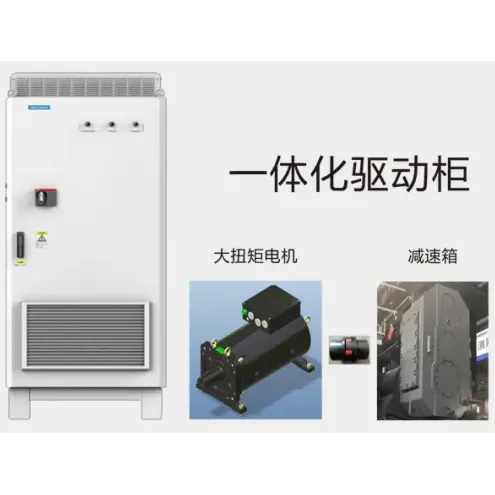
A third development phase has been the shift toward electrically driven, high-efficiency preplasticizing units with tighter process control and lower energy use than older hydraulic arrangements. These systems are now often integrated with automation, recipe control, and in some cases simultaneous preplasticizing, mold opening, and ejection to reduce idle time.
Technical Overview
Preplasticizing equipment performs one or more of four functions: heating, softening, mixing/homogenizing, and preforming or charge metering. The exact configuration depends on whether the downstream process is compression molding, transfer molding, or two-stage injection molding.
Working principle
In a typical preplasticizing system, solid molding compound is fed into a heated chamber, barrel, or screw unit. Mechanical shear and external heating raise the material to a plasticized or soft, moldable state, after which it is transferred to a shot chamber, preform station, or molding press.
In two-stage injection machines, the first stage plasticizes at relatively low pressure, with literature describing controllable plasticizing pressures of about 50 to 300 psi \((0.34 \text{ to } 2.07 \text{ MPa})\), while the second-stage nozzle pressure may range from about 2,000 to 30,000 psi \((14 \text{ to } 200 \text{ MPa})\), depending on the material and mold requirements.
Common engineering elements
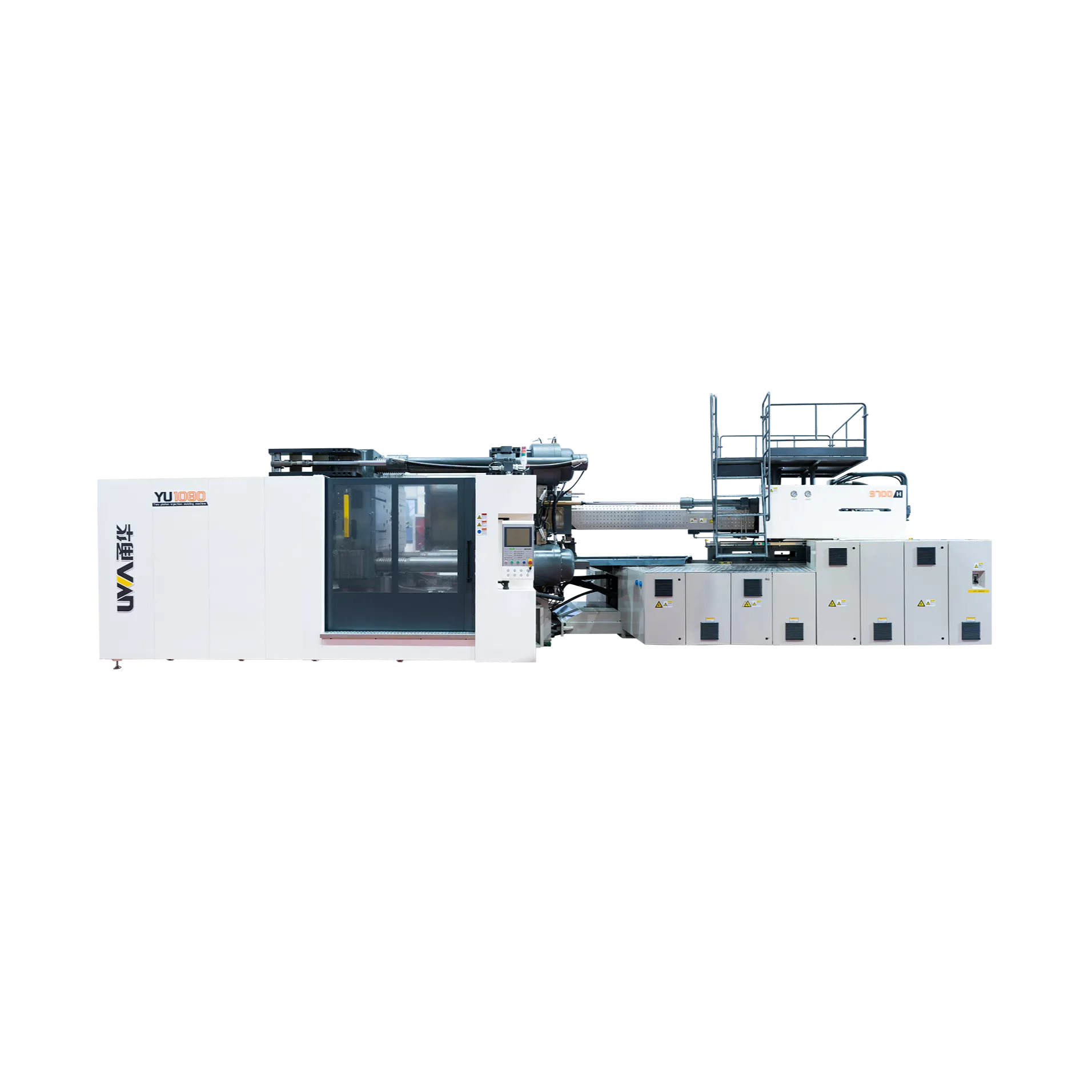
- Plasticizing barrel or chamber for thermal conditioning and melt generation.
- Screw or plunger mechanism for conveying, compressing, and metering the charge.
- Heater bands, thermal zones, or RF preheating modules for controlled heating profiles.
- Non-return valves or shutoff valves to prevent backflow during transfer and injection.
- Weigh feeders or volumetric dosing systems to improve shot consistency.
- Preforming or compacting devices for charge shaping before compression molding.
Typical performance characteristics
Although specifications vary widely by material and machine class, the following ranges are representative of industrial preplasticizing and preheating systems:
- Rotor or screw speeds: often set conservatively for thermosets; a startup procedure for phenolic preheat compression molding suggests 60 rpm or less for the preplasticizer screw in many cases.
- Residual moisture after centrifugal dewatering: in plastics recovery and preconditioning chains, centrifugal dewatering is commonly used to bring flake moisture down to low single digits, often around 1–3% before final thermal drying in high-quality lines; this is an operational benchmark rather than a universal machine specification.
- Granulator flake size: for recycled molding feedstock or reprocessed scrap entering preplasticizing lines, common industrial flakes are often around 10–20 mm in characteristic dimension, depending on the cutter and screen design; finer control improves feeding uniformity.
- Throughput: equipment spans from laboratory and low-volume preplasticizers to industrial units handling hundreds of kg/h in specialty lines and substantially more in continuous compounding or preconditioning systems.
- Specific energy consumption: modern electrically driven preplasticizing systems generally aim to reduce energy intensity relative to older hydraulic designs, with improvements often coming from reduced conversion losses and better cycle overlap rather than a single universal kWh/kg figure.
Types and Variations
| Type | Main mechanism | Typical use | Notable features |
|---|---|---|---|
| Plunger preplasticizer | Heated chamber with piston/plunger | Earlier injection systems, some specialty thermosets | Simple separation of plasticizing and injection functions. |
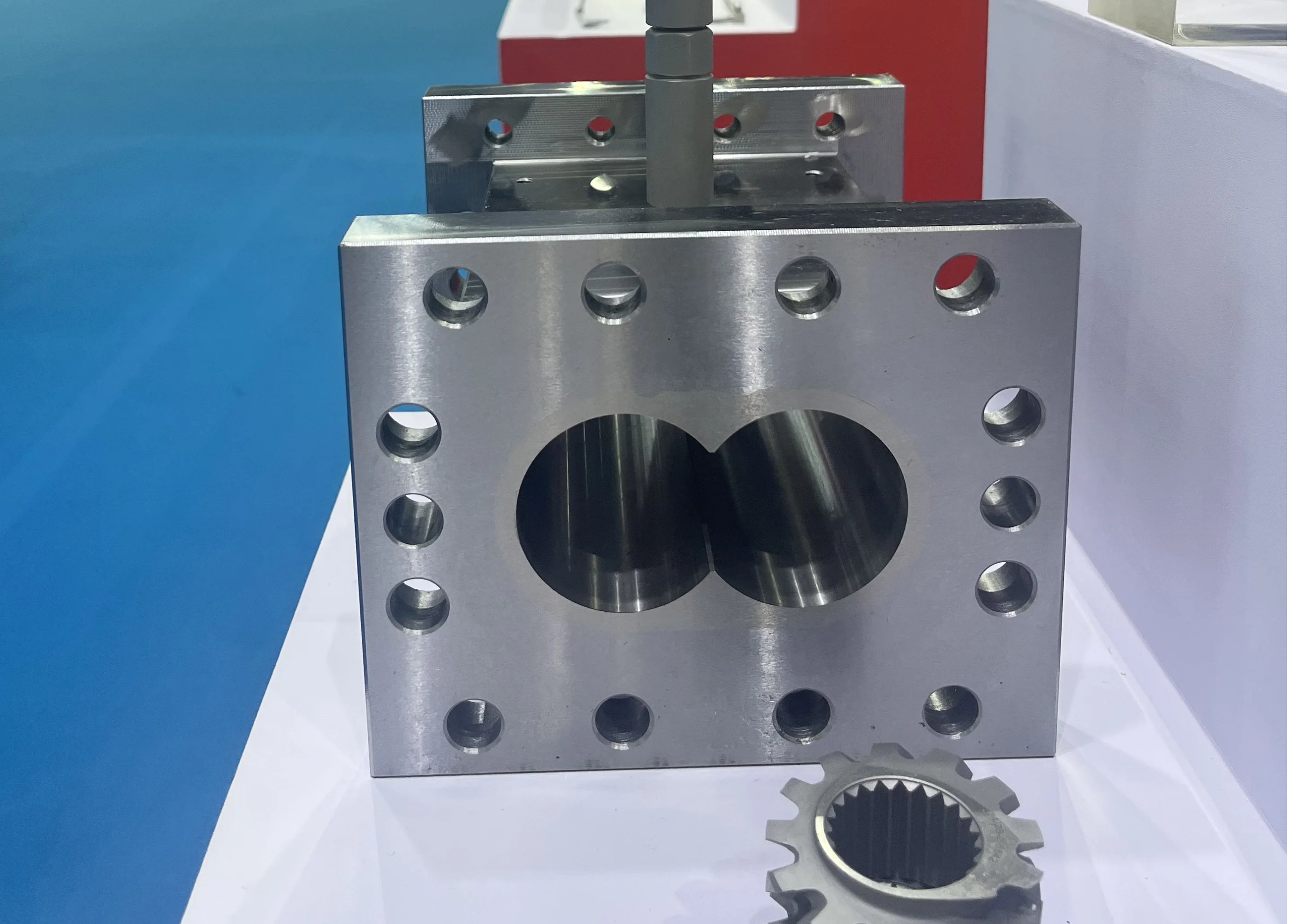
| Screw preplasticizer | Rotating screw plasticizes before transfer | Two-stage injection, specialty molding compounds | Better melt homogenization and controllable plasticizing. |
| Thermoset plasticator | Preheating and preforming for thermosets | BMC, SMC, phenolics | Designed for accurate shot sizes and consistent feed. |
| Thermoplastic plasticator | Preplasticizing before compression molding | Thermoplastic compression molding | Combines preheating and preforming into one step. |
| RF preheater | Radio-frequency dielectric heating | Thermosetting plastics | Rapid bulk heating for compression and transfer molding. |
| Electric preplasticizing unit | Electrically driven plasticizing screw | High-end injection molding | Improved energy efficiency and process control. |
By machine geometry
- In-line systems: the plasticizing and injection units are aligned, allowing a direct transfer path.
- Angle or parallel systems: the plasticizing unit feeds a separate injection cylinder from a different orientation.
- Two-stage injection systems: first-stage plasticizing is separated from second-stage injection for process independence.
Applications and Uses
Preplasticizing equipment is used wherever the molding charge benefits from uniform temperature, consistent plasticity, and precise dosing.
- Compression molding of thermosets: BMC, SMC, phenolics, and related compounds are often preheated or preformed to improve charge placement and reduce variability.
- Transfer molding: preheated charges improve flow into cavities and reduce cold spots.
- Specialty injection molding: two-stage injection systems are used for materials that benefit from separate plasticizing and injection functions.
- High-consistency technical parts: electrical, automotive, and precision components can benefit from more uniform charge preparation.
- Poor-fit use: highly abrasive or contamination-heavy feedstocks are generally a poor fit unless the system is specifically designed for wear resistance and upstream cleaning; standard preplasticizers are not a substitute for full compounding or sorting.
Technological Innovations and Automation
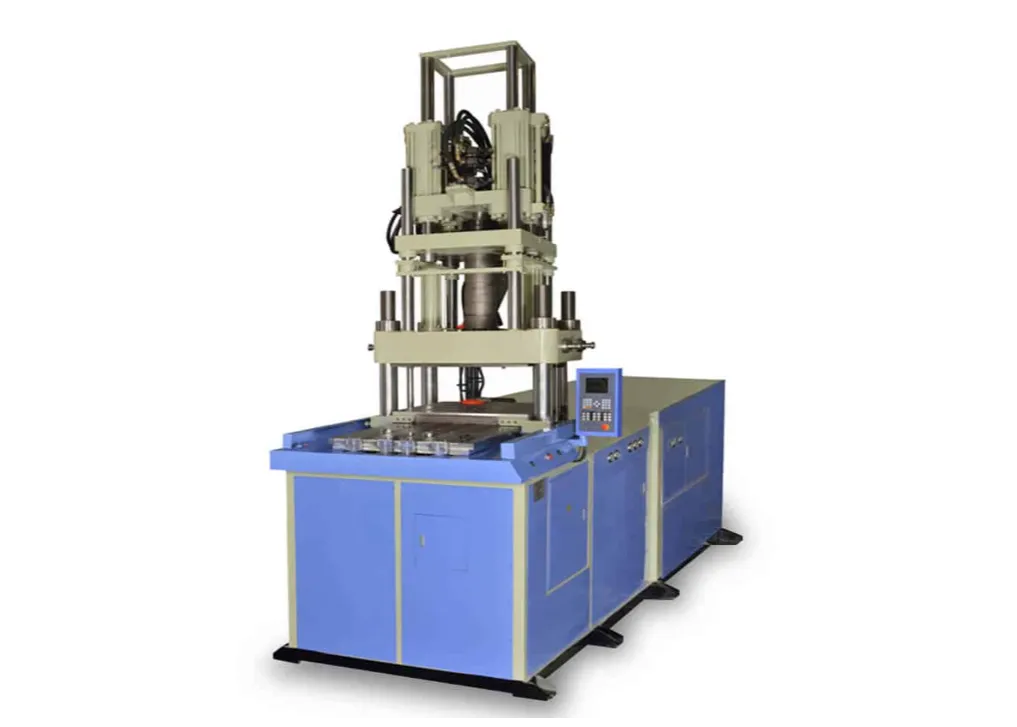
Recent developments have focused on servo-electric drives, improved screw designs, closed-loop temperature control, and integrated monitoring. Electric preplasticizing systems are promoted for reduced hydraulic losses and improved response, while specialized screw geometries are used to improve homogenization or material-specific handling.
Automation trends include:
- Recipe-based temperature and screw-speed control for repeatability.
- Simultaneous overlap of plasticizing, mold motion, and ejection to reduce non-productive time.
- Weight-controlled shot preparation through feeders and gravimetric dosing.
- Condition monitoring for barrel wear, valve integrity, and thermal stability.
Environmental and Sustainability Aspects
Preplasticizing equipment can support sustainability when it reduces scrap, energy waste, and cycle variability. Better charge uniformity can lower reject rates, and separating plasticizing from injection may improve process stability for difficult materials.
At the same time, sustainability performance depends on the broader system:
- Energy efficiency: electric drives typically reduce losses associated with hydraulic power conversion.
- Material efficiency: accurate shot sizing reduces overpacking and trim waste.
- Recyclability and circularity: preconditioning can help incorporate regrind or recycled flake when material quality is controlled, but contamination and moisture remain limiting factors.
- Heat management: RF and other rapid-heating methods may improve throughput, but they require careful control to avoid uneven heating or premature cure in thermosets.
Economic and Global Market Impact
Preplasticizing equipment occupies a specialized but strategically important niche within the plastics machinery sector, particularly in thermoset molding, high-precision injection systems, and specialty compounds. Demand is shaped by vehicle electrification, electrical insulation components, technical thermosets, and the continuing need for stable production of medium- to high-value molded parts.
In commercial terms, the segment is influenced less by mass-market unit volumes than by process-critical performance, uptime, and the ability to handle formulations that standard injection units cannot process as effectively. Suppliers such as Trinks, Thermex-Thermatron, WITTMANN BATTENFELD, Sumitomo Heavy Industries, and other machinery builders participate through specialized plasticators, preheaters, or two-stage injection platforms.
Current Challenges and Innovations
Key engineering challenges include:
- Thermal non-uniformity, which can create inconsistent cure or flow behavior.
- Feed consistency, especially when compounds vary in bulk density or moisture content.
- Wear and corrosion, particularly with filled, glass-reinforced, or chemically active compounds.
- Balancing shear and heat, since excessive shear may degrade sensitive polymers or advance cure in thermosets.
- Integration with upstream compounding, where mixing quality strongly affects downstream moldability.
Innovation is therefore concentrated on better metering, gentler but more uniform plasticizing, improved thermal zoning, and more intelligent automation.
Future Outlook
The future of preplasticizing equipment is likely to be shaped by servo-electric actuation, digital process control, hybrid machine architectures, and tighter integration with compounding and material-handling systems. As molding operations face higher expectations for energy efficiency, traceability, and scrap reduction, preplasticizing units that can stabilize difficult compounds while shortening cycles are likely to remain relevant.
For thermoset processing in particular, the most durable opportunities lie in more precise charge conditioning, faster preheating, and better compatibility with automation cells. For thermoplastics and specialty molding, the principal direction is toward more efficient two-stage plasticizing and improved control of melt quality before injection.
Summary
Preplasticizing equipment for molding compounds is a specialized class of plastics machinery that prepares material before molding by heating, softening, homogenizing, and metering it into a controlled charge. Its value lies in improving part consistency, reducing cycle variation, and enabling materials and processes that are difficult to handle in conventional one-stage injection or direct compression systems.
References
- •
Electric pre-plasticizing injection molding machine. (n.d.). Threeplast. https://suruimachinery.com/final-post-type/electric-preplasticizing-injection-molding-machine/Link
- •
Operation steps for screw cleaning in injection molding production. (2026, February 11). Hoorenwell. https://www.hoorenwell.com/news/1095-en.htmlLink
- •
SUMIKASUPER LCP injection molding machine and control method. (n.d.). Sumitomo Chemical. https://www.sumitomo-chem.co.jp/sep/english/products/lcp/lcp_s2_sekkei.htmlLink
- •
1.3.1. Классификация оборудования для смешения полимерных материалов. (2019, August 25). Studfile. https://studfile.net/preview/15803093/page:7/Link
- •
Смесители больших объемов, шнековые и дисковые смесители-пластикаторы. (n.d.). Studref. https://studref.com/478107/tehnika/smesiteli_bolshih_obemovLink
- •
Sumitomo Heavy Industries launches “SP300,” a new injection molding machine. (2026, May 22). Sumitomo Heavy Industries. https://www.shi.co.jp/english/info/2026/6kgpsq00000041as.htmlLink
- •
Premixing masterbatch powder coatings pigmentation. (2024, May 21). Plas Mec. https://www.plasmec.it/premixing-masterbatch-pigmentation-rotomoulding/Link
- •
Plasticizing. (n.d.). Springer. https://link.springer.com/chapter/10.1007/978-1-4615-4597-2_3Link
- •
Preheat compression molding startup procedure for phenolic and thermoset materials. (n.d.). Plenco. https://plenco.com/wp-content/uploads/2026/05/16-Preheat-Compression-Phenolic-Startup-Procedure.pdfLink
- •
Thermoplastic premelters. (2025, January 20). Alibaba. https://www.alibaba.com/showroom/thermoplastic-premelters.htmlLink
- •
Compounding technology for engineering plastics. (n.d.). Coperion. https://coperion.com/en/industries/plastics/engineering-plasticsLink
- •
化合方法, 攪拌設備, 擠出機 (26). (2009, October 26). PP Solutions Book. https://pp-solutions-book.blogspot.com/2009/10/26.htmlLink
- •
Compounding and mixing systems. (2024, December 8). The Free Library. https://www.thefreelibrary.com/Compounding+and+mixing+systems.-a0110117349Link
- •
Compounding and mixing systems. (2025, March 1). The Free Library. https://www.thefreelibrary.com/COMPOUNDING+AND+MIXING+SYSTEMS.-a080327196Link
- •
Plastics processing equipment. (n.d.). APS Mixers. https://www.eirichusa.com/en/industries/industrial-and-chemical/plasticsLink
- •
Equipment feature: Specialty mixing equipment for the plastics industry. (n.d.). UL Prospector. https://www.ulprospector.com/knowledge/8689/pe-ross-equipment-feature-specialty-mixing-equipment-for-the-plastics-industry/Link
- •
Introduction. (n.d.). OCW SNU. https://ocw.snu.ac.kr/sites/default/files/NOTE/PM-w06-Ch2-1.pdfLink
- •
Industrial mixers for plastics mixing. (n.d.). B&P Littleford. https://www.bplittleford.com/plastics.htmlLink
- •
Injection molding. (2022, April 1). Chemical Engineering University of Michigan. https://encyclopedia.che.engin.umich.edu/injection-molding/Link
- •
ప్లాస్టిక్ పరిశ్రమ కోసం ప్లాస్టిక్ ముడి పదార్థాల పూర్వ ప్రాసెసింగ్ మిక్సింగ్ డ్రైయింగ్ మెషిన్. (2026, May 27). Yude Machinery. https://www.yudemachinery.com/te/knowledge/plastic-raw-material-pre-treatment-mixing-drying-machine-for-plastic-industryLink
- •
1. (n.d.). Tatming. https://tatming.com.cn/wp-content/uploads/2020/03/Injection-molding-process-modified.pdfLink
- •
Facilities and equipment - materials and compounding technologies V04.0. (n.d.). Fraunhofer ICT. https://www.ict.fraunhofer.de/content/dam/ict/en/documents/media/pe/mc/250001_Facilities-and-equipment-materials-and-compounding-technologies.pdfLink
- •
Compounding and extrusion instruments. (n.d.). Thermo Fisher Scientific. https://www.thermofisher.com/us/en/home/industrial/manufacturing-processing/extrusion-compounding-equipment/instruments.htmlLink
- •
Plasticizing systems. (n.d.). Wittmann Group. https://www.wittmann-group.com/sites/default/files/2022-01/plastifiziereinheit_en_2022-01_web.pdfLink
- •
Thermoset Plasticator. (2025, December 1). Trinks Inc. https://trinksinc.com/products-2/thermoset-plasticator/Link
- •
Thermoplastic Plasticator - Trinks Inc. (2025, December 1). Trinks Inc. https://trinksinc.com/products-2/thermoplastic-plasticator/Link
- •
Pre-plasticizing type injection molding machine and control method therefor. (1997, April 24). Google Patents. https://patents.google.com/patent/US5925295A/enLink
- •
Máquinas de inyección con preplastificación y sus tipos. (2024, June 6). Studocu. https://www.studocu.com/es-mx/document/universidad-tecnologica-de-jalisco/procesos-de-produccion/maquinas-de-piston-con-preplastificacion/96727593Link
- •
Injection molding machines. (2017, August 4). PTFE Machinery Blog. https://ptfemachineryblog.wordpress.com/2017/08/04/injection-molding-machines/Link
- •
Injection mold P5 1 types of injection units. (n.d.). Argo Mold. http://www.argomold.com/html/INJECTION-MOLD-P5-1-Types-of-Injection-Units.aspLink
- •
기타 기계ㆍ장비 조립용 플라스틱제품 제조업. (2020, August 14). Siheung B2B. https://www.siheungb2b.com/intro/product_view.html?p_uid=7131Link
- •
RF preheaters. (2020, November 11). Thermex-Thermatron Systems. https://thermex-thermatron.com/products/rf-preheatersLink
- •
Materials engineering laboratory for plastics engineering company. (2025, January 23). Plenco. https://www.plenco.com/customer-engineering-lab.htmLink
- •
2 - Injection mould machinefinal. (2025, December 16). Scribd. https://www.scribd.com/presentation/915820296/2-Injection-Mould-MachinefinalLink
- •
How does the injection molding machine work? (n.d.). Alps Machine. https://www.alps-machine.com/news/how-does-the-injection-molding-machine-work.htmlLink
- •
NEO·HII two-platen injection molding machine. (n.d.). Tederic. https://www.tedericglobal.com/products/neo-h/neo-h-new-high-end-two-platen-imm.htmlLink
- •
Electroplastic technology. (n.d.). Taiwan Union Plastic. https://www.taiwanunionplastic.com/electroplastic-technology/Link
- •
Pre processing machines. (2024, June 1). Rapter Extrusion. https://www.rapterextrusion.com/pre-processing-machines/Link
- •
News & stories. (2024, November 6). Fakuma Messe. https://www.fakuma-messe.de/en/news-stories/Link
- •
Screw type preplasticizing plastic injection molding machine. (1995, October 17). Google Patents. https://patents.google.com/patent/US3169275A/enLink
- •
MS Moriyama. (n.d.). Spindle. https://www.spindle.co.jp/ms-moriyama/Link
- •
2015 processing handbook & buyers' guide: Products * suppliers * contacts. (n.d.). The Free Library. https://www.thefreelibrary.com/2015+Processing+Handbook+&+Buyers'+Guide:+products+*+suppliers+*...-a0391308583Link
- •
Compounding and mixing systems. (Product lines reviewed). (n.d.). The Free Library. https://www.thefreelibrary.com/Compounding+and+mixing+systems.+(Product+Lines+Reviewed).-a093534837Link
- •
Plasticizing systems. (n.d.). Wittmann Group. https://www.wittmann-group.com/sites/default/files/2023-03/plastifiziereinheit_en_2022-08.pdfLink
- •
What are the common types of plastic machinery? (2020, September 25). Market Prospects. https://www.market-prospects.com/articles/plastic-machinery-of-plastics-industryLink
- •
Plasticizing systems. (n.d.). Wittmann Group. https://www.wittmann-group.com/sites/default/files/2020-10/plastifiziersysteme_en_2019-01_web.pdfLink
- •
Plasticizing systems. (n.d.). Wittmann Group. https://www.wittmann-group.com/sites/default/files/2022-09/plastifiziereinheit_2022-08_en_web.pdfLink
- •
The role of plasticizing in injection molding process. (2025, December 23). MD Plastics. https://mdplastics.com/feeds/blog/plasticizingLink
- •
Plastic compounding equipment: Processing solutions. (n.d.). MD Plastics. https://mdplastics.com/feeds/category/plastic-compounding-equipmentLink
- •
7 most common plastic material handling equipment. (2021, March 3). Shini. https://www.shini.com/en/news_i_Plastic-Material-Handling-Equipment.htmlLink
- •
PlastiWin: Buy & sell plastic process equipment. (2025, November 14). PlastiWin. https://plastiwin.com/Link
- •
How do plastic injection molding machines work? A breakdown. (2025, August 7). EMPSLC. https://empslc.com/how-do-plastic-injection-molding-machines-work-a-breakdownLink
- •
Plastic injection molding machines: Types, parts, and uses. (2022, April 29). Xometry. https://www.xometry.com/resources/injection-molding/plastic-injection-molding-machine/Link
- •
How injection molding machines work. (2024, October 14). RJG Inc. https://rjginc.com/back-to-basics-how-does-a-plastic-injection-molding-machine-work/Link
- •
What is plastic injection molding and how does it work? (2023, December 11). Essentra Components. https://www.essentracomponents.com/en-us/news/manufacturing/injection-molding/what-is-plastic-injection-molding-and-how-does-it-workLink