
Introduction
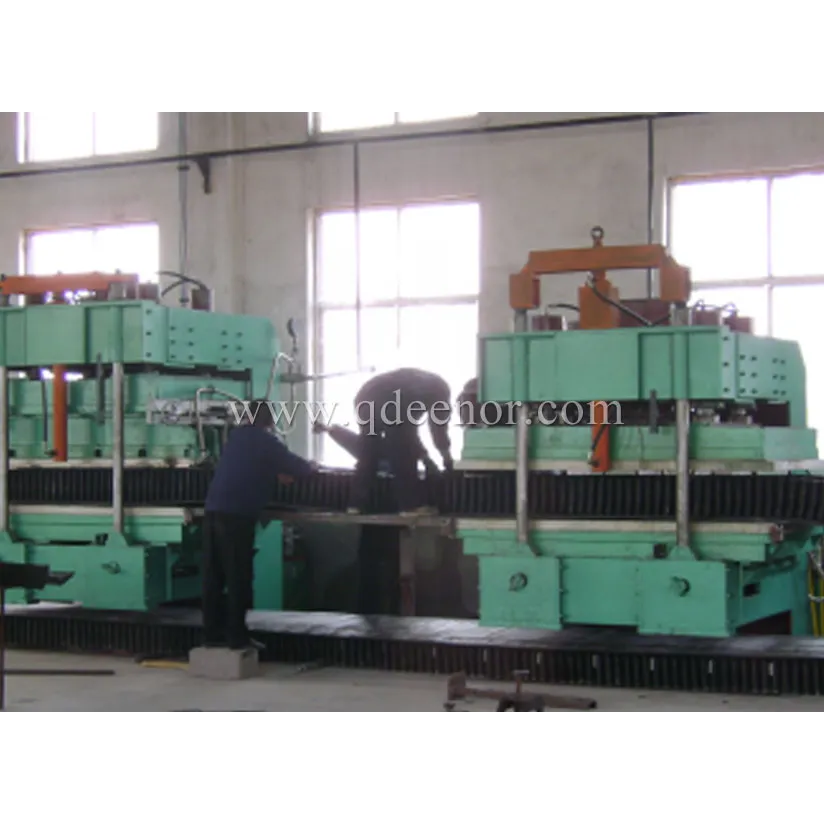
Double belt presses are continuous processing machines that apply heat, pressure, and controlled cooling between two synchronized endless belts to form, laminate, consolidate, or densify materials in a single through-feed operation. In plastics processing and adjacent advanced-materials industries, they are especially valued for producing flat panels, laminates, composite sheets, battery materials, insulation products, and functional multilayer structures with high thickness consistency and repeatable surface quality.
Unlike batch presses, double belt presses operate continuously, which supports stable output, shorter cycle interruptions, and better integration with upstream and downstream automation. Their technical relevance has expanded from traditional laminate and board production into thermoplastic composites, technical textiles, energy-storage materials, and lightweight structural panels, while newer modular systems add tailored heating and cooling zones for tighter process control.
History and Development
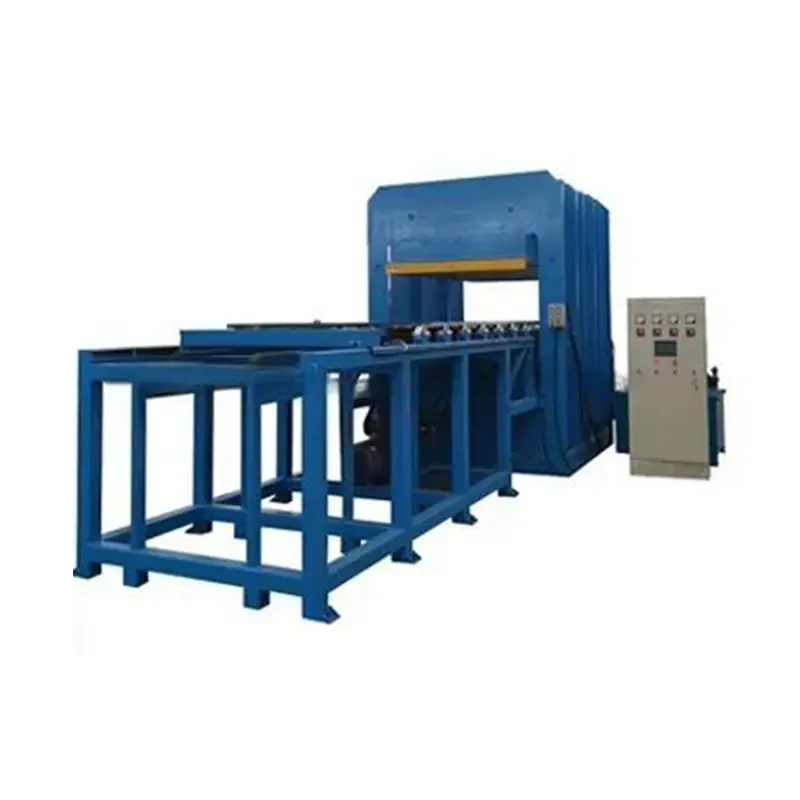
Double belt pressing evolved from earlier continuous laminate and board-pressing concepts intended to replace discontinuous platen pressing in high-volume production. Early patent literature already identified the technology as suitable for decorative laminates, fiberboard, plywood, and electrical laminates, establishing the basic industrial logic of continuous consolidation between moving belts.
A major development milestone was the refinement of isobaric continuous presses, in which pressure is distributed more uniformly over wide webs and panel formats, improving dimensional stability and surface finish in laminated products. This made the technology attractive for increasingly demanding applications such as automotive interiors, furniture surfaces, flooring, and electrical insulation.
A further step was the move toward modular belt-press platforms with configurable heating and cooling sections, enabling one line to be adapted to different materials and process windows. More recent system development has extended the process into thermoplastic composite consolidation and battery-material lamination, where temperature uniformity, residence time, and pressure profile are critical to product performance.
Technical Overview
A double belt press consists of two continuous belts, typically steel in many industrial laminating and panel applications, although alternative belt materials and combinations are also used in some systems. The material stack or web is fed into the nip between the belts, then passes through zones where heat activates bonding or softening, pressure consolidates the structure, and cooling locks in the final geometry.
Key engineering functions include:
- Pressure uniformity, which helps minimize thickness variation and voids across the full width of the product.
- Thermal control, which governs resin flow, adhesive activation, curing, or thermoplastic fusion.
- Continuous residence time, which improves throughput and process stability relative to cyclic platen pressing.
- Web guidance and belt tension control, which are essential for alignment, flatness, and repeatability.
In composite applications, the process may consolidate fiber fabrics, thermoplastic films, mats, powders, or pre-assembled multilayer stacks into flat laminates or sandwich structures. In laminating applications, the press bonds films, decorative layers, or technical textiles to core substrates while maintaining surface quality and minimizing defects.
Typical technical benchmarks reported for industrial systems include:
- Working widths up to about 120 inches in some laminating configurations.
- Process temperatures up to about 450°F in certain high-temperature laminators.
- Continuous operation rather than discrete platen cycles, which improves line productivity.
- Multi-zone heating and cooling, often arranged as a modular process sequence.
For dewatering-oriented belt presses, which are mechanically related but used in a different sector, the system may include a wedge zone and pressure zone, with much of the free water removed before final compression. However, this is distinct from plastics-oriented double belt pressing, where the primary function is usually thermal consolidation rather than liquid separation.
Main Construction Features
A typical industrial double belt press includes:
- Upper and lower endless belts that carry and compress the material.
- Roller and tensioning systems that stabilize belt tracking and nip conditions.
- Heating modules such as heated platens, thermal oil systems, or other controlled thermal zones depending on machine design.
- Cooling modules that fix the laminate or composite after consolidation.
- Feed, alignment, and discharge systems for continuous handling and automated transfer.
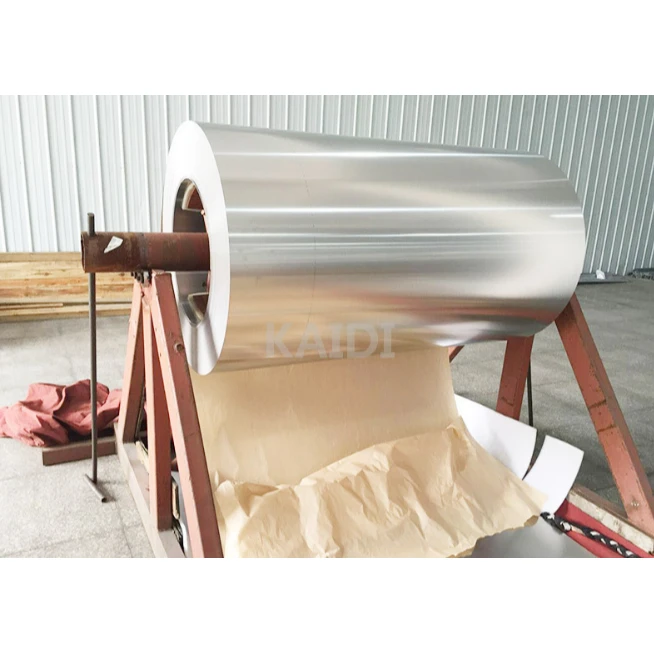
The belt surface itself is an important process variable. Steel belts are common where flatness, thermal conduction, and durable continuous contact are required, while some systems use alternative belt concepts for specialized products or lower rigidity requirements.
Types and Variations
| Type | Main function | Typical products | Main advantage |
|---|---|---|---|
| Lamination double belt press | Bonds layers into a continuous sheet or panel | Decorative laminates, flooring, technical fabrics | High surface quality and consistent bonding |
| Composite consolidation press | Consolidates fiber-reinforced stacks or thermoplastic composites | Organosheets, CFRTP laminates, sandwich panels | Uniform pressure and low void content |
| Modular double belt press | Configurable heating/cooling for different process windows | Mixed product portfolios | Process flexibility |
| Isobaric double belt press | Promotes more even pressure distribution | Wide panels and technical laminates | Better thickness consistency |
| Battery-material or functional-material press | Laminates or densifies advanced functional layers | Battery and fuel-cell materials | Stable continuous production |
Applications and Uses
Double belt presses are used across a broad range of plastics-related and advanced-materials sectors:
- Automotive: structural panels, interior laminates, impact-protection parts, lightweight composite elements.
- Aerospace: interior panels, tank linings, structural laminates, and other lightweight composites.
- Construction: insulation boards, soundproofing panels, wall and roof elements, and panel-heating substrates.
- Flooring and furniture: decorative laminates, wear layers, and board surfaces with high visual consistency.
- Electronics and electrical insulation: insulating laminates, printed-circuit-board base materials, and technical substrates.
- Energy and battery industries: separator films, electrodes, fuel-cell materials, and other functional layers.
- Ballistics and protective equipment: multilayer armor, helmets, and protective laminates.
A less ideal fit is sludge dewatering, which uses a related belt-press architecture but serves a fundamentally different solid-liquid separation role rather than plastics consolidation.
Working Principle in Plastics and Composites
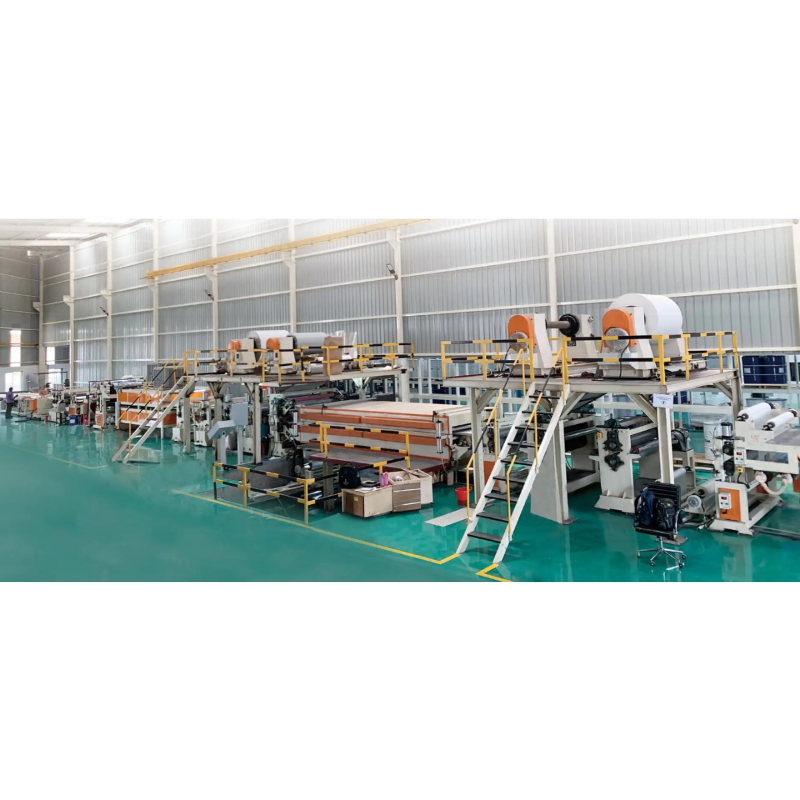
The process typically follows this sequence:
- Feeding of films, fibers, mats, powders, or layered semifinished products into the entry zone.
- Preheating or pre-compaction to improve contact, reduce air entrapment, and begin matrix softening or adhesive activation.
- Compression and impregnation, where pressure drives resin flow, layer bonding, or thickness reduction.
- Thermal consolidation or curing, which stabilizes the final internal structure.
- Cooling and release, where the product is fixed in its final form before discharge.
In thermoplastic composites, the press can enable direct impregnation of reinforcement fabrics with thermoplastic resin, producing high-volume laminates with controlled fiber wet-out and short cycle times. In laminates and decorative boards, the same machine principle is used to bond surface films to substrates while preserving flatness and finish quality.
Performance Characteristics
Important performance indicators include:
- Thickness tolerance, influenced by belt rigidity, pressure uniformity, and thermal profile.
- Surface quality, especially in decorative laminates and visible interior parts.
- Void content and impregnation quality, critical in composite laminates.
- Residence time control, which affects bonding strength and cure state.
- Throughput, which can be high because the process is continuous rather than cyclical.
For many applications, the industrial value of the machine lies in its ability to combine high output with repeatable product geometry and stable interlayer bonding.
Technological Innovations and Automation
Recent developments emphasize:
- Modular heating/cooling architecture for faster product changeover and process tailoring.
- Improved belt materials and belt combinations for specialized thermal or surface requirements.
- Digital temperature and pressure monitoring, which supports tighter process windows and quality control.
- Integration with upstream material handling, including automated feeding, alignment, and cutting systems.
- Industry 4.0-style data capture, which allows trend monitoring of belt tension, temperature uniformity, and product consistency.
These innovations are especially important in battery, aerospace, and composite manufacturing, where small process deviations can affect electrical, structural, or thermal performance.
Environmental and Sustainability Aspects
Double belt presses can support sustainability goals in several ways:
- Material efficiency through consistent thickness and reduced off-spec production.
- Energy efficiency from continuous processing and minimized idle time relative to batch pressing.
- Lightweight design, enabling lower material use in transport and construction products.
- Recycling compatibility, particularly where recycled polymers, reclaimed fibers, or reprocessed layers are consolidated into new panels.
At the same time, the technology is energy-intensive when operated at high temperatures or wide widths, so sustainability depends strongly on thermal management, belt efficiency, and product yield. In practice, the most favorable footprint is achieved when the line is matched closely to the product and operates at high utilization.
Economic and Global Market Impact
Double belt presses occupy a specialized but strategically important position in plastics processing machinery because they serve both high-volume commodity laminates and higher-value engineered materials. Their market relevance is reinforced by demand for lightweight mobility components, construction insulation, flooring, electrical laminates, and energy-transition materials such as battery and fuel-cell products.
The technology is also internationally distributed across suppliers of laminating lines, composite presses, and modular continuous press systems, with competition focused less on simple machine count and more on process know-how, line customization, and application engineering. For processors, the economic case often depends on improved throughput, lower scrap rates, and the ability to enter higher-performance material segments.
Current Challenges and Innovations
The main technical challenges are:
- Uniform heat transfer across wide belts, especially for thick or multilayer stacks.
- Belt wear, tracking, and maintenance, which directly affect uptime and product quality.
- Process sensitivity of advanced materials, including thermoplastic composites and battery-related webs.
- Balancing flexibility with line specialization, since highly optimized presses can be less adaptable to mixed production.
Current innovation efforts are focused on better zone control, improved belt durability, enhanced measurement systems, and machine designs that can process a broader range of materials without sacrificing precision.
Future Outlook
Future double belt press development is likely to be shaped by three forces: lightweighting, electrification, and circular manufacturing. Demand is expected to remain strong for continuous production of composite laminates, energy-material webs, and high-quality flat panels where consistency matters as much as throughput.
In plastics processing, the most promising direction is the combination of continuous consolidation with more intelligent process control, allowing manufacturers to produce lower-defect, lower-waste products from both virgin and recycled feedstocks. As material systems become more complex, double belt presses are likely to remain a core enabling technology wherever a wide, flat, continuously processed product must be thermally and mechanically stabilized in one uninterrupted line.
References
- •
What is a double belt press and why does it matter? (2026, July 24). Compoform. https://compoform.com/knowledgebase/what-is-a-double-belt-press-and-why-does-it-matter/Link
- •
HELD Technologie GmbH. (n.d.). High-performance double belt presses. https://www.held-tech.de/download/Held_2015_Prospekt_WEB.pdfLink
- •
Isobaric double belt press for pressing many materials. (n.d.). HELD Technologie. https://www.held-tech.de/en/belt-pressesLink
- •
Advantages of adaptable double belt presses for any industry. (2023, April 12). Berndorf Band Group. https://www.berndorfband-group.com/2023/04/12/adaptable-and-suitable-modular-double-belt-presses-for-any-industry/Link
- •
Modular double belt press with heating and cooling modules. (2025, November 19). Berndorf Band Group. https://www.berndorfband-group.com/products/modular-double-belt-press/Link
- •
Double belt presses = production efficiency. (n.d.). Hymmen. https://www.hymmen.com/en/technologies/double-belt-presses/Link
- •
Double belt press (DBP) in the real world: 5 uses you'll actually.... (2025, October 2). LinkedIn. https://www.linkedin.com/pulse/double-belt-press-dbp-real-world-5-uses-youll-actually-6ylecLink
- •
Innovations in double belt press technology for superior manufacturing: Revolutionizing the way we create and process machinery and equipment. (2024, January 28). Consol Steel Belt. https://www.consolsteelbelt.com/news_details/1751485316687347712.htmlLink
- •
Double belt presses. (n.d.). Linnenbrink Technik Warburg. https://www.linnenbrink-technik-warburg.de/en/products/laminating-lines/double-belt-pressesLink
- •
Double belt press solutions for battery production. (2026, May 28). Berndorf Band Group. https://www.berndorfband-group.com/2026/05/28/double-belt-press-solutions-for-battery-production/Link
- •
Composites double belt press process. (2026, January 10). Jota Machinery. https://jotaintl.com/about-us/academy/composites-double-belt-press-process/Link
- •
How double belt press (DBP) works — In one simple flow (2025). (2025, October 17). LinkedIn. https://www.linkedin.com/pulse/how-double-belt-press-dbp-works-one-simple-flow-okgrcLink
- •
Double belt press. (2026, August 24). Juicing Systems. https://www.juicingsystems.com/double-belt-press/Link
- •
Double belt press machines: How they improve lamination quality. (2025, October 13). Pace-Berndorf. https://pace-berndorf.co.uk/news/double-belt-press-machines-how-they-improve-lamination-qualityLink
- •
Double belt press system IPCO. (2025, February 25). IPROS GMS. https://mono.ipros.com/en/product/detail/2000402817/Link
- •
Double belt laminating press. (2015, December 27). Lenderink Technologies. https://lenderink.com/laminators/double-belt-laminating-press/Link
- •
News. (n.d.). Pace-Berndorf. https://pace-berndorf.co.uk/news-dev/double-belt-press-machines-how-they-improve-lamination-qualityLink
- •
Double belt press. (2024, January 1). Guangzhou Consol Machinery Equipment. https://www.consolsteelbelt.com/product/Double-belt-press-40.htmlLink
- •
Understanding the double belt press: A key technology in.... (n.d.). Consol Steel Belt. https://www.consolsteelbelt.com/news_details/1818169655923662848.htmlLink
- •
Double belt lamination press. (n.d.). Versiv Composites. https://www.versivcomposites.com/en-us/double-belt-lamination-pressLink
- •
How to use a double belt press for efficient material processing in.... (2025, December 28). Kuntai Laminating. https://www.kuntai-laminating.com/blog/double-belt-press-for-efficient-material-processing/Link
- •
Thermo double belt presses. (2026, June 17). IPCO. https://www.ipco.com/solutions/thermo-double-belt-pressesLink
- •
The double belt press and its alternatives. (2023, November 30). Conversion Technologies. https://www.conversiontechnologies.com/the-double-belt-press-and-its-alternatives/Link
- •
Double belt press systems. (2024, February 7). Smart Machines & Factories. https://smartmachinesandfactories.co.uk/double-belt-press-systems/Link
- •
xpress2 and xpress3 belt press. (n.d.). OR-TEC. https://www.or-tec.com/x-pressLink
- •
Double belt press for continuous thermoplastic composite production. (2025, September 1). ABC Composite Material. https://abcompositematerial.com/product/double-belt-press-for-continuous-thermoplastic-composite-production/Link
- •
Continuously running double belt press is an efficient way for high-volume production of thermoplastic composite laminates. (n.d.). J-STAGE. https://www.jstage.jst.go.jp/article/materialssystem/40/0/40_29/_pdfLink
- •
Double belt press. (2002, October 17). Google Patents. https://patents.google.com/patent/DE10248387B4/enLink
- •
Double belt press for the continuous production.... (n.d.). Google Patents. https://patents.google.com/patent/EP0131879B1/enLink
- •
Double belt press system. (n.d.). Honghua Machines. https://honghua-machines.com/double_belt_press_systemLink
- •
Double belt press for producing a plate-like product. (2011, July 29). Google Patents. https://patents.google.com/patent/US9409326B2/enLink
- •
What every operator should know about belt filter presses. (n.d.). Water Environment Federation. https://www.wef.org/globalassets/assets-wef/2-pubs--news/magazines/wet/wet-november-2018/wet_p38_p40_operator_essentials.pdfLink
- •
Double belt press and method for producing a plate-like product using a double belt press. (2011, July 29). Google Patents. https://patents.google.com/patent/US20130147090Link
- •
Belt filter presses for sludge dewatering. (2025, March 6). The MBR Site. https://www.thembrsite.com/belt-filter-presses-sludge-dewateringLink
- •
Flottweg: Your manufacturer for industrial belt presses. (2019, March 8). Flottweg. https://www.flottweg.com/product-lines/belt-press/Link
- •
Belt filter. (2009, August 12). Wikipedia. https://en.wikipedia.org/wiki/Belt_filterLink