
Introduction
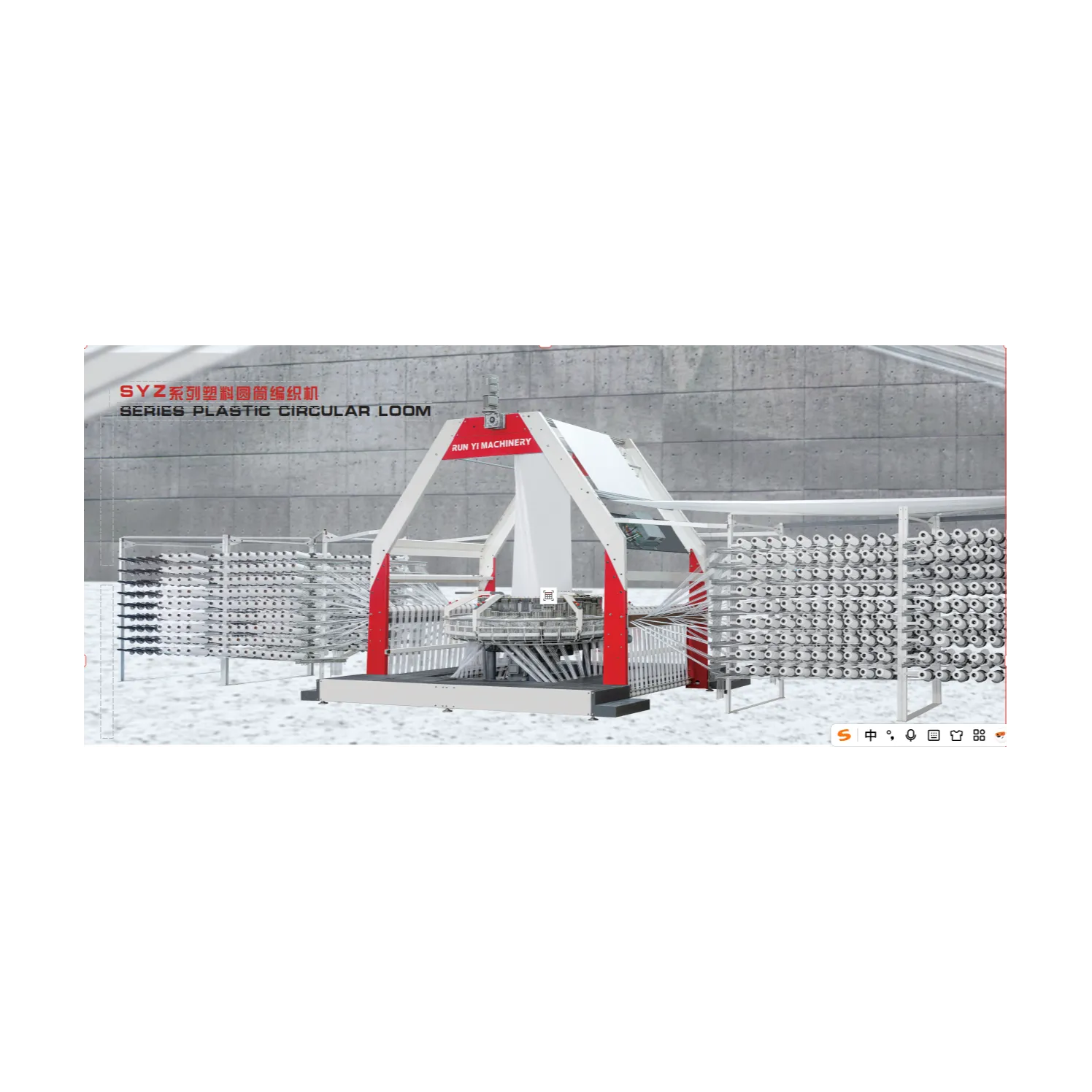
A plastic circular loom is an industrial weaving machine used to produce tubular woven fabric from polypropylene (PP) or high-density polyethylene (HDPE) tapes or flat yarns, most commonly for sacks, woven bags, FIBC jumbo bags, and other flexible packaging products. In its conventional form, the machine uses multiple shuttles or carriers moving around a circular path to interlace weft and warp elements, enabling continuous production of seamless cylindrical fabric with high material efficiency.
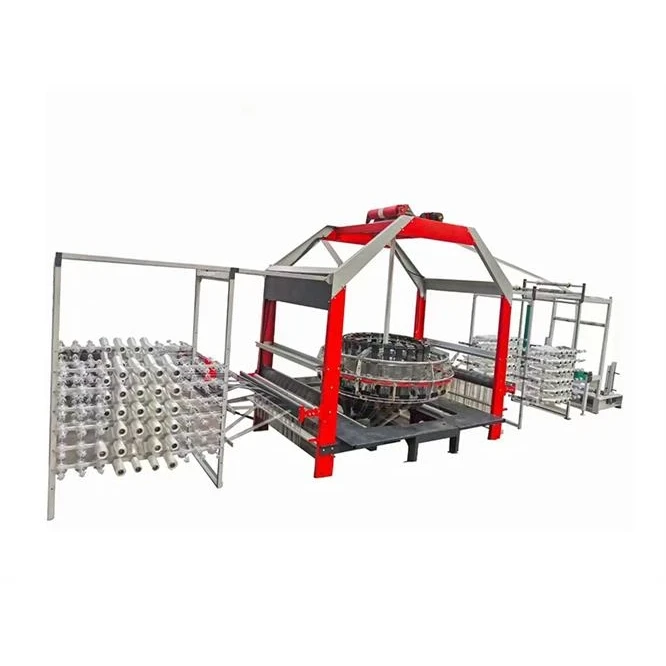
Within plastics processing machinery, the plastic circular loom occupies a specialized position between film-based packaging equipment and extrusion-based tape production, because it converts polymer tapes into high-strength woven structures rather than melting the polymer into a shaped article. Modern machines are often designed with plate-cam drive systems, oil-free or low-lubrication operation, and shuttle counts matched to fabric width and bag specification. The sector has evolved from simpler small-shuttle and hex-shuttle designs toward wider, faster, and more automated looms optimized for lower labor intensity, improved consistency, and better energy performance.
Plastic circular looms remain central to the production of breathable, tear-resistant, and load-bearing woven packaging, especially where tubular construction, low scrap rates, and cost-effective conversion are important. At the same time, the technology faces pressure to reduce power consumption, noise, maintenance, and waste while accommodating recycled PP and tighter quality requirements in export packaging markets. Future development is expected to focus on servo-assisted control, smarter defect monitoring, and closer integration with downstream cutting, sewing, lamination, and bag-making lines.
History and development
The plastic circular loom developed as an adaptation of circular weaving principles to synthetic tapes, following the wider industrialization of woven sack production for agricultural and bulk materials. Early machines were relatively compact and shuttle-limited, designed to weave narrow tubular cloth for basic polywoven bags.
Several milestones mark the technical evolution of the class:
- Small multi-shuttle designs: Patent literature describes compact circular looms with four- and six-shuttle configurations, reflecting early efforts to increase productivity and stabilize tubular weaving on plastic tapes.
- Plate-cam drive and low-lubrication operation: Commercial product descriptions highlight plate-cam structures that run stably without oil lubrication, indicating a move toward cleaner, lower-maintenance mechanical systems.
- Expansion into high-width and FIBC applications: Current product offerings include looms for wide tube or flat fabric and machines explicitly targeted at jumbo bags and FIBC fabric, showing the transition from small bag cloth to heavier industrial packaging grades.
This development path mirrors the broader woven plastics industry: higher shuttle counts, improved motion control, and better integration with PP/HDPE tape extrusion and finishing lines.
Technical overview
A plastic circular loom is engineered to convert flat polymer tapes into a woven tubular structure with controlled width, pick density, and fabric weight. In a typical machine, a warp system is arranged around the circular path, while shuttles carry weft tapes through the shed in a coordinated rotary sequence. The machine frame, motor, reduction gearbox, cam system, and take-up or winding assembly form the core mechanical subsystems.
Key technical characteristics include:
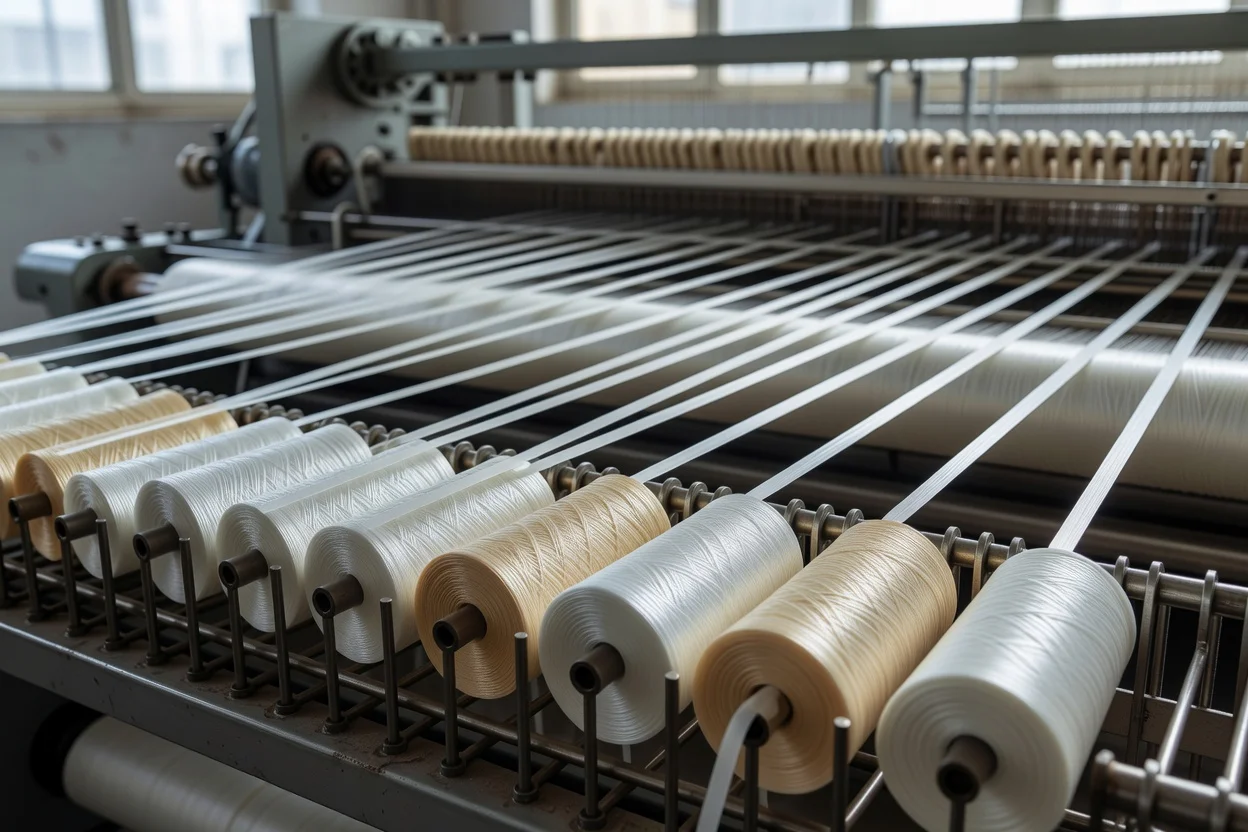
- Raw materials: PP or HDPE flat yarns/tapes are the dominant inputs, chosen for tensile strength, low density, and cost efficiency.
- Drive system: Plate-cam or related mechanical indexing systems are used to synchronize shuttle movement and reduce vibration.
- Lubrication: Some designs are marketed as operating without oil lubrication, which can reduce contamination risk and maintenance burden.
- Shuttle count: Machines are commonly built in multiple-shuttle configurations, with patents and commercial models indicating four-, six-, and eight-shuttle variants.
- Product form: Output is usually endless tubular woven fabric, though some systems can also produce flat fabric that is later slit or converted.
Quantitative performance varies by machine size and fabric specification, but commonly reported industry ranges include:
- Fabric use: tubular sack fabric for woven bags, FIBC liners or outer sleeves, and agricultural or construction coverings.
- Throughput: commercial circular looms are typically supplied as production units rather than precision-metered machines, so line output depends strongly on shuttle count, tape denier, fabric width, and pick density; supplier listings imply a broad manufacturing range rather than a single standardized capacity.
- Machine size and price: public market listings show substantial variation in configuration and price, with some units listed around the several-thousand-dollar range per set, reflecting differences in width, shuttle count, and automation level.
For woven packaging, the loom is only one stage in a larger process chain that usually includes tape extrusion, stretching, weaving, cutting, printing, sewing, and optional lamination.
Types and variations
Plastic circular looms are commonly classified by shuttle count, fabric width, and intended bag format. The most relevant variants are:
| Type | Main use | Technical note |
|---|---|---|
| Small shuttle loom | Small sacks, narrow tubular cloth | Simpler construction, lower output, often used for basic woven bag formats. |
| Six-shuttle loom | General woven packaging cloth | A common mid-range configuration that balances speed and fabric quality. |
| Eight-shuttle loom | FIBC and higher-output bag fabric | Greater productivity and improved fabric width range; often marketed for PP/HDPE flat yarn. |
| Wide-tube loom | Jumbo bags and large tubular fabric | Designed for wider fabric sections and heavier-duty woven structures. |
| Flat-fabric capable loom | Flat woven cloth for conversion | May be used where later slitting or special bag fabrication is required. |
Commercial offerings also differ by motion architecture. Some suppliers emphasize plate cam systems for stable running and reduced lubrication needs, while others focus on compact, economical machines for smaller bag producers. In market practice, the choice usually depends on required fabric width, desired speed, available maintenance capability, and end-product grade.
Applications and uses
Plastic circular looms are most strongly associated with woven polypropylene packaging. Major applications include:
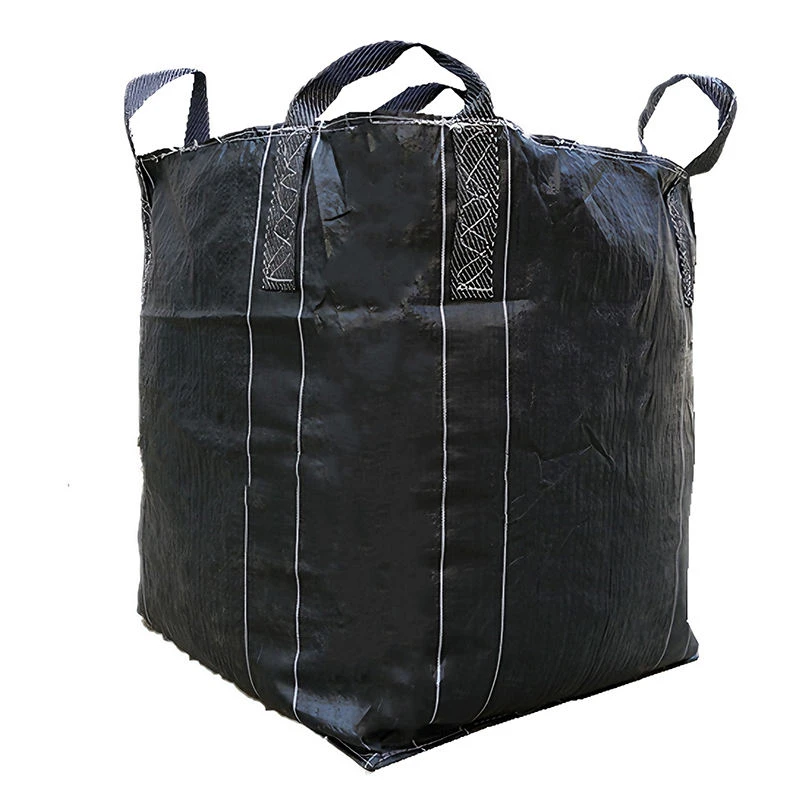
- FIBC jumbo bags for powders, granules, and bulk solids.
- PP woven sacks for rice, grain, fertilizer, animal feed, and sugar.
- Agricultural and industrial covers where tubular woven fabric is useful for strength and ventilation.
- Construction-related woven materials such as sandbag-type or protective packaging fabrics.
- Liner-supporting or intermediate packaging cloth for further conversion into bags or sleeves.
A less suitable application is high-barrier food packaging, because circular-loom woven fabric is porous unless laminated or otherwise coated, making it poorly matched to products requiring airtight, moisture-impermeable structures.
Working principle
The machine forms woven fabric by moving multiple shuttles around a circular track while maintaining tension in the warp system. Each shuttle carries tape across the shed, and the cam or drive mechanism sequences the movement so that the weft interlaces consistently with the warp.
In practical operation:
- tapes are fed from supply packages into the loom;
- shuttles move in coordinated circular motion;
- the woven tube advances continuously;
- fabric is wound or taken up downstream for later conversion.
The appeal of this architecture is that it produces a seamless tubular web, which reduces side-seam formation and can improve handling efficiency in bag-making operations.
Technological innovations and automation
Recent development in plastic circular looms has centered on improved control, wear reduction, and operator efficiency. Notable trends include:
- Cam and bearing refinement to reduce vibration and maintain stable shuttle motion.
- Oil-free or low-lubrication operation to reduce contamination and simplify maintenance.
- Higher shuttle counts for greater productivity and broader fabric widths.
- Integration with automated bag lines, including cutting, stitching, and printing equipment.
- Condition monitoring and defect control, especially where consistent fabric density is required for export packaging.
Automation trade-offs are significant. Higher levels of control can improve output stability and reduce operator dependence, but they also increase initial cost, spare-parts complexity, and the need for skilled maintenance.
Environmental and sustainability aspects
Plastic circular looms can support material efficiency because they produce near-net tubular fabric with relatively low trim waste compared with some cut-and-sew alternatives. Their sustainability profile is nevertheless mixed:
- Positive factors
- Lower side-seam waste due to tubular construction.
- Compatibility with PP, a widely recyclable thermoplastic in many collection systems.
- Potential for reduced lubrication losses in oil-free designs.
- Challenges
- The machines rely on polymer tapes, which are still fossil-derived in most supply chains.
- Woven sacks often require coating or lamination for moisture resistance, which can complicate recycling.
- Energy use depends on shuttle count, line speed, and drive efficiency, so older machines can be comparatively power intensive.
Recent industry discussion has increasingly focused on the use of recycled PP content, lower-gauge tapes, and more efficient drives, though the exact feasibility depends on tensile properties and end-use strength requirements.
Economic and market impact
Plastic circular looms are economically important in regions with strong woven packaging manufacturing, especially where agricultural distribution, bulk commodity handling, and export packaging drive demand. The machine class remains attractive because it supports high-volume production of relatively low-cost industrial packaging from widely available PP and HDPE inputs.
Market listings suggest a broad pricing range, reflecting differences in width, shuttle count, automation, and build quality. In practice, buyers evaluate:
- fabric quality and pick consistency,
- machine stability and maintenance burden,
- spare-parts availability,
- operator skill requirements,
- compatibility with local tape-extrusion and bag-making ecosystems.
Manufacturers with notable relevance in the segment are typically those supplying circular looms for PP/HDPE flat yarn, jumbo bag cloth, or small-to-medium woven sack production.
Current challenges and innovations
The main engineering challenges for plastic circular looms are:
- Wear in shuttle and cam systems, especially under continuous industrial operation.
- Tension uniformity, which affects fabric density and seam performance in downstream conversion.
- Noise and vibration, particularly in older mechanical platforms.
- Material variability, including recycled-content tape inconsistency and dimensional drift.
- Labor and skill shortages, which encourage partial automation and simpler maintenance design.
Innovation is directed toward:
- servo-assisted or electronically synchronized motion,
- improved shuttle guidance and bearings,
- smarter fault detection,
- easier changeovers between fabric widths,
- more energy-efficient take-up and drive systems.
Future outlook
The future of plastic circular looms is likely to be shaped by three forces: sustainability, automation, and quality standardization. As woven packaging continues to serve bulk logistics and agricultural supply chains, demand will persist for machines that can produce strong tubular fabric at low cost while accommodating recycled feedstocks and stricter process control.
The most plausible technical direction is incremental rather than disruptive: more efficient drives, better motion synchronization, lower-maintenance wear parts, and tighter coupling to digital production monitoring. In parallel, market differentiation will probably increase between economical machines for commodity sack fabric and higher-spec looms for FIBC and export-grade woven products.
Summary
A plastic circular loom is a specialized weaving machine for producing tubular PP or HDPE woven fabric, especially for sacks and FIBC bags. Its development has moved from small shuttle-based systems to wider, more stable, and more automated machines with improved lubrication, control, and production versatility.
References
- •
Plastic Circular Loom-yongming-Build a professional industrial ... (n.d.). https://en.yong-ming.com/bzllist.htmlLink
- •
PLASTIC CIRCULAR WEAVING LOOM (2024, November 1). https://www.asiamachinery.net/supplier/product_details.asp?ProID=9779&SupID=6438Link
- •
learn new stitches on circle looms (2026, July 23). https://www.geplastics.com/hack/learn-new-stitches-on-circle-loomsLink
- •
Send Inquiry to This Supplier (n.d.). https://www.cccme.cn/products/detail-8224193.aspxLink
- •
Plastic Circular Loom Manufacturers & Suppliers - China Plastic Circular Loom Factory (n.d.). https://www.fibcmachine.com/plastic-circular-loom/Link
- •
Learn to Loom Knit with a Circular Loom (2023, June 2). https://leisurearts.com/blog/learn-to-loom-knit-with-a-circular-loom/Link
- •
How to Make a Circular Loom From PVC Pipe (2019, April 1). https://www.instructables.com/How-to-Make-a-Circular-Loom-From-PVC-Pipe/Link
- •
Small six shuttle plastic circular loom (2002, August 19). https://patents.google.com/patent/CN2578356Y/enLink
- •
Plastic Circular Loom Market Outlook 2025-2032 (2025, July 25). https://www.intelmarketresearch.com/plastic-circular-loom-2025-2032-440-4515Link
- •
Plastic circular weaving machine (2012, May 14). https://patents.google.com/patent/CN102677369A/enLink
- •
How to Weave on a Circle Loom (2025, January 21). https://www.goodknitkisses.com/how-to-weave-on-a-circle-loom/Link
- •
Learn to Loom Knit in the Round Like A Boss! (2020, March 7). https://www.goodknitkisses.com/learn-to-loom-knit-in-the-round/Link
- •
Aspen Baguette (n.d.). https://isela.typepad.com/instructions/LoomKnittingBasics.pdfLink
- •
How to Knit Using Rectangular Looms and Circular Looms (2012, December 27). https://discover.hubpages.com/art/How-to-Knit-Using-a-Rectangular-LoomLink
- •
How to Loom Knit (2010, August 5). https://www.instructables.com/Loom-Knitting/Link
- •
Round Looms | Hobby Lobby | 588012 (2015, July 31). https://www.hobbylobby.com/yarn-needle-art/knitting/knitting-looms/round-looms/p/36312Link
- •
'Premium' Round Looms, small gauge (2023, May 3). https://knittingboard.com/premium-round-looms-small-gauge-2/Link
- •
Microsoft Word - loom knitting basics2.doc (n.d.). https://www.knitchat.com/wp-content/uploads/2008/02/loom-knitting-basics.pdfLink
- •
Hao Yu Precision Machinery Industry Co., Ltd. (n.d.). https://www.hao-yu.com.tw/Link
- •
News - Plastic Circular Loom for Plastic Woven Bag (2024, January 1). https://www.fibcmachine.com/news/plastic-circular-loom-for-plastic-woven-bag/Link
- •
Basic Loom Knit Techniques (2017, January 25). https://www.instructables.com/Basic-Loom-Knit-Techniques/Link
- •
5 Ways to Knit on a Loom (n.d.). https://www.wikihow.com/Knit-on-a-LoomLink
- •
Plástico Tear Circular (2024, April 21). https://pt.aliexpress.com/w/wholesale-pl%C3%A1stico-tear-circular.htmlLink
- •
Products list direct from CN (n.d.). https://zjnymachine.en.alibaba.com/productgrouplist-221465337/Circular_Loom.htmlLink
- •
Circular Loom in China (2024, January 1). https://www.tradeindia.com/cn/circular-loom.htmlLink
- •
Basic Weaving for Kids Using Recycled Plastic Looms (2024, April 25). https://babbledabbledo.com/art-kids-basic-weaving-plastic-looms/Link
- •
DIY: Circle loom weavings (2022, January 31). https://www.ourhappytribe.net/home/diy-circular-loom-weavingsLink
- •
Circular Loom (n.d.). https://www.majacraft.co.nz/wp-content/uploads/2018/05/getting_started_1.01.pdfLink
- •
Weaving Lessons || Warping a Circle Loom (2016, January 7). https://www.theweavingloom.com/weaving-lessons-warping-a-circle-loom/Link
- •
Circular loom for woven bags-Henan Ruifa Plastic Packaging ... (2025, February 28). https://en.rfbz.net/Blog_details/16.htmlLink
- •
Round Loom Knitting in 10 Easy Lessons - patterns (2023, October 2). https://www.ravelry.com/patterns/sources/round-loom-knitting-in-10-easy-lessonsLink
- •
"Plastic Circular Loom Price" (2026, May 19). https://www.made-in-china.com/products-search/hot-china-products/Plastic_Circular_Loom_Price.htmlLink
- •
Understanding Knitting Circular Loom (2026, March 15). https://www.alibaba.com/product-insights/knitting-circular-loom.htmlLink
- •
Plastic circular loom Price (2025, November 15). https://www.chinaplasonline.com/eMarketplace/Quality/AllProducts/?SProds=133&src=31&SearchType=all&SearchBy=Prod&page=1&Sort=0&v=c1Link
- •
Loom Knitting Beginner's Guide - LoveCrafts (2019, March 26). https://www.lovecrafts.com/en-us/c/article/guide-to-loom-knittingLink
- •
Learn to Make Your Own Circular Loom and Lovely Bowl (n.d.). https://healinghandcrafting.com/2020/04/05/learn-to-make-your-own-circular-loom-and-lovely-bowl/Link
- •
Plastic Weaving Loom & Hook (n.d.). https://woolnovelty.com/products/plastic-weaving-loom-hookLink
- •
[PDF] Instruction Sheet 1: How to weave a circular rag rug - Squarespace (n.d.). https://static1.squarespace.com/static/60e2b241bb6bc379d72fb2d9/t/623d6ca6bbe6890171f10c0a/1648192695619/Instructions+to+weave+a+rag+rug+for+country.pdfLink
- •
Loom Knitting Made Easy (2025, August 23). https://www.scribd.com/doc/308464798/Loom-Knitting-Made-EasyLink
- •
circular weaving – Healing Handcrafting (n.d.). https://healinghandcrafting.com/tag/circular-weaving/Link
- •
Introduction to Loom Knitting (2024, April 6). https://knittingboard.com/introduction-to-loom-knitting/Link
- •
[PDF] Round Weaving (n.d.). https://extension.usu.edu/sewing/files/Roundweaving.pdfLink
- •
How to Circular Weave on a Round Knitting Loom (n.d.). https://yarndesignersboutique.com/blogs/news/how-to-circular-weave-on-a-round-knitting-loomLink