
Introduction
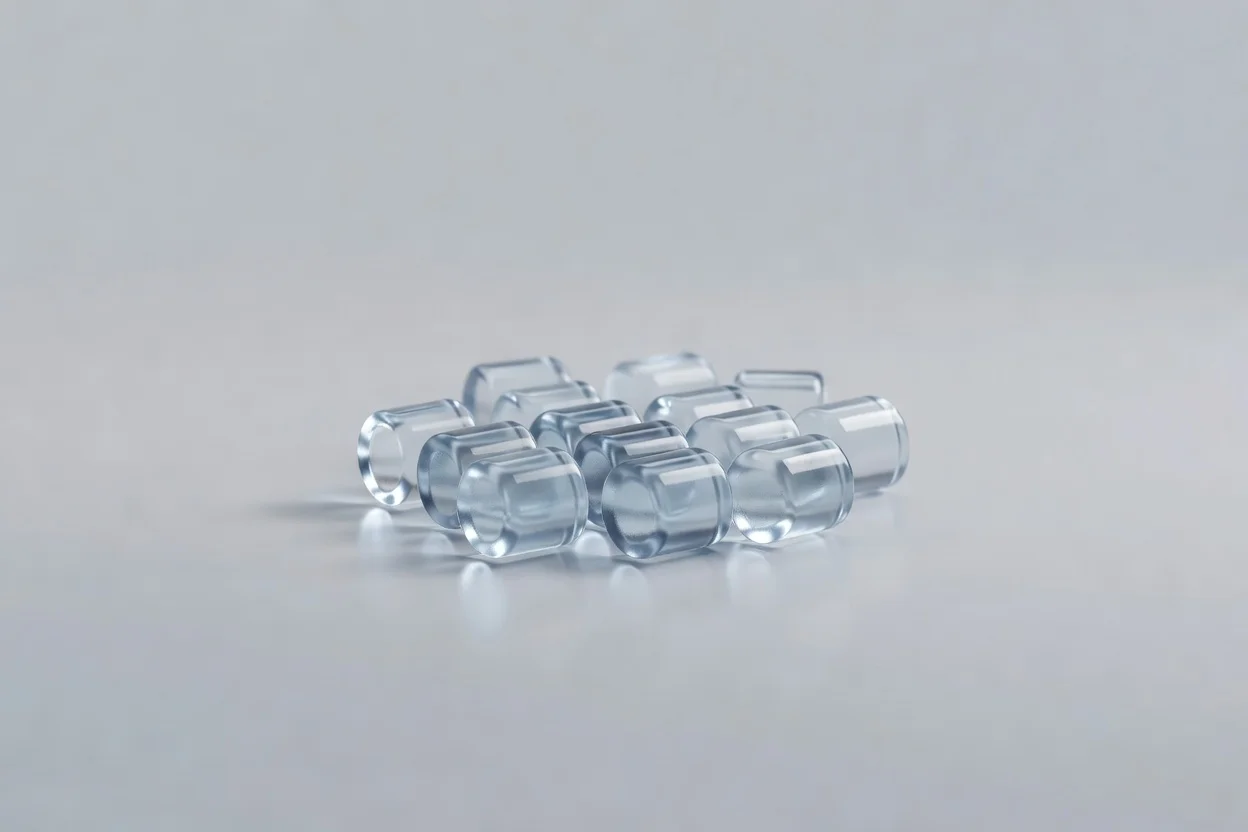
PCTG (polycyclohexylenedimethylene terephthalate glycol-modified) is a transparent, amorphous copolyester used in packaging, medical products, consumer goods, sheets, profiles, and 3D printing filaments. It belongs to the broader polyester family and is commonly positioned as a tougher, more chemically resistant, and clearer alternative to standard PETG or, in some applications, to polycarbonate, while remaining BPA-free and relatively easy to process.
PCTG is typically understood as a glycol-modified copolyester in which cyclohexanedimethanol content is sufficiently high to differentiate it from related PETG-type materials, and this modified structure is the main reason for its improved impact strength, clarity, and processability. Its commercial appeal comes from the combination of optical quality, low shrinkage, and durability, which makes it suitable for premium packaging, healthcare items, and demanding consumer products.
The material’s position in the plastics value chain reflects several broader industry trends: the shift from brittle commodity plastics toward higher-performance amorphous copolyesters; the demand for bisphenol-free, food-contact-capable materials; and the ongoing interest in recyclable, lower-waste alternatives for rigid packaging and additive manufacturing. At the same time, PCTG remains constrained by its relatively moderate heat resistance compared with engineering thermoplastics such as polycarbonate or high-temperature polyesters, which limits its use in very hot environments.
History and Development
PCTG emerged from the development of copolyesters designed to improve clarity, toughness, and processability relative to earlier polyester materials. Its chemistry is closely related to PET-based copolyesters, but the use of cyclohexanedimethanol and glycol modification altered crystallization behavior and produced a more amorphous resin with better impact performance and optical properties.
Commercial development was driven by packaging and consumer-product needs, especially applications where glass-like appearance, chemical resistance, and impact durability were required without the weight and fragility of glass or the bisphenol concerns associated with polycarbonate. Over time, the material also became established in medical and cosmetic packaging, then later gained visibility in filament form for fused-filament fabrication and other additive manufacturing uses.
Chemical Structure and Key Properties
PCTG is a copolyester based on terephthalate chemistry and modified with cyclohexanedimethanol-derived units and glycol variation, which suppresses crystallization and supports an amorphous structure. That amorphous character is central to its transparent appearance, low warpage, and relatively broad processing window.
Key properties
| Property | Typical significance |
|---|---|
| Transparency | High optical clarity and gloss, suitable for premium visual applications. |
| Impact strength | Higher toughness than many standard PETG-type resins, useful for drop resistance and snap-fit parts. |
| Chemical resistance | Good resistance to oils, cleaning agents, and many cosmetic or household chemicals. |
| Dimensional stability | Low shrinkage and low warpage support precise molding and printing. |
| Food-contact potential | Frequently marketed for food-related applications when compliant grades are used. |
| BPA-free profile | Often selected where bisphenol avoidance is important. |
Practical limits and workarounds
- Moderate heat resistance → caused by its amorphous copolyester structure and relatively modest heat-deflection behavior → workaround: use it for ambient- or warm-use items rather than under-hood, sterilization-heavy, or continuous high-temperature service; select thicker sections or alternative high-heat polymers when needed.
- Lower barrier performance than specialized barrier polymers → caused by its polyester base without dedicated barrier layers → workaround: pair PCTG with multilayer structures, coatings, or secondary packaging when oxygen or aroma retention is critical.
- Not universally ideal for every load-bearing or structural use → caused by its balance of toughness and transparency rather than extreme stiffness → workaround: use ribbing, geometry optimization, or fiber-reinforced alternatives when higher modulus is essential.
Comparison with PETG and polycarbonate
| Material | Main advantage | Main limitation |
|---|---|---|
| PETG | Easy processing, good clarity, broad availability | Usually lower impact and aesthetic performance than PCTG in premium uses. |
| PCTG | Better toughness, clarity, and chemical resistance in many grades | Less heat-resistant than polycarbonate or higher-performance engineering plastics. |
| Polycarbonate | Higher heat resistance and stiffness | BPA concerns and different regulatory/aging trade-offs in some applications. |
Production Processes and Raw Feedstocks
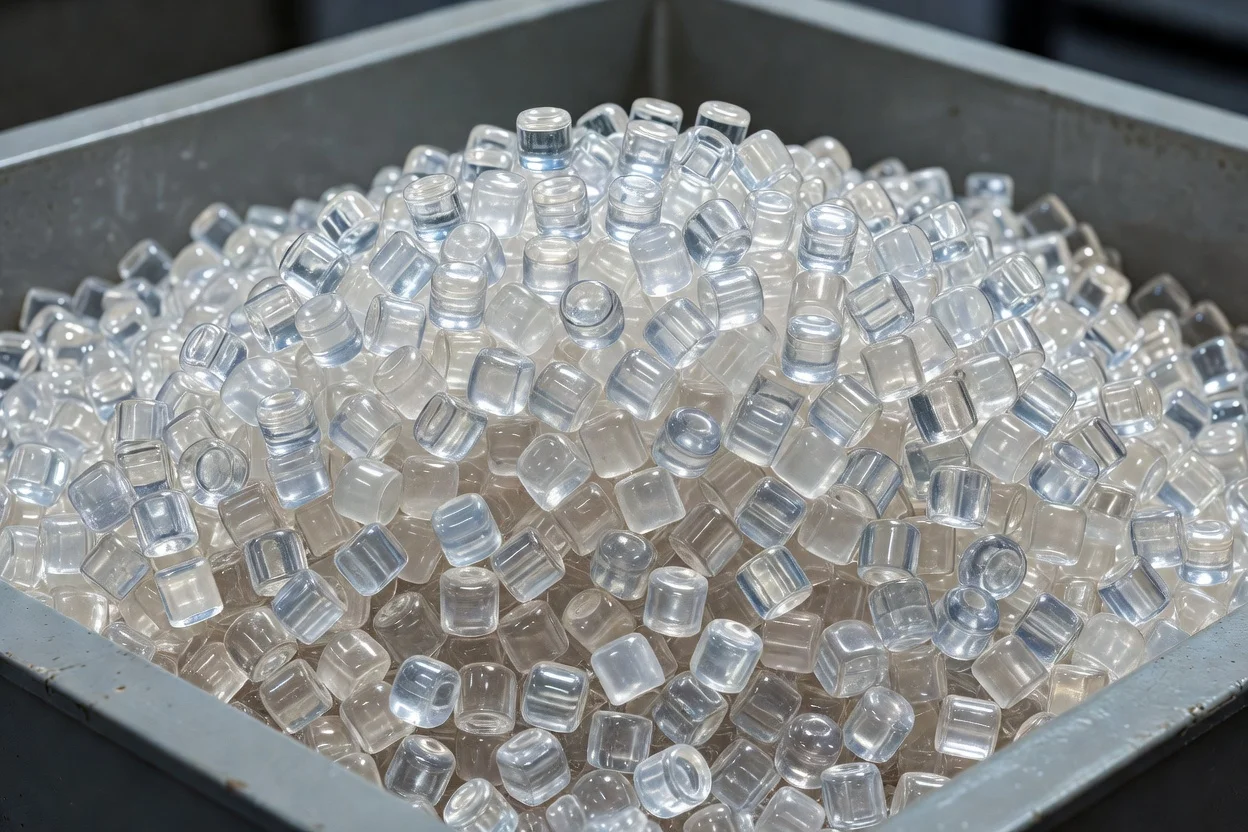
PCTG is produced from polyester feedstocks derived from aromatic diacids and diols, with formulations commonly described as involving terephthalate chemistry, cyclohexanedimethanol, and glycol modification. Industrial synthesis is usually based on conventional polyester polymerization routes, followed by melt processing into pellets, sheets, preforms, or filament feedstock.
The main production logic is to control monomer ratio and chain architecture so that crystallization is inhibited and the final resin remains clear and impact resistant. In practice, this enables stable injection molding, extrusion, thermoforming, and stretch-oriented or sheet-forming operations, depending on the grade.
Feedstock and process considerations include:
- Terephthalate-based inputs for the aromatic backbone.
- Cyclohexanedimethanol to improve toughness and optical behavior.
- Glycol modification to reduce crystallinity and improve processability.
- Quality control for molecular weight, residual monomers, and haze, especially for packaging and medical uses.
Applications and End-Use Markets
PCTG is used wherever a combination of clarity, toughness, and chemical resistance is required, especially when the design brief values appearance and durability at the same time.
| End-use sector | Typical grade/form | Why PCTG is chosen |
|---|---|---|
| Food and beverage packaging | Injection-molded containers, bottles, closures, rigid packaging | Clarity, toughness, food-contact potential, BPA-free positioning. |
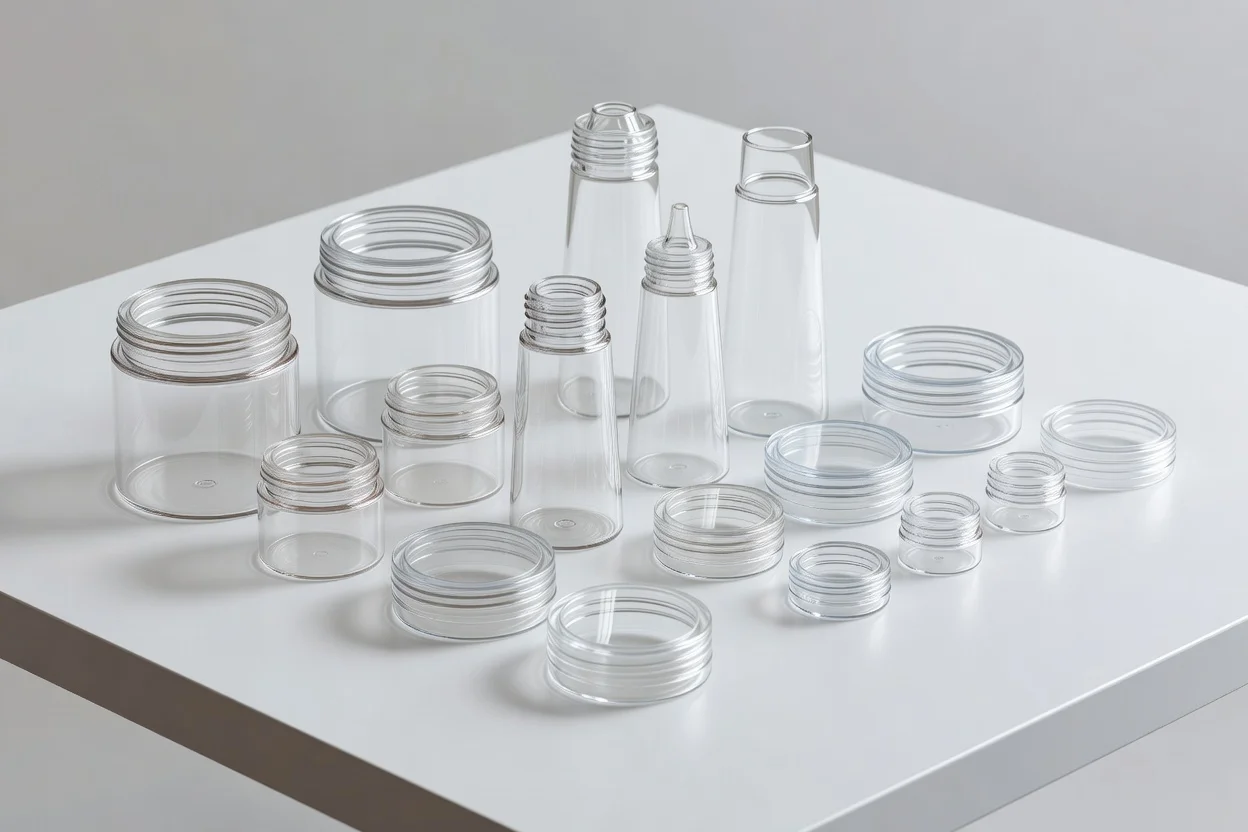
| Cosmetics and personal care | Bottles, caps, jars, dispensers, display packaging | Premium appearance, chemical resistance to cosmetic formulations. |
| Medical and laboratory products | Housings, containers, disposable or semi-durable components | Clarity, sterilization tolerance in selected grades, low extractables focus. |
| Consumer goods | Appliance covers, housings, transparent cases, reusable items | Impact strength, gloss, and good surface finish. |
| Sheets and profiles | Thermoformed sheet, transparent panels, displays | Optical quality and ease of forming. |
| Additive manufacturing | Filament for functional prints and prototypes | Low warpage, layer adhesion, and toughness. |
One less suitable use is continuous high-temperature service, where PCTG generally falls short of engineering resins designed for elevated thermal loads.
Environmental and Sustainability Aspects
PCTG is often presented as a more sustainable choice than some legacy transparent plastics because it is BPA-free, can be mechanically recycled in suitable streams, and can reduce breakage and product loss through its toughness and clarity. Its durability also supports reuse in applications such as bottles, housings, and consumer products, which can improve use-phase resource efficiency.
However, sustainability performance depends strongly on application design and local recycling infrastructure. As a copolyester, PCTG is not automatically accepted into every PET recycling stream, and contamination concerns may limit circularity unless sorting and end-market specifications are well managed. In practice, design-for-recycling choices, resin identification, and compatible collection systems are critical to realizing environmental benefits.
Bio-based substitutes and lower-carbon routes remain important areas of development for the wider copolyester family, although widely deployed bio-based PCTG equivalents are not yet as established as fossil-based grades in the market information reviewed here. The principal sustainability opportunity is therefore not only substitution, but also higher recycled content, improved circular design, and longer service life in durable applications.
Economic and Global Market Impact
PCTG occupies a specialty position between commodity packaging resins and higher-end engineering plastics. Demand is supported by premium packaging, healthcare, and 3D printing segments, where customers are willing to pay for clarity, toughness, and cleaner aesthetics.
Recent industry materials and supplier descriptions indicate that global interest is strongest in Asia, Europe, and North America, with resin suppliers and distributors emphasizing food-contact, medical, and cosmetic uses as key growth areas. A notable market trend is the diversification of supply into filament and sheet formats, which extends the resin’s reach beyond conventional packaging converters into prototyping, short-run manufacturing, and design-led applications.
Leading contributors in the market include established copolyester and specialty polymer producers such as Eastman, whose Tritan-brand copolyesters are frequently discussed in the same market space, and distributors or compounders that supply branded PCTG grades for packaging and industrial use. Their importance lies in setting performance benchmarks for clarity, impact, and compliance, rather than solely in resin volume.
Current Challenges and Innovations
Current development is concentrated in several areas:
- Recycling compatibility → improving identification, collection, and mechanical recycling pathways for PCTG-containing products.
- Thermal performance → extending usable temperature windows without sacrificing clarity or toughness.
- Medical and food-contact compliance → maintaining low extractables, low odor, and regulatory consistency across markets.
- Additive manufacturing optimization → improving layer adhesion, dimensional stability, and print consistency for filament grades.
- Surface and barrier engineering → combining PCTG with coatings or multilayer structures for better oxygen or aroma protection in packaging.
A practical innovation pattern is the use of small additive packages to fine-tune performance. For example, trace nucleating or processing aids may be used to control shrinkage and cycle time in molding, while impact modifiers or copolymer design changes adjust toughness without creating visible haze; the exact package depends on whether the target is sheet, bottle, or medical component production.

Future Outlook
PCTG is likely to remain a niche but strategically important copolyester for applications that prioritize premium transparency, impact resistance, and BPA-free positioning. Its strongest long-term opportunities are in reusable packaging, medical and cosmetic components, and higher-end functional printing materials, where appearance and toughness must coexist.
Future growth will depend on whether producers can improve circularity, expand certified food-contact and medical-grade offerings, and reduce cost relative to adjacent materials such as PETG or polycarbonate substitutes. If recycling systems become more compatible with specialty copolyesters and if design requirements continue to favor lightweight clarity over maximum heat resistance, PCTG should retain a stable role in the specialty thermoplastics landscape.
Summary
PCTG is a glycol-modified copolyester valued for its clarity, toughness, chemical resistance, and easy processing. It is especially strong in packaging, medical, cosmetic, and 3D printing applications, but its moderate heat resistance and recycling complexity limit universal replacement of higher-performance plastics.
References
- •
Polycyclohexylenedimethylene terephthalate. (2011, April 7). Wikipedia. https://en.wikipedia.org/wiki/Polycyclohexylenedimethylene_terephthalateLink
- •
PCTG - Poly Cyclohexylenedimethylene Terephthalate glycol-modified. (n.d.). Biesterfeld. https://www.biesterfeld.com/en/dk/product/pctg-poly-cyclohexylenedimethylene-terephthalate-glycol-modified/Link
- •
What is PCTG? (2026, June 5). 3DBite. https://3dbite.com/what-is-pctg-filament/Link
- •
PCTG樹脂. (2026, May 22). https://plastics-material.com/pctg/Link
- •
Everything about PCTG filaments: The bigger brother of PETG [2026]. (2024, December 11). Nobufil. https://www.nobufil.com/en/post/pctg-filament-guideLink
- •
PCTG: Versatile plastic for advanced applications. (2025, July 17). Patsnap Eureka. https://eureka.patsnap.com/blog/pctg-plastic-applications/Link
- •
PCTG filament guide 2026: What it is, how it prints, and when.... (2026, May 31). Cheapspool. https://www.cheapspool.com/articles/pctg-filament/Link
- •
PCTG是什么材料?有什么特点与应用. (2026, June 23). https://b2bwiki.baidu.com/article/d1jdg3hftjskdn13nmv0Link
- •
PCTG - Material guide. (n.d.). Craftcloud. https://craftcloud3d.com/en/material-guide/pctgLink
- •
PCTG filament technical data sheet. (n.d.). https://32d7228fa4db1ecd7e2e-509bb4ba9c60784e554acbc9d4f40ec1.ssl.cf2.rackcdn.com/AF_PCTG_Technical_Data_Sheet_-_TDS.pdfLink
- •
20+ years PCTG resin supplier. (n.d.). Luoyang Baiyou. https://www.polyhdpe.com/pctg.htmlLink
- •
PCTG: Versatile plastic for advanced applications. (2025, July 17). Patsnap Eureka. https://eureka.patsnap.com/blog/tech-seek/pctg-plastic-applications/Link
- •
PCTG filaments: Everything you need to know. (2024, November 8). 3Digital. https://3digital.tech/en/blogs/stampa-3d/filamenti-pctg-tutto-da-sapereLink
- •
PCTG. (n.d.). Advanced Polymers. https://www.advancedpolymers.co.za/pctg/Link
- •
PCTG filament: Print settings, temps & best brands. (2026, January 27). Filament Cheat Sheet. https://filamentcheatsheet.com/filaments/pctg/Link
- •
PCTG plastic - News. (n.d.). China Dawn Group. https://www.chinadawngroup.com/news/pctg-plastic-75545157.htmlLink
- •
PCTG filament. (2026, August 12). Fiberlogy. https://fiberlogy.com/en/product/pctg-filament/Link
- •
Amorphous, high glass transition temperature copolyester compositions, methods of manufacture, and articles thereof. (2012, February 15). https://patents.google.com/patent/US8901273B2/enLink
- •
Application of PCTG material in cosmetic packaging. (n.d.). https://www.glass-cosmetic-bottles.com/info/application-of-pctg-material-in-cosmetic-packa-84523675.htmlLink
- •
A comparative overview of PETG, PCTG, PCTA, and Tritan. (2026, April 19). Wankai. https://wkaiglobal.com/blogs/rising-copolyester-materials-a-comparative-overview-of-petg-pctg-pcta-and-tritanLink
- •
PCTG - Poly Cyclohexylenedimethylene Terephthalate glycol-modified. (2011, October 1). Biesterfeld. https://www.biesterfeld.com/en/ba/product/pctg-poly-cyclohexylenedimethylene-terephthalate-glycol-modified/Link
- •
Technical data sheet. (n.d.). Spectrum Filaments. https://spectrumfilaments.com/wp-content/uploads/2022/05/en_tds_spectrum_pctg.pdfLink
- •
CN103481437A - Molding method of PCTG (Poly(cyclohexylene dimethylene terephthalate)-Glycol modified polyester) copolyester container. (2013, August 14). https://patents.google.com/patent/CN103481437A/enLink
- •
PCTG. (2026, July 29). Fiberlogy. https://fiberlogy.com/en/filaments/pctg-en/pctg-pctg-en/Link
- •
Eastman Eastar DN004 PCTG copolyester datasheet. (n.d.). Look Polymers. https://www.lookpolymers.com/polymer_Eastman-Eastar-DN004-PCTG-Copolyester.phpLink
- •
A BPA-free copolyester material: PCTG resin. (2024, September 6). Dawn Polymer Material. https://www.dawnpolymermaterial.com/blog/a-bpa-free-copolyester-material-pctg-resinLink
- •
The science behind PCTG food grade: Properties, production, and.... (2026, March 17). https://www.alibaba.com/product-insights/pctg-food-grade.htmlLink
- •
PCTG filament - The best alternative to PET-G in 3D printing. (2025, January 20). Fiberlogy. https://fiberlogy.com/en/fiberlogy-filaments/pctg-filament/Link
- •
PCTG: Its iterations and connection with PET-G. (2023, July 21). Spectrum Filaments. https://spectrumfilaments.com/en/pctg-its-iterations-and-connection-with-pet-g/Link
- •
Introduction to the characteristics of PETG/PCTG plastics for injection molding. (n.d.). Yuheng Package. https://yuhengpackage.com/en/news/136.htmlLink
- •
Overview of PCTG plastic BPA free. (2026, March 12). https://www.alibaba.com/product-insights/pctg-plastic-bpa-free.htmlLink
- •
PCTG bottle: Structure, specifications, and common industry.... (2026, February 19). https://www.alibaba.com/product-insights/pctg-bottle.htmlLink
- •
Why you aren't 3D printing PCTG and why you should. (2025, April 24). Fabbaloo. https://www.fabbaloo.com/news/why-you-arent-3d-printing-pctg-and-why-you-shouldLink
- •
Mechanical properties evaluation of 3D printed PETG and PCTG.... (n.d.). https://openprairie.sdstate.edu/cgi/viewcontent.cgi?article=1846&context=etd2Link
- •
Essentium PCTG review. (2021, May 29). CNC Kitchen. https://www.cnckitchen.com/blog/essentium-pctg-reviewLink
- •
(PCTG) Polycyclohexylenedimethylene terephthalate glycol-modified. (2026, August 31). https://www.chinaplasonline.com/eMarketplace/AllExhibitors/eng/?Products=1001023&SProds=1001023Link
- •
PC, PCTG, PET, PPSU which one is safer in water bottle? (2026, April 20). https://www.polyhdpe.com/article/PC-PCTG-PET-PPSU-which-one-is-safer-in-water-bottle.htmlLink
- •
Types of plastic to use in packaging products. (2019, September 3). APC Packaging. https://techcenter.apcpackaging.com/lets-talk-plasticLink
- •
PCTG - Is it a good filament to use? Testing results seem inconsistent. (2024, August 16). Reddit. https://www.reddit.com/r/3Dprinting/comments/1etlrgq/pctg_is_it_a_good_filament_to_use_testing_results/Link