
Introduction
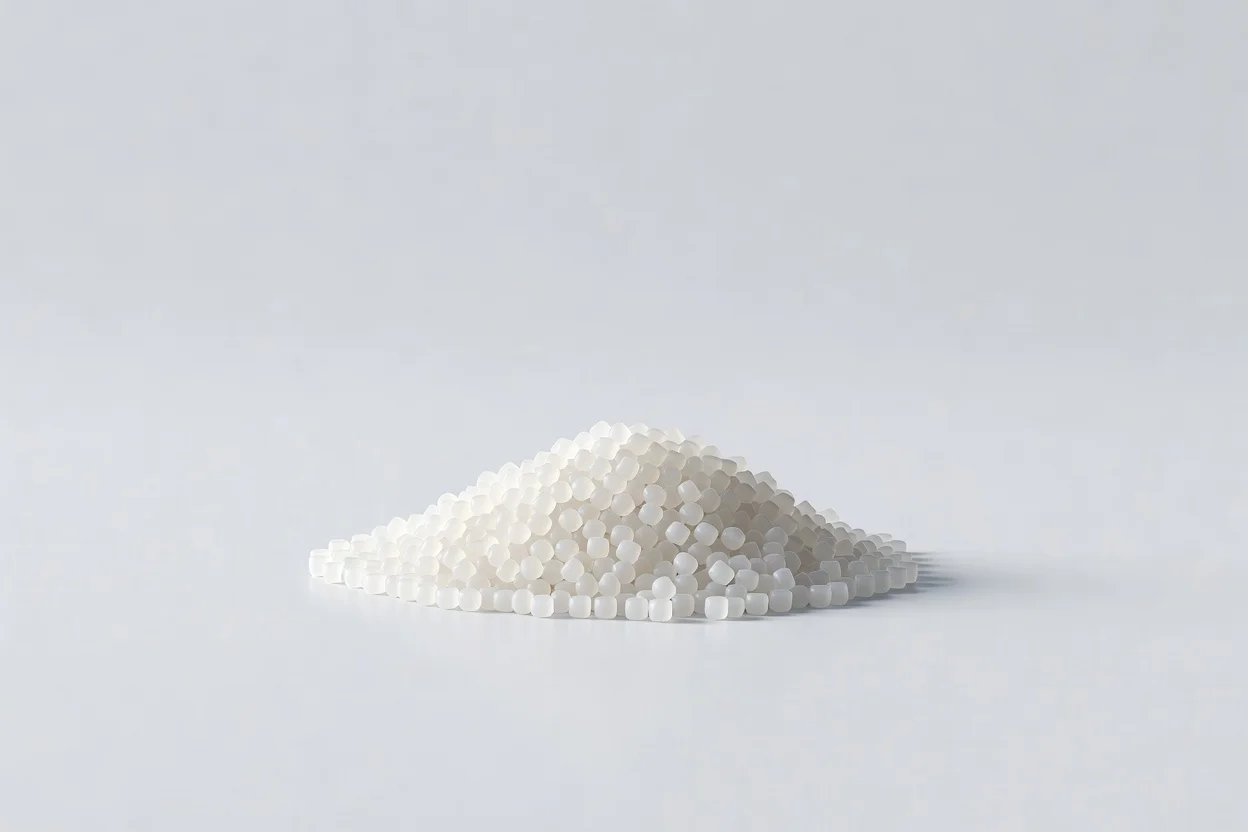
rLDPE, or recycled low-density polyethylene, is a mechanically recycled polyethylene feedstock made from post-consumer and post-industrial low-density polyethylene waste that has been collected, sorted, washed, shredded, reprocessed, and pelletized for reuse in new products. It is valued for retaining much of the flexibility, moisture resistance, and chemical stability of virgin LDPE while reducing dependence on fossil feedstocks and lowering the life-cycle carbon footprint of many applications.
In the plastics value chain, rLDPE occupies an important position in the circular economy because it can re-enter manufacturing streams as film, sheet, molded items, liners, and certain industrial products, often in blended formulations with virgin resin to stabilize processing and property consistency. Its market significance is increasing as packaging, agriculture, and construction sectors seek recycled-content materials that can meet both performance requirements and regulatory or brand-owner sustainability targets.
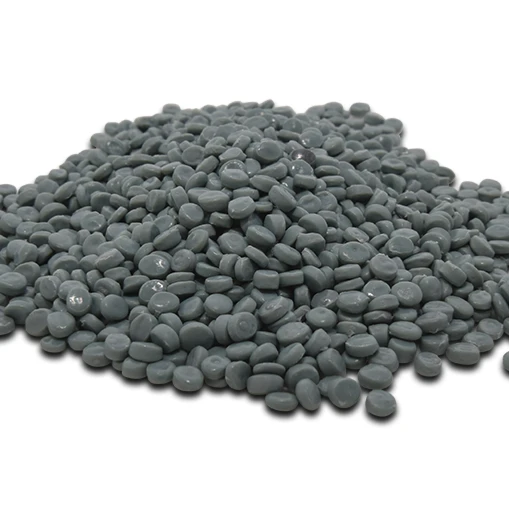
The material is not a single uniform grade but a family of recyclates whose properties vary with feedstock purity, melt history, contamination level, and reprocessing conditions. Leading suppliers and recyclers have therefore developed grade-specific offerings for blown film, stretch film, garbage bags, sheets, and other flexible-product applications, with some companies operating dedicated LDPE recycling plants or recycled-resin product lines.
History and Development
LDPE became a foundational packaging polymer because of its toughness, sealability, and low-temperature processability, and rLDPE emerged later as collection systems and mechanical recycling infrastructure matured. Early recycling efforts focused on relatively clean industrial scrap, while more recent systems increasingly target post-consumer film and flexible packaging waste streams.
The development of rLDPE has been driven by three converging pressures: waste-management policy, customer demand for recycled content, and the economic need to valorize low-density film waste that is difficult to recover in high-purity form. Recent commercial activity includes dedicated recyclate brands and pricing references for rLDPE pellets, reflecting a more organized market for recycled polyethylene feedstocks.
Chemical Structure and Key Properties
LDPE is a saturated hydrocarbon polymer with a highly branched chain architecture, and rLDPE retains that basic chemistry because mechanical recycling does not change the polymer backbone in the way that chemical recycling might. Its useful properties arise from its low density, relatively low melting behavior, and flexible amorphous-rich morphology, all of which are still present in recycled material, although they may be moderated by chain scission, oxidation, and contamination during service and reprocessing.
Key performance characteristics commonly associated with rLDPE include:
- Flexibility and soft hand feel, supporting film and bag applications.
- Moisture resistance, useful in packaging and agricultural films.
- Chemical resistance to many dilute acids, bases, and alcohols.
- Good electrical insulation, which supports selected cable and wire uses.
- Low processing temperature, which can reduce energy demand during extrusion and molding.
Important limitations are typically managed by formulation and process control:
- Poor oxygen and grease barrier → caused by polyethylene’s nonpolar hydrocarbon structure and relatively open morphology → workaround: multilayer coextrusion, barrier coatings, or lamination with higher-barrier polymers.
- Low surface energy and weak printability before treatment → caused by the chemically inert, nonpolar surface → workaround: corona, plasma, flame treatment, or primer systems before printing, coating, or bonding.
- Property variability in recycled grades → caused by mixed feedstocks, residual inks, labels, and thermal history → workaround: tighter sorting, melt filtration, odor control, compatibilizers, and blending with virgin LDPE.
- Reduced mechanical performance after multiple heat histories → caused by oxidation and molecular-weight loss during repeated reprocessing → workaround: stabilizer packages, controlled residence time, and use in lower-demand or blended applications.
A practical commercial example is blown-film rLDPE, which is often supplied as natural or translucent pellets with a relatively narrow melt-flow specification for flexible packaging and non-food films. Another example is stretch-film recyclate, where high toughness and low spotting are emphasized because the application tolerates some color variation but requires stable drawdown and puncture resistance.
Production Processes and Raw Feedstocks
rLDPE is produced mainly by mechanical recycling rather than depolymerization. The usual process chain includes collection, sorting, washing, drying, size reduction, melt filtration, extrusion, and pelletizing.
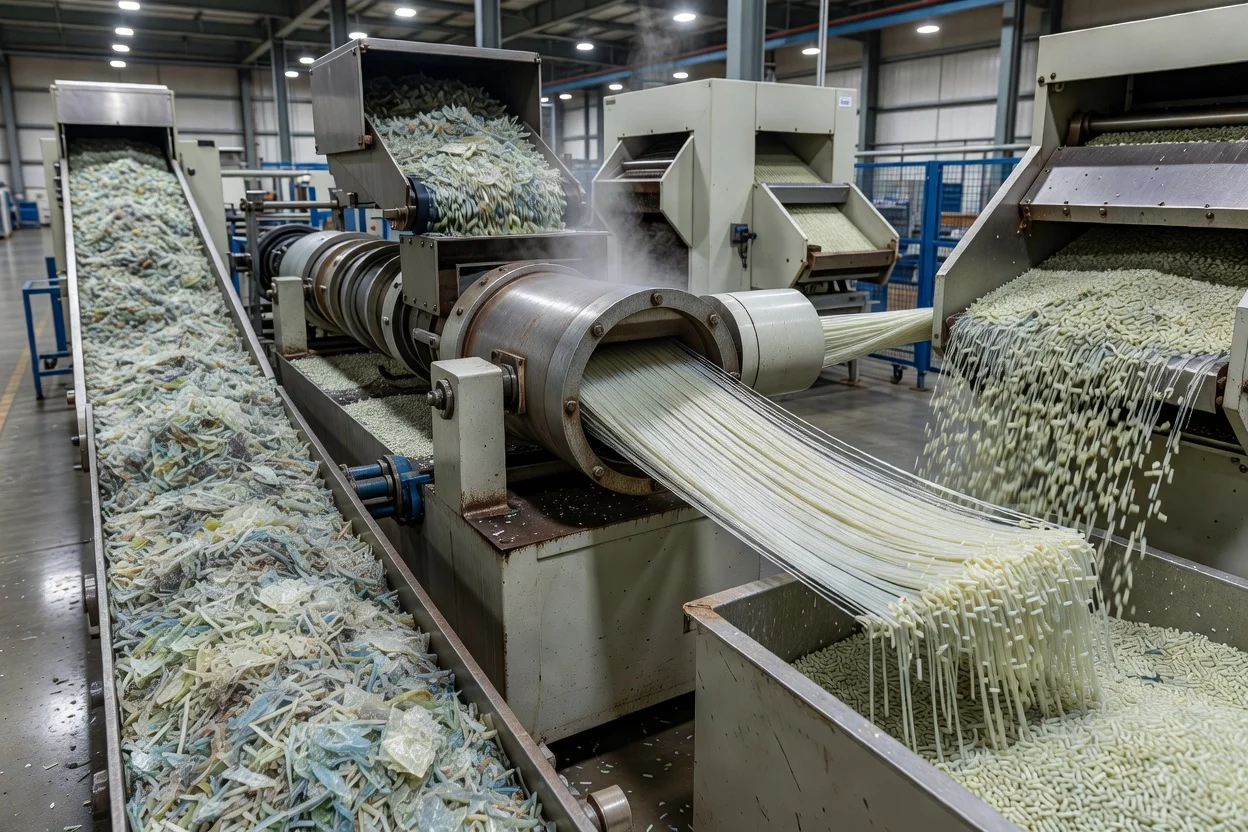
Common feedstocks include:
- Post-consumer shopping bags and film packaging.
- Stretch wrap and pallet film.
- Agricultural films such as mulch film and greenhouse film.
- Industrial film scrap and off-spec production waste.
Feedstock quality is decisive. Clean post-industrial scrap generally yields more consistent recyclate than post-consumer film, which may contain moisture, paper, adhesives, organic residue, and cross-polymer contamination. Many producers therefore operate washing and separation steps designed to remove inks, labels, dirt, and non-polyethylene fractions before pelletizing.
In commercial practice, rLDPE is often produced in grades optimized for a target melt flow index and color range. Recent market references describe natural transparent pellets in a narrow MFI window for flexible uses, indicating the industry’s movement toward more tightly specified recycled-resin products.
Applications and End-Use Markets
rLDPE is primarily used where flexibility, toughness, and moisture resistance matter more than optical perfection or premium barrier performance. The largest and most established outlets are in flexible packaging and film, with additional use in construction, agriculture, and selected industrial products.
| End-use sector | Typical rLDPE grade or form | Usual processing route | Notes |
|---|---|---|---|
| Flexible packaging | Blown-film pellet, often blended | Film extrusion, coextrusion | Bags, liners, mailers, secondary packaging. |
| Agriculture | Film grade, sometimes darker recycled grades | Film extrusion | Mulch film, greenhouse cover, silage wrap, irrigation-related film products. |
| Construction | Sheet or film grade | Extrusion, lamination | Vapor barriers, protective sheeting, geomembrane-related uses, drainage layers. |
| Industrial and logistics | Film and stretch grades | Stretch-film extrusion | Pallet wrap, protective wrapping, shipping envelopes. |
| Molded goods | Injection or blow-molding blends | Injection molding, blow molding | Containers, lids, bins, non-critical household items. |
| Wood-plastic and composite products | Lower-optical, utility grades | Compounding, extrusion | Plastic lumber, decking, fencing, composite panels. |
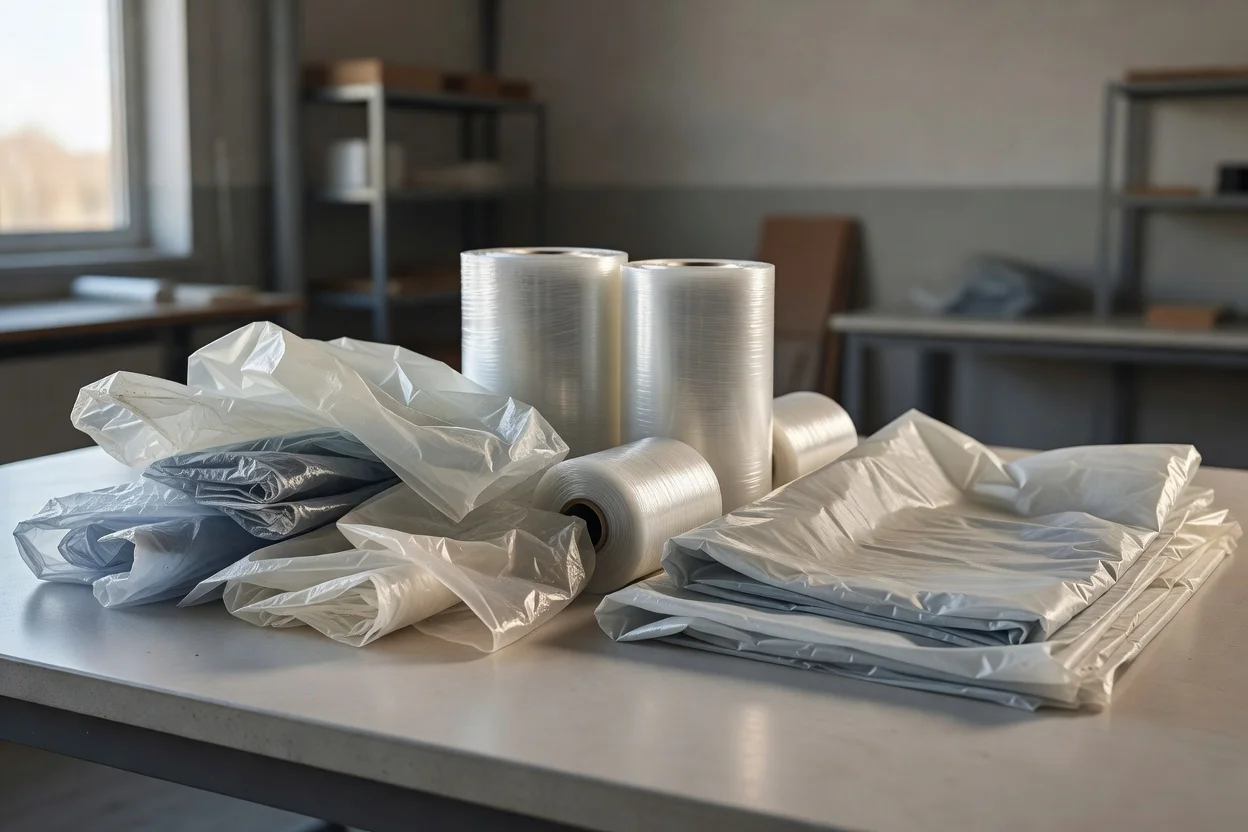
A notable poor-fit use is direct food-contact packaging, because recycled LDPE often carries contamination, odor, and regulatory challenges that make it unsuitable without highly controlled decontamination and compliance systems.
Specific applications commonly cited for rLDPE include trash bags, garbage liners, construction sheeting, agricultural films, plastic lumber, shipping envelopes, and non-food flexible packaging. Some suppliers also reference uses in cable and wire applications, flexible bottles, and foam-like products, although these are typically more selective and grade-dependent.
Environmental and Sustainability Aspects
The main environmental advantage of rLDPE is that it displaces virgin polymer made from fossil-derived ethylene, thereby reducing resource extraction and energy use. Life-cycle sources associated with recycled LDPE pellets indicate lower fossil-fuel demand and lower energy consumption than primary LDPE production.
Recent industry and LCA-oriented sources report that producing one tonne of virgin LDPE may generate roughly 1.9 to 2.1 tonnes of CO2, while recycled LDPE may be closer to 0.4 to 0.6 tonnes, implying a substantial emissions reduction, although exact values vary by system boundary, electricity mix, and collection efficiency. Other industry analyses similarly describe large energy savings and reduced emissions relative to virgin resin production.
Sustainability considerations also include:
- Recyclability: LDPE is technically recyclable, but collection rates for flexible film are often constrained by contamination and sorting complexity.
- Circularity: rLDPE supports material looping, but repeated recycling can reduce quality unless blended, stabilized, or downcycled into less demanding uses.
- Bio-based alternatives: bio-based polyethylene can reduce fossil carbon inputs, but it does not inherently solve end-of-life challenges if the material remains chemically identical to conventional PE.
- Trade-offs: replacing virgin LDPE with recycled resin can lower emissions, but poor sorting or contamination may raise processing losses and odor, limiting how much high-value content can be recovered.
The strongest sustainability case for rLDPE is therefore not unlimited substitution in every application, but matched use: deploying recycled resin in products whose requirements align with the material’s actual quality and variability.
Economic and Global Market Impact
rLDPE has become economically important because flexible film waste is abundant, yet difficult to manage in a circular system. This makes recycled LDPE pellets a strategic raw material for converters seeking lower-carbon inputs and for recyclers seeking value from difficult waste streams.
Market activity is becoming more structured. Dedicated recyclate product lines, regional recycling plants, and published pellet pricing signals show that rLDPE is moving from an informal secondary material toward a more standardized commodity-like product category. This trend is reinforced by policy pressure on packaging waste and recycled-content targets in several markets.
Leading industry participants mentioned in the provided sources include:
- Veolia PlastiLoop, which reports LDPE recycling plants in its network and supplies recycled low-density polyethylene.
- Ambio Materials, which markets rLDPE product information for multiple regional markets and emphasizes PCR/PIR-derived grades.
- Cirplus and similar recyclate marketplaces, which reflect the growing digitalization and specification of recycled polymer trading.
- Specialty recyclers and converters offering film-grade pellets for stretch film, blown film, and utility products.
Pricing is influenced by contamination levels, sorting costs, energy prices, virgin LDPE spreads, and end-market demand for recycled content. In periods of weak virgin polymer prices, rLDPE producers may face margin pressure unless policy or brand commitments sustain demand.
Current Challenges and Innovations
The central challenge for rLDPE is consistency. Waste-derived feedstocks vary in composition, odor, color, contamination, and melt history, which can limit performance and broader adoption in higher-value applications.
Current innovation themes include:
- Advanced sorting and washing to improve purity and reduce odor.
- Melt filtration and odor mitigation to improve film appearance and convertibility.
- Compatibilizers and blends to restore properties when rLDPE is mixed with other polyolefins or used in multilayer structures.
- Better grade definition and MFI control to make recycled pellets more predictable for converters.
- Food-contact decontamination routes for selected applications, though this remains highly regulated and technically demanding.
- Design-for-recycling packaging that reduces multilayer complexity and contamination at the end of life.
A representative technical strategy is the use of compatibilizers at low loading levels in blended systems. For example, studies on recycled LDPE/PVC systems have used chlorinated polyethylene as a compatibilizer to improve interfacial adhesion and processability, illustrating how formulation can extend the usable window of recycled feedstocks. More broadly, the same principle applies to recycled-polyethylene blends with fillers, wood flour, or mixed polyolefin streams, where a small additive dose can materially improve dispersion and mechanical integrity.
Future Outlook
The outlook for rLDPE is positive, but differentiated by quality tier. The strongest growth is likely to remain in non-food film, agricultural film, construction sheeting, waste bags, and other applications where recycled content can be used at scale without excessive performance risk.
Future progress will depend on four factors:
- Improved collection and sorting of flexible packaging waste.
- Better specification systems for recycled pellets and recyclate grades.
- Policy frameworks that reward recycled content and traceability.
- Product design that reduces contamination and enables higher-value recovery.
The most probable long-term role of rLDPE is as a high-volume, lower-carbon substitute for virgin LDPE in fit-for-purpose applications, rather than as a universal replacement. Its value will come from combining material circularity with processability, cost discipline, and grade-specific engineering.
Summary
rLDPE is a recycled polyethylene raw material that preserves many of LDPE’s core advantages while substantially reducing dependence on virgin fossil feedstocks. It is most important in flexible packaging, agriculture, construction, and utility-grade products, where its softness, moisture resistance, and low-temperature processability are especially useful.
Its principal constraints are variability, contamination sensitivity, and weaker barrier performance, but these can often be managed through sorting, filtration, blending, compatibilization, and smart application selection. As recycling systems mature and demand for recycled content expands, rLDPE is likely to remain one of the most commercially significant and strategically relevant recycled plastics in the global market.
References
- •
Återvunnen LDPE – Egenskaper, användningsområden och fördelar. (n.d.). Ambio. https://www.ambiomaterials.com/se/material/rldpeLink
- •
Recycled LLDPE – Properties, Applications, and Benefits. (n.d.). Ambio. https://www.ambiomaterials.com/en/materials/rlldpeLink
- •
Recycled LDPE – Properties, Applications, and Benefits. (n.d.). Ambio. https://www.ambiomaterials.com/en/materials/rldpeLink
- •
Applications of recycled LDPE pellets. (2025, March 7). WasteTrade. https://www.wastetrade.com/cs/resources/recycling/applications-of-recycled-ldpe-pellets/Link
- •
Recycled LDPE granules: Types, uses & applications. (2025, July 7). Swami Polymers. https://swamipolymers.com/recycled-ldpe-granules-types-uses/Link
- •
Is LDPE recyclable? (2022, February 3). Laird Plastics. https://lairdplastics.com/resources/lowdensity-polyethylene-ldpe-complete-technical-guide/Link
- •
Linear low density polyethylene recycled content grade. (n.d.). Eureka PatSnap. https://eureka.patsnap.com/materials/lldpe-recycled-content-gradeLink
- •
LLDPE recyclate (PCR) for extrusion | Stretch films. (n.d.). FKuR. https://fkur.com/en/recyclates/recyclate/lldpe-stretch-natural/Link
- •
PCR r-LLDPE - Linear low-density polyethylene. (n.d.). Sinox Polymers. https://www.sinox-polymers.com/en/plastic-recycled-pellets-pcr-lldpe-linear-low-density-polyethylene.htmlLink
- •
Recycled PET pellets price guide 2026: Spread vs virgin... (2026, June 1). KiTech Recycling. https://kitech-recycling.com/blog/recycled-low-density-polyethylene/Link
- •
LDPE recycling: A key step towards a sustainable future. (2026, January 1). Recycling Today. https://www.recyclingtoday.org/pages/ldpe-recyclingLink
- •
Recycled linear low-density polyethylene (R-LLDPE). (2025, October 21). cirplus. https://cirplus.com/materials/R-LLDPELink
- •
Recycled low density polyethylene (LDPE) process flow. (2024, July 31). POLYPVC. https://www.polypvc.com/news/Recycled-low-density-polyethylene-LDPE-process-flow.htmlLink
- •
rLDPE. (2000, January 1). Stavian Global. https://stavianglobal.com/en/san-pham/chi-tiet-rldpe-32Link
- •
ICIS introduces new rLDPE pellet pricing reflecting regulatory driven market evolution. (2026, July 20). Yahoo Finance. https://finance.yahoo.com/markets/commodities/articles/icis-introduces-rldpe-pellet-pricing-093000069.htmlLink
- •
Journal of Applied Polymer Science | Wiley Online Library. (n.d.). Wiley. https://onlinelibrary.wiley.com/doi/10.1002/app.28175Link
- •
Our products rLDPE. (n.d.). PolyToPoly. https://www.polytopoly.com/en/our-products/ldpeLink
- •
BP40900008 recycled LDPE translucent granules. (n.d.). Banyan Nation Products. https://www.banyannationproducts.com/recycled-ldpe-granules.htmlLink
- •
PCR r-LDPE - Low-density polyethylene. (n.d.). Sinox Polymers. https://www.sinox-polymers.com/en/plastic-recycled-pellets-pcr-ldpe-low-density-polyethylene.htmlLink
- •
Leadership lens - LDPE recycled pellet market by application. (n.d.). Leadership Lens. https://sites.google.com/view/leadership-lens/leadership-lens/ldpe-recycled-pellet-market-by-applicationLink
- •
Recycled plastics glossary. (n.d.). Into Plastics. https://intcoplastics.com/glossaryLink
- •
Low-density polyethylene. (2005, June 29). Wikipedia. https://en.wikipedia.org/wiki/Low-density_polyethyleneLink
- •
Recycled low-density polyethylene rLDPE - PlastiLoop - Veolia. (2024, July 25). Veolia. https://www.plastiloop.veolia.com/our-resins/recycled-low-density-polyethylene-rldpeLink
- •
High-quality recycled LDPE regrind and granules. (2026, March 12). cirplus. https://cirplus.com/materials/R-LDPELink
- •
Recycled LDPE pellets for film & flexible products. (n.d.). Damao Tech. https://www.damao-tech.com/materials/recycled-ldpe-pelletsLink
- •
LDPE plastic film recycling process. (2023, September 4). EDL Packaging. https://edlpackaging.com/how-is-ldpe-film-recycled-after-its-used-for-secondary-packaging/Link
- •
EcoProfile of recycled LDPE pellets EU27+3, gate-to-.... (n.d.). openLCA Nexus. https://nexus.openlca.org/ws/files/38597Link
- •
EcoProfile of recycled LDPE pellets EU27+3, cradle-to-.... (n.d.). openLCA Nexus. https://nexus.openlca.org/ws/files/38596Link
- •
Why recycled LDPE granules are crucial for circular economy.... (2026, April 10). eGrowth SB. https://www.egrowthsb.com/recycled-ldpe-granules-circular-economy/Link
- •
Kierrätetty LDPE – Ominaisuudet, käyttökohteet ja hyödyt. (n.d.). Ambio. https://www.ambiomaterials.com/fi/materiaalit/rldpeLink
- •
HDPE vs LDPE - RetailPartner – Sustainability. (n.d.). Retail Partner. https://wordpress.retailpartner.com/hdpe-vs-ldpe/Link
- •
Low-density polyethylene (LDPE) and its advantages. (2024, October 27). Recycling Today. https://www.recyclingtoday.org/blogs/news/low-density-polyethylene-ldpe-and-its-advantagesLink
- •
Recyceltes LDPE – Eigenschaften, Anwendungen und.... (n.d.). Ambio. https://www.ambiomaterials.com/de/materialen/rldpeLink
- •
Lower carbon footprint. (2025, April 2). eGrowth SB. https://www.egrowthsb.com/the-environmental-benefits-of-ldpe-a-step-towards-sustainable-plastic-use/Link
- •
The role of R-LDPE in the plastic pipe industry. (2024, December 15). Thinh Vuong Plastic. https://thinhvuongplas.com/the-role-of-r-ldpe-in-the-plastic-pipe-industry/Link
- •
4 common applications for low-density polyethylene. (n.d.). Poly Starco. https://www.polystarco.com/blog-detail/4-common-applications-for-low-density-polyethylene/Link
- •
LDPE recycling facilities: Technology, process and industrial.... (2026, March 16). Inan Plastics. https://www.inanplastics.com/en/ldpe-recycling-facilities-circular-plastics-economyLink
- •
Recycling and reusing potential of disposable low-density.... (2024, April 8). PMC. https://pmc.ncbi.nlm.nih.gov/articles/PMC11024625/Link
- •
Recycled polyethylene | International Polymers Ltd. (n.d.). International Polymers Ltd. https://www.internationalpolymersltd.com/recycled-polyethylene/Link
- •
Measuring the circularity potential of recycled LDPE based.... (n.d.). ScienceDirect. https://www.sciencedirect.com/science/article/pii/S2667378922000645Link
- •
Recycled LDPE granules | A solution for stretch film &.... (2025, May 5). Farahi Polymer. https://farahipolymer.com/recycled-ldpe-granules/Link
- •
Benefits of polyethylene in packaging, construction, and.... (2026, February 4). Elchemy. https://elchemy.com/blogs/chemical-market/benefits-of-polyethylene-in-packaging-construction-and-manufacturingLink
- •
Global perspectives on the biodegradation of LDPE in.... (2025, January 7). PMC. https://pmc.ncbi.nlm.nih.gov/articles/PMC11748793/Link
- •
Climate and biodiversity impacts of low-density polyethylene production from CO2 and electricity in comparison to bio-based polyethylene. (n.d.). ScienceDirect. https://www.sciencedirect.com/science/article/pii/S0048969723022489Link
- •
Promoting a greener future with LDPE alternatives. (2025, June 30). Eureka PatSnap. https://eureka.patsnap.com/report-promoting-a-greener-future-with-ldpe-alternativesLink
- •
Discover the environmental benefits of HDPE. (2025, November 10). WL Plastics. https://www.wlplastics.com/environmental-benefits-of-hdpeLink